1144 Results for "

small molecule

" in MedChemExpress (MCE) Product Catalog:
Products (1144)

1144 Results for "small molecule" in MCE Product Catalog:

9
9 Cited Publications
Cat. No.: HY-123834
CAS No.: 824983-91-7
Purity:  99.85%
Target:  

FLAP ATM/ATR

Research Areas:  

Cancer

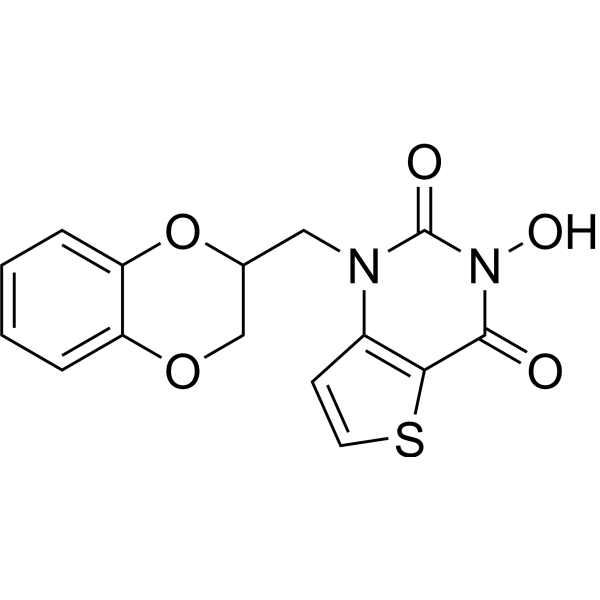
FEN1-IN-1 (compound 1) is a small molecule flap endonuclease 1 (FEN1) inhibitor with antitumor activity. FEN1-IN-1 binds to the active site of FEN1 and partly achieves inhibition by the co-ordination of Mg 2+ ions. FEN1-IN-1 initiaties a DNA damage response and activates the ATM checkpoint signalling pathway, the phosphorylation of histone H2AX and the ubiquitination of FANCD2 in mammalian cells. FEN1-IN-1 is promising for research of cancers .
loading...
    loading...
8
8 Cited Publications
Cat. No.: HY-16925
CAS No.: 1857417-13-0
Research Areas:  

Cancer

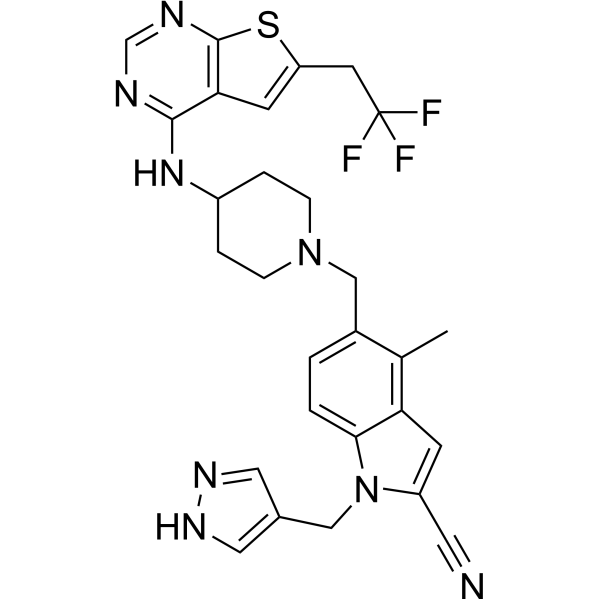
MI-503 is a highly potent and orally bioavailable small molecule inhibitor of the menin-mLL interaction.
loading...
    loading...
8
8 Cited Publications
Cat. No.: HY-131296
CAS No.: 2677841-58-4
Purity:  98.98%
Target:  

Drug Derivative

Research Areas:  

Inflammation/Immunology

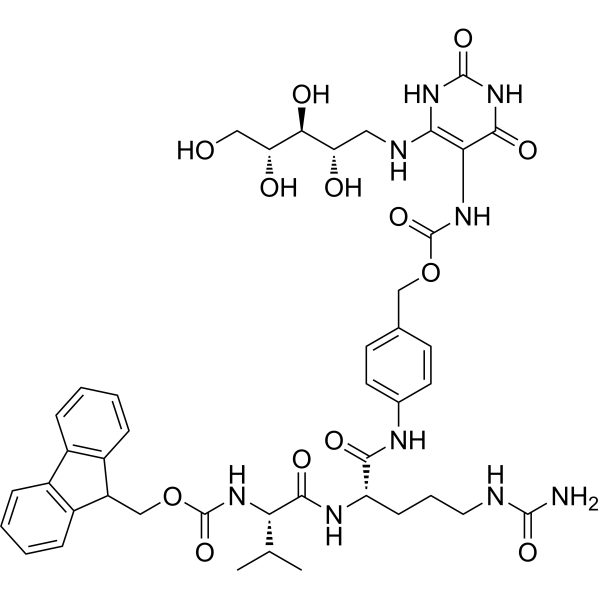
5-A-RU-PABC-Val-Cit-Fmoc is the proagent of 5-A-RU . 5-A-RU, a precursor of bacterial Riboflavin, is a mucosal-associated invariant T (MAIT) cells activator. 5-A-RU forms potent MAIT-activating antigens via non-enzymatic reactions with small molecules, such as glyoxal and methylglyoxal, which are derived from other metabolic pathways .
loading...
    loading...
8
8 Cited Publications
Cat. No.: HY-114312
CAS No.: 2136247-12-4
Purity:  99.60%
Research Areas:  

Cancer

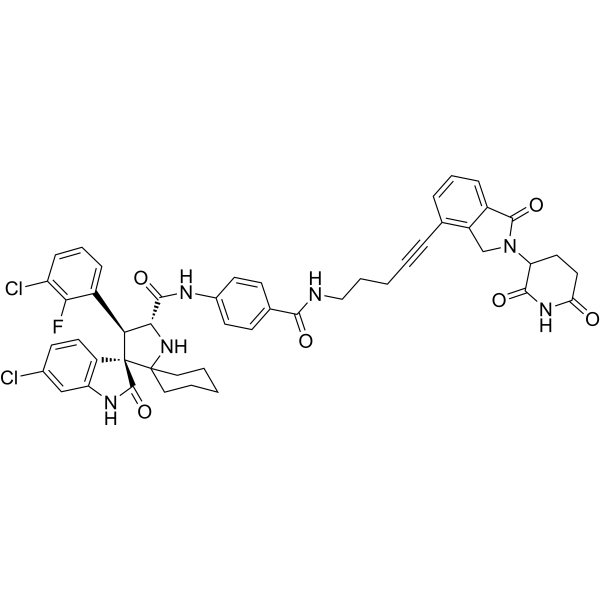
MD-224 is a first-in-class and highly potent small-molecule human murine double minute 2 (MDM2) degrader based on the proteolysistargeting chimera (PROTAC) concept. MD-224 consists of ligands for Cereblon and MDM2. MD-224 induces rapid degradation of MDM2 at concentrations <1 nM in human leukemia cells, and achieves an IC50 value of 1.5 nM in inhibition of growth of RS4;11 cells. MD-224 has the potential to be a new class of anticancer agent . MD-224 is a click chemistry reagent, it contains an Alkyne group and can undergo copper-catalyzed azide-alkyne cycloaddition (CuAAc) with molecules containing Azide groups.
loading...
    loading...
8
8 Cited Publications
Cat. No.: HY-15908
CAS No.: 979-88-4
Purity:  99.52%
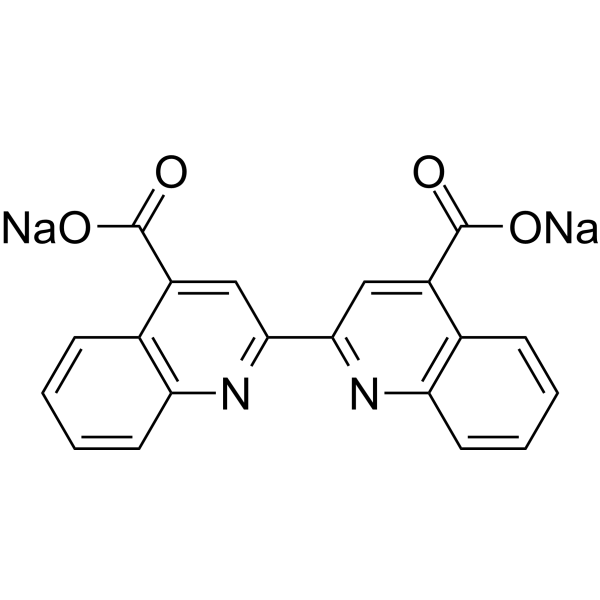
Synonyms: Disodium bicinchoninate
Research Areas:  

Others

BCA is a chelating agent targeting Cu I. BCA forms a water-soluble complex with Cu I at a 2:1 stoichiometric ratio, which not only inhibits its oxidation and disproportionation reactions, but also mediates the Cu I-catalyzed azide-alkyne cycloaddition click chemistry reaction to achieve bioconjugation of fluorophores or biotin with functionalized proteins. BCA chelates Cu + from proteins that reduce Cu 2+, forming a purple compound detectable by colorimetry, and thus is used to determine the total protein concentration in solution. BCA is a potential small-molecule candidate for AHAS inhibitors .
loading...
    loading...
8
8 Cited Publications
Cat. No.: HY-W004599
CAS No.: 1245-13-2
Research Areas:  

Others

Bicinchoninic acid is a chelating agent targeting Cu I. Bicinchoninic acid forms a water-soluble complex with Cu I at a 2:1 stoichiometric ratio, which not only inhibits its oxidation and disproportionation reactions, but also mediates the Cu I-catalyzed azide-alkyne cycloaddition click chemistry reaction to achieve bioconjugation of fluorophores or biotin with functionalized proteins. Bicinchoninic acid chelates Cu + from proteins that reduce Cu 2+, forming a purple compound detectable by colorimetry, and thus is used to determine the total protein concentration in solution. Bicinchoninic acid is a potential small-molecule candidate for AHAS inhibitors .
loading...
    loading...
8
8 Cited Publications
Cat. No.: HY-15908A
CAS No.: 63451-34-3
Research Areas:  

Others

Dipotassium [2,2'-biquinoline]-4,4'-dicarboxylate is a chelating agent targeting Cu I. Dipotassium [2,2'-biquinoline]-4,4'-dicarboxylate forms a water-soluble complex with Cu I at a 2:1 stoichiometric ratio, which not only inhibits its oxidation and disproportionation reactions, but also mediates the Cu I-catalyzed azide-alkyne cycloaddition click chemistry reaction to achieve bioconjugation of fluorophores or biotin with functionalized proteins. Dipotassium [2,2'-biquinoline]-4,4'-dicarboxylate chelates Cu + from proteins that reduce Cu 2+, forming a purple compound detectable by colorimetry, and thus is used to determine the total protein concentration in solution. Dipotassium [2,2'-biquinoline]-4,4'-dicarboxylate is a potential small-molecule candidate for AHAS inhibitors .
loading...
    loading...
7
7 Cited Publications
Cat. No.: HY-19546
CAS No.: 1906919-67-2
Research Areas:  

Cancer

BAY-598, a chemical probe, is selective small molecule inhibitor of SMYD2 with an IC50 of 27 nM .
loading...
    loading...
7
7 Cited Publications
Cat. No.: HY-100354
CAS No.: 24696-26-2
Purity:  ≥98.0%
Synonyms: C16-Ceramide
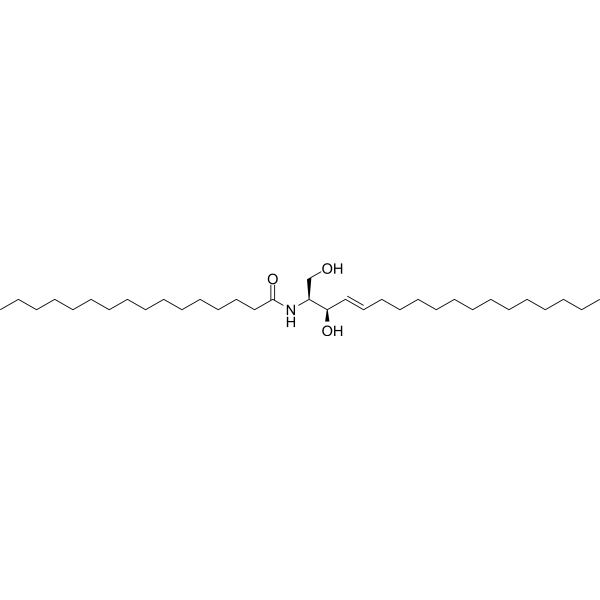
C16-Ceramide (d18:1/16:0) is a natural small molecule activating p53 through the direct and selective binding .
loading...
    loading...
7
7 Cited Publications
Cat. No.: HY-110250
CAS No.: 1241390-29-3
Purity:  98.85%
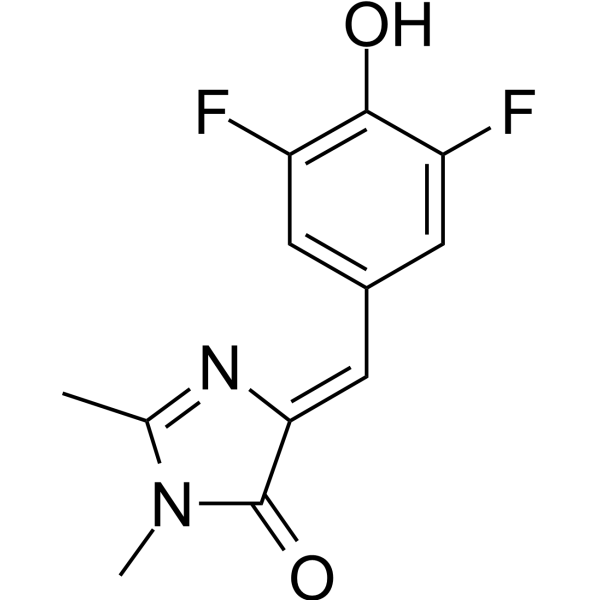
DFHBI is a small molecule that resembles the chromophore of green fluorescent protein (GFP). DFHBI can be used for imaging RNA in living cells. . Spinach and DFHBI are essentially nonfluorescent when unbound, whereas the Spinach-DFHBI complex is brightly fluorescent both in vitro and in living cells (Ex/Em = 469/501 nm).
loading...
    loading...
7
7 Cited Publications
Cat. No.: HY-18705
CAS No.: 932986-18-0
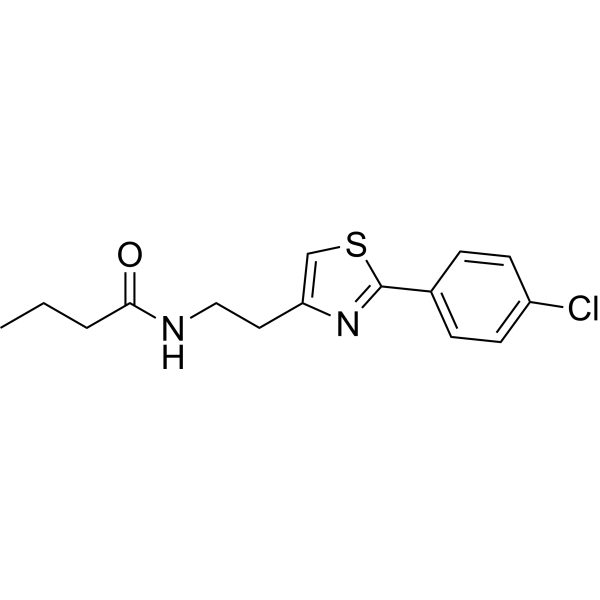
Azoramide is a potent, orally active small-molecule modulator of the unfolded protein response (UPR). Azoramide improves ER protein folding and elevates ER chaperone capacity, which together protects cells against ER stress. Azoramide alleviates PLA2G6 mutant-induced ER stress through modulating unfolded protein response, and enhances the CERB signaling to rescue mitochondrial function, thereby preventing apoptosis of DA neurons. Azoramide has antidiabetic activity .
loading...
    loading...
6
6 Cited Publications
Cat. No.: HY-112167
CAS No.: 1196541-47-5
Purity:  99.23%
Synonyms: ARRY-575; RG7741
Research Areas:  

Cancer

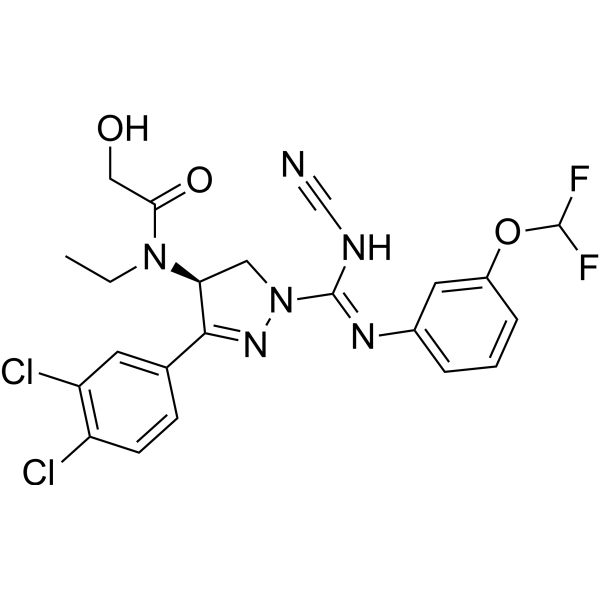
GDC-0575 (ARRY-575, RG7741) is a highly-selective oral small-molecule Chk1 inhibitor with an IC50 of 1.2 nM.
loading...
    loading...
6
6 Cited Publications
Cat. No.: HY-10704
CAS No.: 612530-44-6
Purity:  99.65%
Synonyms: PTP1B inhibitor
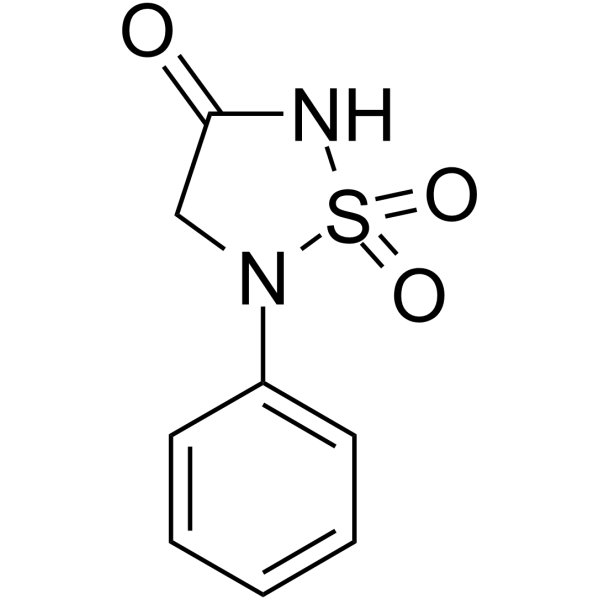
PTP1B-IN-1 (Compound 7a) is a small molecule inhibitor of PTP1B with an IC50 value of 1.6 mM. It is often used as the mother core for derivatives of analogues .
loading...
    loading...
6
6 Cited Publications
Cat. No.: HY-W015828
CAS No.: 353-09-3
Synonyms: RGX-202; 3-Guanidinopropionic acid
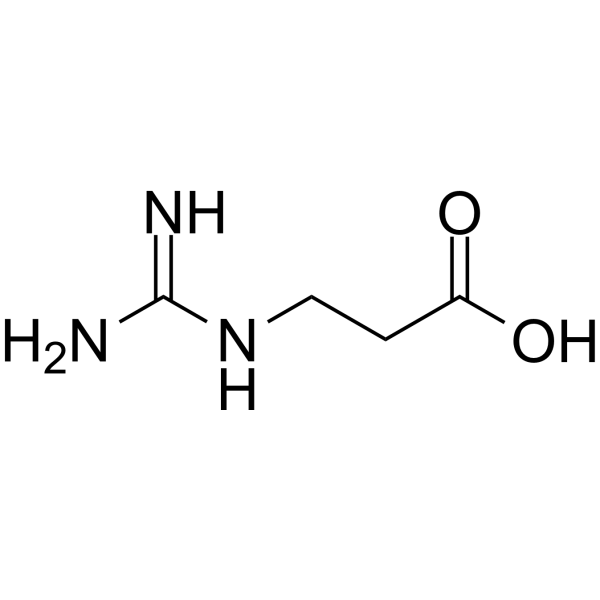
Ompenaclid (RGX-202) is an oral small-molecule SLC6A8 transporter inhibitor. Ompenaclid robustly inhibits creatine import in vitro and in vivo, reduces intracellular phosphocreatine and ATP levels, and induces tumor apoptosis. Ompenaclid can be used for the research of cancer and duchenne muscular dystrophy .
loading...
    loading...
6
6 Cited Publications
Cat. No.: HY-111793A
CAS No.: 2749281-71-6
Purity:  98.19%
Target:  

CXCR

Research Areas:  

Neurological Disease

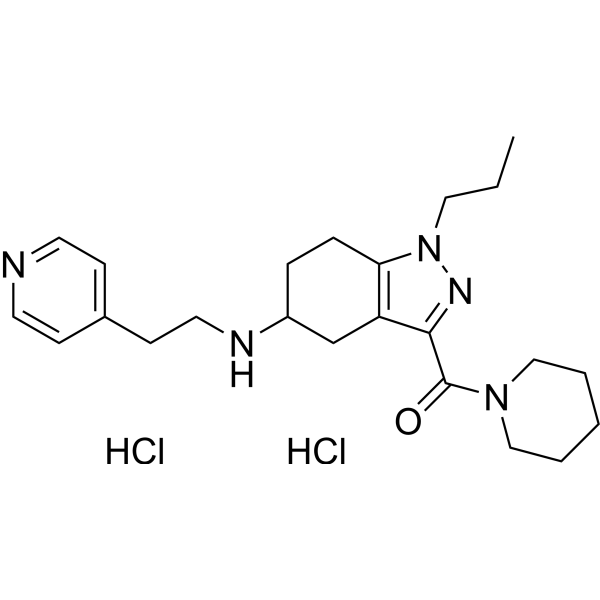
NUCC-390 dihydrochloride is a novel and selective small-molecule CXCR4 receptor agonist. NUCC-390 dihydrochloride induces internalization of CXCR4 receptors and acts in an opposite way of AMD3100 (HY-10046) . NUCC-390 dihydrochloride promotes nerve recovery of function after neurodegeneration in vivo .
loading...
    loading...
6
6 Cited Publications
Cat. No.: HY-111793
CAS No.: 1060524-97-1
Purity:  98.40%
Target:  

CXCR

Research Areas:  

Neurological Disease

NUCC-390 is a novel and selective small-molecule CXCR4 receptor agonist. NUCC-390 induces internalization of CXCR4 receptors and acts in an opposite way of AMD3100 (HY-10046) . NUCC-390 promotes nerve recovery of function after neurodegeneration in vivo .
loading...
    loading...
6
6 Cited Publications
Cat. No.: HY-128892
CAS No.: 1808714-73-9
Purity:  99.42%
Target:  

Autophagy

Research Areas:  

Neurological Disease

EN6 is a small-molecule in vivo autophagy activator that covalently targets cysteine 277 in the ATP6V1A subunit of the lysosomal v-ATPase. EN6-mediated modification of ATP6V1A uncouples v-ATPase from Rag, leading to inhibition of mTORC1 signalling, increased lysosomal acidification, and activation of autophagy. EN6 also scavenges TDP-43 aggregates (causative agents of frontotemporal dementia) in a lysosome-dependent manner .
loading...
    loading...
6
6 Cited Publications
Cat. No.: HY-138226
CAS No.: 158757-84-7
Purity:  98.42%
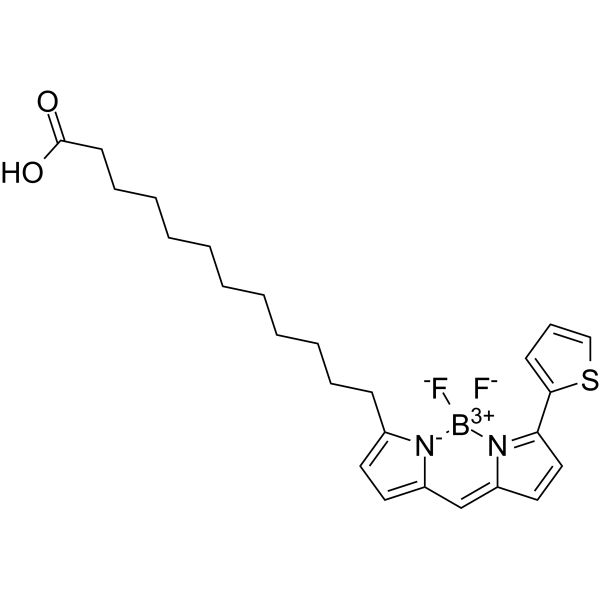
BODIPY 558/568 C12 is a BODIPY dye. BODIPY dye is a small molecule dye with strong ultraviolet absorption ability, its fluorescence peak is relatively sharp, and the quantum yield is high. They are relatively insensitive to the polarity and pH of the environment and are relatively stable under different physiological conditions. Due to its structural asymmetry, BODIPY derives a variety of structural products. BODIPY lipid droplet dyes can well pass through the cell membrane into the cell, and localize the neutral lipids in the cell to specifically stain the lipid droplets, which can be used for labeling of live cells and fixed cells . Maximum excitation/emission wavelength: 558/568 nm .
loading...
    loading...
5
5 Cited Publications
Cat. No.: HY-101950
CAS No.: 1428729-56-9
Purity:  ≥98.0%
Target:  

Influenza Virus

Research Areas:  

Infection

KIN1148, a small-molecule IRF3 agonist, is a novel influenza vaccine adjuvant found to enhance flu vaccine efficacy.
loading...
    loading...