



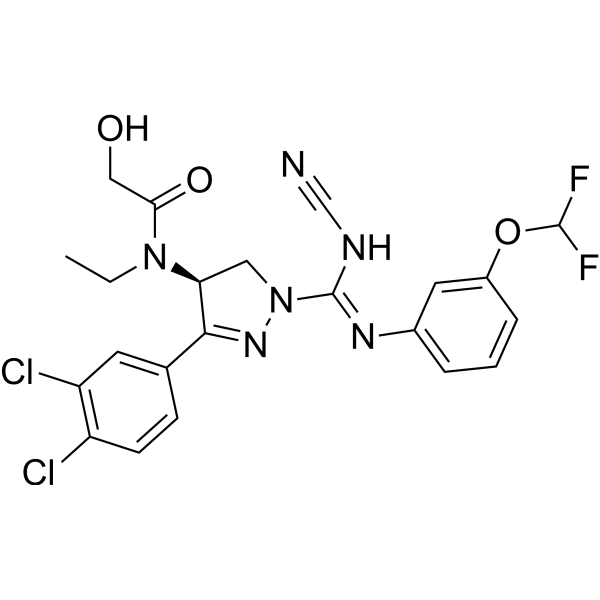
BAY-598
Based on 7 publication(s) in Google Scholar
BAY-598, a chemical probe, is selective small molecule inhibitor of SMYD2 with an IC50 of 27 nM.
Nur für Forschungszwecke. Wir verkaufen nicht an Patienten.
- Reinheit : 99.33%
- CAS. Nr.: 1906919-67-2
- Formel: C22H20Cl2F2N6O3
- Molecular Weight:525.34
-
Speicherung:Powder -20°C, 3 years , 4°C, 2 years ; In solvent -80°C, 2 years , -20°C, 1 year

To place orders, for customer services and technical support, please contact: MedChemExpress USA
Tel: 609-228-6898 E-mail: [email protected] [email protected]


-
 Biologische Aktivität
-
Chemical Information
-
Lösungsmittel & Löslichkeit
- Reinheit & Dokumentation
- Verweise
-
 Help & FAQs


-
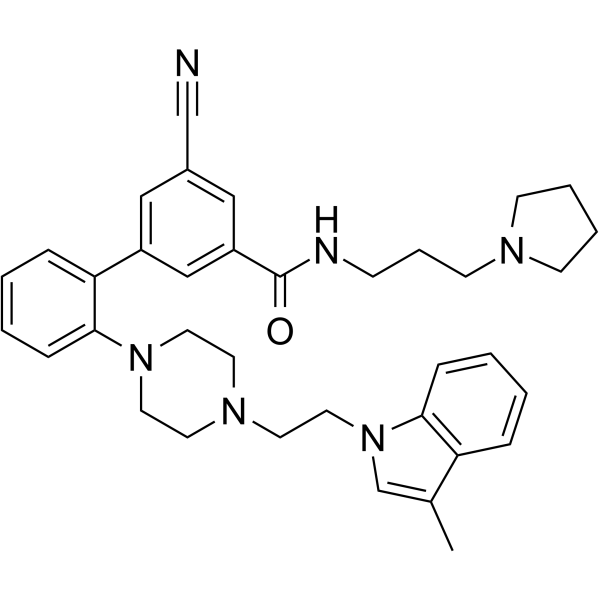
HY-19313
LLY-507Histone Methyltransferase Inhibitor -
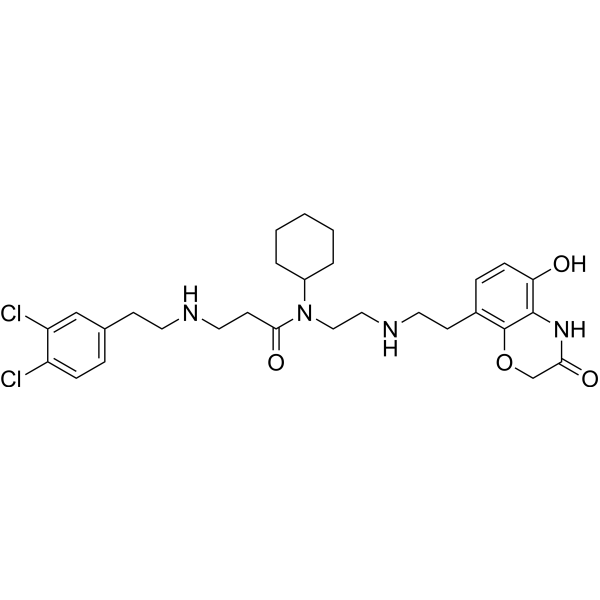
HY-15226
AZ505Histone Methyltransferase Inhibitor -
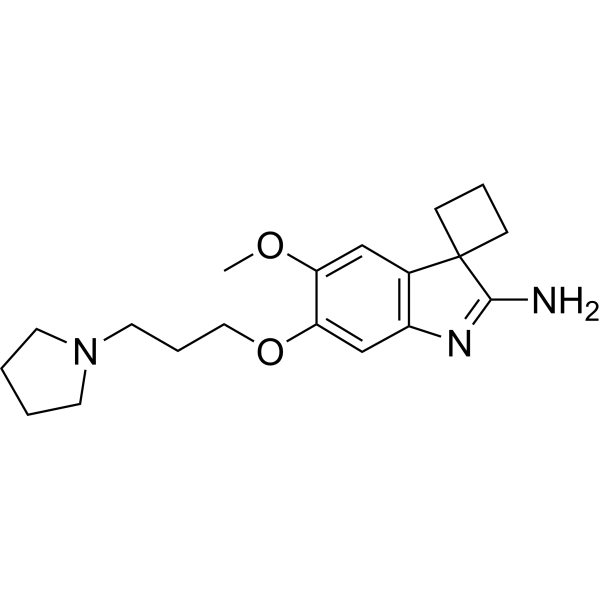
HY-12583
A-366G9a Inhibitor -
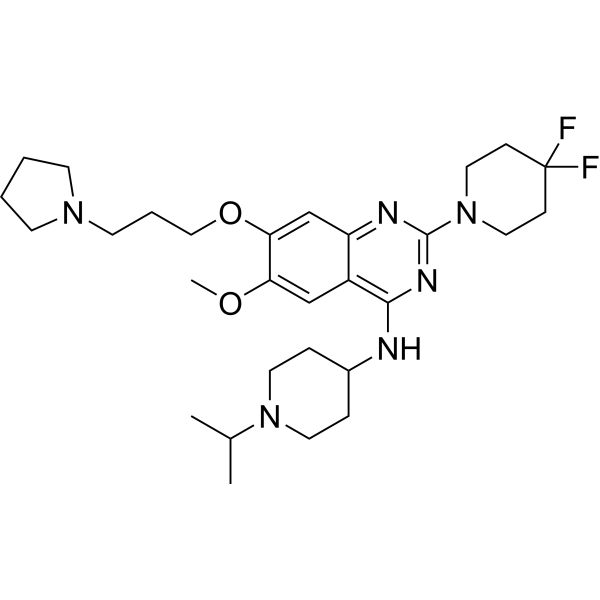
HY-13980
UNC0642G9a/GLP Inhibitor -
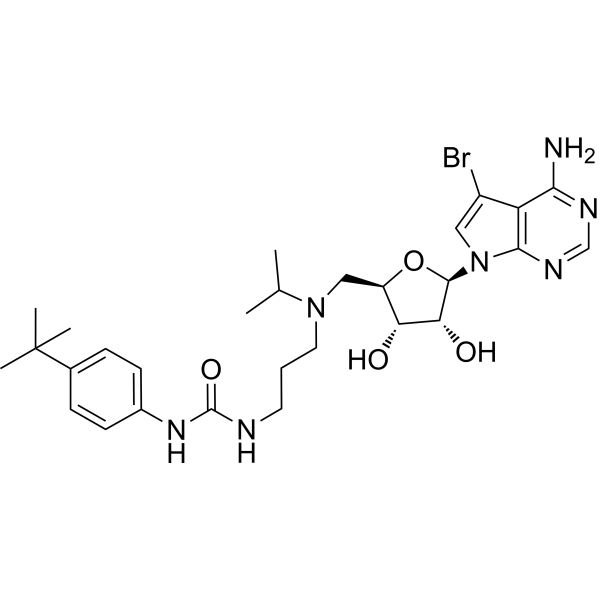
HY-15650
SGC0946DOT1L Inhibitor -
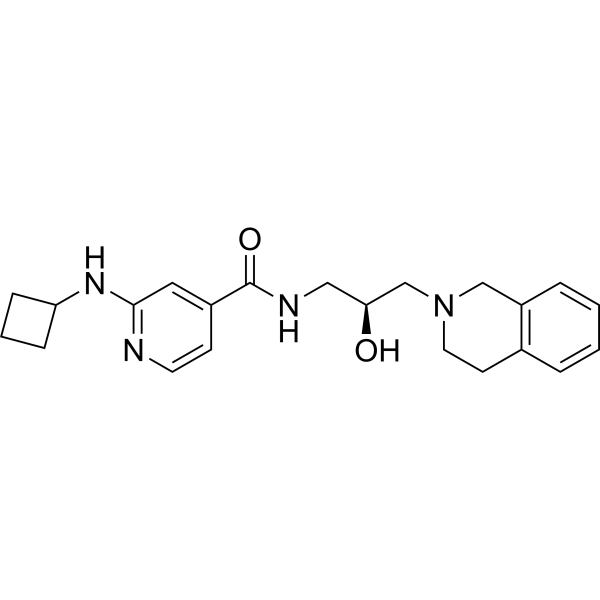
HY-100235
GSK591PRMT5 Inhibitor -
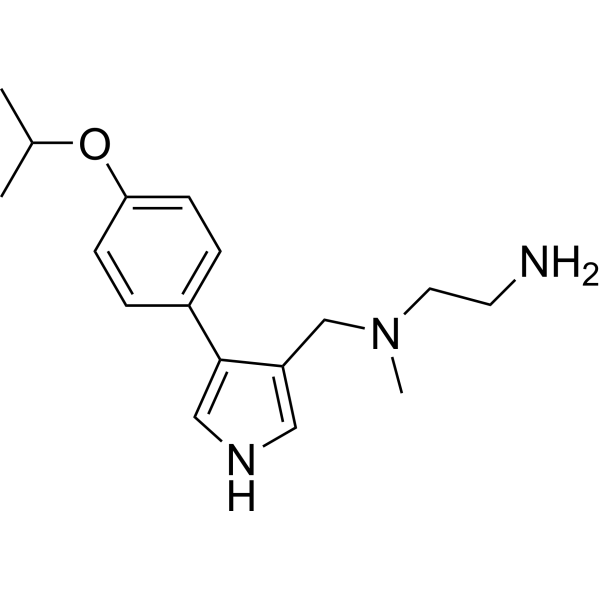
HY-19615
MS023Type I PRMT Inhibitor -
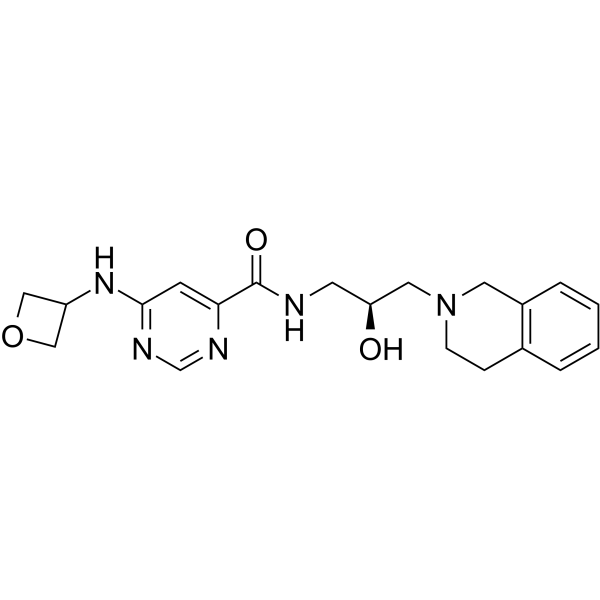
HY-12727
EPZ015666PRMT5 Inhibitor -
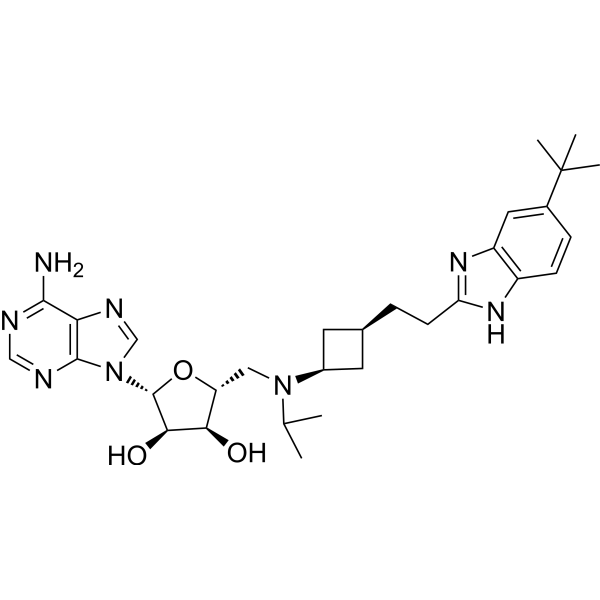
HY-15593
PinometostatDOT1L Inhibitor -
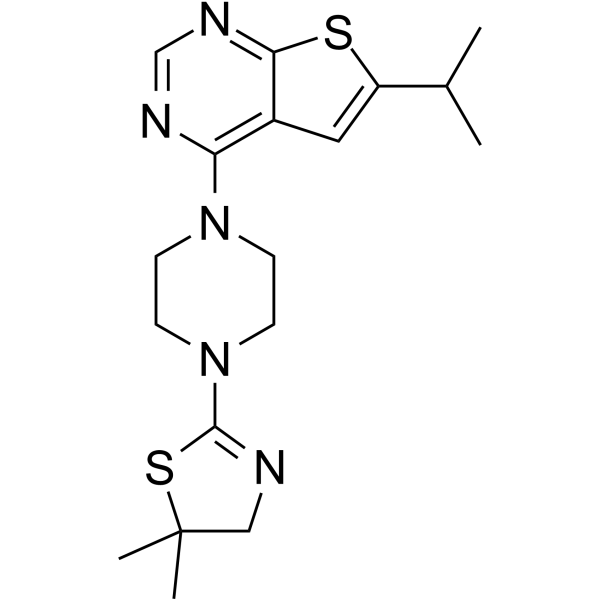
HY-15223
MI-3Menin-MLL Inhibitor -
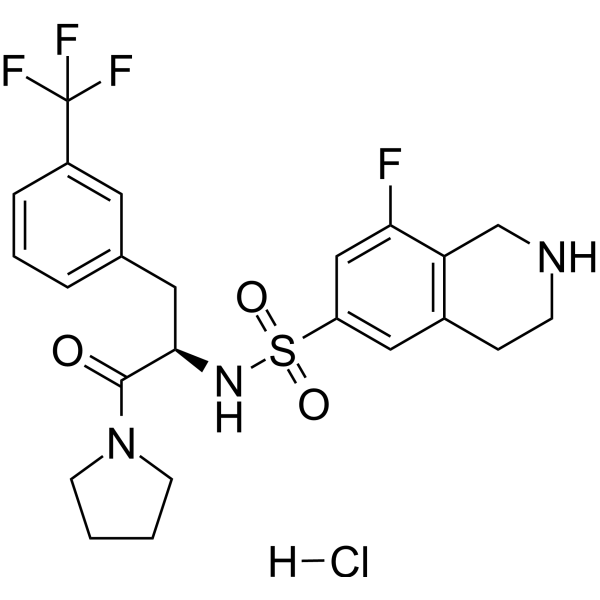
HY-18627A
PFI-2 hydrochlorideSETD7 Inhibitor -
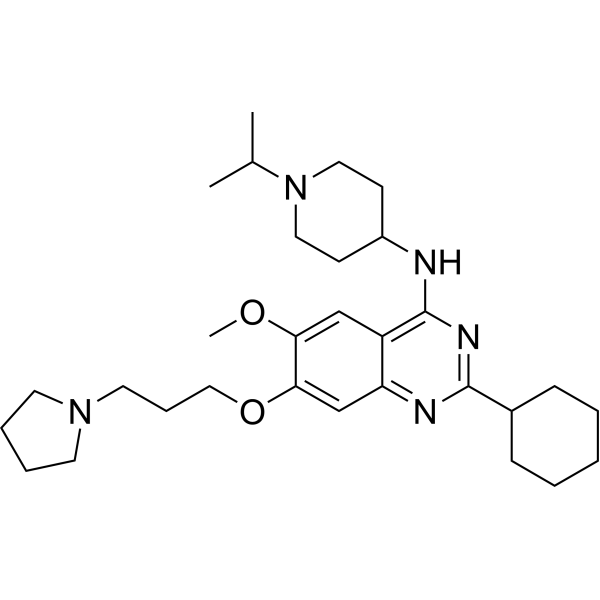
HY-15273
UNC0638G9a/GLP Inhibitor
Publications Citing Use of MedChemExpress (MCE) BAY-598
More- Nat Commun. 2026 Feb 12;17(1):1214. [Abstract]
- Pharmacol Res. 2022 Mar:177:106122. [Abstract]
- Cell Death Dis. 2022 Jan 12;13(1):52. [Abstract]
- Acta Pharmacol Sin. 2022 Feb;43(2):457-469. [Abstract]
- Cells. 2022 Apr 8;11(8):1262. [Abstract]
- Heliyon. 2024 May 29;10(11):e32015. [Abstract]
- bioRxiv. 2023 Apr 3.
Alle Histone Methyltransferase Isoform-spezifische Produkte anzeigen
More

Biologische Aktivität
Beschreibung
IC50 & Target
|
SMYD2 |
Cellular Effect
|
Cell Line

|
Type | Value | Description | References |
|---|---|---|---|---|
| MDA-MB-231 | IC50 |
60 nM
Compound: (S)-4; BAY-598
|
Inhibition of N-terminal 2xc-myc-tagged human SMYD2 transfected in human MDA-MB-231 cells assessed as reduction in AHNAK methylation after 72 hrs by ICW assay
Inhibition of N-terminal 2xc-myc-tagged human SMYD2 transfected in human MDA-MB-231 cells assessed as reduction in AHNAK methylation after 72 hrs by ICW assay
|
[PMID: 27075367] |
In Vitro
BAY-598 treatment blocks in vitro methylation of MAPKAPK3 by SMYD2 but has no activity against the SMYD2-related KMT SMYD3. BAY-598 treatment reduces the growth of Kras;p53 mutant PDAC cells after 9 d in culture but has little impact on the growth of Kras;p53;Smyd2 mutant cells[1].
MedChemExpress (MCE) has not independently confirmed the accuracy of these methods. They are for reference only.


Chemical Information
-
CAS. Nr. 1906919-67-2
-
Appearance Solid
-
Molecular Weight 525.34
-
Formel C22H20Cl2F2N6O3
-
Color Light yellow to yellow
-
SMILES
ClC1=C(Cl)C=CC(C2=NN(/C(NC#N)=N/C3=CC=CC(OC(F)F)=C3)C[C@@H]2N(C(CO)=O)CC)=C1
-
Versand
Room temperature in continental US; may vary elsewhere.
-
Speicherung
Powder -20°C 3 years 4°C 2 years In solvent -80°C 2 years -20°C 1 year


Publications (7)
-
Journal Impact Factor
-
Most Recent
-
Nat Commun
Human iPSC-based Modeling of Pulmonary Fibrosis Reveals p300/CBP Inhibition Suppresses Alveolar Transitional Cell State. [Abstract]2026 Feb 12;17(1):1214. PMID: 41680175 -
Pharmacol Res
2022 Mar:177:106122. PMID: 35149187 -
Cell Death Dis
SMYD2 targets RIPK1 and restricts TNF-induced apoptosis and necroptosis to support colon tumor growth. [Abstract]2022 Jan 12;13(1):52. PMID: 35022391 -
Acta Pharmacol Sin
2022 Feb;43(2):457-469. PMID: 33850273 -
Cells
SMYD2 Inhibition Downregulates TMPRSS2 and Decreases SARS-CoV-2 Infection in Human Intestinal and Airway Epithelial Cells. [Abstract]2022 Apr 8;11(8):1262. PMID: 35455942 -
Heliyon
Synergistic anticancer effects of SMYD2 inhibitor BAY-598 and doxorubicin in non-small cell lung cancer. [Abstract]2024 May 29;10(11):e32015. PMID: 38947456 -


Lösungsmittel & Löslichkeit
In Vitro:
DMSO : 125 mg/mL (237.94 mM; Need ultrasonic; Hygroscopic DMSO has a significant impact on the solubility of product, please use newly opened DMSO)
Please refer to the solubility information to select the appropriate solvent. Once prepared, please aliquot and store the solution to prevent product inactivation from repeated freeze-thaw cycles.
Storage method and period of stock solution: -80°C, 2 years; -20°C, 1 year. When stored at -80°C, please use it within 2 years. When stored at -20°C, please use it within 1 year.
Please refer to the solubility information to select the appropriate solvent. Once prepared, please aliquot and store the solution to prevent product inactivation from repeated freeze-thaw cycles.
Storage method and period of stock solution: -80°C, 2 years; -20°C, 1 year. When stored at -80°C, please use it within 2 years. When stored at -20°C, please use it within 1 year.
Konzentration (Stammlösung) × Volumen (Stammlösung) = Konzentration (Ziellösung) × Volumen (Ziellösung)
In Vivo:
Select the appropriate dissolution method based on your experimental animal and administration route.
- For the following dissolution methods, please ensure to first prepare a clear stock solution using an In Vitro approach and then sequentially add co-solvents:
- To ensure reliable experimental results, the clarified stock solution can be appropriately stored based on storage conditions. As for the working solution for In Vivo experiments, it is recommended to prepare freshly and use it on the same day.
- The percentages shown for the solvents indicate their volumetric ratio in the final prepared solution. If precipitation or phase separation occurs during preparation, heat and/or sonication can be used to aid dissolution.
Add each solvent one by one: 10% DMSO 40% PEG300 5% Tween-80 45% Saline
Solubility: ≥ 2.08 mg/mL (3.96 mM); Clear solution
This protocol yields a clear solution of ≥ 2.08 mg/mL (saturation unknown).
Taking 1 mL working solution as an example, add 100 μL DMSO stock solution (20.8 mg/mL) to 400 μL PEG300, and mix evenly; then add 50 μL Tween-80 and mix evenly; then add 450 μL Saline to adjust the volume to 1 mL.
Preparation of Saline: Dissolve 0.9 g sodium chloride in ddH₂O and dilute to 100 mL to obtain a clear Saline solution.
In Vivo Dissolution Calculator
Please enter the basic information of animal experiments:
-
-
-
-
Recommended: Prepare an additional quantity of animals to account for potential losses during experiments.
Please enter your animal formula composition:
-
%DMSO +
Recommended: Keep the proportion of DMSO in working solution below 2% if your animal is weak.
-
%+
-
+%Tween-80 + +
-
%Saline +
The co-solvents required include: DMSO, . All of co-solvents are available by MedChemExpress (MCE). , Tween 80. All of co-solvents are available by MedChemExpress (MCE).
Working solution concentration: 0.22 mg/mL
Method for preparing stock solution: mg drug dissolved in μL DMSO. Stock solution concentration: mg/mL.
1. Take μL DMSO stock solution;
2. Add μL .
μL , mix evenly;
3. Then add μL Tween 80, mix evenly;
4. Then add μL
Please ensure that the stock solution in the first step is dissolved to a clear state, and add co-solvents in sequence. You can use ultrasonic heating (ultrasonic cleaner, recommended frequency 20-40 kHz), vortexing, etc. to assist dissolution.


Reinheit & Dokumentation
-
Data Sheet (279 KB)
-
SDS (392 KB)
- English - EN (392 KB)
- Français - FR (392 KB)
- Deutsch - DE (392 KB)
- Norwegian - NO (392 KB)
- Español - ES (392 KB)
- Swedish - SV (392 KB)
- Italian - IT (392 KB)
- Korean - KR (392 KB)
- Portuguese - PT (392 KB)
-
Handling Instructions (2659 KB)
Verweise
[1]. Reynoird N, et al. Coordination of stress signals by the lysine methyltransferase SMYD2 promotes pancreaticcancer. Genes Dev. 2016 Apr 1;30(7):772-85. [Content Brief]
[2]. Eggert E, et al. Discovery and Characterization of a Highly Potent and Selective Aminopyrazoline-Based in Vivo Probe (BAY-598) for the Protein Lysine Methyltransferase SMYD2. J Med Chem. 2016 May 26;59(10):4578-600. [Content Brief]


Complete Stock Solution Preparation Table
Please refer to the solubility information to select the appropriate solvent. Once prepared, please aliquot and store the solution to prevent product inactivation from repeated freeze-thaw cycles.
Storage method and period of stock solution: -80°C, 2 years; -20°C, 1 year. When stored at -80°C, please use it within 2 years. When stored at -20°C, please use it within 1 year.
| Optional Solvent | Concentration Solvent Mass | 1 mg | 5 mg | 10 mg | 25 mg |
|---|---|---|---|---|---|
| DMSO | 1 mM | 1.9035 mL | 9.5176 mL | 19.0353 mL | 47.5882 mL |
| 5 mM | 0.3807 mL | 1.9035 mL | 3.8071 mL | 9.5176 mL | |
| 10 mM | 0.1904 mL | 0.9518 mL | 1.9035 mL | 4.7588 mL | |
| 15 mM | 0.1269 mL | 0.6345 mL | 1.2690 mL | 3.1725 mL | |
| 20 mM | 0.0952 mL | 0.4759 mL | 0.9518 mL | 2.3794 mL | |
| 25 mM | 0.0761 mL | 0.3807 mL | 0.7614 mL | 1.9035 mL | |
| 30 mM | 0.0635 mL | 0.3173 mL | 0.6345 mL | 1.5863 mL | |
| 40 mM | 0.0476 mL | 0.2379 mL | 0.4759 mL | 1.1897 mL | |
| 50 mM | 0.0381 mL | 0.1904 mL | 0.3807 mL | 0.9518 mL | |
| 60 mM | 0.0317 mL | 0.1586 mL | 0.3173 mL | 0.7931 mL | |
| 80 mM | 0.0238 mL | 0.1190 mL | 0.2379 mL | 0.5949 mL | |
| 100 mM | 0.0190 mL | 0.0952 mL | 0.1904 mL | 0.4759 mL |


BAY-598 Related Classifications
HY-19546 Related Classifications
 Powered by Bioz