
2868 Results for "

tissue

" in MedChemExpress (MCE) Product Catalog:
Products (2868)

2868 Results for "tissue" in MCE Product Catalog:

32
32 Cited Publications
Cat. No.: HY-B2247
CAS No.: 34346-01-5
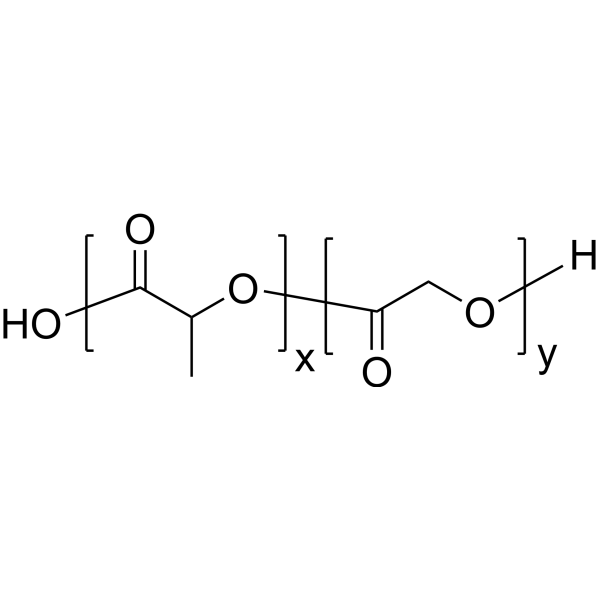
Synonyms: poly(lactic-co-glycolic acid) (50:50)
PLGA (50:50) (poly(lactic-co-glycolic acid) (50:50)) is a copolymer of poly lactic acid (PLA) and poly glycolic acid (PGA) which can be used to fabricate devices for drug delivery and tissue engineering applications.
loading...
    loading...
32
32 Cited Publications
Cat. No.: HY-D0218
CAS No.: 2390-54-7
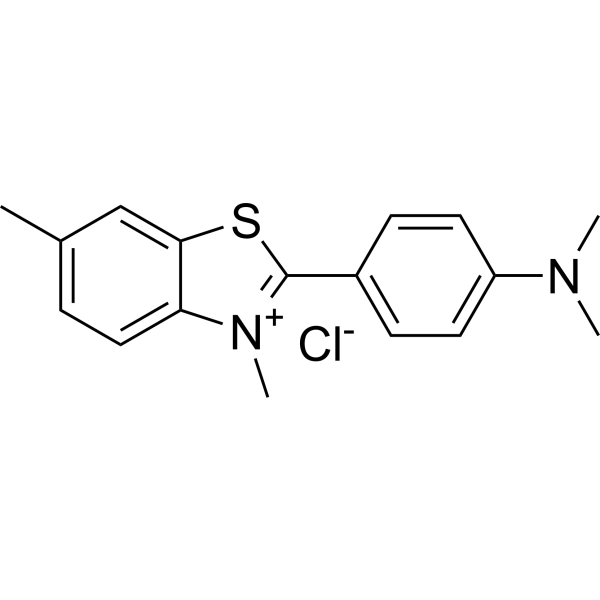
Synonyms: Basic Yellow 1
Thioflavin T is a cationic Benzothiazole dye that shows enhanced fluorescence upon binding to amyloid in tissue sections. Excitation max.: ~385 nm (free); ~450 nm (bound); Emission max.: ~445 nm (free); ~485 nm (bound) .
loading...
    loading...
32
32 Cited Publications
Cat. No.: HY-128643
CAS No.: 2374782-02-0
Purity:  98.29%
Target:  

FAP

Research Areas:  

Cancer

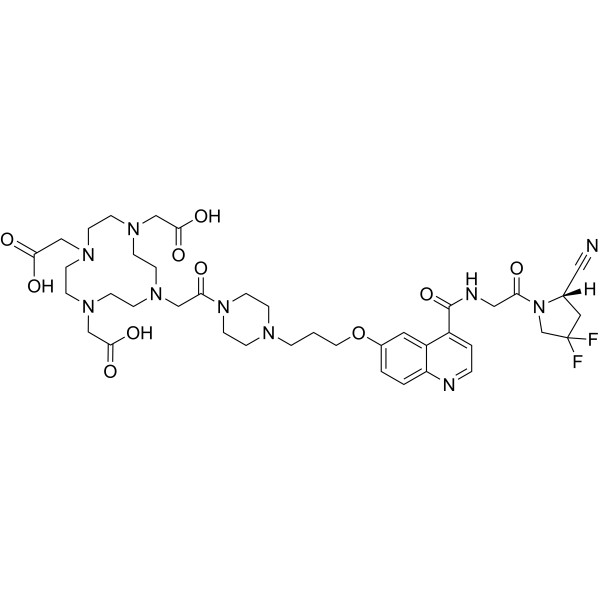
FAPI-4 is a potent fibroblast activation protein (FAP) inhibitor for the targeting FAP. FAPI-4 can be used in cancer research. 68Ga-FAPI-4 PET/CT is a promising new diagnostic method for imaging various kinds of cancer, with good tumor-to-background contrast ratios .
loading...
    loading...
30
30 Cited Publications
Cat. No.: HY-100972
CAS No.: 1949837-12-0
Purity:  98.87%
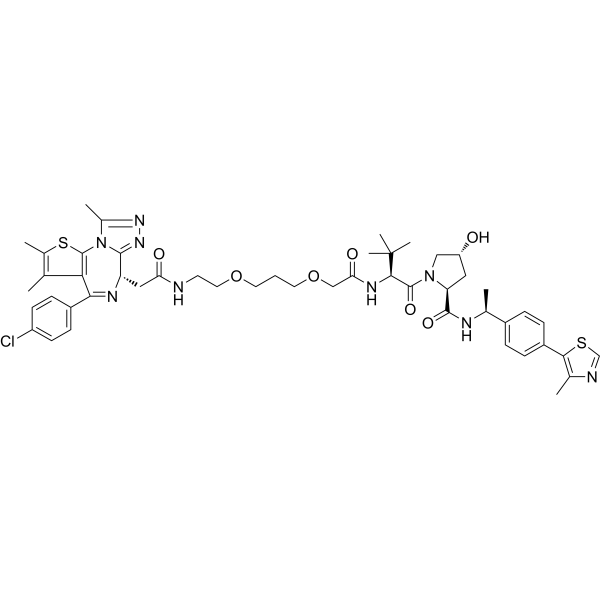
ARV-771 is a BET PROTAC degrader, with Kd values of 34, 4.7, 8.3, 7.6, 9.6 and 7.6 nM against BRD2 (1), BRD2 (2), BRD3 (1), BRD3 (2), BRD4 (1) and BRD4 (2) , respectively. ARV-771 inhibits the transcription of AR/AR-v7 and its downstream target genes. By degrading BRD4 protein, ARV-771 enhances the sensitivity of prostate cancer cells to ferroptosis, suppresses cancer cell viability, and induces apoptosis. ARV-771 downregulates the levels of BRD4, c-MYC and AR-V7 in tumor tissues and inhibits tumor tissue growth. ARV-771 can be used in prostate cancer-related research .
loading...
    loading...
28
28 Cited Publications
Cat. No.: HY-116771
CAS No.: 183720-02-7
Purity:  99.37%
Target:  

Adrenergic Receptor

Research Areas:  

Metabolic Disease

CL316243 free acid is a highly potent selective β3-adrenoceptor agonist with a EC50 of 3 nM, but is an extremely poor to β1/2- receptors. CL316243 free acid is a effective stimulant of adipocyte lipolysis and increases brown adipose tissue thermogenesis and metabolic rate. CL316243 free acid has the potential for the treatment obesity, diabetes and urge urinary incontinence .
loading...
    loading...
28
28 Cited Publications
Cat. No.: HY-116771A
CAS No.: 138908-40-4
Purity:  99.98%
Target:  

Adrenergic Receptor

Research Areas:  

Metabolic Disease

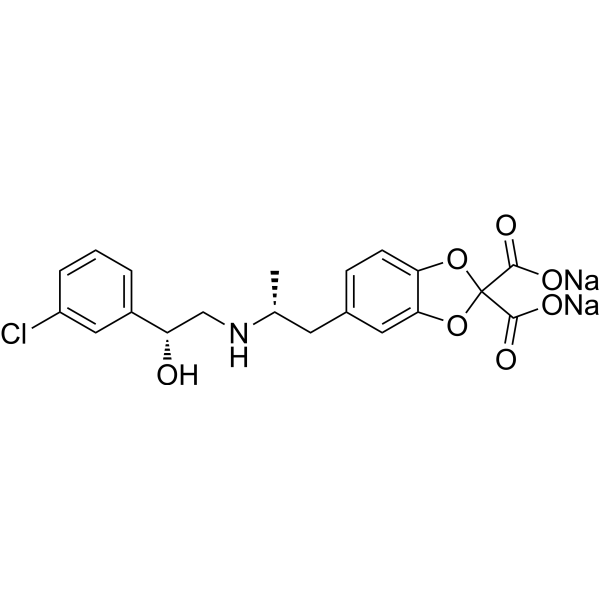
CL316243 is a highly potent selective β3-adrenoceptor agonist with a EC50 of 3 nM, but is an extremely poor to β1/2- receptors .CL316243 is a effective stimulant of adipocyte lipolysis and increases brown adipose tissue thermogenesis and metabolic rate . CL316243 has the potential for the treatment obesity, diabetes and urge urinary incontinence .
loading...
    loading...
26
26 Cited Publications
Cat. No.: HY-A0134
CAS No.: 26675-46-7
Isoflurane is a volatile anaesthetic. Isoflurane diminishs the effect of ROS activity. Isoflurane suppresses respiration. Isoflurane enables rapid anesthesia induction and emergence. Isoflurane protects against noise-induced hearing loss and tissue damage in mice. Isoflurane protects against renal ischemia and reperfusion injury and modulates leukocyte infiltration .
loading...
    loading...
21
21 Cited Publications
Cat. No.: HY-B0633
CAS No.: 9067-32-7
Synonyms: Sodium hyaluronate
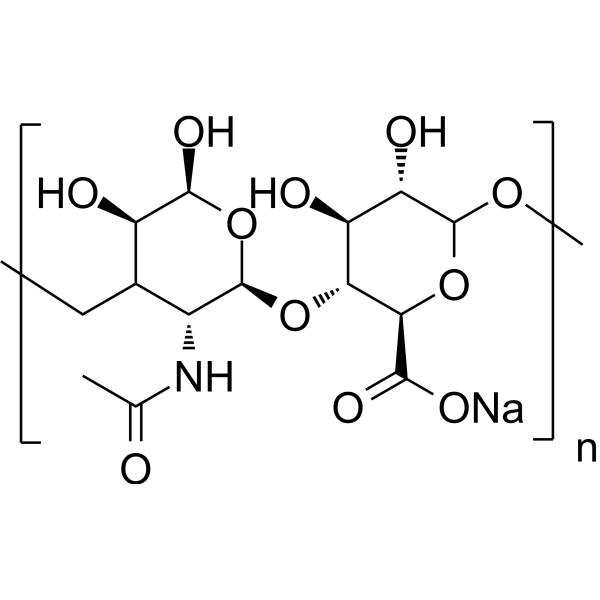
Hyaluronic acid sodium (Sodium hyaluronate) is a biopolymer composed of repeating units of disaccharides with various applications. Hyaluronic acid sodium is a major component of the extracellular matrix (ECM). Hyaluronic acid sodium is synthesized at the plasma membrane. Increased hyaluronic acid sodium levels are associated with tumor cell growth, adhesion, migration, invasion and angiogenesis in digestive cancers. Hyaluronic acid sodium participates in tissue remodeling and rapid cell proliferation in some physiological processes including embryonic morphogenesis and wound-healing. Hyaluronic acid sodium activates the PI3K-Akt signaling. Hyaluronic acid sodium acts as a regulator of cancer-associated lymphangiogenesis. Hyaluronic acid sodium also enhances cell invasion and angiogenesis by promoting proteolytic MMP-9 binding to cell surface or stimulating MMP-9 binding to cell surface. Hyaluronic acid sodium can be used as drug delivery for sodium butyrate to improve the anti-proliferative activity on breast cancer cell line. Hyaluronic acid sodium can be studied in joint diseases, wound healing and cancer .
loading...
    loading...
21
21 Cited Publications
Cat. No.: HY-B0633A
CAS No.: 9004-61-9
Synonyms: Hyaluronan; Hyaluronate
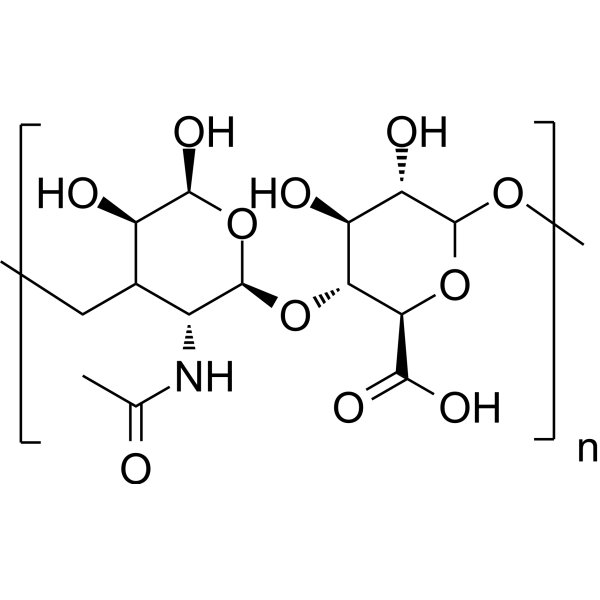
Hyaluronic acid is a biopolymer composed of repeating units of disaccharides with various applications. Hyaluronic acid is a major component of the extracellular matrix (ECM). Hyaluronic acid is synthesized at the plasma membrane. Increased hyaluronic acid levels are associated with tumor cell growth, adhesion, migration, invasion and angiogenesis in digestive cancers. Hyaluronic acid participates in tissue remodeling and rapid cell proliferation in some physiological processes including embryonic morphogenesis and wound-healing. Hyaluronic acid activates the PI3K-Akt signaling. Hyaluronic acid acts as a regulator of cancer-associated lymphangiogenesis. Hyaluronic acid also enhances cell invasion and angiogenesis by promoting proteolytic MMP-9 binding to cell surface or stimulating MMP-9 binding to cell surface. Hyaluronic acid can be used as drug delivery for sodium butyrate to improve the anti-proliferative activity on breast cancer cell line. Hyaluronic acid can be studied in joint diseases, wound healing and cancer .
loading...
    loading...
20
20 Cited Publications
Cat. No.: HY-13738A
CAS No.: 82640-04-8
Purity:  99.78%
Synonyms: Keoxifene hydrochloride; LY156758; LY139481 hydrochloride
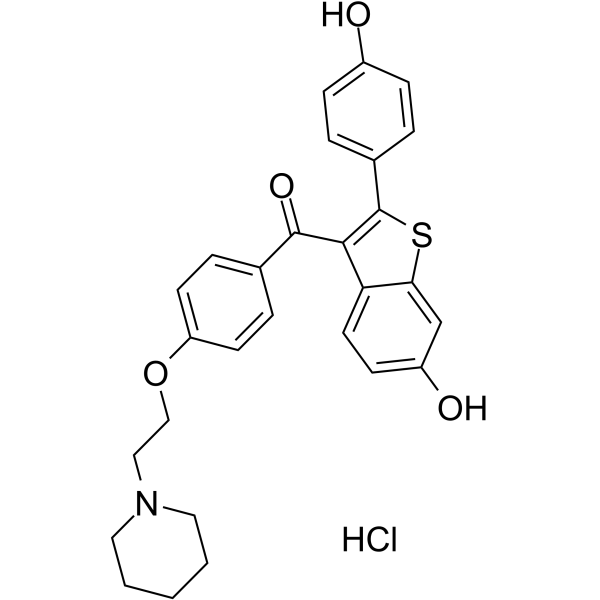
Raloxifene hydrochloride (Keoxifene hydrochloride) is a second generation selective and orally active estrogen receptor modulator. Raloxifene hydrochloride produces estrogen-agonistic effects on bone and lipid metabolism and estrogen-antagonistic effects on uterine endometrium and breast tissue .
loading...
    loading...
19
19 Cited Publications
Cat. No.: HY-107910
CAS No.: 37326-33-3
Synonyms: Hyaluronate 4-glycanohydrolase, Bovine testes; Hyaluronoglucosaminidase, Bovine testes
Target:  

NF-κB

Research Areas:  

Inflammation/Immunology Cancer

Hyaluronidase, Bovine testes (Hyaluronate 4-glycanohydrolase; Hyaluronoglucosaminidase) is an endoglycosidase that depolymerizes Hyaluronic acid (HA) (HY-B0633A) by cleavage of glycosidic bonds. Hyaluronidase degrades HA and activates membrane receptors that trigger pathways converging in NF-κB activation. Hyaluronidase is employed in the research of granulomatous foreign body reactions, soft-tissue necrosis caused by vascular compromise and uncomplicated nodules, overcorrection, inflamed nodules or tissue ischemia associated with HA filler injection .
loading...
    loading...
17
17 Cited Publications
Cat. No.: HY-103311
CAS No.: 11103-72-3
Purity:  ≥97.0%
Synonyms: Ammoniated ruthenium oxychloride
Target:  

Calcium Channel

Research Areas:  

Cardiovascular Disease

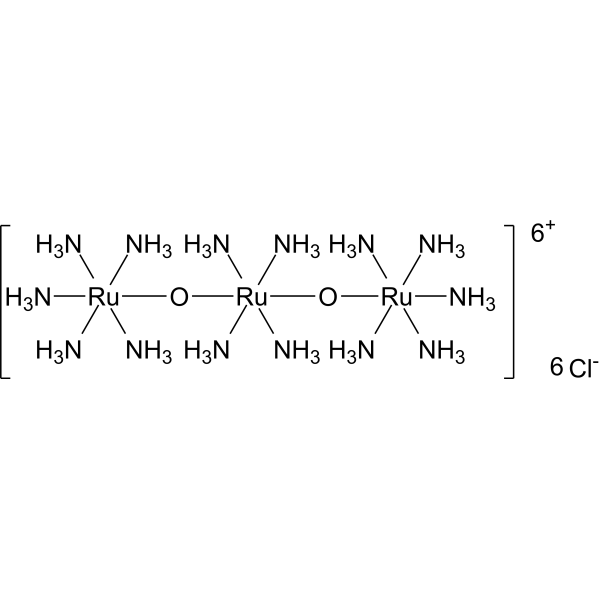
Ruthenium red (Ammoniated ruthenium oxychloride) is a polycationic dye widely used for electron microscopy (EM) of cells, tissues and vegetative bacteria. Ruthenium red strongly reacts with phospholipids and fatty acids and binds to acidic mucopolysaccharides. Ruthenium red is a L-type calcium current (ICa) blocker. When using Ruthenium Red to stain plant tissue sections affected by pathogens, the breakdown of mucilaginous substances by the pathogens prevents them from taking up the stain, whereas the cell walls of healthy tissue stain red .
loading...
    loading...
17
17 Cited Publications
Cat. No.: HY-K1002

MCE NP-40 Lysis Buffer is a relatively mild reliable buffers used to lyse cells from animal, plant tissue and fungi, bacteria etc.

loading...
    loading...
17
17 Cited Publications
Cat. No.: HY-K0311

MCE GSH/GSSG Assay Kit is suitable for the quantitative determination of reduced and oxidized glutathione (GSH/GSSG) in whole blood, plasma, serum, urine, and tissue and cell extracts.

loading...
    loading...
17
17 Cited Publications
Cat. No.: HY-B0639
CAS No.: 20537-88-6
Synonyms: WR2721
Research Areas:  

Cancer

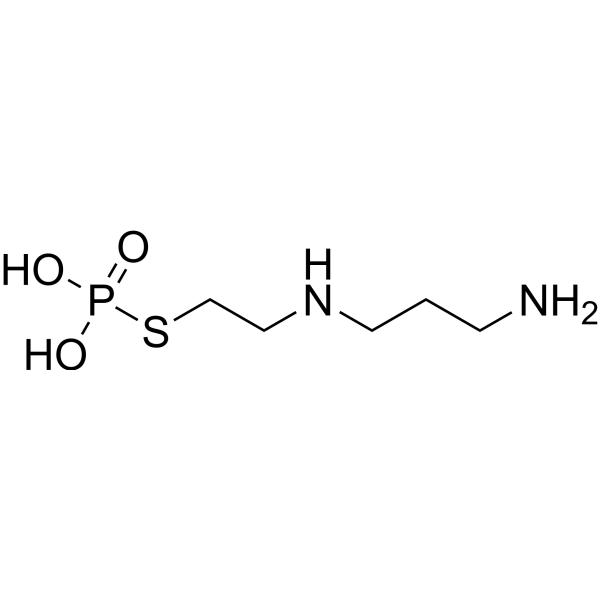
Amifostine (WR2721) is a broad-spectrum cytoprotective agent and a radioprotector. Amifostine selectively protects normal tissues from damage caused by radiation and chemotherapy. Amifostine is potent hypoxia-inducible factor-α1 (HIF-α1) and p53 inducer. Amifostine protects cells from damage by scavenging oxygen-derived free radicals. Amifostine reduces renal toxicity and has antiangiogenic action .
loading...
    loading...
17
17 Cited Publications
Cat. No.: HY-B0639A
CAS No.: 112901-68-5
Synonyms: WR2721 trihydrate
Research Areas:  

Cancer

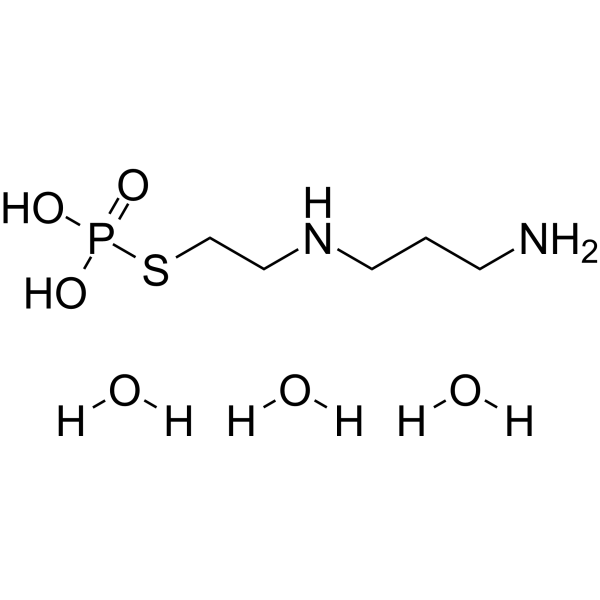
Amifostine trihydrate (WR2721 trihydrate) is a broad-spectrum cytoprotective agent and a radioprotector. Amifostine trihydrate selectively protects normal tissues from damage caused by radiation and chemotherapy. Amifostine trihydrate is potent hypoxia-inducible factor-α1 (HIF-α1) and p53 inducer. Amifostine trihydrate protects cells from damage by scavenging oxygen-derived free radicals. Amifostine trihydrate reduces renal toxicity and has antiangiogenic action .
loading...
    loading...
16
16 Cited Publications
Cat. No.: HY-123986
CAS No.: 68003-38-3
Purity:  99.95%
Research Areas:  

Inflammation/Immunology Cancer

CTPI-2 is a third-generation mitochondrial citrate carrier SLC25A1 inhibitor with a KD of 3.5 μM. CTPI-2 inhibits glycolysis, PPARγ, and its downstream target the glucose transporter GLUT4. CTPI-2 halts salient alterations of NASH reverting steatosis, preventing the evolution to steatohepatitis, reducing inflammatory macrophage infiltration in the liver and adipose tissue, and starkly mitigating obesity induced by a high-fat diet. Antitumor activity .
loading...
    loading...
15
15 Cited Publications
Cat. No.: HY-N0378
CAS No.: 69-65-8
Synonyms: Mannitol; Mannite
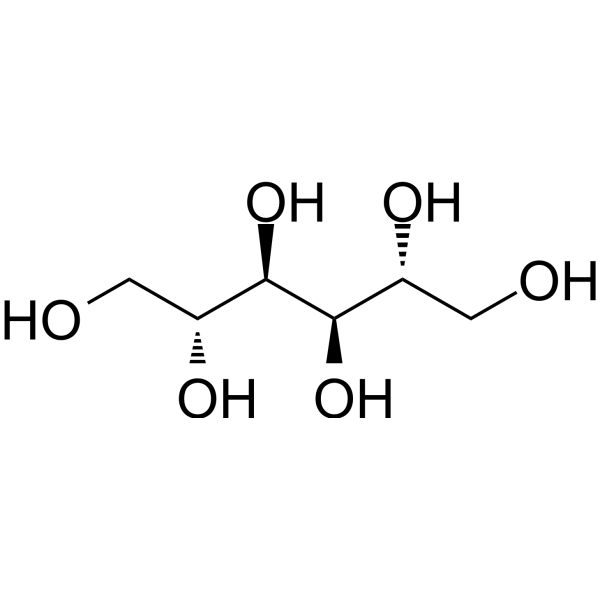
D-Mannitol (Mannitol) is an oral, resistant sugar widely used in the food and pharmaceutical industries to promote the absorption and retention of calcium and magnesium through cecal fermentation, while acting as a osmotic diuretic to reduce tissue edema. D-Mannitol can enhance brown fat formation, improve insulin effect, reduce blood sugar levels, And through the start the β3-adrenergic receptor (β3-AR), PGC1α and PKA induced by means of white fat cells into brown fat cells . D-Mannitol is commonly used to maintain osmotic pressure between the plant cytoplasm and the culture medium and protect cells when the cell wall is weakened or even removed .
loading...
    loading...
14
14 Cited Publications
Cat. No.: HY-D0714
CAS No.: 298-96-4
Synonyms: 2,3,5-Triphenyltetrazolium chloride; TPTZ; TTC
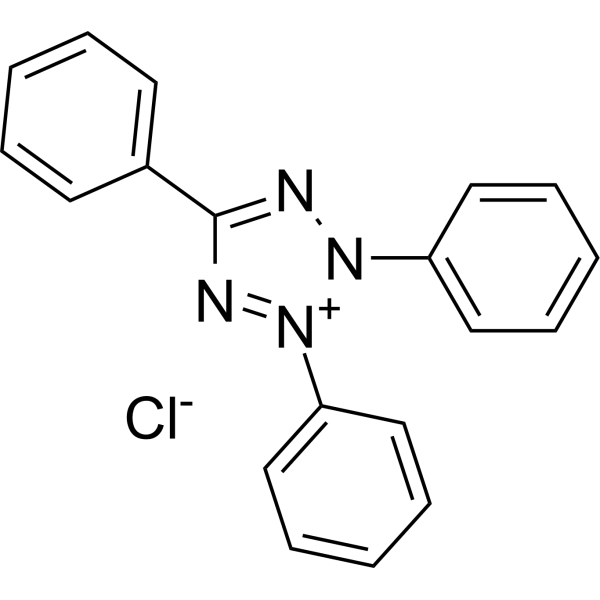
Tetrazolium Red (2,3,5-Triphenyltetrazolium chloride; TTC) is a not brain-penetrant, colorless, water-soluble dye that is reduced by mitochondrial enzymes to a deep red, water-insoluble compound (formazan) mainly in the mitochondria of living cells. Tetrazolium Red is used to observe the activity of dehydrogenase, and it turns colorless to red when exposed to hydrogen. Tetrazolium Red distinguishes between surviving and infarcted brain tissue after stroke. Tetrazolium Red has been used to stain heart tissue to measure the extent of acute lesions and also used to stain brain tissue to detect the size of the infarcted area. The absorption wavelength of Tetrazolium Red is 570 nm .
loading...
    loading...
14
14 Cited Publications
Cat. No.: HY-D0208
CAS No.: 518-47-8
Synonyms: Uranine sodium
Research Areas:  

Cancer

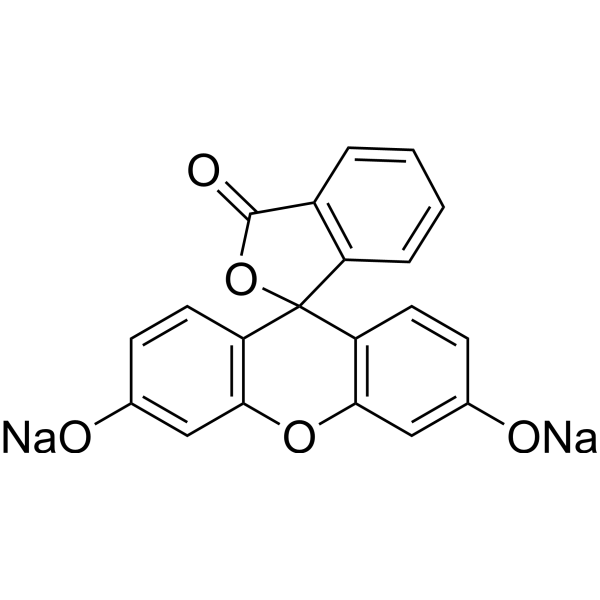
Fluorescein (Uranine) sodium is widely used as a fluorescent tracer in medicinal and biological applications and tumor infected tissues tracer. Fluorescein (Uranine) sodium is a representative green fluorophore that has been widely used as a scaffold of practically useful green fluorescent probes .
loading...
    loading...

