261 Results for "

microsomes

" in MedChemExpress (MCE) Product Catalog:
Products (261)

261 Results for "microsomes" in MCE Product Catalog:

1
1 Cited Publications
Cat. No.: HY-B1311
CAS No.: 62-68-0
Synonyms: SKF-525A; U-5446; RP-5171
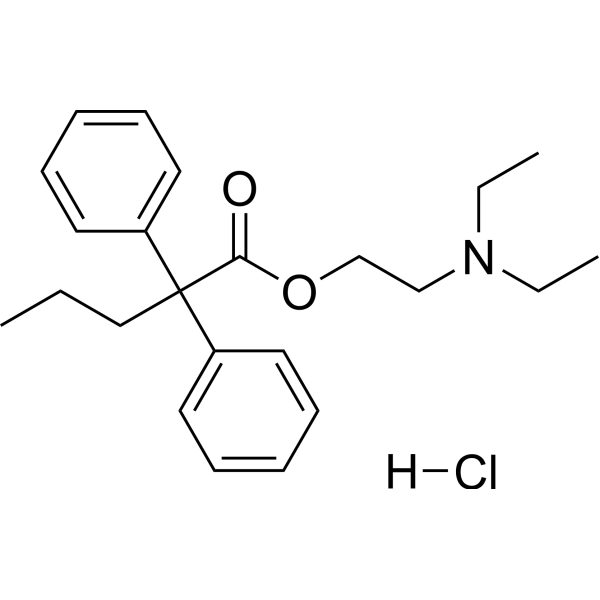
Proadifen (SKF-525A) hydrochloride is a non-competitive Cytochrome P450 inhibitor with an IC50 value of 19 μM. Proadifen hydrochloride reduces monoamine oxidase A (MAO-A) activity and reverses the antidepressantlike behavioral effect of Imipramine (HY-B1490A) and Desipramine (HY-B1272A) in rats. Proadifen hydrochloride also reduces N, N-dimethyltryptamine (DMT) metabolism in liver microsomes and inhibits N-demethylationand Acridone (HY-W007771) formation. Proadifen hydrochloride augments Lipopolysaccharide (LPS) (HY-D1056)-induced fever and exacerbates Prostaglandin E2 (PGE2) (HY-101952) levels in the rat. Proadifen hydrochloride is promising for research of metabolism-related deseases, ovarian carcinoma, inflammation and dopamine neurons-related deseases .
loading...
    loading...
Cat. No.: HY-149055
CAS No.: 1967811-46-6
Purity:  99.49%
Target:  

CXCR

Research Areas:  

Inflammation/Immunology

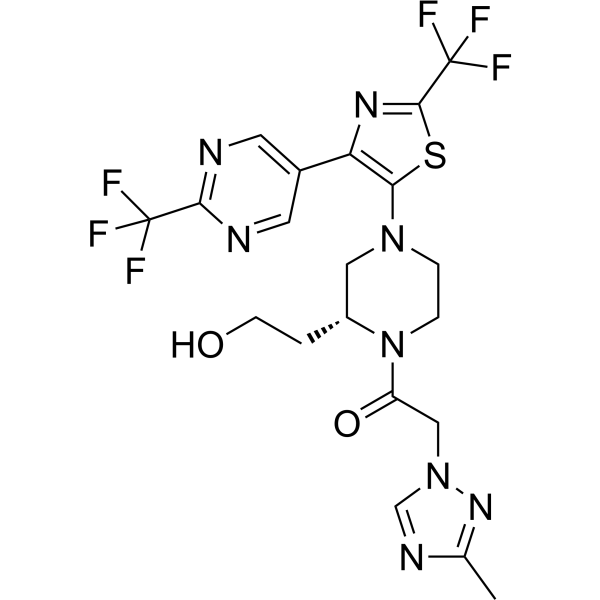
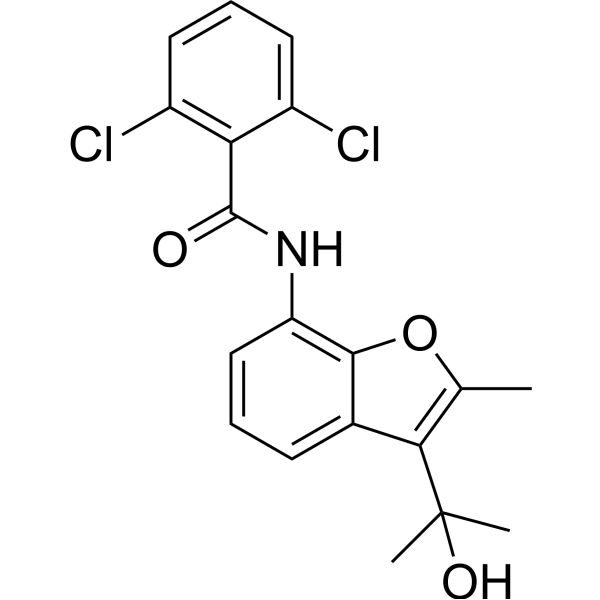
ACT-777991 is an orally active and selective CXCR3 antagonist. ACT-777991 has microsomes and hepatocytes stability across animal models. ACT-777991 inhibits the migration of activated T cells toward CXCL11 .
loading...
    loading...
Cat. No.: HY-16718
CAS No.: 1044535-52-5
Synonyms: PF-00251802
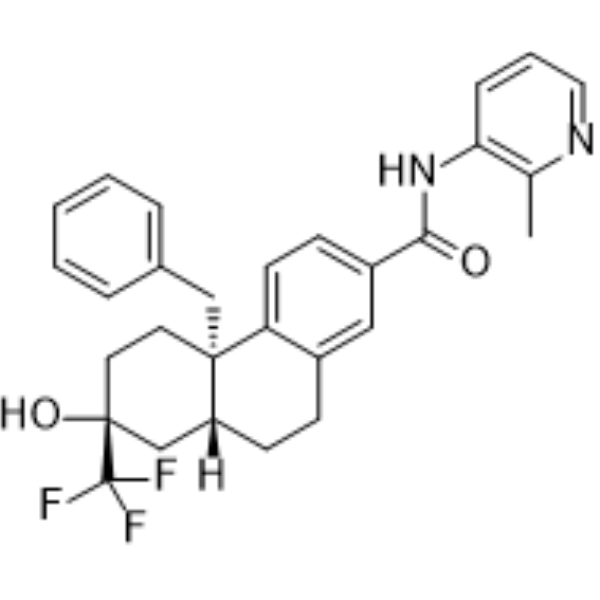
Dagrocorat (PF-00251802) is an orally active and selective high-affinity partial agonist of the glucocorticoid receptor. Dagrocorat is also a time-dependent reversible inhibitor of CYP3A (IC50=1.3 μM in human liver microsomes) and CYP2D6 (Ki=0.57 μM in human liver microsomes). Dagrocorat can be used for the research of rheumatoid arthritis .
loading...
    loading...
Cat. No.: HY-W130074
CAS No.: 1686-14-2
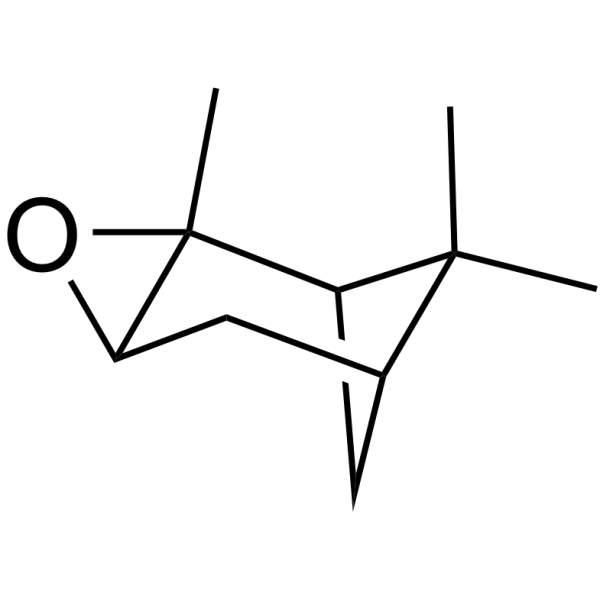
α-Pinene oxide is a type of monoterpene epoxidation intermediate. α-Pinene oxide is produced via the cytochrome P-450-mediated oxidation pathway in Dendroctonus terebrans body microsomes and rat liver microsomes, and can be further converted into alcohols, ketones and insect pheromone derivatives. α-Pinene oxide can generate the perfume intermediate myrtenal. α-Pinene oxide is used in studies related to terpenoid metabolism and perfume synthesis .
loading...
    loading...
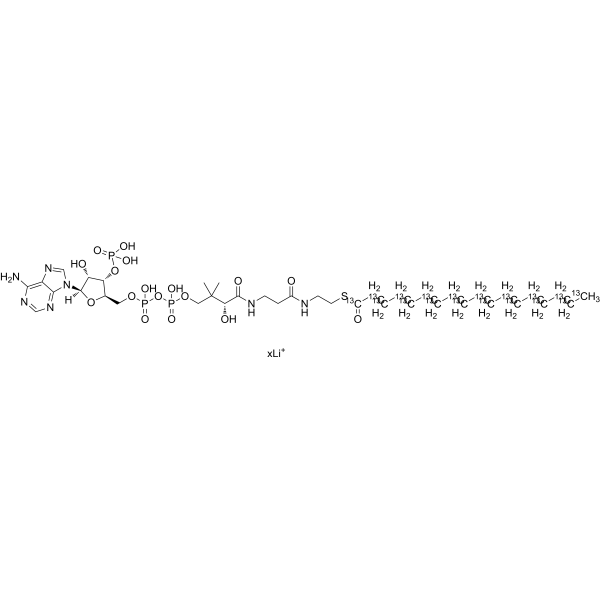
Cat. No.: HY-134423S
Stearoyl coenzyme A- 13C18 (lithium) is the 13C labeled Stearoyl coenzyme A lithium . Stearoyl coenzyme A (Stearoyl-CoA) lithium is an active compound that can be used as a substrate for the determination of stearoyl-Coenzyme desaturase in microsomes .
loading...
    loading...
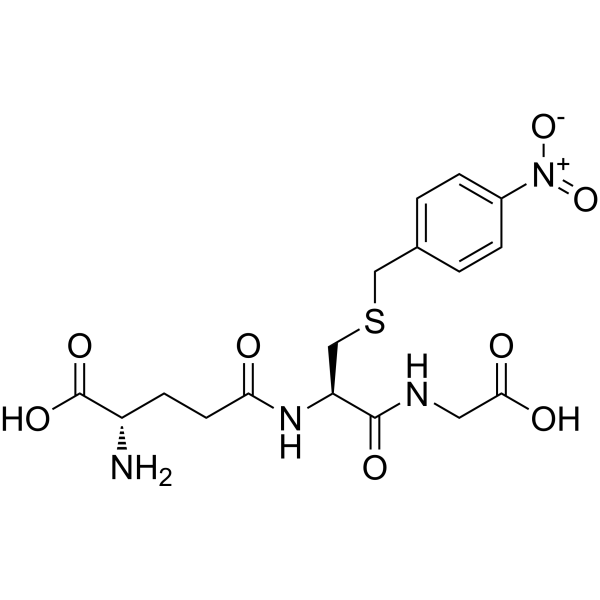
Cat. No.: HY-148208
CAS No.: 6803-19-6
Research Areas:  

Metabolic Disease

S-(p-Nitrobenzyl)glutathione is a competitive glutathionase inhibitor. S-(p-Nitrobenzyl)glutathione is converted to the corresponding cysteine derivatives by rat kidney microsomes. S-(p-Nitrobenzyl)glutathione can be used for the research of metabolic breakdown of glutathione by the glutathionase system .
loading...
    loading...
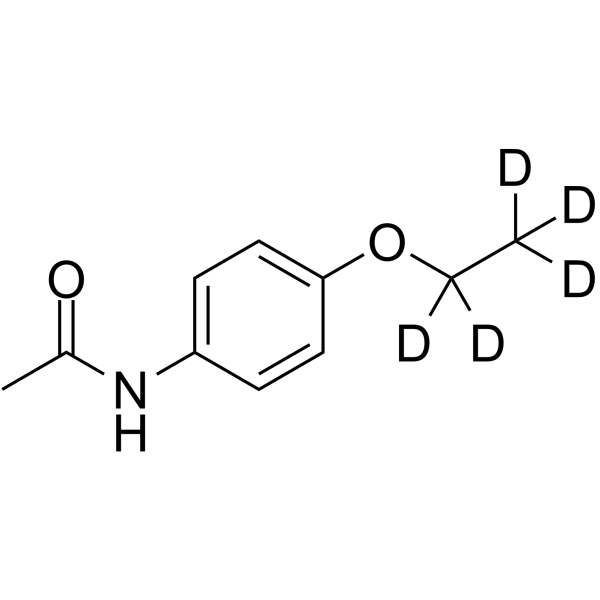
Cat. No.: HY-B0476S
CAS No.: 69323-74-6
Synonyms: Acetophenetidin-d5
Phenacetin-d5 is the deuterium labeled Phenacetin. Phenacetin (Acetophenetidin) is a non-opioid analgesic/antipyretic agent. Phenacetin is a selective COX-3 inhibitor. Phenacetin is used as probe of cytochrome P450 enzymes CYP1A2 in human liver microsomes and in rats .
loading...
    loading...
Cat. No.: HY-W003371
CAS No.: 134521-16-7
Target:  

Drug Metabolite

Research Areas:  

Others

CGP 44 645 is the methanol metabolite of Letrozole (HY-14248) and is a molecular indicator for evaluating its metabolic kinetics in microsomes in vitro. Levels of CGP 44 645 in rat liver microsomes may be sex-specific .
loading...
    loading...
Cat. No.: HY-119669
CAS No.: 3688-53-7
Target:  

Bacterial

Research Areas:  

Others

Furylfuramide is a food preservative that exhibits mutagenic activity. Furylfuramide can be degraded through the aerobic metabolism by liver microsomes .
loading...
    loading...
Cat. No.: HY-N1483
CAS No.: 1394-48-5
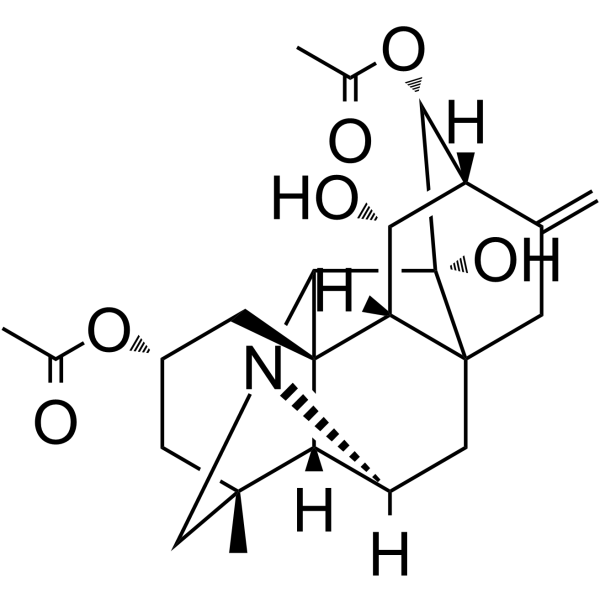
Guanfu base A is an antiarrhythmic alkaloid isolated from Aconitum coreanum and is a potent noncompetitive CYP2D6 inhibitor, with a Ki of 1.20 μM in human liver microsomes (HLMs) and a Ki of 0.37 μM for the human recombinant form (rCYP2D6). Guanfu base A is also a potent competitive inhibitor of CYP2D in monkey (Ki of 0.38 μM) and dog (Ki of 2.4 μM) microsomes . Guanfu base A also inhibits HERG channel current .
loading...
    loading...
Cat. No.: HY-W196803
CAS No.: 629-19-6
Synonyms: Propyl Disulfide; DPDS
Research Areas:  

Others

Dipropyl disulfide is oxidized to dipropyl thiosulfinate (DPDSO) by rat microsomes. Both flavincontaining monooxygenases (FMO) and cytochrome P450 enzymes (CYPs) are involved in dipropyl disulfide oxidation. Dipropyl disulfide forms two metabolites: propylglutathione sulfide conjugate and propylthiol .
loading...
    loading...
Cat. No.: HY-123370
CAS No.: 174185-16-1
Target:  

Proton Pump

Research Areas:  

Metabolic Disease Cancer

FR-167356 is a potent, orally active and selective vacuolar ATPase inhibitor with IC50 values of 170, 220, 370, and 1200 nM for osteoclast plasma membranes, macrophage microsomes, renal brush border membranes, and liver lysosomal membranes, respectively. FR-167356 inhibits bone resorption and ovariectomy-induced bone loss .
loading...
    loading...
Cat. No.: HY-129344
CAS No.: 96224-26-9
Target:  

Acyltransferase

Research Areas:  

Metabolic Disease

CL 277082 is a potent and selective acyl CoA:cholesterol acyltransferase (ACAT) inhibitor in microsomes. CL 277082 inhibits ACAT with IC50 values of 0.14 μM for intestinal mucosal microsomes, 0.74 μM for liver, and 1.18 μM for rat adrenal. CL 277082 is a ACAT-catalyzed cholesterol esterification and cholesterol absorption inhibitor .
loading...
    loading...
Cat. No.: HY-N6702
CAS No.: 2503-13-1
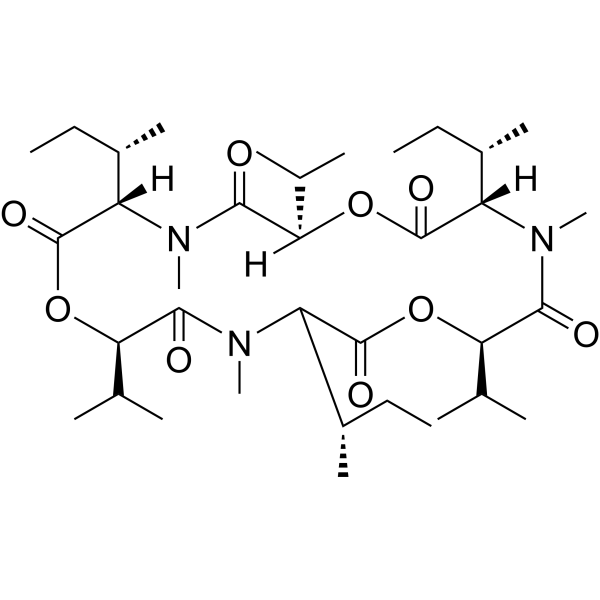
Enniatin A is a Fusarium mycotoxin. Enniatin A inhibits acyl-CoA: cholesterol acyltransferase (ACAT) activity with an IC50 of 22 μM in an enzyme assay using rat liver microsomes .
loading...
    loading...
Cat. No.: HY-148207
CAS No.: 6803-17-4
Purity:  98.86%
Research Areas:  

Metabolic Disease

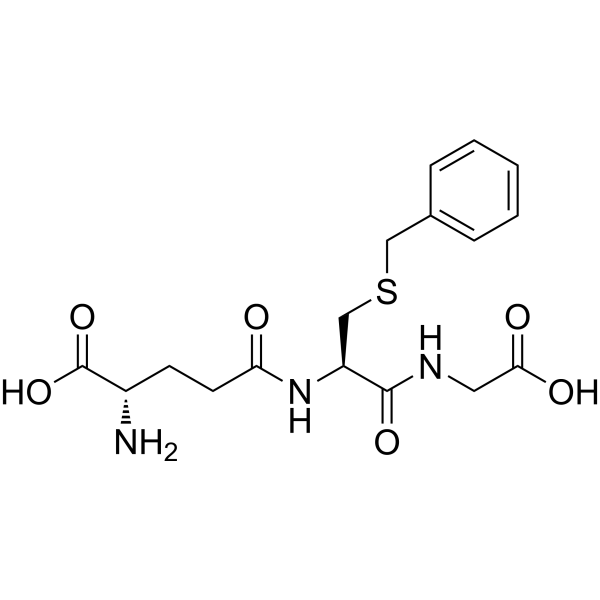
S-Benzylglutathione is a competitive glutathionase inhibitor. S-Benzylglutathione is converted to the corresponding cysteine derivatives by rat kidney microsomes. S-Benzylglutathione can be used for the research of metabolic breakdown of glutathione by the glutathionase system .
loading...
    loading...
Cat. No.: HY-126665
CAS No.: 1799421-48-9
Target:  

ADC Payloads

Research Areas:  

Cancer

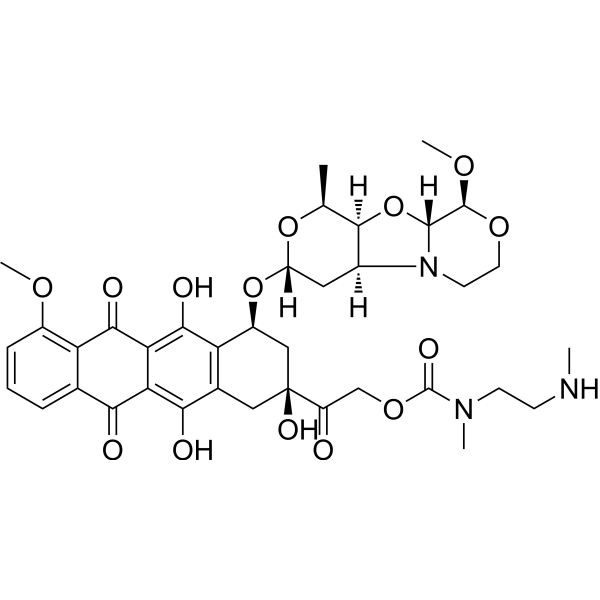
DMEA-PNU-159682 (molecule D12) is a ADC cytotoxin molecule including metabolites of nemorubicin (MMDX) from liver microsomes and a potent ADCs cytotoxin PNU-159682 .
loading...
    loading...
Cat. No.: HY-117789
CAS No.: 112560-33-5
Synonyms: keto-ITZ
Target:  

Cytochrome P450

Research Areas:  

Infection Cancer

Keto-itraconazole (keto-ITZ) is a metabolism of Itraconazole (HY-17514) with a potent inhibitor activity of CYP3A. Keto-itraconazole shows unbound IC50 value of 4.6 nM when coincubated with human liver microsomes and midazolam .
loading...
    loading...
Cat. No.: HY-130238
CAS No.: 90780-54-4
Synonyms: (±)8-HDoHE; 8-hydroxy Docosahexaenoic acid; (±)8-HDoHE
Target:  

Endogenous Metabolite

Research Areas:  

Metabolic Disease

(±)8-HDHA is an autoxidation product of docosahexaenoic acid (DHA) in vitro. It is also produced from incubations of DHA in rat liver, brain, and intestinal microsomes. (±)8-HDHA is a potential marker of oxidative stress in brain and retina where DHA is an abundant polyunsaturated fatty acid.
loading...
    loading...
Cat. No.: HY-N11677
CAS No.: 1035154-52-9
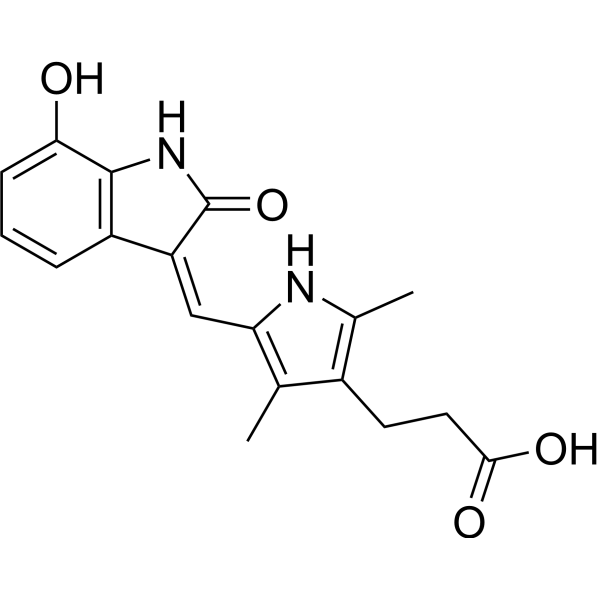
7-Hydroxy-TSU-68 is a derivative of TSU-68 (HY-10517). It is a metabolite of the biotransformation pathway of TSU-68 in human liver microsomes. The content represents the self-induced hydroxylation level of TSU-68 .
loading...
    loading...
Cat. No.: HY-170546
CAS No.: 3067968-52-6
Target:  

Haspin Kinase

Research Areas:  

Cancer

MU1920 is an ATP-competitive, selective inhibitor for haspin with an IC50 of 6 nM. MU1920 exhibits good pharmacokinetic properties and metabolic stability in mouse plasma and microsomes without obvious anticancer effects, which can be used for development of chemical probes .
loading...
    loading...

