588 Results for "

stem+cell

" in MedChemExpress (MCE) Product Catalog:
Products (588)

588 Results for "stem+cell" in MCE Product Catalog:

Cat. No.: HY-P3483A
Maxadilan TFA is a specific irreversible PAC1 receptor agonist and a potent vasodilator peptide present in the salivary glands of sand flies. Maxadilan TFA exhibits anti-apoptotic activity in hADSCs. Maxadilan TFA inhibits pro-inflammatory cytokines (TNF-α) and enhances anti-inflammatory mediators (IL-10). Maxadilan TFA can activate leukocytes and inhibit vascular permeability through PAC1 receptors. Maxadilan TFA promotes neural differentiation of human adipose-derived stem cells. Maxadilan TFA can be used to study endotoxin shock, atherosclerosis, and neurodegenerative diseases [1] [2] [3] [4] [5].
loading...
    loading...
Cat. No.: HY-P990851

Target:  

c-Kit

Research Areas:  

Inflammation/Immunology Cancer

Anti-c-Kit/CD117 Antibody (SR-1) is a kind of mouse IgG2a κ chimeric antibody inhibitor, targeting to human c-Kit/CD117. Anti-c-Kit/CD117 Antibody (SR-1) binds to the extracellular domain of human c-Kit (also known as CD117) and blocks stem cell factor (SCF) binding to CD117. Anti-c-Kit/CD117 Antibody (SR-1) can be used for the researches of cancer and immunology, such as gastrointestinal stromal tumor (GIST) and xenograft .
loading...
    loading...
Cat. No.: HY-W011338R
CAS No.: 85-68-7
Research Areas:  

Cancer

Benzyl butyl phthalate (Standard) is the analytical standard of Benzyl butyl phthalate. This product is intended for research and analytical applications. Benzyl butyl phthalate, a member of phthalic acid esters (PAEs), can trigger the migration and invasion of hemangioma (HA) cells via upregulation of Zeb1. Benzyl butyl phthalate activates aryl hydrocarbon receptor (AhR) in breast cancer cells to stimulate SPHK1/S1P/S1PR3 signaling and enhances formation of metastasis-initiating breast cancer stem cells (BCSCs) .
loading...
    loading...
Cat. No.: HY-W653962
CAS No.: 2726926-25-4
Triclosan- 13C6 is 13C labeled Triclosan. Triclosan is a broad-spectrum antibacterial agent that inhibits bacterial fatty acid synthesis at the enoyl-acyl carrier protein reductase (FabI) step. Triclosan inhibits E. coli enoyl-acyl carrier protein reductase (FabI) and FabI containing a glycine-to-valine substitution at position 93 (FabIG93V) with IC50s of 2 μM and 10 μM, respectively. Triclosan causes apoptotic effect in cultured rat neural stem cells (NSC). Triclosan exacerbates colitis and colitis-associated colorectal tumorigenesis in animal models .
loading...
    loading...
Cat. No.: HY-K6022

MCE ECM Gentle Dissociation Solution is a gentle ECM-degrading enzyme mixture derived from marine bacteria and Bacillus species, specifically formulated for efficient and low-damage digestion of in-vitro cell systems. It selectively degrades extracellular matrix components while minimizing disruption to the cell membrane and intercellular junctions, thereby significantly reducing mechanical stress during dissociation. This product is compatible with a wide range of cell types, including stem cell colonies, primary cells, neural cells, and organoids, and is particularly well suited for gentle yet effective dissociation of brain organoids and other complex 3D structures.

loading...
    loading...
Cat. No.: HY-10182AR
CAS No.: 1797989-42-4
Synonyms: CHIR-99021 monohydrochloride (Standard); CT99021 monohydrochloride (Standard)
Research Areas:  

Cancer

Laduviglusib (monohydrochloride) (Standard) is the analytical standard of Laduviglusib (monohydrochloride). This product is intended for research and analytical applications. Laduviglusib (CHIR-99021) monohydrochloride is a potent and selective GSK-3α/β inhibitor with IC50s of 10 nM and 6.7 nM. Laduviglusib monohydrochloride shows >500-fold selectivity for GSK-3 over CDC2, ERK2 and other protein kinases. Laduviglusib monohydrochloride is also a potent Wnt/β-catenin signaling pathway activator. Laduviglusib monohydrochloride enhances mouse and human embryonic stem cells self-renewal. Laduviglusib monohydrochloride induces autophagy .
loading...
    loading...
Cat. No.: HY-103701R
CAS No.: 23313-12-4
Synonyms: 2-Phospho-L-ascorbic acid (Standard); LAA2P (Standard)
L-Ascorbic acid 2-phosphate (Standard) is the analytical standard of L-Ascorbic acid 2-phosphate (HY-103701). This product is intended for research and analytical applications. L-ascorbic acid 2-phosphate (2-Phospho-L-ascorbic acid) is a long-acting vitamin C derivative that can stimulate collagen formation and expression . L-ascorbic acid 2-phosphate (2-Phospho-L-ascorbic acid) can be used as a culture medium supplement for the osteogenic differentiation of human adipose stem cells (hASCs). L-ascorbic acid 2-phosphate increases alkaline phosphatase (ALP) activity and expression of runx2A in hASCs during the osteogenic differentiation .
loading...
    loading...
Cat. No.: HY-113286
CAS No.: 463-00-3
Purity:  ≥98.0%
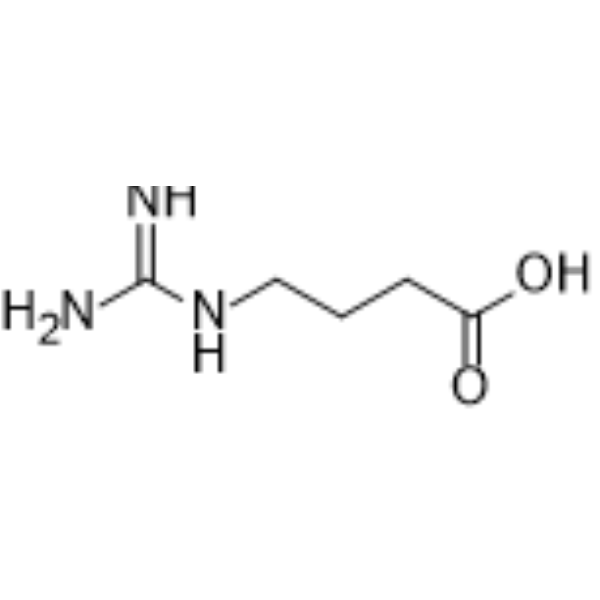
4-Guanidinobutanoic acid is a metabolite of arginine and an orally active SLC36A1/Hedgehog signaling pathway activator. 4-Guanidinobutanoic acid drives epithelial reprogramming, enhances intestinal stem cell function and goblet cell differentiation. 4-Guanidinobutanoic acid promotes the enrichment of Akkermansia muciniphila via mucus-dependent niche expansion, regulates intestinal homeostasis, and establishes a microbiota-host feedback loop. 4-Guanidinobutanoic acid exhibits anti-aging and healthspan-regulating properties. 4-Guanidinobutanoic acid can be used in research related to ulcerative colitis, amyotrophic lateral sclerosis, and Duchenne muscular dystrophy .
loading...
    loading...
Cat. No.: HY-156816
CAS No.: 1585246-23-6
Purity:  99.73%
Synonyms: 108600
Research Areas:  

Cancer

ON 108600 (108600) is a CK2 (CK2α1: IC50 = 50 nM; CK2α2 = 5 nM), TNIK (IC50 = 5 nM) and DYRK (DYRK1A: IC50 = 16 nM; DYRK1B = 7 nM; DYRK2: = 28 nM). ON 108600 suppresses the growth of CD44high/CD24low breast cancer stem cell (BCSC) populations, induces G2/M arrest and apoptosis in triple negative breast cancer (TNBC) cells, and inhibits tubulin polymerization. ON 108600 can be used for the study of chemotherapy-resistant and metastatic TNBC .
loading...
    loading...
Cat. No.: HY-173369
Target:  

PROTACs MAGL MDM-2/p53

Research Areas:  

Neurological Disease Cancer

PROTAC MAGL degrader-1 is an orally active, moderately blood-brain barrier permeable bifunctional PROTAC (DC50: 60.28 nM) that possesses MAGL degradation activity alongside MDM2 inhibitory activity. PROTAC MAGL degrader-1 recruits E3 ubiquitin ligase MDM2 to mediate ubiquitination of MAGL and subsequent proteasomal degradation. PROTAC MAGL degrader-1 blocks the interaction between MDM2 and P53 and upregulates the expression of tumor suppressor protein P53. PROTAC MAGL degrader-1 is applicable for research on glioblastoma stem cells, melanoma and breast cancer .
loading...
    loading...
Cat. No.: HY-181074
Tubulin polymerization-IN-88 is a tubulin inhibitor that blocks tubulin polymerization, leading to microtubule destabilization and disruption of the mitotic spindle. Tubulin polymerization-IN-88 induces G2/M phase arrest and apoptosis in cancer cells, and inhibits cancer cell migration and self-renewal of cancer stem cells. It exhibits in vitro anti-proliferative activity against cancer cells with selectivity over normal cells. Tubulin polymerization-IN-88 also demonstrates in vivo anti-cancer activity without significant toxicity. Tubulin polymerization-IN-88 is applicable for research on glioblastoma, lung cancer, endometrial cancer, ovarian cancer, and leukemia .
loading...
    loading...
Cat. No.: HY-181560
CAS No.: 2759011-75-9
Target:  

Wnt β-catenin

Research Areas:  

Metabolic Disease

SLD1121 is an agonist of the Wnt/β-catenin signaling pathway that enhances Wnt signaling by targeting LRP6 (Kd: 4.52-7.49 nM). SLD1121 interacts with the intracellular domain of LRP6, stabilizes LRP6, promotes its nuclear translocation, and facilitates its binding to β-catenin, TCF4 or LEF1 in the nucleus, thereby inducing the expression of Wnt-regulated genes and stem cell-related genes. SLD1121 induces the transition of hair follicles from telogen to anagen in the mouse hair growth cycle and promotes hair growth in mice. SLD1121 is applicable to hair loss-related research .
loading...
    loading...
Cat. No.: HY-N8572R
CAS No.: 4143-62-8
3',4'-Dimethoxyflavone is a lipophilic flavone, can be isolated from the leaves of Primula veris. 3',4'-Dimethoxyflavone can reduce the synthesis and accumulation of PARP and protect cortical neurones against cell death induced by Parthanatos. 3',4'-Dimethoxyflavone is also an aryl hydrocarbon receptor antagonist in human breast cancer cells. 3',4'-Dimethoxyflavone can promote the proliferation of human hematopoietic stem cells. 3',4'-Dimethoxyflavone has various biological activities, including antioxidant, anti-cancer, anti-inflammatory, anti-atherogenic, hypolipidaemic, and neuroprotective or neurotrophic effects .
loading...
    loading...
Cat. No.: HY-W133907
CAS No.: 55566-30-8
Tetrakis (hydroxymethyl) phosphonium sulfate is a protein crosslinker and hydrogel modifier. Tetrakis (hydroxymethyl) phosphonium sulfate covalently binds to primary and secondary amines of amino acids or proteins via a Mannich-type reaction, thereby constructing stable crosslinking bonds between protein molecules. Tetrakis (hydroxymethyl) phosphonium sulfate not only regulates the gelation time and storage modulus of recombinant elastin-like protein hydrogels, but also exhibits excellent cytocompatibility, and supports the differentiation and growth of embryonic stem cells and neural cells in a three-dimensional encapsulation environment. Tetrakis (hydroxymethyl) phosphonium sulfate is suitable for protein-based hydrogel systems, especially for applications related to cell encapsulation .
loading...
    loading...
Cat. No.: HY-W714048
Synonyms: CHIR-99021-d4; CT99021-d4
Laduviglusib-d4 (CHIR-99021-d4) is the deuterium labeled Laduviglusib (HY-10182). Laduviglusib (CHIR-99021) is a potent, selective and orally active GSK-3α/β inhibitor with IC50s of 10 nM and 6.7 nM. Laduviglusib shows >500-fold selectivity for GSK-3 over CDC2, ERK2 and other protein kinases. Laduviglusib is also a potent Wnt/β-catenin signaling pathway activator. Laduviglusib enhances mouse and human embryonic stem cells self-renewal. Laduviglusib induces autophagy.
loading...
    loading...
Cat. No.: HY-W747491
CAS No.: 1365620-36-5
Triclosan- 13C12 is 13C labeled Triclosan (HY-B1119). Triclosan is a broad-spectrum antibacterial agent that inhibits bacterial fatty acid synthesis at the enoyl-acyl carrier protein reductase (FabI) step. Triclosan inhibits E. coli enoyl-acyl carrier protein reductase (FabI) and FabI containing a glycine-to-valine substitution at position 93 (FabIG93V) with IC50s of 2 μM and 10 μM, respectively. Triclosan causes apoptotic effect in cultured rat neural stem cells (NSC). Triclosan exacerbates colitis and colitis-associated colorectal tumorigenesis in animal models .
loading...
    loading...
Cat. No.: HY-K6301

MCE Human iPSC/ESC Cortical Brain Organoid Induction Differentiation Kit is a standardized culture system specifically designed to recapitulate the developmental processes and functional features of the human cerebral cortex through forebrain ventralization-based signaling regulation. By sequentially activating the Wnt/β-catenin pathway and gradually inhibiting BMP/Smad signaling, this system efficiently drives human pluripotent stem cells (PSC) to differentiate into high-purity glutamatergic neurons (VGLUT1/2+ > 85%), while simultaneously promoting the formation of Pax6+/BLBP+ radial glial cells that establish a biomimetic ventricular-zone–like structure.

loading...
    loading...
Cat. No.: HY-P71539
Purity:  ≥ 90%, as determined by reducing SDS-PAGE.
Synonyms: LY6E; Thymic Shared Antigen 1; Lymphocyte Antigen 6 Family Member E; Lymphocyte Antigen 6E; TSA-1; Stem Cell Antigen 2; RIG-E; Ly-6E; SCA-2; RIGE; Lymphocyte Antigen 6 Complex, Locus E; SCA2; Retinoic Acid-Induced Gene E Protein; TSA1; Retinoic Acid Induc
Species:  
Human
Source:  
E. coli
loading...
    loading...
Cat. No.: HY-P71830
Purity:  ≥ 90%, as determined by reducing SDS-PAGE.
Synonyms: LY6E; Thymic Shared Antigen 1; Lymphocyte Antigen 6 Family Member E; Lymphocyte Antigen 6E; TSA-1; Stem Cell Antigen 2; RIG-E; Ly-6E; SCA-2; RIGE; Lymphocyte Antigen 6 Complex, Locus E; SCA2; Retinoic Acid-Induced Gene E Protein; TSA1; Retinoic Acid Induc
Species:  
Mouse
Source:  
P. pastoris
loading...
    loading...
Cat. No.: HY-P705423
Purity:  ≥ 90%, as determined by reducing SDS-PAGE.
Synonyms: LY6E; Thymic Shared Antigen 1; Lymphocyte Antigen 6 Family Member E; Lymphocyte Antigen 6E; TSA-1; Stem Cell Antigen 2; RIG-E; Ly-6E; SCA-2; RIGE; Lymphocyte Antigen 6 Complex, Locus E; SCA2; Retinoic Acid-Induced Gene E Protein; TSA1; Retinoic Acid Induc
Species:  
Human
Source:  
HEK293
loading...
    loading...

