588 Results for "

stem+cell

" in MedChemExpress (MCE) Product Catalog:
Products (588)

588 Results for "stem+cell" in MCE Product Catalog:

Cat. No.: HY-P705424
Purity:  ≥ 95%, as determined by reducing SDS-PAGE.
Synonyms: LY6E; Thymic Shared Antigen 1; Lymphocyte Antigen 6 Family Member E; Lymphocyte Antigen 6E; TSA-1; Stem Cell Antigen 2; RIG-E; Ly-6E; SCA-2; RIGE; Lymphocyte Antigen 6 Complex, Locus E; SCA2; Retinoic Acid-Induced Gene E Protein; TSA1; Retinoic Acid Induc
Species:  
Mouse
Source:  
HEK293
loading...
    loading...
Cat. No.: HY-138195
CAS No.: 1361198-79-9
Research Areas:  

Cancer

NEO212 is an orally active, blood-brain barrier permeable conjugate of Temozolomide (TMZ) (HY-17364) and Perillyl Alcohol (POH) (HY-N7000), with potent anticancer activity. NEO212 overcomes classical TMZ resistance and DNA alkylation by depleting MGMT. By inhibiting the FAK/Src signaling pathway, NEO212 reduces the production of MMP2 and MMP9, induces mesenchymal-epithelial transition, and inhibits the migration, invasion and tumor progression of glioma stem cells. NEO212 disrupts autophagy flux to enhance mitochondrial apoptosis; it induces differentiation of acute myeloid leukemia (AML) cells into macrophages and proliferation arrest .
loading...
    loading...
Cat. No.: HY-145121R
CAS No.: 2871872-79-4
DS96432529 (Standard) is the analytical standard of DS96432529 (HY-145121). This product is intended for research and analytical applications. DS96432529 is an orally active CDK8 inhibitor with an IC50 of 33 nM. DS96432529 enhances ALPase activity, with an EC200 of 63 nM. DS96432529 inhibits TNF-α-induced activation of the RLR signaling pathway, activates mitophagy, accelerates mineralized nodule formation, and suppresses the proliferation of periodontal ligament stem cells. DS96432529 promotes bone formation, alleviates ligation-induced alveolar bone loss, and increases bone mineral density in ovariectomized animal models. DS96432529 can be used in studies related to periodontitis and osteoporosis .
loading...
    loading...
Cat. No.: HY-160121
CAS No.: 76319-15-8
Synonyms: Patrinoside aglycone
Patrinoside aglucone (Compound 8) is an iridoid glucoside that can be isolated from the Valeriana tuberosa. Patrinoside aglucone has potent anticancer activity with G2/M phase tumor cell cycle arrest and apoptosis induction. Patrinoside aglucone also significantly inhibits the proliferation of cancer stem cells (such as MDA-MB-231 and U-251MG cells). Patrinoside aglucone has great anti-inflammatory activity by inhibiting NO release (IC50: 43.44 μM) and significantly reduces the level of TNF-α, IL-1β, IL-6, PGE2 and COX-2 .
loading...
    loading...
Cat. No.: HY-169327
CAS No.: 2415160-21-1
Research Areas:  

Cancer

MD-265 is a PROTAC degrader targeting MDM2, which activates p53 in cancer cells carrying wild-type p53. MD-265 induces MDM2 degradation by recruiting the CRL4-CRBN ligase complex via the ubiquitination and proteasomal degradation pathway. MD-265 upregulates p53 target genes, induces apoptosis, reduces Mcl-1 levels, increases caspase-3 cleavage, and inhibits colony formation of wild-type p53 leukemia stem cells. MD-265 can be used in research related to leukemia and acute myeloid leukemia .
loading...
    loading...
Cat. No.: HY-D0889R
CAS No.: 556-50-3
Synonyms: Gly-Gly (Standard); H-Gly-Gly-OH (Standard)
Glycylglycine (Standard) is the analytical standard of Glycylglycine (HY-D0889). This product is intended for research and analytical applications. Glycylglycine is a non-selective glycylglycine dipeptidase substrate and iNOS inhibitor. Glycylglycine can cross the cell membrane by passive diffusion and is hydrolyzed to glycine in the cell, participating in energy metabolism and antioxidant processes. Glycylglycine promotes spermatogonial stem cells (SSCs) proliferation, inhibits astrocyte overactivation and reduces nitric oxide (NO) release, while upregulating the expression of neurotrophic factors (such as PDGFA, FGF2, CNTF) to support nerve myelin repair. Glycylglycine can be used to study male reproductive biology (such as SSCs proliferation regulation) and neurodegenerative diseases (such as neuroprotective mechanisms in multiple sclerosis) .
loading...
    loading...
Cat. No.: HY-N0754
CAS No.: 877822-40-7
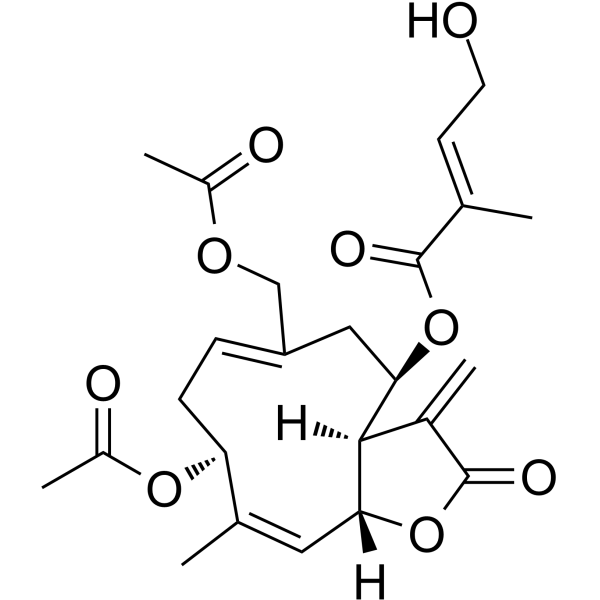
Eupalinolide A is a Yes-associated protein (YAP) degrader and HSP70 inducer. Eupalinolide A inhibits osteogenic differentiation of tendon-derived stem cells (TDSCs). Eupalinolide A induces autophagy in hepatocellular carcinoma cells via activating the ROS/ERK signaling pathway. Eupalinolide A protects PAM212 cells from UVB-, Menadione (HY-B0332)-, or heat shock-induced apoptosis. Eupalinolide A alleviates trauma-induced heterotopic ossification (HO) of Achilles tendon and inhibits growth of MHCC97-L and HCCLM3 hepatocellular carcinoma xenograft tumors in mice. Eupalinolide A can be used for the study of traumatic heterotopic ossification of tendons and hepatocellular carcinoma .
loading...
    loading...
Cat. No.: HY-103701AR
CAS No.: 113170-55-1
Synonyms: 2-Phospho-L-ascorbic acid magnesium (Standard); LAA2P magnesium (Standard)
L-Ascorbic acid 2-phosphate (magnesium) (Standard) is the analytical standard of L-Ascorbic acid 2-phosphate (magnesium). This product is intended for research and analytical applications. L-Ascorbic acid 2-phosphate magnesium (2-Phospho-L-ascorbic acid magnesium) is a?long-acting?vitamin?C?derivative?that can stimulate collagen formation and expression . L-Ascorbic acid 2-phosphate magnesium (2-Phospho-L-ascorbic acid magnesium) can be used as a culture medium supplement for the osteogenic differentiation of human adipose stem cells (hASCs). L-Ascorbic acid 2-phosphate magnesium (2-Phospho-L-ascorbic acid magnesium) increases alkaline phosphatase (ALP) activity and expression of runx2A in hASCs during the osteogenic differentiation .
loading...
    loading...
Cat. No.: HY-107413R
CAS No.: 146670-40-8
Synonyms: BMS-649 (Standard)
SR11237 (Standard) is the analytical standard of SR11237 (HY-107413). This product is intended for research and analytical applications. SR11237 is a RXR activator and lipid metabolism regulator that promotes the differentiation of induced neural stem cells into dopaminergic (TH-positive) neurons. SR11237 induces transcriptional regulation of lipogenic genes and cholesterol transporters, increases glycosaminoglycan release, and elevates total cellular triglyceride levels. SR11237 promotes heterodimerization of RXR with Nurr1, thereby enhancing tyrosine hydroxylase expression and facilitating dopamine release. SR11237 produces a synergistic effect when used in combination with bFGF/EGF. SR11237 is mainly used in studies related to osteoarthritis and Parkinson's disease .
loading...
    loading...
Cat. No.: HY-107837R
CAS No.: 66170-10-3
Synonyms: 2-Phospho-L-ascorbic acid trisodium (Standard)
L-Ascorbic acid 2-phosphate (trisodium) (Standard) is the analytical standard of L-Ascorbic acid 2-phosphate (trisodium). This product is intended for research and analytical applications. L-Ascorbic acid 2-phosphate trisodium (2-Phospho-L-ascorbic acid trisodium) is a long-acting vitamin C derivative that can stimulate collagen formation and expression[1]. L-Ascorbic acid 2-phosphate trisodium (2-Phospho-L-ascorbic acid trisodium) can be used as a culture medium supplement for the osteogenic differentiation of human adipose stem cells (hASCs). L-Ascorbic acid 2-phosphate trisodium (2-Phospho-L-ascorbic acid trisodium) increases alkaline phosphatase (ALP) activity and expression of runx2A in hASCs during the osteogenic differentiation[2][3].
loading...
    loading...
Cat. No.: HY-110280R
CAS No.: 1776116-74-5
Research Areas:  

Cancer

MC1742 (Standard) is the analytical standard of MC1742 (HY-110280). This product is intended for research and analytical applications. MC1742 is a potent HDAC inhibitor, with IC50s of 0.1 μM, 0.11 μM, 0.02 μM, 0.007 μM, 0.61 μM, 0.04 μM and 0.1 μM for HDAC1, HDAC2, HDAC3, HDAC6, HDAC8, HDAC10 and HDAC11, respectively. MC1742 can increase acetyl-H3 and acetyl-tubulin levels and inhibits cancer stem cells growth. MC1742 can induce growth arrest, apoptosis, and differentiation in sarcoma CSC .
loading...
    loading...
Cat. No.: HY-116705G
CAS No.: 70763-62-1
Synonyms: 2-Fluorofucose (GMP)
2-Deoxy-2-fluoro-L-fucose (2-Fluorofucose) GMP is a fucosyltransferase inhibitor that inhibits core fucosylation modification in cells. 2-Deoxy-2-fluoro-L-fucose GMP promotes the production of defucosylated IgG1 antibodies in IgG1-expressing cell culture systems; it regulates the levels of inflammatory cytokines such as IL-1β, IL-6 and TGF-β in human induced pluripotent stem cell-derived microglia. 2-Deoxy-2-fluoro-L-fucose GMP can be used in the research of related diseases including dengue fever and Alzheimer's disease .
loading...
    loading...
Cat. No.: HY-132974
CAS No.: 165179-35-1
Synonyms: NSC-686288
Aminoflavone is an anti-tumor agent. Aminoflavone inhibits the expression of ITGA6/SOX2 by activating the AhR-miR-125b-2-3p axis, thereby targeting breast cancer stem cells. Aminoflavone induces an increase in intracellular ROS, increases the level of oxidative DNA damage marker 8-oxodG and DNA-protein cross-links. Aminoflavone causes S-phase arrest, activates caspase-3/8/9 and induces apoptosis (apoptosis). Aminoflavone inhibits HIF-1α expression in a manner independent of AhR. Aminoflavone can be used for the study of breast cancer .
loading...
    loading...
Cat. No.: HY-15001G
CAS No.: 1227633-49-9
Synonyms: SR1 (GMP)
Stemregenin 1 (SR1) (GMP) is a GMP-grade Stemregenin 1 (HY-15001). GMP-grade small molecules can be used as adjuvants in cell therapy. Stemregenin 1 is a potent aryl hydrocarbon receptor (AhR) antagonist with an IC50 of 127 nM. Stemregenin 1 (GMP) can competitively bind to AhR and inhibit its nuclear translocation, inhibiting osteoclastogenesis and promoting hematopoietic progenitor cell expansion by blocking the AhR-c-src-NF-κB/p-ERK MAPK-NFATc1 signaling pathway. Stemregenin 1 (GMP) can be used for the study of osteoporosis, in vitro expansion of hematopoietic stem cells, and the study of the mechanism of bone metabolic diseases .
loading...
    loading...
Cat. No.: HY-160850
CAS No.: 384835-48-7
Target:  

Endogenous Metabolite

Research Areas:  

Endocrinology

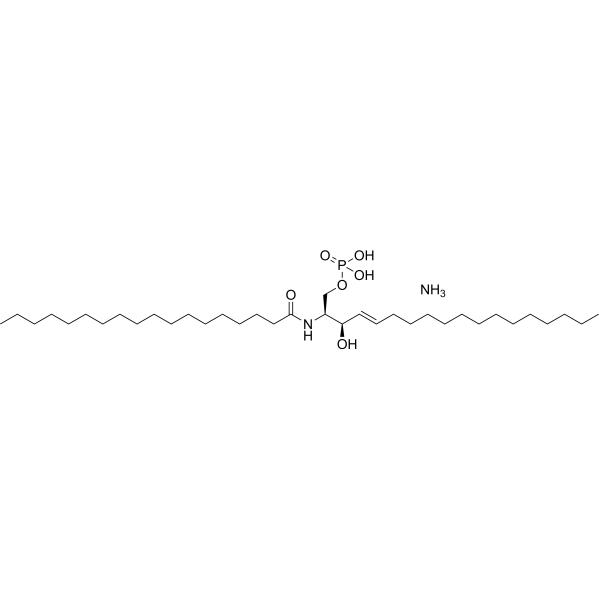
C18 Ceramide-1-phosphate (d18:1/18:0) (ammonium salt) is a specific type of long-chain molecule found in murine skin . C18 Ceramide-1-phosphate (d18:1/18:0) (ammonium salt) promotes migration of both mouse bone marrow-derived multipotent stromal cells and human umbilical vein endothelial cells at concentrations between 0.5-5 µM. C18 Ceramide-1-phosphate (d18:1/18:0) (ammonium salt)’s levels are higher in CFPAC-1 pancreatic ductal adenocarcinoma cells than in pancreatic cancer stem cells .
loading...
    loading...
Cat. No.: HY-186001
CAS No.: 2922732-38-3
Synonyms: RM-044
Target:  

Ras β-catenin

Research Areas:  

Cancer

RMC-9945 (RM-044) is a selective, covalent, and orally active RAS (ON) G12D inhibitor. RMC-9945 enhances the transcriptional activity of β-Catenin/TCF. RMC-9945 induces cell state transition, forcing metastatic colorectal cancer cells to switch from the Emp1 + state to the Lgr5 + stem cell-like state. RMC-9945 achieves durable disease control in preclinical models of colorectal cancer with early liver metastasis, but shows reduced activity in late-stage metastasis models. RMC-9945 can be used in research related to metastatic colorectal cancer and pancreatic ductal adenocarcinoma .
loading...
    loading...
Cat. No.: HY-187170
CAS No.: 3038211-56-9
BM-51 is a selective inhibitor of CYP4Z1, with a human IC50 value of 91.7 nM. BM-51 binds to amino acid residues of CYP4Z1, thereby inhibiting its enzymatic activity. BM-51 downregulates the protein expression of stem cell markers (ALDH1A1, SOX2, OCT3/4 and KLF4) in cancer cells, inhibits cancer cell migration and invasion, and exhibits low toxicity to normal cells/tissues. BM-51 suppresses tumor initiation capacity and enhances the chemotherapeutic efficacy of Doxorubicin (HY-15142A). BM-51 can be used in breast cancer-related research .
loading...
    loading...
Cat. No.: HY-N21980
CAS No.: 65563-75-9
5α-Epoxyalantolactone is an orally active, blood-brain barrier-permeable ANXA2 inhibitor. 5α-Epoxyalantolactone binds to ANXA2, blocks the formation of ANXA2-S100A10 heterotetramers, inhibits the membrane trafficking of E-cadherin, and prevents metastasis of breast cancer cells as well as proliferation of breast cancer stem cells. 5α-Epoxyalantolactone improves cognitive and memory impairments by inhibiting the iNOS/COX-2/NF-κB pathway and reducing the activity of cerebral AChE. 5α-Epoxyalantolactone can be used in studies related to Alzheimer's disease and triple-negative breast cancer .
loading...
    loading...
Cat. No.: HY-N9790
CAS No.: 79907-44-1
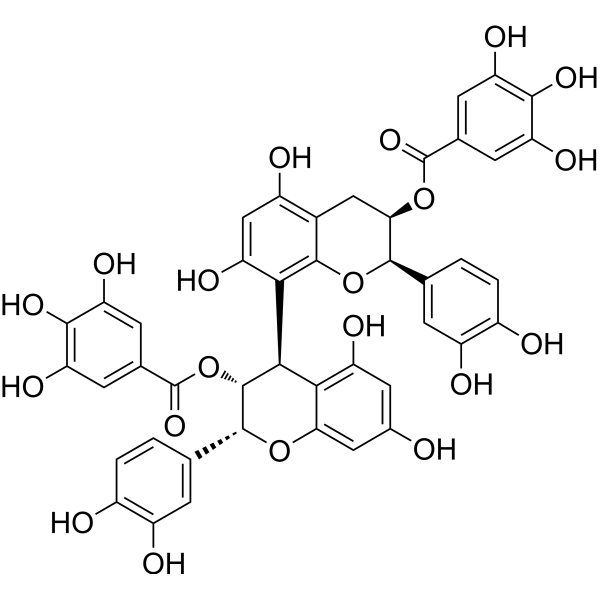
Procyanidin B2, 3,3'-di-O-gallate is an active constituent. Procyanidin B2, 3,3'-di-O-gallate can be isolated from grape seed extract (GSE) procyanidin mix. Procyanidin B2, 3,3' -di-o-gallate target cancer stem cells (CSCs) in prostate cancer (PCa). Procyanidin B2, 3,3'-di-O-gallate targets both unsorted and sorted CSCs at lower doses. Procyanidin B2, 3,3'-di-O-gallate strongly suppresses the constitutive as well as Jagged1 (Notch1 ligand)-induced activated Notch1 pathway .
loading...
    loading...
Cat. No.: HY-P4866
CAS No.: 1361235-89-3
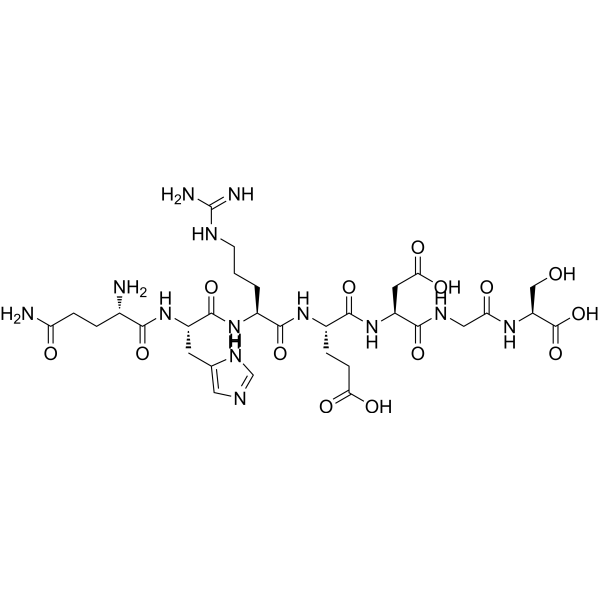
Q-Peptide is an angiopoietin-1 derived peptide (QHREDGS). Q-Peptide interacts with β1-integrin, binds to integrins on the surface of osteoblasts, and serves as an acyl donor substrate for Streptomyces mobaraensis transglutaminase. Q-Peptide activates Akt, MAPKp42/44, ILK, ERK1/2, and downregulates caspase-3/7. Q-Peptide inhibits cell apoptosis, enhances cell adhesion and migration, and promotes osteoblast differentiation, bone matrix deposition and mineralization. Q-Peptide can be used in studies related to myocardial infarction, bone regeneration, diabetic wound repair and human induced pluripotent stem cells .
loading...
    loading...

