




962 Results for "

Non-small

" in MedChemExpress (MCE) Product Catalog:
Products (962)

962 Results for "Non-small" in MCE Product Catalog:

5
5 Cited Publications
Cat. No.: HY-123844
CAS No.: 1883863-52-2
Purity:  99.94%
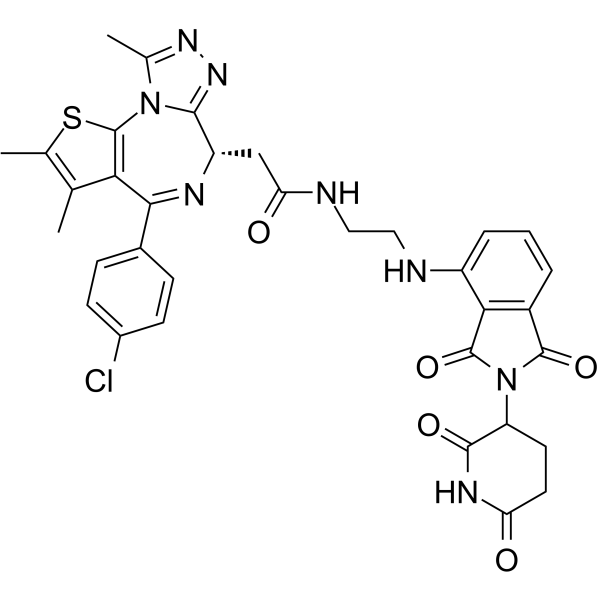
dBET57 is a potent and selective BRD4BD1 PROTAC degrader with a DC50 of approximately 500 nM. dBET57 forms a ternary complex with CRL4 CRBN and BRD4BD1, induces the ubiquitination and degradation of BRD4, and indirectly inhibits the transcription of MYCN, c-Myc and PD-L1, ultimately leading to cell cycle arrest and apoptosis. dBET57 can be used in related research on neuroblastoma, non-small cell lung cancer and colorectal cancer .
loading...
    loading...
4
4 Cited Publications
Cat. No.: HY-119307
CAS No.: 287405-51-0
Purity:  99.67%
Synonyms: TMI-005
Target:  

MMP TNF Receptor

Research Areas:  

Cancer

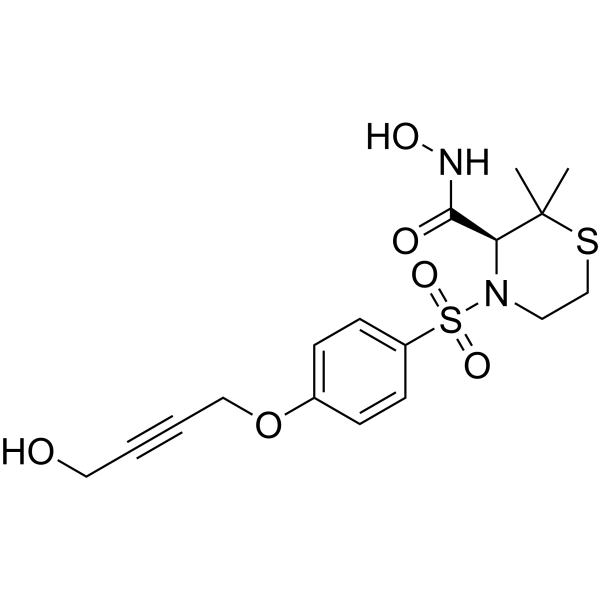
Apratastat (TMI-005) is an orally active, non-selective and reversible TACE/MMPs inhibitor, can inhibit inhibit the release of TNF-α. Apratastat has the potential to overcome radiotherapy-resistance in non-small cell lung cancer (NSCLC) . Apratastat is a click chemistry reagent, it contains an Alkyne group and can undergo copper-catalyzed azide-alkyne cycloaddition (CuAAc) with molecules containing Azide groups.
loading...
    loading...
4
4 Cited Publications
Cat. No.: HY-N1462
CAS No.: 102130-43-8
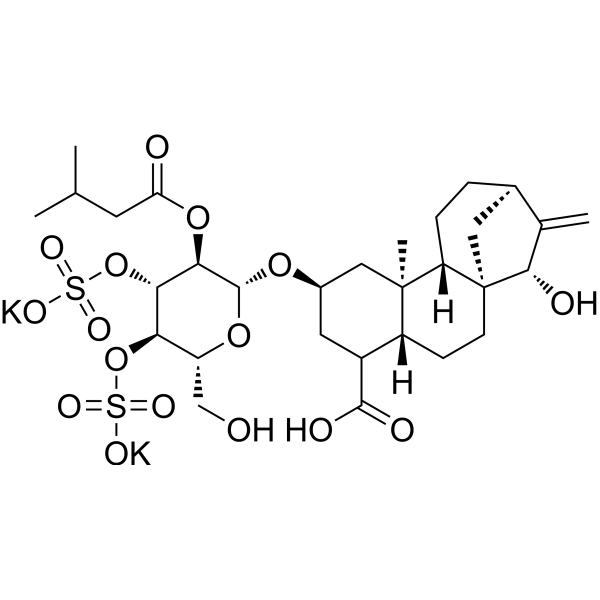
Atractyloside potassium salt is a powerful and specific inhibitor of mitochondrial ADP/ATP transport. Atractyloside potassium salt inhibits chloride channels from mitochondrial membranes of rat heart. Atractyloside potassium salt activates autophagy, inhibits ANT2, mTOR and promotes the activation of p-AMPK. Atractyloside potassium salt has anti-cancer effects on non-small cell lung cancer and can inhibit liver steatosis. Atractylodesin potassium salt has nephrotoxicity .
loading...
    loading...
4
4 Cited Publications
Cat. No.: HY-101984
CAS No.: 2620-62-4
Purity:  99.95%
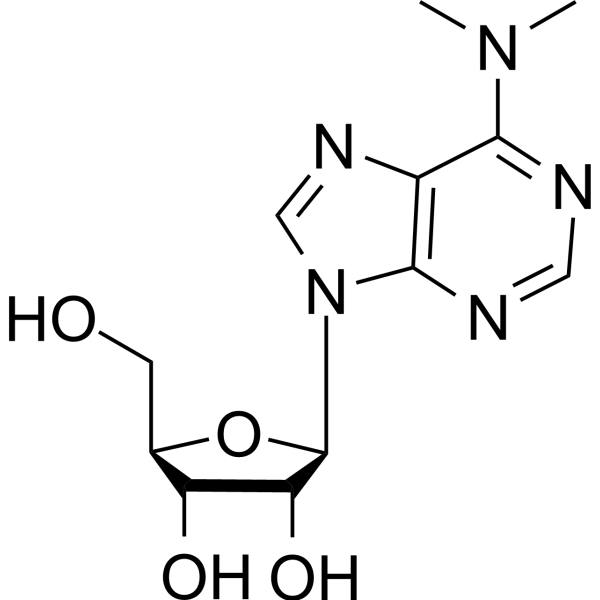
N6,N6-Dimethyladenosine, a modified ribonucleoside, is an endogenous A3 adenosine receptor ligand. N6,N6-Dimethyladenosine is an AKT inhibitor with antitumor effects. N6, N6-Dimethyladenosine targets SARS-CoV-2 entry protein ADAM17. N6, N6-Dimethyladenosine robustly inhibits AKT signaling in a variety of non-small cell lung cancer cell lines .
loading...
    loading...
4
4 Cited Publications
Cat. No.: HY-112155
CAS No.: 2229036-62-6
Purity:  99.72%
Research Areas:  

Cancer

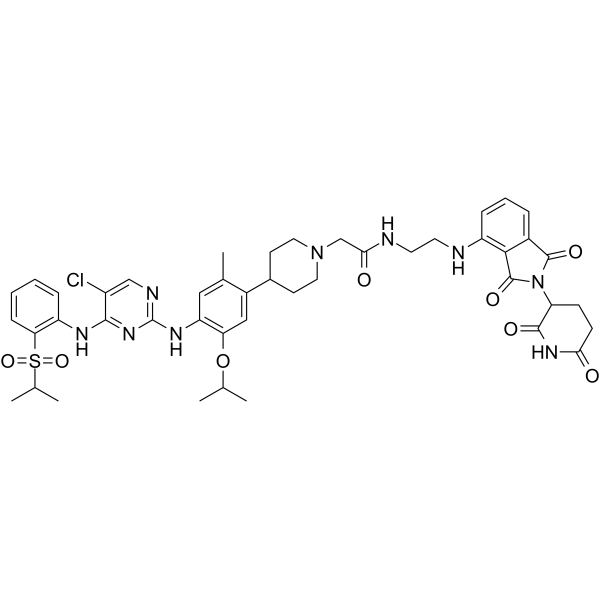
MS4078 is a ALK PROTAC degrader with a DC50 of 11 nM in SU-DHL-1 cells and a DC50 of 59 nM in NCI-H2228 cells, and its Kd value for ALK binding is 19 nM. MS4078 induces ALK degradation via the ubiquitin-proteasome pathway by recruiting cereblon, and inhibits the phosphorylation of ALK and STAT3, thereby suppressing cancer cell proliferation. MS4078 is applicable for the research of non-small cell lung cancer and anaplastic large cell non-Hodgkin's lymphoma .
loading...
    loading...
4
4 Cited Publications
Cat. No.: HY-109061
CAS No.: 1903008-80-9
Purity:  99.87%
Synonyms: YH25448; GNS-1480
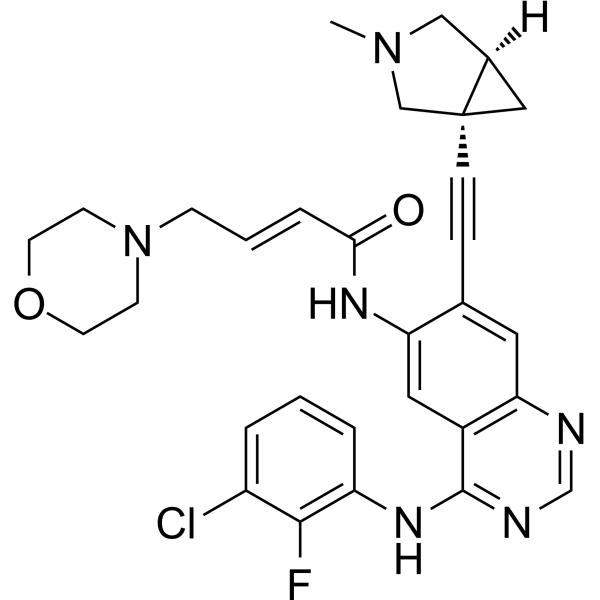
Lazertinib (YH25448; GNS-1480) is an orally active, blood-brain barrier permeable third-generation EGFR tyrosine kinase inhibitor, as well as an ABCB1/ABCG2 inhibitor and a TRPA1 activator. Lazertinib exhibits IC50 values of 0.4 mM and 0.2 mM against human ABCB1 and ABCG2, respectively. By inhibiting mutant EGFR signaling, EGFR phosphorylation and the downstream ERK/AKT pathway, as well as upregulating surface expression of EGFR/MET, Lazertinib induces cell cycle arrest, apoptosis, spontaneous calcium responses, hyperexcitability of dorsal root ganglion (DRG) neurons, and TRPA1-dependent pain-like behaviors. Lazertinib competitively binds to the substrate-binding sites of ABCB1/ABCG2, stimulates their ATPase activity without altering their expression or plasma membrane localization, thereby enhancing ADCC activity, acting as a chemosensitizer, and reversing ABCB1-mediated multidrug resistance. It exerts antitumor activity as a single agent or in combination with other drugs. Lazertinib is applicable to research related to non-small cell lung cancer, multidrug-resistant cancers, and paresthesia .
loading...
    loading...
4
4 Cited Publications
Cat. No.: HY-109061B
CAS No.: 2247995-37-3
Synonyms: YH25448 mesylate; GNS-1480 mesylate
Research Areas:  

Cancer

Lazertinib (YH25448; GNS-1480) mesylate is an orally active, blood-brain barrier permeable third-generation EGFR tyrosine kinase inhibitor, as well as an ABCB1/ABCG2 inhibitor and a TRPA1 activator. Lazertinib mesylate exhibits IC50 values of 0.4 mM and 0.2 mM against human ABCB1 and ABCG2, respectively. By inhibiting mutant EGFR signaling, EGFR phosphorylation and the downstream ERK/AKT pathway, as well as upregulating surface expression of EGFR/MET, Lazertinib mesylate induces cell cycle arrest, apoptosis, spontaneous calcium responses, hyperexcitability of dorsal root ganglion (DRG) neurons, and TRPA1-dependent pain-like behaviors. Lazertinib mesylate competitively binds to the substrate-binding sites of ABCB1/ABCG2, stimulates their ATPase activity without altering their expression or plasma membrane localization, thereby enhancing ADCC activity, acting as a chemosensitizer, and reversing ABCB1-mediated multidrug resistance. It exerts antitumor activity as a single agent or in combination with other drugs. Lazertinib mesylate is applicable to research related to non-small cell lung cancer, multidrug-resistant cancers, and paresthesia .
loading...
    loading...
3
3 Cited Publications
Cat. No.: HY-119182
CAS No.: 54824-17-8
Purity:  99.79%
Synonyms: NSC 300288
Target:  

DNA/RNA Synthesis

Research Areas:  

Cancer

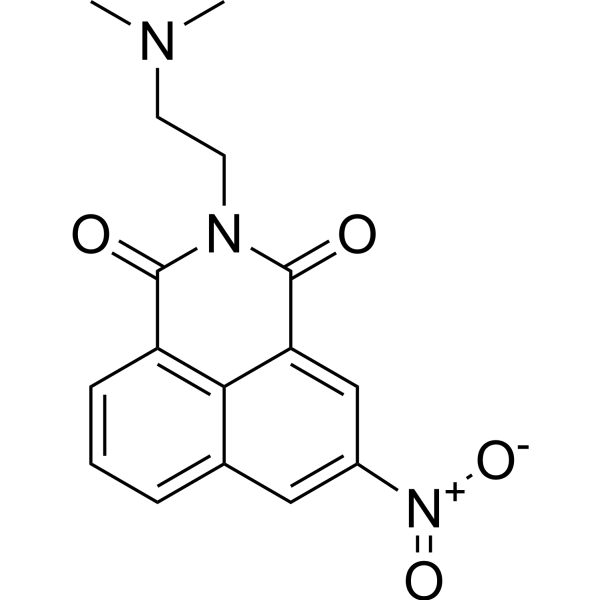
Mitonafide (NSC 300288) is a cytostatic agent. Mitonafide binds to double-stranded DNA through intercalation, and inhibits DNA and RNA synthesis. Mitonafide is an antitumor agent that can be used in the research of cancers, such as non-small cell lung cancer (NSCLC), leukemia .
loading...
    loading...
3
3 Cited Publications
Cat. No.: HY-108940
CAS No.: 112921-11-6
Purity:  99.40%
Research Areas:  

Cancer

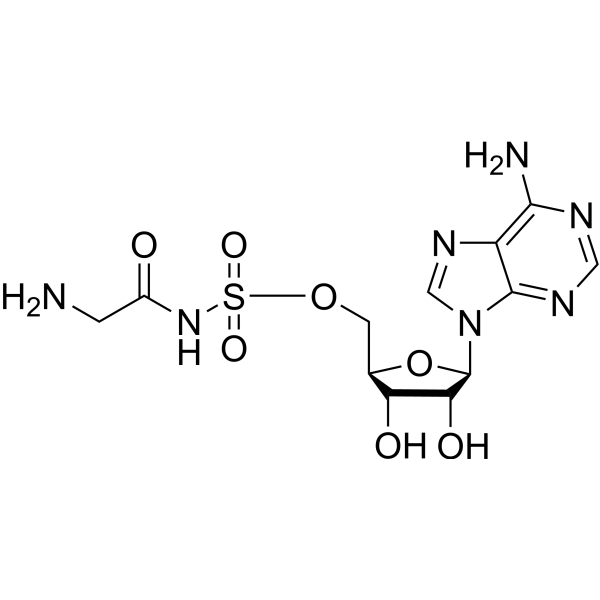
GlyRS-IN-1 is a GlyRS inhibitor. GlyRS-IN-1 reduces lung metastasis in breast cancer mice. GlyRS-IN-1 can be used in research on breast cancer, non-small cell lung cancer, renal cancer, prostate cancer, ovarian cancer, leukemia, and colon cancer .
loading...
    loading...
3
3 Cited Publications
Cat. No.: HY-13299
CAS No.: 1001917-37-8
Purity:  98.34%
Target:  

c-Met/HGFR

Research Areas:  

Cancer

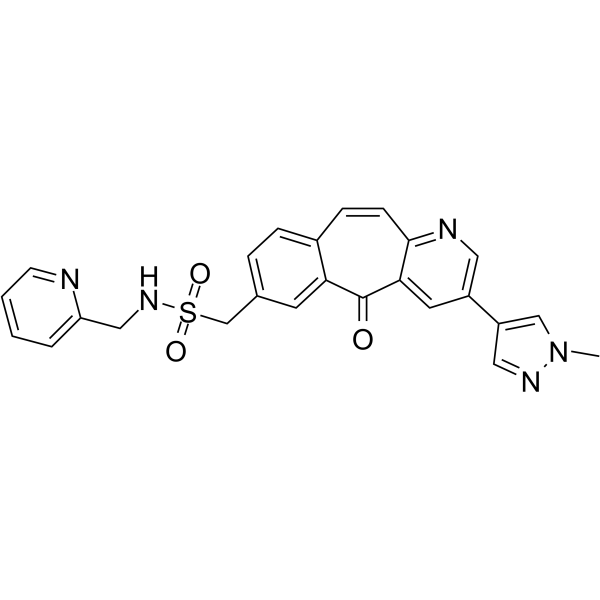
MK-8033 is an orally active ATP competitive c-Met/Ron dual inhibitor (IC50s: 1 nM (c-Met),7 nM (Ron)), with preferential binding to the activated kinase conformation. MK-8033 can be used in the research of cancers, such as breast and bladder cancers, non-small cell lung cancers (NSCLCs) .
loading...
    loading...
3
3 Cited Publications
Cat. No.: HY-13299A
CAS No.: 1283000-43-0
Purity:  99.86%
Target:  

c-Met/HGFR

Research Areas:  

Cancer

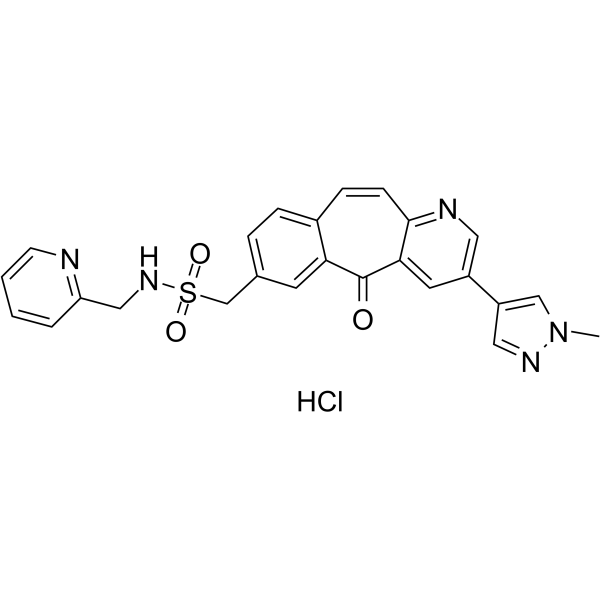
MK-8033 hydrochloride is an orally active ATP competitive c-Met/Ron dual inhibitor (IC50s: 1 nM (c-Met),7 nM (Ron)), with preferential binding to the activated kinase conformation. MK-8033 hydrochloride can be used in the research of cancers, such as breast and bladder cancers, non-small cell lung cancers (NSCLCs) .
loading...
    loading...
3
3 Cited Publications
Cat. No.: HY-P99843
CAS No.: 2267989-53-5
Target:  

TROP2 ADC Antibodies

Research Areas:  

Cancer

Datopotamab is a humanized anti trophoblast cell surface antigen 2 (TROP2) antibody. Datopotamab can generate antibody drug conjugates (ADC) (HY-141598) with DNA topoisomerase I inhibitor Deruxtecan (HY-13631E). Datopotamab can be used in the study of triple negative breast cancer and non-small cell lung cancer .
loading...
    loading...
3
3 Cited Publications
Cat. No.: HY-153268
CAS No.: 2607829-38-7
Purity:  99.03%
Synonyms: BDTX-1535; EGFR-IN-76
Target:  

EGFR

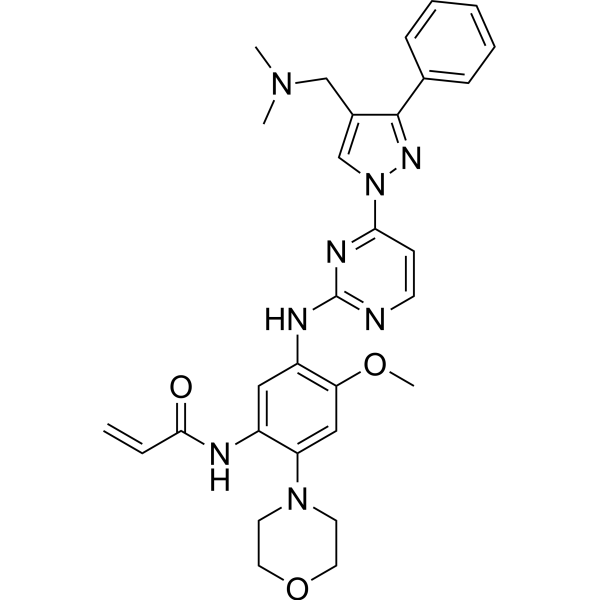
Silevertinib (BDTX-1535) is an irreversible, brain-penetrant, selective and orally active EGFR inhibitor with wild-type EGFR-sparing. Silevertinib targets key EGFR resistance mutations, including the kinase domain (C797S, L718Q, G724S, S768I), extracellular domain (EGFRvIII, A289X), and EGFR amplification. Silevertinib exerts anti-tumor activity with well tolerated in vivo. Silevertinib can be used for non-small cell lung cancer (NSCLC) and glioblastoma (GBM) research .
loading...
    loading...
3
3 Cited Publications
Cat. No.: HY-P99052
CAS No.: 1858168-59-8
Synonyms: BGB-A317
Target:  

PD-1/PD-L1

Research Areas:  

Inflammation/Immunology Cancer

Tislelizumab is a monoclonal antibody that specifically binds to programmed cell death receptor 1 (PD-1), blocking its interaction with programmed death ligand 1 (PD-L1) and programmed death ligand 2 (PD-L2). Tislelizumab can reactivate immune cells such as T lymphocytes and enhance anti-tumor activity. Tislelizumab can be used for the research of a variety of tumors including typical Hodgkin's lymphoma, urothelial carcinoma, non-small cell lung cancer and hepatocellular carcinoma .
loading...
    loading...
3
3 Cited Publications
Cat. No.: HY-N0836
CAS No.: 469-59-0
Synonyms: 11-Ketocyclopamine
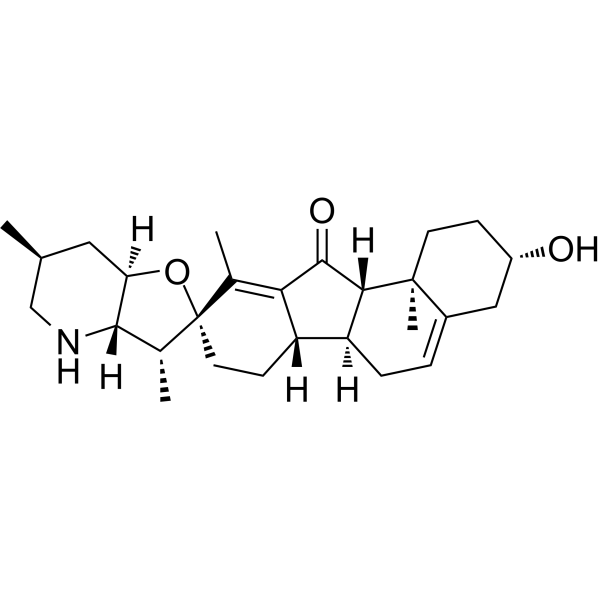
Jervine (11-Ketocyclopamine) is an orally active steroidal alkaloid and Hedgehog signaling pathway inhibitor. Jervine can be isolated from Veratrum californicum. Jervine regulates Wnt, inhibits the AKT/mTOR signaling pathway, and activates the AMPK signaling pathway. Jervine induces DNA damage, Apoptosis, Autophagy, ROS production and Mitochondrial damage. Jervine exhibits anti-cancer and anti-inflammatory activities. Jervine reduces tumor growth rate and weight in xenograft models. Jervine can be used in studies related to triple-negative breast cancer, nasopharyngeal carcinoma and non-small cell lung cancer .
loading...
    loading...
3
3 Cited Publications
Cat. No.: HY-P99048
CAS No.: 2072873-06-2
Synonyms: IBI308

Target:  

PD-1/PD-L1

Research Areas:  

Inflammation/Immunology Cancer

Sintilimab (IBI308) is a safe and effectivel humanized IgG4 monoclonal antibody that binds to PD-1 with a KD value of 74 pM. Sintilimab blocks the interaction of PD-1 with its ligands (PD-L1 and PL-L2), consequently helping to restore the endogenous antitumour T-cell response. Sintilimab combined with prebiotics inhibits tumor volume and regulates immune cell subpopulation balance in lung adenocarcinoma mice. Sintilimab can be used for the research of classical Hodgkin's lymphoma, non-small cell lung cancer and oesophageal cancer .
loading...
    loading...
3
3 Cited Publications
Cat. No.: HY-141598B
CAS No.: 2238831-60-0
Synonyms: DS-1062; Dato-DXd
Datopotamab deruxtecan (DS-1062) is a TROP2-targeted antibody-drug conjugate (ADC) with human TROP2 Kd of 0.74 nmol/L. Datopotamab deruxtecan consists of the antibody Datopotamab (HY-P99843) and the toxic molecule-linker conjugate Deruxtecan (HY-13631E). Datopotamab deruxtecan binds TROP2, triggers internalization and lysosomal trafficking and releases DXd topoisomerase I inhibitor payload. Datopotamab deruxtecan disrupts DNA function, induces DNA damage, apoptosis, and bystander killing of tumor microenvironment cells. Datopotamab deruxtecan can be used in research related to triple-negative breast cancer, gastric cancer, and non-small cell lung cancer .
loading...
    loading...
3
3 Cited Publications
Cat. No.: HY-141598
CAS No.: 2238831-60-0
Purity:  99.54%
Synonyms: DS-1062 (solution); Dato-DXd (solution)
Research Areas:  

Cancer

Datopotamab deruxtecan (DS-1062) solution is a TROP2-targeted antibody-drug conjugate (ADC) with human TROP2 Kd of 0.74 nmol/L. Datopotamab deruxtecan solution consists of the antibody Datopotamab (HY-P99843) and the toxic molecule-linker conjugate Deruxtecan (HY-13631E). Datopotamab deruxtecan solution binds TROP2, triggers internalization and lysosomal trafficking and releases DXd topoisomerase I inhibitor payload. Datopotamab deruxtecan solution disrupts DNA function, induces DNA damage, apoptosis, and bystander killing of tumor microenvironment cells. Datopotamab deruxtecan solution can be used in research related to triple-negative breast cancer, gastric cancer, and non-small cell lung cancer .
loading...
    loading...
3
3 Cited Publications
Cat. No.: HY-N1073
CAS No.: 51225-30-0
Synonyms: 6-Isopentenylgenistein; Erythrinin B
Wighteone (6-Isopentenylgenistein; Erythrinin B) is a prenylated isoflavone that acts as a HSP90/EGFR L858R/T790M inhibitor and antifungal agent. Wighteone reduces the expression level of HSP90, blocks EGF-induced phosphorylation of EGFR, and thereby inhibits the downstream ERK and AKT signaling pathways. Wighteone induces cell cycle redistribution, inhibits proliferation and triggers apoptosis in cancer cells. Wighteone can be isolated from Erythrina suberosa, and can also be induced to synthesize in Lotus japonicus under specific conditions. Wighteone can be used to study HER2-positive breast cancer, leukemia, non-small cell lung cancer with EGFR L858R/T790M mutation, and fungal infections .
loading...
    loading...
3
3 Cited Publications
Cat. No.: HY-N1401
CAS No.: 112246-15-8
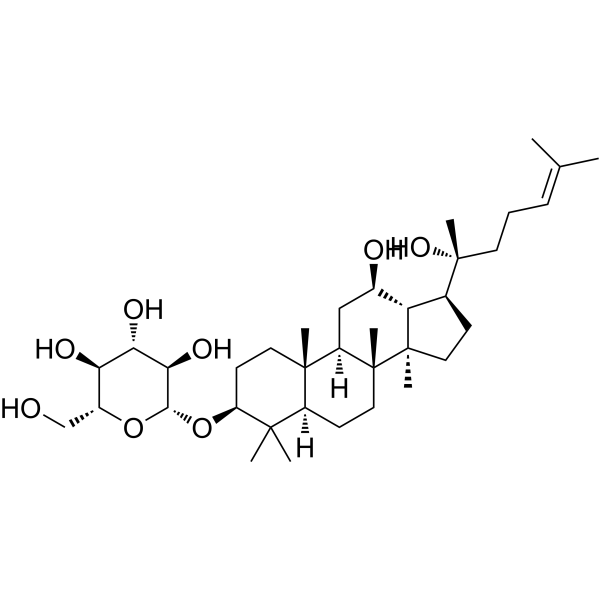
20(R)-Ginsenoside Rh2 is an orally active protopanaxadiol-type saponin with multiple biological activities. 20(R)-Ginsenoside Rh2 exerts a significant inhibitory effect on non-small cell lung cancer and liver cancer by inducing cell cycle arrest and promoting apoptosis. 20(R)-Ginsenoside Rh2 exerts anti-γ-herpesvirus effects by inhibiting viral DNA replication. 20(R)-Ginsenoside Rh2 inhibits inflammatory mediators by reducing the levels of NO, PGE2, and ROS; it can delay skin photoaging by reducing ROS and inhibiting MMP-9/2 activity. 20(R)-Ginsenoside Rh2 accelerates the recovery after muscle injury by activating the Akt1/PKB signaling pathway. 20(R)-Ginsenoside Rh2 can inhibit osteoclast formation and exert an anti-osteoporosis effect .
loading...
    loading...

