728 Results for "

BCL2

" in MedChemExpress (MCE) Product Catalog:
Products (728)

728 Results for "BCL2" in MCE Product Catalog:

Cat. No.: HY-P81259
Synonyms: BAG1; HAP; BAG family molecular chaperone regulator 1; BAG-1; BCL-2-associated athanogene 1

Host:  

Mouse

Application:  

WB

Reactivity:  

Human, Mouse, Rat

loading...
    loading...
Cat. No.: HY-P81259A
Synonyms: BAG1; HAP; BAG family molecular chaperone regulator 1; BAG-1; BCL-2-associated athanogene 1

Host:  

Rabbit

Application:  

WB, IHC-P, ICC/IF

Reactivity:  

Human, Mouse, Rat

loading...
    loading...
Cat. No.: HY-145288
CAS No.: 3005986-81-9
Target:  

Apoptosis

Research Areas:  

Cancer

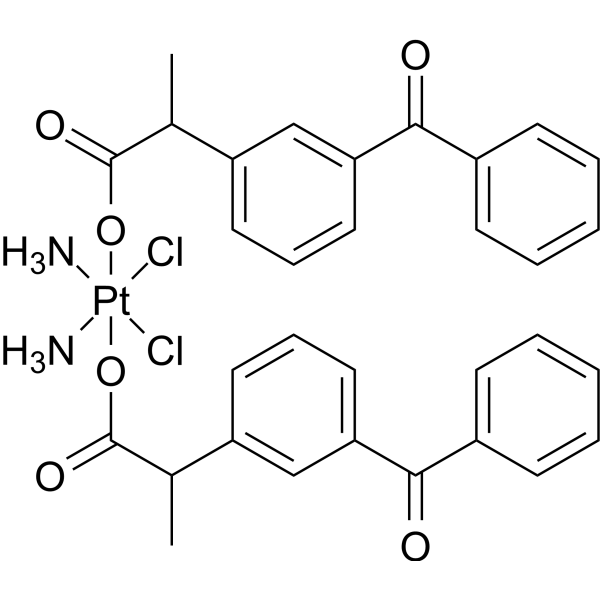
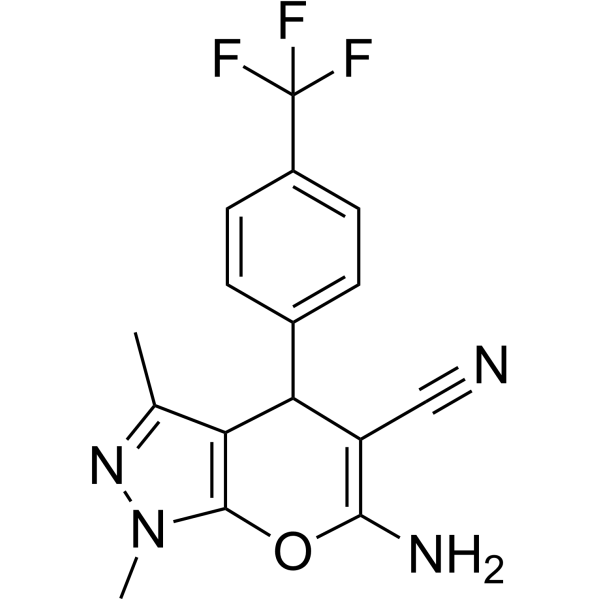
Antitumor agent-36 possesses potent anti-proliferative and anti-metastasis activities. Antitumor agent-36 induces serious DNA damage and further leads to high expression of γ-H2AX and p53. Antitumor agent-36 promotes apoptosis of tumor cells through mitochondrial apoptotic pathway Bcl-2/Bax/caspase3. Antitumor agent-36 significantly improves immune response through restraining the expression of PD-L1 to increase CD3+ and CD8+ T infiltrating cells in tumor tissues .
loading...
    loading...
Cat. No.: HY-145289
CAS No.: 3032101-64-4
Target:  

Apoptosis

Research Areas:  

Cancer

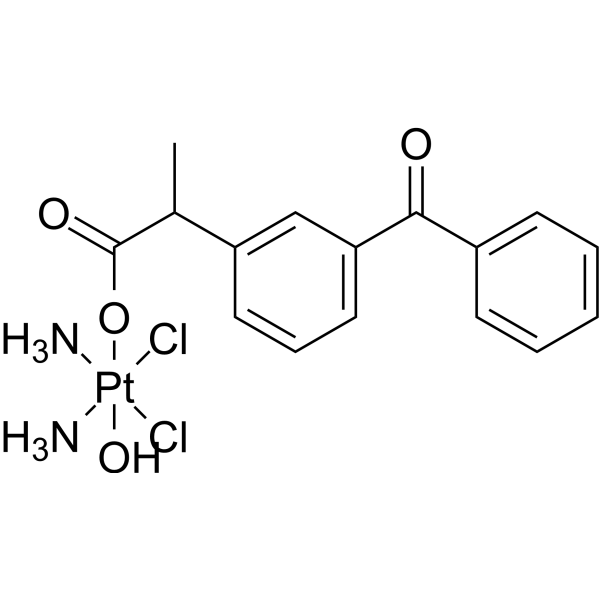
Antitumor agent-37 possesses potent anti-proliferative and anti-metastasis activities. Antitumor agent-37 induces serious DNA damage and further leads to high expression of γ-H2AX and p53. Antitumor agent-37 promotes apoptosis of tumor cells through mitochondrial apoptotic pathway Bcl-2/Bax/caspase3. Antitumor agent-37 significantly improves immune response through restraining the expression of PD-L1 to increase CD3+ and CD8+ T infiltrating cells in tumor tissues .
loading...
    loading...
Cat. No.: HY-P811835A
Synonyms: KIAA0873, BAG5, BAG family molecular chaperone regulator 5, BAG-5, BCL-2-associated athanogene 5

Host:  

Mouse

Application:  

WB, FC

Reactivity:  

Human, Mouse, Rat

loading...
    loading...
Cat. No.: HY-129488
CAS No.: 265130-22-1
Synonyms: R-(-)-BPAP hydrochloride
Target:  

Bcl-2 Family

Research Areas:  

Neurological Disease

FPFS-1169 (hydrochloride) is a proto-oncogene protein c-bcl-2 stimulant. FPFS-1169 (hydrochloride) can increase the impulse-evoked release of monoamine neurotransmitters. FPFS-1169 (hydrochloride) can be studied in research on Parkinson’s disease [2].
loading...
    loading...
Cat. No.: HY-P87468
Synonyms: BTF, KIAA0164, BCLAF1, BCL-2-associated transcription factor 1, Btf, BCLAF1 and THRAP3 family member 1

Host:  

Rabbit

Application:  

WB, IHC-P, IHC-F, ICC/IF, IF-Tissue

Reactivity:  

Human, Mouse, Rat

loading...
    loading...
Cat. No.: HY-P87867
Synonyms: NIP3, BNIP3, BCL2/adenovirus E1B 19 kDa protein-interacting protein 3

Host:  

Rabbit

Application:  

WB, IHC-P, ICC/IF, ELISA

Reactivity:  

Human, Mouse, Rat

loading...
    loading...
Cat. No.: HY-P81259AA
Synonyms: BAG1; HAP; BAG family molecular chaperone regulator 1; BAG-1; BCL-2-associated athanogene 1

Host:  

Rabbit

Application:  

WB, IHC-P, ICC/IF

Reactivity:  

Human, Mouse, Rat

loading...
    loading...
Cat. No.: HY-163077
Research Areas:  

Cancer

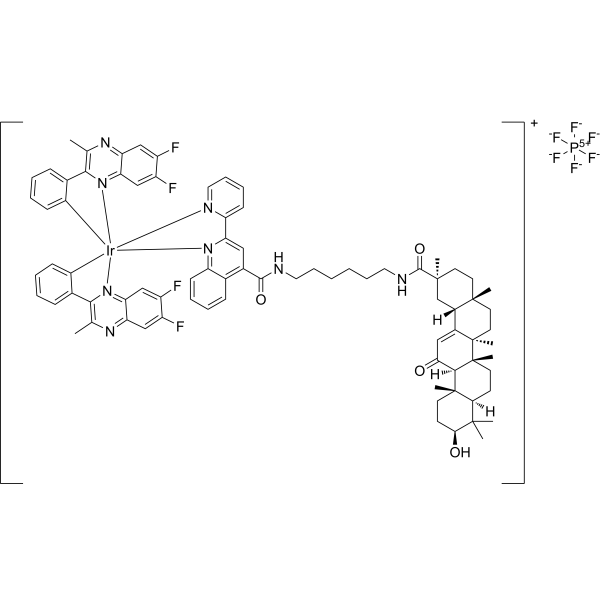
Anticancer agent 175 (complex 1) ia a near-infrared (NIR) luminescent theranostic complex. Anticancer agent 175 induces ROS accumulation, mitochondrial damage, disruption of Bax/Bcl-2 equilibrium, and tumor cell apoptosis in HepG2 cell line .
loading...
    loading...
Cat. No.: HY-P82213
Synonyms: BAG4; SODD; BAG family molecular chaperone regulator 4; BAG-4; BCL-2-associated athanogene 4; Silencer of death domains

Host:  

Rabbit

Application:  

WB, IHC-F, IHC-P, ICC/IF

Reactivity:  

Human

loading...
    loading...
Cat. No.: HY-P82213A
Synonyms: BAG4; SODD; BAG family molecular chaperone regulator 4; BAG-4; BCL-2-associated athanogene 4; Silencer of death domains

Host:  

Rabbit

Application:  

WB, IHC-F, IHC-P, ICC/IF

Reactivity:  

Human

loading...
    loading...
Cat. No.: HY-N7930
CAS No.: 63026-02-8
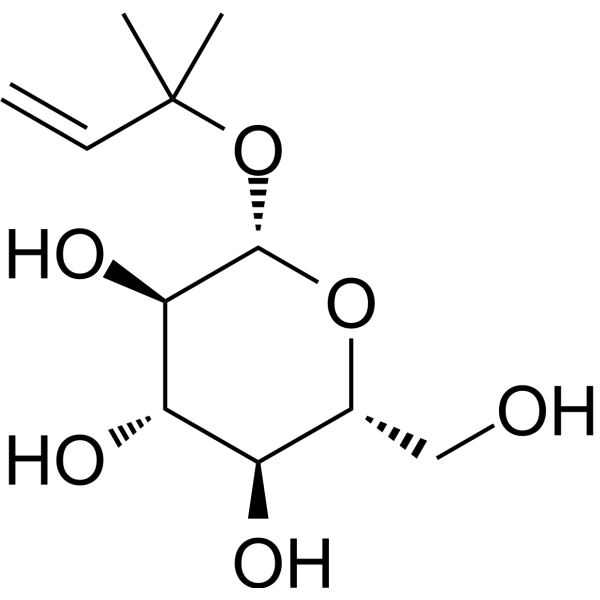
Crenulatin is a gallotannin that can be isolated from Rhodiola rosea. Crenulatin can be used as a biomarker to identify potentially adulterated R. rosea products. Crenulatin has dual- direction effects on apoptosis of cerebral microvascular endothelial cells, via regulating Fas/Bcl-2 expression and caspase-3 activity [2] .
loading...
    loading...
Cat. No.: HY-N6812
CAS No.: 39089-30-0
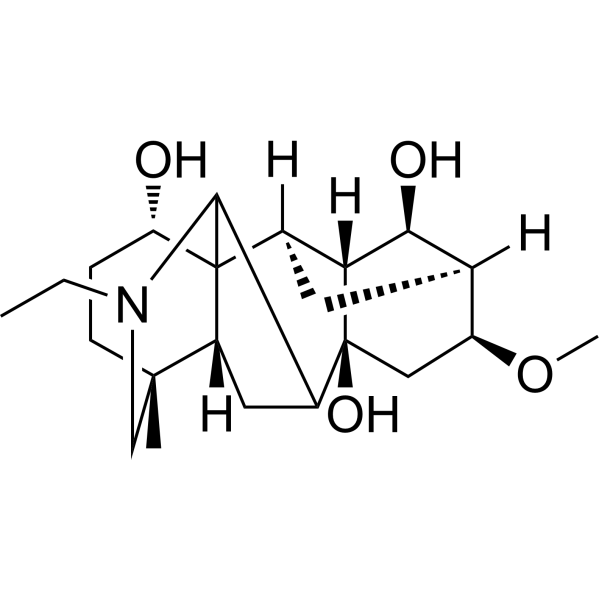
Karacoline is an orally active PPARγ activator and ERK/JNK MAPK inhibitor. Karacoline restricts ROS production, maintains mitochondrial membrane potential, and inhibits pulmonary cell apoptosis. Karacoline inhibits NF-κB pathway activation, reduces acetylation levels of p65 and the expression of MMP14 and MMP9, enhances the expression of type II collagen (collagen II) and aggrecan (aggrecan), and suppresses extracellular matrix degradation. In a mouse model of sepsis-induced acute lung injury, Karacoline alleviates lung injury, inhibits the release of IL-1β, IL-6 and TNF-α, increases the Bcl-2/BAX ratio, and reduces caspase 3 expression. Karacoline can be used in research related to acute lung injury and intervertebral disc degeneration [2].
loading...
    loading...
Cat. No.: HY-12875
CAS No.: 1637739-82-2
Purity:  99.45%
Target:  

Ras

Research Areas:  

Cancer

BQU57 is a selective inhibitor of RalA/RalB small GTPases, with a binding potency (Kb) of 7.7 μM for RalB-GDP. BQU57 can block its interaction with effector proteins (such as SEC5 and EXO84), inhibiting tumor cell migration, invasion and non-adherent growth. BQU57 downregulates the NF-κB signaling pathway, reduces the expression of IL-6, IL-8 and MMP-13, and inhibits apoptosis by regulating the Bcl-2/Bax balance. BQU57 also protects the extracellular matrix by inhibiting the Ral/NF-κB pathway and can be used for the study of degenerative diseases. BQU57 exhibits significant antitumor activity in triple-negative breast cancer (TNBC) models, inhibiting orthotopic tumor growth and lung metastasis and enhancing paclitaxel chemotherapy sensitivity [2] .
loading...
    loading...
Cat. No.: HY-N5008
CAS No.: 146100-02-9
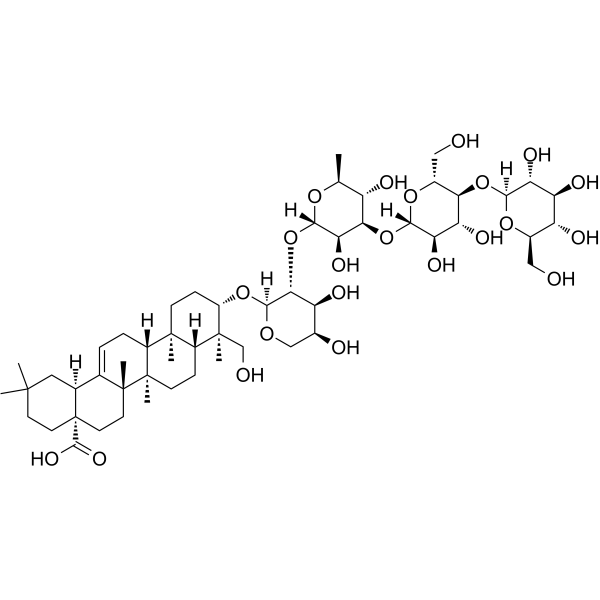
Macranthoside B is an apoptosis inducer with in vitro and in vivo anticancer activity. Macranthoside B induces autophagy and ferroptosis in cancer cells. Macranthoside B induces intracellular ROS accumulation, activates AMPK, inhibits mTOR and P70S6 kinase phosphorylation, and modulates Bcl-2/Bax expression. Macranthoside B activates caspase-3, caspase-9, and the intrinsic caspase cascade, induces PARP cleavage/degradation, and inhibits NRF2 signaling. Macranthoside B disrupts iron homeostasis via NCOA4-dependent ferritinophagy, up-regulates Lip-ROS, reduces mitochondrial membrane potential, and activates the JNK pathway. Macranthoside B can be used for the research of ovarian cancer, hepatoma, gastric carcinoma, breast carcinoma, colon carcinoma, glioma, melanoma, adenocarcinoma of the esophagogastric junction, and cervical cancer [2] .
loading...
    loading...
Cat. No.: HY-N1440
CAS No.: 1358-76-5
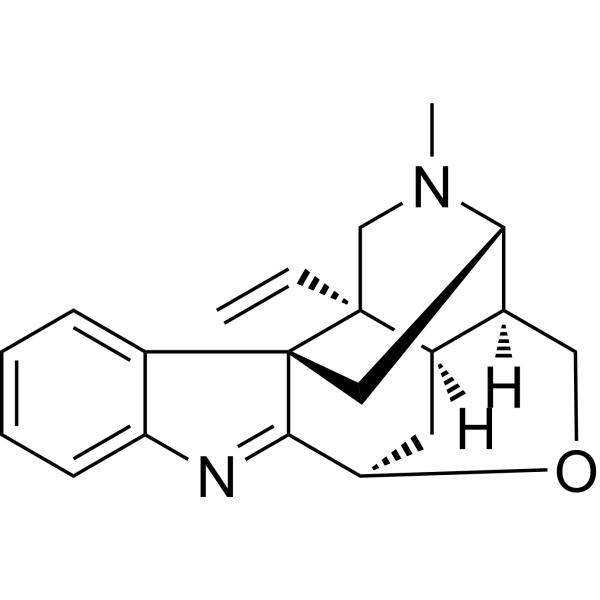
Koumine is an alkaloid separated from Gelsemium elegans, shows potent anti-tumor activity. Koumine up-regulates the Bax/Bcl-2 ratio and caspase-3 expression in human breast cancer cells . Koumine has anxiolytic, antistress, antipsoriatic, and analgesic activities , protects against the development of arthritis in Rheumatoid arthritis (RA) animal models [2].
loading...
    loading...
Cat. No.: HY-B0011S
CAS No.: 940867-25-4
Synonyms: RP-56976-d9
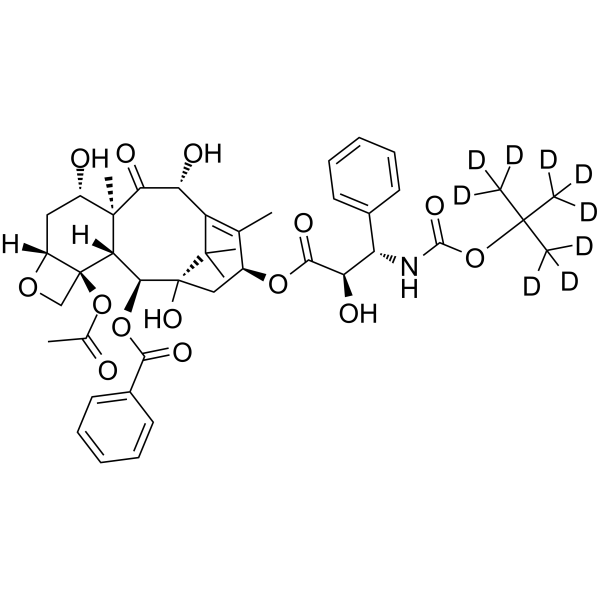
Docetaxel-d9 is the deuterium labeled Docetaxel. Docetaxel (RP-56976) is a microtubule?depolymerization inhibitor, with an IC50 of 0.2 μM. Docetaxel attenuates the effects of?bcl-2 and bcl-xL gene expression. Docetaxel arrests the cell cycle at G2/M and leads to cell apoptosis. Docetaxel has anti-cancer activity .
loading...
    loading...
Cat. No.: HY-N14116
CAS No.: 8000-78-0
Garlic oil is an orally effective anti-inflammatory, antioxidant, and anticancer agent. Garlic oil inhibits the activation of NF-κB, NFκB2 and NLRP3 inflammasome, and induces the expression of GSTA1, HO-1 and NQO-1. Garlic oil reduces the Bcl-2/Bax protein ratio and activates NNK-induced apoptosis (apoptosis) in lung tissues. Garlic oil attenuates NNK-induced apoptosis in MRC-5 cells and reduces excessive ROS production. Garlic oil alleviates pyroptosis (pyroptosis) and exerts a protective effect against acute lung injury in mice. Garlic oil inhibits lung tumorigenesis in mice and improves small intestinal motility in rats with type 2 diabetes . Garlic oil can be used in research related to acute lung injury, lung cancer, peptic ulcer, type 2 diabetes and hypertension [2] .
loading...
    loading...
Cat. No.: HY-N14116A
CAS No.: 8000-78-0
Garlic oil (synthetic) is an orally effective anti-inflammatory, antioxidant, and anticancer agent. Garlic oil (synthetic) inhibits the activation of NF-κB, NFκB2 and NLRP3 inflammasome, and induces the expression of GSTA1, HO-1 and NQO-1. Garlic oil (synthetic) reduces the Bcl-2/Bax protein ratio and activates NNK-induced apoptosis (apoptosis) in lung tissues. Garlic oil (synthetic) attenuates NNK-induced apoptosis in MRC-5 cells and reduces excessive ROS production. Garlic oil (synthetic) alleviates pyroptosis (pyroptosis) and exerts a protective effect against acute lung injury in mice. Garlic oil (synthetic) inhibits lung tumorigenesis in mice and improves small intestinal motility in rats with type 2 diabetes . Garlic oil (synthetic) can be used in research related to acute lung injury, lung cancer, peptic ulcer, type 2 diabetes and hypertension [2] .
loading...
    loading...

