754 Results for "

regulator

" in MedChemExpress (MCE) Product Catalog:
Products (754)

754 Results for "regulator" in MCE Product Catalog:

Cat. No.: HY-W012382R
CAS No.: 537-55-3
N-Acetyl-L-tyrosine (Standard) is the analytical standard of N-Acetyl-L-tyrosine (HY-W012382). This product is intended for research and analytical applications. N-Acetyl-L-tyrosine is an orally active endogenous mitochondrial stress response regulator that can permeate the cell membrane by passive diffusion. N-Acetyl-L-tyrosine induces low-level reactive oxygen species (ROS) generation by transiently perturbing mitochondrial membrane potential, triggering reverse signaling to activate FoxO and Keap1 pathways. As a result, N-Acetyl-L-tyrosine enhances the expression of antioxidant enzyme genes, exerting anti-stress and cytoprotective effects. N-Acetyl-L-tyrosine can improve heat stress tolerance, inhibit tumor growth, and regulate energy metabolism. N-Acetyl-L-tyrosine can be used in the research of aging, metabolic diseases (such as diabetes), and cancer .
loading...
    loading...
Cat. No.: HY-W012382S
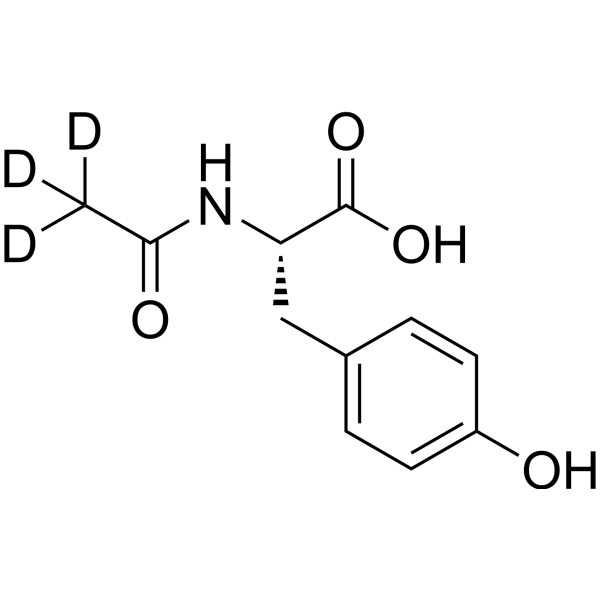
N-Acetyl-L-tyrosine-d3 is the deuterated form of N-Acetyl-L-tyrosine (HY-W012382). N-Acetyl-L-tyrosine is an orally active endogenous mitochondrial stress response regulator that can permeate the cell membrane by passive diffusion. N-Acetyl-L-tyrosine induces low-level reactive oxygen species (ROS) generation by transiently perturbing mitochondrial membrane potential, triggering reverse signaling to activate FoxO and Keap1 pathways. As a result, N-Acetyl-L-tyrosine enhances the expression of antioxidant enzyme genes, exerting anti-stress and cytoprotective effects. N-Acetyl-L-tyrosine can improve heat stress tolerance, inhibit tumor growth, and regulate energy metabolism. N-Acetyl-L-tyrosine can be used in the research of aging, metabolic diseases (such as diabetes), and cancer .
loading...
    loading...
Cat. No.: HY-W107409
CAS No.: 213473-00-8
Meridianin C is a marine natural product with anticancer activity. Meridianin C has significant inhibitory effects on four different human tongue cancer cells (YD-8, YD-10B, YD-38 and HSC-3). Meridianin C most strongly reduced the growth of YD-10B cells, the most aggressive and tumorigenic of the cell lines tested. Meridianin C also induced significant accumulation of large vesicles in YD-10B cells, validating its function through macrophagocytosis. Meridianin C reduces cellular levels of Dickkopf-related protein-3 (DKK-3), a known negative regulator of macrophagy. Meridianin C affects macrophagocytosis by downregulating DKK-3, thereby affecting cell proliferation .
loading...
    loading...
Cat. No.: HY-P71576
Purity:  ≥ 90%, as determined by reducing SDS-PAGE.
Synonyms: ATG14; Autophagy-Related Protein 14-Like Protein; Prev. KIAA0831; ATG14 Autophagy Related 14 Homolog; ATG14L; Beclin 1-Interacting Protein; Beclin 1-Associated Autophagy-Related Key regulator; Atg14L; Barkor; Autophagy Related 14; ATG14 Autophagy Related
Species:  
Human
Source:  
E. coli
loading...
    loading...
Cat. No.: HY-P71919
Purity:  ≥ 95%, as determined by reducing SDS-PAGE.
Synonyms: TIGAR; Probable Fructose-2,6-Bisphosphatase TIGAR; Prev. C12orf5; Chromosome 12 Open Reading Frame 5; TP53-Induced Glycolysis And Apoptosis regulator; Transactivated By NS3TP2 Protein; Fructose-2,6-Bisphosphatase TIGAR; FR2BP; TP53-Induced Glycolysis Regu
Species:  
Human
Source:  
E. coli
loading...
    loading...
Cat. No.: HY-P72258
Purity:  ≥ 90%, as determined by reducing SDS-PAGE.
Synonyms: PRAME; Preferentially Expressed Antigen Of Melanoma; Prev. MAPE; Opa-Interacting Protein 4; CT130; OIP-4; Melanoma Antigen Preferentially Expressed In Tumors; OIP4; Preferentially Expressed Antigen In Melanoma; Opa-Interacting Protein OIP4; PRAME Nuclear Receptor Transcriptional regulator; Cancer/Testis Antigen 130
Species:  
Human
Source:  
E. coli
loading...
    loading...
Cat. No.: HY-P81443
Synonyms: BCL10; CIPER; CLAP; B-cell lymphoma/leukemia 10; B-cell CLL/lymphoma 10; Bcl-10; CARD-containing molecule enhancing NF-kappa-B; CARD-like apoptotic protein; hCLAP; CED-3/ICH-1 prodomain homologous E10-like regulator; CIPER; Cellular homolog

Host:  

Rabbit

Application:  

IHC-P

Reactivity:  

Human

loading...
    loading...
Cat. No.: HY-P703282
Purity:  ≥ 95%, as determined by reducing SDS-PAGE.
Synonyms: IRF9; Interferon-Stimulated Transcription Factor 3, Gamma (48kD); Prev. ISGF3G; ISGF-3 Gamma; IFN-Alpha-Responsive Transcription Factor Subunit; IRF-9; Transcriptional regulator ISGF3 Subunit Gamma; ISGF3; Interferon-Stimulated Gene Factor 3 Gamma; P48; I
Species:  
Human
Source:  
Sf9 insect cells
loading...
    loading...
Cat. No.: HY-P811960
Synonyms: RENT3B, UPF3X, UPF3B, regulator of nonsense transcripts 3B, Nonsense mRNA reducing factor 3B, Up-frameshift suppressor 3 homolog B, Up-frameshift suppressor 3 homolog on chromosome X, hUpf3B, hUpf3p-X

Host:  

Mouse

Application:  

WB, FC, ICC/IF

Reactivity:  

Human

loading...
    loading...
Cat. No.: HY-P7985
Purity:  ≥ 90%, as determined by reducing SDS-PAGE.
Synonyms: SMARCA2; Brahma Homolog; Prev. SNF2L2; SAMRCA2; HBRM; BAF190B; BRM; CDNA FLJ59976, Highly Similar To Probable Global Transcription Activator SNF2L2; SWI/SNF Related, Matrix Associated, Actin Dependent regulator Of Chromatin, Subfamily A, Member 2; CDNA FL
Species:  
Human
Source:  
P. pastoris
loading...
    loading...
Cat. No.: HY-P702727
Purity:  ≥ 80%, as determined by reducing SDS-PAGE.
Synonyms: FYN; MGC45350; FYN Proto-Oncogene, Src Family Tyrosine Kinase; P59-Fyn; SLK; OKT3-Induced Calcium Influx regulator; Tyrosine-Protein Kinase Fyn; Tyrosine Kinase P59fyn(T); Proto-Oncogene C-Fyn; Src/Yes-Related Novel; SYN; C-Syn Protooncogene; FYN Oncogene
Species:  
Human
Source:  
Sf9 insect cells
loading...
    loading...
Cat. No.: HY-P81443A
Synonyms: BCL10; CIPER; CLAP; B-cell lymphoma/leukemia 10; B-cell CLL/lymphoma 10; Bcl-10; CARD-containing molecule enhancing NF-kappa-B; CARD-like apoptotic protein; hCLAP; CED-3/ICH-1 prodomain homologous E10-like regulator; CIPER; Cellular homolog

Host:  

Rabbit

Application:  

IHC-P

Reactivity:  

Human

loading...
    loading...
Cat. No.: HY-P811960A
Synonyms: RENT3B, UPF3X, UPF3B, regulator of nonsense transcripts 3B, Nonsense mRNA reducing factor 3B, Up-frameshift suppressor 3 homolog B, Up-frameshift suppressor 3 homolog on chromosome X, hUpf3B, hUpf3p-X

Host:  

Mouse

Application:  

WB, FC, ICC/IF

Reactivity:  

Human

loading...
    loading...
Cat. No.: HY-B0762S
CAS No.: 1334532-17-0
Synonyms: O-Acetyl-L-carnitine-d3 hydrochloride
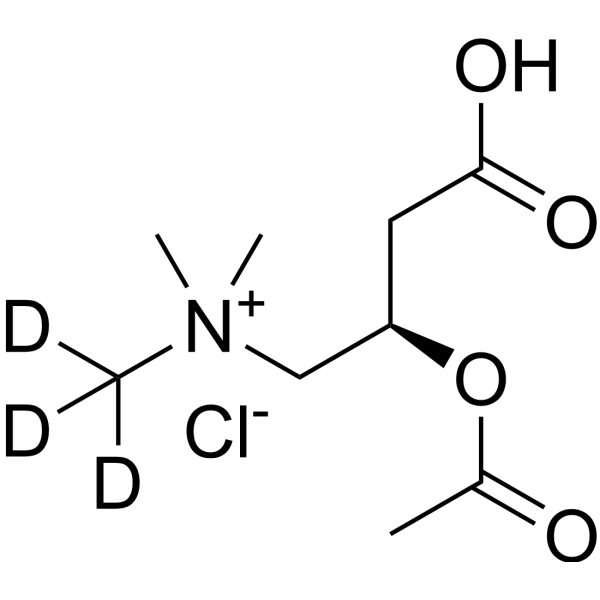
Acetyl-L-carnitine-d3 (O-Acetyl-L-carnitine-d3) hydrochloride is the deuterium labeled Acetyl-L-carnitine hydrochloride (HY-B0762). Acetyl-L-carnitine (O-Acetyl-L-carnitine; ALCAR) hydrochloride is an orally active mitochondrial energy metabolism regulator and neuroprotectant that can penetrate the blood-brain barrier. Acetyl-L-carnitine hydrochloride selectively enters cells and the brain through the organic cation transporter OCTN2. Acetyl-L-carnitine hydrochloride can participate in fatty acid β-oxidation, promote acetylcholine synthesis, regulate mitochondrial function and inhibit oxidative stress as an acetyl donor. Acetyl-L-carnitine hydrochloride exerts its activity by enhancing energy metabolism, protecting neurons and improving synaptic plasticity. Acetyl-L-carnitine hydrochloride is mainly used in the study of neurodegenerative diseases and metabolic disorder-related diseases such as neonatal hypoxic-ischemic brain damage, Alzheimer's disease, and depression .
loading...
    loading...
Cat. No.: HY-B0762S1
CAS No.: 362049-62-5
Synonyms: O-Acetyl-L-carnitine-d3-1 hydrochloride
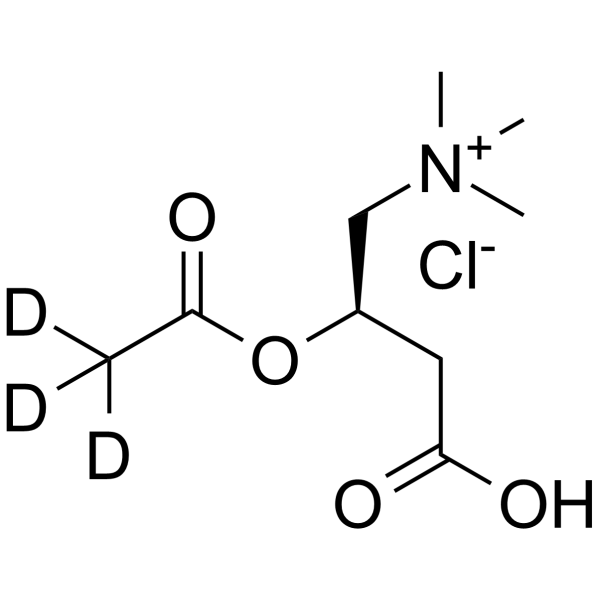
Acetyl-L-carnitine-d3-1 (O-Acetyl-L-carnitine-d3-1) hydrochloride is the deuterium labeled Acetyl-L-carnitine hydrochloride (HY-B0762). Acetyl-L-carnitine (O-Acetyl-L-carnitine; ALCAR) hydrochloride is an orally active mitochondrial energy metabolism regulator and neuroprotectant that can penetrate the blood-brain barrier. Acetyl-L-carnitine hydrochloride selectively enters cells and the brain through the organic cation transporter OCTN2. Acetyl-L-carnitine hydrochloride can participate in fatty acid β-oxidation, promote acetylcholine synthesis, regulate mitochondrial function and inhibit oxidative stress as an acetyl donor. Acetyl-L-carnitine hydrochloride exerts its activity by enhancing energy metabolism, protecting neurons and improving synaptic plasticity. Acetyl-L-carnitine hydrochloride is mainly used in the study of neurodegenerative diseases and metabolic disorder-related diseases such as neonatal hypoxic-ischemic brain damage, Alzheimer's disease, and depression .
loading...
    loading...
Cat. No.: HY-N0390R
CAS No.: 56-85-9
Synonyms: L-Glutamic acid 5-amide (Standard)
L-Glutamine (Standard) is the analytical standard of L-Glutamine (HY-N0390). This product is intended for research and analytical applications. L-Glutamine is an orally active nutritional agent and cellular metabolism regulator. L-Glutamine is taken up in a Na +-dependent manner and targets multiple key molecules including glutaminase, mTORC1, NF-κB, STAT-3 and HIF-1α. L-Glutamine enhances glutaminolytic catabolism, drives the conversion of glutamate to α-ketoglutarate, thereby regulating gene expression, integrating metabolic signals, mediating glutamine flux and maintaining redox homeostasis. L-Glutamine also promotes cell proliferation, osteogenic differentiation and fracture healing, exerts neuroprotective and cardioprotective effects, and inhibits osteoarthritis. L-Glutamine can be applied to research related to osteoporosis, osteoarthritis, ischemic stroke and acute cantharidin-induced cardiotoxicity .
loading...
    loading...
Cat. No.: HY-N0390S4
CAS No.: 159680-32-7
Synonyms: L-Glutamic acid 5-amide-5-13C
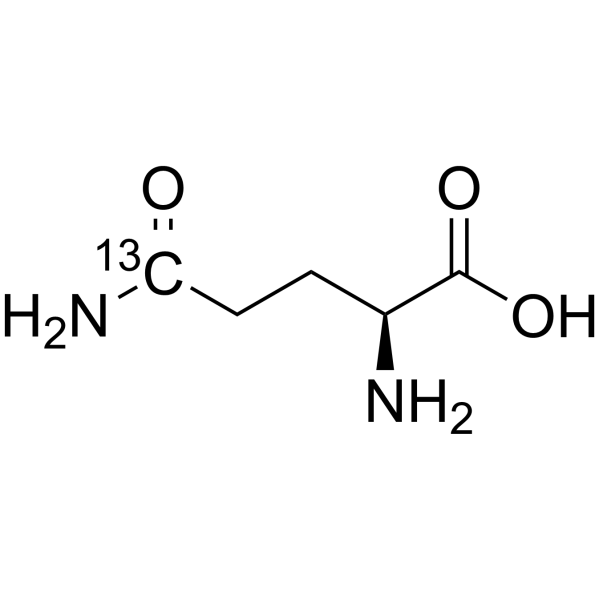
L-Glutamine-5- 13C is the 13C-labeled L-Glutamine (HY-N0390). L-Glutamine is an orally active nutritional agent and cellular metabolism regulator. L-Glutamine is taken up in a Na +-dependent manner and targets multiple key molecules including glutaminase, mTORC1, NF-κB, STAT-3 and HIF-1α. L-Glutamine enhances glutaminolytic catabolism, drives the conversion of glutamate to α-ketoglutarate, thereby regulating gene expression, integrating metabolic signals, mediating glutamine flux and maintaining redox homeostasis. L-Glutamine also promotes cell proliferation, osteogenic differentiation and fracture healing, exerts neuroprotective and cardioprotective effects, and inhibits osteoarthritis. L-Glutamine can be applied to research related to osteoporosis, osteoarthritis, ischemic stroke and acute cantharidin-induced cardiotoxicity .
loading...
    loading...
Cat. No.: HY-W010178R
CAS No.: 54947-74-9
4-Methyloctanoic acid (Standard) is the analytical standard of 4-Methyloctanoic acid (HY-W010178). This product is intended for research and analytical applications. 4-Methyloctanoic acid is an endogenous branched-chain medium-chain fatty acid and a negative regulator of the cAMP/PKA signaling pathway. 4-Methyloctanoic acid exerts antiepileptic effects by inhibiting epileptiform discharges and terminating behavioral and electroencephalographic seizures. 4-Methyloctanoic acid has neuroprotective effects; its polar metabolites can cross the blood-brain barrier, repair presynaptic release defects, improve motor function and alleviate neuromuscular degeneration in ALS models. 4-Methyloctanoic acid regulates phosphatidylinositol metabolism, reduces PIP/PIP2 levels and increases inositol levels. 4-Methyloctanoic acid can be used in studies related to epilepsy and amyotrophic lateral sclerosis .
loading...
    loading...
Cat. No.: HY-W015600R
CAS No.: 614-80-2
Synonyms: Orthocetamol (Standard)
2-Acetamidophenol (Standard) is the analytical standard of 2-Acetamidophenol. This product is intended for research and analytical applications. 2-Acetamidophenol (Orthocetamol) is a regulator that targets ferroptosis and glutathione metabolic pathways, is the ortho-regioisomer of Paracetamol (HY-66005). 2-Acetamidophenol has anti-atherosclerotic activity, and inhibiting total cholesterol (TC) and triglyceride (TG) in a zebrafish hyperlipidemia model with IC50s for 30 μM and 40 μM, respectively. 2-Acetamidophenol upregulates the expression of glutathione synthesis-related genes (such as GCLC, GCLM, GSS) and iron ion transport genes (such as FPN1, FTH), reduces the accumulation of intracellular reactive oxygen species (ROS) and ferrous ions (Fe 2+), and enhances the activity of glutathione peroxidase GPX4, thereby inhibiting macrophage phagocytosis of oxidized low-density lipoprotein (ox-LDL) and foam cell formation .
loading...
    loading...
Cat. No.: HY-W015600S
CAS No.: 122258-87-1
Synonyms: Orthocetamol-d3
2-Acetamidophenol-d3 (Orthocetamol-d3) is the deuterium labeled 2-Acetamidophenol (HY-W015600). 2-Acetamidophenol (Orthocetamol) is a regulator that targets ferroptosis and glutathione metabolic pathways, is the ortho-regioisomer of Paracetamol (HY-66005). 2-Acetamidophenol has anti-atherosclerotic activity, and inhibiting total cholesterol (TC) and triglyceride (TG) in a zebrafish hyperlipidemia model with IC50s for 30 μM and 40 μM, respectively. 2-Acetamidophenol upregulates the expression of glutathione synthesis-related genes (such as GCLC, GCLM, GSS) and iron ion transport genes (such as FPN1, FTH), reduces the accumulation of intracellular reactive oxygen species (ROS) and ferrous ions (Fe2+), and enhances the activity of glutathione peroxidase GPX4, thereby inhibiting macrophage phagocytosis of oxidized low-density lipoprotein (ox-LDL) and foam cell formation .
loading...
    loading...

