1018 Results for "

Detection

" in MedChemExpress (MCE) Product Catalog:
Products (1018)

1018 Results for "Detection" in MCE Product Catalog:

3
3 Cited Publications
Cat. No.: HY-W040258
CAS No.: 905-96-4
Synonyms: DiOC2(3)
Target:  

Fluorescent Dye

Research Areas:  

Others

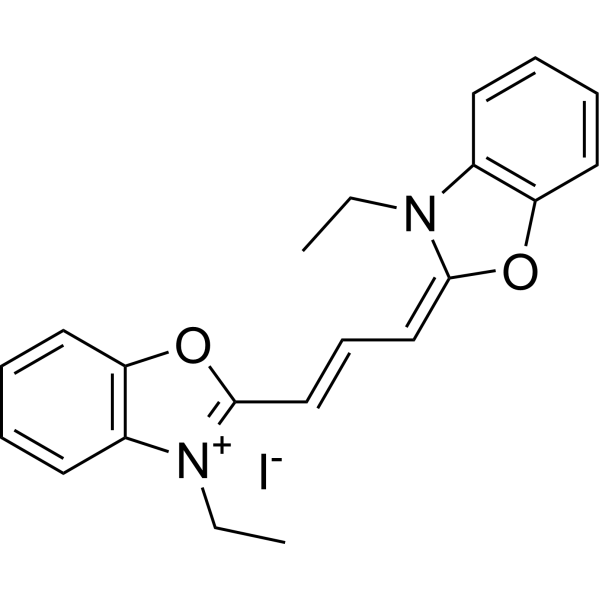
3,3'-Diethyloxacarbocyanine iodide (DiOC2 (3)) is a Fluorescent probe used for microviscosity detection, micelle and microemulsion probing, critical micelle concentration determination, photophysical property research, and bacterial membrane potential assessment. The excitation wavelength of 3,3'-Diethyloxacarbocyanine iodide is 355 nm .
loading...
    loading...
3
3 Cited Publications
Cat. No.: HY-151656
CAS No.: 118162-46-2
Purity:  99.88%
Synonyms: Azido Palmitic Acid
Target:  

ADC Linkers

Research Areas:  

Others

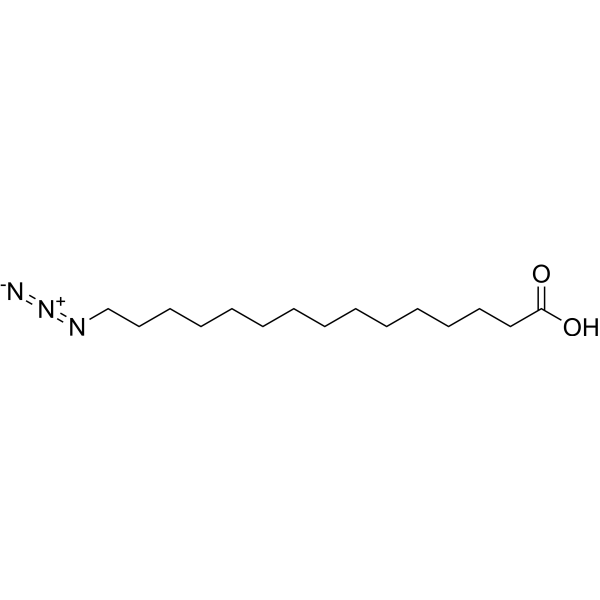
15-Azido-pentadecanoic acid is a click chemistry reagent containing an azide group. Azido Palmitic Acid can be used to identify and characterize post-translationally palmitylated proteins with using a simple and robust two-step labeling and detection technique . 15-Azido-pentadecanoic acid is a click chemistry reagent, it contains an Azide group and can undergo copper-catalyzed azide-alkyne cycloaddition reaction (CuAAc) with molecules containing Alkyne groups. It can also undergo strain-promoted alkyne-azide cycloaddition (SPAAC) reactions with molecules containing DBCO or BCN groups.
loading...
    loading...
3
3 Cited Publications
Cat. No.: HY-W010991
CAS No.: 64967-39-1
Synonyms: FAPGG
Research Areas:  

Others

N-[3-(2-Furyl)acryloyl]-Phe-Gly-Gly (FAPGG) is a specific substrate of angiotensin converting enzyme (ACE) with a Ki of 2.546×10 -4 M. It is used as a chromogenic probe for quantitative detection of ACE activity. N-[3-(2-Furyl)acryloyl]-Phe-Gly-Gly can be hydrolyzed by ACE to generate N-[3-(2-furyl)acryloyl]-Phe (FAP) and Gly-Gly, and the ACE inhibitory effect is monitored by photometry. FAPGG competitively binds to the active center of ACE and is a key tool for screening ACE inhibitors such as Captopril (HY-B0368) and Dioscorin. Its reversible mechanism of action supports hypertension research and drug development targeting the renin-angiotensin system .
loading...
    loading...
2
2 Cited Publications
Cat. No.: HY-126047A
CAS No.: 2743-90-0
Purity:  98.75%
Research Areas:  

Inflammation/Immunology

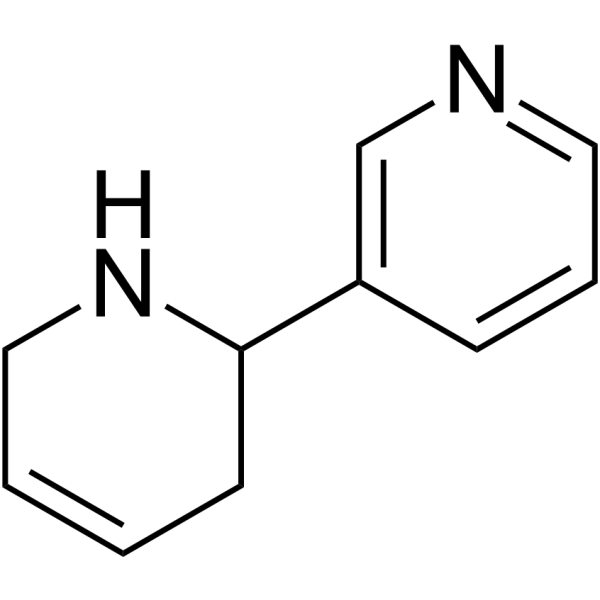
(R,S)-Anatabine is a a minor tobacco alkaloid found in the Solanaceae family of plants that can be used as a specific marker for the detection of tobacco use .
loading...
    loading...
2
2 Cited Publications
Cat. No.: HY-123645
CAS No.: 74317-53-6
Purity:  99.87%
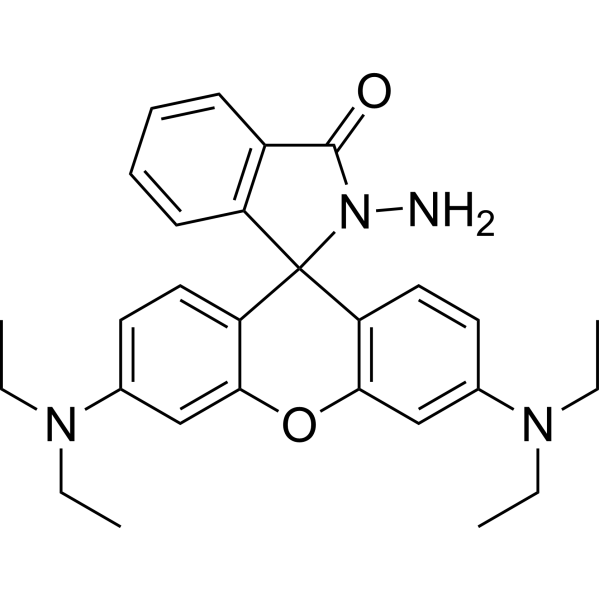
Rhodamine B hydrazide is a fluorescent derivative based on rhodamine B, containing the spirocyclic structure of Rhodamine B (HY-Y0016), which can be used to detect copper ions (Cu 2+), mercury ions, peroxynitrite, hydroxyl radicals and nitric oxide (NO) .
Excitation/emission wavelength:
Conventional detection: 510/578 nm.
Sulfite detection: 554 nm absorption, 574 nm emission (due to the formation of Rhodamine B fluorescent product).
loading...
    loading...
2
2 Cited Publications
Cat. No.: HY-B1025
CAS No.: 1672-46-4
Synonyms: Lanadigenin
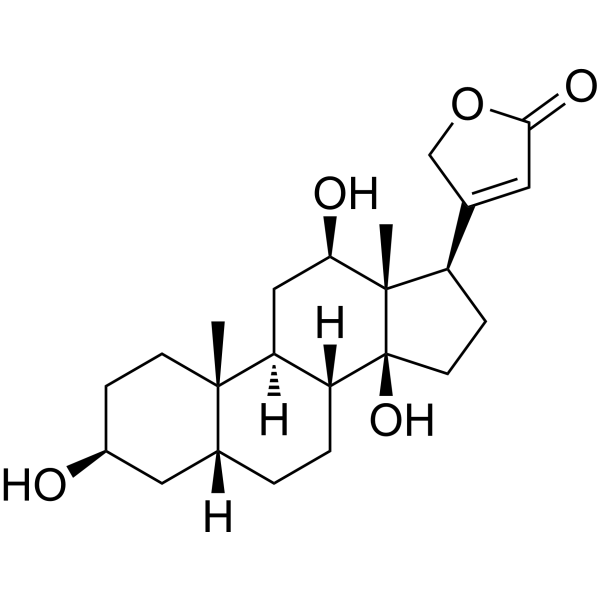
Digoxigenin (DIG) is a steroid. DIG is used for situ hybridization as a labeling molecule probe due to long shelf life and fast detection and high sensitivity of DIG-labeled riboprobes .
loading...
    loading...
2
2 Cited Publications
Cat. No.: HY-130022
CAS No.: 2240163-05-5
Purity:  99.35%
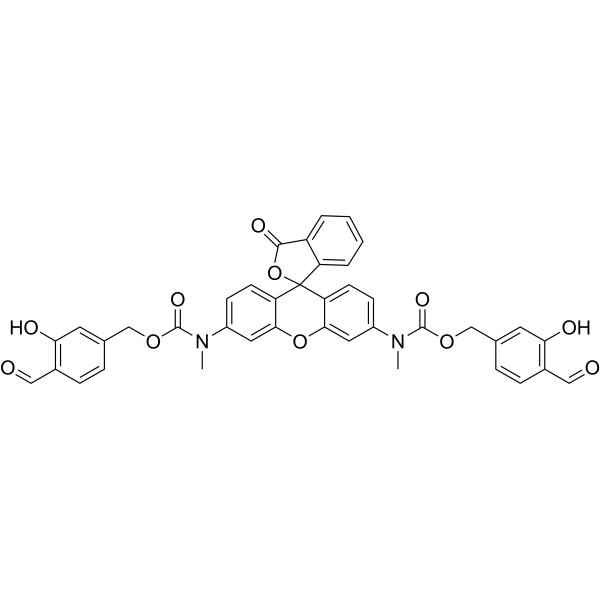
HKPerox-1 is a highly sensitive green fluorescent probe for the specific detection of H2O2 in living cells with a maximum excitation wavelength and emission wavelength of 520 nm and 543 nm, respectively .
loading...
    loading...
2
2 Cited Publications
Cat. No.: HY-134434
CAS No.: 136132-67-7
Purity:  99.79%
Research Areas:  

Others

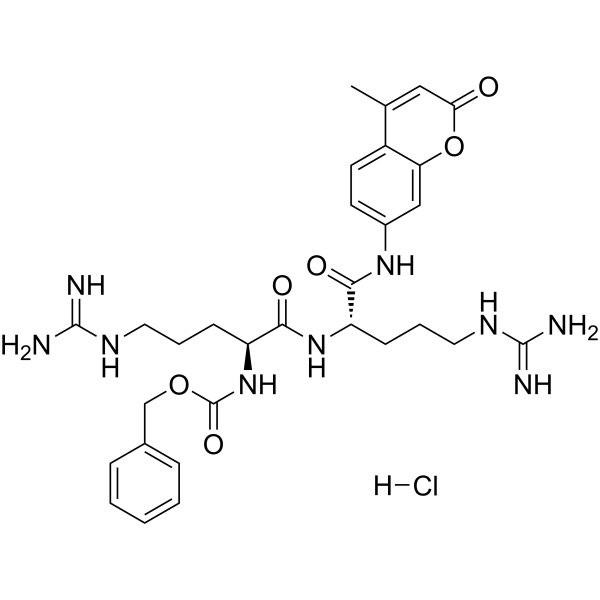
Z-Arg-Arg-AMC hydrochloride is a highly selective fluorescent Cathepsin B substrate. Z-Arg-Arg-AMC hydrochloride can be hydrolyzed by Cathepsin B to produce a fluorescent product for enzyme activity detection .
loading...
    loading...
2
2 Cited Publications
Cat. No.: HY-134757
CAS No.: 9028-72-2
Target:  

Endogenous Metabolite

Research Areas:  

Others

Lactate oxidase (EC 1.13.12.4) belongs to a group of FMN-dependent enzymes and they catalyze a conversion of lactate to pyruvate with a release of hydrogen peroxide. Lactate oxidase can be used in the detection of Lactate .
loading...
    loading...
2
2 Cited Publications
Cat. No.: HY-120166
CAS No.: 214491-43-7
Purity:  99.05%
Synonyms: 6,8-Difluoro-4-methylumbelliferyl phosphate
Target:  

Phosphatase

Research Areas:  

Others

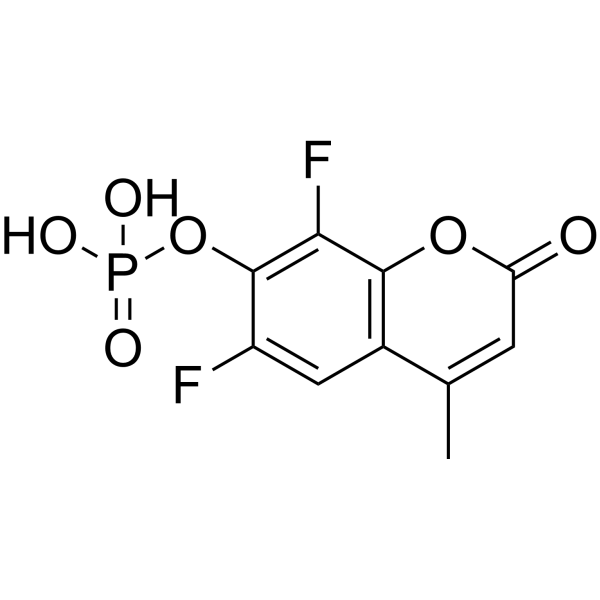
DiFMUP is a fluorogenic substrate, and has been widely used for the continuous detection of phosphatase activities. DiFMUP is hydrolysis by a phosphatase results in the release of Xuorescent DIFMU, which can be easily followed in continuous mode by a Xuorescence reader .
loading...
    loading...
2
2 Cited Publications
Cat. No.: HY-130027
CAS No.: 2031170-85-9
Purity:  95.05%
Synonyms: BXY2142
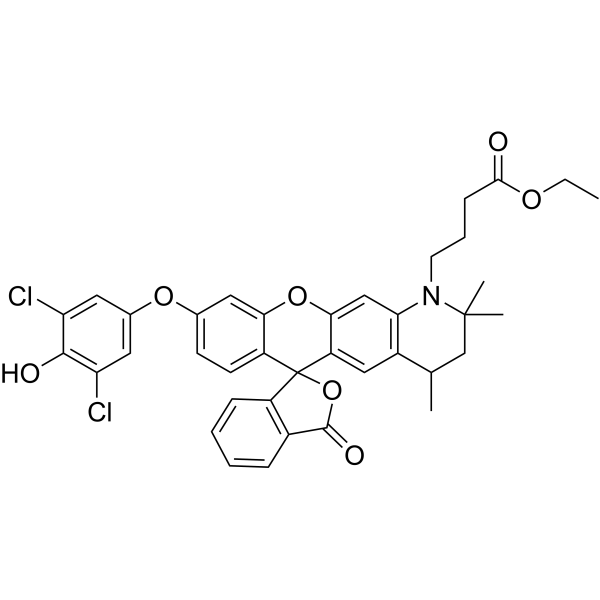
HKOCl-4 (BXY2142) is a rhodol-based yellow fluorescent probe for the detection of hypochlorous acid with excellent sensitivity and selectivity . HKOCl-4 has longer absorption wavelength and better pH stability compared with fluorescein-based probes. Ex: 530 nm; Em 557 nm.
loading...
    loading...
2
2 Cited Publications
Cat. No.: HY-K1077

Annexin V-mCherry/SYTOX Green Apoptosis Detection Kit provides a rapid and convenient method to detect cell apoptosis and necrosis. After staining, live cells show little or no fluorescence, apoptosis cells show red fluorescence, necrosis cells show red and green fluorescence.

loading...
    loading...
2
2 Cited Publications
Cat. No.: HY-D0150
CAS No.: 107091-89-4
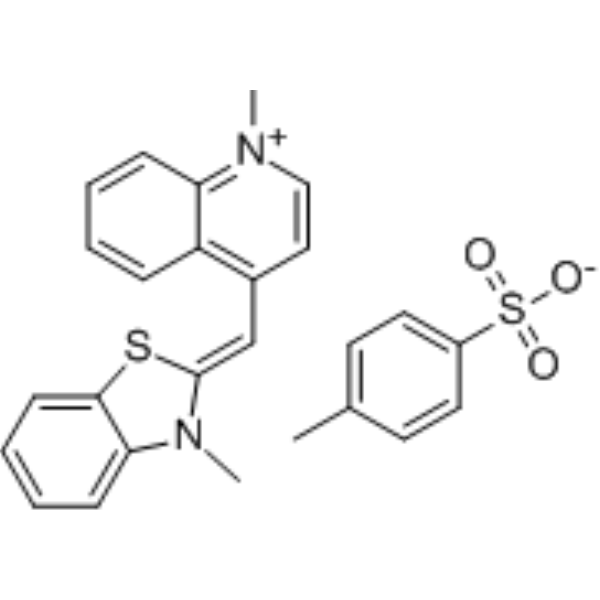
Thiazole Orange is an asymmetric anthocyanin dye that can be coupled with oligonucleotides (ONs) to prepare fluorescent hybridization probes. Thiazole Orange has been widely used in biomolecular detection and staining of DNA/ RNA in gels and can be used for reticulocyte analysis. Thiazole orange generates a significant fluorescence enhancement and high quantum yield when it binds with nucleic acids, especially RNA. Thiazole orange can permeate living cell membranes. Thiazole orange can use UV light for detection, but can also be detected with blue light. The excitation and emission of Thiazole orange are λex = 510 nm (488 nm and 470 nm also show strong excitation) and λem = 527 nm, respectively .
loading...
    loading...
2
2 Cited Publications
Cat. No.: HY-K1095

MCE Live & Dead Bacterial Viability and Counting Kit is based on dual-fluorescence staining technology, which can effectively differentiate live bacteria from dead bacteria and enable quantitative detection using flow cytometry. It can also be used for quantitative analysis of various bacterial mixtures.

loading...
    loading...
2
2 Cited Publications
Cat. No.: HY-130015
Purity:  98.99%
HKSOX-1 (5/6-mixture) is a fluorescent probe which is used for imaging and detection of endogenous superoxide in live cells and in vivo. HKSOX-1 (5/6-mixture) exhibits excellent selectivity and sensitivity towards superoxide anion radical (Ex/Em = 509/534 nm) .
loading...
    loading...
2
2 Cited Publications
Cat. No.: HY-116424
CAS No.: 1354630-46-8
Purity:  ≥99.0%
Synonyms: Anti-dynamin II
Research Areas:  

Cancer

DYn-2 (Anti-dynamin II) is a chemoselective sulfenylated protein probe. DYn-2 binds to sulfenylated proteins with chemoselectivity, enabling the detection of such proteins. DYn-2 can detect differences in intracellular sulfenylation rates. DYn-2 can be used in human cancer research, including studies on breast cancer and lung cancer .
loading...
    loading...
2
2 Cited Publications
Cat. No.: HY-D1836
Synonyms: VF 555 Tyramide
Vari Fluor 555 TSA (200x) , also know as VF 555 Tyramide. Vari Fluor 555 TSA (200x) is one of Vari Fluor TSA series fluorescent probes, which can be used for high-density in situ labeling assays. Vari Fluor TSA series target antigens via horseradish peroxidase (HRP), which are widely used in ELISA, IF, IHC and other techniques with high detection sensitivity .
loading...
    loading...
2
2 Cited Publications
Cat. No.: HY-KD1006

MCE offers a variety of multiplex fluorescence detection kits, featuring high quenching resistance, low cross-contamination, and strong stability. The five-color multiplex fluorescence staining kit can stain four indicators. (MCE offers six VF series dyes: VF 480, VF 520, VF 570, VF 620, VF 690, and VF 780; you can flexibly select according to your actual needs.)

loading...
    loading...
2
2 Cited Publications
Cat. No.: HY-108717A
CAS No.: 39450-01-6
Synonyms: Recombinant Protease K (DNase & RNase free, animal free)
Target:  

Ser/Thr Protease

Research Areas:  

Others

Recombinant Proteinase K (Protease K) (DNase & RNase free, animal free) is a nonspecific serine protease that is useful for general digestion of proteins. Proteinase K (DNase & RNase free, animal free) is active in the presence of SDS or urea and over a wide range of pH (4-12), salt concentrations, and temperatures. Proteinase K (DNase & RNase free, animal free) can be use for promoting methods of viral nucleic acid extraction, and detection. This product is of molecular biology grade, free of animal-derived ingredients, and is recombinantly purified from yeast .
loading...
    loading...
2
2 Cited Publications
Cat. No.: HY-P2848
CAS No.: 9028-76-6
Synonyms: ChOx, Microorganism
Target:  

Xanthine Oxidase

Research Areas:  

Infection Metabolic Disease

Cholesterol oxidase, Microorganism (ChOx, Microorganism) (EC 1.1.3.6) is a cholesterol oxidase identified from bacterial sources. Cholesterol oxidase, Microorganism catalyzes the oxidation of cholesterol to 4-cholesten-3-one, while simultaneously reducing oxygen to hydrogen peroxide. Cholesterol oxidase, Microorganism retains its enzymatic activity and exhibits improved catalytic efficiency upon immobilization. Cholesterol oxidase, Microorganism is applicable for cholesterol detection, steroid biotransformation, and research on tuberculosis-related diseases .
loading...
    loading...