
698 Results for "

Matrix

" in MedChemExpress (MCE) Product Catalog:
Products (698)

698 Results for "Matrix" in MCE Product Catalog:

  • Targets Recommended:
2
2 Cited Publications
Cat. No.: HY-K6004

MCE Growth Factor Reduced Basement Membrane Matrix (Phenol Red-Free) is primarily composed of natural basement membrane matrix extracted from mouse tumors and contains abundant extracellular matrix components and a variety of naturally occurring growth factors. This product is primarily designed for 3D organoid culture and other research applications requiring high-quality basement membrane matrix. The phenol red-free formulation avoids potential interference with experiments requiring subsequent colorimetric or color-based analysis.

loading...
    loading...
2
2 Cited Publications
Cat. No.: HY-P70105
Purity:  ≥ 95%, as determined by reducing SDS-PAGE.
Synonyms: DMP1; Dentin Matrix Acidic Phosphoprotein; Dentin Matrix Acidic Phosphoprotein 1; ARHP; Dentin Matrix Protein 1; ARHR; DMP-1
Species:  
Human
Source:  
HEK293
loading...
    loading...
2
2 Cited Publications
Cat. No.: HY-W014125
CAS No.: 1852-04-6
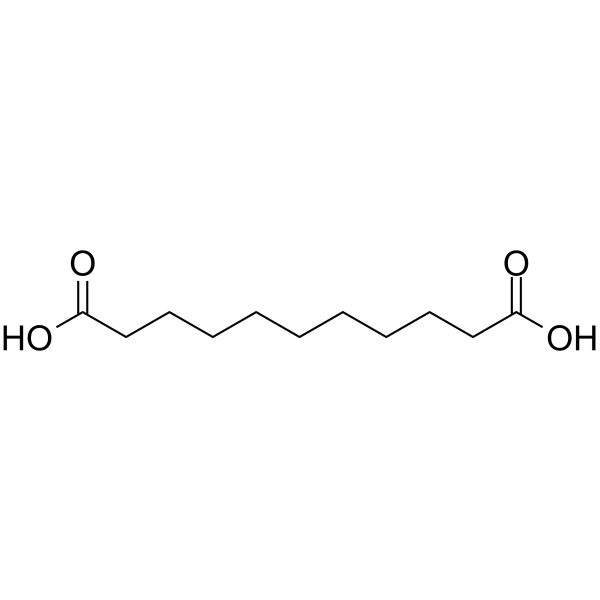
Undecanedioic acid is an oral activie nndogenous metabolite. Undecanedioic acid is associated with intercellular matrix macromolecules and specifically with elastin .
loading...
    loading...
2
2 Cited Publications
Cat. No.: HY-P73300
Purity:  ≥ 90%, as determined by reducing SDS-PAGE.
Synonyms: MMP9; Matrix Metallopeptidase 9 (Gelatinase B, 92kDa Gelatinase, 92kDa Type IV Collagenase); Prev. CLG4B; Macrophage Gelatinase; Matrix Metalloproteinase 9 (Gelatinase B, 92kDa Gelatinase, 92kDa Type IV Collagenase); Type V Collagenase; Matrix Metalloproteinase-9; 92 KDa Gelatinase; MMP-9; Gelatinase B; GELB; MANDP2; Matrix Metallopeptidase 9; 92 KDa Type IV Collagenase
Species:  
Human
Source:  
HEK293
loading...
    loading...
2
2 Cited Publications
Cat. No.: HY-P70351A
Purity:  ≥ 95%, as determined by reducing SDS-PAGE.
Synonyms: MMP9; Matrix Metallopeptidase 9 (Gelatinase B, 92kDa Gelatinase, 92kDa Type IV Collagenase); Prev. CLG4B; Macrophage Gelatinase; Matrix Metalloproteinase 9 (Gelatinase B, 92kDa Gelatinase, 92kDa Type IV Collagenase); Type V Collagenase; Matrix Metalloprot
Species:  
Mouse
Source:  
HEK293
loading...
    loading...
2
2 Cited Publications
Cat. No.: HY-134427
CAS No.: 188174-64-3
Purity:  96.00%
Synonyms: Palmitoyl CoA lithium
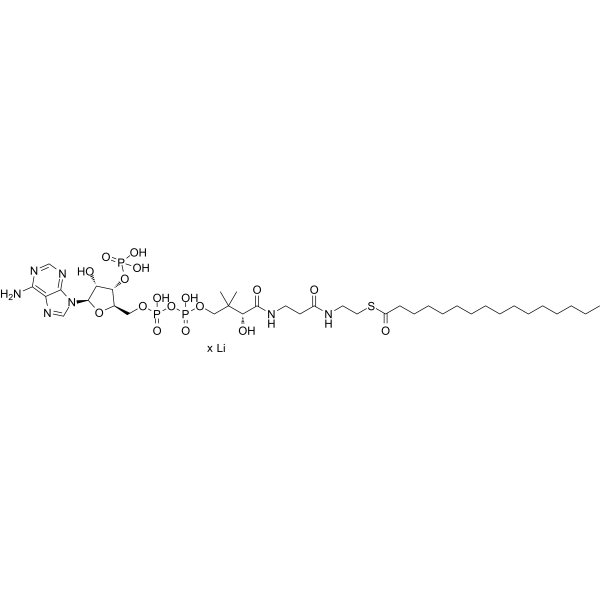
Palmitoyl coenzyme A lithium is an acyl-CoA thioester that can be transported into the mitochondrial matrix via the carnitine shuttle system and is involved in β-oxidation. Palmitoyl coenzyme A lithium can also be used as a substrate for sphingosine biosynthesis .
loading...
    loading...
2
2 Cited Publications
Cat. No.: HY-19485
CAS No.: 1224964-36-6
Target:  

MMP

Research Areas:  

Cardiovascular Disease

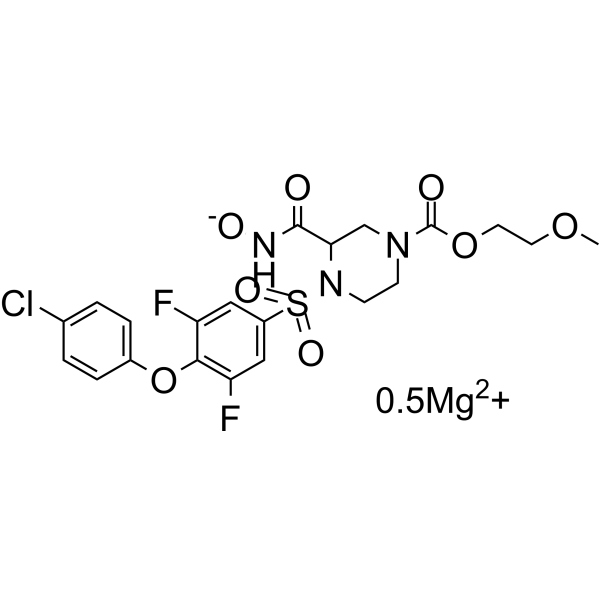
XL-784 is a selective matrix metalloproteinases (MMP) inhibitor, with IC50s of ~1900, 0.81, 120, 10.8, 18, 0.56 nM for MMP-1, MMP-2, MMP-3, MMP-8, MMP-9, MMP-13, respectively.
loading...
    loading...
2
2 Cited Publications
Cat. No.: HY-P73810
Purity:  ≥ 95%, as determined by reducing SDS-PAGE.
Synonyms: MMP2; Matrix Metallopeptidase 2 (Gelatinase A, 72kDa Gelatinase, 72kDa Type IV Collagenase); Prev. CLG4A; Collagenase Type IV-A; Prev. CLG4; Neutrophil Gelatinase; TBE-1; 72 KDa Gelatinase; MMP-2; Gelatinase A; 72 KDa Type IV Collagenase; MMP-II; Matrix M
Species:  
Mouse
Source:  
HEK293
loading...
    loading...
2
2 Cited Publications
Cat. No.: HY-P80756
Synonyms: MMP9; CLG4B; Matrix metalloproteinase-9; MMP-9; 92 kDa gelatinase; 92 kDa type IV collagenase; Gelatinase B; GELB

Host:  

Rabbit

Application:  

WB, IHC-P, ICC/IF

Reactivity:  

Human, Mouse, Rat

loading...
    loading...
2
2 Cited Publications
Cat. No.: HY-N2205
CAS No.: 66656-92-6
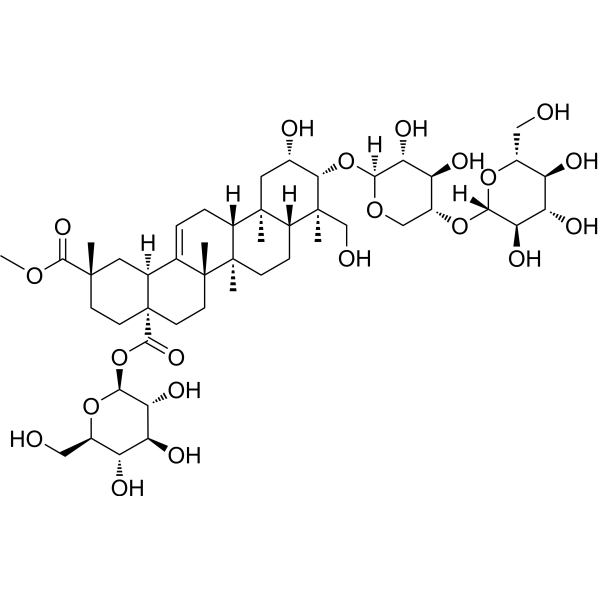
Esculentoside H (EsH) is a saponin isolated from the root extract of perennial plant Phytolacca esculenta . Esculentoside H (EH) has anti-tumor activity, the mechanism is related to the capacity for TNFrelease . Esculentoside H (EsH) suppresses colon cancer cell migration through blockage of the JNK1/2 and NF-κB signaling-mediated matrix metalloproteinases-9 (MMP-9) expression .
loading...
    loading...
2
2 Cited Publications
Cat. No.: HY-N11287A
CAS No.: 108320-89-4
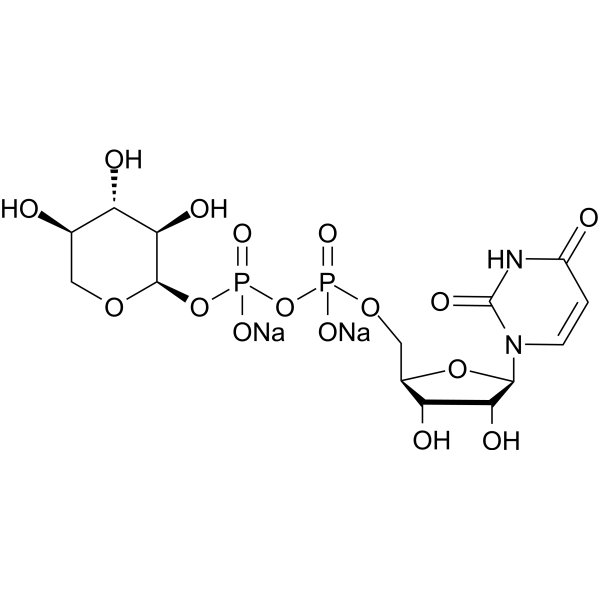
UDP-xylose disodium is an endogenous sugar nucleotide and a catalytic substrate of UDP-xylose disodium synthase (UXS). UDP-xylose disodium is a sugar donor for the synthesis of glycoproteins, polysaccharides, various metabolites and oligosaccharides in plants, vertebrates and fungi, and participates in the synthesis of proteoglycans as a glycosyl donor. UDP-xylose disodium participates in the regulation of the synthesis of extracellular matrix components and can be used to study the mechanism of proteoglycan biosynthesis in glycobiology and related diseases (such as connective tissue diseases)[1][2].
loading...
    loading...
2
2 Cited Publications
Cat. No.: HY-N0671
CAS No.: 155-58-8
Synonyms: Rhaponiticin
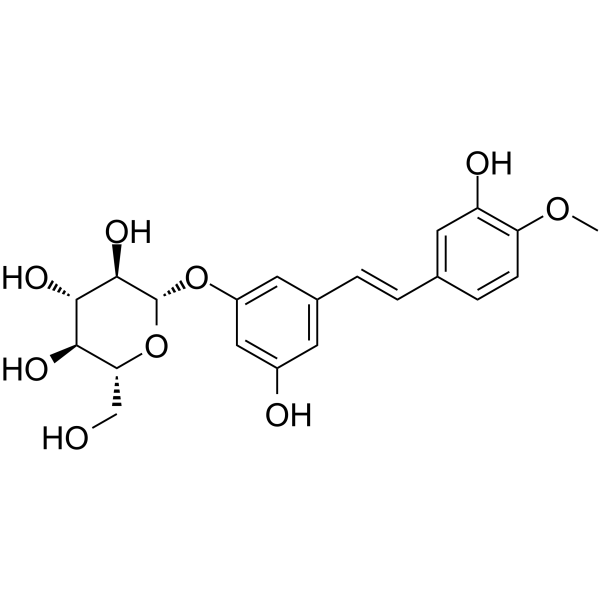
Rhapontin (Rhaponiticin) is an orally aactive SIRT1 agonist and AMPK activator with anti-inflammatory and anti-fibrotic activities. Rhapontin inhibits NLRP3 inflammasome activation by activating SIRT1 and inhibits TGF-β/Smad signaling via the AMPK pathway. Rhapontin reduces intestinal and lung inflammation, inhibits fibroblast differentiation and extracellular matrix deposition, and enhances tight junction protein expression to repair epithelial barriers. Rhapontin can be used in the study of inflammatory bowel diseases (such as ulcerative colitis) and pulmonary fibrosis .
loading...
    loading...
2
2 Cited Publications
Cat. No.: HY-114091
CAS No.: 820223-77-6
Purity:  ≥99.0%
Target:  

MMP

Research Areas:  

Inflammation/Immunology

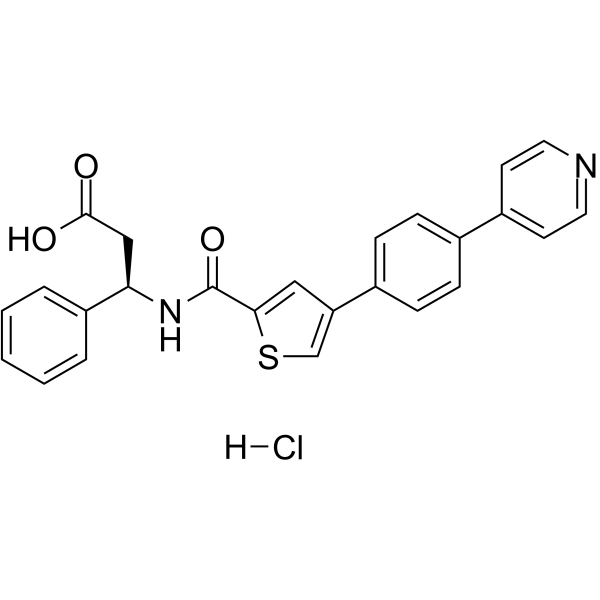
PF-00356231 hydrochloride is a specific, non-peptidic, non-zinc chelating ligand and inhibitor of matrix metalloproteinase MMP-12 (IC50=1.4 μM). PF-00356231 hydrochloride binds to MMP-12 and forms PF-00356231/MMP-12 complex. PF-00356231 hydrochloride shows potency against MMP-13, MMP-8, MMP-9, MMP-3 with IC50s of 0.00065, 1.7, 0.98, 0.39 μM, respectively .
loading...
    loading...
2
2 Cited Publications
Cat. No.: HY-N6985
CAS No.: 27548-93-2
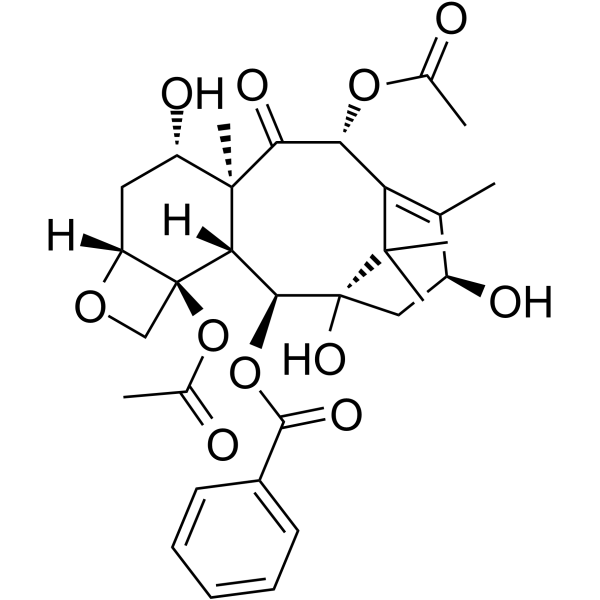
Baccatin III is an orally available, selective inhibitor of the TGF-β1 signaling pathway and myeloid-derived suppressor cell (MDSC) activation. Baccatin III targets the AKT/STAT6 and Smad2/3 pathways, blocking TGF-β1-induced fibroblast differentiation and MDSC-mediated immunosuppression. Baccatin III exerts anti-inflammatory and anti-fibrotic effects by inhibiting macrophage activation and extracellular matrix deposition, and shows potential in the treatment of pulmonary fibrosis and cancer in terms of regulating the tumor immune microenvironment .
loading...
    loading...
2
2 Cited Publications
Cat. No.: HY-P72945
Purity:  ≥ 90%, as determined by reducing SDS-PAGE.
Synonyms: COMP; TSP-5; Prev. PSACH; Cartilage Oligomeric Matrix Protein (Pseudoachondroplasia, Epiphyseal Dysplasia 1, Multiple); Prev. EDM1; Multiple Epiphyseal Dysplasia; Prev. EPD1; Pseudoachondroplasia (Epiphyseal Dysplasia 1, Multiple); TSP5; Alternative Prote
Species:  
Human
Source:  
HEK293
loading...
    loading...
2
2 Cited Publications
Cat. No.: HY-P71691
Purity:  ≥ 90%, as determined by reducing SDS-PAGE.
Synonyms: TNC; Neuronectin; Prev. HXB; Cytotactin; Prev. DFNA56; Tenascin-C; TN; MGC167029; Tenascin; GMEM; Glioma-Associated-Extracellular Matrix Antigen; TN-C; Deafness, Autosomal Dominant 56; JI; Tenascin-C Additional Domain 1; Hexabrachion (Tenascin C, Cytotact
Species:  
Human
Source:  
E. coli
loading...
    loading...
2
2 Cited Publications
Cat. No.: HY-D0227B
CAS No.: 6850-28-8
Synonyms: Tris acetate; Tris(hydroxymethyl)aminomethane acetate
Research Areas:  

Metabolic Disease

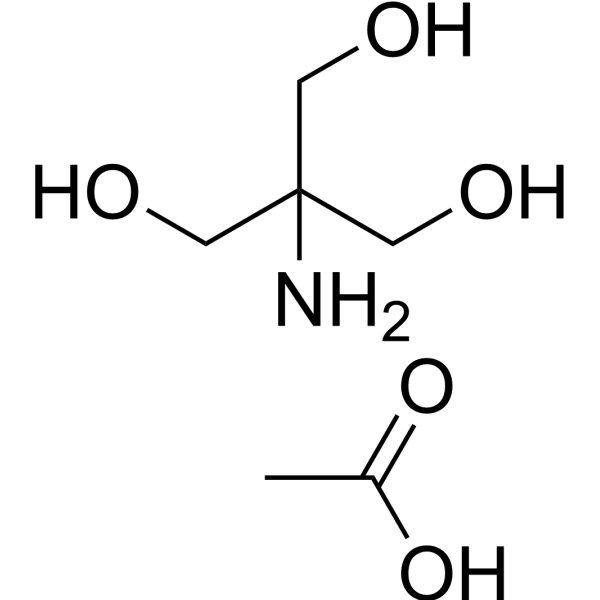
THAM acetate is a low-toxicity amino alcohol buffer, a CO2-consuming proton acceptor that buffers carbon dioxide and acid both in vitro and in vivo. THAM acetate binds protons to form bicarbonate, reduces PaCO2, and induces intracellular alkalization, thereby ameliorating hypercapnia-induced elevation of pulmonary blood vessels and pulmonary arterial pressure. THAM acetate may cause PaCO2 rebound, hypoglycemia, and respiratory depression. THAM acetate removes amniotic epithelium and preserves the basement membrane, but depletes extracellular matrix and reduces the adhesion rate of limbal epithelial cells. THAM acetate can act as a CO2 carrier to enhance the productivity and carbon utilization rate of Scenedesmus obliquus. THAM acetate is a key component of buffer solutions used in various biological, cell culture, biochemical, and molecular biology applications .
loading...
    loading...
2
2 Cited Publications
Cat. No.: HY-P73917
Purity:  ≥ 90%, as determined by reducing SDS-PAGE.
Synonyms: HSPD1; HuCHA60; Prev. SPG13; CPN60; HSP60; Spastic Paraplegia 13 (Autosomal Dominant); 60 KDa Heat Shock Protein, Mitochondrial; Epididymis Secretory Sperm Binding Protein; Mitochondrial Matrix Protein P1; Heat Shock 60kD Protein 1 (Chaperonin); 60 KDa Ch
Species:  
Human
Source:  
E. coli
loading...
    loading...
2
2 Cited Publications
Cat. No.: HY-D0227J
CAS No.: 1185-53-1
Synonyms: Tris HCl (≥99%, for cell culture); Tris hydrochloride (≥99%, for cell culture)
THAM hydrochloride (≥99%, for cell culture) is a low-toxicity amino alcohol buffer, a specific CO2-consuming proton acceptor that buffers carbon dioxide and acid both in vitro and in vivo. THAM hydrochloride (≥99%, for cell culture) binds protons to form bicarbonate, reduces PaCO2, and induces intracellular alkalization, thereby ameliorating hypercapnia-induced elevation of pulmonary blood vessels and pulmonary arterial pressure. THAM hydrochloride (≥99%, for cell culture) may cause PaCO2 rebound, hypoglycemia, and respiratory depression. THAM hydrochloride (≥99%, for cell culture) removes amniotic epithelium and preserves the basement membrane, but depletes extracellular matrix and reduces the adhesion rate of limbal epithelial cells. THAM hydrochloride (≥99%, for cell culture) can act as a CO2 carrier to enhance the productivity and carbon utilization rate of Scenedesmus obliquus. THAM hydrochloride (≥99%, for cell culture) is a key component of buffer solutions used in various biological, cell culture, biochemical, and molecular biology applications .
loading...
    loading...
2
2 Cited Publications
Cat. No.: HY-N0249
CAS No.: 20736-08-7
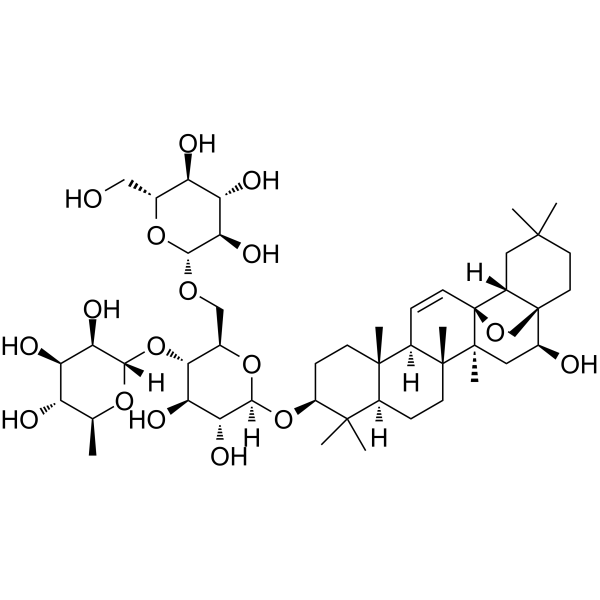
Saikosaponin C is an orally active MMP-2 inducer. Saikosaponin C induces the survival, growth, migration and capillary tube formation of endothelial cells. Saikosaponin C inhibits the early stage of hepatitis C virus infection. Saikosaponin C can be used in research related to ischemic tissue diseases, chronic kidney diseases and hepatitis C virus infection .
loading...
    loading...

