141 Results for "

HCC cell

" in MedChemExpress (MCE) Product Catalog:
Products (141)

141 Results for "HCC cell" in MCE Product Catalog:

Cat. No.: HY-138813R
Synonyms: SU-12662 hydrochloride (Standard)
Research Areas:  

Cancer

Glycochenodeoxycholic acid sodium salt (Standard) is the analytical standard of Glycochenodeoxycholic acid sodium salt. This product is intended for research and analytical applications. Glycochenodeoxycholic acid sodium salt (Sodium glycochenodeoxycholate) is a relatively toxic bile salt generated in the liver from chenodeoxycholic acid and glycine. Glycochenodeoxycholic acid sodium salt inhibits Autophagosome formation and impairs lysosomal function by inhibiting lysosomal proteolysis and increasing lysosomal pH in human normal liver cells, leading to the Apoptosis of human hepatocyte cells. Glycochenodeoxycholic acid sodium salt induces stemness and chemoresistance via activating STAT3 signaling pathway in hepatocellular carcinoma cells (HCC). Glycochenodeoxycholic acid sodium salt is promising for research in the field of cholestasis desease, hepatocellular carcinoma and primary sclerosing cholangitis (PSC) .
loading...
    loading...
Cat. No.: HY-161934
Research Areas:  

Cancer

PARP1-IN-27 (Compound 9B) is the inhibitor for PARP1 and PARP2, with IC50 of 2.53 nM and 6.45 nM in cell SUM149PT. PARP1-IN-27 inhibits the proliferation of BRCA-mutated cancer cells SUM149PT, HCC1937 and Capan-1, with IC50 of 0.62, 1.91 and 4.26 μM respectively. PARP1-IN-27 aggravates DNA double-strand breaks, increases ROS generation, arrests cell cycle at G2/M phase, and induces apoptosis in SUM149PT .
loading...
    loading...
Cat. No.: HY-170549
CAS No.: 3116929-46-2
Target:  

VEGFR

Research Areas:  

Cancer

VEGFR-2-IN-60 (compound 5c) is a potent VEGFR-2 inhibitor with an IC50 of 1.07 nM. VEGFR-2-IN-60 exhibits cytotoxic activity against HCC1806, Hela, and A549 cell lines .
loading...
    loading...
Cat. No.: HY-180281
CAS No.: 3099026-16-8
Research Areas:  

Cancer

PLAGL2-IN-1 is a inhibitor of pleiomorphic adenoma-like protein 2 (PLAGL2) with a Kd of 2.23 µM. PLAGL2-IN-1 suppresses PLAGL2 transcriptional activity, induces G0/G1 cell cycle arrest, and apoptosis, thereby inhibiting hepatocellular carcinoma (HCC) cell proliferation. PLAGL2-IN-1 disrupts extracellular matrix organization and suppresses the PI3K-AKT pathway by reducing AKT phosphorylation. PLAGL2-IN-1 inhibits tumor growth in an HCCLM3 xenograft mouse model. PLAGL2-IN-1 can be used for the research of HCC .
loading...
    loading...
Cat. No.: HY-172499
Target:  

Liposome

Research Areas:  

Cancer

DSPE-PEG1000-Mal-CLPLIPTHIISFS is a PEG compound composed of DSPE and the liver cancer targeting peptide SP94 (HY-P11050A) (sequence SFSIIHTPILPL). SP94 exhibits specific binding to hepatocellular carcinoma (HCC) cells. DSPE-PEG1000-Mal-CLPLIPTHIISFS can be used to prepare lipid nanoparticles to form liver cancer-targeting nanocarriers.
loading...
    loading...
Cat. No.: HY-172501
Target:  

Liposome

Research Areas:  

Cancer

DSPE-PEG5000-Mal-CLPLIPTHIISFS is a PEG compound composed of DSPE and the liver cancer targeting peptide SP94 (HY-P11050A) (sequence SFSIIHTPILPL). SP94 exhibits specific binding to hepatocellular carcinoma (HCC) cells. DSPE-PEG5000-Mal-CLPLIPTHIISFS can be used to prepare lipid nanoparticles to form liver cancer-targeting nanocarriers.
loading...
    loading...
Cat. No.: HY-179385
Research Areas:  

Cancer

Tubulin-IN-62 is a tubulin inhibitor targeting the colchicine-binding site. Tubulin-IN-62 exhibits IC50 values of 17.2 nM and 19.3 nM against SKOV3 and HCC827 cells, respectively. Tubulin-IN-62 inhibits microtubule polymerization, arrests the cell cycle at the G2/M phase, and induces apoptosis. Tubulin-IN-62 demonstrates significant antitumor efficacy in vivo with good tolerability. Tubulin-IN-62 can be used in ovarian cancer and non-small cell lung cancer (NSCLC) research .
loading...
    loading...
Cat. No.: HY-184448
CAS No.: 2963747-43-3
CIB-Q22 is a potent pyruvate carboxylase (PC) inhibitor with an IC50 of 1.74 nM. CIB-Q22 suppresses hepatocellular carcinoma (HCC) cell proliferation, migration, and invasion. CIB-Q22 induces apoptosis and ferroptosis, promotes mitochondrial oxidative stress and dysfunction, inhibits glycolysis and anaplerotic flux, and reverses epithelial-mesenchymal transition (EMT). CIB-Q22 can be used for the study of hepatocellular carcinoma .
loading...
    loading...
Cat. No.: HY-173038
Target:  

EGFR ERK STAT Apoptosis

Research Areas:  

Cancer

EGFR-IN-151 (Compound 10) inhibits EGFR and its downstream signaling pathways ERK/STAT3. EGFR-IN-151 inhibits the proliferation of a variety lung cancer cells (IC50s for NCI-H1781, HCC827, NCI-H3255 and NCI-H1975 is 11.7, 5.19, 7.32 and 1.53 μM, respectively), inhibits the colony formation and migration of H1975, arrests the cell cycle at G1 phase, and induces apoptosis in H1975 .
loading...
    loading...
Cat. No.: HY-162650
CAS No.: 3054715-45-3
Target:  

ClpP

Research Areas:  

Cancer

SL44 is an agonist for human caseinolytic protease P (HsClpP), with an EC50 of 1.30 μM. SL44 inhibits the proliferation of LM3 with an IC50 of 3.1 μM. SL44 induces apoptosis in HCC cells, through the degradation of respiratory chain complex subunits. SL44 exhibits antitumor efficacy in mouse models without obvious toxicity (LD50=400 mg/kg). SL44 exhibits good pharmacokinetic characters in rat models .
loading...
    loading...
Cat. No.: HY-176957
CAS No.: 3097325-25-9
Target:  

Wee1

Research Areas:  

Cancer

PKMYT1-IN-11 (Example 1) is a PKMYT1 inhibitor with an IC50 of 4.49 nM. PKMYT1-IN-11 inhibits the proliferation of HCC1569 cells. When combined with Gemcitabine (HY-17026), PKMYT1-IN-11 shows a significant anti-tumor effect in the OVCAR3 xenograft mouse model. PKMYT1-IN-11 can be used for the study of various cancers such as breast cancer and ovarian cancer .
loading...
    loading...
Cat. No.: HY-P11816
Research Areas:  

Cancer

DOTA-cTMTP1 is a cyclic tumor-homing peptide precursor molecule. DOTA-cTMTP1 selectively binds to XPNPEP2 on highly metastatic tumor cells, accumulates and retains in hepatocellular carcinoma tumors, and maintains a high tumor-to-liver contrast over time in small animal models. After radiolabeling with 68Ga, DOTA-cTMTP1 forms a PET probe for positron emission tomography (PET) imaging of hepatocellular carcinoma (HCC).
loading...
    loading...
Cat. No.: HY-17654
CAS No.: 1429497-30-2
Target:  

EGFR mTOR

Research Areas:  

Cancer

BIEGi-1 is an EGFR inhibitor. BIEGi-1 effectively disrupts the EGFR-Rheb interaction in cells. BIEGi-1 robustly inhibits EGFR kinase activity (reduces p-Y1068-EGFR) as well as mTORC1 activation (reduces p-T389-S6K1) in EGFR-mutant cells. BIEGi-1 shows strong antiproliferative effects on EGFR-mutant PC9 and HCC827 cells with IC50 values of 17 nM and 20 nM, respectively. BIEGi-1 can be used for the study of cancers harboring EGFR mutations, such as non-small cell lung cancer (NSCLC) .
loading...
    loading...
Cat. No.: HY-W001925
CAS No.: 6836-19-7
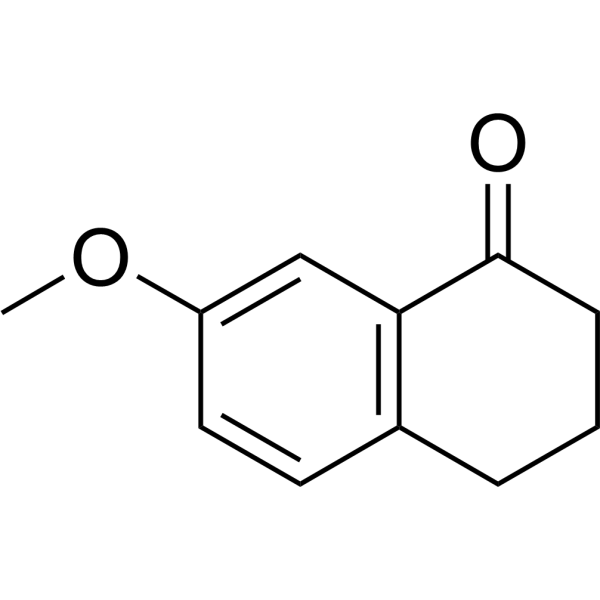
7-Methoxy-1-tetralone is a potent antitumor agent. 7-Methoxy-1-tetralone inhibits cancer cell proliferation and migration, and induces hepatocellular carcinoma cell (HCC) apoptosis. 7-Methoxy-1-tetralone decreased the protein levels of NF-κB, matrix metallopeptidase 2 (MMP2)/MMP9, and p-AKT. 7-Methoxy-1-tetralone showed antitumor activity in nude mice and had no effect on body weight and liver, spleen and organ index .
loading...
    loading...
Cat. No.: HY-119833
CAS No.: 73694-15-2
Purity:  99.1%
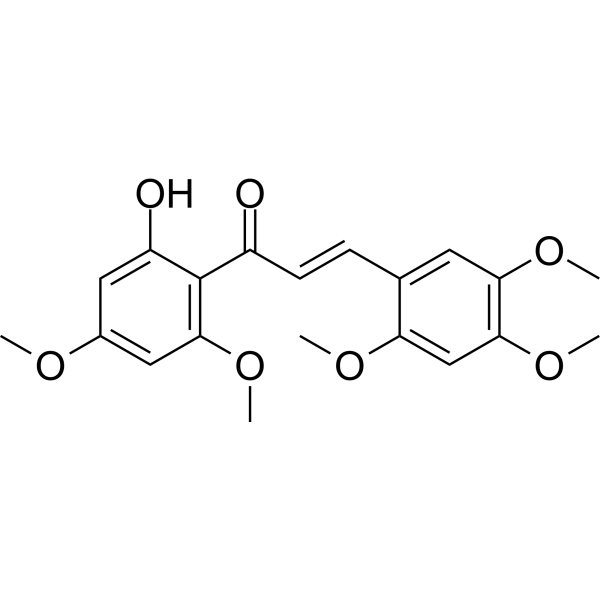
Rubone, a chalcone analog, is a modulator of miR-34a. Rubone upregulates miR-34a expression in a p53 dependent manner, downregulates the downstream target Bcl-2 and Cyclin D1 expression, and suppresses hepatocellular carcinoma (HCC) growth in vivo. Rubone enhances the anticancer effect of Paclitaxel (PTX; HY-B0015) in PTX-resistant prostate cancer cell lines by reversing the expression of miR-34a downstream targets .
loading...
    loading...
Cat. No.: HY-150596
CAS No.: 2460738-32-1
Target:  

Apoptosis Bcl-2 Family JNK

Research Areas:  

Cancer

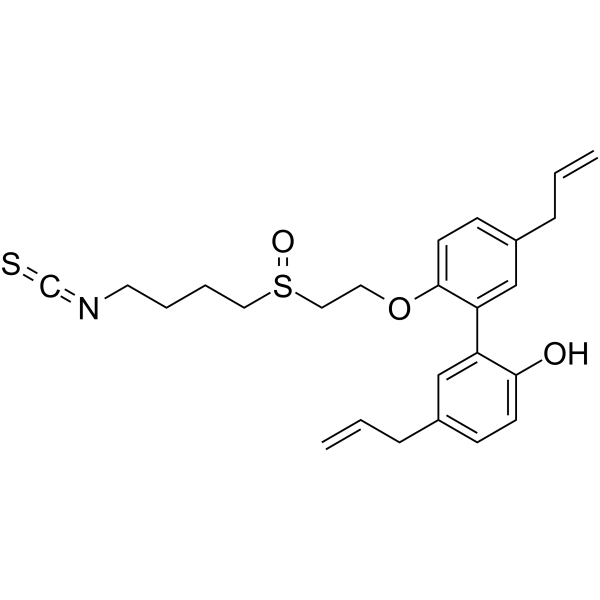
CT1-3 is a potent anticancer agent. CT1-3 induces mitochondria-mediated apoptosis by regulating JNK/Bcl-2/Bax/XIAP pathway. CT1-3 suppresses the epithelial mesenchymal transition (EMT) potential of human cancer cells (HCCs) via regulating the E-cadherin/Snail axis, thus inhibits tumorigenesis. CT1-3 has a strong antitumor effect in mice model and exhibits no significant hepatic and renal toxicity .
loading...
    loading...
Cat. No.: HY-175606
CAS No.: 2588489-03-4
Target:  

ATP Citrate Lyase

Research Areas:  

Cancer

EVT0185 is an orally active ATP citrate lyase (ACLY) inhibitor. EVT0185 is converted to a CoA thioester in the liver by SLC27A2 and interacts with the CoA-binding site of ACLY. EVT0185-CoA inhibits ACLY activity with an IC50 of 2.5 μM. EVT0185 can phenocopy the immune and antitumour effects of genetic ACLY deletion. EVT0185 can increase tumour-infiltrating B cells and chemokine CXCL13 levels. EVT0185 can be used for the research of cancer, such as hepatocellular carcinoma (HCC) .
loading...
    loading...
Cat. No.: HY-147793
CAS No.: 2423992-63-4
Target:  

FGFR

Research Areas:  

Cancer

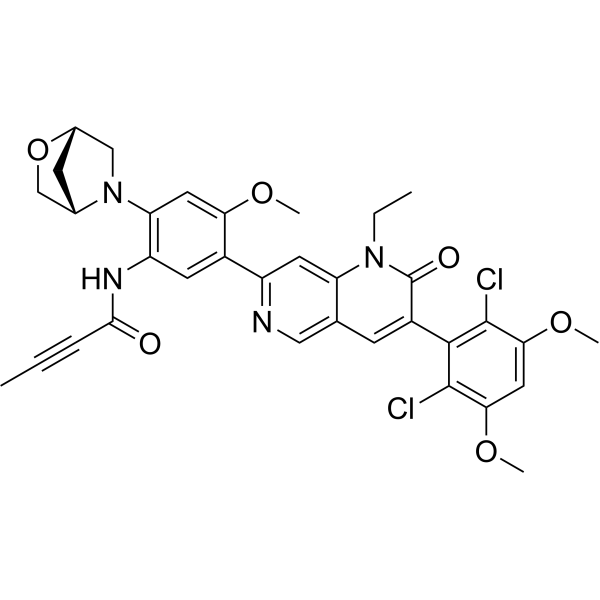
FGFR4-IN-12 (Compound A34) is a potent inhibitor of FGFR4. FGFR4-IN-12 exhibits improved FGFR4 inhibitory capability and selectivity and excellent anti-proliferative activities against FGFR4-dependent HCC cell lines. FGFR4-IN-12 has the potential for the research of cancer diseases . FGFR4-IN-12 is a click chemistry reagent, it contains an Alkyne group and can undergo copper-catalyzed azide-alkyne cycloaddition (CuAAc) with molecules containing Azide groups.
loading...
    loading...
Cat. No.: HY-N0751R
CAS No.: 27740-01-8
Scutellarin (Standard) is the analytical standard of Scutellarin. This product is intended for research and analytical applications. Scutellarin, an active flavone isolated from Scutellaria baicalensis, can down-regulates the STAT3/Girdin/Akt signaling in HCC cells, and inhibits RANKL-mediated MAPK and NF-κB signaling pathway in osteoclasts. Scutellarin is active against HIV-1IIIB, HIV-1(74V) and HIV-1KM018 with EC50s of 26 μM, 253 μM and 136 μM, respectively.
loading...
    loading...
Cat. No.: HY-178114
CAS No.: 3065966-31-3
Research Areas:  

Cancer

SKLB-0124 is a selective PRMT6 degrader based on a hydrophobic labeling (HyT) method. SKLB-0124 is a selective PRMT6 degrader with DC50s of 15.4 μM and a 16.4 μM in HCC827 and MDA-MB-435 cells. SKLB-0124 does not degrade PRMT1 or PRMT8. SKLB-0124 exhibits an IC50 on PRMT6 of 1.6 μM. SKLB-0124 induces proteasome dependent degradation of PRMT6 and significantly inhibits the proliferation. SKLB-0124 effectively induces apoptosis and cell cycle arrest. SKLB-0124 can be used for the studies of lung cancer and breast cancer .
loading...
    loading...

