143 Results for "

BACE1,

" in MedChemExpress (MCE) Product Catalog:
Products (143)

143 Results for "BACE1," in MCE Product Catalog:

Cat. No.: HY-N2284
CAS No.: 216450-65-6
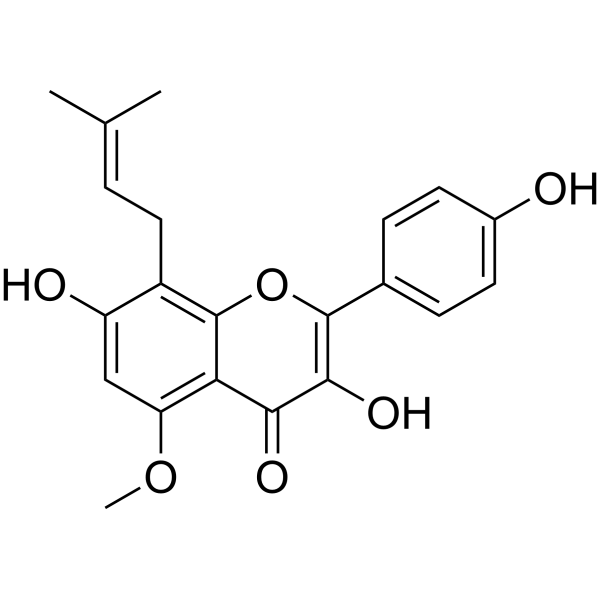
Sophoflavescenol is a prenylated flavonol, which shows great inhibitory activity with IC50 of 0.013 μM against Phosphodiesterase 5 (PDE5), and also inhibits RLAR, HRAR, AGE, BACE1, AChE and BChE with IC50s of 0.30 μM, 0.17 μM, 17.89 μg/mL, 10.98 μM, 8.37 μM and 8.21 μM, respectively.
loading...
    loading...
Cat. No.: HY-170938
AChE-IN-82 (compound 49) is an acetylcholinesterase (AChE) inhibitor. AChE-IN-82 inhibits eeAChE, eqBChE, hMAO-A, hMAO-B, and BACE-1 with IC50s of 0.072, 9.81, 14.52, 0.024, 2.42 μM, respectively. AChE-IN-82 inhibits COX-1, COX-2 and 5-LOX with IC50s of 60.41, 0.187, 0.18 μM, respectively. AChE-IN-82 shows an excellent neuroprotective effect by significantly reducing oxidative stress induced by H2 O2 [1].
loading...
    loading...
Cat. No.: HY-100740A
CAS No.: 1383986-31-9
Synonyms: AZD-3293 hydrochloride; LY3314814 hydrochloride
Target:  

Beta-secretase

Research Areas:  

Neurological Disease

Lanabecestat (AZD3293; LY3314814) hydrochloride is a potent BACE1 inhibitor that has been investigated for its potential as a modifying treatment for Alzheimer's disease. Lanabecestat (hydrochloride) demonstrated significant dose- and time-dependent reductions in concentrations of amyloid beta peptides in plasma, cerebrospinal fluid, and brain. Lanabecestat (hydrochloride) was also shown to produce reductions in Aβ neuritic plaque burden without demonstrating clinical benefits or slowing the progression of Alzheimer's disease pathophysiology.
loading...
    loading...
Cat. No.: HY-N8912
CAS No.: 509-93-3
Ambrosin is an orally active NF-κβ and BACE1 inhibitor. Ambrosin reduces pro-inflammatory and nitrosative mediators, increases PPARγ levels, inhibits apoptosis (Apoptosis), enhances autophagy (Autophagy), and ameliorates oxidative stress. Ambrosin reduces Amyloid plaque deposition. Ambrosin improves lipopolysaccharide-induced memory impairment and colonic histopathological changes. Ambrosin can be used in research related to Alzheimer's disease and colitis [1] .
loading...
    loading...
Cat. No.: HY-111383R
CAS No.: 333745-53-2
LX2343 (Standard) is the analytical standard of LX2343 (HY-111383). This product is intended for research and analytical applications. LX2343 is a BACE1 enzyme inhibitor with an IC50 value of 11.43±0.36 μM. LX2343 acts as a non-ATP competitive PI3K inhibitor with an IC50 of 15.99±3.23 μM. LX2343 stimulates autophagy in its promotion of Aβ clearance.
loading...
    loading...
Cat. No.: HY-N0249R
CAS No.: 20736-08-7
Saikosaponin C (Standard) is the analytical standard of Saikosaponin C. This product is intended for research and analytical applications. Saikosaponin C is a bioactive component found in radix bupleuri, targets amyloid beta and tau in Alzheimer's disease. Saikosaponin C inhibits the secretion of both Aβ1-40 and Aβ1-42, and suppresses abnormal tau phosphorylation, but shows no effect on BACE1 activity and expression [1].
loading...
    loading...
Cat. No.: HY-W347202
CAS No.: 928765-97-3
Target:  

COX

N-Caffeoyl serotonin is a COX-2 inhibitor, with IC50 and Kᵢ values of 42.5 μM and 65.5 μM against COX-2, respectively. N-Caffeoyl serotonin exhibits weak inhibitory activity against BACE1, with an IC50 > 400 μM. N-Caffeoyl serotonin has free radical scavenging activity. N-Caffeoyl serotonin can be used in the research of allergic diseases and Alzheimer's disease [1] .
loading...
    loading...
Cat. No.: HY-128774
CAS No.: 1874232-80-0
Target:  

Beta-secretase

Research Areas:  

Neurological Disease

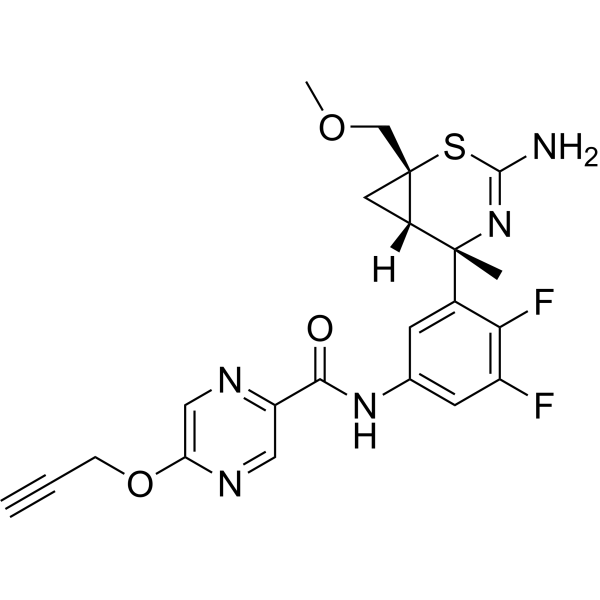
AM-6494 is a potent and orally active BACE1 (efficacious β-site amyloid precursor protein cleaving enzyme 1) inhibitor (IC50=0.4 nM) with in vivo selectivity over BACE2 (IC50=18.6 nM) [1]. AM-6494 is a click chemistry reagent, it contains an Alkyne group and can undergo copper-catalyzed azide-alkyne cycloaddition (CuAAc) with molecules containing Azide groups.
loading...
    loading...
Cat. No.: HY-183796
GFAP/NF-κB/APOE/NLRP3-IN-1 is an orally active, blood-brain barrier-permeable multi-target inhibitor with an IC50 of 3.50 nM against Acetylcholinesterase. GFAP/NF-κB/APOE/NLRP3-IN-1 inhibits BACE-1 with an IC50 of 14.61 nM. GFAP/NF-κB/APOE/NLRP3-IN-1 inhibits Aβ1-42 aggregation with an IC50 of 8.63 μM. GFAP/NF-κB/APOE/NLRP3-IN-1 reduces the levels of GFAP, NLRP3 inflammasome, NF-κB and APOE. GFAP/NF-κB/APOE/NLRP3-IN-1 is applicable for the research of Alzheimer's disease and neuroblastoma [1].
loading...
    loading...
Cat. No.: HY-115973
Target:  

Cholinesterase (ChE)

Research Areas:  

Neurological Disease

AChE-IN-11 (compound 5C) is a triple inhibitor targeting AChE/MAO-B/BACE1 (IC50=7.9 μM, 9.9 μM, 8.3 μM, respectively) and a selective metal ion chelators. AChE-IN-11 exhibits mixed AChE inhibitory effects, binding to both CAS and PAS of AChE. AChE-IN-11 also exhibits good antioxidant activity (ORAC=2.5 eq) and potential neuroprotective effects in Alzheimer's disease [1].
loading...
    loading...
Cat. No.: HY-149340
Target:  

Cholinesterase (ChE)

Research Areas:  

Neurological Disease

PD07 is an orally active AChE inhibitor (IC50: 0.29 μM for hAChE). PD07 also inhibits ChEs, BACE1 (IC50: 13.42 μM), and Aβ1–42 aggregation in in vitro. PD07 is an antioxidant, and shows DPPH inhibitory activity (IC50: 26.46 μM). PD07 improves memory and cognition in Scopolamine (HY-N0296)-induced amnesia rats. PD07 can be used for research of Alzheimer’s disease [1].
loading...
    loading...
Cat. No.: HY-182786
MAO-B-IN-56 is a multi-target-directed ligand with AChE, BChE, MAO-B, and BACE1 inhibitory activity, with IC50 values of 0.35 μM, 3.22 μM, 0.14 μM, and 3.85 μM respectively, and shows selectivity for AChE over BChE and MAO-B over MAO-A.MAO-B-IN-56 reduces amyloid-beta production, reduces paw edema, improves spatial memory, and enhances Alzheimer's disease hallmarks and associated histopathological alterations.MAO-B-IN-56 can be used for the research of alzheimer's disease [1].
loading...
    loading...
Cat. No.: HY-N13064
CAS No.: 123702-96-5
2,2′,4,4′-Tetrahydroxychalcone (Compound 18) is a selective and potent BACE1 inhibitor with an IC50 of 0.62 μM. 2,2′,4,4′-Tetrahydroxychalcone is a derivative of Isoliquiritigenin (HY-N0102) found in Glycyrrhiza uralensis. 2,2′,4,4′-Tetrahydroxychalcone can block the β-cutting step of amyloid precursor protein (APP), thereby reducing the production of β-amyloid () peptide. 2,2′,4,4′-Tetrahydroxychalcone can be used for research of Alzheimer’s disease [1].
loading...
    loading...
Cat. No.: HY-187367
Research Areas:  

Infection

WJM590 is an orally active antimalarial agent that also exhibits inhibitory activities against renin, cathepsin D, BACE1, and plasmodial aspartic proteases. WJM590 inhibits substrate and protein maturation processing mediated by key proteases of Plasmodium falciparum, arrests asexual blood-stage parasites at the late schizont stage, inhibits merozoite release, and blocks malaria parasite transmission via vectors. WJM590 exerts selective inhibitory activity against multiple Plasmodium species and drug-resistant Plasmodium falciparum strains, and reduces parasitemia in infected mice. WJM590 can be used in malaria-related research [1].
loading...
    loading...
Cat. No.: HY-175661
Research Areas:  

Neurological Disease

SRI-22136 is a Delta Opioid Receptor (DOR) antagonist that can cross blood-brain barrier with a IC50 of 0.42 nM. SRI-22136 does not have agonistic activity but antagonistic activity against DOR, MOR (IC50 = 370 nM), KOR (IC50 = 54 nM) and can avoid addiction/aversion effects. SRI-22136 can effectively inhibit the BACE1 activity induced by DADLE (a DOR agonist) (HY-105343) (IC50 = 120 nM). SRI-22136 prevents completely Alzheimer’s-like pathology in mouse model. SRI-22136 can used for the study of Alzheimer’s disease [1].
loading...
    loading...
Cat. No.: HY-100740CR
CAS No.: 1384082-96-5
Synonyms: (1α,1'S,4β)-AZD3293 (Standard); (1α,1'S,4β)-LY3314814 (Standard)
Research Areas:  

Neurological Disease

(1α,1'S,4β)-Lanabecestat (Standard) is the analytical standard of (1α,1'S,4β)-Lanabecestat (HY-100740C). This product is intended for research and analytical applications. (1α,1'S,4β)-Lanabecestat ((1α,1'S,4β)-AZD3293) a less active enantiomer of Lanabecestat. Lanabecestat is a potent, orally active and blood-brain barrier penetrating BACE1 inhibitor with a Ki of 0.4 nM [1].
loading...
    loading...
Cat. No.: HY-N0226
CAS No.: 6873-09-2
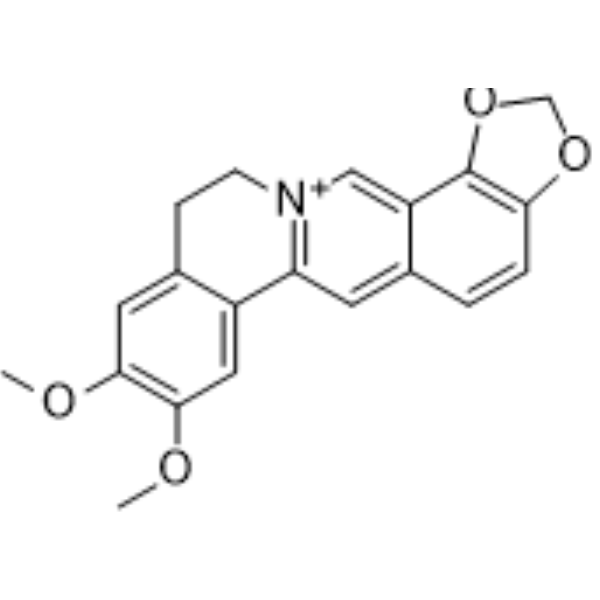
Epiberberine is an alkaloid isolated from Coptis chinensis, acts as a potent AChE and BChE inhibitor, and a non-competitive BACE1 inhibitor, with IC50s of 1.07, 6.03 and 8.55 μM, respectively. Epiberberine has antioxidant activity, with peroxynitrite ONOO - scavenging effect (IC50, 16.83 μM), and can be used for the research of Alzheimer disease [1]. Epiberberine inhibits the early stage of differentiation of 3T3-L1 preadipocytes, downregulates the Raf/MEK1/2/ERK1/2 and AMPKα/Akt pathways . Epiberberinecan be used for the research of diabetic disease .
loading...
    loading...
Cat. No.: HY-P704472
Purity:  ≥ 95%, as determined by reducing SDS-PAGE.
Synonyms: BACE1; CDNA FLJ54690, Highly Similar To Beta-Secretase 1; Prev. BACE; Beta-Site APP-Cleaving Enzyme 1, Isoform CRA_f; Membrane-Associated Aspartic Protease 2; Beta-Site APP-Cleaving Enzyme 1, Isoform CRA_e; Aspartyl Protease 2; Transmembrane Aspartic Prot
Species:  
Human
Source:  
HEK293
loading...
    loading...
Cat. No.: HY-N0631R
CAS No.: 131189-57-6
Cornuside (Standard) is the analytical standard of Cornuside (HY-N0631). This product is intended for research and analytical applications. Cornuside is an iridoid glycoside with anti-allergic, anti-inflammatory, and neuroprotective activities. Cornuside exerts anti-allergic activity by downregulating the p38 MAPK, JNK, and NF-κB signaling pathways, and inhibits IgE-mediated histamine release from mast cells. Cornuside improves cognitive impairment in mice by inhibiting BACE1 activity (IC50 = 55.84 μg/mL) and enhancing ChAT activity. Cornuside inhibits LPS (HY-D1056)-induced inflammatory mediators, including iNOS, COX-2, PGE2, TNF-α, IL-6, and IL-1β, by suppressing NF-κB activation.
loading...
    loading...
Cat. No.: HY-N1255
CAS No.: 6451-73-6
Synonyms: (-)-Scoulerine; Discretamine
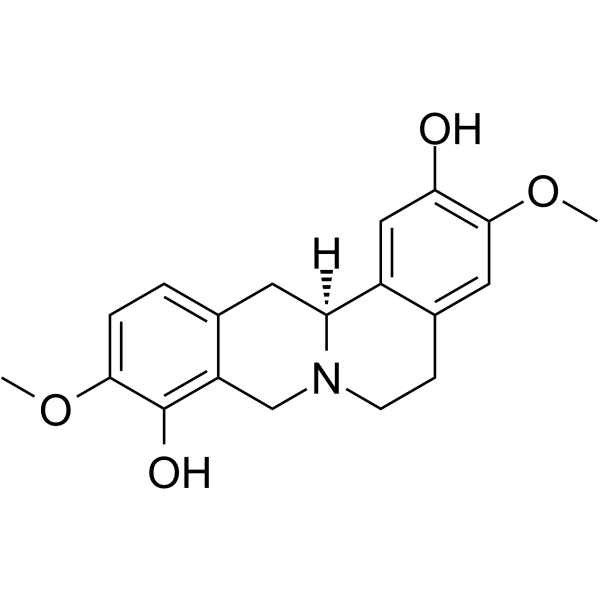
Scoulerine ((-)-Scoulerine; Discretamine) hydrochloride is a multi-target inhibitor with anti-tumor and antioxidant activities. Scoulerine mainly targets the PI3K/Akt/mTOR signaling axis and α1D-adrenergic receptor, disrupts microtubule structure, and induces cell cycle arrest and apoptosis. Scoulerine effectively inhibits mitochondrial dehydrogenase activity, targets GABA receptors and BACE1, and suppresses the proliferation, migration, invasion, epithelial-mesenchymal transition and stem cell properties of cancer cells. Scoulerine also exhibits multiple pharmacological activities including anti-Plasmodium falciparum, antibacterial, antiemetic and antitussive effects, and regulates endoplasmic reticulum stress and mitochondrial function (modulates Bax, Bcl-2 and cytochrome c). Scoulerine is applicable to research related to leukemia, ovarian cancer, and colorectal cancer [1] .
loading...
    loading...

