136 Results for "

CaV

" in MedChemExpress (MCE) Product Catalog:
Products (136)

136 Results for "CaV" in MCE Product Catalog:

Cat. No.: HY-180400
CAS No.: 1426293-61-9
Target:  

nAChR Calcium Channel

Research Areas:  

Neurological Disease

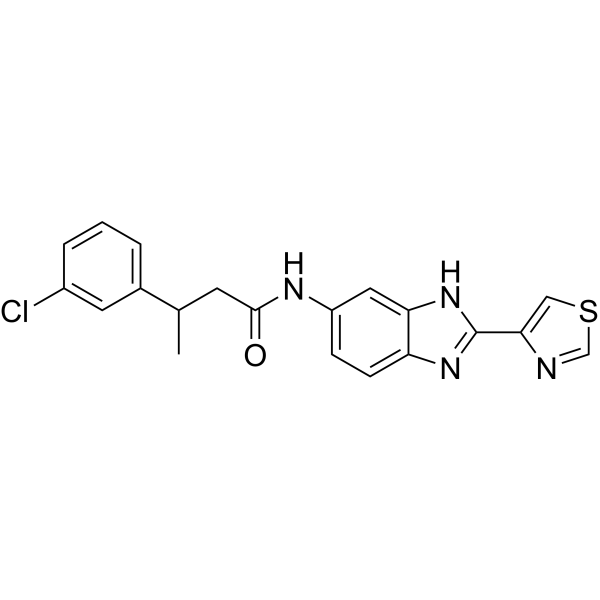
PAM-2 is a potent, orally active, CNS-penetrant selective α7 nAChR positive allosteric modulator (human α7 nAChR EC50: 39 μM, rat α7 nAChR EC50: 12 μM) with anti-nociceptive and anti-inflammatory activity. PAM-2 exhibits selectivity over α9α10 nAChR (IC50 = 174 μM) and CaV2.2 channel (IC50 = 89 μM). PAM-2 decreases Streptozotocin (STZ) (HY-13753)- and Oxaliplatin (HY-17371)-inducned nuroparhic pain in mice by α7 nAChR potentiation. PAM-2 can be used for the research of neuropathic pain .
loading...
    loading...
Cat. No.: HY-132184S
CAS No.: 1881277-30-0
Synonyms: 5,6-EET-d11; (±)5,6-EpETrE-d11
5,6-Epoxyeicosatrienoic acid-d11 (5,6-EET-d11) is deuterium labeled 5,6-Epoxyeicosatrienoic acid. 5,6-Epoxyeicosatrienoic acid is one of the four major epoxyeicosatrienoic acid (EET) isomers metabolized from Arachidonic acid (HY-109590). 5,6-Epoxyeicosatrienoic acid induces peripheral vasodilation and lowers blood pressure by inhibiting T-type calcium channels (Cav3.2: IC50 = 0.54 μM). 5,6-Epoxyeicosatrienoic acid causes vasoconstriction in hypoxic pulmonary blood vessels via activating Rho kinase in a membrane depolarization-dependent manner. 5,6-Epoxyeicosatrienoic acid induces mechanical pain by activating TRPA1. 5,6-Epoxyeicosatrienoic acid can be used in studies related to hypoxic pulmonary vasoconstriction, mechanical hyperalgesia and hypertension.
loading...
    loading...
Cat. No.: HY-116307
CAS No.: 35763-29-2
Target:  

P2Y Receptor

Research Areas:  

Cardiovascular Disease

2-Thio-UTP is a selective P2Y2 inhibitor with an EC50 value of 50 nM. 2-Thio-UTP reduces pro-fibrotic gene expression and protein α-smooth muscle actin. 2-Thio-UTP has the potential for the research of calcific aortic valve stenosis (CAVS) .
loading...
    loading...
Cat. No.: HY-189214
eNOS activator-1 is an orally active, blood-brain barrier permeable endothelial nitric oxide synthase (eNOS) activator. eNOS activator-1 upregulates eNOS mRNA expression, enhances endogenous NO biosynthesis, and activates the eNOS signaling pathway to maintain blood-brain barrier integrity. eNOS activator-1 upregulates the protein expression levels of PI3K, AKT, p-PI3K, and p-AKT. eNOS activator-1 reduces oxidative stress levels by decreasing lipid peroxidation and restoring antioxidant enzyme activities. eNOS activator-1 upregulates the expression of tight junction proteins ZO-1 and occludin, increases Cav-1 expression, and inhibits MMP-9-mediated blood-brain barrier disruption. eNOS activator-1 can be used in the research of ischemic stroke .
loading...
    loading...
Cat. No.: HY-P86255
Synonyms: CACNA1F; CACNAF1; Voltage-dependent L-type calcium channel subunit alpha-1F ; Voltage-gated calcium channel subunit alpha CaV1.4;

Host:  

Rabbit

Application:  

WB, FC

Reactivity:  

Human

loading...
    loading...
Cat. No.: HY-180547
CAS No.: 3070832-68-4
Target:  

Drug Derivative

Research Areas:  

Others

MRC71 is a TRIMTAC degrader that recruits endogenous TRIM21 E3 ligase at one end and covalently binds to HaloTag-fusion target proteins at the other end. MRC71 selectively degrades oligomeric CAV1- and Cavin1-mEGFP-Halo, but not monomeric mEGFP-Halo, and exhibits a typical concentration-dependent degradation profile with a hook effect. MRC71 can be used to verify TRIMTAC ternary complex formation and state-selective degradation in cells .
loading...
    loading...
Cat. No.: HY-181957
CAS No.: 3082090-83-0
KB528 is a p300/CBP histone acetyltransferase (KAT) inhibitor with low nM IC50 values against human p300 and CBP, and exhibits selectivity over other KAT family members. KB528 modulates the IRF4 transcriptional network, downregulates the expression of IRF4, MYC, CAV2 and IGLL5, and reduces the protein level of IKZF3. KB528 potently induces apoptosis in multiple myeloma cells. KB528 is applicable to research related to multiple myeloma .
loading...
    loading...
Cat. No.: HY-44153
CAS No.: 689297-68-5
Target:  

Potassium Channel

Research Areas:  

Neurological Disease

KV2 channel inhibitor-1 is a selective KV2 channel inhibitor with IC50s of 0.2 μM and 0.41 μM for KV2.1 and KV2.2, respectively. KV2 channel inhibitor-1 possesses good selectivity over KV1.2 (IC50>10 μM). KV2 channel inhibitor-1 is >10-fold selective over NaV channels and other KV channels and displays weak activity on CaV channels .
loading...
    loading...
Cat. No.: HY-112499S
CAS No.: 1233937-31-9
Synonyms: Vitamin K2-7-d7; Vitamin K2(35)-d7; Vitamin MK-7-d7
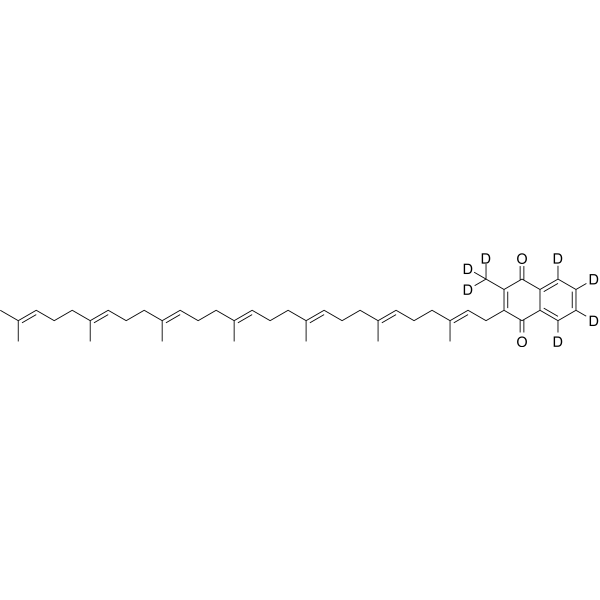
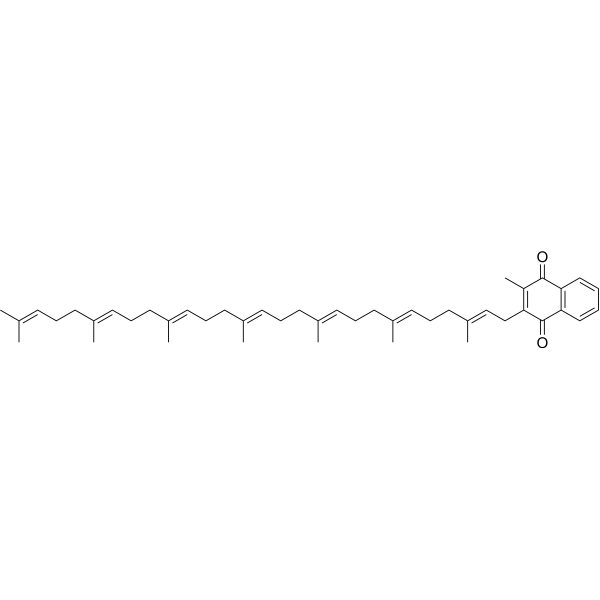
Menaquinone-7-d7 is the deuterium labeled Menaquinone-7. Menaquinone-7 (Vitamin K2-7), belongs to a class of K2-vitamin homologs, is originally discovered as the anti-hemorrhagic factors . Menaquinone-7 (Vitamin K2-7) is identified as the most bioactive cofactor for the carboxylation reaction of Gla-proteins . Supplementation with Menaquinone-7 (Vitamin K2-7) is a pharmacological option for activating matrix Gla protein and intervening in the progression of calcific aortic valve stenosis (CAVS) .
loading...
    loading...
Cat. No.: HY-112499S1
Purity:  ≥96.0%
Synonyms: Vitamin K2-7-13C6; Vitamin K2(35)-13C6; Vitamin MK-7-13C6
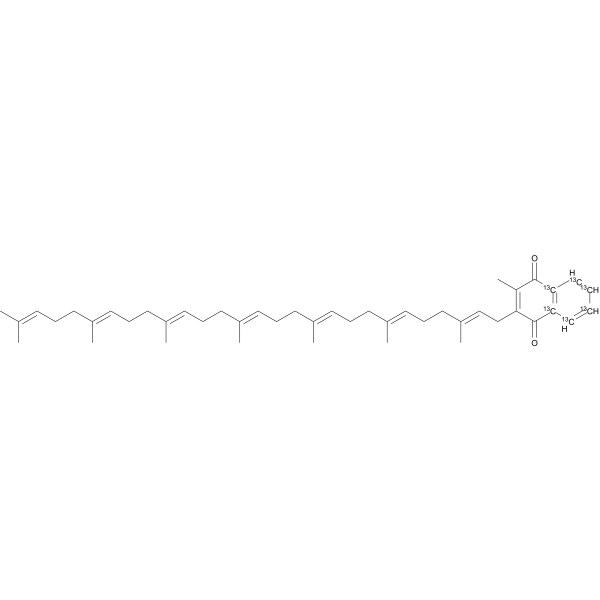
Menaquinone-7- 13C6 is the 13C-labeled Menaquinone-7. Menaquinone-7 (Vitamin K2-7), belongs to a class of K2-vitamin homologs, is originally discovered as the anti-hemorrhagic factors . Menaquinone-7 (Vitamin K2-7) is identified as the most bioactive cofactor for the carboxylation reaction of Gla-proteins . Supplementation with Menaquinone-7 (Vitamin K2-7) is a pharmacological option for activating matrix Gla protein and intervening in the progression of calcific aortic valve stenosis (CAVS) .
loading...
    loading...
Cat. No.: HY-N4189
CAS No.: 17278-28-3
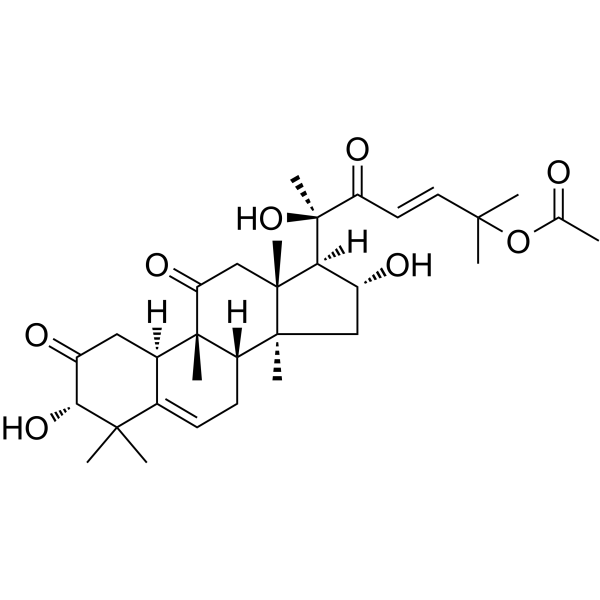
Isocucurbitacin B is a natural terpenoid compound found in Pedicellus Melo. Isocucurbitacin B can inhibit the PI3K/AKT, MAPK, and STAT3 signaling pathways and downregulate CAV1 expression. Isocucurbitacin B can inhbit cancer cell proliferation, migration and invision. Isocucurbitacin B can induce apoptosis and cause G2/M phase arrest. Isocucurbitacin B can decrease intracellular cholesterol and PH levels and increase intracellular calcium levels. Isocucurbitacin B can be used for the research of cancer, such as glioma [1][2].

loading...
    loading...
Cat. No.: HY-184501
CAS No.: 486440-74-8
Research Areas:  

Cancer

UE01 is an orally active, selective small-molecule modulator targeting both ULK1/ERK1/2. UE01 activates hULK1 with an EC50 of 695.30 nM and a KD of 114.3 nM for ULK1; it inhibits hERK1 with an IC50 of 179.90 nM and a KD of 114 nM for ERK1; it shows weak binding to ERK2 with a KD of 2.8 mM. UE01 induces the conformational transition of ULK1 from an inactive to an active state, enhances the phosphorylation of ULK1 Ser317 and mAtg13 Ser355, and reduces the phosphorylation of ULK1 Ser757. UE01 competitively occupies the ATP-binding pocket of ERK1, inhibits ERK1 kinase activity, and reduces the activity of the ERK1/2 signaling pathway. UE01 induces complete autophagy flux and apoptosis, upregulates Atg5, Atg7, LC3-II/LC3-I, Bax, cytochrome C (Cyt c), Cleaved-Caspase 3, Cleaved-PARP1 and E-cadherin, downregulates p62, Bcl-2, MMP-2 and MMP-9, reduces the phosphorylation of Exo70 Ser250, and promotes the proteasome-dependent degradation of Cav-1, thereby inhibiting EMT-related phenotypes and extracellular matrix degradation. UE01 can be used in studies related to triple-negative breast cancer .
loading...
    loading...
Cat. No.: HY-L923
9000 compounds

Ion channels are key proteins on the cell membrane that regulate the flow of ions across membranes. They participate in nearly all physiological processes, including nerve conduction, muscle contraction, heart rhythm, and pain perception. Abnormalities in their function can lead to various serious diseases such as arrhythmia, epilepsy, hypertension, neuropathic pain, and cancer. Therefore, ion channels are highly valuable drug targets—over 15% of approved drugs target ion channels currently, demonstrating their irreplaceable therapeutic value in cardiovascular, neurological, and analgesic fields.

MCE has collected a library of over 5,000 reported ion channel-related bioactive compounds targeting major sites such as Na+ channels, K+ channels, Ca2+ channels, GABA receptors, iGluRs, and others. Using AI models, these compounds are characterized through both 2D representations (molecular fingerprints, pharmacophores) and 3D representations (3D conformation) to screen for a collection of lead-like compounds highly similar to known active molecules. Additionally, an hERG channel prediction algorithm integrating XGB and ISE mapping strategy is employed to assess and exclude potential cardiotoxicity in the library.. This step significantly reduces safety risks in subsequent screenings, particularly for ion channel drug development related to cardiovascular systems (e.g., Nav1.5, Cav1.2), effectively minimizing failures due to hERG inhibition and serving as a valuable tool for ion channel drug screening.

Cat. No.: HY-112499R
CAS No.: 2124-57-4
Synonyms: Vitamin K2-7(Standard); Vitamin K2(35)(Standard); Vitamin MK-7 (Standard)
Menaquinone-7 (Standard) is the analytical standard of Menaquinone-7. This product is intended for research and analytical applications. Menaquinone-7 (Vitamin K2-7), belongs to a class of K2-vitamin homologs (orally active), is originally discovered as the anti-hemorrhagic factors. Menaquinone-7 inhibits osteoclast bone resorption in vitro and stimulates bone formation in femoral tissue of aged female rats. Menaquinone-7 has a well-researched potential in the prevention of aging-induced bone degeneration. Menaquinone-7 is also a pharmacological option for activating Gla matrix protein and intervening in the progression of calcific aortic stenosis (CAVS) .
loading...
    loading...
Cat. No.: HY-P76753
Purity:  ≥ 95%, as determined by reducing SDS-PAGE.
Synonyms: CA5A; CA-VA; Prev. CA5; Carbonic Anhydrase VA; CaVA; Carbonic Dehydratase; CaV; Carbonic Anhydrase; Carbonic Anhydrase VA, Mitochondrial; GS1-21A4.1; Carbonic Anhydrase 5A, Mitochondrial; CA5AD; Carbonate Dehydratase VA; Carbonic Anhydrase 5A; Carbonic An
Species:  
Human
Source:  
E. coli
loading...
    loading...
Cat. No.: HY-P702228
Purity:  ≥ 90%, as determined by reducing SDS-PAGE.
Synonyms: CACNA1C; CACNA1C Intronic Transcript 2; Prev. CACNL1A1; Voltage-Gated L-Type Calcium Channel CaV1.2 Alpha 1 Subunit, Splice Variant 9*; Prev. CCHL1A1; Calcium Channel, L Type, Alpha-1 Polypeptide, Isoform 1, Cardiac Muscle; Prev. CACNA1C-IT2; Calcium Chan
Species:  
Pig
Source:  
E. coli Cell-free
loading...
    loading...

