176 Results for "

Cardiomyocyte

" in MedChemExpress (MCE) Product Catalog:
Products (176)

176 Results for "Cardiomyocyte" in MCE Product Catalog:

Cat. No.: HY-N0265R
CAS No.: 39524-08-8
Synonyms: Akebia saponin D (Standard)
Asperosaponin VI (Standard) is the analytical standard of Asperosaponin VI. This product is intended for research and analytical applications. Asperosaponin VI is a saponin component from Dipsacus asper. Asperosaponin VI induces osteoblast differentiation through the BMP-2/p38 and ERK1/2 signaling pathways. Asperosaponin VI protects against hypoxia-induced cardiomyocyte apoptosis by activating the PI3K/Akt and CREB pathways. Additionally, Asperosaponin VI also has antidepressant and wound-healing-promoting activities .
loading...
    loading...
Cat. No.: HY-N0721R
CAS No.: 27215-14-1
Synonyms: Neoandrographiside (Standard)
Neoandrographolide (Standard) is the analytical standard of Neoandrographolide. This product is intended for research and analytical applications. Neoandrographolide is a diterpenoid compound isolated from Andrographis paniculata. Neoandrographolide inhibits osteoclasts differentiation and bone resorption through inhibition of MAPK/NF-κB/PI3K/AKT/GSK3β/PPAR/CAMK signaling pathway. Neoandrographolide inhibits apoptosis in rat embryonic ventricular cardiomyocytes. Neoandrographolide inhibits iNOS and the generation of ROS, activates eNOS, exhibiting anti-inflammatory and hypolipidemic activity .
loading...
    loading...
Cat. No.: HY-168894
CT-1 is a secreted protein belonging to the IL-6 cytokine family. Overexpression of CT-1 enhances cell proliferation, migration and angiogenesis via the ADMA/DDAH pathway. CT-1 inhibits the growth of triple-negative breast cancer cells by simultaneously inducing Ferroptosis in N2-type tumor-associated neutrophils and cancer cells. CT-1 activates the Jak/STAT-3, p42/p44 MAPK and AMPK pathways, and inhibits GSK-3β activity through phosphorylation to induce cardiomyocyte hypertrophy. CT-1 enhances the viability of cardiomyocytes and neurons, reduces cell Apoptosis, induces the expression of heat shock proteins (HSP) and BNP, and inhibits TNF levels. CT-1 exerts anti-tumor activity in mouse models of triple-negative breast cancer. CT-1 improves cognitive impairment in mice. CT-1 is applicable to the research of ischemic heart disease, triple-negative breast cancer, myocardial hypertrophy, Parkinson's disease, hypertensive heart disease, myocardial infarction, acute Chagas cardiomyopathy, high-fat diet-induced cognitive impairment and diabetes-related cognitive impairment .
loading...
    loading...
Cat. No.: HY-120960
CAS No.: 187224-29-9
Synonyms: ARA-S
N-Arachidonoyl-L-serine (ARA-S) is an endocannabinoid. N-Arachidonoyl-L-serine induces phosphorylation of Akt and MAPK in endothelial cells. N-Arachidonoyl-L-serine also induces endothelium-dependent vasodilation in isolated rat mesenteric and abdominal aortas. N-Arachidonoyl-L-serine exhibits neuroprotective effects after traumatic brain injury by reducing apoptosis. N-Arachidonoyl-L-serine promotes the opening of KV7.1/KCNE1 channels in mammalian cells and shortens the action potential duration in cardiomyocytes. N-Arachidonoyl-L-serine may be used in research on cardiovascular and cerebrovascular diseases and neurological disorders .
loading...
    loading...
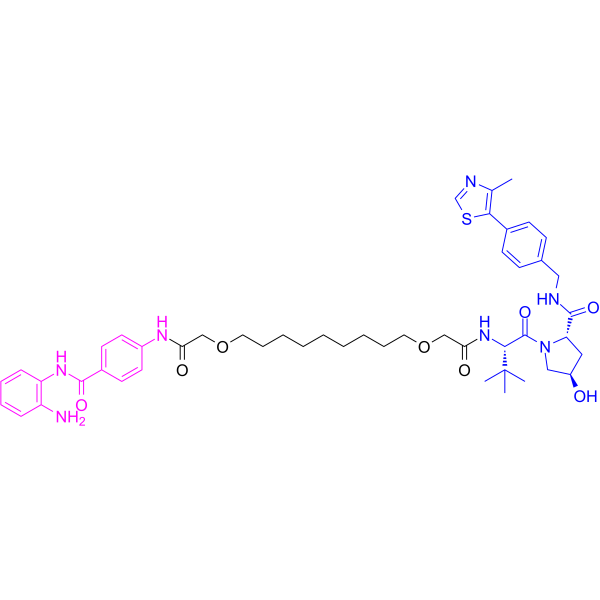
Cat. No.: HY-145816
CAS No.: 2669785-77-5
JPS016 is a class I histone deacetylase (HDAC) PROTAC inhibitor. JPS016 recruits the VHL E3 ligase (Ligands for E3 Ligase) to mediate the ubiquitination and proteasomal degradation of HDAC1, HDAC2 and HDAC3. JPS016 reduces the viability of colon cancer cells and induces Apoptosis. JPS016 activates the PINK1/Parkin mitochondrial Autophagy pathway, enhances cardiomyocyte viability, alleviates mitochondrial damage, and reduces mitochondrial ROS production in cells. JPS016 is applicable to research related to colon cancer and sepsis cardiomyopathy .
loading...
    loading...
Cat. No.: HY-105521A
CAS No.: 94096-42-1
Synonyms: (S)-Nafenodone; LU-43706
Research Areas:  

Neurological Disease

Dexnafenodone hydrochloride ((S)-Nafenodone; LU-43706) is a novel antidepressant candidate molecule that selectively inhibits the norepinephrine synaptosomal uptake transporter. Dexnafenodone hydrochloride inhibits the fast inward Na + current and slow inward Ca 2+ current in cardiomyocytes. Dexnafenodone hydrochloride inhibits voltage-gated and receptor-activated Ca 2+ influx in vascular smooth muscle, depletes norepinephrine-sensitive intracellular Ca 2+ stores, suppresses agonist-stimulated Ca 2+ influx, relaxes precontracted vascular smooth muscle, inhibits spontaneous myogenic activity, and modulates cardiac electrophysiology, exerting negative chronotropic and negative inotropic effects. Dexnafenodone hydrochloride can be used in the research of depression .
loading...
    loading...
Cat. No.: HY-169052
CAS No.: 2644673-01-6
Cyy-272 is an orally active JNK inhibitor with IC50 values of 1.25 μM for JNK1, 1.07 μM for JNK2, and 1.24 μM for JNK3. Cyy-272 exerts anti-inflammatory effects by inhibiting JNK phosphorylation, thereby alleviating acute lung injury (ALI) induced by lipopolysaccharide (LPS, HY-D1056). Additionally, Cyy-272 significantly reduces inflammation in cardiomyocytes and cardiac tissue induced by high lipid concentrations, further mitigating cardiac hypertrophy, fibrosis, and apoptosis. Cyy-272 can be used in the study of obese cardiomyopathy .
loading...
    loading...
Cat. No.: HY-180575
CAS No.: 2210298-14-7
LCB-2122 is an adenosine-like nucleoside analogue bearing a C2'-stereogenic all-carbon quaternary center. LCB-2122 can prevent Doxorubicin (HY-15142A)-induced cardiomyocytes apoptosis with an IC50 of 0.5 μM and prevent Imatinib (HY-15463)-induced apoptosis. LCB-2122 can activate AMPK signaling and induce the phosphorylation of AMPK and its downstream substrate, acetyl-CoA carboxylase (ACC). LCB-2122 can reduce Doxorubicin-induced mitochondrial damage. LCB-2122 can be used for the research of heart failure .
loading...
    loading...
Cat. No.: HY-N1570R
CAS No.: 34175-96-7
Pterosin B (Standard) is the analytical standard of Pterosin B (HY-N1570). This product is intended for research and analytical applications. Pterosin B is an indanone. Pterosin B can be obtained from Pteridium aquilinum. Pterosin B is a Sik3 signaling inhibitor. Pterosin B inhibits Klf5 expression and reduces β-amyloid deposition. Pterosin B prevents chondrocyte hypertrophy and osteoarthritis in mice. Pterosin B inhibits cardiomyocyte hypertrophy, improves cognitive impairment, and lowers blood glucose. Pterosin B can be used in research on arthritis, Alzheimer's disease, pathological cardiac hypertrophy and diabetes .
loading...
    loading...
Cat. No.: HY-105521
CAS No.: 92629-87-3
Synonyms: (S)-Nafenodone free base; LU-43706 free base
Research Areas:  

Neurological Disease

Dexnafenodone ((S)-Nafenodone free base; LU-43706 free base) is a novel antidepressant candidate molecule that selectively inhibits the norepinephrine synaptosomal uptake transporter. Dexnafenodone inhibits the fast inward Na + current and slow inward Ca 2+ current in cardiomyocytes. Dexnafenodone inhibits voltage-gated and receptor-activated Ca 2+ influx in vascular smooth muscle, depletes norepinephrine-sensitive intracellular Ca 2+ stores, suppresses agonist-stimulated Ca 2+ influx, relaxes precontracted vascular smooth muscle, inhibits spontaneous myogenic activity, and modulates cardiac electrophysiology, exerting negative chronotropic and negative inotropic effects. Dexnafenodone can be used in the research of depression .
loading...
    loading...
Cat. No.: HY-111754R
CAS No.: 2306178-56-1
Research Areas:  

Cardiovascular Disease

DMX-5804 (Standard) is the analytical standard of DMX-5804 (HY-111754). This product is intended for research and analytical applications. DMX-5804 is a potent, orally active and selective MAP4K4 inhibitor, with an IC50 of 3 nM, a pIC50 of 8.55 for human MAP4K4, less potent on MINK1/MAP4K6 (pIC50, 8.18), and TNIK/MAP4K7 (pIC50, 7.96). DMX-5804 enhances cardiomyocyte survival, and reduces ischemia-reperfusion injury in mice .
loading...
    loading...
Cat. No.: HY-W012352R
CAS No.: 605-32-3
2-Hydroxyanthraquinone (Standard) is the analytical standard of 2-Hydroxyanthraquinone (HY-W012352). This product is intended for research and analytical applications. 2-Hydroxyanthraquinone is a product generated by the photochemical oxidation of Anthracene (ANT) (HY-Y0299). 2-Hydroxyanthraquinone induces ferroptosis in cardiomyocytes by depleting GSH and inhibiting GPX4, leading to cardiac developmental malformations. 2-Hydroxyanthraquinone causes damage to the cerebrovascular system and blood-brain barrier in zebrafish by downregulating the Wnt/β-catenin signaling pathway, as well as inducing inflammation and neuronal apoptosis. 2-Hydroxyanthraquinone can be used in studies related to cerebrovascular diseases and cardiotoxicity .
loading...
    loading...
Cat. No.: HY-125447
CAS No.: 145941-07-7
Artemisinin B is an orally active sesquiterpene natural product with anti-neuroinflammatory activity, which can be found in Artemisia annua Linn.. Artemisinin B suppresses the TLR4-MyD88-NF-κB signaling pathway by reducing the protein levels of TLR4 and MyD88, as well as inhibiting the mRNA expression of NF-κB p65. Artemisinin B reduces the expression of pro-inflammatory cytokines and attenuates synaptic loss, which can be used for the research of cognitive and behavioral impairments in Alzheimer's disease. Artemisinin B shows no cytotoxicity against human cardiomyocytes and exhibits very weak binding to hERG, suggesting its potential for cardioprotective property research .
loading...
    loading...
Cat. No.: HY-D3146
CAS No.: 1418017-91-0
Target:  

Fluorescent Dye

Research Areas:  

Others

Di-4-AN (F) EPPTEA is a voltage-sensitive dye used for membrane potential imaging and optical recording of electrical activity in excitable cells and tissues. Its detection mechanism is based on electrochromism (also known as the molecular Stark effect). The single-photon excitation/emission wavelengths measured in ethanol solution are Ex/Em = 444/610 nm, and it can be excited via 1064 nm two-photon excitation in optical recording applications. Di-4-AN (F) EPPTEA can be used to record backpropagating action potentials in individual dendritic spines of brain cortical slices, map subcellular action potential characteristics of single cardiomyocytes, and perform real-time recording of multicellular action potentials in cerebellar slices .
loading...
    loading...
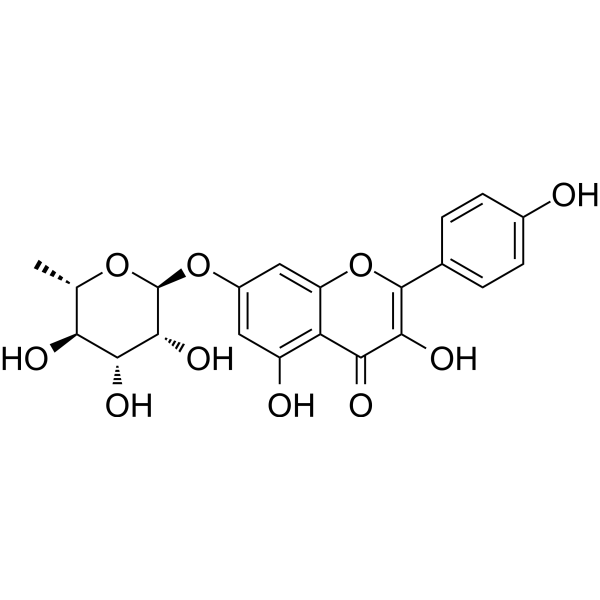
Cat. No.: HY-N3431
CAS No.: 20196-89-8
Kaempferol-7-O-rhamnoside is a PD-1/PD-L1 inhibitor and farnesoid X receptor (FXR) agonist. Kaempferol-7-O-rhamnoside demonstrates cardioprotective potential targeting the AMPKα1 signaling pathway. Kaempferol-7-O-rhamnoside significantly upregulates the mRNA expression of AMPKα1 in H9c2 cardiomyocytes. Kaempferol-7-O-rhamnoside reverses APAP-induced reduction of glutathione (GSH) content and increase of ROS production in L02 cells. Kaempferol-7-O-rhamnoside has the potential for heart failure .
loading...
    loading...
Cat. No.: HY-W207224
CAS No.: 287177-12-2
Target:  

MAP4K

F1386-0303 is a highly selective MAP4K4 inhibitor with an IC50 of 34 nM against human targets. F1386-0303 exerts cardiomyocyte protective and function-preserving effects through mechanisms such as alleviating oxidative stress, inhibiting caspases, and maintaining mitochondrial membrane potential, while it does not interfere with the activity of Doxorubicin (HY-15142A) in cancer cells. F1386-0303 is rapidly cleared and has no bioavailability in mice, but it is well-suited as a tool compound for target validation. F1386-0303 can be applied to studies related to cardiac ischemia-reperfusion injury, Doxorubicin-induced cardiotoxicity, myocardial infarction and other related conditions .
loading...
    loading...
Cat. No.: HY-133240
CAS No.: 1109241-72-6
trans-AzoTAB is a photoresponsive potassium/sodium/calcium channel modulator and DNA-binding agent. trans-AzoTAB undergoes trans-cis isomerization driven by light, with variable polarity and DNA affinity. trans-AzoTAB also enhances voltage-gated potassium currents and inhibits sodium and calcium currents in cardiomyocytes, thereby reducing spontaneous electrical activity and excitation conduction velocity. In addition, trans-AzoTAB induces compaction and frozen conformation of λ-phage DNA, and non-sequence-dependently inhibits transcription and translation processes in the dark; its activity can be reversed and restored by visible light after activation with ultraviolet irradiation. trans-AzoTAB can serve as a probe for two-photon optical regulation of myocardial excitability, and is used to construct photoresponsive interfacial polymer structures .
loading...
    loading...
Cat. No.: HY-175640
Troponin-IN-1 is a troponin inhibitor. Troponin-IN-1 protects OGD/R-injured H9c2 cardiomyocytes by reducing LDH leakage, pyroptosis and ROS accumulation. Troponin-IN-1 inhibits NO production and IL-1β/TNF-α/IL-18 release in LPS (HY-D1056)-induced RAW264.7 cells. Troponin-IN-1 acts via caspase-1/GSDMD/IL-18 pathway. Troponin-IN-1 reduces myocardial infarct size in LAD-induced myocardial ischemia/reperfusion (MI/R) male rats. Troponin-IN-1 can be used for the study of myocardial ischemia/reperfusion (MI/R) injury .
loading...
    loading...
Cat. No.: HY-18347
CAS No.: 210101-16-9
Synonyms: YM 087 free base
Conivaptan (YM 087 free base) is an orally active dual vasopressin V1a/V2 receptor antagonist with Ki values of 0.48 nM and 3.04 nM for vasopressin V1a receptor and V2 receptor, respectively. Conivaptan competitively and reversibly blocks vasopressin-mediated antidiuresis, vasoconstriction, and cellular hypertrophy, while inhibiting CYP3A4. Conivaptan inhibits vasopressin-induced intracellular calcium, cAMP, and mitogen-activated kinase activation in vascular smooth muscle cells and cardiomyocytes. Conivaptan induces water diuresis while improving hemodynamics in heart failure models, reducing left ventricular end-diastolic pressure, vascular resistance, and organ weight. Conivaptan is used for research on hyponatremia and congestive heart failure .
loading...
    loading...
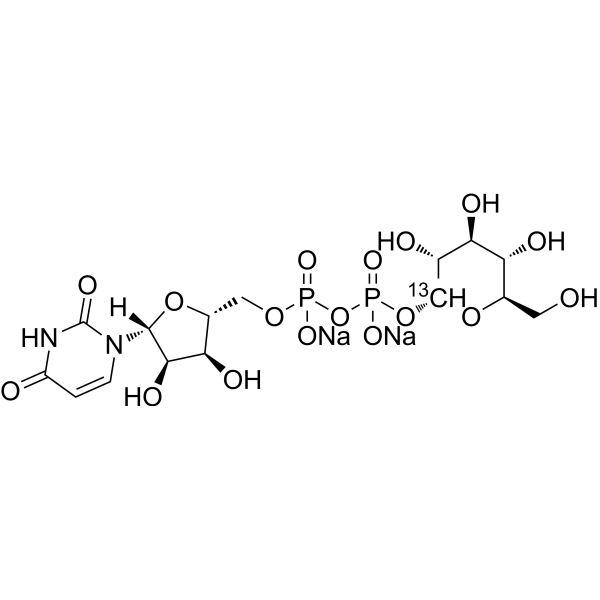
Cat. No.: HY-N7032S
CAS No.: 478529-38-3
Synonyms: UDP-D-Glucose-13C disodium
Uridine 5′-diphosphoglucose- 13C (UDP-D-Glucose- 13C) disodium is the 13C labeled Uridine 5′-diphosphoglucose disodium (HY-N7032) . Uridine 5’-diphosphoglucose (UDP-glucose) disodium, secreted by cardiomyocytes during ischemia and reperfu, is a potent agonist of the proinflammatory P2Y14 receptor. It acts an important role in the regulation of inflammation and neutrophil polarization in neutrophils. Uridine 5’-diphosphoglucose disodium is also the precursor of glucose-containing oligosaccharides, polysaccharides, glycoproteins, and glycolipids in animal tissues and in some microorganisms. Uridine 5’-diphosphoglucose disodium is promising for research in counteracting myocardial infarction/reperfusion (MIR)-induced inflammation in the heart tissue .
loading...
    loading...

