197 Results for "

ulcerative colitis

" in MedChemExpress (MCE) Product Catalog:
Products (197)

197 Results for "ulcerative colitis" in MCE Product Catalog:

Cat. No.: HY-P990876A
Synonyms: PF-06480605; RVT-3101
Target:  

TNF Receptor NF-κB IFNAR

Research Areas:  

Inflammation/Immunology

Afimkibart (PF-06480605; RVT-3101) is a humanized monoclonal antibody targeting TL1A (TNFSF15). Afimkibart blocks the TL1A‑DR3 signaling axis by neutralizing the TL1A ligand, inhibits the release of pro-inflammatory cytokines, suppresses NF-κB activation and IFN-γ production, and simultaneously attenuates fibroblast activation and fibrosis progression associated with this pathway. Afimkibart is applicable to research on immune inflammation-related conditions, such as ulcerative colitis .
loading...
    loading...
Cat. No.: HY-10863S
CAS No.: 924894-98-4
Synonyms: AEA-d8
Anandamide-d8 is a deuterated labeled Anandamide . Anandamide is an endocannabinoid. Anandamide modulates both neuronal and immune functions through two protein-coupled cannabinoid receptors (CB1 and CB2). Anandamide can activate numerous other receptors like PPARS, TRPV1, and GPR18/GPR55. Anandamide also has potential anti-fungal and anti-inflammatory activities. Anandamide can be used for the research of Alzheimer’s disease (AD) and ulcerative colitis .
loading...
    loading...
Cat. No.: HY-109569
CAS No.: 11032-49-8
Vitamin K2 is an orally active proliferation inhibitor. Vitamin K2 induces Autophagy and Apoptosis. Vitamin K2 reduces the levels of proinflammatory cytokines (such as IL-1β, TNF-α, and IL-6). Vitamin K2 inhibits cell growth in leukemia cells. Vitamin K2 can be used for the research of involutional osteoporosis, non-alcoholic fatty liver disease, ulcerative colitis, acute myeloid leukemia, myelodysplastic syndromes, and hepatocellular carcinoma .
loading...
    loading...
Cat. No.: HY-125099
CAS No.: 2095107-57-4
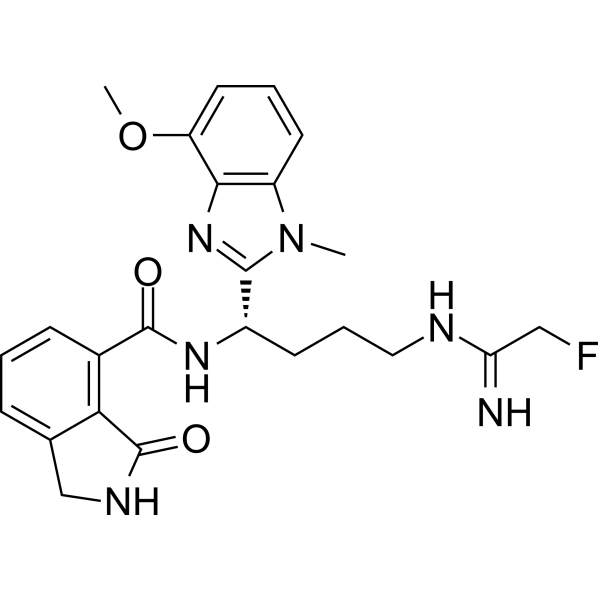
AFM-30a is a potent protein arginine deiminase 2 (PAD2) inhibitor and has excellent PAD2-selectivity. AFM-30a binds to PAD2 with an EC50 value of 9.5 μM. AFM-30a also inhibits H3 citrullination with an EC50 value of 0.4 μM. AFM-30a can be used for the research of certain cancers and a variety of autoimmune diseases including rheumatoid arthritis (RA), multiple sclerosis, lupus, and ulcerative colitis .
loading...
    loading...
Cat. No.: HY-173129
Research Areas:  

Inflammation/Immunology

Anti-inflammatory agent 97 (Compound 1l), an anti-inflammation agent, can also inhibit oxidative stress. Anti-inflammatory agent 97 can inhibit the colonic shortening and suppress inflammatory symptoms of the colonic tissue in the DSS (HY-116282C)-induced ulcerative colitis mice model. Anti-inflammatory agent 97 can regulate the inflammation-related TLR4/NF-κB signaling pathway and the oxidative stress-related Nrf2/HO-1 signaling pathway .
loading...
    loading...
Cat. No.: HY-176793
CAS No.: 2459377-98-9
Synonyms: JAK1-IN-18
Target:  

JAK

Embricitinib (JAK1-IN-18) (Example 2) is a selective JAK1 inhibitor with an IC50 of 0.15  nM for JAK1 over JAK2 and JAK3. Embricitinib significantly reduces inflammation in DSS (HY-116282C)-induced ulcerative colitis (UC) mouse models and DNBS(HY-W324435)-induced Crohn's disease (CD) rat models. Embricitinib can be used for autoimmune diseases (such as inflammatory bowel disease), viral infections (such as HBV infection) and cancers (such as blood cancer) research .
loading...
    loading...
Cat. No.: HY-N0589R
CAS No.: 2680-81-1
Dehydrodiisoeugenol (Standard) is the analytical standard of Dehydrodiisoeugenol (HY-N0589). This product is intended for research and analytical applications. Dehydrodiisoeugenol is an orally active anti-inflammatory and anti-tumor agent. Dehydrodiisoeugenol inhibits the proliferation of colorectal cancer cells, and induces apoptosis, autophagy, endoplasmic reticulum stress and cell cycle arrest. Dehydrodiisoeugenol also exerts anti-inflammatory effects by inhibiting the activation of NF-κB and the expression of COX-2. Dehydrodiisoeugenol can be used in the research related to colorectal cancer, inflammatory diseases and ulcerative colitis .
loading...
    loading...
Cat. No.: HY-P3419A
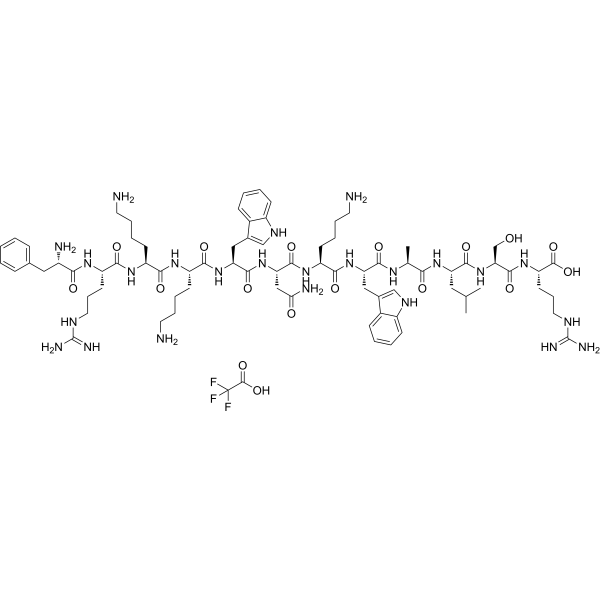
PAMP-12 (unmodified) TFA is an endogenous peptide and is a MrgX2 agonist. PAMP-12 (unmodified) TFA can reduce cAMP accumulation, increase Ca 2+ levels, enhance beta-arrestin recruitment, decrease IP-1, and increases phosphoERK. PAMP-12 (unmodified) TFA can elicit hypotension through inhibiting catecholamine secretion from sympathetic nerve endings and adrenal chromaffin cells. PAMP-12 (unmodified) TFA can be used for the research of hypotension and ulcerative colitis .
loading...
    loading...
Cat. No.: HY-W008766
CAS No.: 5022-65-1
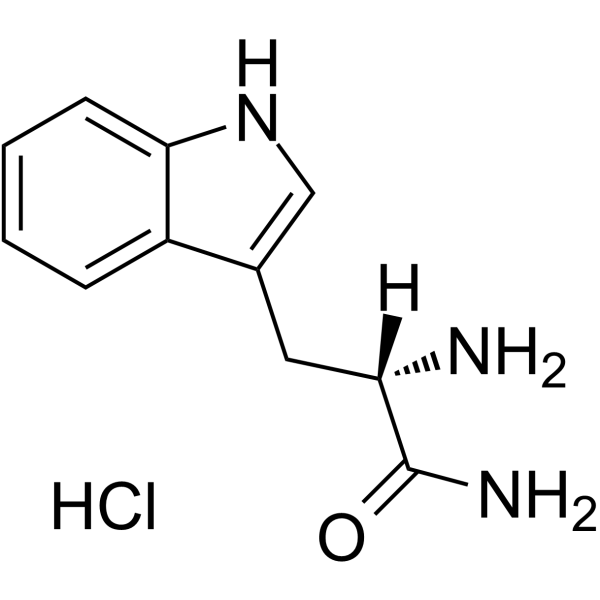
H-Trp-NH2.HCl is an amide derivative of tryptophan. H-Trp-NH2.HCl has potential effects in inducing cell proliferation, apoptosis, necrosis, and angiogenesis-related activities. H-Trp-NH2.HCl also exhibits anti-Leishmania activity. H-Trp-NH2.HCl can be used in research on ulcerative colitis, wet age-related macular degeneration, skin diseases, chronic obstructive pulmonary disease, and leishmaniasis .
loading...
    loading...
Cat. No.: HY-174287
CAS No.: 3066895-41-5
Target:  

Keap1-Nrf2

Research Areas:  

Inflammation/Immunology

Keap1-IN-2 (Compound 164) is a KEAP1 inhibitor (IC50: 2 nM). Keap1-IN-2 indirectly activates Nrf2 by inhibiting KEAP1, thereby enhancing the antioxidant capacity of cells. Keap1-IN-2 promotes the accumulation and nuclear translocation of Nrf2 by blocking KEAP1-mediated Nrf2 degradation. Keap1-IN-2 can be used to study diseases associated with oxidative stress, such as inflammatory bowel disease, Crohn's disease, and immune diseases such as ulcerative colitis .
loading...
    loading...
Cat. No.: HY-W010066
CAS No.: 28822-73-3
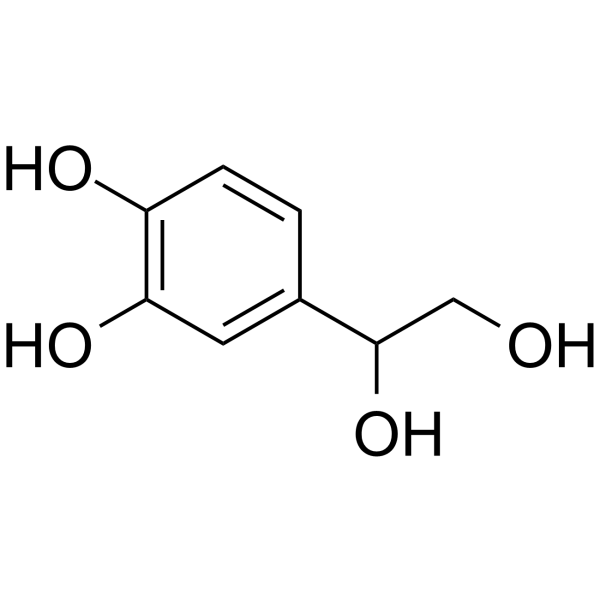
3,4-Dihydroxyphenylglycol is a phenolic compound and antioxidant. 3,4-Dihydroxyphenylglycol can be extracted from olive oil. 3,4-Dihydroxyphenylglycol downregulates the expression of proinflammatory enzymes (iNOS, COX-2) and prevents the degradation of IκBα. 3,4-Dihydroxyphenylglycol has antioxidant properties. 3,4-Dihydroxyphenylglycol has shown positive effects on frozen-thawed ram sperm. 3,4-Dihydroxyphenylglycol can be used in the study of inflammatory-related diseases (such as ulcerative colitis) and reproductive health (sperm cryopreservation) .
loading...
    loading...
Cat. No.: HY-W010435R
CAS No.: 110-93-0
Synonyms: 6-Methyl-5-hepten-2-one (Standard)
Sulcatone (Standard) (6-Methyl-5-hepten-2-one (Standard)) is the analytical standard of Sulcatone (HY-W010435). This product is intended for research and analytical applications. Sulcatone (6-Methyl-5-hepten-2-one) is a plant-derived volatile organic compound with activities such as insecticidal, antifungal, and blood pressure-lowering effects. Sulcatone also serves as an insect pheromone and an endogenous metabolite, which can be found in feces. Changes in Sulcatone levels can be used for the auxiliary diagnosis of ulcerative colitis.
loading...
    loading...
Cat. No.: HY-107831R
CAS No.: 13110-96-8
Research Areas:  

Inflammation/Immunology Cancer

5-Acetylsalicylic acid (Standard) is the analytical standard of 5-Acetylsalicylic acid (HY-107831). This product is intended for research and analytical applications. 5-Acetylsalicylic acid is the derivate of Aspirin (HY-14654), with anti-inflammatory property. 5-Acetylsalicylic acid is the active metabolite of Sulfasalazine (HY-14655) and its production is regulated by beneficial bacteria in the gut but is confined to the intestinal tract. 5-Acetylsalicylic acid exhibits a mild cytotoxicity effect on B16F10 cells. 5-Acetylsalicylic acid can be used for the study of inflammatory bowel disease (IBD) such as ulcerative colitis (UC) .
loading...
    loading...
Cat. No.: HY-108039
CAS No.: 1001100-69-1
Purity:  ≥95.0%
Synonyms: HE 3286; NE-3107
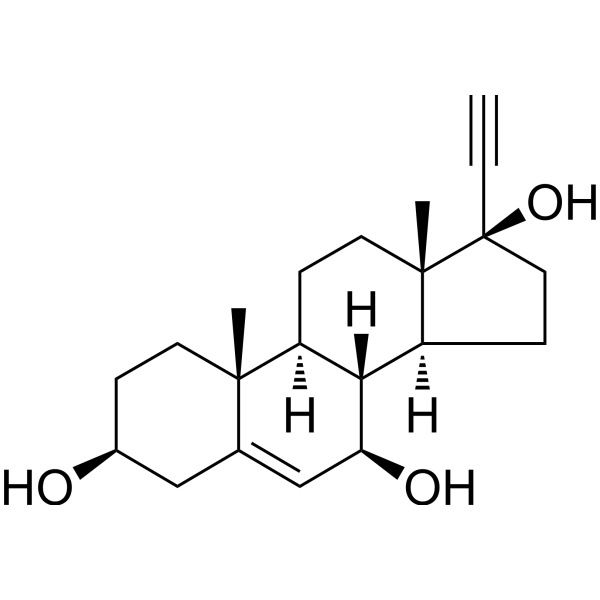
Bezisterim (HE 3286; NE-3107) is a synthetic derivative of a natural anti-inflammatory steroid, β-AET. Bezisterim is an orally active partial NF-κB inhibitor. HE3286 reduces proinflammatory signals, including IL-6 and matrix metallopeptidase 3. Bezisterim freely penetrates the blood brain barrier in mice. Bezisterim can be used for the research of the ulcerative colitis, arthritis, experimental autoimmune encephalomyelitis . Bezisterim is a click chemistry reagent, it contains an Alkyne group and can undergo copper-catalyzed azide-alkyne cycloaddition (CuAAc) with molecules containing Azide groups.
loading...
    loading...
Cat. No.: HY-10863S2
Synonyms: AEA-15NN; Arachidonoyl ethanolamide-15NN
Anandamide- 15N (AEA- 15N) is the 15N-labeled Anandamide (HY-10863). Anandamide is an endocannabinoid. Anandamide modulates both neuronal and immune functions through two protein-coupled cannabinoid receptors (CB1 and CB2). Anandamide can activate numerous other receptors like PPARS, TRPV1, and GPR18/GPR55. Anandamide also has potential anti-fungal and anti-inflammatory activities. Anandamide can be used for the research of Alzheimer’s disease (AD) and ulcerative colitis .
loading...
    loading...
Cat. No.: HY-172871
CAS No.: 3053104-47-2
Anti-inflammatory agent 102 (Compound 11a) is an orally active anti-inflammatory agent. Anti-inflammatory agent 102 exerts its anti-inflammatory effect by blocking the activation of the ASK1/p38 MAPKs/NF-κB signaling pathway. Anti-inflammatory agent 102 has significant anti-inflammatory activity and can inhibit the release of NO, ROS, and inflammatory factors (such as IL-6, TNF-α, IL-1β). Anti-inflammatory agent 102 can be used in the study of inflammatory diseases such as ulcerative colitis (UC) .
loading...
    loading...
Cat. No.: HY-W782193
CAS No.: 55320-91-7
Synonyms: 6-Methyl-5-hepten-2-one-d5
Sulcatone-d5 (6-Methyl-5-hepten-2-one-d5) is the deuterium labeled Sulcatone (HY-W010435). Sulcatone (6-Methyl-5-hepten-2-one) is a plant-derived volatile organic compound with activities such as insecticidal, antifungal, and blood pressure-lowering effects. Sulcatone also serves as an insect pheromone and an endogenous metabolite, which can be found in feces. Changes in Sulcatone levels can be used for the auxiliary diagnosis of ulcerative colitis .
loading...
    loading...
Cat. No.: HY-113286
CAS No.: 463-00-3
Purity:  ≥98.0%
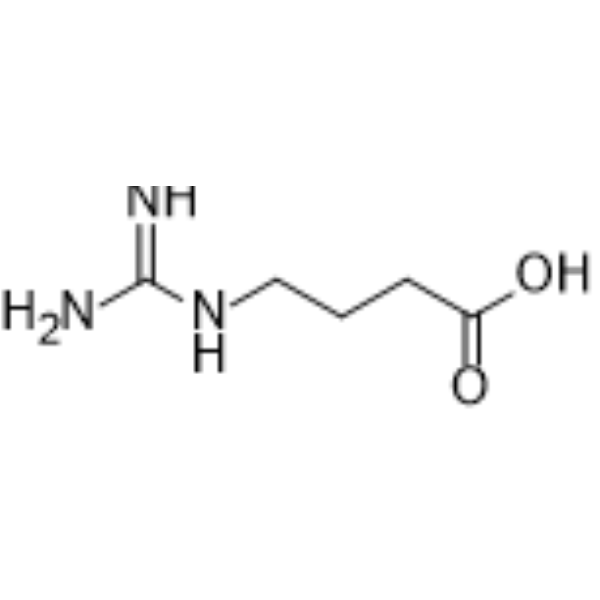
4-Guanidinobutanoic acid is a metabolite of arginine and an orally active SLC36A1/Hedgehog signaling pathway activator. 4-Guanidinobutanoic acid drives epithelial reprogramming, enhances intestinal stem cell function and goblet cell differentiation. 4-Guanidinobutanoic acid promotes the enrichment of Akkermansia muciniphila via mucus-dependent niche expansion, regulates intestinal homeostasis, and establishes a microbiota-host feedback loop. 4-Guanidinobutanoic acid exhibits anti-aging and healthspan-regulating properties. 4-Guanidinobutanoic acid can be used in research related to ulcerative colitis, amyotrophic lateral sclerosis, and Duchenne muscular dystrophy .
loading...
    loading...
Cat. No.: HY-125387
CAS No.: 1628439-59-7
Target:  

Src

Research Areas:  

Inflammation/Immunology

TOP1210 is a narrow-spectrum tyrosine kinase inhibitor with potent inhibitory activity against P38α, Src, and Syk kinases. TOP1210 effectively reduced proinflammatory cytokines released by peripheral blood monocytes, primary macrophages, HT29 cells, inflammatory cells in ulcerative colitis (UC) biopsies, and myofibroblasts isolated from inflamed colonic UC mucosa. TOP1210 showed significant anti-inflammatory effects in cell experiments and UC biopsies, superior to some selective kinase inhibitors. The multi-kinase inhibition of TOP1210 provides the possibility of obtaining a wider range of therapeutic effects, especially in the regulation of autoimmune responses .
loading...
    loading...
Cat. No.: HY-126066
CAS No.: 6216-81-5
Purity:  99.95%
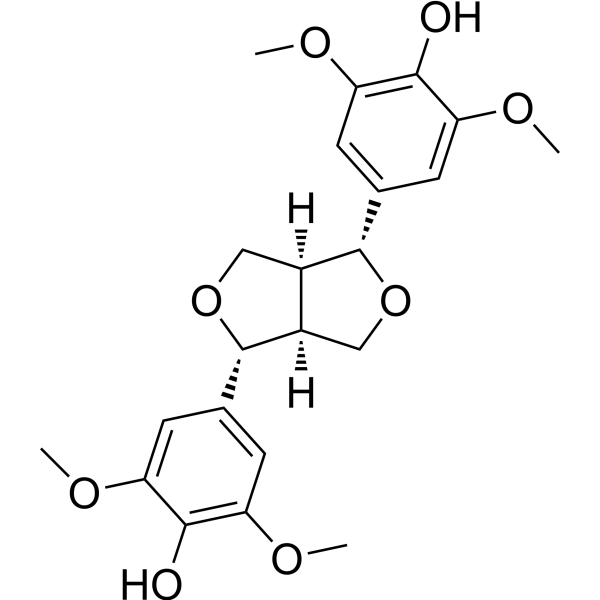
(-)-Syringaresinol is an orally active isomer of syringaresinol (HY-N8307) found in Annona Montana. (-)-Syringaresinol exhibits antioxidant, anti-inflammatory, and anticancer activities. (-)-Syringaresinol can alleviate ulcerative colitis via the PI3K-Akt/MAPK/Wnt signaling pathway. (-)-Syringaresinol inhibits HL-60 cell proliferation by arresting the G1 phase and inducing apoptosis. (-)-Syringaresinol inhibits LPS (HY-D1056)-induced microglial activation by downregulating the NF-κB p65 signaling pathway and its interaction with ERβ, exerting anti-neuroinflammatory effects .
loading...
    loading...

