175 Results for "

larvae

" in MedChemExpress (MCE) Product Catalog:
Products (175)

175 Results for "larvae" in MCE Product Catalog:

Cat. No.: HY-N17963
CAS No.: 229483-41-4
Cappariloside A is a larvicide that exhibits larvicidal activity against Aedes aegypti larvae and reduces larval glutathione-S-transferase activity. Cappariloside A also possesses antiviral activity, decreases the level of phosphorylated STAT1 in cells, inhibits the replication of influenza viruses H1N1, H3N2, PIV3 and ADV, and downregulates the expression of IL-6, IP-10, MIG, RANTES/CCL-5, IFN-β and IL-29. Cappariloside A suppresses the inflammatory response induced by mouse lung-adapted influenza virus strains. Cappariloside A can be used in studies related to larvicidal applications and influenza virus infection .
loading...
    loading...
Cat. No.: HY-182372
CAS No.: 1638153-78-2
Target:  

Epoxide Hydrolase

Research Areas:  

Neurological Disease

SH-11037 is a potent inhibitor of soluble epoxide hydrolase (sEH) and docks to the substrate binding cleft in the sEH hydrolase domain. SH-11037 dose-dependently suppresses angiogenesis in the choroidal sprouting assay ex vivo and inhibited ocular developmental angiogenesis in zebrafish larvae. SH-11037 reduces choroidal neovascularisation lesion volume in the laser-induced CNV mouse model. SH-11037 synergises with anti-VEGF treatments in vitro and in vivo. SH-11037 induces G2/M phase blockade and retains retinal endothelial cell viability at active concentrations without overt toxicity. SH-11037 can be used for the research of retinal neovascularization and ocular neovascularization .
loading...
    loading...
Cat. No.: HY-D0259R
CAS No.: 16423-68-0
Synonyms: Erythrosin extra bluish (Standard); Tetraiodofluorescein disodium (Standard)
Research Areas:  

Infection

Erythrosine B (Standard) (Erythrosin extra bluish (Standard); Tetraiodofluorescein disodium (Standard)) is the analytical standard of Erythrosine B (HY-D0259). This product is intended for research and analytical applications. Erythrosine B (Erythrosin extra bluish; Tetraiodofluorescein) is a visible red dye and insecticide with colorimetric and fluorescent properties. Erythrosine B serves as a membrane-impermeant live-cell dye for Gram-positive and Gram-negative bacteria, primarily staining dead cells with damaged plasma membranes. Erythrosine B exhibits photosensitive larvicidal toxicity against Culex pipiens quinquefasciatus larvae. Erythrosine B is used in live/dead bacterial assays in colorimetric and fluorescent measurements for low-, medium-, and high-throughput experiments, as well as in research related to mosquito-borne diseases and food coloring .
loading...
    loading...
Cat. No.: HY-N9164
CAS No.: 62874-52-6
Hecubine is a monoterpene indole alkaloid found in Ervatamia ocinalis. Hecubine activates TREM2 expression, reduces LPS (HY-D1056)-stimulated inammatory cytokines (TNF-α、IL-6、IL-1β) overexpression, as well as suppresses the levels of TLR4-, MyD88-, MAPK/PI3K/AKT- and NF-κB-related proteins. Hecubin also exhibits antioxidative effect, reduces ROS production and activates of the Nrf2/HO-1 pathway. Hecubine rescues LPS-induced behavioral deficits in zebrash larvae. Hecubine can be used for the research of neural inflammation-associated central nervous system diseases .
loading...
    loading...
Cat. No.: HY-107864R
CAS No.: 15905-32-5
Synonyms: Erythrosin extra bluish free acid (Standard); Tetraiodofluorescein (Standard)
Research Areas:  

Infection

Erythrosine B free acid (Standard) (Erythrosin extra bluish free acid (Standard); Tetraiodofluorescein (Standard)) is the analytical standard of Erythrosine B free acid (HY-107864). This product is intended for research and analytical applications. Erythrosine B free acid​ (Erythrosin extra bluish free acid; Tetraiodofluorescein) is a visible red dye and insecticide with colorimetric and fluorescent properties. Erythrosine B free acid serves as a membrane-impermeant live-cell dye for Gram-positive and Gram-negative bacteria, primarily staining dead cells with damaged plasma membranes. Erythrosine B free acid exhibits photosensitive larvicidal toxicity against Culex pipiens quinquefasciatus larvae. Erythrosine B free acid is used in live/dead bacterial assays in colorimetric and fluorescent measurements for low-, medium-, and high-throughput experiments, as well as in research related to mosquito-borne diseases and food coloring .
loading...
    loading...
Cat. No.: HY-130349
CAS No.: 121124-29-6
Synonyms: L-656,748
Target:  

GABA Receptor

Research Areas:  

Infection

Emamectin B1a (L-656,748) is a semisynthetic derivative of avermectin B1a that binds to GABA receptors (Ki=17.6 nM in rat brain membranes) and enhances GABA responses. Emamectin B1a acitivates GABAA receptors α1β1γ2, α1β2γ2, and α1β3γ2 with IC50s of 57, 210, and 49.8 nM, respectively. Emamectin B1a also binds to glycine receptors, inhibiting glycine receptors with an IC50=218 nM in rat spinal cord. Emamectin B1a (1.067 ng/mL) caused 90% mortality of S. exigua larvae in foliar spray bioassays and topical application, making it more toxic than avermectin B1.
loading...
    loading...
Cat. No.: HY-184587
Antibacterial agent 356 is an orally active antibacterial agent. Antibacterial agent 356 binds to the Mrr1 transcription factor, inhibits the expression of the MDR1 efflux pump gene, reduces the efflux of Rhodamine 123, and increases the accumulation of intracellular substrates in drug-resistant Candida albicans cells. Antibacterial agent 356 induces mitochondrial membrane potential reduction and ROS accumulation in Candida albicans, inhibits the yeast-hypha transition process, and suppresses its biofilm formation. Antibacterial agent 356 reverses efflux pump-mediated drug resistance in azole-resistant Candida albicans with overexpressed Mdr1. Antibacterial agent 356 improves the survival rate of Galleria mellonella larvae infected with azole-resistant Candida albicans*CA632, and reduces the renal fungal load and renal tissue damage in infected BALB/c mice. Antibacterial agent 356 can be used for the research of Candida albicans infection .
loading...
    loading...
Cat. No.: HY-N2434R
CAS No.: 36752-54-2
-Shogaol (Standard) is the analytical standard of -Shogaol (HY-N2434). This product is intended for research and analytical applications. [10]-Shogaol is an orally active antioxidant. [10]-Shogaol can be extracted from ginger (Zingiber officinale). [10]-Shogaol1 inhibits COX-2 with an IC50 value of 7.5 μM. [10]-Shogaol inhibits the production of proinflammatory cytokines (IL-1β, IL-6). [10]-Shogaol inhibits NF-κB phosphorylation. [10]-Shogaol has anti-inflammatory effects. [10]-Shogaol has anticancer effects against Docetaxel (HY-B0011)-resistant prostate cancer. [10]-Shogaol exhibits larvicidal activity against L5 larvae of Angiostrongylus cantonensis .
loading...
    loading...
Cat. No.: HY-N12378
CAS No.: 514-51-2
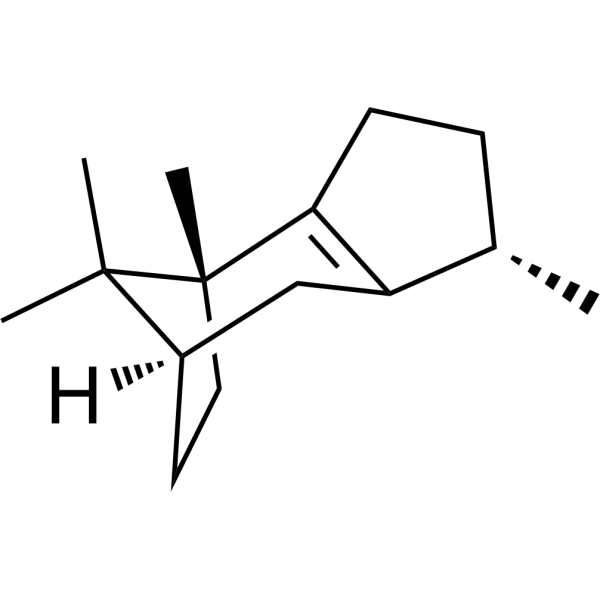
β-Patchoulene is an orally active anti-inflammatory, antioxidant, and anti-apoptotic agent. β-Patchoulene inhibits the NF-κB, TLR4, and cAMP/PKA/CREB signaling pathways; activates the Sirt1/Nrf2 and AMPK signaling pathways; and targets Fas/FasL, Caspase-3, ERK1/2, ROCK1/MLC2 for inhibition. β-Patchoulene regulates cytokine secretion, inflammatory cell infiltration, lipid peroxidation, cell polarization, gut microbiota, and lipid metabolism, restores barrier function, mitochondrial function, and cell viability, and exhibits repellent activity against Spodoptera exigua larvae. β-Patchoulene can be used in research related to various inflammatory, ischemic, fibrosis-associated diseases, as well as hepatocellular carcinoma .
loading...
    loading...
Cat. No.: HY-138185
CAS No.: 158792-24-6
Synonyms: SF 2738A
Target:  

Bacterial Apoptosis

Research Areas:  

Cancer

Collismycin A is a bacterial metabolite originally isolated from Streptomyces that has diverse biological activities, including antibacterial, antiproliferative, and neuroprotective properties. It is active against a variety of bacteria (MICs=6.25 and 100 μg/mL) and fungi (MICs=12.5-100 μg/mL). It inhibits proliferation of A549 lung, HCT116 colon, and HeLa cervical cancer cells (IC50s=0.3, 0.6, and 0.3 μM, respectively) and NIH373 fibroblasts (IC50=56.6 μM) but not MDA-MD-231 breast cancer cells (IC50=>100 μM). Collismycin A forms a complex with Fe(II) and Fe(III) at a 2:1 ratio, and the addition of iron ions inhibits the antiproliferative effect of collismycin A on HeLa cells, an effect that does not occur with the addition of zinc, manganese, copper, or magnesium ions.3 Collismycin A (1 μM) prevents apoptosis in the brain region of zebrafish larvae in a model of neuronal cell death induced by all-trans retinoic acid.
loading...
    loading...
Cat. No.: HY-N10423
CAS No.: 18423-69-3
Synonyms: (-)-Cubebin
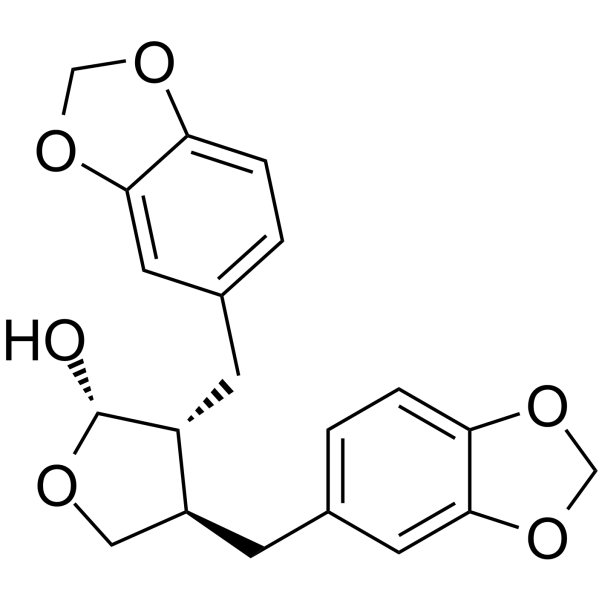
Cubebin ((-)-Cubebin), a dibenzyl butyrolactone lignan, is an orally active AChE inhibitor. Cubebin binds to active sites of NF-κB, TNF-α, and TGF-β1 via hydrogen and hydrophobic interactions, obstructing critical residues to inhibit pro-inflammatory or renal fibrosis-related activity. Cubebin enhances p38 MAPK phosphorylation to increase tyrosinase gene expression, stimulating melanogenesis via elevated tyrosinase activity, expression, and mRNA levels. Cubebin reduces oxidative stress via enhanced endogenous antioxidant enzyme activity and inhibited lipid peroxidation, regulates lipid metabolism, improves glycemic control, and exerts renoprotective effects via reduced renal dysfunction markers and improved renal architecture. Cubebin shows antimicrobial activity. Cubebin exerts larvicidal activity against Angiostrongylus cantonensis larvae, with no cytotoxicity toward monkey or human cell lines or Caenorhabditis elegans. Cubebin can be used for the research of diabetic nephropathy, melanoma, colon adenocarcinoma, neuroangiostrongyliasis, Alzheimer’s disease (AD) and depression .
loading...
    loading...
Cat. No.: HY-N3097
CAS No.: 18836-52-7
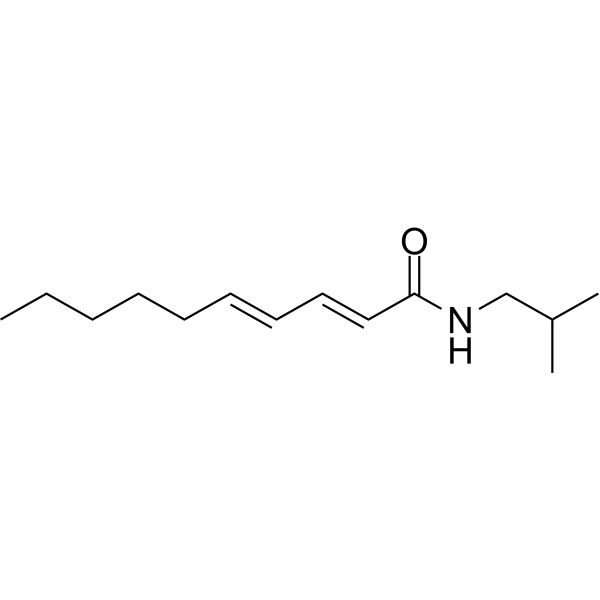
Pellitorine is a bioactive natural amide compound. Pellitorine can competitively antagonize the activation of TRPV1 by Capsaicin (HY-10448), thereby reducing pain signal transmission. Pellitorine improves cognitive dysfunction by upregulating the BDNF-ERK1/2-CREB and Nrf2-HO-1 pathways. Pellitorine exerts anti-inflammatory and anti-sepsis effects by inhibiting the release of high mobility group protein B1 (HMGB1) and the expression of RAGE/TLR4. Pellitorine exerts its antithrombotic effect by prolonging the clotting time, inhibiting the activity of clotting factors and thrombin. Pellitorine inhibits lipid peroxidation and resists ferroptosis by upregulating GPX4 and DHODH. Pellitorine kills Aedes aegypti mosquito larvae by inhibiting V-type H⁺-ATPase and aquaporin 4 (AaAQP4). Pellitorine exhibits anti-cancer activity (e.g., leukemia and breast cancer) and has inhibitory effects on certain bacteria .
loading...
    loading...
Cat. No.: HY-N3097R
CAS No.: 18836-52-7
Pellitorine (Standard) is the analytical standard of Pellitorine (HY-N3097). Pellitorine is a bioactive natural amide compound. Pellitorine can competitively antagonize the activation of TRPV1 by Capsaicin (HY-10448), thereby reducing pain signal transmission. Pellitorine improves cognitive dysfunction by upregulating the BDNF-ERK1/2-CREB and Nrf2-HO-1 pathways. Pellitorine exerts anti-inflammatory and anti-sepsis effects by inhibiting the release of high mobility group protein B1 (HMGB1) and the expression of RAGE/TLR4. Pellitorine exerts its antithrombotic effect by prolonging the clotting time, inhibiting the activity of clotting factors and thrombin. Pellitorine inhibits lipid peroxidation and resists ferroptosis by upregulating GPX4 and DHODH. Pellitorine kills Aedes aegypti mosquito larvae by inhibiting V-type H⁺-ATPase and aquaporin 4 (AaAQP4). Pellitorine exhibits anti-cancer activity (e.g., leukemia and breast cancer) and has inhibitory effects on certain bacteria.
loading...
    loading...
Cat. No.: HY-W011927
CAS No.: 80-09-1
Synonyms: Bisphenol S; Bis(4-hydroxyphenyl) sulfone
4,4'-Sulfonyldiphenol (Bisphenol S; Bis(4-hydroxyphenyl) sulfone), a substitute for Bisphenol A (HY-18260), is widely used in industrial and consumer products. 4,4'-Sulfonyldiphenol is an oally ative estrogen receptor (ER) agonist and can competitively bind to thyroid hormone receptors (TR) with IC50 values for TRα and TRβ are 2650 μM and 2294 μM respectively, thereby affecting breast development and reducing the expression of androgen receptor (AR) in fetal testes. 4,4'-Sulfonyldiphenol promotes the progression of glioblastoma by upregulating the EZH2 mediated PI3K/AKT/mTOR pathway. Under chronic exposure, 4,4'-Sulfonyldiphenol can cause significant lipid deposition and dyslipidemia in the mouse liver by upregulating JunB and Atf3, and has a role in causing obesity at low doses. 4,4'-Sulfonyldiphenol induces intestinal inflammation by altering the intestinal microbiome. 4,4'-Sulfonyldiphenol accelerates the progression of atherosclerosis in zebrafish embryo larvae .
loading...
    loading...
Cat. No.: HY-W011927R
CAS No.: 80-09-1
Synonyms: Bisphenol S (Standard); Bis(4-hydroxyphenyl) sulfone (Standard)
4,4'-Sulfonyldiphenol (Bisphenol S; Bis(4-hydroxyphenyl) sulfone) (Standard) is the analytical standard of 4,4'-Sulfonyldiphenol (HY-W011927). This product is intended for research and analytical applications. 4,4'-Sulfonyldiphenol, a substitute for Bisphenol A (HY-18260), is widely used in industrial and consumer products. 4,4'-Sulfonyldiphenol is an estrogen receptor (ER) agonist and can competitively bind to thyroid hormone receptors (TR) with IC50 values for TRα and TRβ are 2650 μM and 2294 μM respectively, thereby affecting breast development and reducing the expression of androgen receptor (AR) in fetal testes. 4,4'-Sulfonyldiphenol promotes the progression of glioblastoma by upregulating the EZH2 mediated PI3K/AKT/mTOR pathway. Under chronic exposure, 4,4'-Sulfonyldiphenol can cause significant lipid deposition and dyslipidemia in the mouse liver by upregulating JunB and Atf3, and has a role in causing obesity at low doses. 4,4'-Sulfonyldiphenol induces intestinal inflammation by altering the intestinal microbiome. 4,4'-Sulfonyldiphenol accelerates the progression of atherosclerosis in zebrafish embryo larvae.
loading...
    loading...