199 Results for "

ALDH

" in MedChemExpress (MCE) Product Catalog:
Products (199)

199 Results for "ALDH" in MCE Product Catalog:

Cat. No.: HY-N1177
CAS No.: 514-07-8
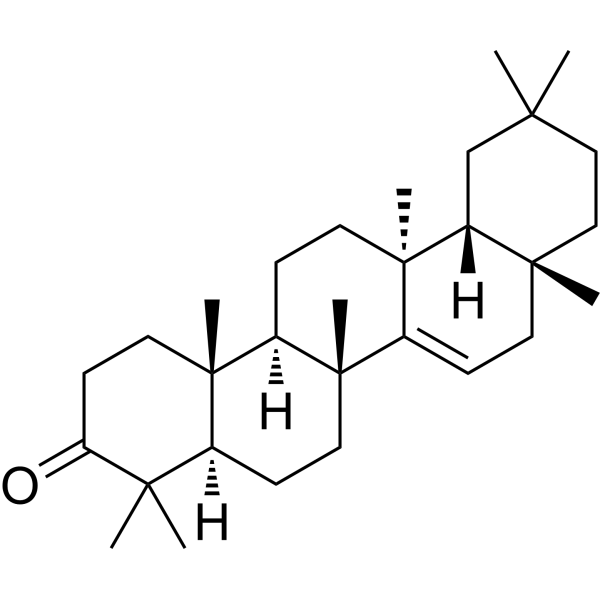
Taraxerone is isolated from Sedum sarmentosum. Taraxerone enhances effects on alcohol dehydrogenase (ADH) and acetaldehyde dehydrogenase (ALDH) activities with EC50 values of 512.42 and 500.16 μM, respectively .
loading...
    loading...
Cat. No.: HY-107030R
CAS No.: 21721-92-6
Synonyms: EMD-15700 (Standard)
Nitrefazole (Standard) is the analytical standard of Nitrefazole. This product is intended for research and analytical applications. Nitrefazole is a 4-nitroimidazole derivative with strong and long lasting inhibition of aldehyde dehydrogenase (ALDH), an enzyme involved in the metabolism of alcohol.
loading...
    loading...
Cat. No.: HY-121817R
CAS No.: 95-05-6
Sulfiram (Standard) is the analytical standard of Sulfiram (HY-121817). This product is intended for research and analytical applications. Sulfiram, an ectoparasiticide, is a weak aldehyde dehydrogenase (ALDH) inhibitor. Sulfiram can be used for the study of scabies .
loading...
    loading...
Cat. No.: HY-W048995
CAS No.: 72002-30-3
Target:  

Endogenous Metabolite

Research Areas:  

Neurological Disease

D-6-Oxo-pipecolinic acid is the D-enantiomer of 6-Oxo-pipecolinic acid. 6-Oxo-pipecolinic acid is the biomarkers associated with pyridoxine-dependent epilepsy (PDE-ALDH7A1) .
loading...
    loading...
Cat. No.: HY-184776
CAS No.: 586-60-7
Synonyms: Dyclocaine
Dyclonine (Dyclocaine) is an orally active, blood-brain barrier-permeable piperidine phenylacetone small molecule commonly used as a local anesthetic. Dyclonine acts as a highly selective allosteric antagonist of TRPV3; it also reversibly inhibits G9a, ALDH2 and ALDH3A1, non-competitively blocks AChE. Dyclonine activates the Nrf2/ARE pathway, relieves the epigenetic silencing of FXN, blocks Aβ42 aggregation, and promotes remyelination and reparative polarization of microglia. Dyclonine alleviates pruritus via TRPV3 inhibition; it is used in studies of neurodegenerative disease models based on its AChE inhibitory, antioxidant and remyelinating effects; it sensitizes drug-resistant tumors through ALDH inhibition, and combined use with protease inhibitors induces more tumor cell apoptosis; it inhibits Candida albicans in vitro. Dyclonine can be used for research on multiple diseases including neurodegenerative diseases, cancer and pruritic dermatitis .
loading...
    loading...
Cat. No.: HY-126241
CAS No.: 1016897-10-1
Purity:  98.0%
Research Areas:  

Inflammation/Immunology

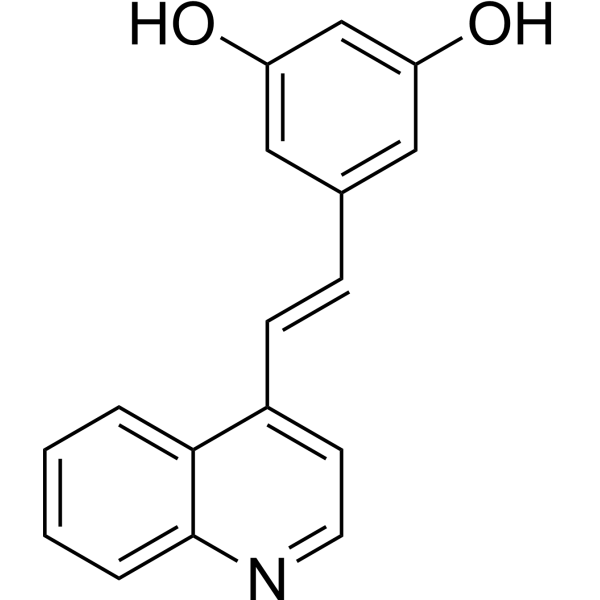
RV01 is an analogue of resveratrol, inhibits DNA damage, reduces acetaldehyde dehydrogenase 2 (ALDH2) mRNA expression induced by ethanol, and exhibits hydroxyl radical scavenging activity . RV01 decreases iNOS expression, with anti-neuroinflammatory activity .
loading...
    loading...
Cat. No.: HY-B0364AR
CAS No.: 536-43-6
Synonyms: Dyclocaine hydrochloride (Standard)
Dyclonine hydrochloride (Standard) (Dyclocaine hydrochloride (Standard)) is the analytical standard of Dyclonine hydrochloride (HY-B0364A). This product is intended for research and analytical applications. Dyclonine hydrochloride (Dyclocaine hydrochloride) is an orally active, blood-brain barrier-permeable piperidine phenylacetone small molecule commonly used as a local anesthetic. Dyclonine hydrochloride acts as a highly selective allosteric antagonist of TRPV3; it also reversibly inhibits G9a, ALDH2 and ALDH3A1, non-competitively blocks AChE. Dyclonine hydrochloride activates the Nrf2/ARE pathway, relieves the epigenetic silencing of FXN, blocks Aβ42 aggregation, and promotes remyelination and reparative polarization of microglia. Dyclonine hydrochloride alleviates pruritus via TRPV3 inhibition; it is used in studies of neurodegenerative disease models based on its AChE inhibitory, antioxidant and remyelinating effects; it sensitizes drug-resistant tumors through ALDH inhibition, and combined use with protease inhibitors induces more tumor cell apoptosis; it inhibits Candida albicans in vitro. Dyclonine hydrochloride can be used for research on multiple diseases including neurodegenerative diseases, cancer and pruritic dermatitis .
loading...
    loading...
Cat. No.: HY-B0364AS
Synonyms: Dyclocaine-d9 hydrochloride
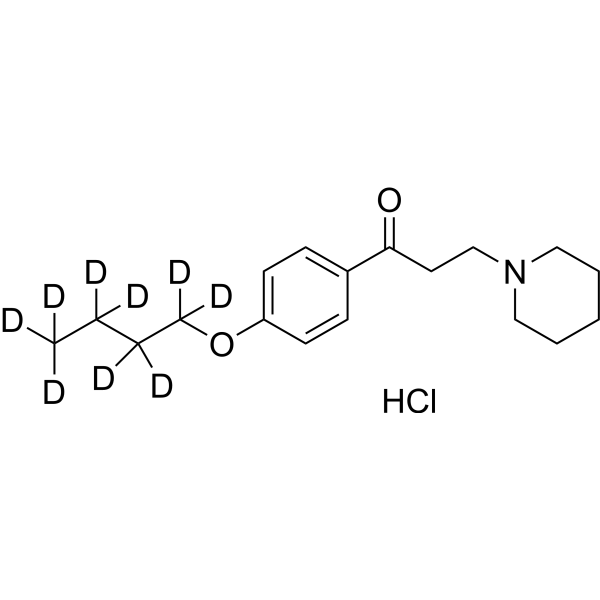
Dyclonine-d9 hydrochloride (Dyclocaine-d9 hydrochloride) is the deuterated-labeled Dyclonine hydrochloride (HY-B0364A). Dyclonine hydrochloride (Dyclocaine hydrochloride) is an orally active, blood-brain barrier-permeable piperidine phenylacetone small molecule commonly used as a local anesthetic. Dyclonine hydrochloride acts as a highly selective allosteric antagonist of TRPV3; it also reversibly inhibits G9a, ALDH2 and ALDH3A1, non-competitively blocks AChE. Dyclonine hydrochloride activates the Nrf2/ARE pathway, relieves the epigenetic silencing of FXN, blocks Aβ42 aggregation, and promotes remyelination and reparative polarization of microglia. Dyclonine hydrochloride alleviates pruritus via TRPV3 inhibition; it is used in studies of neurodegenerative disease models based on its AChE inhibitory, antioxidant and remyelinating effects; it sensitizes drug-resistant tumors through ALDH inhibition, and combined use with protease inhibitors induces more tumor cell apoptosis; it inhibits Candida albicans in vitro. Dyclonine hydrochloride can be used for research on multiple diseases including neurodegenerative diseases, cancer and pruritic dermatitis .
loading...
    loading...
Cat. No.: HY-169883
CAS No.: 1011641-78-3
Research Areas:  

Cancer

PKM2-IN-7 (compound 34) can inhibit the interaction between PKM2 and ALDH1A3 without showing significant toxicity to normal cells. PKM2-IN-7 can be used for research in the field of tumors .
loading...
    loading...
Cat. No.: HY-182636
CAS No.: 1895049-73-6
MT16-001 is a cell-permeable UCHL1 inhibitor with an IC50 value of 580 nM. MT16-001 also exhibits considerable inhibitory activity against USP30, and shows selectivity for other UCH family deubiquitinases (DUBs) as well as the broader proteome. MT16-001 binds covalently to the cysteine residue at the active site of UCHL1, and forms covalent interactions with ALDH2, ALDH9A1 and GATD3A in intact cells. Meanwhile, as a cytotoxic agent, it displays a steep dose-response curve in human embryonic kidney cells. MT16-001 can be used for research on various cancers, liver fibrosis and pulmonary fibrosis .
loading...
    loading...
Cat. No.: HY-171852
CAS No.: 2007-00-3
Research Areas:  

Cancer

Iodoquine is an analog of chloroquine. Iodoquine exhibits high uptake in tumor cells and can localize to cells with high ALDH1 content, including cancer stem cells. With low uptake in normal brain tissue, iodoquine can be used in research related to tumor diagnosis or as a radiotracer .
loading...
    loading...
Cat. No.: HY-N10991
CAS No.: 502-70-5
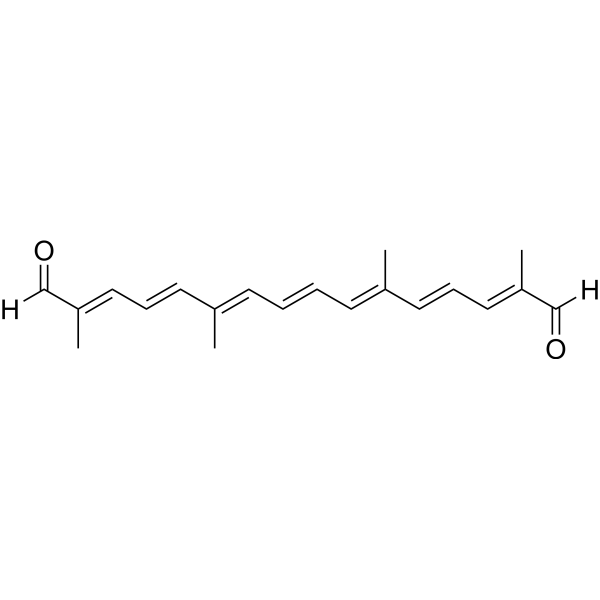
Crocetin dialdehyde is a non-volatile apocarotenoid obtained by the action of the plastidic enzyme CCD2 over the carotenoid zeaxanthin in saffron. Crocetin dialdehyde can be converted into Crocetin (HY-N2072) by aldehyde dehydrogenases (ALDHs). Crocetin dialdehyde has no effect on the liver in mice .
loading...
    loading...
Cat. No.: HY-112277
CAS No.: 2231079-74-4
Purity:  99.37%
Research Areas:  

Cancer

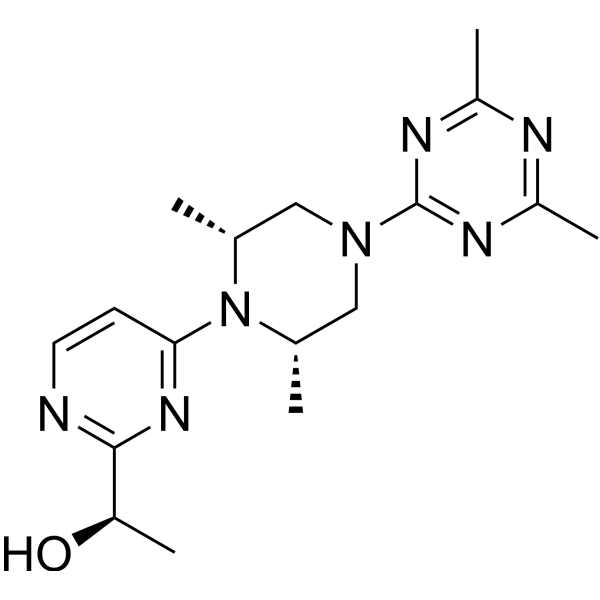
NCT-505 is a potent and selective aldehyde dehydrogenase (ALDH1A1) inhibitor, with an IC50 of 7 nM, and weakly inhibits hALDH1A2, hALDH1A3, hALDH2, hALDH3A1 (IC50s, >57, 22.8, 20.1, >57 μM).
loading...
    loading...
Cat. No.: HY-118980
CAS No.: 300551-49-9
Purity:  98.70%
Research Areas:  

Metabolic Disease

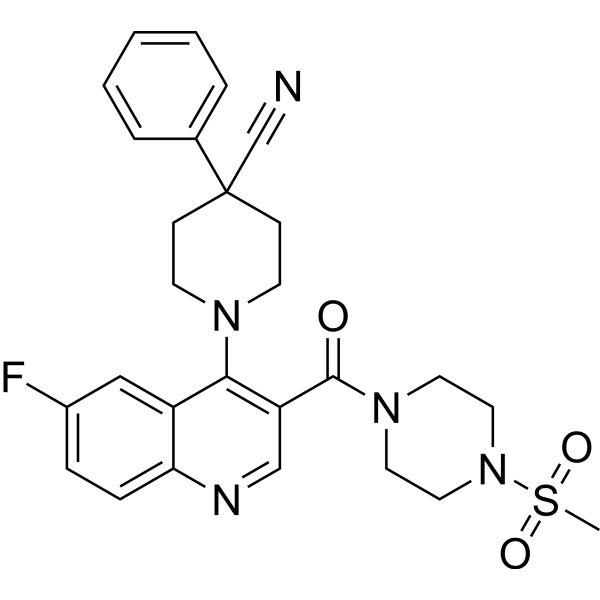
Sorbitol dehydrogenase-IN-1 is a potent and orally active sorbitol dehydrogenase inhibitor with IC50 s of 4, 5 nM for rat and human, respectively. Sorbitol Dehydrogenase (SDH) is an enzyme that belongs to the zinc-containing alcohol dehydrogenase (ADH) family. ADH and ALDH are enzymes that work together to metabolize alcohol .
loading...
    loading...
Cat. No.: HY-W004301
CAS No.: 112-54-9
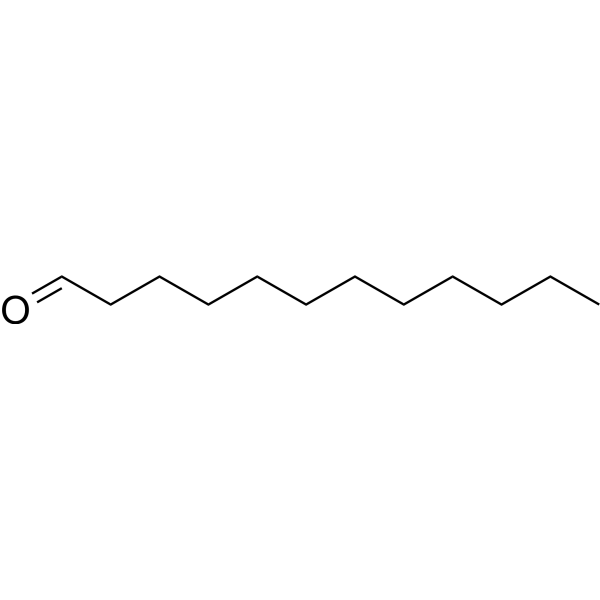
Dodecanal is an aliphatic aldehyde and serves as the major volatile metabolite in the leaves, stems and roots of Polygonum minus. Dodecanal acts as a substrate for oxidation reactions and is converted into dodecanoic acid by endogenous ALDH enzymes. Dodecanal is an intermediate in the biological oxidation pathway of n-dodecane and the biotransformation pathway of ω-aminododecane .
loading...
    loading...
Cat. No.: HY-W011094R
CAS No.: 1477-57-2
Win 18446 is an orally active testes-specific enzyme ALDH1a2 inhibitor, with an IC50 of 0.3 μM. Win 18446 reversibly inhibits spermatogenesis in many species and inhibits Retinoic acid (HY-14649) biosynthesis from Retinol (HY-B1342) within the testes .
loading...
    loading...
Cat. No.: HY-Y1668
CAS No.: 630-19-3
Synonyms: Pivalic aldehyde; Pivalaldehyde
Research Areas:  

Others

Trimethylacetaldehyde (Pivalic aldehyde; Pivalaldehyde) is an inhibitor of E. coli betaine aldehyde dehydrogenase (ALDH) with a Ki of 4.5 mM. Trimethylacetaldehyde serves as a substrate for Drosophila melanogaster alcohol dehydrogenase (AdhS), undergoing oxidation and disproportionation reactions with the release of NADH, and also forms an inactive binary enzyme-aldehyde complex via a compulsory ordered reaction mechanism .
loading...
    loading...
Cat. No.: HY-N7083R
CAS No.: 5392-40-5
Citral (Standard) is the analytical standard of Citral. This product is intended for research and analytical applications. Citral is an orally active monoterpene compound in lemon grass essential oil and a natural ALDH1A inhibitor, which can induce apoptosis and cycle arrest in breast cancer cell lines, and has analgesic, anti-injurious and anti-inflammatory effects .
loading...
    loading...
Cat. No.: HY-76006
CAS No.: 100-83-4
Synonyms: M-Hydroxybenzaldehyde
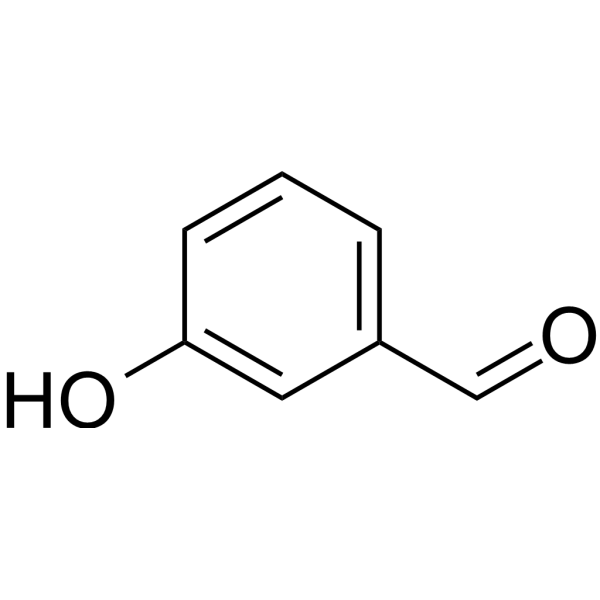
3-Hydroxybenzaldehyde (3-HBA) is a precursor compound for phenolic compounds like Protocatechuic aldehyde (PCA) (HY-N0295). 3-Hydroxybenzaldehyde, produced by 3-hydroxybenzyl-alcohol dehydrogenase, is a substrate of aldehyde dehydrogenase (ALDH) in rats and humans. 3-Hydroxybenzaldehyde has vasculoprotective effects in vitro and in vivo. 3-Hydroxybenzaldehyde is proming for research of atherosclerosis .
loading...
    loading...
Cat. No.: HY-P1201A
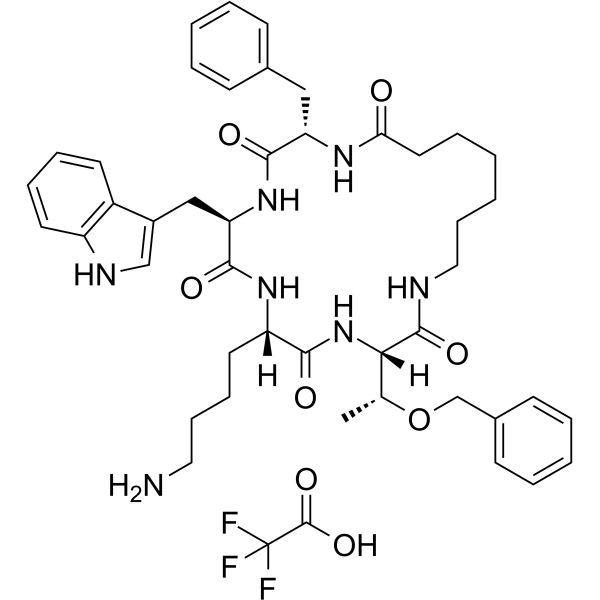
Cyclosomatostatin TFA is a non-selective somatostatin receptor antagonist that blocks SSTR1-5-mediated signaling. Cyclosomatostatin TFA decreases the ALDH + stem cell population and sphere formation without affecting cell viability, and reduces cell proliferation. Cyclosomatostatin TFA activates opioid receptors. Cyclosomatostatin TFA can be used for research on arthritis and colorectal cancer .
loading...
    loading...

