282 Results for "

Transcriptome sequencing analyses

" in MedChemExpress (MCE) Product Catalog:
Products (282)

282 Results for "Transcriptome sequencing analyses" in MCE Product Catalog:

Cat. No.: HY-179556
Target:  

SARS-CoV

Research Areas:  

Infection

SARS-CoV-2 nsp14-IN-10 is a highly potent and selective NSP14 (IC50 = 0.34 µM) S-adenosylmethionine (SAM) binding pocket inhibitor. SARS-CoV-2 nsp14-IN-10 demonstrates robust antiviral activity against SARS-CoV-2. SARS-CoV-2 nsp14-IN-10 exhibits broad-spectrum activity against other betacoronaviruses and inhibits SARS-CoV-2 at the replication stage. SARS-CoV-2 nsp14-IN-10 suppresses viral translation and exhibits immunostimulatory effects. SARS-CoV-2 nsp14-IN-10 specifically reverses NSP14-mediated alterations inhost transcriptome. SARS-CoV-2 nsp14-IN-10 can be used for the study of SARS-CoV-2 .
loading...
    loading...
Cat. No.: HY-101400S3
Purity:  ≥99.0%
Synonyms: dCTP-15N3 dilithium; 2′-Deoxycytidine-5′-triphosphate-15N3 dilithium
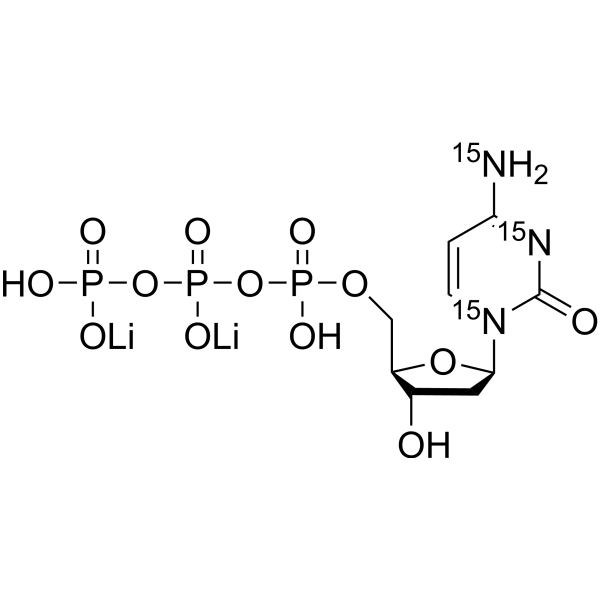
Deoxycytidine triphosphate- 15N3 (dCTP- 15N3 dilithium; 2′-Deoxycytidine-5′-triphosphate- 15N3) dilithium is 15N labeled Deoxycytidine triphosphate (HY-101400). Deoxycytidine triphosphate (dCTP) is a nucleoside triphosphate that can be used for DNA synthesis. Deoxycytidine triphosphate has many applications, such as real-time PCR, cDNA synthesis, and DNA sequencing.
The product specifications provided below refer solely to the active content of Deoxycytidine triphosphate- 15N3 dilithium.
loading...
    loading...
Cat. No.: HY-185273
CAS No.: 959755-49-8
Target:  

DNA/RNA Synthesis

Research Areas:  

Others

3'-O-(2-Nitrobenzyl)-dGTP is a reversible terminator. 3'-O-(2-Nitrobenzyl)-dGTP can be recognized and incorporated by DNA polymerases, thereby temporarily terminating DNA primer extension; after the 2-nitrobenzyl blocking group is removed via laser irradiation, a free 3'-OH can be regenerated to allow subsequent polymerase-mediated extension. 3'-O-(2-Nitrobenzyl)-dGTP can be used in DNA sequencing studies .
loading...
    loading...
Cat. No.: HY-E71729
Synonyms: RNA m22G Demethylase (D135S/L118V)
Target:  

DNA/RNA Synthesis

Research Areas:  

Others

AlkB (D135S/L118V), Nuclease-free (RNA m22G Demethylase (D135S/L118V)) is a nuclease-free modified demethylase. AlkB (D135S/L118V), Nuclease-free exhibits catalytic activity toward N2,N2-dimethylguanosine (m22G), N1-methylguanosine (m1G) and N1-methyladenosine (m1A). AlkB (D135S/L118V), Nuclease-free efficiently removes m1G and m1A modifications on RNA, and can also selectively convert m22G to N2-methylguanosine (m2G), thereby significantly reducing the level of m22G in transfer RNA (tRNA). AlkB (D135S/L118V), Nuclease-free greatly reduces sequencing bias and improves the efficiency of high-throughput tRNA sequencing .
loading...
    loading...
Cat. No.: HY-101400S1
Synonyms: dCTP-15N3,d14 dilithium; 2′-Deoxycytidine-5′-triphosphate-15N3,d14 dilithium
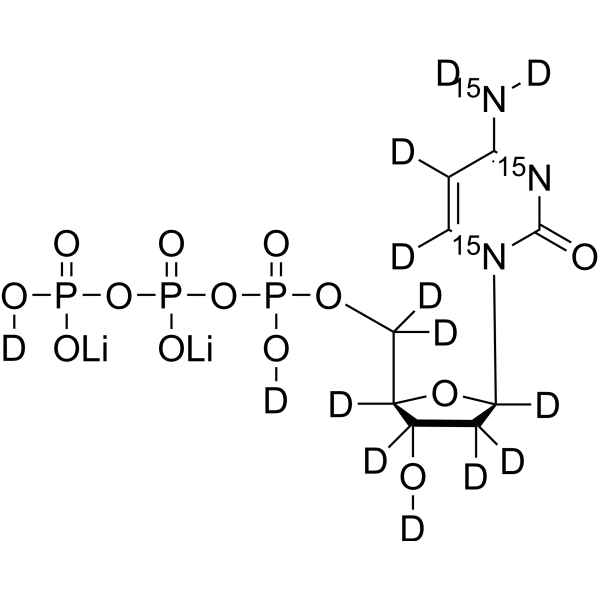
Deoxycytidine triphosphate- 15N3,d14 (dCTP- 15N3,d14 dilithium; 2′-Deoxycytidine-5′-triphosphate- 15N3,d14) dilithium is deuterium and 15N labeled Deoxycytidine triphosphate (HY-101400). Deoxycytidine triphosphate (dCTP) is a nucleoside triphosphate that can be used for DNA synthesis. Deoxycytidine triphosphate has many applications, such as real-time PCR, cDNA synthesis, and DNA sequencing.
loading...
    loading...
Cat. No.: HY-132138A
Purity:  98.02%
Target:  

DNA/RNA Synthesis

Research Areas:  

Others

5-Propargylamino-3'-azidomethyl-dCTP (TEA) is a nucleotide molecule that can be used in DNA synthesis and DNA sequencing. For detailed information, refer to compound 17 in patent document WO2004018497A2. 5-Propargylamino-3'-azidomethyl-dCTP (TEA) is a click chemistry reagent containing an azide group, which can undergo copper-catalyzed azide-alkyne cycloaddition (CuAAc) with molecules containing alkyne groups. It can also react with molecules containing DBCO or BCN groups through strain-promoted alkyne-azide cycloaddition (SPAAC) .
loading...
    loading...
Cat. No.: HY-W1119950
CAS No.: 1644649-86-4
3'-NH-Tr-2',3'-DMF-ddA-5'-CE-Phosphoramidite is an adenine nucleotide monomer precursor used in solid-phase synthesis of oligonucleotides, particularly modified oligonucleotides, such as those with DNA chain end modifications. 3'-NH-Tr-2',3'-DMF-ddA-5'-CE-Phosphoramidite, with trityl (Tr), cyanoethyl (CE), and dimethylformamidine (DMF) protecting groups, is a ddNTP adenosine nucleoside useful in applications such as solid-phase oligonucleotide synthesis, probe design, and chain-termination sequencing .
loading...
    loading...
Cat. No.: HY-D1090
CAS No.: 82855-40-1
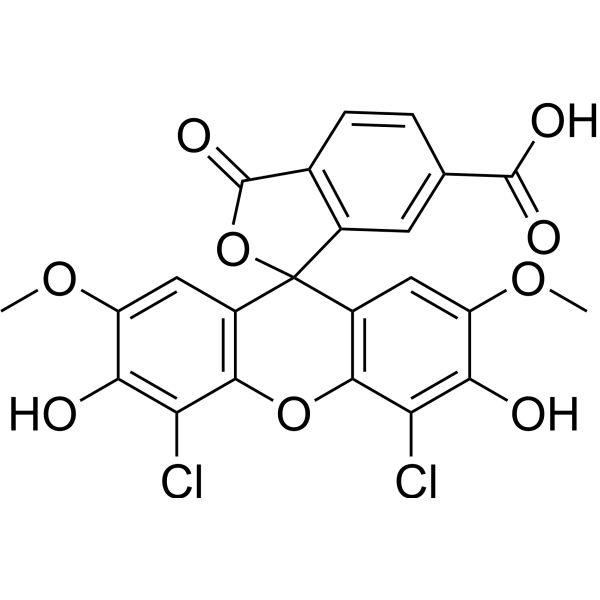
JOE is a xanthene fluorophore (i.e., 4′,5′-dichloro-2′,7′-dimethoxy-5 (6)-carboxyfluorescein; 2',7'-dimethoxy-4',5'-dichloro-6-carboxyfluorescein) with an absorption wavelength of approximately 525 nm and an emission wavelength of approximately 550 nm. The fluorescence quantum yield of JOE correlates with the rigidity of the linker arm and the distance to dG nucleoside. JOE is commonly used as a fluorescent label for oligonucleotides and molecular beacon probes, and also serves as the acceptor fluorophore in fluorescence energy transfer primers for DNA sequencing .
loading...
    loading...
Cat. No.: HY-177901
CAS No.: 159954-97-9
Target:  

DNA/RNA Synthesis

Research Areas:  

Others

3'-O-(2-Nitrobenzyl)-dATP is a reversible and photolabile DNA synthesis terminator. 3'-O-(2-Nitrobenzyl)-dATP incorporates into growing DNA strands to terminate synthesis in a base-specific manner. 3'-O-(2-Nitrobenzyl)-dATP undergoes efficient photolytic removal of its 3'-protecting group upon UV exposure to enable reinitiation of DNA synthesis. 3'-O-(2-Nitrobenzyl)-dATP supports development of the Base Addition Sequencing Scheme (BASS) via a complete stop-start DNA synthesis cycle .
loading...
    loading...
Cat. No.: HY-131740
CAS No.: 67460-15-5
Synonyms: C7dATP
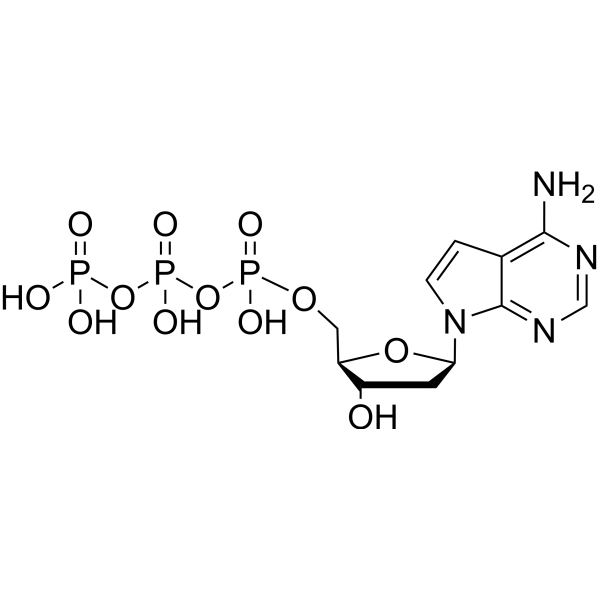
2'-Deoxytubercidin 5'-triphosphate (C7dATP) is a deoxyadenosine triphosphate (dATP) analog that serves as a substrate for DNA polymerases. 2'-Deoxytubercidin 5'-triphosphate eliminates Hoogsteen base-pairing capacity and weakens base-stacking interactions; it is recognized and incorporated into nascent DNA strands by DNA polymerases such as Klenow and T7; it reduces DNA electrophoresis compression artifacts; it is effectively degraded by apyrase, thereby lowering the enzyme product inhibition effect caused by dATPaS. 2'-Deoxytubercidin 5'-triphosphate reduces abnormal electrophoretic mobility caused by compression of G or A residues and is used to improve the quality of DNA sequencing data .
loading...
    loading...
Cat. No.: HY-131740A
Synonyms: C7dATP sodium
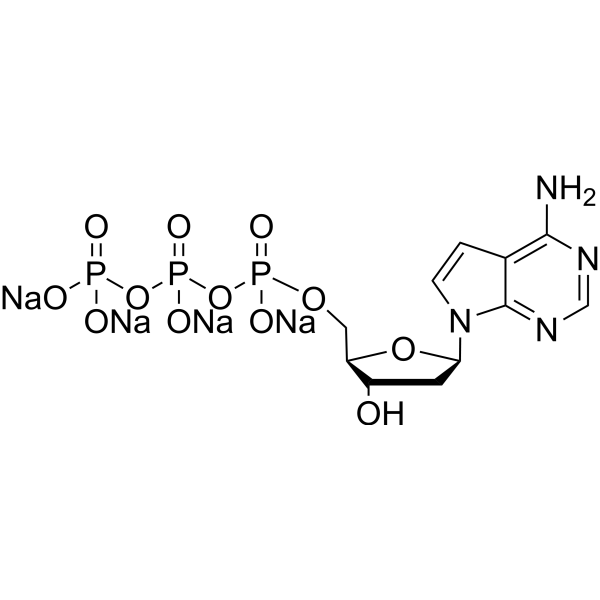
2'-Deoxytubercidin 5'-triphosphate sodium (C7dATP sodium) is a deoxyadenosine triphosphate (dATP) analog that serves as a substrate for DNA polymerases. 2'-Deoxytubercidin 5'-triphosphate sodium eliminates Hoogsteen base-pairing capacity and weakens base-stacking interactions; it is recognized and incorporated into nascent DNA strands by DNA polymerases such as Klenow and T7; it reduces DNA electrophoresis compression artifacts; it is effectively degraded by apyrase, thereby lowering the enzyme product inhibition effect caused by dATPaS. 2'-Deoxytubercidin 5'-triphosphate sodium reduces abnormal electrophoretic mobility caused by compression of G or A residues and is used to improve the quality of DNA sequencing data .
loading...
    loading...
Cat. No.: HY-141140R
CAS No.: 69075-42-9
Synonyms: 5-EU (Standard)
Research Areas:  

Others

5-Ethynyluridine (Standard) is the analytical standard of 5-Ethynyluridine (HY-141140). This product is intended for research and analytical applications. 5-Ethynyluridine (5-EU) is a potent cell-permeable nucleoside can be used to label newly synthesized RNA. 5-Ethynyluridine can be used for isolation and sequencing of nascent RNA from neuronal populations in vivo. 5-Ethynyluridine can be used to identify changes in transcription in vivo in nervous system disease models . 5-Ethynyluridine is a click chemistry reagent, it contains an Alkyne group and can undergo copper-catalyzed azide-alkyne cycloaddition (CuAAc) with molecules containing Azide groups.
loading...
    loading...
Cat. No.: HY-E71730
Synonyms: RNA m1G Demethylase (D135S)
Research Areas:  

Others

AlkB (D135S), Nuclease-free (RNA m1G Demethylase (D135S)) is a nuclease-free N1-methylguanosine (m1G) demethylase that specifically removes the methyl group from m1G residues in small non-coding RNAs. AlkB (D135S), Nuclease-free effectively promotes the reverse transcription of small non-coding RNAs and supports high-throughput sequencing methods such as CPA-seq. AlkB (D135S), Nuclease-free can be used for the precise detection and quantitative analysis of methylated small non-coding RNAs that are easily missed by conventional methods .
loading...
    loading...
Cat. No.: HY-169798
CAS No.: 23481-50-7
Target:  

Fluorescent Dye VSV

Research Areas:  

Infection

1,9-Dimethylmethylene blue is a photosensitizer, virus inactivator and hemoglobin oxidant derived from methylene blue. When activated, 1,9-Dimethylmethylene blue generates reactive oxygen species including singlet oxygen, and acts as a metachromatic dye. When activated in monomeric or dimeric form, 1,9-Dimethylmethylene blue induces photoinactivation of R17 phage and vesicular stomatitis virus and oxidizes hemoglobin via non-singlet oxygen reactive oxygen species or singlet oxygen-mediated pathways, respectively. The monomeric form, with higher nucleic acid affinity, achieves virus inactivation under specific conditions without forming methemoglobin. 1,9-Dimethylmethylene blue binds to substances such as glycosaminoglycans to produce color changes. Although it is susceptible to interference from non-glycosaminoglycan components in urine, it is still applicable to spectrophotometric analysis for glycosaminoglycan quantification. With these unique photochemical and binding properties, 1,9-Dimethylmethylene blue is widely used in studies of viral infections and related biochemical analyses .
loading...
    loading...
Cat. No.: HY-168066
Target:  

Fungal

Research Areas:  

Infection

Antifungal agent 117 is a bis-pyrazole carboxamide derivative with antifungal activity, exhibiting an EC50 value of 11.58 mg/L against Sclerotinia sclerotiorum. Antifungal agent 117 increases cell membrane permeability, causing an imbalance in osmotic pressure inside and outside the cell, and induces the accumulation of reactive oxygen species (ROS), leading to oxidative damage to the cell membrane, resulting in leakage of cellular contents and eventually cell death. RNA sequencing analysis reveals that Antifungal agent 117 downregulates catalase genes and upregulates neutral ceramidase genes, disrupting cell membrane structure, accelerating sphingolipid metabolism, and promoting cell death. Antifungal agent 117 shows great potential in the fields of plant protection and antifungal infection .
loading...
    loading...
Cat. No.: HY-185274
CAS No.: 219607-49-5
Target:  

DNA/RNA Synthesis

Research Areas:  

Others

3'-O-(2-Nitrobenzyl)-dTTP acts as a reversible terminator for DNA chain elongation. 3'-O-(2-Nitrobenzyl)-dTTP interacts with 9°N polymerase (exo-) A485L/Y409V, gets recognized and incorporated into the elongating DNA chain, thereby temporarily terminating the polymerase reaction. 3'-O-(2-Nitrobenzyl)-dTTP carries a 3'-O-(2-nitrobenzyl) blocking group, which can be removed by laser irradiation to regenerate the free 3'-OH − group and restore polymerase activity. 3'-O-(2-Nitrobenzyl)-dTTP is applicable in DNA sequencing studies .
loading...
    loading...
Cat. No.: HY-Y1219C
CAS No.: 112926-00-8
Silica gel, high-purity grade, 220-440 mesh is a low-density, high-surface-area, high-purity inert additive that can be used to prepare chromatographic column sieve plates based on the sol-gel method. Silica gel, high-purity grade prevents DNA degradation by absorbing water from plant leaves, and is suitable for the preservation of field-collected samples for subsequent DNA extraction, restriction endonuclease digestion, PCR amplification and gene sequencing. It can also be reused after being saturated with water. Silica gel, high-purity grade can provide a non-toxic, inert aquatic environment for embedded cells, allowing nutrients, oxygen and metabolic waste to diffuse freely and blocking external pollution, thereby maintaining the activity of fibroblasts and epithelial cells .
loading...
    loading...
Cat. No.: HY-Y1219D
CAS No.: 112926-00-8
Silica gel, high-purity grade, 35-70 mesh is a low-density, high-surface-area, high-purity inert additive that can be used to prepare chromatographic column sieve plates based on the sol-gel method. Silica gel, high-purity grade prevents DNA degradation by absorbing water from plant leaves, and is suitable for the preservation of field-collected samples for subsequent DNA extraction, restriction endonuclease digestion, PCR amplification and gene sequencing. It can also be reused after being saturated with water. Silica gel, high-purity grade can provide a non-toxic, inert aquatic environment for embedded cells, allowing nutrients, oxygen and metabolic waste to diffuse freely and blocking external pollution, thereby maintaining the activity of fibroblasts and epithelial cells .
loading...
    loading...
Cat. No.: HY-Y1219E
CAS No.: 112926-00-8
Silica gel, high-purity grade, 130-270 mesh is a low-density, high-surface-area, high-purity inert additive that can be used to prepare chromatographic column sieve plates based on the sol-gel method. Silica gel, high-purity grade prevents DNA degradation by absorbing water from plant leaves, and is suitable for the preservation of field-collected samples for subsequent DNA extraction, restriction endonuclease digestion, PCR amplification and gene sequencing. It can also be reused after being saturated with water. Silica gel, high-purity grade can provide a non-toxic, inert aquatic environment for embedded cells, allowing nutrients, oxygen and metabolic waste to diffuse freely and blocking external pollution, thereby maintaining the activity of fibroblasts and epithelial cells .
loading...
    loading...
Cat. No.: HY-Y1219H
CAS No.: 112926-00-8
Silica gel, high-purity grade, 200-400 mesh is a low-density, high-surface-area, high-purity inert additive that can be used to prepare chromatographic column sieve plates based on the sol-gel method. Silica gel, high-purity grade prevents DNA degradation by absorbing water from plant leaves, and is suitable for the preservation of field-collected samples for subsequent DNA extraction, restriction endonuclease digestion, PCR amplification and gene sequencing. It can also be reused after being saturated with water. Silica gel, high-purity grade can provide a non-toxic, inert aquatic environment for embedded cells, allowing nutrients, oxygen and metabolic waste to diffuse freely and blocking external pollution, thereby maintaining the activity of fibroblasts and epithelial cells .
loading...
    loading...

