
1. Search Result
Search Result
Results for "

Cd

" in MedChemExpress (MCE) Product Catalog:

2277

Inhibitors & Agonists

1

Screening Libraries

23

Fluorescent Dye

30

Biochemical Assay Reagents

144

Peptides

13

MCE Kits

947

Inhibitory Antibodies

73

Natural
Products

2778

Recombinant Proteins

323

Isotope-Labeled Compounds

1170

Antibodies

6

Click Chemistry

295

Oligonucleotides

3

GMP Molecules

Cat. No. Product Name Target Research Areas Chemical Structure
  • HY-123999
    CD38 inhibitor 1
    10+ Cited Publications

    CD38 Metabolic Disease
    CD38 inhibitor 1 (compound 78c) is a potent CD38 inhibitor with IC50s of 7.3 nM and 1.9 nM for hCD38 and mouse CD38 .
    CD38 inhibitor 1
  • HY-100256

    Cd5789

    RAR/RXR Autophagy Inflammation/Immunology
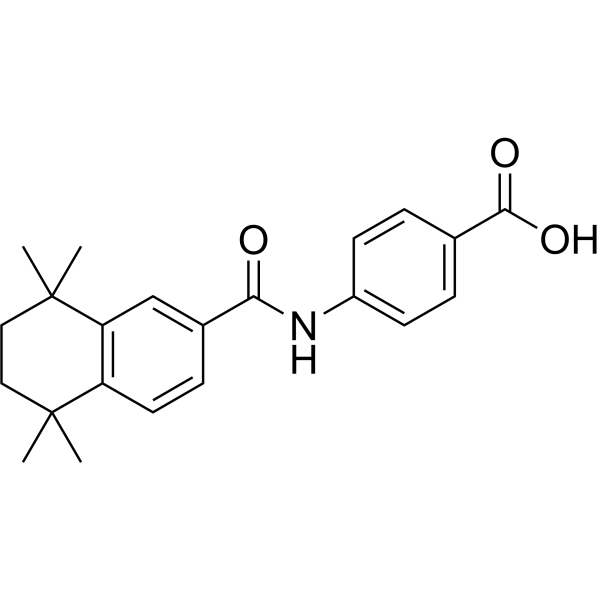
    Trifarotene (CD5789) is a potent and selective RARγ agonist. Trifarotene (CD5789) shows ~65-fold and ~16-fold selectivitiy for the RARγ (EC50=7.7 nM) over RARα (EC50=500 nM) and RARβ (EC50=125 nM), respectively .
    Trifarotene
  • HY-100532
    CD437
    4 Publications Verification

    AHPN

    RAR/RXR Autophagy Cancer
    CD437 is a selective Retinoic Acid Receptor γ (RARγ) agonist.
    CD437
  • HY-153084A
    CD19 CAR mRNA (Human)
    1 Publications Verification

    mRNA CD19 Cancer
    CD19 CAR mRNA (Human) expresses CAR protein that specifically targets human CD19. CD19 CAR mRNA can trigger transitory expression of CAR, allowing T cells to be targeted without permanent genetic modification. CD19 CAR mRNA targets CD19 which is a transmembrane glycoprotein primarily expressed on B lymphocytes and is important in B cell activation. CD19 CAR mRNA can be studied in cancer research such as lymphoma and leukemia .
    CD19 CAR mRNA (Human)
  • HY-108527
    CD1530
    3 Publications Verification

    RAR/RXR Bacterial TGF-beta/Smad β-catenin MMP Reactive Oxygen Species (ROS) Infection Metabolic Disease Endocrinology
    CD1530 is an orally active, selective RARγ agonist and antibacterial agent. CD1530 reduces Smad1/5/8 phosphorylation and overall Smad levels. CD1530 reduces β-catenin, MMP9 protein, and ROS levels. CD1530 exhibits activities such as inhibiting heterotopic ossification, promoting Achilles tendon healing, and inhibiting muscle fatty infiltration. CD1530 can be used in the research of orthopedic diseases (such as heterotopic ossification, Achilles tendon injury), muscle diseases (such as muscle fatty infiltration-related diseases) .
    CD1530
  • HY-107399
    CD3254
    3 Publications Verification

    RAR/RXR Metabolic Disease Cancer
    CD3254 a potent and selective retinoid-X-receptor (RXR) agonist .
    CD3254
  • HY-174341

    Transmembrane Glycoprotein Cancer
    CD39-IN-1 is a selective CD39 inhibitor with an IC50 value of 68.7 nM. CD39-IN-1 exerts antiproliferative effects on tumor cells and shows low toxicity to normal cell lines. CD39-IN-1 inhibits CD39-mediated eATP hydrolysis in the ATP-adenosine pathway. CD39-IN-1 is applicable for tumor-related research .
    CD39-IN-1
  • HY-112273
    CD532
    1 Publications Verification

    Aurora Kinase Cancer
    CD532 is a potent Aurora A kinase inhibitor with an IC50 of 45 nM. CD532 has the dual effect of blocking Aurora A kinase activity and driving degradation of MYCN. CD532 also can directly interact with AURKA and induces a global conformational shift. CD532 can be used for the research of cancer .
    CD532
  • HY-137246

    CD73 Cancer
    CD73-IN-3 is a potent CD73 inhibitor (IC50=7.3 nM in Calu6 human cell assay). CD73-IN-3, example 2 extracted from patent WO2019168744 A1, has the potential for cancer research .
    CD73-IN-3
  • HY-P10091

    PD-1/PD-L1 Cancer
    CD24/Siglec-10 blocking peptide, CSBP can not only block the interaction of CD24/Siglec-10 but also PD-1/PD-L1. CD24/Siglec-10 blocking peptide, CSBP can induce the phagocytosis of tumor cell .
    CD24/Siglec-10 blocking peptide, CSBP
  • HY-145334

    CD73 Cancer
    CD73-IN-5 is a potent and selective non-nucleotide small molecule inhibitor of CD73 (IC50 = 19 nM).
    CD73-IN-5
  • HY-103695

    CD73 Cancer
    CD73-IN-1 is an inhibitor of CD73 which can be used in the treatment of cancer extracted from patent WO 2017153952 A1, example 80.
    CD73-IN-1
  • HY-P990017

    Cd19-4-1BBL; RO7227166; RG6076

    CD19 Cancer
    Englumafusp alfa (CD19-4-1BBL; RO7227166) is a fusion construct comprised of a CD19-specific antibody domain fused to a trimerized extracellular domains of human 41BBL. Englumafusp alfa promotes CD19-specific 4-1BB cross-linking on the surface of T and NK cells .
    Englumafusp alfa
  • HY-108533

    RAR/RXR Cancer
    CD2314 is a potent and selective RARβ receptor agonist with a Kd of 195 nM in S91 melanoma cells .
    CD2314
  • HY-107437
    CD2665
    2 Publications Verification

    RAR/RXR Metabolic Disease
    CD2665 is an orally active and selective RAR-β,γ antagonist, with Kd values of 306 nM, 110 nM for RAR-β and RAR-γ, repectively .
    CD2665
  • HY-W177546

    Phosphodiesterase (PDE) Apoptosis Caspase DNA/RNA Synthesis Cancer
    CD00509 is a tyrosyl-DNA phosphodiesterase (PDE) Tdp1 inhibitor with an IC50 of 0.71 μM. CD00509 increases DNA damage and promotes apoptosis of MCF-7 cells. CD00509 can sensitize breast cancer cells and wild-type murine embryonic fibroblasts (MEFs) to Camptothecin (CPT) (HY-16560). CD00509 can be used for the study of cancers such as breast cancer .
    CD00509
  • HY-144399

    Transmembrane Glycoprotein Neurological Disease
    CD33 splicing modulator 1 (Compound 1) is a CD33 splicing modulator. CD33/Siglec 3 is a myeloid lineage cell surface receptor that is known to regulate microglia activity. CD33 splicing modulator 1 increases exon 2 skipping in cellular mRNA pools. CD33 splicing modulator 1 has the potential for the research of neurodegenerative disease including Alzheimer's disease .
    CD33 splicing modulator 1
  • HY-124596

    Epigenetic Reader Domain Cancer
    CD161 is a potent, selective and orally bioavailable bromodomain and extra-terminal (BET) bromodomain inhibitor with an IC50s of 28.2 nM and 7.2 nM for BRD4 BD1 and BRD4 BD2, respectively. CD161 has good anticancer activity .
    CD161
  • HY-131967

    CD73 Inflammation/Immunology Cancer
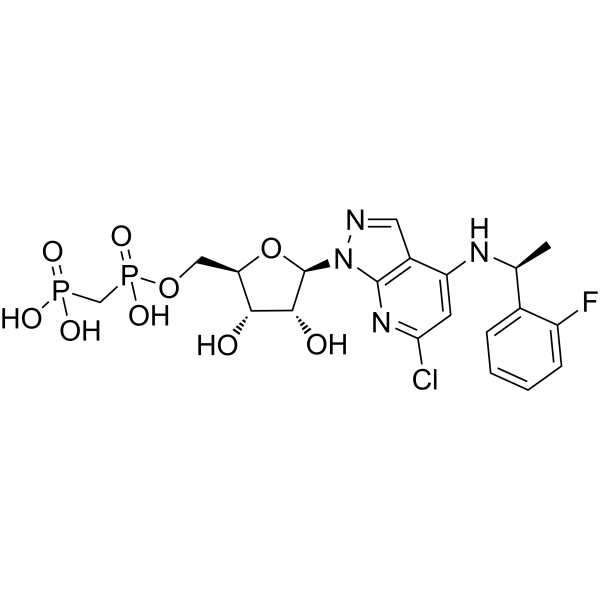
    CD73-IN-4 is a potent and selective methylenephosphonic acid CD73 inhibitor, with an IC50 of 2.6 nM for human CD73. CD73-IN-4 is potential for the research of cancer immunology .
    CD73-IN-4
  • HY-175780

    CD28 IFNAR TNF Receptor Interleukin Related Cancer
    CD28-IN-1 (Compound 19MS-5) is a CD28 inhibitor with a KD of 12.48  μM. CD28-IN-1 has a superior binding capacity to CD28 and potently inhibits CD28-B7 interactions. CD28-IN-1 inhibits CD28-driven immune activation and suppresses cytokine (IFN-γ, IL-2 and TNF-α) production in primary human T cells co-cultured with tumor spheroids and human epithelial tissues. CD28-IN-1 can be used for tumor immunity research .
    CD28-IN-1
  • HY-112273A
    CD532 hydrochloride
    1 Publications Verification

    Aurora Kinase Cancer
    CD532 hydrochloride is a potent Aurora A kinase inhibitor with an IC50 of 45 nM. CD532 hydrochloride has the dual effect of blocking Aurora A kinase activity and driving degradation of MYCN. CD532 hydrochloride also can directly interact with AURKA and induces a global conformational shift. CD532 hydrochloride can be used for the research of cancer .
    CD532 hydrochloride
  • HY-144988

    CD38 Cancer
    CD38 inhibitor 2 is a potent CD38 inhibitor (IC50 = 0.01 ~ 0.1 μΜ).
    CD38 inhibitor 2
  • HY-100891

    CD28 Inflammation/Immunology
    CD80-IN-3, a potent CD80 inhibitor, inhibits CD80/CD28 interaction with an EC50 of 630 nM and a Kd of 125 nM.
    CD80-IN-3
  • HY-153085

    CD19 Inflammation/Immunology Cancer
    CD19 CAR circRNA will express CD19 car protein, and can be used in chimeric antigen receptor T cell immunotherapy (CAR-CD19). The CD19 car is a chimeric antigen receptor. Among them, CD19 is a CD molecule expressed by B cells (i.e. leukocyte differentiation antigen), an important membrane antigen involved in B cell proliferation, differentiation, activation and antibody production, and can also promote BCR signal transduction.
    CD19 CAR circRNA
  • HY-131435

    CD73 Cancer
    CD73-IN-2 is a potent CD73 inhibitor extracted from WO2020151707A1, example 1, has an IC50 of 0.09 nM .
    CD73-IN-2
  • HY-P10183

    Cys-Cd36(139-155)

    Transmembrane Glycoprotein Inflammation/Immunology
    CD36 Peptide P (139-155), Cys conjugated is a Cys labelled CD36 Peptide, and can inhibit the immunoadsorption of CD36 by OKM5 .
    CD36 Peptide P (139-155), Cys conjugated
  • HY-146081

    CD22 Cancer
    CD22 ligand-1 (compound 12) is a potent and selective CD22 ligand with KD of 0.335, 30.7 µM for hCD22 and MAG, respectively. CD22 ligand-1 has the potential for the research of B-cell related disease .
    CD22 ligand-1
  • HY-P3444

    PECAM-1

    SHP2 Bacterial Metabolic Disease Inflammation/Immunology
    CD31 (PECAM-1) is platelet endothelial cell adhesion molecule-1, serves as the endothelial cell-specific receptor of clostridium perfringens b-Toxin (CPB). CD31 is also an ER-MP12 antigen, acts as a linker between mechanical stress, metabolism and inflammation. CD31 peptide is able to sustain phosphorylation of the CD31 ITIM686 and of SHP2 and to inhibit TCR-induced T-cell activation - .
    CD31
  • HY-P99844

    ALPN-202; Cd80 vIgD-Fc

    CTLA-4 Cancer
    Davoceticept (ALPN-202; CD80 vIgD-Fc) is a variant CD80 vIgD-Fc fusion protein targeting CTLA-4 and PD-L1. Davoceticept consists of the (1-107) fragment of CD80 linked to IGHG1 Fc via a peptidyl linker. The expression system of Davoceticept is usually CHO (Chinese Hamster Ovary) cells .
    Davoceticept
  • HY-RS02266

    Small Interfering RNA (siRNA) Others

    CD74 Human Pre-designed siRNA Set A contains three designed siRNAs for CD74 gene (Human), as well as a negative control, a positive control, and a FAM-labeled negative control.

    CD74 Human Pre-designed siRNA Set A
    CD74 Human Pre-designed siRNA Set A
  • HY-174395

    Keap1-Nrf2 Interleukin Related Heme Oxygenase (HO) Neurological Disease
    CD-10 is an orally active and BBB-penatrable Keap1-Nrf2 protein-protein interaction (PPI) inhibitor. CD-10 binds to Keap1 with a KD value of 193 nM. CD-10 exhibits potent anti-oxidative and anti-inflammatory effects through Keap1-Nrf2 pathway activation, evidenced by reduced levels of MDA, IL-4, IL-10 and increased expression of HO-1. CD-10 effectively alleviated anxiety and depressive behaviors and restored serum neurotransmitter levels by promoting Nrf2 nuclear translocation in the chronic unpredictable mild stress (CUMS) mouse model. CD-10 can be used for the study of depression.
    CD-10
  • HY-147590

    CD73 Inflammation/Immunology
    CD73-IN-9 (compound 2) is a potent inhibitor of CD73. CD73 can catalyze the production of adenosine from extracellular 5'-phosphate adenosine (5'-AMP), and adenosine can induce immunosuppressive effects and promote tumor proliferation and/or metastasis. CD73-IN-9 can be used for the study of tumor-related diseases .
    CD73-IN-9
  • HY-172527

    CD73 Phosphodiesterase (PDE) Phosphatase Cancer
    CD73-IN-20 (Compound 5c) is an e5′NT (CD73) inhibitor (IC50: 0.37 μM). CD73-IN-20 also inhibits other ectonucleotidases, with IC50s of 1.12 μM (h-ENPP1), 1.37 μM (h-ENPP3), 1.66 μM (r-e5′NT), 1.48 μM (h-TNAP), respectively. CD73-IN-20 can be used for cancer research .
    CD73-IN-20
  • HY-144399A

    Transmembrane Glycoprotein Neurological Disease
    CD33 splicing modulator 1 (Compound 1) hydrochloride is a CD33 splicing modulator. CD33/Siglec 3 is a myeloid cell surface receptor known to regulate microglial activity. CD33 splicing modulator 1 hydrochloride increases exon 2 skipping in the cellular mRNA pool and can be used to study neurodegenerative diseases including Alzheimer's disease .
    CD33 splicing modulator 1 hydrochloride
  • HY-P10184

    Transmembrane Glycoprotein Inflammation/Immunology
    CD36 Peptide P (93-110), Cys conjugated is a Cys labelled CD36 Peptide, and can block binding of CD36 to immobilized thrombospondin and partially inhibited collagen-induced platelet aggregation .
    CD36 Peptide P (93-110), Cys conjugated
  • HY-CE01250

    Cd564-Coenzyme A

    Biochemical Assay Reagents Metabolic Disease
    CD564-CoA (CD564-Coenzyme A) is a coenzyme A derivative .
    CD564-CoA
  • HY-128977

    Epigenetic Reader Domain Cancer
    CD235 is a structurally similar analogue of CD161. CD161 is a potent and orally bioavailable BET bromodomain inhibitor .
    CD235
  • HY-111366

    ROR Inflammation/Immunology
    CD12681 (compound 14) is a potent and selective RORγ inverse agonist with IC50 of 19 nM and 10 nM for RORγ GAL4 and CD4-IL-17 cells, respectively. CD12681 decreases the IL-17 inflammatory cell recruitment. CD12681 has the potential for the research of psoriasis .
    CD12681
  • HY-147594

    CD73 Cancer
    CD73-IN-13 (compound 7) is a potent inhibitor of CD73. CD73 is closely associated with tumor growth, angiogenesis and metastasis. CD73-IN-13 can be used for the study of tumor-related diseases .
    CD73-IN-13
  • HY-162554

    CD73 Inflammation/Immunology Cancer
    CD73-IN-15 (compound 12f) is a potent inhibitor of CD73, with the IC50 of 60 nM. CD73-IN-15 plays an important role in cancer research .
    CD73-IN-15
  • HY-160624

    Polo-like Kinase (PLK) Cancer
    CD 10899 is a hydroxylated metabolite of Volasertib (HY-12137). CD 10899 is pharmacologically active against Polo-like kinase 1 (PLK1) (IC50: 6 nM). Volasertib is an orally active, highly potent and ATP-competitive PLK1 inhibitor. CD 10899 can be used for research of cancer .
    CD 10899
  • HY-144209

    CD73 Cancer
    CD73-IN-6 is a CD73 inhibitor extracted from patent WO2022007677A1 compound 2. CD73-IN-6 can be used for the research of cancer .
    CD73-IN-6
  • HY-162918

    CD73 Cancer
    CD73-IN-17 (compound 19) is a CD73 inhibitor with IC50 of 0.1 μM for hCD73. CD73-IN-17 can be used in anti-cancer research .
    CD73-IN-17
  • HY-169189

    CD73 Cancer
    CD73-IN-18 (compound 35j) is an orally available inhibitor of extracellular 5-nucleotidase (CD73). CD73-IN-18 can be used in anti-cancer research .
    CD73-IN-18
  • HY-147593

    CD73 Cancer
    CD73-IN-12 (compound 9) is a potent inhibitor of CD73. CD73 is closely associated with tumor growth, angiogenesis and metastasis. CD73-IN-12 can be used for the study of tumor-related diseases . CD73-IN-12 is a click chemistry reagent, it contains an Alkyne group and can undergo copper-catalyzed azide-alkyne cycloaddition (CuAAc) with molecules containing Azide groups.
    CD73-IN-12
  • HY-173145

    Aminopeptidase Cancer
    CD13-IN-1 (Compound 5f) is a CD13 inhibitor with an IC50 of 1.71 μM. CD13-IN-1 can inhibit the proliferation of multiple tumor cells and has anti-tumor activity .
    CD13-IN-1
  • HY-170525

    CD73 Inflammation/Immunology
    CD73-IN-19 (Compound 4ab) is a CD73 inhibitor (with a 44% inhibition rate of CD73 enzymatic activity at 100 μM). CD73-IN-19 (at 10 μM and 100 μM) can completely antagonize the blockade of T cell proliferation induced by TCR (T cell receptor) triggering (which is induced by CD73 activity), and it can also inhibit the hA2A receptor activity in HEK-293 cells (Ki is 3.31 μM). CD73-IN-19 holds promise for research in the field of immune diseases .
    CD73-IN-19
  • HY-147592

    CD73 Inflammation/Immunology Cancer
    CD73-IN-11 (compound 24) is a potent inhibitor of CD73. CD73 can catalyze the production of adenosine from extracellular 5'-phosphate adenosine (5'-AMP), and adenosine can induce immunosuppressive effects and promote tumor proliferation and/or metastasis. CD73-IN-11 can be used for the study of tumor-related diseases .
    CD73-IN-11
  • HY-147591

    CD73 Inflammation/Immunology Cancer
    CD73-IN-10 (compound 4) is a potent inhibitor of CD73. CD73 can catalyze the production of adenosine from extracellular 5'-phosphate adenosine (5'-AMP), and adenosine can induce immunosuppressive effects and promote tumor proliferation and/or metastasis. CD73-IN-10 can be used for the study of tumor-related diseases .
    CD73-IN-10
  • HY-147589

    CD73 Cancer
    CD73-IN-8 (compound 57) is a potent inhibitor of CD73. CD73 can catalyze the production of adenosine from extracellular 5'-phosphate adenosine (5'-AMP), and adenosine can induce immunosuppressive effects and promote tumor proliferation and/or metastasis. CD73-IN-8 can be used for the study of tumor-related diseases .
    CD73-IN-8

Inquiry Online

Your information is safe with us. * Required Fields.

Salutation


Country or Region *

Applicant Name *


Organization Name *

Department *


Email Address *


Product Name *

Cat. No.


Requested quantity *

Phone Number *


Remarks

Inquiry Online

Inquiry Information

Product Name:
Cat. No.:
Quantity:
MCE Japan Authorized Agent:

