56 Results for "

Cellular imaging

" in MedChemExpress (MCE) Product Catalog:
Products (56)

56 Results for "Cellular imaging" in MCE Product Catalog:

34
34 Publications Verification
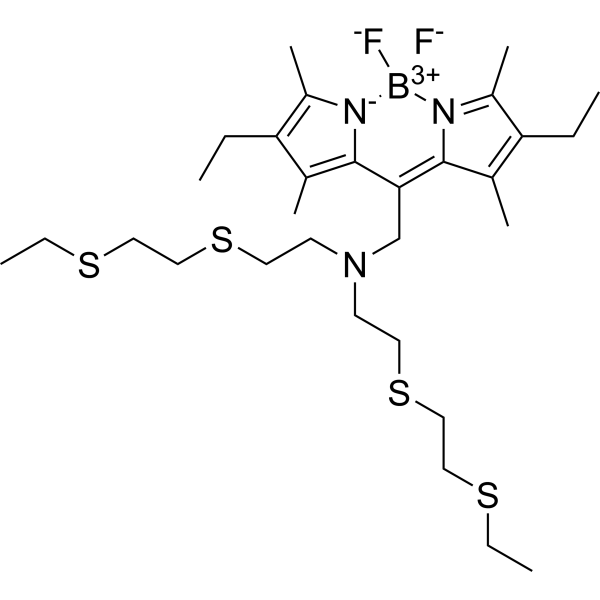
Cat. No.: HY-141511
CAS No.: 874748-20-6
Purity:  97.74%
Coppersensor-1 (CS1) is a membrane-permeable fluorescent dye. Coppersensor-1 has a picomolar affinity for Cu + with high selectivity over competing cellular metalions. Coppersensor-1 as a probe, can selective and sensitive detection of copper(I) ions (Cu +) in biological samples, including live cells. Coppersensor-1 can be used for the research of imaging of severe diseases such as cancer, cardiovascular disorders and neurogenerative diseases .
loading...
    loading...
2
2 Cited Publications
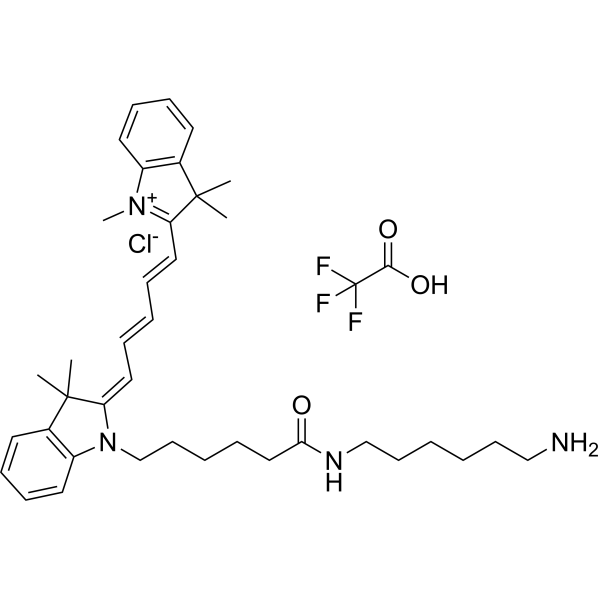
Cat. No.: HY-D1321A
Synonyms: Cyanine5 amine TFA
Cy 5 amine (Cyanine5 amine) TFA is a fluorescent dye. Cy 5 amine TFA can be used in the preparation of Cy5.5-labeled compound or polymers, which can be used for imaging cellular process and trafficking .
loading...
    loading...
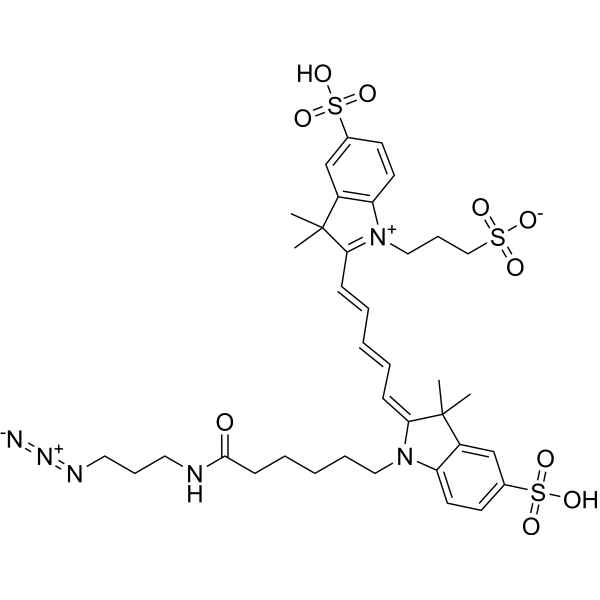
Cat. No.: HY-145746
CAS No.: 1782950-80-4
Sulfo-Cy5 azide is a near-infrared fluorescent probe with favorable click chemistry reactivity. Sulfo-Cy5 azide enables fluorescence imaging, tissue and cellular visualization of PD-L1 in tumors, and site-specific modification of anti-PD-L1 antibodies. Sulfo-Cy5 azide has been employed for RNA labeling and imaging. Sulfo-Cy5 azide can be conjugated to targeting agents for fluorescence imaging in atherosclerosis and breast cancer models (Ex/Em = 645/670 nm) .
loading...
    loading...
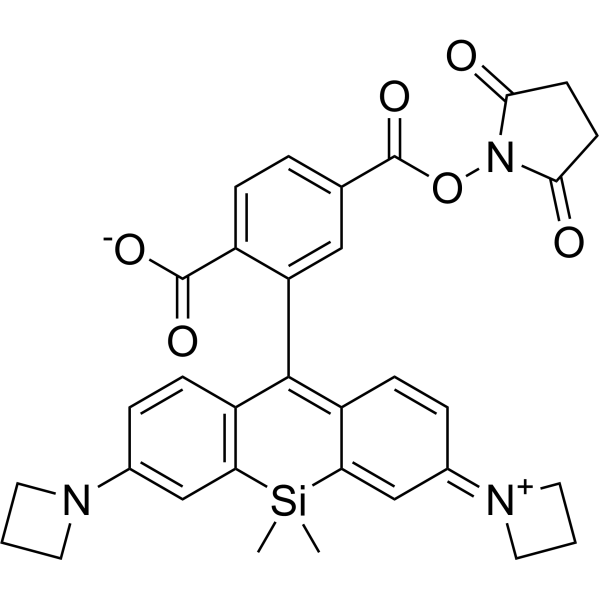
Cat. No.: HY-130735
CAS No.: 1811539-59-9
Purity:  99.67%
Synonyms: JF646, SE; JF646, NHS
Janelia Fluor 646, SE (JF646, SE) is a red fluorescent dye can be used in cellular imaging . Janelia Fluor products are licensed under U.S. Pat. Nos. 9,933,417, 10,018,624 and 10,161,932 and other patents from Howard Hughes Medical Institute.
loading...
    loading...
Cat. No.: HY-137006
CAS No.: 57360-69-7
Target:  

Fluorescent Dye

Research Areas:  

Others

MTT Formazan is a purple water-insoluble product formed by the reduction of yellow soluble MTT by succinate dehydrogenase in the mitochondria of viable cells. The amount of MTT Formazan produced is proportional to cellular metabolic activity, and it can serve as an indicator for evaluating cell viability and proliferation. MTT Formazan exhibits solvent-dependent solubility properties, and its absorbance value can be measured by spectrophotometry to reflect cellular status. MTT Formazan also supports the assessment of cell viability in bacterial MTT assays. MTT Formazan can be used in photoacoustic microscopy to enhance the imaging effect of viable cells, especially in applications in the fields of three-dimensional cell culture and tissue engineering .
loading...
    loading...
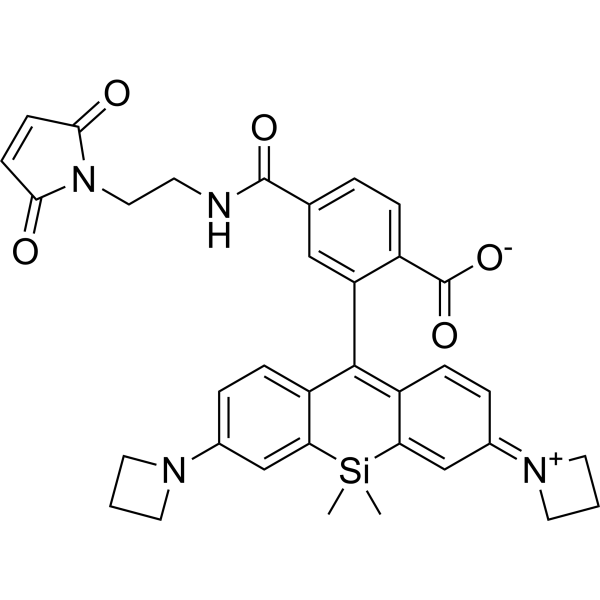
Cat. No.: HY-131029
Purity:  ≥95.0%
Synonyms: JF646, Maleimide
Janelia Fluor® 646, Maleimide (JF646, Maleimide) is a red fluorescent dye that contains a maleimide group. JF646, Maleimide can be used in cellular imaging . Janelia Fluor® products are licensed under U.S. Pat. Nos. 9,933,417, 10,018,624 and 10,161,932 and other patents from Howard Hughes Medical Institute.
loading...
    loading...
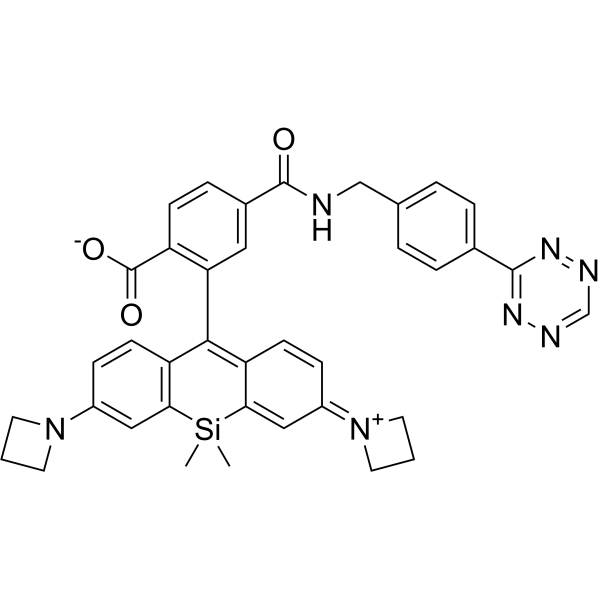
Cat. No.: HY-138659
CAS No.: 2042192-00-5
Purity:  95.29%
Synonyms: JF646, Tetrazine
Janelia Fluor 646, Tetrazine (JF646, Tetrazine) a red fluorescent dye that contains a tetrazine group. JF646, Tetrazine can be used in cellular imaging . Janelia Fluor products are licensed under U.S. Pat. Nos. 9,933,417, 10,018,624 and 10,161,932 and other patents from Howard Hughes Medical Institute. Janelia Fluor? 646, Tetrazine is a click chemistry reagent, it contains a Tetrazine group that can undergo an inverse electron demand Diels-Alder reaction (iEDDA) with molecules containing TCO groups.
loading...
    loading...
Cat. No.: HY-168943
PLGA nanoparticles, 100nm, are biodegradable tumor-targeting nanocarriers that can serve as drug delivery enhancers and multidrug resistance inhibitors. PLGA nanoparticles, 100nm, passively enriched through the EPR effect and actively targeted via ligand-mediated endocytosis, can encapsulate various antitumor active molecules. PLGA nanoparticles, 100nm can specifically recognize multiple types of tumor cells and improve cellular uptake, cytotoxicity and antiproliferative effects after modification with ligands such as transferrin, folic acid, and RGD. PLGA nanoparticles, 100nm can encapsulate various therapeutic drugs and can be surface modified to achieve targeting, imaging, and prolonged circulation time, making them suitable for cancer-related research .
loading...
    loading...
Cat. No.: HY-P5114A
Target:  

Calcium Channel

Research Areas:  

Others

Maurocalcine TFA is an agonist of ryanodine receptor (RyR) channel types 1, 2 and 3 with cellular permeability. Maurocalcine TFA induces [ 3H]ryanodine binding on RyR1 with an EC50 value of 2558 nM. Maurocalcine TFA exhibits a apparent affinity of 14 nM for RyR2. Maurocalcine TFA can be applied to in vivo cell tracking or other cell imaging techniques .
loading...
    loading...
Cat. No.: HY-150175
CAS No.: 1786411-17-3
Target:  

Fluorescent Dye

Research Areas:  

Inflammation/Immunology

HKSOX-1 and its derivatives (HKSOX-1r and HKSOX-1m) are novel fluorescent probes designed for highly sensitive and selective detection of the superoxide anion radical (O2 •−) in cellular environments. These probes utilize an aryl trifluoromethanesulfonate group that undergoes O2 •−-mediated cleavage, releasing a free phenol and emitting fluorescence. They demonstrate excellent specificity and sensitivity across various pH ranges, withstand interference from strong oxidants and reductants typical in cellular contexts. HKSOX-1r, optimized for cellular retention, has been effectively employed in diverse assays including confocal imaging, flow cytometry, and zebrafish embryo studies, highlighting its utility in investigating O2 •− roles in inflammation, mitochondrial stress, and other physiological processes .
loading...
    loading...
Cat. No.: HY-148958
CAS No.: 471918-16-8
SNAP-Biotin is a biotin-labeled SNAP tag probe. SNAP-Biotin can be used for protein biotinylation .
loading...
    loading...
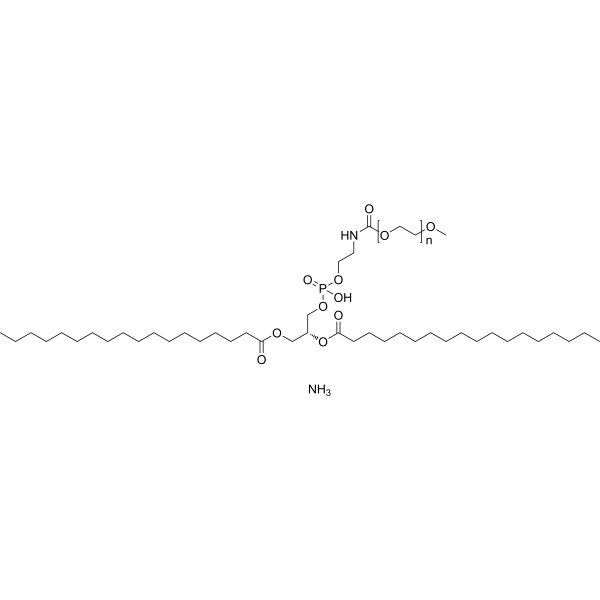
Cat. No.: HY-144013A
CAS No.: 474922-77-5
Synonyms: DSPE-mPEG350 ammonium; 1,2-Distearoyl-sn-glycero-3-phosphoethanolamine-N-[methoxy(polyethylene glycol)-350] ammonium
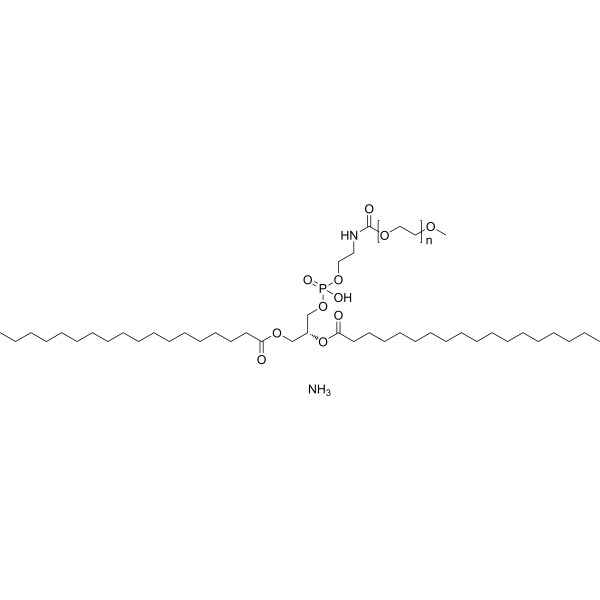
18:0 mPEG350 PE (ammonium) is a PEG lipid functional end group used in the synthesis of liposomes (LPs) for the design of conjugated polymer nanoparticles. Through biotin modification and carboxyl terminus, lipid nanoparticles (LNPs) further coupling with other biomolecules can be achieved. Functionalized nanoparticles can be used for targeted labeling of specific cellular proteins. With streptavidin as a linker, biotinylated PEG lipid-conjugated polymer nanoparticles are able to bind to biotinylated antibodies on cell surface receptors, yielding the utility of fluorescence-based imaging and sensing.
loading...
    loading...
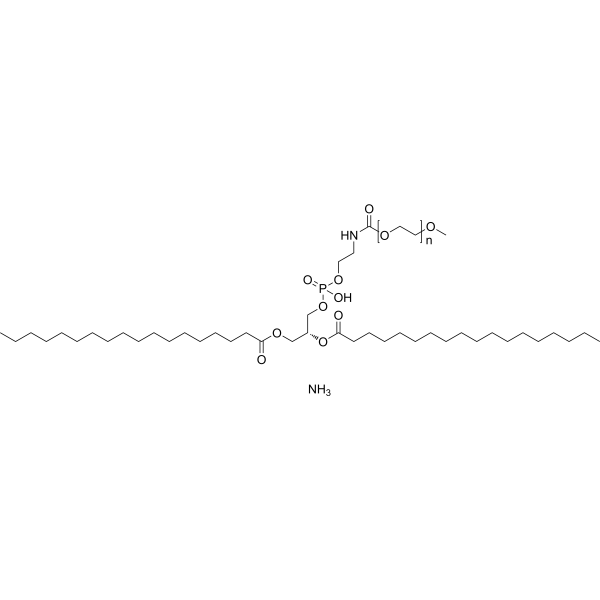
Cat. No.: HY-144013B
CAS No.: 474922-77-5
Synonyms: DSPE-mPEG550 ammonium; 1,2-Distearoyl-sn-glycero-3-phosphoethanolamine-N-[methoxy(polyethylene glycol)-550] ammonium
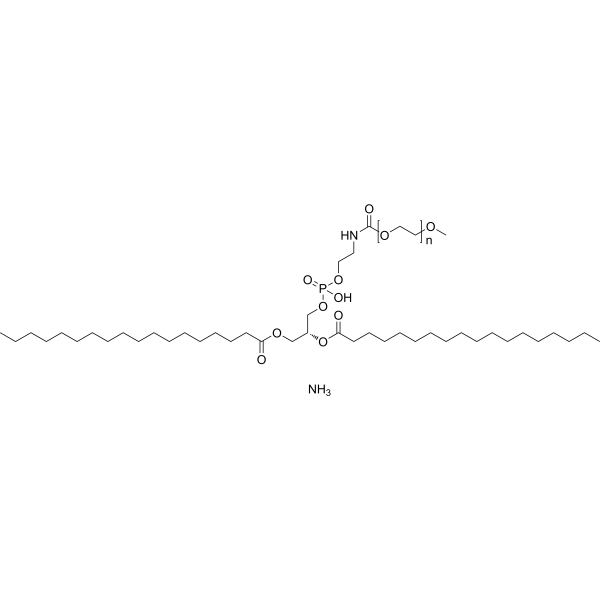
18:0 mPEG550 PE (ammonium) is a PEG lipid functional end group used in the synthesis of liposomes (LPs) for the design of conjugated polymeric nanoparticles. Through biotin modification and carboxyl terminus, lipid nanoparticles (LNPs) further coupling with other biomolecules can be achieved. Functionalized nanoparticles can be used for targeted labeling of specific cellular proteins. With streptavidin as a linker, biotinylated PEG lipid-conjugated polymer nanoparticles are able to bind to biotinylated antibodies on cell surface receptors, yielding the utility of fluorescence-based imaging and sensing.
loading...
    loading...
Cat. No.: HY-144013C
CAS No.: 474922-77-5
Synonyms: DSPE-mPEG750 ammonium; 1,2-Distearoyl-sn-glycero-3-phosphoethanolamine-N-[methoxy(polyethylene glycol)-750] ammonium
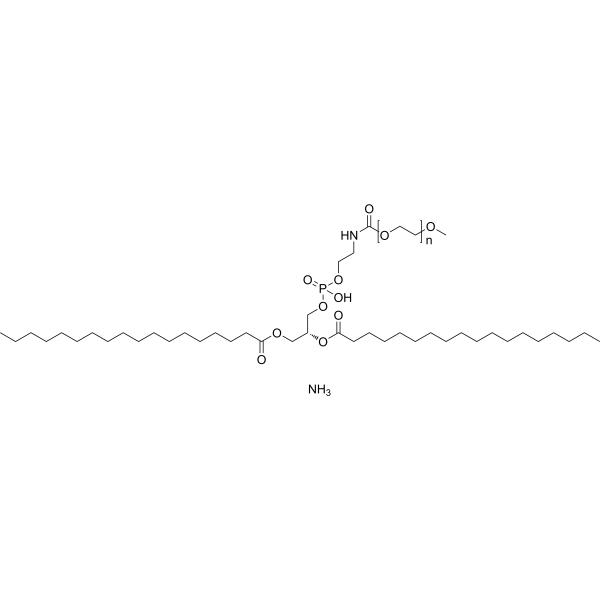
18:0 mPEG750 PE (ammonium) is a PEG lipid functional end group used in the synthesis of liposomes (LPs) for the design of conjugated polymeric nanoparticles. Through biotin modification and carboxyl terminus, lipid nanoparticles (LNPs) further coupling with other biomolecules can be achieved. Functionalized nanoparticles can be used for targeted labeling of specific cellular proteins. With streptavidin as a linker, biotinylated PEG lipid-conjugated polymer nanoparticles are able to bind to biotinylated antibodies on cell surface receptors, yielding the utility of fluorescence-based imaging and sensing.
loading...
    loading...
Cat. No.: HY-144013D
CAS No.: 474922-77-5
Synonyms: DSPE-mPEG1000 ammonium; 1,2-Distearoyl-sn-glycero-3-phosphoethanolamine-N-[methoxy(polyethylene glycol)-1000] ammonium
18:0 mPEG1000 PE (ammonium) is a PEG lipid functional end group used in the synthesis of liposomes (LPs) for the design of conjugated polymeric nanoparticles. Through biotin modification and carboxyl terminus, lipid nanoparticles (LNPs) further coupling with other biomolecules can be achieved. Functionalized nanoparticles can be used for targeted labeling of specific cellular proteins. With streptavidin as a linker, biotinylated PEG lipid-conjugated polymer nanoparticles are able to bind to biotinylated antibodies on cell surface receptors, yielding the utility of fluorescence-based imaging and sensing.
loading...
    loading...
Cat. No.: HY-144013E
CAS No.: 474922-77-5
Synonyms: DSPE-mPEG3000 ammonium; 1,2-Distearoyl-sn-glycero-3-phosphoethanolamine-N-[methoxy(polyethylene glycol)-3000] ammonium
18:0 mPEG3000 PE (ammonium) is a PEG lipid functional end group used in the synthesis of liposomes (LPs) for the design of conjugated polymeric nanoparticles. Through biotin modification and carboxyl terminus, lipid nanoparticles (LNPs) further coupling with other biomolecules can be achieved. Functionalized nanoparticles can be used for targeted labeling of specific cellular proteins. With streptavidin as a linker, biotinylated PEG lipid-conjugated polymer nanoparticles are able to bind to biotinylated antibodies on cell surface receptors, yielding the utility of fluorescence-based imaging and sensing.
loading...
    loading...
Cat. No.: HY-155934
CAS No.: 474922-90-2
Synonyms: DOPE-PEG5000 ammonium; 1,2-Dioleoyl-sn-glycero-3-phosphoethanolamine-N-[methoxy(polyethylene glycol)-5000] ammonium
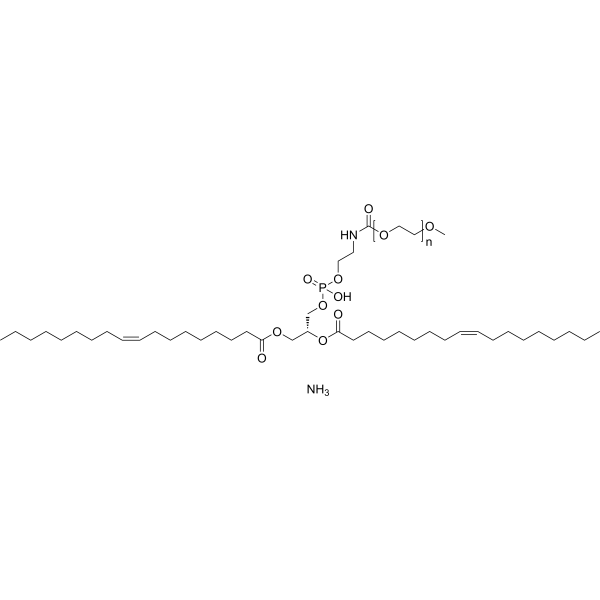
18:1 PEG5000 PE ammonium (DOPE-PEG5000 ammonium) is a PEG lipid functional end group used in the synthesis of liposomes (LPs) for the design of conjugated polymer nanoparticles. Through biotin modification and carboxyl terminus, lipid nanoparticles (LNPs) further coupling with other biomolecules can be achieved. Functionalized nanoparticles can be used for targeted labeling of specific cellular proteins. With streptavidin as a linker, biotinylated PEG lipid-conjugated polymer nanoparticles are able to bind to biotinylated antibodies on cell surface receptors, yielding the utility of fluorescence-based imaging and sensing.
loading...
    loading...
Cat. No.: HY-155924
CAS No.: 474922-82-2
Synonyms: 14:0 PEG350 PE ammonium; 1,2-Dimyristoyl-sn-glycero-3-phosphoethanolamine-N-[methoxy(polyethylene glycol)-350] ammonium
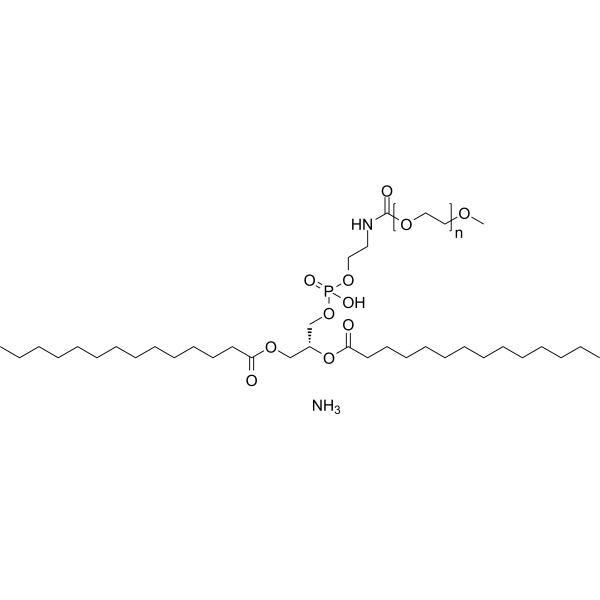
DMPE-PEG350 ammonium (14:0 PEG350 PE ammonium) is a PEG lipid functional end group used in the synthesis of liposomes (LPs) for the design of conjugated polymer nanoparticles. Through biotin modification and carboxyl terminus, lipid nanoparticles (LNPs) further coupling with other biomolecules can be achieved. Functionalized nanoparticles can be used for targeted labeling of specific cellular proteins. With streptavidin as a linker, biotinylated PEG lipid-conjugated polymer nanoparticles are able to bind to biotinylated antibodies on cell surface receptors, yielding the utility of fluorescence-based imaging and sensing.
loading...
    loading...
Cat. No.: HY-155925
CAS No.: 474922-82-2
Synonyms: 14:0 PEG550 PE ammonium; 1,2-Dimyristoyl-sn-glycero-3-phosphoethanolamine-N-[methoxy(polyethylene glycol)-550] ammonium
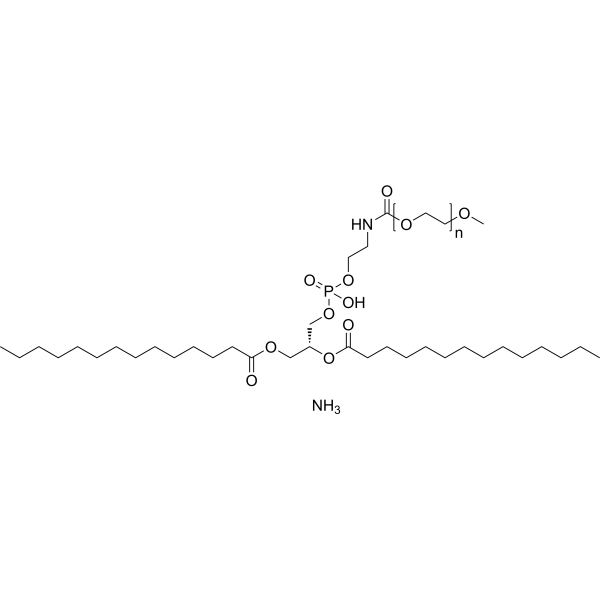
DMPE-PEG550 ammonium (14:0 PEG550 PE ammonium) is a PEG lipid functional end group used in the synthesis of liposomes (LPs) for the design of conjugated polymeric nanoparticles. Through biotin modification and carboxyl terminus, lipid nanoparticles (LNPs) further coupling with other biomolecules can be achieved. Functionalized nanoparticles can be used for targeted labeling of specific cellular proteins. With streptavidin as a linker, biotinylated PEG lipid-conjugated polymer nanoparticles are able to bind to biotinylated antibodies on cell surface receptors, yielding the utility of fluorescence-based imaging and sensing.
loading...
    loading...
Cat. No.: HY-155926
CAS No.: 474922-82-2
Synonyms: 14:0 PEG750 PE ammonium; 1,2-Dimyristoyl-sn-glycero-3-phosphoethanolamine-N-[methoxy(polyethylene glycol)-750] ammonium
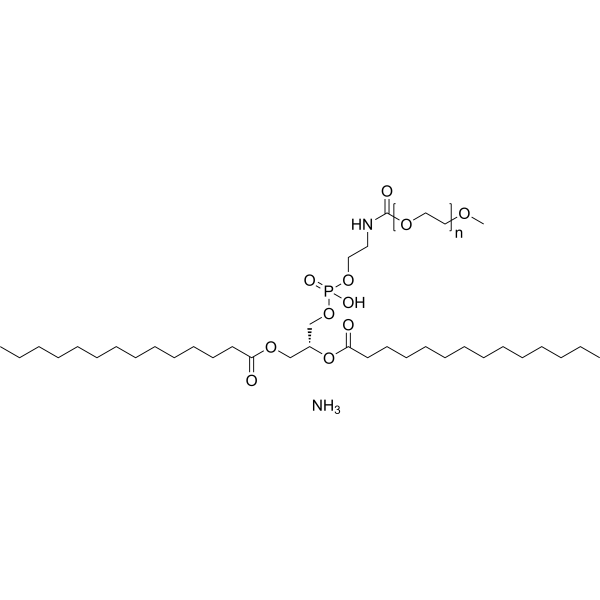
DMPE-PEG750 ammonium (14:0 PEG750 PE ammonium) is a PEG lipid functional end group used in the synthesis of liposomes (LPs) for the design of conjugated polymeric nanoparticles. Through biotin modification and carboxyl terminus, lipid nanoparticles (LNPs) further coupling with other biomolecules can be achieved. Functionalized nanoparticles can be used for targeted labeling of specific cellular proteins. With streptavidin as a linker, biotinylated PEG lipid-conjugated polymer nanoparticles are able to bind to biotinylated antibodies on cell surface receptors, yielding the utility of fluorescence-based imaging and sensing.
loading...
    loading...

