



1. Search Result
Search Result
Results for "

DLL4

" in MedChemExpress (MCE) Product Catalog:

12

Inhibitors & Agonists

8

Inhibitory Antibodies

2

Natural
Products

8

Recombinant Proteins

2

Antibodies

3

Oligonucleotides

Cat. No. Product Name Target Research Areas Chemical Structure
  • HY-P99377

    OMP-305B83; Anti-DLL4 Reference Antibody (navicixizumab)

    Notch Cancer
    Navicixizumab (OMP-305B83) is a bispecific anti-VEGF and anti-DLL4 inhibitory antibody. Navicixizumab can combine with Paclitaxel (HY-B0015) for cancer research. Navicixizumab can be used in the research of ovarian, primary peritoneal, or fallopian tube cancer .
    Navicixizumab
  • HY-P99261

    OMP 21M18

    Notch Cancer
    Demcizumab (OMP 21M18) is an anti-DLL4 monoclonal antibody. Demcizumab is a potent inhibitor of the Notch pathway. Demcizumab alone or in combination with chemotherapy is effective in various cancer models .
    Demcizumab
  • HY-P99852

    ABT165; PR1283233

    VEGFR Notch Cancer
    Dilpacimab (ABT165) is a bispecific variable domain immunoglobulin. Dilpacimab binds to and inhibits DLL4 and VEGF and acts as a tumor growth inhibitor. Dilpacimab can be used in research related to metastatic colorectal cancer and advanced solid tumors .
    Dilpacimab
  • HY-P99925

    REGN421

    Notch Metabolic Disease Cancer
    Enoticumab (REGN421, SAR153192) is an IgG1κ antibody targeting human Dll4. DLL4 is a ligand of the Notch signaling pathway and regulates fatty acid uptake through non-transcriptional regulation of macropinocytosis-dependent long-chain fatty acid uptake. Specific in vivo activity of Enoticumab in an ovarian xenograft model. EGN421 (2.5 mg/kg once weekly) resulted in 86% and 83% tumor growth inhibition in mouse subcutaneous TOV-112D or intraperitoneal A2780 human tumor xenograft models, respectively .
    Enoticumab
  • HY-122094

    HIF/HIF Prolyl-Hydroxylase Cardiovascular Disease Cancer
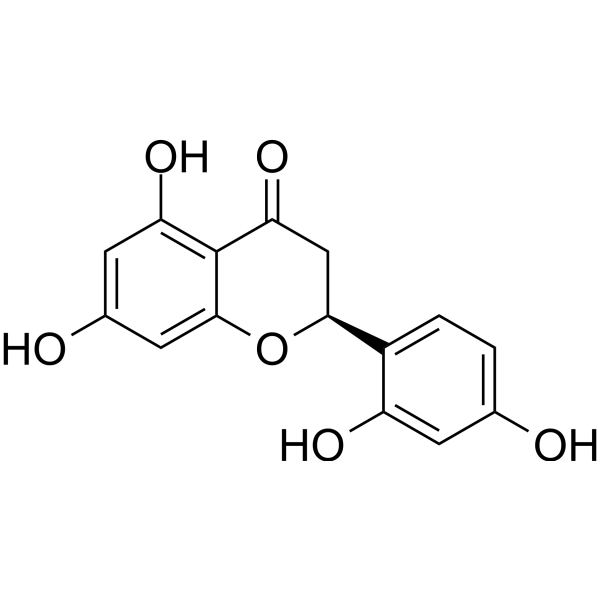
    Steppogenin is a potent inhibitor of HIF-1α and DLL4, with IC50 values of 0.56 and 8.46 μM, respectively. Steppogenin can be sued for the research of angiogenic diseases, such as those involving solid tumors .
    Steppogenin
  • HY-P991033

    CTX-009

    VEGFR Inflammation/Immunology
    HY-P991033 is an VEGFA/DLL4-targeting G1-scFvlh_L-κ type bispecific antibody .
    Tovecimig
  • HY-P991423

    21H3RK

    Notch Cancer
    MEDI0639 (21H3RK) is a human monoclonal antibody (mAb) targeting DLL4. MEDI0639 inhibits Notch1 binding to Dll4. MEDI0639 reverses Notch1-mediated growth inhibition of human umbilical vein endothelial cells in vitro. MEDI0639 promotes human angiogenesis and reduces the number of vessels covered by smooth muscle actin-positive mural cells. MEDI0639 can be used in Small cell lung cancer and solid tumors research .
    MEDI0639
  • HY-N11709

    Apoptosis VEGFR ATM/ATR PTEN Akt mTOR HIF/HIF Prolyl-Hydroxylase NF-κB Notch Cholinesterase (ChE) Amyloid-β γ-secretase Ferroptosis Fungal Infection Neurological Disease Metabolic Disease Cancer
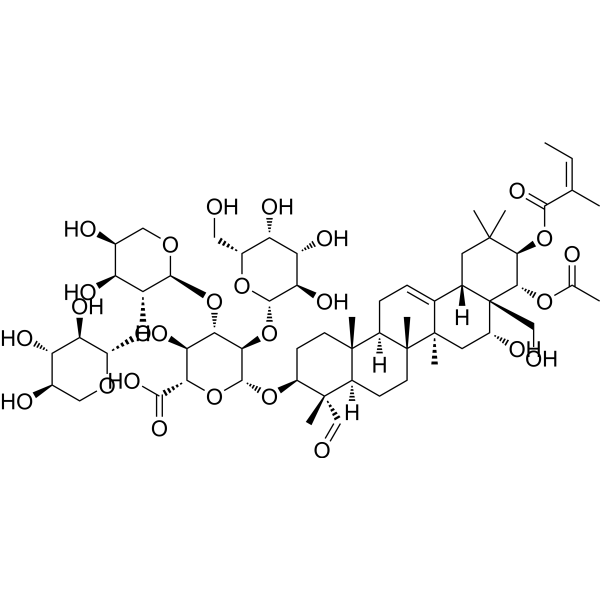
    Theasaponin E1 is an orally effective tea saponin. Theasaponin E1 inhibits the proliferation of cancer cells by activating apoptosis. Theasaponin E1 inhibits angiogenesis in ovarian cancer cells and HUVECs by reducing the expression of VEGF. Theasaponin E1 upregulates the phosphorylation level of ATM protein and the expression level of PTEN protein in cancer cells, decreases the phosphorylation levels of Akt, mTOR, p70S6K and 4E-BP1 proteins, downregulates the expression of HIF-1α and NF-κB, and reduces the protein expression of Notch ligands Dll4 and Jagged1. Theasaponin E1 exerts neuroprotective effects by inhibiting the activity of acetylcholinesterase, activating α-secretase and neprilysin, reducing the concentration of , and inhibiting the activities of β-secretase and γ-secretase. Theasaponin E1 exhibits toxic effects on cancer cells and quinone reductase-inducing activity, and inhibits tumor growth in vivo. Theasaponin E1 induces ferroptosis in Pomacea canaliculata by synergistically disrupting cholesterol homeostasis and sphingolipid metabolism. Theasaponin E1 possesses anti-biofilm activity against Candida albicans. Theasaponin E1 can be used in the research of ovarian cancer, obesity, Alzheimer's disease and fungal infections [4] .
    Theasaponin E1
  • HY-RS03810

    Small Interfering RNA (siRNA) Others

    DLL4 Human Pre-designed siRNA Set A contains three designed siRNAs for DLL4 gene (Human), as well as a negative control, a positive control, and a FAM-labeled negative control.

    DLL4 Human Pre-designed siRNA Set A
    DLL4 Human Pre-designed siRNA Set A
  • HY-RS16878

    Small Interfering RNA (siRNA) Others

    Dll4 Mouse Pre-designed siRNA Set A contains three designed siRNAs for Dll4 gene (Mouse), as well as a negative control, a positive control, and a FAM-labeled negative control.

    Dll4 Mouse Pre-designed siRNA Set A
    Dll4 Mouse Pre-designed siRNA Set A
  • HY-RS23320

    Small Interfering RNA (siRNA) Others

    Dll4 Rat Pre-designed siRNA Set A contains three designed siRNAs for Dll4 gene (Rat), as well as a negative control, a positive control, and a FAM-labeled negative control.

    Dll4 Rat Pre-designed siRNA Set A
    Dll4 Rat Pre-designed siRNA Set A
  • HY-P990252

    Notch Interleukin Related NF-κB VEGFR FGFR NO Synthase Metabolic Disease Inflammation/Immunology Cancer
    Anti-Mouse Delta-like protein 4/DLL4 Antibody (HMD4-2) is an anti-mouse Delta-like protein 4/DLL4 IgG monoclonal antibody. Anti-Mouse Delta-like protein 4/DLL4 Antibody (HMD4-2) can reduce angiogenesis and density by blocking the DLL4-Notch signaling pathway. Anti-Mouse Delta-like protein 4/DLL4 Antibody (HMD4-2) reduces inflammatory response by decreasing NF-κB activity and pro-inflammatory factors (IL-1β, iNOS, IL-6) levels. Anti-Mouse Delta-like protein 4/DLL4 Antibody (HMD4-2) can inhibit Th17 cell differentiation and IL-17A production. Anti-Mouse Delta-like protein 4/DLL4 Antibody (HMD4-2) can reduce macrophage infiltration and alleviate insulin resistance. Anti-Mouse Delta-like protein 4/DLL4 Antibody (HMD4-2) can be used for researches on inflammation, metabolic conditions and cancer such as atherosclerosis, pancreatic cancer and asthma [4].
    Anti-Mouse Delta-like protein 4/DLL4 Antibody (HMD4-2)

Inquiry Online

Your information is safe with us. * Required Fields.

Salutation


Country or Region *

Applicant Name *


Organization Name *

Department *


Email Address *


Product Name *

Cat. No.


Requested quantity *

Phone Number *


Remarks

Inquiry Online

Inquiry Information

Product Name:
Cat. No.:
Quantity:
MCE Japan Authorized Agent:

