1. Search Result
Search Result
Results for "

EAAT

" in MedChemExpress (MCE) Product Catalog:

32

Inhibitors & Agonists

1

Biochemical Assay Reagents

1

Peptides

1

Natural
Products

1

Recombinant Proteins

4

Antibodies

Targets Recommended:
Cat. No. Product Name Target Research Areas Chemical Structure
  • HY-B1102
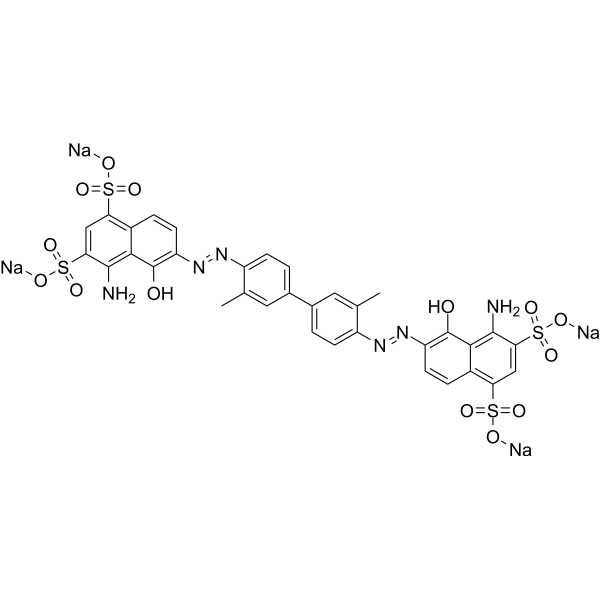
    Evans Blue
    25+ Cited Publications

    Direct Blue 53; T-1824; C.I. 23860

    EAAT iGluR Cardiovascular Disease Neurological Disease
    Evans Blue (Direct Blue 53) is a potent inhibitor of L-glutamate uptake via the membrane bound excitatory amino acid transporter (EAAT). Evans Blue is a L-glutamate and kainate receptor-mediated currents inhibitor. Evans Blue has a strong affinity towards serum albumin, making it a high molecular weight protein tracer. Evans Blue is also used to study BBB (blood-brain barrier) permeability .
    Evans Blue
  • HY-107522
    DL-TBOA
    1 Publications Verification

    EAAT Neurological Disease
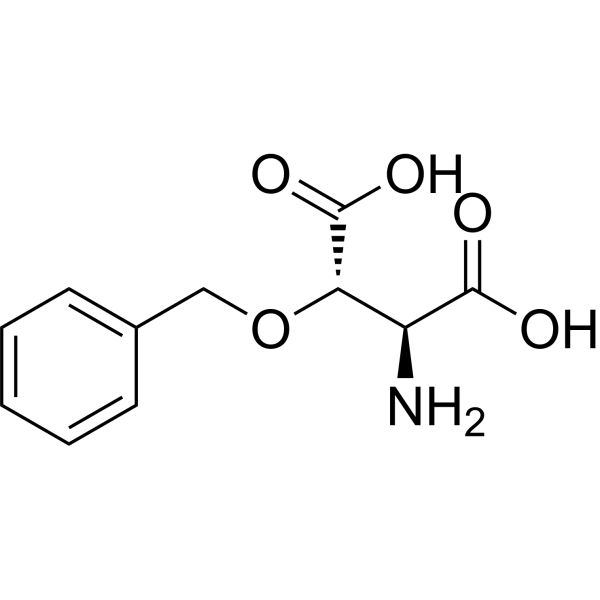
    DL-TBOA is a potent non-transportable inhibitor of excitatory amino acid transporters with IC50s of 70 μM, 6 μM and 6 μM for excitatory amino acid transporter-1 (EAAT1), EAAT2 and EAAT3, respectively. DL-TBOA inhibits the uptake of [ 14C]glutamate in COS-1 cells expressing the human EAAT1 and EAAT2 with Ki valuesof 42 μM and 5.7 μM, respectively. DL-TBOA blocks EAAT4 and EAAT5 in a competitive manner with Ki values of 4.4 μM and 3.2 μM, respectively .
    DL-TBOA
  • HY-107661
    Arundic Acid
    2 Publications Verification

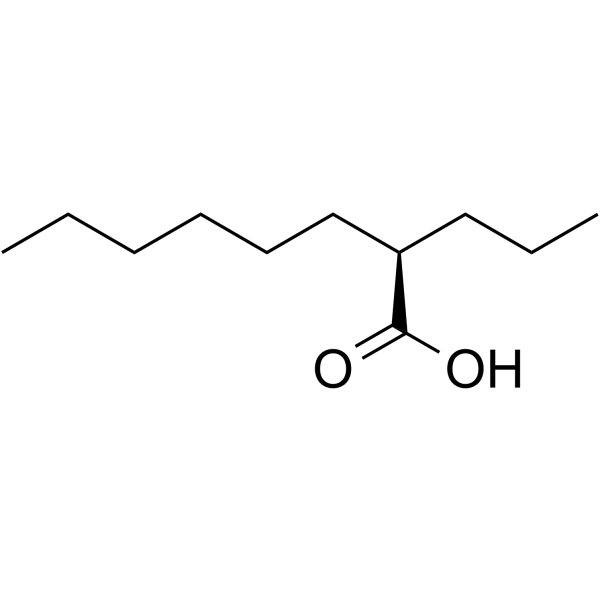
    ONO-2506; (R)-2-Propyloctanoic acid

    ERK Akt NF-κB EAAT Cardiovascular Disease Neurological Disease
    Arundic Acid is an orally effective astrocyte function modulator and neuroprotective agent. Arundic Acid increases the expression and function of the astrocytic glutamate transporter EAAT1 by activating the ERK, Akt and NF-κB pathways. Arundic Acid attenuates retinal ganglion cell death in a normal-tension glaucoma model. Arundic Acid exerts neuroprotective effects in a mouse model of Parkinson's disease. Arundic Acid is a S100β protein synthesis inhibitor that prevents neurological deficits and brain tissue damage after intracerebral hemorrhage in rats. Arundic Acid downregulates neuroinflammation and astrocytic dysfunction after status epilepticus in immature rats. Arundic Acid is applicable to research related to Parkinson's disease, cerebral ischemia, glaucoma, intracerebral hemorrhage and epilepsy .
    Arundic Acid
  • HY-10914
    UCPH-101
    1 Publications Verification

    EAAT Neurological Disease
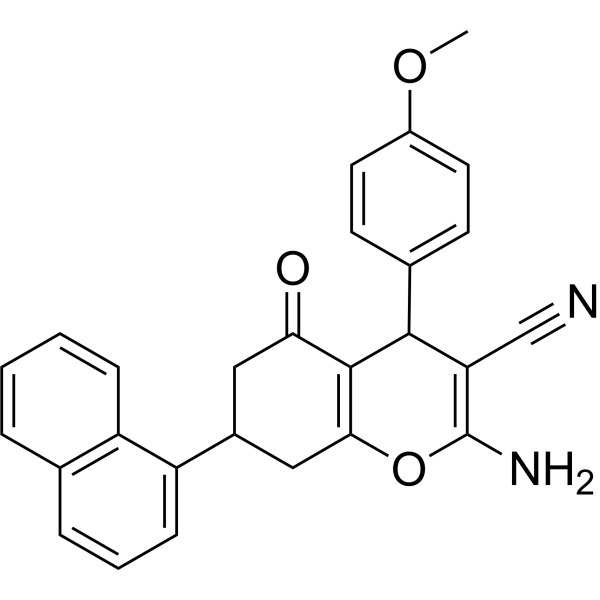
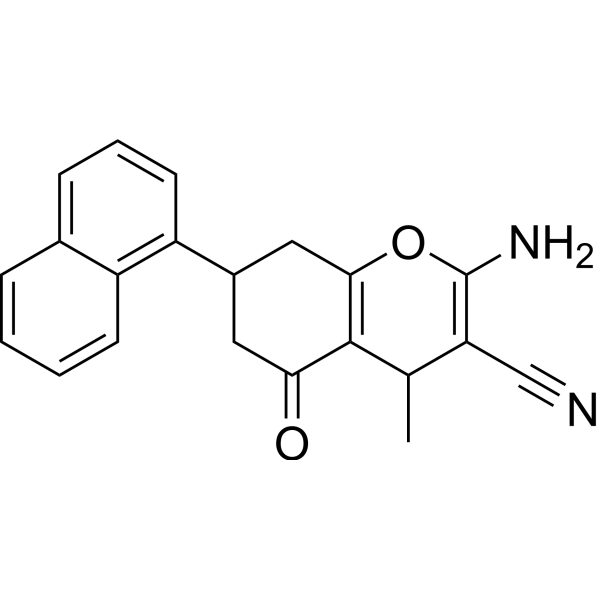
    UCPH-101 is an excitatory amino acid transporter subtype 1 (EAAT1) inhibitor with an IC50 of 0.66 μM.
    UCPH-101
  • HY-12741
    LDN-212320
    5+ Cited Publications

    LDN-0212320; OSU-0212320

    EAAT Neurological Disease
    LDN-212320 (LDN-0212320) is a glutamate transporter (GLT-1)/excitatory amino acid transporter 2 (EAAT2) activator (at translational level). LDN-212320 (LDN-0212320) prevents nociceptive pain by upregulating astroglial GLT-1 expression in the hippocampus and ACC [1]
    LDN-212320
  • HY-107523
    WAY-213613
    3 Publications Verification

    EAAT Neurological Disease
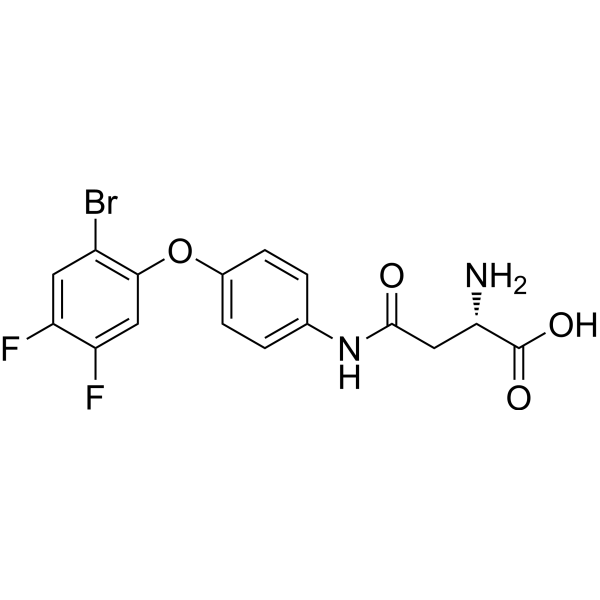
    WAY-213613 is a potent and selective human EAAT2 inhibitor. WAY-213613 has potent EAAT2 inhibitory activity with an IC50 value of 85 nM. WAY-213613 can be used for the research of central nervous system
    WAY-213613
  • HY-114381

    EAAT Neurological Disease
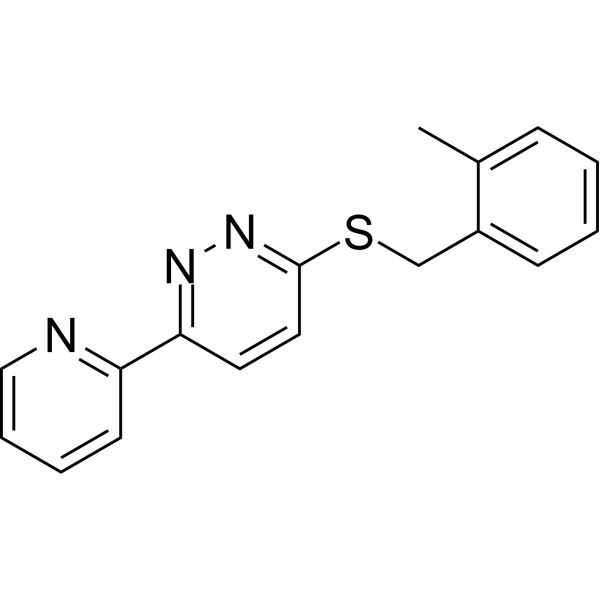
    GT 949 is a selective excitatory amino acid transporter-2 (EAAT2) positive allosteric modulator with an EC50 of 0.26 nM .
    GT 949
  • HY-162455

    EAAT Neurological Disease
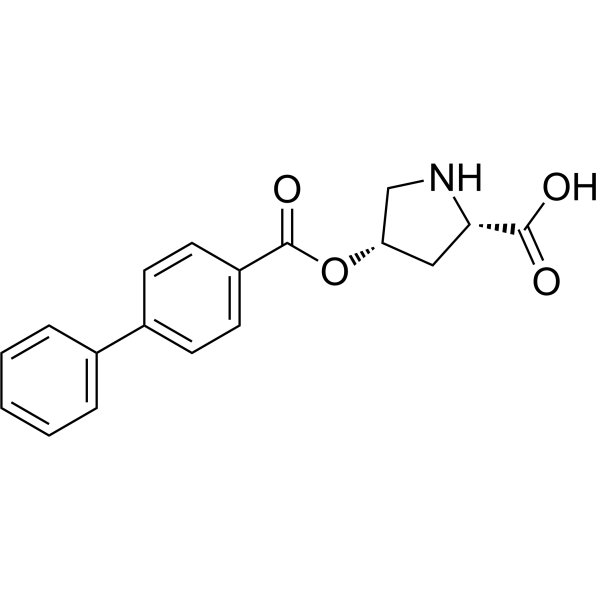
    NA-014 is an excitatory amino acid transporter 2 (EAAT2)-selective positive allosteric modulator. NA-014 increases EAAT2-mediated glutamate uptake. NA-014 can be used for the research of epilepsy, neuropathic pain, stroke, drugs of abuse disorders .
    NA-014
  • HY-107521
    TFB-TBOA
    3 Publications Verification

    CF3-Bza-TBOA

    EAAT Neurological Disease
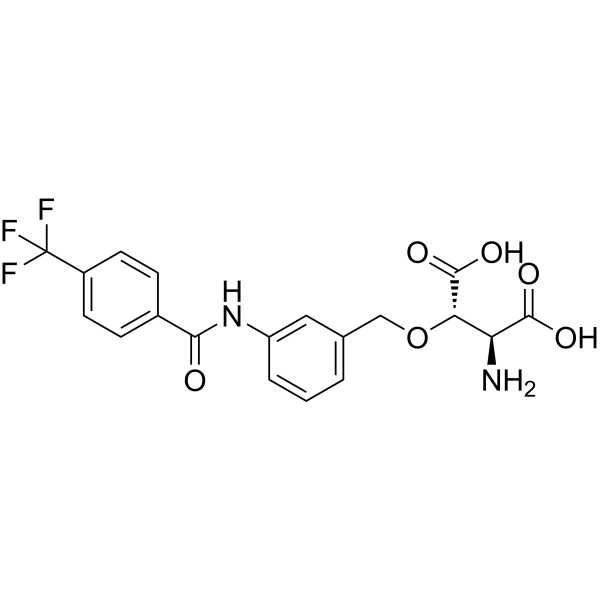
    TFB-TBOA (CF3-Bza-TBOA) is a potent glutamate transporter blocker that potently suppresses the activity of glial transporters. TFB-TBOA shows IC50 values of 22, 17, and 300 nM for glutamate transporters EAAT1, EAAT2, and EAAT3 respectively in an uptake assay using cells transiently expressing EAATs .
    TFB-TBOA
  • HY-101310

    iGluR EAAT Bcl-2 Family Caspase Cardiovascular Disease Neurological Disease Inflammation/Immunology
    SYM 2081 is a kainate receptor agonist. SYM 2081 is a substrate of EAAT1 (Km of 54 μM). SYM 2081 inhibits EAAT2-mediated glutamate transport (Kb is 3.4 μM in Xenopus oocytes), modulates Apoptotic signaling pathways (increases Bcl-2 and decreases Bax/caspase-3 expression). SYM 2081 exhibits neuroprotective activity. SYM 2081 can be used in the study of hypoxic-ischemic brain damage and inflammatory or neuropathic pain .
    SYM 2081
  • HY-168773

    EAAT Neurological Disease
    (R)-AS-1 is a selective positive allosteric modulator of the excitatory amino acid transporter 2 (EAAT2), with an EC50 of 11 nM. (R)-AS-1 (at doses of 60 and 90 mg/kg) increases spontaneous locomotor activity in mice. Additionally, it demonstrates anticonvulsant activity in mouse models of seizures induced by maximal electroshock (MES), pentylenetetrazole (PTZ), or electrical stimuli (32 or 44 mA), with ED50s of 66.3, 36.3, 15.6, and 41.6 mg/kg, respectively. (R)-AS-1 can be used in neurological disease research .
    (R)-AS-1
  • HY-139692

    EAAT Neurological Disease
    EAAT2 activator 1 is the potent activator of excitatory amino acid transporter 2 (EAAT2). EAAT2 is the major glutamate transporter and functions to remove glutamate from synapses. EAAT2 activator 1 increases EAAT2 protein levels dose-dependently .
    EAAT2 activator 1
  • HY-130125

    EAAT Neurological Disease
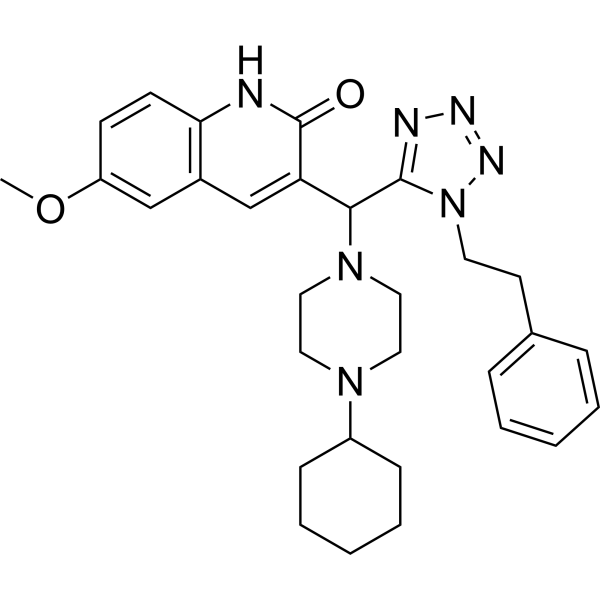
    SLC1A1/EAAT3-IN-1 (Compound 3e) is a selective EAAT3 inhibitor with an IC50 of 7.2  μM for hEAAT3 over EAAT1,2,4 (IC50: ∼ 250 μM). SLC1A1/EAAT3-IN-1 can be used for psychiatric disorders such as obsessive compulsive disorder and schizophrenia research .
    SLC1A1/EAAT3-IN-1
  • HY-146242

    EAAT ASCT Cancer
    SN05 is a potent amino acid transport (AAT) inhibitor with Ki values of 2.77 μM, 0.73 μM, 0.87 μM, 3.7 μM, 7.25 μM, 7.23 μM and 2.22 μM for hASCT1, rASCT2, hASCT2, EAAT1, EAAT2, EAAC1 and EAAT5, respectively. SN05 can be used in the study of cancer .
    SN05
  • HY-107523A
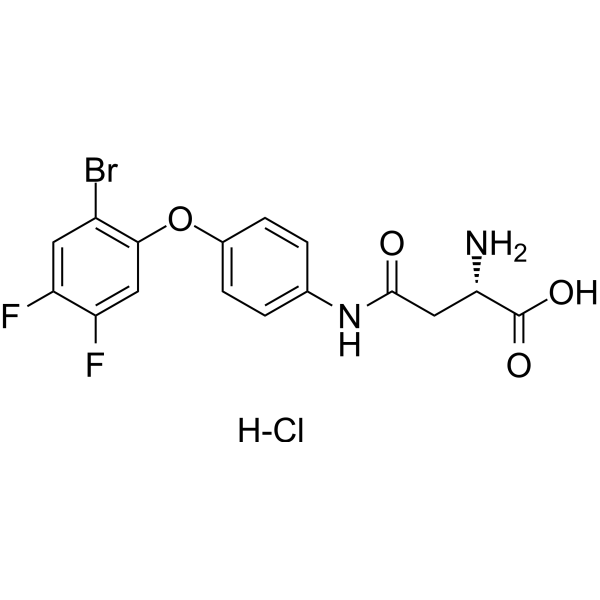
    WAY-213613 hydrochloride
    3 Publications Verification

    EAAT Neurological Disease
    WAY-213613 (hydrochloride) is a potent and selective human EAAT2 inhibitor. WAY-213613 has potent EAAT2 inhibitory activity with an IC50 value of 85 nM. WAY-213613 can be used for the research of central nervous system .
    WAY-213613 hydrochloride
  • HY-100801

    EAAT Neurological Disease
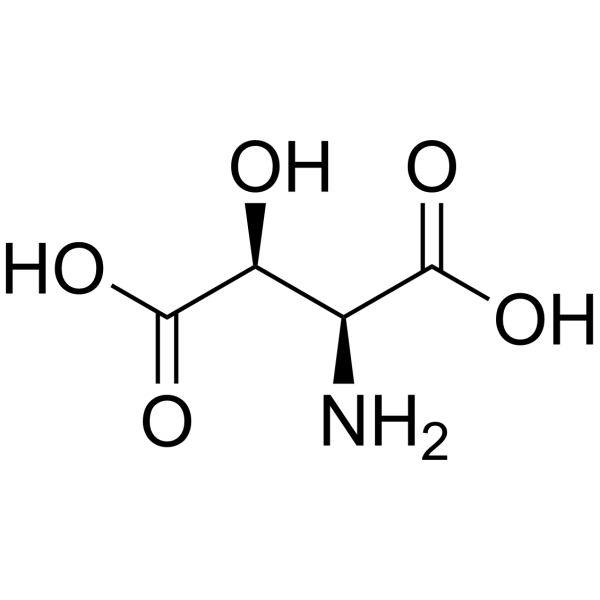
    L-threo-3-Hydroxyaspartic acid is a potent EAAT inhibitor with Kis of 11, 19 and 14 μM for EAAT1, EAAT2 and EAAT3, respectively in HEK293 cell lines .
    L-threo-3-Hydroxyaspartic acid
  • HY-118858

    EAAT Neurological Disease Cancer
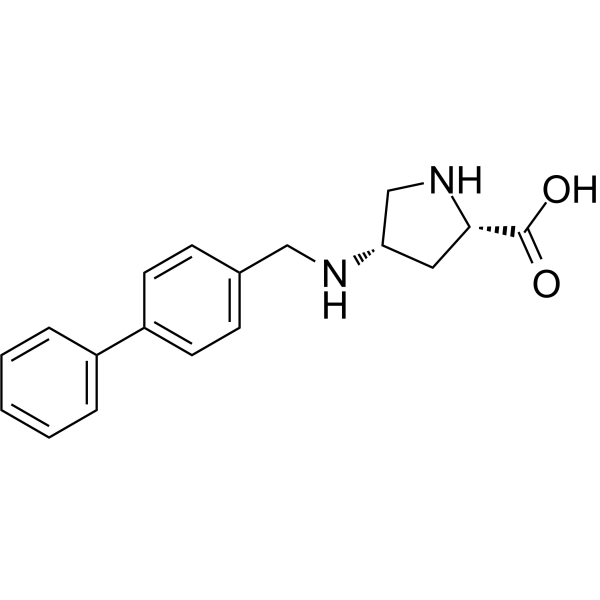
    UCPH-102 is a highly selective EAAT1 inhibitor with an IC50 of 0.43 µM. UCPH-102 exhibits a specific anti-proliferative effect on T-ALL cells. UCPH-102 also shows good blood-brain permeability, which can be used in studies of amyotrophic lateral sclerosis, Alzheimer’s disease, chronic pain and obsessive compulsive disorder .
    UCPH-102
  • HY-146241

    EAAT ASCT Cancer
    SN40 is a potent amino acid transport (AAT) inhibitor with Kis of 7.29 μM, 2.42 μM, 2.94 μM, 5.55 μM, 24.43 μM and 5.55 μM for rat ASCT2, human ASCT2, EAAT1, EAAT2, EAAC1 and EAAT5, respectively. SN40 can be used for researching anticancer .
    SN40
  • HY-101227

    EAAT Metabolic Disease
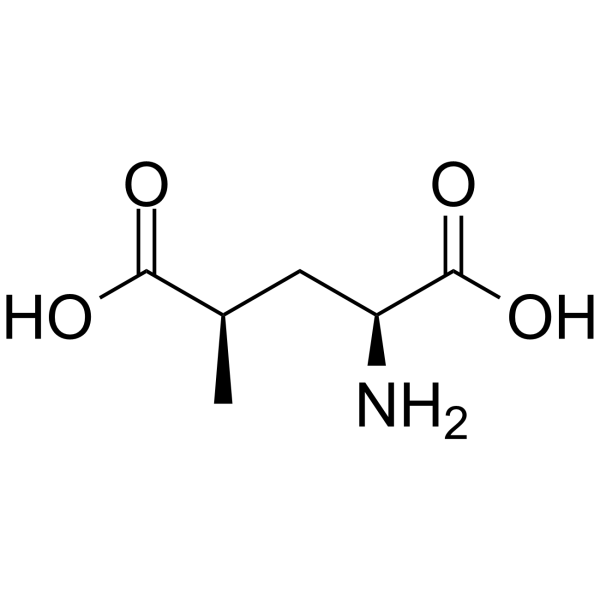
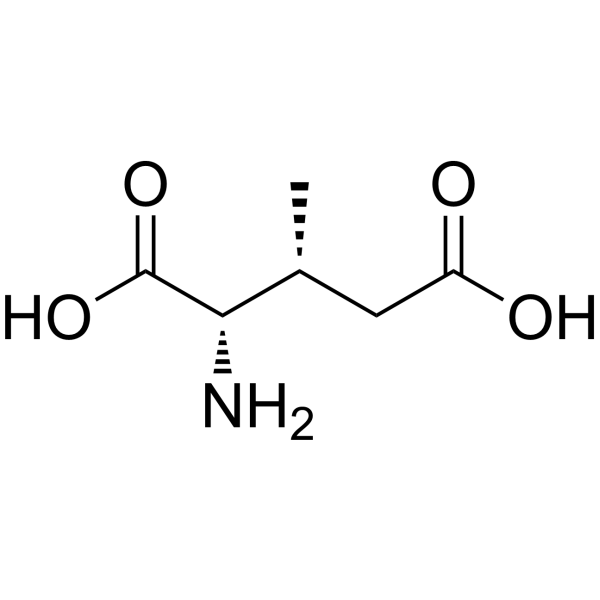
    (±)-threo-3-Methylglutamic acid is a potent EAAT2/4 inhibitor. (±)-threo-3-Methylglutamic acid also is an ionotropic glutamate receptor agonist. (±)-threo-3-Methylglutamic acid inhibits glutamate uptake by rod outer segments .
    (±)-threo-3-Methylglutamic acid
  • HY-175296

    EAAT Neurological Disease
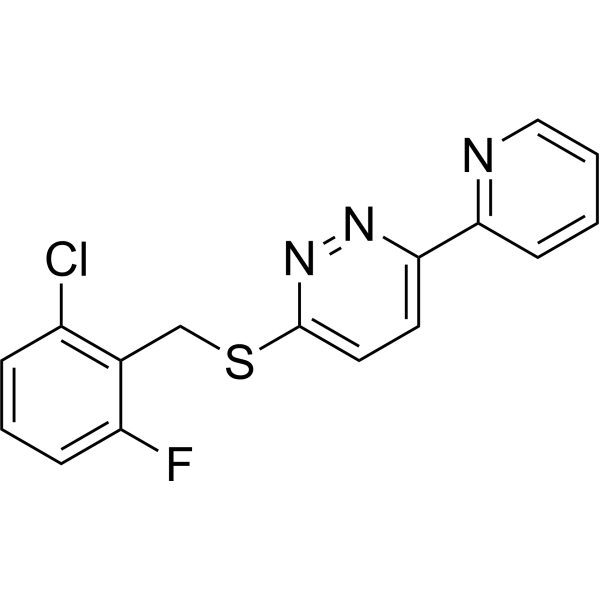
    EAAT2 activator 2 (Compound 4(SF-2)) is a brain-penetrant excitatory amino acid transporter 2 (EAAT2) modulator (Ki=28.7 nM). EAAT2 activator 2 enhances EAAT2-mediated glutamate uptake, improving synaptic glutamate clearance. EAAT2 activator 2 is promising for research of neurodegenerative diseases (e.g., ALS, Alzheimer’s disease) .
    EAAT2 activator 2
  • HY-146241B

    EAAT ASCT Others
    SN40 hydrochloride is a potent amino acid transport (AAT) inhibitor with Kis of 7.29 μM, 2.42 μM, 2.94 μM, 5.55 μM, 24.43 μM and 5.55 μM for rat ASCT2, human ASCT2, EAAT1, EAAT2, EAAC1 and EAAT5, respectively. SN40 hydrochloride can be used for researching anticancer .
    SN40 hydrochloride
  • HY-107522B

    EAAT Neurological Disease
    DL-TBOA ammonium is a potent non-transportable inhibitor of excitatory amino acid transporters with IC50s of 70 μM, 6 μM and 6 μM for excitatory amino acid transporter-1 (EAAT1), EAAT2 and EAAT3, respectively. DL-TBOA ammonium inhibits the uptake of [ 14C]glutamate in COS-1 cells expressing the human EAAT1 and EAAT2 with Ki valuesof 42 μM and 5.7 μM, respectively. DL-TBOA ammonium blocks EAAT4 and EAAT5 in a competitive manner with Ki values of 4.4 μM and 3.2 μM, respectively .
    DL-TBOA ammonium
  • HY-162454

    EAAT Neurological Disease
    DA-023 (Compound 4) is a selective positive allosteric modulator (PAM) of EAAT2 with an EC50 value of 1 nM .
    DA-023
  • HY-161062

    EAAT Neurological Disease
    TAOA AM Ester trimethyl lock is a high-affinity fluorescent prodrug-like inhibitor of the excitatory amino acid transporter (EAAT). It can penetrate the cell membrane and be activated by hydrolysis by endogenous cell esterases to form active EAAT inhibitors. TAOA AM Ester trimethyl lock can be used to study neurodegeneration and neuronal cell death .
    TAOA AM Ester trimethyl lock
  • HY-100838

    L-CCG III

    EAAT Neurological Disease
    cis-α-(Carboxycyclopropyl)glycine (L-CCG III) is a potent, competitive glutamate uptake inhibitor. cis-α-(Carboxycyclopropyl)glycine is a substrate of glutamate transporters (GluT) (EC50: 13 μM, 2 μM for EAAT 1 and EAAT 2, respectively). cis-α-(Carboxycyclopropyl)glycine inhibits a Na +-dependent high-affinity L-glutamate uptake in glial plasmalemmal vesicles (GPV) and synaptosomes .
    cis-α-(Carboxycyclopropyl)glycine
  • HY-100784R

    Reference Standards EAAT Neurological Disease
    Dihydrokainic acid (Standard) is the analytical standard of Dihydrokainic acid. This product is intended for research and analytical applications. Dihydrokainic acid (DHK) is a glutamate transporter GLT1 (EAAT2) inhibitor. Dihydrokainic acid impairs novel object recognition (NOR) memory performance in mice. Dihydrokainic acid also shows epileptogenic effects .
    Dihydrokainic acid (Standard)
  • HY-107525

    EAAT Neurological Disease
    (±)-HIP-A is a non-competitive excitatory amino acid transporter (EAAT) blocker that effectively blocks Glu uptake (IC50=17-18 μM). (±)-HIP-A is also a lead compound against ischemia-induced neuronal degeneration. (±)-HIP-A can be used in the study of neurological diseases .
    (±)-HIP-A
  • HY-107524

    EAAT Neurological Disease
    (±)-HIP-B is a non-competitive excitatory amino acid transporter (EAAT) blocker that effectively blocks Glu uptake (IC50=17-18 μM). (±)-HIP-B is also a lead compound against ischemia-induced neuronal degeneration. (±)-HIP-B can be used in the study of neurological diseases .
    (±)-HIP-B
  • HY-182941

    EAAT Neurological Disease
    Parawixin10 (Compound 2) is an N-acylpolyamine. Parawixin10 fails to enhance glutamate uptake in radioligand uptake assays of EAAT1, EAAT2 or EAAT3. Parawixin10 exhibits no positive allosteric modulatory activity in radioligand uptake assays of EAAT1EAAT3, nor can it improve neuronal survival rates in mice in a dose-dependent and statistically significant manner. Parawixin10 has no neuroprotective activity .
    Parawixin10
  • HY-183588

    EAAT Reactive Oxygen Species (ROS) Neurological Disease
    HCM-01 is an Excitatory amino acid transporter 2 (EAAT2) activator with oral effectiveness and blood-brain barrier penetration.HCM-01 binds to the allosteric site of EAAT2, increases EAAT2 expression in astrocytes, enhances glutamate-handling capacity, and modulates glutamate homeostasis.HCM-01 acts as an antioxidant, improves oxidative/antioxidative balance and increases total antioxidant capacity. HCM-01 can be used for the research of Alzheimer's disease .
    HCM-01
  • HY-101310R

    iGluR Reference Standards EAAT Bcl-2 Family Caspase Cardiovascular Disease Neurological Disease Inflammation/Immunology
    SYM 2081 (Standard) is the analytical standard of SYM 2081 (HY-101310). This product is intended for research and analytical applications. SYM 2081 is a kainate receptor agonist. SYM 2081 is a substrate of EAAT1 (Km of 54 μM). SYM 2081 inhibits EAAT2-mediated glutamate transport (Kb is 3.4 μM in Xenopus oocytes), modulates Apoptotic signaling pathways (increases Bcl-2 and decreases Bax/caspase-3 expression). SYM 2081 exhibits neuroprotective activity. SYM 2081 can be used in the study of hypoxic-ischemic brain damage and inflammatory or neuropathic pain .
    SYM 2081 (Standard)
  • HY-107523AR

    Reference Standards EAAT Neurological Disease
    WAY-213613 hydrochloride (Standard) is the analytical standard of WAY-213613 (hydrochloride) (HY-107523A). This product is intended for research and analytical applications. WAY-213613 (hydrochloride) is a potent and selective human EAAT2 inhibitor. WAY-213613 has potent EAAT2 inhibitory activity with an IC50 value of 85 nM. WAY-213613 can be used for the research of central nervous system .
    WAY-213613 hydrochloride (Standard)

Inquiry Online

Your information is safe with us. * Required Fields.

Salutation


Country or Region *

Applicant Name *


Organization Name *

Department *


Email Address *


Product Name *

Cat. No.


Requested quantity *

Phone Number *


Remarks

Inquiry Online

Inquiry Information

Product Name:
Cat. No.:
Quantity:
MCE Japan Authorized Agent:

