Search Result
Results for "
GPR119
" in MedChemExpress (MCE) Product Catalog:
2
Biochemical Assay Reagents
1
Isotope-Labeled Compounds
| Cat. No. |
Product Name |
Target |
Research Areas |
Chemical Structure |
-
- HY-W011121
-
|
2-OG
|
GPR119
NF-κB
TGF-beta/Smad
GLP Receptor
|
Metabolic Disease
|
|
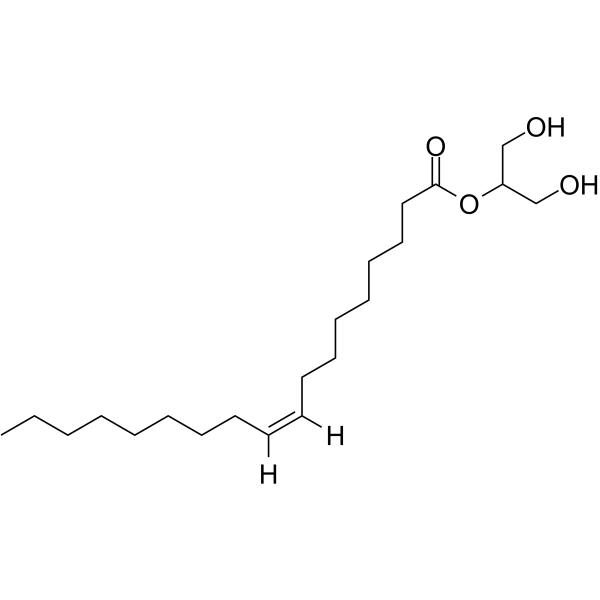
2-Oleoylglycerol (2-OG) is a lipid found in the diet. It is a GPR119 agonist, with an EC50 value of 2.5 μM in activating hGPR119 in transiently transfected COS-7 cells. 2-Oleoylglycerol enhances the inflammatory response of macrophages and promotes fibrosis by activating the GPR119/TAK1/NF-κB/TGF-β1 signaling pathway. It also stimulates glucagon-like peptide 1 (GLP-1) secretion in vivo. 2-Oleoylglycerol is expected to be used in the research of non-alcoholic steatohepatitis (NASH) .
|
-
-
- HY-15291
-
MBX-2982
Maximum Cited Publications
12 Publications Verification
|
GPR119
|
Metabolic Disease
|
|
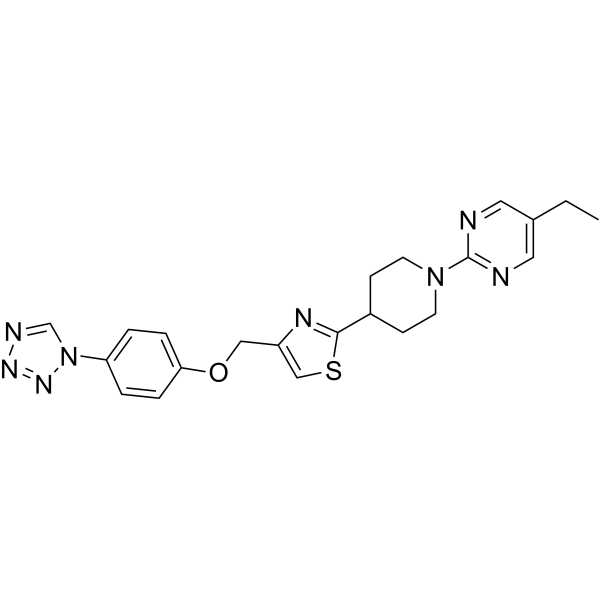
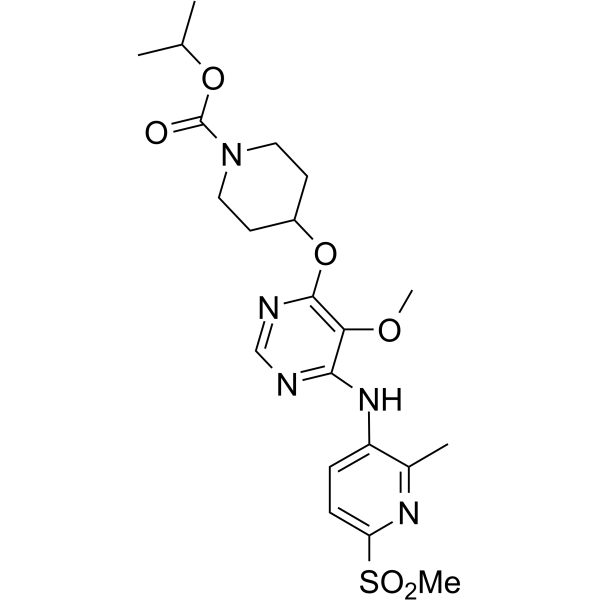
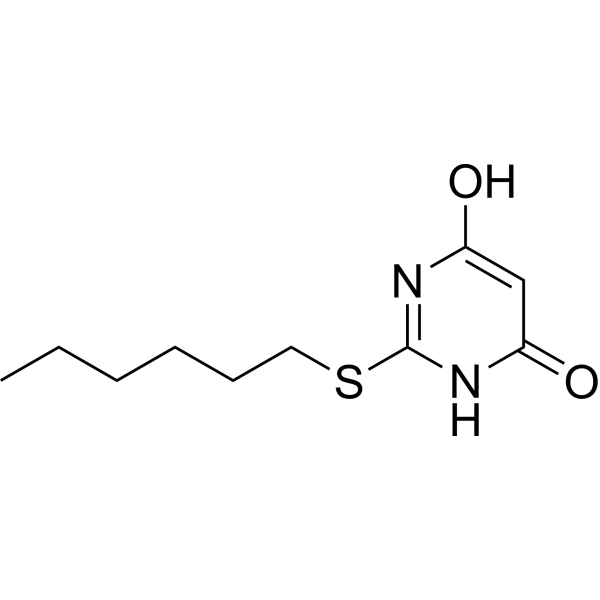
MBX-2982 is a selective, orally-available G protein-coupled receptor 119 (GPR119) agonist.
|
-
-
- HY-12066
-
|
|
GPR119
|
Metabolic Disease
Inflammation/Immunology
|
|
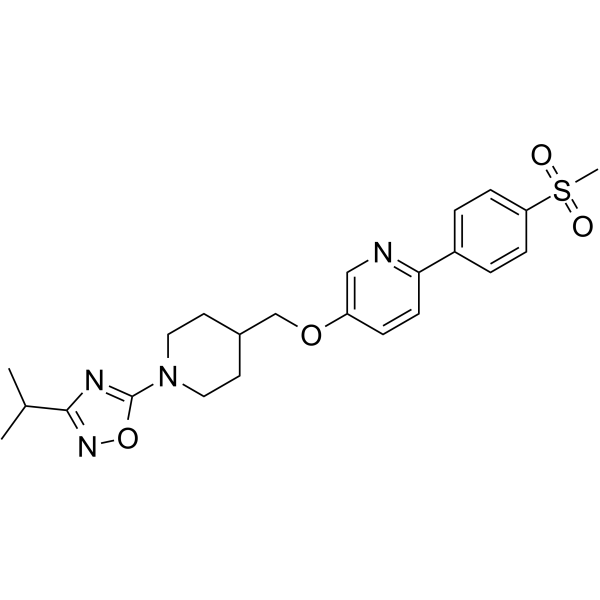
GSK-1292263 is an orally available GPR119 agonist with pEC50s of 6.9 and 6.7 for human and rat GPR119, respectively. GSK-1292263 can be used for the research of type 2 diabetes mellitus (T2DM) .
|
-
-
- HY-15564
-
|
|
GPR119
|
Metabolic Disease
|
|
AR 231453 is a potent, specific and orally available GPR119 agonist. AR 231453 can stimulate β-cell replication and improve islet graft function s .
|
-
-
- HY-109032
-
|
DS-8500a
|
GPR119
|
Metabolic Disease
|
|
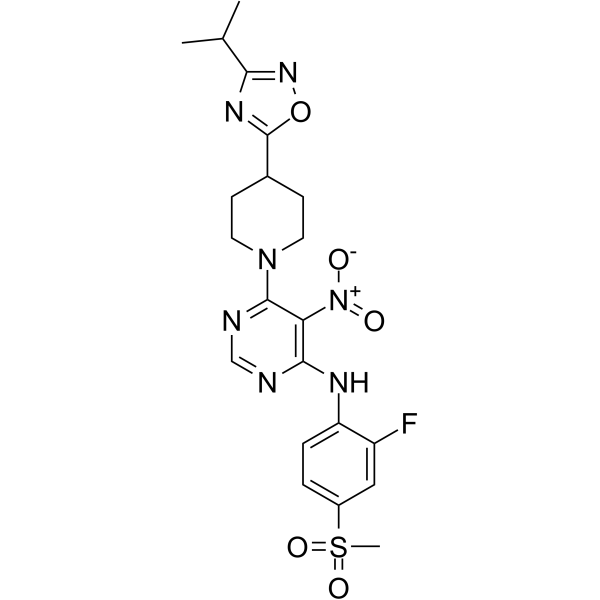
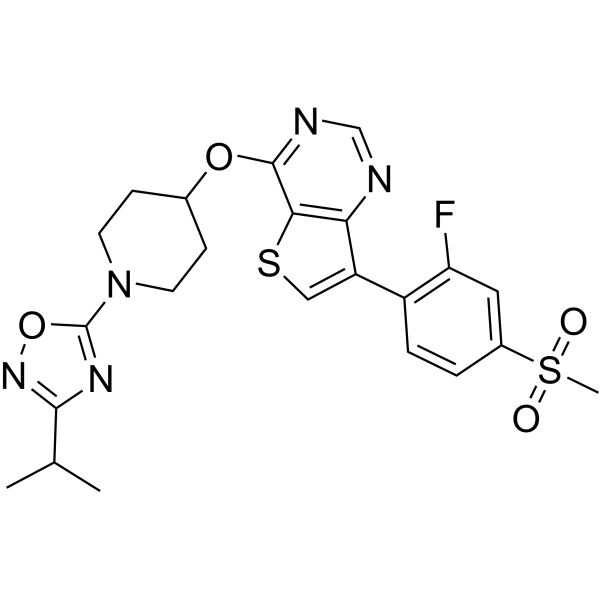
Firuglipel (DS-8500a) is an orally available, potent and selective GPR119 agonist.
|
-
-
- HY-15565
-
APD668
2 Publications Verification
|
GPR119
Cytochrome P450
Potassium Channel
|
Metabolic Disease
|
|
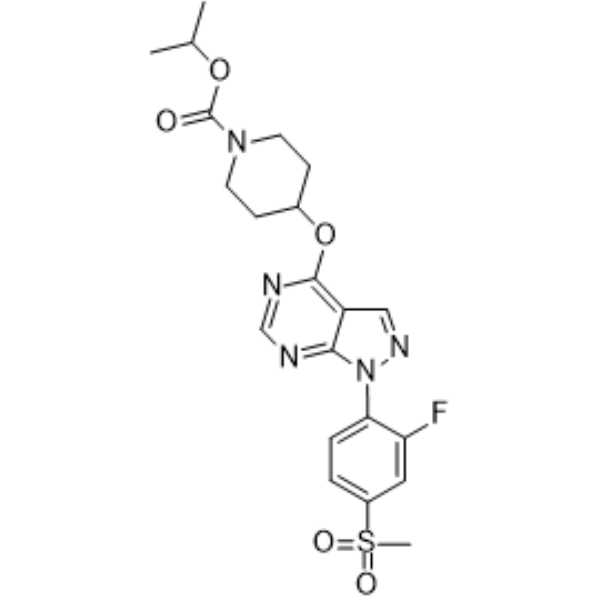
APD668 is a potent, selective and orally active agonist of G-protein coupled receptor GPR119, with EC50s of 2.7 nM and 33 nM for hGPR119 and rGPR119, respectively. APD668 shows no significant inhibition of any of the five major CYP isoforms with the exception of CYP2C9 (Ki=0.1 μM). APD668 can be used for the research of steatohepatitis and diabetes .
|
-
-
- HY-124571
-
|
|
GPR84
|
Inflammation/Immunology
|
|
ZQ-16 is a potent and selective GPR84 agonist with an EC50 value of 0.213 μM. ZQ-16 has no activity on the other free fatty acid receptors (FFARs), including GPR40, GPR41, GPR119 and GPR120 .
|
-
-
- HY-108448
-
|
OLDA
|
TRP Channel
Lipoxygenase
|
Cardiovascular Disease
Neurological Disease
Metabolic Disease
|
|
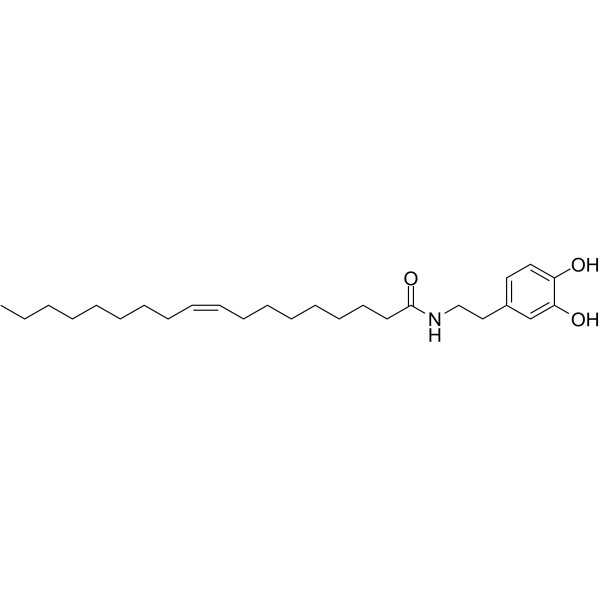
N-Oleoyldopamine (OLDA) is an orally active TRPV1 activator and 5-LOX inhibitor with blood-brain barrier permeability. N-Oleoyldopamine excites histaminergic neurons in the tuberomammillary nucleus via a dopamine receptor mechanism, a process independent of TRPV1 and cannabinoid receptors. On one hand, N-Oleoyldopamine promotes the release of insulin and glucose-dependent insulinotropic polypeptide through a GPR119-dependent pathway to improve glucose tolerance; on the other hand, N-Oleoyldopamine improves left ventricular function and reduces myocardial infarction size by triggering the release of substance P and calcitonin gene-related peptide. N-Oleoyldopamine is used in studies related to glycemic abnormalities and myocardial ischemia-reperfusion injury .
|
-
-
- HY-15566
-
APD597
1 Publications Verification
JNJ-38431055
|
GPR119
|
Metabolic Disease
|
|
APD597 (JNJ-38431055) is an orally active agonist of GPR119. APD597 exhibits reduced CYP2C9 inhibition with an IC50 of 5.8 μM. APD597 can be studied in research for type 2 diabetes .
|
-
-
- HY-171454
-
|
|
GPR119
|
Metabolic Disease
Inflammation/Immunology
|
|
DA-1241 is a GPR119 agonist. DA-1241 reduces macrophage differentiation through downregulation of NFκB signaling by activating GPR119. DA-1241, alone and in combination with a DPP4 inhibitor, reduces liver inflammation and restores inflammation-related liver gene expression. DA-1241 can be used for the research of metabolic dysfunction-associated steatohepatitis (MASH) .
|
-
-
- HY-RS05653
-
|
|
Small Interfering RNA (siRNA)
|
Others
|
|
Gpr119 Mouse Pre-designed siRNA Set A contains three designed siRNAs for Gpr119 gene (Mouse), as well as a negative control, a positive control, and a FAM-labeled negative control.
|
-
Gpr119 Mouse Pre-designed siRNA Set A
-
- HY-108258
-
|
|
GPR119
|
Endocrinology
|
|
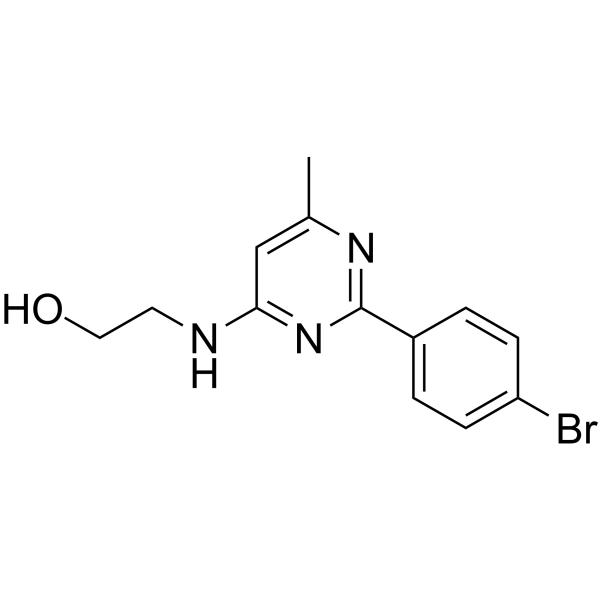
PSN 375963 is a potent GPR119 agonist, with EC50s of 8.4 and 7.9 μM for human and mouse GPR119, respectively. PSN 375963 shows similar potency to the endogenous agonist oleoylethanolamide (OEA) .
|
-
-
- HY-32748
-
|
|
Biochemical Assay Reagents
Drug Intermediate
|
Others
|
|
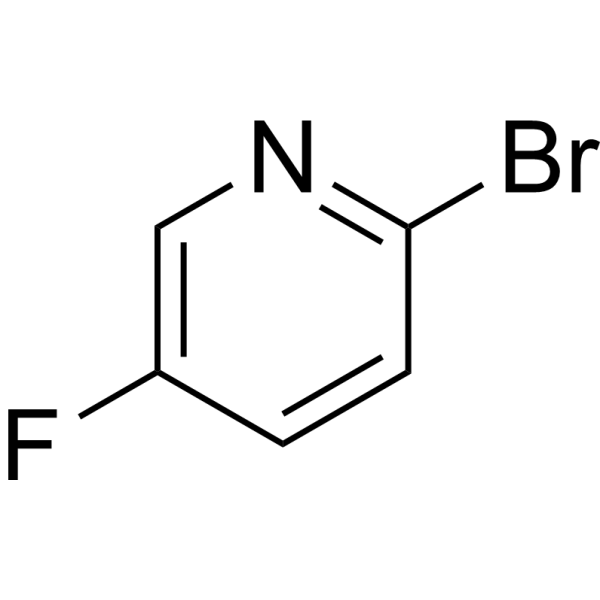
2-Bromo-5-fluoropyridine is an intermediate. 2-Bromo-5-fluoropyridine can undergo Suzuki coupling reaction with Boronic acid (HY-41551). 2-Bromo-5-fluoropyridine can be used in the synthesis of GSK1292263A (a GPR119 receptor agonist) .
|
-
-
- HY-155553
-
|
|
GPR119
|
Metabolic Disease
|
|
GPR119 agonist 2 (compound 43) is an orally active GPR119 agonist. GPR119 agonist 2 shows good pharmacokinetic characteristics in rodents and can effectively improve glucose tolerance in mice and rats. GPR119 agonist 2 has the potential to study type 2 diabetes .
|
-
-
- HY-W013788
-
|
2-Palm-Gl
|
Cannabinoid Receptor
|
Neurological Disease
|
|
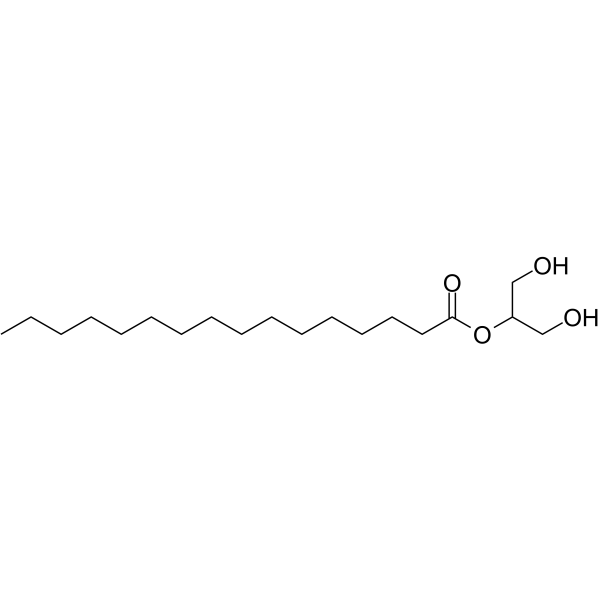
2-Palmitoylglycerol (2-Palm-Gl), an congener of 2-arachidonoylglycerol (2-AG), is a modest cannabinoid receptor CB1 agonist. 2-Palmitoylglycerol also may be an endogenous ligand for GPR119 .
|
-
-
- HY-172120
-
|
|
GPR119
|
Metabolic Disease
|
|
GPR119 agonist 3 (Compound 21b) is an orally active agonist of GPR119 with an EC50 value of 3.8 nM for hGPR119. Additionally, GPR119 agonist 3 exhibits hypoglycemic effects and can be used in research on type 2 diabetes and obesity .
|
-
-
- HY-RS05654
-
|
|
Small Interfering RNA (siRNA)
|
Others
|
|
Gpr119 Rat Pre-designed siRNA Set A contains three designed siRNAs for Gpr119 gene (Rat), as well as a negative control, a positive control, and a FAM-labeled negative control.
|
-
Gpr119 Rat Pre-designed siRNA Set A
-
- HY-RS05652
-
|
|
Small Interfering RNA (siRNA)
|
Others
|
|
GPR119 Human Pre-designed siRNA Set A contains three designed siRNAs for GPR119 gene (Human), as well as a negative control, a positive control, and a FAM-labeled negative control.
|
-
GPR119 Human Pre-designed siRNA Set A
-
- HY-182454
-
|
|
GPR119
|
Metabolic Disease
|
|
GPR119 agonist 4 is a GPR119 agonist and oral glucose-lowering agent with a human GPR119 EC50 of 42 nM.GPR119 agonist 4 activates GPR119.GPR119 agonist 4 reduces blood glucose area under the curve in an oral glucose tolerance test.GPR119 agonist 4 exhibits improved clearance in liver microsomes.GPR119 agonist 4 can be used for the research of type 2 diabetes mellitus .
|
-
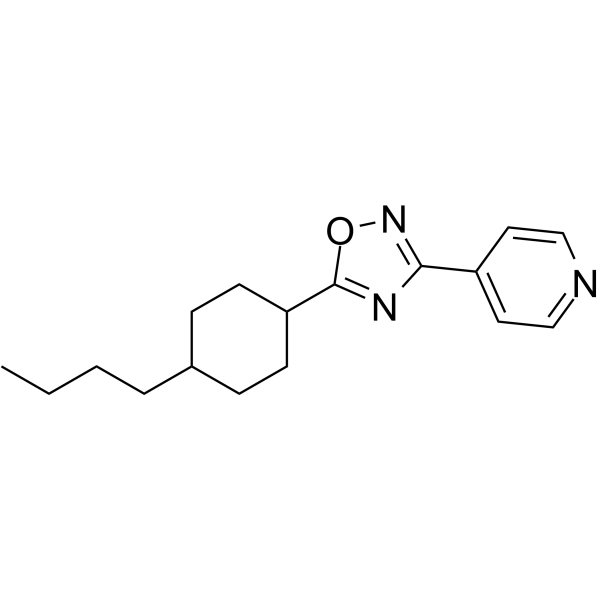
-
- HY-146469
-
|
|
Dipeptidyl Peptidase
GPR119
|
Metabolic Disease
|
|
DPP-4/GPR119 modulator 2 (Compound 20i) is a dipeptidyl peptidase IV (DPP-IV) inhibitor and GPR119 agonist with an IC50 of 0.22 μM for DPP-IV and an EC50 of 0.95 μM for GPR119. DPP-4/GPR119 modulator 2 can be used for diabetes research . DPP-4/GPR119 modulator 2 is a click chemistry reagent, it contains an Alkyne group and can undergo copper-catalyzed azide-alkyne cycloaddition (CuAAc) with molecules containing Azide groups.
|
-
-
- HY-178780
-
|
|
GPR119
|
Metabolic Disease
|
|
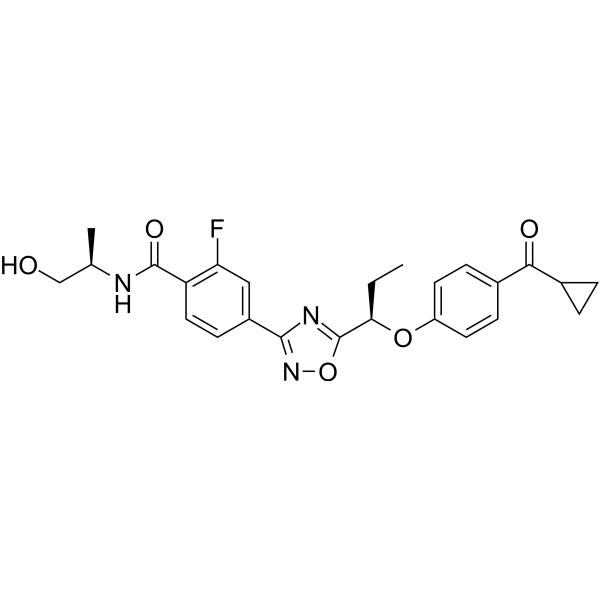
MKP10241 is an orally active GPR119 agonist. MKP10241 elevates cAMP levels in the GPR119 expressing cell line (EC50: 3.7 nM). MKP10241 reduces blood glucose levels and HbA1c in acute models and a chronic diabetic mouse model. MKP10241 also demonstrates excellent preclinical efficacy in acute as well as chronic rodent models of obesity, and MASH .
|
-
-
- HY-107535
-
|
|
GPR119
TRP Channel
|
Metabolic Disease
|
|
AS1269574 is a potent, orally available GPR119 agonist, with an EC50 of 2.5 μM in HEK293 cells expressing human GPR119. AS1269574 activates TRPA1 cation channels to stimulate glucagon-like peptide-1 (GLP-1) secretion. AS1269574 specifically induces glucose-dependent insulin secretion from pancreatic β-cells only under high-glucose conditions. AS1269574 has the potential for the research of type 2 diabetes .
|
-
-
- HY-146468
-
|
|
Dipeptidyl Peptidase
GPR119
Potassium Channel
|
Metabolic Disease
|
|
DPP-4/GPR119 modulator 1 (Compound 22) is an orally active dipeptidyl peptidase IV (DPP-IV) inhibitor and GPR119 agonist. DPP-4/GPR119 modulator 1 shows blood glucose-lowering effect and moderate inhibition on hERG channel with an IC50 of 4.9 μM. DPP-4/GPR119 modulator 1 can be used for diabetes research . DPP-4/GPR119 modulator 1 is a click chemistry reagent, it contains an Alkyne group and can undergo copper-catalyzed azide-alkyne cycloaddition (CuAAc) with molecules containing Azide groups.
|
-
-
- HY-175422
-
|
|
GPR119
|
Metabolic Disease
|
|
K-833 is a GPR119 agonist with EC50 values of 39.8 nM (human), 100nM (mouse), 75.4 nM (rat) and 12.6 nM (dog). K-833 demonstrates a modest increase in GLP-1 secretion and leads to a synergistic increase in GLP-1 levels when combined with AM-5262 (HY-16619) in acute gut peptide secretion assays in mice. K-833 can be used in studies on weight loss .
|
-
-
- HY-124978
-
|
|
GPR119
|
Metabolic Disease
|
|
MK-8282 is a potent, orally active GPR-119 agonist. MK-8282 shows improved glucose tolerance. MK-8282 can be used in the research of type 2 diabetes .
|
-
-
- HY-16673
-
|
|
GPR119
|
Metabolic Disease
|
|
PSN632408, a selective, orally active GPR119 agonist, shows similar potency to OEA at both recombinant mouse and human GPR119 receptors (EC50=5.6 and 7.9 uM, respectively). PSN632408 can stimulate β-cell replication and improve islet graft function. PSN632408 has the potential for the research of obesity and related metabolic disorders .
|
-
-
- HY-77642
-
|
|
Biochemical Assay Reagents
Drug Intermediate
|
Metabolic Disease
|
|
4-(Methylsulfonyl)phenylboronic acid is an intermediate. 4-(Methylsulfonyl)phenylboronic acid can be used to synthesize GPR119 agonists via Suzuki coupling reaction. 4-(Methylsulfonyl)phenylboronic acid can be used in the research of type 2 diabetes .
|
-
-
- HY-12375
-
-
-
- HY-W727728
-
|
|
Free Fatty Acid Receptor
|
Metabolic Disease
|
|
MK-8666 is a potent and selective partial GPR40 agonist (EC50 = 0.54 nM for human GPR40). MK-8666 shows selectivity over GPR119, GPR43, GPR41, GPR120, and other G-protein-coupled receptors (GPCRs). MK-8666 reduces glucose in the rodent. MK-8666 can be used for type 2 diabetes research [1][2].
|
-
-
- HY-126807
-
|
|
GPR119
|
Metabolic Disease
|
|
AS1907417 is a novel GPR119 agonist with an oral activity. AS1907417 is a modified form of AS1269574. AS1907417 has antihyperglycemic and can be used in the research of type 2 diabetes .
|
-
-
- HY-168997
-
|
|
Cannabinoid Receptor
|
Neurological Disease
Inflammation/Immunology
|
|
CB1R agonist 1 is a potent, CNS-penetrant, and selective Cannabinoid-1 receptor (CB1R) agonist with a Ki of 0.95 nM, modulating Gi/o signaling. CB1R agonist 1 exhibits high selectivity over CB2R and other off-target GPCRs, including GPR55, GPR18, and GPR119. CB1R agonist 1 induces analgesia and hypothermia, and potentiates opioid analgesia in mice. CB1R agonist 1 can be used for the research of pain .
|
-
-
- HY-12066A
-
|
|
GPR119
|
Metabolic Disease
|
|
GSK-1292263 (hydrochloride) is an orally active GPR119 agonist (pEC50 of approximately 6.9 and 6.7 nM for human and rat GPR119, respectively). GSK-1292263 is used in the research of type 2 diabetes and dyslipidemia .
|
-
-
- HY-108258A
-
|
|
GPR119
|
Endocrinology
|
|
PSN 375963 hydrochloride is a potent GPR119 agonist, with EC50s of 8.4 and 7.9 μM for human and mouse GPR119, respectively. PSN 375963 hydrochloride shows similar potency to the endogenous agonist oleoylethanolamide (OEA) .
|
-
-
- HY-120637
-
|
|
GPR119
|
Others
|
|
BMS-986034 is an orally active ingredient (API) that is an agonist of GPR119. .
|
-
-
- HY-12066R
-
|
|
GPR119
|
Metabolic Disease
Inflammation/Immunology
|
|
GSK1292263 (Standard) is the analytical standard of GSK1292263. This product is intended for research and analytical applications. GSK-1292263 is an orally available GPR119 agonist with pEC50s of 6.9 and 6.7 for human and rat GPR119, respectively. GSK-1292263 can be used for the research of type 2 diabetes mellitus (T2DM) .
|
-
-
- HY-18354
-
|
|
GPR119
|
Metabolic Disease
|
|
GSK1104252A is a potent and selective GPR119 agonist. GSK1104252A can be used for type 2 diabetes research .
|
-
-
- HY-113653
-
|
GSK706
|
GPR119
|
Metabolic Disease
|
|
GSK2041706A (GSK706) is a potent G protein-coupled receptor 119 (GPR119) agonist. GSK2041706A can be used for the research of type 2 diabetes .
|
-
-
- HY-15565R
-
|
|
GPR119
Cytochrome P450
Potassium Channel
|
Metabolic Disease
|
|
APD668 (Standard) is the analytical standard of APD668. This product is intended for research and analytical applications. APD668 is a potent, selective and orally active agonist of G-protein coupled receptor GPR119, with EC50s of 2.7 nM and 33 nM for hGPR119 and rGPR119, respectively. APD668 shows no significant inhibition of any of the five major CYP isoforms with the exception of CYP2C9 (Ki=0.1 μM). APD668 can be used for the research of steatohepatitis and diabetes .
|
-
-
- HY-15291R
-
|
|
GPR119
|
Metabolic Disease
|
|
MBX-2982 (Standard) is the analytical standard of MBX-2982. This product is intended for research and analytical applications. MBX-2982 is a selective, orally-available G protein-coupled receptor 119 (GPR119) agonist.
|
-
-
- HY-W701772
-
|
2-OG-d5
|
Isotope-Labeled Compounds
GPR119
TGF-beta/Smad
NF-κB
GLP Receptor
|
Metabolic Disease
|
|
2-Oleoylglycerol-d5 (2-OG-d5) is the deuterium labeled 2-Oleoylglycerol (HY-W011121). 2-Oleoylglycerol (2-OG) is a lipid found in the diet. It is a GPR119 agonist, with an EC50 value of 2.5 μM in activating hGPR119 in transiently transfected COS-7 cells. 2-Oleoylglycerol enhances the inflammatory response of macrophages and promotes fibrosis by activating the GPR119/TAK1/NF-κB/TGF-β1 signaling pathway. It also stimulates glucagon-like peptide 1 (GLP-1) secretion in vivo. 2-Oleoylglycerol is expected to be used in the research of non-alcoholic steatohepatitis (NASH) .
|
-
-
- HY-113513
-
|
|
Others
|
Cancer
|
|
5(S)-HEPE is an active metabolite of eicosapentaenoic acid. It is formed from EPA by 5-lipoxygenase (5-LO). 5(S)-HEPE is an agonist of G protein-coupled receptor 119 (GPR119). It increases cAMP accumulation in CHO-K1 cells expressing human GPR119 when used at a concentration of 10 μM. 5(S)-HEPE increases glucose-induced insulin secretion from MING6 insulinoma pancreatic islets and glucagon-like peptide 1 (GLP-1) secretion from HuTu 80 adenocarcinoma cells when used at a concentration of 10 μM. Serum levels of 5(S)-HEPE are elevated in patients with hyperlipidemia.
|
-
-
- HY-15564R
-
|
|
GPR119
|
Metabolic Disease
|
|
AR 231453 (Standard) is the analytical standard of AR 231453. This product is intended for research and analytical applications. AR 231453 is a potent, specific and orally available GPR119 agonist. AR 231453 can stimulate β-cell replication and improve islet graft function s .
|
-
-
- HY-117446
-
|
|
GPR119
|
Metabolic Disease
|
|
AS-1669058 is a GPR119 agonist and a potential inhibitor of type 2 diabetes. AS-1669058 induces insulin secretion in response to high blood glucose levels in vitro and in vivo and increases insulin promoter activity. In animal studies, AS-1669058 improved glucose tolerance and reduced blood glucose levels in db/db mice .
|
-
-
- HY-W013788R
-
|
2-Palm-Gl (Standard)
|
Reference Standards
Cannabinoid Receptor
|
Neurological Disease
|
|
2-Palmitoylglycerol (Standard) is the analytical standard of 2-Palmitoylglycerol. This product is intended for research and analytical applications. 2-Palmitoylglycerol (2-Palm-Gl), an congener of 2-arachidonoylglycerol (2-AG), is a modest cannabinoid receptor CB1 agonist. 2-Palmitoylglycerol also may be an endogenous ligand for GPR119 .
|
-
-
- HY-117446A
-
|
|
GPR119
|
Metabolic Disease
|
|
AS-1669058 free base is a GPR119 agonist and a potential inhibitor of type 2 diabetes. AS-1669058 free base induces insulin secretion induced by high blood glucose levels in vitro and in vivo and increases insulin promoter activity. In animal studies, AS-1669058 free base improved glucose tolerance and reduced blood glucose levels in db/db mice.
|
-
-
- HY-125646
-
|
|
GPR119
|
Metabolic Disease
|
|
YH18968 is an orally active GPR119 agonist with an EC50 of 2.8 nM for inducing cAMP accumulation. YH18968 activates GPR119, elevates intracellular cyclic adenosine monophosphate levels, stimulates glucagon-like peptide-1 secretion from intestinal L cells, and triggers glucose-dependent insulin secretion from pancreatic β cells. YH18968 improves glucose tolerance in normal mice and diet-induced obese mice. YH18968 can be used for the research of type 2 diabetes .
|
-
-
- HY-108258R
-
|
|
Reference Standards
GPR119
|
Endocrinology
|
|
PSN 375963 (Standard) is the analytical standard of PSN 375963 (HY-108258). This product is intended for research and analytical applications. PSN 375963 is a potent GPR119 agonist, with EC50s of 8.4 and 7.9 μM for human and mouse GPR119, respectively. PSN 375963 shows similar potency to the endogenous agonist oleoylethanolamide (OEA) .
|
-
-
- HY-109032R
-
|
DS-8500a (Standard)
|
Reference Standards
GPR119
|
Metabolic Disease
|
|
Firuglipel (Standard) is the analytical standard of Firuglipel (HY-109032). This product is intended for research and analytical applications. Firuglipel (DS-8500a) is an orally available, potent and selective GPR119 agonist.
|
-
-
- HY-182580
-
|
|
GPR119
Dipeptidyl Peptidase
|
Metabolic Disease
Inflammation/Immunology
|
|
HBK001 is an orally active and selective dual GPR119 agonist and DPP-IV inhibitor. HBK001 triggers cAMP production, PKA activation, CREB phosphorylation, glucose-stimulated insulin secretion, plasma incretin elevation, β-cell proliferation, and β-cell function gene up-regulation. HBK001 reduces blood glucose, ameliorates hyperglycemia, improves glucose tolerance, and enhances islet morphology. HBK001 can be used for the research of type 2 diabetes mellitus .
|
-
-
- HY-107535R
-
|
|
Reference Standards
GPR119
TRP Channel
|
Metabolic Disease
|
|
AS1269574 (Standard) is the analytical standard of AS1269574 (HY-107535). This product is intended for research and analytical applications. AS1269574 is a potent, orally available GPR119 agonist, with an EC50 of 2.5 μM in HEK293 cells expressing human GPR119. AS1269574 activates TRPA1 cation channels to stimulate glucagon-like peptide-1 (GLP-1) secretion. AS1269574 specifically induces glucose-dependent insulin secretion from pancreatic β-cells only under high-glucose conditions. AS1269574 has the potential for the research of type 2 diabetes .
|
-
- HY-108448R
-
|
OLDA (Standard)
|
Reference Standards
TRP Channel
Lipoxygenase
|
Cardiovascular Disease
Neurological Disease
Metabolic Disease
|
|
N-Oleoyldopamine (Standard) is the analytical standard of N-Oleoyldopamine (HY-108448). This product is intended for research and analytical applications. N-Oleoyldopamine (OLDA) is a product of condensation of oleic acid and dopamine (DA) and an endogenous TRPV1 selective agonist. N-Oleoyldopamine (OLDA) can crosses the blood-brain barrier. N-oleoyl-dopamine protects the heart against ischemia-reperfusion injury via activation of TRPV1 .
|
-
| Cat. No. |
Product Name |
Type |
-
- HY-32748
-
|
|
Biochemical Assay Reagents
|
|
2-Bromo-5-fluoropyridine is an intermediate. 2-Bromo-5-fluoropyridine can undergo Suzuki coupling reaction with Boronic acid (HY-41551). 2-Bromo-5-fluoropyridine can be used in the synthesis of GSK1292263A (a GPR119 receptor agonist) .
|
-
- HY-77642
-
|
|
Biochemical Assay Reagents
|
|
4-(Methylsulfonyl)phenylboronic acid is an intermediate. 4-(Methylsulfonyl)phenylboronic acid can be used to synthesize GPR119 agonists via Suzuki coupling reaction. 4-(Methylsulfonyl)phenylboronic acid can be used in the research of type 2 diabetes .
|
| Cat. No. |
Product Name |
Category |
Target |
Chemical Structure |
| Cat. No. |
Product Name |
Chemical Structure |
-
- HY-W701772
-
|
|
|
2-Oleoylglycerol-d5 (2-OG-d5) is the deuterium labeled 2-Oleoylglycerol (HY-W011121). 2-Oleoylglycerol (2-OG) is a lipid found in the diet. It is a GPR119 agonist, with an EC50 value of 2.5 μM in activating hGPR119 in transiently transfected COS-7 cells. 2-Oleoylglycerol enhances the inflammatory response of macrophages and promotes fibrosis by activating the GPR119/TAK1/NF-κB/TGF-β1 signaling pathway. It also stimulates glucagon-like peptide 1 (GLP-1) secretion in vivo. 2-Oleoylglycerol is expected to be used in the research of non-alcoholic steatohepatitis (NASH) .
|
-
| Cat. No. |
Product Name |
|
Classification |
-
- HY-RS05653
-
|
|
|
siRNAs
Mouse Pre-designed siRNA Sets
|
|
Gpr119 Mouse Pre-designed siRNA Set A contains three designed siRNAs for Gpr119 gene (Mouse), as well as a negative control, a positive control, and a FAM-labeled negative control.
|
-
- HY-RS05654
-
|
|
|
siRNAs
Rat Pre-designed siRNA Sets
|
|
Gpr119 Rat Pre-designed siRNA Set A contains three designed siRNAs for Gpr119 gene (Rat), as well as a negative control, a positive control, and a FAM-labeled negative control.
|
-
- HY-RS05652
-
|
|
|
siRNAs
Human Pre-designed siRNA Sets
|
|
GPR119 Human Pre-designed siRNA Set A contains three designed siRNAs for GPR119 gene (Human), as well as a negative control, a positive control, and a FAM-labeled negative control.
|
Your information is safe with us. * Required Fields.
Inquiry Information
- Product Name:
- Cat. No.:
- Quantity:
- MCE Japan Authorized Agent:

