1. Search Result
Search Result
Results for "

Lewy

" in MedChemExpress (MCE) Product Catalog:

29

Inhibitors & Agonists

1

Biochemical Assay Reagents

2

Peptides

6

Natural
Products

3

Antibodies

Cat. No. Product Name Target Research Areas Chemical Structure
  • HY-113407A

    Endogenous Metabolite FBPase Neurological Disease Metabolic Disease
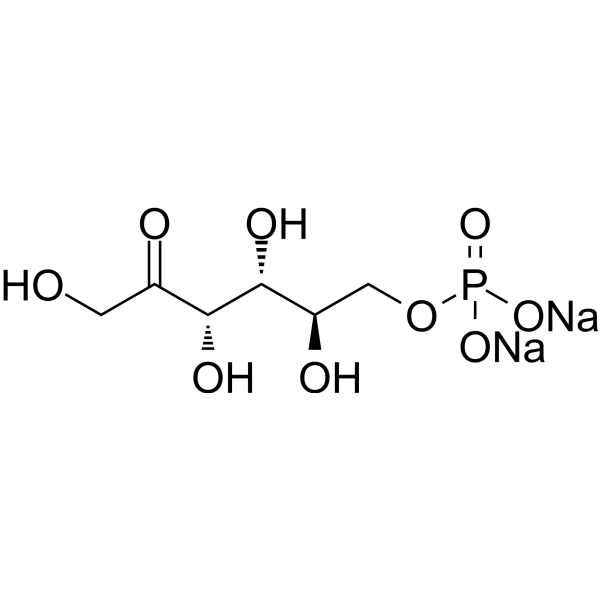
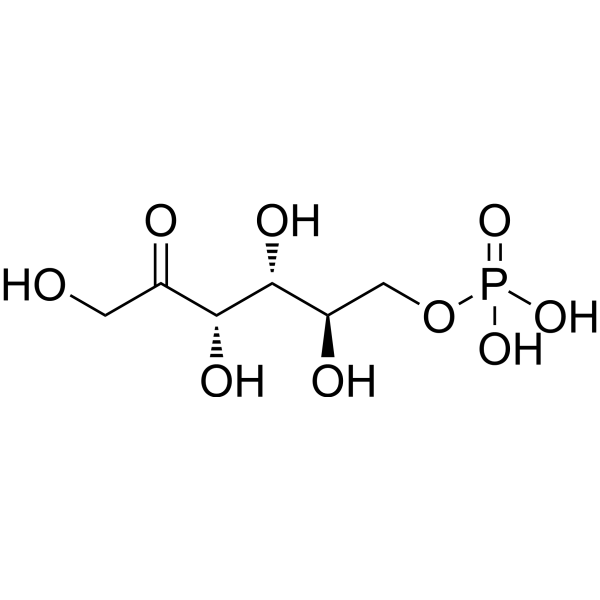
    D-Fructose 6-phosphate disodium is an endogenous metabolite. D-Fructose 6-phosphate disodium can be obtained by hydrolysis of Fructose-1,6-bisphosphatase (FBPase). D-Fructose-6-phosphate disodium is a sugar intermediate in the glycolysis pathway and the pentose phosphate pathway. D-Fructose-6-phosphate disodium can be used to detect glucosamine-6-phosphate synthase and TAL activities. D-Fructose 6-phosphate disodium can be used to study Lewy body dementia .
    D-Fructose-6-phosphate disodium
  • HY-113228
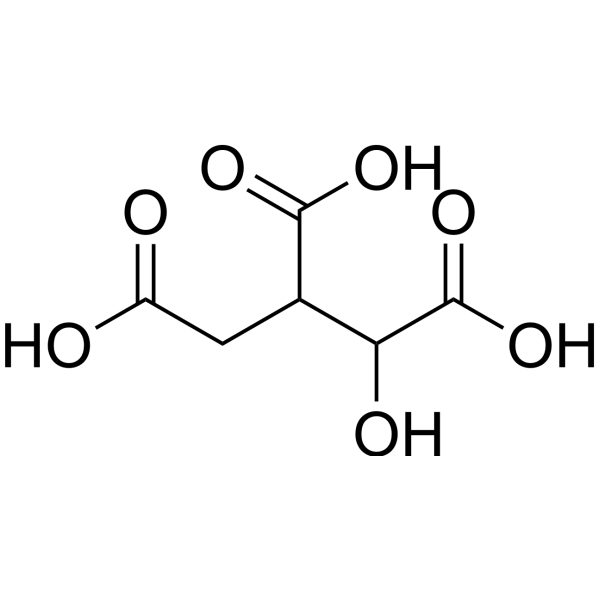
    Isocitric acid
    2 Publications Verification

    Endogenous Metabolite Neurological Disease
    Isocitric acid is an endogenous metabolite present in Saliva and Cellular_Cytoplasm that can be used for the research of Alzheimer's Disease, Lewy Body Dementia and Anoxia .
    Isocitric acid
  • HY-160116

    Radionuclide-Drug Conjugates (RDCs) Fluorescent Dye α-synuclein Neurological Disease
    α-Synuclein aggregate binder 1 (Compound C05-05) is a specific binder for α-synuclein aggregates and can inhibit α-synuclein aggregation. α-Synuclein aggregate binder 1 can be used as a fluorescent probe (excitation wavelength 900 nm, detection wavelength 500-550 nm) for optical imaging, and can also inhibit α-synuclein fibril formation by blocking the aggregation process. α-Synuclein aggregate binder 1 can be used for positron emission tomography (PET) imaging after being labeled with 18F. α-Synuclein aggregate binder 1 can be used for visual diagnosis of brain lesions and mechanism research of neurodegenerative diseases such as Parkinson's disease and Lewy body dementia .
    α-Synuclein aggregate binder 1
  • HY-132821

    E2027

    Phosphodiesterase (PDE) Neurological Disease
    Irsenontrine (E2027) is an orally active and selective phosphodiesterase 9 (PDE9) inhibitor. Irsenontrine can be used for the research of neurological diseases .
    Irsenontrine
  • HY-N0698

    Endogenous Metabolite α-synuclein Neurological Disease Cancer
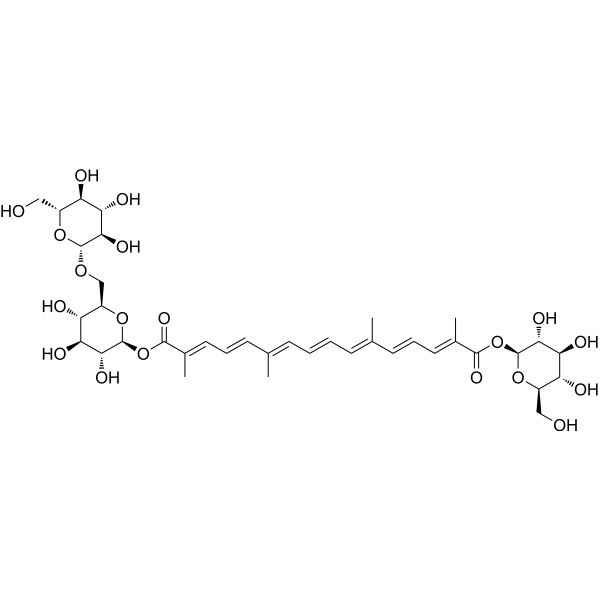
    Crocin II is an inhibitor targeting α-synuclein aggregation, with a IC50 of 0.541 μM and a EC50 of 3.63 μM. Crocin II inhibits α-synuclein aggregation and dissociates pre-formed α-synuclein fibrils. Crocin II possesses antioxidant, anticancer and antidepressant activities. Crocin II is applicable to research related to neurological disorders such as Parkinson's disease, dementia with Lewy bodies and multiple system atrophy, as well as cancers .
    Crocin II
  • HY-122958

    α-synuclein Neurological Disease
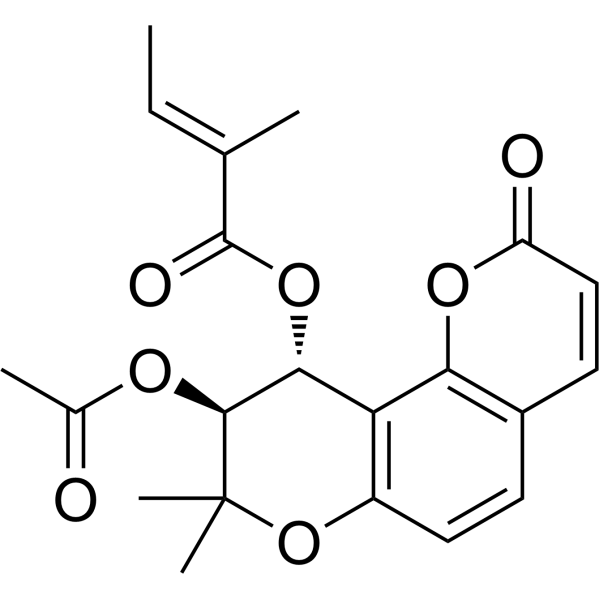
    Peucedanocoumarin III is an α-synuclein fiber depolymerizer with blood-brain barrier permeability. Peucedanocoumarin III depolymerizes β-sheet aggregate structures, promotes aggregate clearance, inhibits β23-induced cytotoxicity, blocks the formation of Lewy body-like inclusions, and prevents dopaminergic neuron loss. Peucedanocoumarin III can be used in studies related to Parkinson's disease .
    Peucedanocoumarin III
  • HY-113407

    Endogenous Metabolite FBPase Neurological Disease Metabolic Disease
    D-Fructose 6-phosphate is an endogenous metabolite. D-Fructose 6-phosphate can be obtained by hydrolysis of Fructose-1,6-bisphosphatase (FBPase). D-Fructose-6-phosphate is a sugar intermediate in the glycolysis pathway and the pentose phosphate pathway. D-Fructose-6-phosphate can be used to detect glucosamine-6-phosphate synthase and TAL activities. D-Fructose 6-phosphate can be used to study Lewy body dementia .
    D-Fructose-6-phosphate
  • HY-113228R

    Reference Standards Endogenous Metabolite Neurological Disease
    Isocitric acid (Standard) is the analytical standard of Isocitric acid (HY-113228). This product is intended for research and analytical applications. Isocitric acid is an endogenous metabolite present in Saliva and Cellular_Cytoplasm that can be used for the research of Alzheimer's Disease, Lewy Body Dementia and Anoxia.
    Isocitric acid (Standard)
  • HY-125287

    (Rac)-UCB0599; NPT200-11

    α-synuclein Neurological Disease
    (Rac)-Minzasolmin ((Rac)-UCB0599; NPT200-11) is a blood-brain barrier penetrated alpha-synuclein (ASYN) misfolding inhibitor. (Rac)-Minzasolmin acts on the early stage of ASYN aggregation process, by replacing the membrane-bound oligomers ASYN, allowing them to revert to the monomeric form, while preventing pathological aggregation. (Rac)-Minzasolmin effectively improves the ASYN deposition in the retina and the neuro-pathological indicators in two α-synuclein transgenic mouse models. (Rac)-Minzasolmin can be used for the studies of Parkinson's disease (PD) and dementia with Lewy bodies (DLB) .
    (Rac)-Minzasolmin
  • HY-P3140A

    α-synuclein Neurological Disease
    α-Synuclein (61-75) TFA is the 61-75 fragment of α-Synuclein. α-Synuclein is an abundant neuronal protein that is highly enriched in presynaptic nerve terminals. α-Synuclein is a potential biomarker for Parkinson's disease (PD) .
    α-Synuclein (61-75) TFA
  • HY-148325

    nAChR Neurological Disease
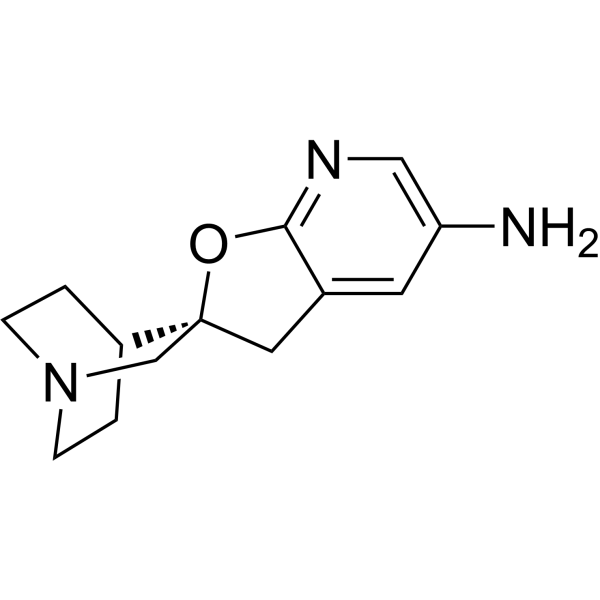
    α7 Nicotinic receptor agonist-1 (Preparation 5) is an α7 nAChR agonist. α7 Nicotinic receptor agonist-1 can be used in studies of psychiatric disorders (such as schizophrenia, manic or hypomanic depression and anxiety disorders) and intellectual disorders (such as alzheimer's disease, learning deficits, cognitive deficits, attention deficits, memory loss, lewy body dementia and attention deficit hyperactivity disorder) .
    α7 Nicotinic receptor agonist-1
  • HY-132821B

    (R)-E2027

    Phosphodiesterase (PDE) Neurological Disease
    (R)-Irsenontrine ((R)-E2027), the R-enantiomer of Irsenontrine (HY-132821), is a potent phosphodiesterase 9 (PDE9) inhibitor with an IC50 value of 0.041 μM. (R)-Irsenontrine can be used for the research of neurological diseases .
    (R)-Irsenontrine
  • HY-178920

    α-synuclein Neurological Disease
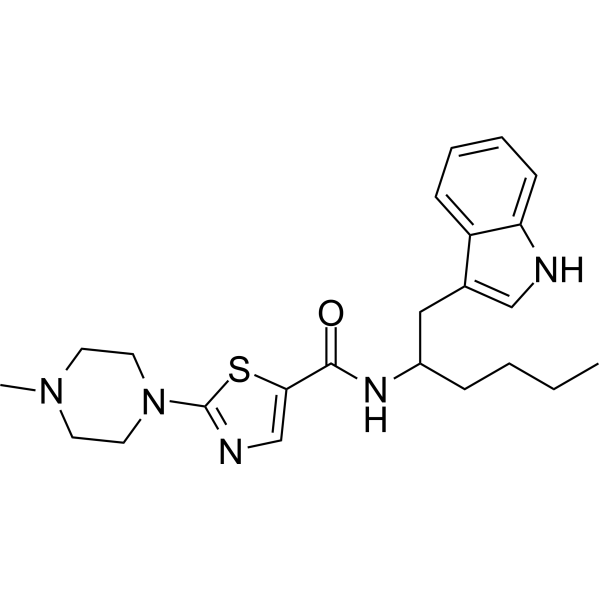
    α-Synuclein-IN-17 (Compound 10) is an α-Synuclein inhibitor, with an IC50 value of 9 μM. α-Synuclein-IN-17 exhibits potent inhibitory activity against both in-vitro assembled asyn fibrils and LBD brain tissue-amplified asyn fibrils. α-Synuclein-IN-17 can be used for the study of Parkinson's disease (PD) and Lewy Body Disease (LBD) .
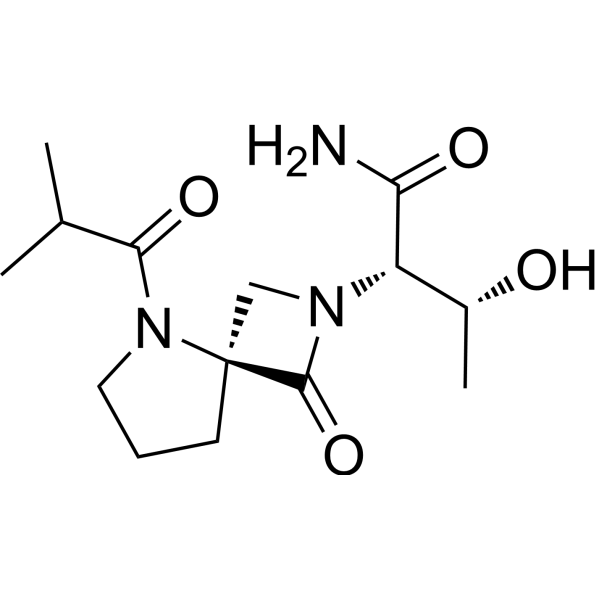
    α-Synuclein-IN-17
  • HY-P3140

    α-synuclein Neurological Disease
    α-Synuclein (61-75) is the 61-75 fragment of α-Synuclein. α-Synuclein is an abundant neuronal protein that is highly enriched in presynaptic nerve terminals. α-Synuclein is a potential biomarker for Parkinson's disease (PD) .
    α-Synuclein (61-75)
  • HY-156634

    NYX-783

    iGluR Neurological Disease
    Risevistinel (NYX-783) is a positive allosteric modulator of N-methyl-D-aspartate (NMDA) receptor. Nevadistinel can be used to inhibit cognitive impairment associated with neurodegenerative diseases, such as mild cognitive impairment, mild Alzheimer's disease, Parkinson's disease, Lewy body disease .
    Risevistinel
  • HY-175308

    α-synuclein Neurological Disease
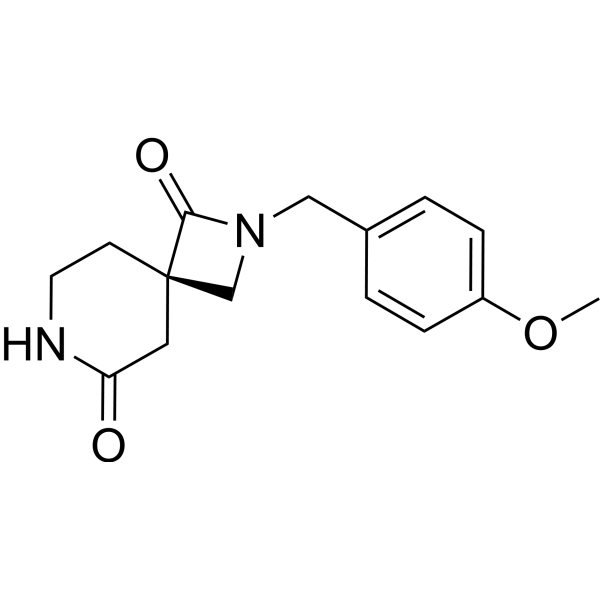
    α-Synuclein inhibitor 15 (Compound 1) is an inhibitor targeting the fibrillation growth of α-synuclein (IC50=18 μM). α-Synuclein inhibitor 15 is promising for research of neurodegenerative diseases, such as Parkinson's disease (PD) and Lewy body dementia (LBD) .
    α-Synuclein inhibitor 15
  • HY-156626

    NYX-458; NYX-3054

    iGluR Neurological Disease
    Nevadistinel (NYX-458; NYX-3054) is a positive allosteric modulator of N-methyl-D-aspartate (NMDA) receptor. Nevadistinel can be used to inhibit cognitive impairment associated with neurodegenerative diseases, such as mild cognitive impairment, mild Alzheimer's disease, Parkinson's disease, Lewy body disease .
    Nevadistinel
  • HY-132821A

    E2027 maleate

    Phosphodiesterase (PDE) Neurological Disease
    Irsenontrine (E2027) maleate is an orally active and selective phosphodiesterase 9 (PDE9) inhibitor. Irsenontrine maleate can be used for the research of neurological diseases .
    Irsenontrine maleate
  • HY-135653A

    (Rac)-BPN-19186

    Epoxide Hydrolase Neurological Disease
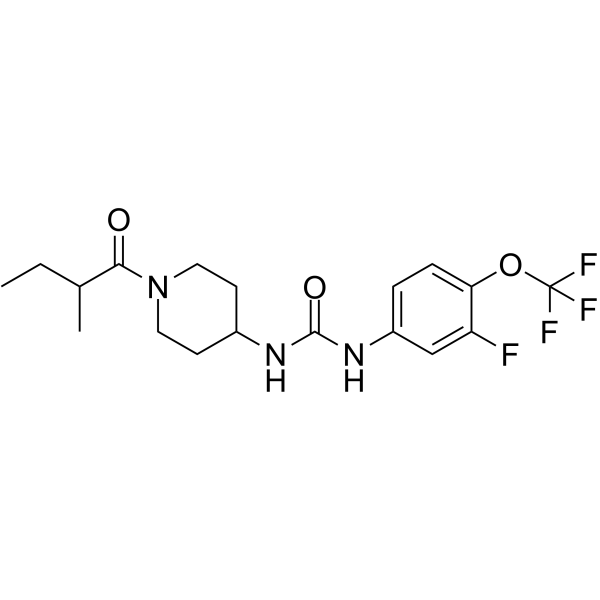
    (Rac)-EC5026 ((Rac)-BPN-19186) is a potent piperidine inhibitor of soluble epoxide hydrolase (sEH) extracted from patent WO2019156991A1, page 39, has a Ki of 0.06 nM. (Rac)-EC5026 can be used for the research of Parkinson's disease and dementia with Lewy Bodies (DLB) .
    (Rac)-EC5026
  • HY-108227

    5-HT Receptor Neurological Disease
    Quetiapine sulfone is a main metabolite of Quetiapine (HY-14544). Quetiapine is a 5-HT receptors agonist and a dopamine receptor antagonist .
    Quetiapine sulfone
  • HY-153127

    AV-133

    Biochemical Assay Reagents Neurological Disease
    Florbenazine (AV-133) is a diagnostic imaging agent targeting the central nervous system monoamine transporter VMAT2, and its F-18 labeled form can be used for PET scanning. The biodistribution of [18F]Florbenazine in mice shows a high striatum/cerebellum ratio (0.48), which can be used for the diagnostic research of neurodegenerative diseases (including dementia with Lewy bodies and Parkinson's disease) .
    Florbenazine
  • HY-W725496

    Endogenous Metabolite Neurological Disease Metabolic Disease
    D-Fructose 6-phosphate dipotassium is an endogenous metabolite in saliva that affects cell growth and autophagy; it can be hydrolyzed by Fructose-1,6-bisphosphatase (FBPase). D-Fructose 6-phosphate dipotassium can be converted into D-glucose 6-phosphate (HY-112537) by the action of phosphoglucose isomerase. D-Fructose 6-phosphate dipotassium is a sugar intermediate in the glycolysis pathway and the pentose phosphate pathway. D-Fructose 6-phosphate dipotassium can be used to study Lewy body dementia .
    D-Fructose 6-phosphate dipotassium
  • HY-N0698R

    Reference Standards Endogenous Metabolite α-synuclein Neurological Disease Cancer
    Crocin II (Standard) is the analytical standard of Crocin II. This product is intended for research and analytical applications. Crocin II is an inhibitor targeting α-synuclein aggregation, with a IC50 of 0.541 μM and a EC50 of 3.63 μM. Crocin II inhibits α-synuclein aggregation and dissociates pre-formed α-synuclein fibrils. Crocin II possesses antioxidant, anticancer and antidepressant activities. Crocin II is applicable to research related to neurological disorders such as Parkinson's disease, dementia with Lewy bodies and multiple system atrophy, as well as cancers.
    Crocin II (Standard)
  • HY-156600A

    SBT-272 trihydrochloride

    Mitochondrial Metabolism Neurological Disease
    Bevemipretide trihydrochloride (SBT-272 trihydrochloride) is a blood-brain barrier-permeable mitochondrial function repair agent. Bevemipretide trihydrochloride stabilizes cardiolipin in the inner mitochondrial membrane, restores mitochondrial structure, respiratory function, motor capacity and upper motor neuron health. Bevemipretide trihydrochloride reduces astrogliosis and microgliosis in mice with amyotrophic lateral sclerosis. Bevemipretide trihydrochloride prevents stroke-induced mitochondrial dysfunction . Bevemipretide trihydrochloride is applicable to research related to amyotrophic lateral sclerosis, Parkinson's disease, dementia with Lewy bodies and Huntington's disease .
    Bevemipretide trihydrochloride
  • HY-113407B

    Endogenous Metabolite FBPase Neurological Disease Metabolic Disease
    D-Fructose 6-phosphate disodium hydrate is an endogenous metabolite. D-Fructose 6-phosphate disodium hydrate can be obtained by hydrolysis of Fructose-1,6-bisphosphatase (FBPase). D-Fructose-6-phosphate disodium hydrate is a sugar intermediate in the glycolysis pathway and the pentose phosphate pathway. D-Fructose-6-phosphate disodium hydrate can be used to detect glucosamine-6-phosphate synthase and TAL activities. D-Fructose 6-phosphate disodium hydrate can be used to study Lewy body dementia .
    D-Fructose-6-phosphate disodium hydrate
  • HY-125984

    α-synuclein Neurological Disease
    Syn-516 is an inhibitor of α-synuclein (α-Syn). Syn-516 targets the 5' untranslated region (5'UTR) of α-Syn mRNA, with an IC50 value of 1.8 μM, thereby inhibiting the translation process of α-Syn. Syn-516 improves motor dysfunction and colonic motility abnormalities associated with α-Syn overexpression in mouse models. α-Syn can be used to study diseases such as Parkinson's disease and Lewy body dementia .
    Syn-516
  • HY-182893

    α-synuclein Reactive Oxygen Species (ROS) Tyrosine Hydroxylase Neurological Disease
    SK-129 is a blood-brain barrier-permeable inhibitor of α-synuclein (αS) oligomers with a Kd of 221 nM. SK-129 preferentially binds to neurotoxic αS oligomers over physiological αS monomers, inhibits αS aggregation, blocks the interaction and co-aggregation of αS with tau protein, and prevents the maturation of αS-tau condensates into amyloid aggregates. SK-129 reduces ROS production, rescues dopaminergic neuron degeneration, improves motor function, restores endogenous dopamine synthesis, increases the number of Tyrosine Hydroxylase-positive neurons, prevents brain histopathological changes, alleviates neuroinflammation, and improves survival rates in relevant models. SK-129 can be used in research related to Parkinson's disease (PD) and Lewy body dementia (LBD) .
    SK-129
  • HY-W777920

    Endogenous Metabolite Neurological Disease Inflammation/Immunology
    C26-Dihydro ceramide is a dihydroceramide containing a C26 very-long-chain fatty acid. C26-Dihydro ceramide can be used for research on various neurological disorders including Alzheimer's disease, Parkinson's disease, multiple sclerosis, depression, and anxiety disorders .
    C26-Dihydro ceramide
  • HY-136878

    Histone Demethylase Monoamine Oxidase Neurological Disease Cancer
    LSD1-IN-10 is a LSD1/MAO inhibitor with LSD1 IC50 of 5 nM, MAO-A IC50 of 16 μM, and MAO-B IC50 of 7.4 μM. LSD1-IN-10 suppresses enzymatic activity of LSD1, MAO-A, and MAO-B. LSD1-IN-10 can be used for the research of cancer, alzheimer's disease, parkinson's disease, huntington's disease .
    LSD1-IN-10

Inquiry Online

Your information is safe with us. * Required Fields.

Salutation


Country or Region *

Applicant Name *


Organization Name *

Department *


Email Address *


Product Name *

Cat. No.


Requested quantity *

Phone Number *


Remarks

Inquiry Online

Inquiry Information

Product Name:
Cat. No.:
Quantity:
MCE Japan Authorized Agent:

