

1. Search Result
Search Result
Pathways Recommended: Metabolic Enzyme/Protease
Results for "

Metabolic disorder.

" in MedChemExpress (MCE) Product Catalog:

246

Inhibitors & Agonists

10

Screening Libraries

2

Fluorescent Dyes

6

Biochemical Assay Reagents

15

Peptides

46

Natural
Products

23

Isotope-Labeled Compounds

3

Oligonucleotides

1

GMP Molecules

Cat. No. Product Name Target Research Areas Chemical Structure
  • HY-101455
    CDN1163
    15+ Cited Publications

    Calcium Channel Metabolic Disease
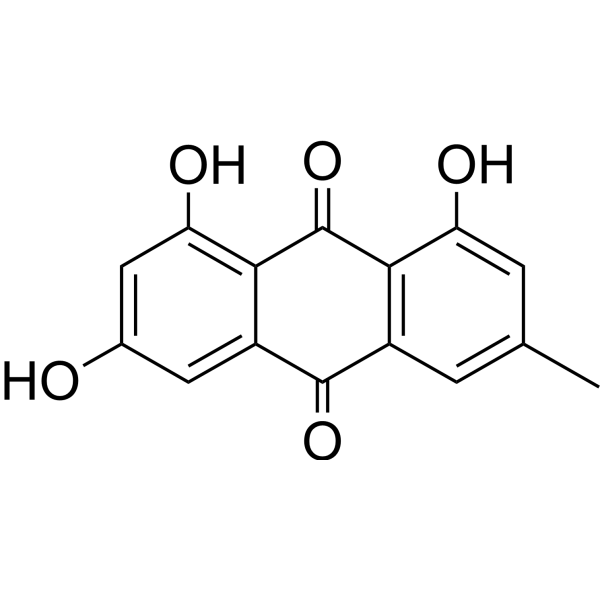
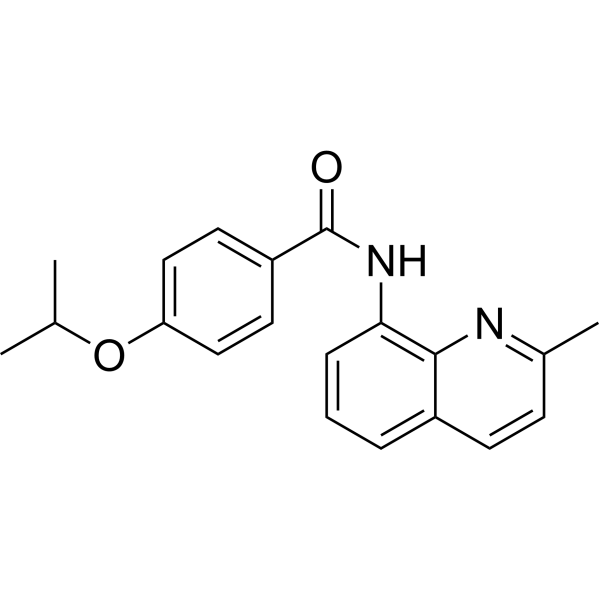
    CDN1163 is an allosteric sarco/endoplasmic reticulum Ca 2+-ATPase (SERCA) activator that improves Ca 2+ homeostasis. CDN1163 attenuates diabetes and metabolic disorders .
    CDN1163
  • HY-114392
    Gly-β-MCA
    20+ Cited Publications

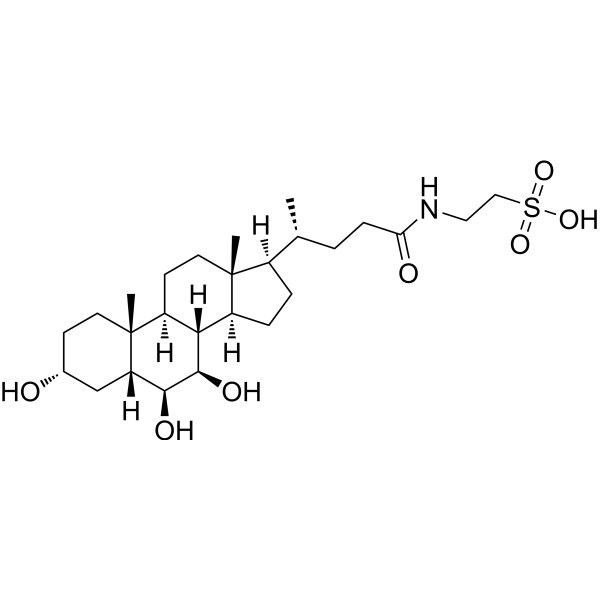
    FXR Autophagy Metabolic Disease
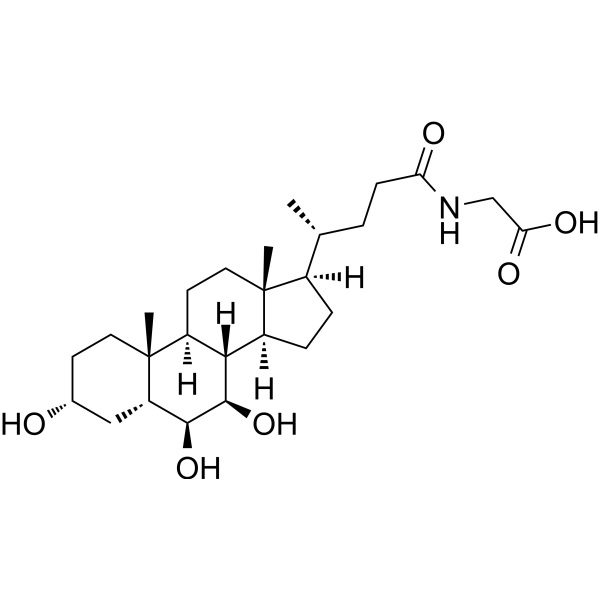
    Gly-β-MCA, a bile acid, is a potent, sable, intestine-selective and oral bioactive farnesoid X receptor (FXR) inhibitor that may be a candidate for the treatment of metabolic disorders .
    Gly-β-MCA
  • HY-P4153

    MK-0616 chloride

    PCSK9 Cardiovascular Disease
    Enlicitide chloride is an orally active inhibitor for PCSK9 that blocks the interaction between LPL receptor and PSCK9, with an IC50 of 2.5 nM. Enlicitide chloride can be used in the study of cardiovascular diseases such as atherosclerosis, hypercholesterolemia, coronary heart disease, metabolic syndrome, acute coronary syndrome or related cardiovascular and cardiometabolic disorders .
    Enlicitide chloride
  • HY-N2024
    Maltose
    1 Publications Verification

    Endogenous Metabolite Glycosidase Metabolic Disease
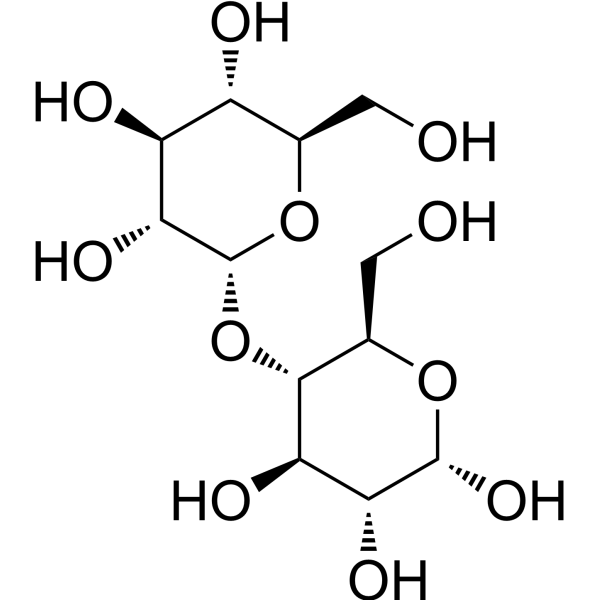
    Maltose is a disaccharide composed of two glucose molecules linked together. Maltose is an endogenous metabolic product in plants, yeast, or bacteria, and it participates in carbon source storage and metabolism. Maltose is a key core metabolite and main transport form in the temporary starch degradation, carbon output, and subsequent sucrose synthesis metabolism of the night chloroplast. In X. dendrorhous, maltose can act as a sugar donor and is converted into isomaltulose by α-glucosidase). Maltose can act as a osmotic agent, supporting continuous capillary ultrafiltration and preventing severe metabolic disorders .
    Maltose
  • HY-N0035
    Arctigenin
    10+ Cited Publications

    (-)-Arctigenin

    MMP Influenza Virus Autophagy Apoptosis Infection Neurological Disease Metabolic Disease Inflammation/Immunology Cancer
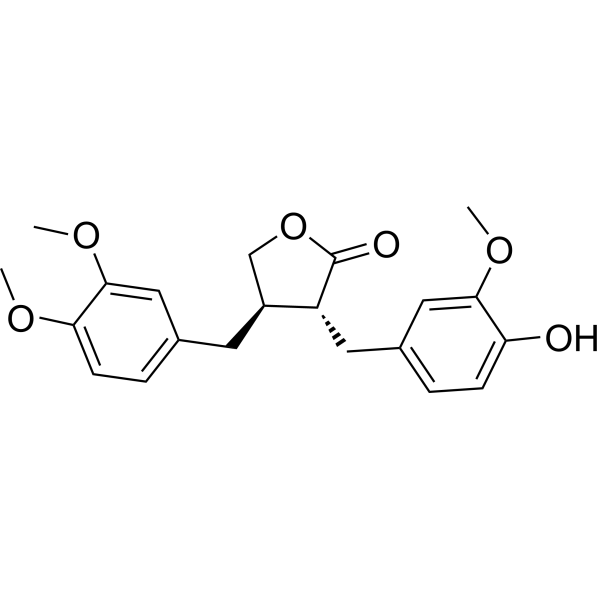
    Arctigenin ((-)-Arctigenin), a biologically active lignan, can be used as an antitumor agent. Arctigenin exhibits potent antioxidant, anti-inflammatory and antiviral (influenza A virus) activities. Arctigenin can be used for the research of metabolic disorders, and central nervous system dysfunctions .
    Arctigenin
  • HY-W013136

    UX007

    Biochemical Assay Reagents Neurological Disease
    Triheptanoin (Propane-1,2,3-triyl triheptanoate) is a synthetic medium-chain triglyceride (MCT) consisting of three odd-chain 7-carbon (heptanoate) fatty acids on a glycerol backbone. Triheptanoin can be used for the research of inherited metabolic disorders .
    Triheptanoin
  • HY-101036
    Choline bitartrate
    4 Publications Verification

    mAChR Endogenous Metabolite Neurological Disease Cancer
    Choline bitartrate is a vitamin-like essential nutrient, can affect diseases such as liver disease, atherosclerosis and neurological disorders . Choline bitartrate is a precursor for the neurotransmitter acetylcholine, as a methyl donor in various metabolic processes, and in lipid metabolism .
    Choline bitartrate
  • HY-W012734
    L-Pipecolic acid
    1 Publications Verification

    H-HoPro-OH

    Endogenous Metabolite Metabolic Disease
    L-Pipecolic acid (H-HoPro-OH) is an oral active metabolite of Lysine and can accumulate in the bodily fluids of infants with autosomal inherited diseases, such as Zellweger syndrome and neonatal adrenal insufficiency. L-Pipecolic acid can promote muscle cell health and growth by enhancing protein synthesis, and plays a role in promoting gut health. L-Pipecolic acid holds promise for research in the fields of metabolic disorders, muscle growth disorders, and intestinal diseases .
    L-Pipecolic acid
  • HY-N2024A
    Maltose monohydrate
    1 Publications Verification

    Endogenous Metabolite Glycosidase Metabolic Disease
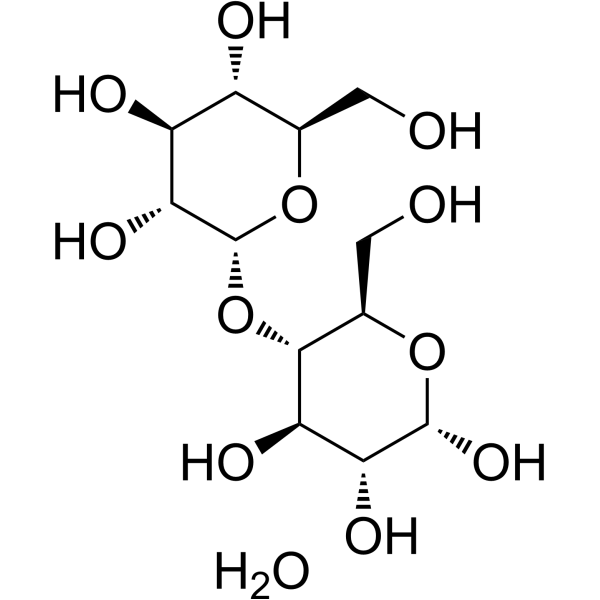
    Maltose monohydrate is a disaccharide composed of two glucose molecules linked together. Maltose monohydrate is an endogenous metabolic product in plants, yeast, or bacteria, and it participates in carbon source storage and metabolism. Maltose monohydrate is a key core metabolite and main transport form in the temporary starch degradation, carbon output, and subsequent sucrose synthesis metabolism of the night chloroplast. In X. dendrorhous, maltose can act as a sugar donor and is converted into isomaltulose by α-glucosidase. Maltose monohydrate can act as a osmotic agent, supporting continuous capillary ultrafiltration and preventing severe metabolic disorders .
    Maltose monohydrate
  • HY-113013

    β-Hydroxypyruvic acid; 3-Hydroxypyruvic acid

    Endogenous Metabolite Metabolic Disease
    Hydroxypyruvic acid (β-Hydroxypyruvic acid) is an intermediate in the metabolism of glycine, serine and threonine. Hydroxypyruvic acid is a substrate for serine-pyruvate aminotransferase and glyoxylate reductase/hydroxypyruvate reductase. Hydroxypyruvic acid is involved in the metabolic disorder which is the dimethylglycine dehydrogenase deficiency pathway.
    Hydroxypyruvic acid
  • HY-117516

    REV-ERB Neurological Disease Metabolic Disease
    SR10067 is a potent, selective and brain penetrant REV-ERB agonist. SR10067 has high affinity for Rev-Erbβ and Rev-Erbα with IC50 values of 160 nM and 170 nM, respectively. SR10067 can be used for the research of metabolic diseases and neuropsychiatric disorders .
    SR10067
  • HY-W250122
    Glutamic acid sodium salt
    1 Publications Verification

    Monosodium glutamate

    Biochemical Assay Reagents Reactive Oxygen Species (ROS) Mitochondrial Metabolism Apoptosis HSP Bcl-2 Family Neurological Disease Metabolic Disease Inflammation/Immunology
    Glutamic acid sodium salt (Monosodium glutamate) is an orally active food flavor enhancer. Glutamic acid sodium salt causes ROS generation, mitochondrial dysfunction, and Apoptosis. Glutamic acid sodium salt upregulates CHOP, Grp78, and Bcl-2. Glutamic acid sodium salt impairs cognition, induces depressive-like behavior, induces hyperalgesia, and induces obesity and insulin resistance. Glutamic acid sodium salt can be used to study neurotoxicity (e.g., brain damage, cognitive impairment), metabolic disorders (e.g., obesity, insulin resistance), hepatotoxicity, and renal toxicity, as well as pain-related disorders .
    Glutamic acid sodium salt
  • HY-A0213A
    Tiludronate disodium
    1 Publications Verification

    Tiludronic acid disodium

    Proton Pump Inflammation/Immunology
    Tiludronate (Tiludronic Acid) disodium, an orally active bisphosphonate, can act an osteoregulator. Tiludronate is used for the research of the metabolic bone disorders. Tiludronate is a potent inhibitor of the osteoclast vacuolar H(+)-ATPase. Antiresorptive and anti-inflammatory properties .
    Tiludronate disodium
  • HY-156968

    GLP Receptor Metabolic Disease
    GLP-1 receptor agonist 14 (compound 474) is a potent agonist of glucagon-like peptide-1 (GLP-1). GLP-1 receptor agonist 14 plays an important role in diabetes or other metabolic disorders .
    GLP-1 receptor agonist 14
  • HY-115688
    TXNIP-IN-1
    4 Publications Verification

    Arrestin Cardiovascular Disease Metabolic Disease Inflammation/Immunology
    TXNIP-IN-1 is TXNIP-TRX (thioredoxin-interacting protein- thioredoxin) complex inhibitor extracted from patent US20200085800A1, Compound 1. TXNIP-IN-1 can be used in the research of TXNIP-TRX complex associated metabolic disorder (diabetes), cardiovascular disease, or inflammatory disease .
    TXNIP-IN-1
  • HY-148815

    NAMPT Metabolic Disease
    Nampt activator-1 is a nicotinamide phosphoribosyltransferase (NAMPT) activator, with an EC50 of 3.3~3.7 μM. Nampt activator-1 enhances the enzymatic activity of NAMPT. Nampt activator-1 can be used for research related to metabolic disorders .
    Nampt activator-1
  • HY-132924

    Acyltransferase Metabolic Disease Inflammation/Immunology
    BMS-963272 is an orally active and selective MGAT2 inhibitor (IC50 = 7.1 nM), used for the study of metabolic disorders and inflammatory diseases .
    BMS-963272
  • HY-100318

    MCHR1 (GPR24) Metabolic Disease
    MCHR1 antagonist 5 (Compound 80) is a melanin-concentrating hormone receptor 1 (MCHR1) antagonist. MCHR1 antagonist 5 can be uesd for the study of a variety of metabolic, feeding and sexual disorders .
    MCHR1 antagonist 5
  • HY-U00461

    Ketohexokinase inhibitor 1

    Ketohexokinase Metabolic Disease
    PF-06835919 (Ketohexokinase inhibitor 1) is an inhibitor of ketohexokinase (KHK), with IC50s of 8.4 nM and 66 nM for KHK-C and KHK-A, respectively. PF-06835919 can be used for the study of metabolic disorders driven by the overconsumption of Fructose (HY-N0395) .
    PF-06835919
  • HY-153476

    GCGR GLP Receptor Inflammation/Immunology
    GIP/GLP-1 dual receptor agonist-1 is a GIP/GLP-1 dual receptor agonist. GIP/GLP-1 dual receptor agonist-1 is used in the research of metabolic disorders and fatty liver diseases, including non-alcoholic steatohepatitis (NASH) and non-alcoholic fatty liver disease (NAFLD) .
    GIP/GLP-1 dual receptor agonist-1
  • HY-103462

    FAAH Cardiovascular Disease Metabolic Disease Inflammation/Immunology Cancer
    TC-F2 is a reversible non-covalent binding inhibitor of fatty acid amide hydrolase (FAAH) with an IC50 of 28 nM. FAAH is involved in many human diseases, particularly cancer, pain and inflammation as well as neurological, metabolic and cardiovascular disorders .
    TC-F2
  • HY-161316

    Amine N-methyltransferase Neurological Disease Metabolic Disease Cancer
    NNMT-IN-5 (Compound 3-12) is a potent nicotinamide N-methyltransferase (NNMT) inhibitor (IC50 = 47.9 ± 0.6 nM). NNMT-IN-5 also has an excellent selectivity profile over a panel of human methyltransferases. NNMT-IN-5 can be used for the research of cancer, diabetes, metabolic disorders, and neurodegenerative diseases .
    NNMT-IN-5
  • HY-101036R

    Reference Standards mAChR Endogenous Metabolite Neurological Disease Cancer
    Choline (bitartrate) (Standard) is the analytical standard of Choline (bitartrate). This product is intended for research and analytical applications. Choline bitartrate is a vitamin-like essential nutrient, can affect diseases such as liver disease, atherosclerosis and neurological disorders . Choline bitartrate is a precursor for the neurotransmitter acetylcholine, as a methyl donor in various metabolic processes, and in lipid metabolism .
    Choline bitartrate (Standard)
  • HY-W012734R

    H-HoPro-OH (Standard)

    Reference Standards Endogenous Metabolite Metabolic Disease
    L-Pipecolic acid (Standard) is an analytical standard of L-Pipecolic acid. This product is used for research and analytical applications. L-Pipecolic acid (H-HoPro-OH) is an oral active metabolite of Lysine and can accumulate in the bodily fluids of infants with autosomal inherited diseases, such as Zellweger syndrome and neonatal adrenal insufficiency. L-Pipecolic acid can promote muscle cell health and growth by enhancing protein synthesis, and plays a role in promoting gut health. L-Pipecolic acid holds promise for research in the fields of metabolic disorders, muscle growth disorders, and intestinal diseases .
    L-Pipecolic acid (Standard)
  • HY-124822
    COH-SR4
    2 Publications Verification

    AMPK Metabolic Disease Cancer
    COH-SR4 is an AMPK activator. COH-SR4 shows potent anti-proliferative activities against leukemia, melanoma, breast and lung cancers. COH-SR4 inhibits adipocyte differentiation via AMPK activation. COH-SR4 can be used for the research of obesity and related metabolic disorders .
    COH-SR4
  • HY-175763

    RGS Protein Neurological Disease Metabolic Disease
    Z55660043 is a Regulator of G protein signaling-14 (RGS14) inhibitor with an IC50 of 2.3  μM. Z55660043 selectively and non-covalently inhibits RGS14 GTPase-accelerating protein (GAP) activity without measurable cytotoxicity. Z55660043 can be used for central nervous system and metabolic disorders research .
    Z55660043
  • HY-N2024AS

    Isotope-Labeled Compounds Endogenous Metabolite Glycosidase Metabolic Disease
    Maltose monohydrate-d14 is the deuterium labeled Maltose monohydrate. Maltose monohydrate is a disaccharide composed of two glucose molecules linked together. Maltose monohydrate is an endogenous metabolic product in plants, yeast, or bacteria, and it participates in carbon source storage and metabolism. Maltose monohydrate is a key core metabolite and main transport form in the temporary starch degradation, carbon output, and subsequent sucrose synthesis metabolism of the night chloroplast. In X. dendrorhous, maltose can act as a sugar donor and is converted into isomaltulose by α-glucosidase. Maltose monohydrate can act as a osmotic agent, supporting continuous capillary ultrafiltration and preventing severe metabolic disorders.
    Maltose monohydrate-d14
  • HY-12813

    Phosphodiesterase (PDE) Neurological Disease
    PDE10-IN-1 is a potent PDE10-IN-1 inhibitor extracted from Patent WO 2013192273 A1, for treating CNS and metabolic disorders.
    PDE10-IN-1
  • HY-14753

    Cannabinoid Receptor Cardiovascular Disease Metabolic Disease
    Rosonabant is a selective antagonist for cannabinoid receptor (CB1 receptor), which reduces body weight and improves improves the risk of obesity-related cardiovascular metabolic diseases. Rosonabant exhibits adverse side effect, such as nausea and mental disorder .
    Rosonabant
  • HY-A0213

    Tiludronic acid

    Proton Pump Inflammation/Immunology
    Tiludronate (Tiludronic Acid), an orally active bisphosphonate, can act an osteoregulator. Tiludronate is used for the research of the metabolic bone disorders. Tiludronate is a potent inhibitor of the osteoclast vacuolar H(+)-ATPase. Antiresorptive and anti-inflammatory properties .
    Tiludronate
  • HY-N11785

    Estrogen Receptor/ERR Metabolic Disease Cancer
    Glyceollin I is a selective estrogen receptor (ER) modulator with anticancer, antioxidant, and anti-inflammatory activities. Glyceollin I is promising for research of estrogen-related cancers (e.g., breast, ovarian) and metabolic disorders (e.g., hypercholesterolemia) .
    Glyceollin I
  • HY-112528

    GP-NPEA

    Endogenous Metabolite Metabolic Disease
    Glycerophospho-N-palmitoyl ethanolamine (GP-NPEA) is a metabolic precursor of palmitoyl ethanolamide PEA (HY-157829). Glycerophospho-N-palmitoyl ethanolamine decreases in the cortex of CUMS rats, which may be related to a disorder in the endocannabinoid system arising after the onset of depression .
    Glycerophospho-N-palmitoyl ethanolamine
  • HY-115688A
    (S)-TXNIP-IN-1
    1 Publications Verification

    Arrestin Cardiovascular Disease Others
    (S)-TXNIP-IN-1 is the less active S-enantiomer of TXNIP-IN-1 (HY-115688). TXNIP-IN-1 is a TXNIP-TRX complex inhibitor which can be used in the research of TXNIP-TRX complex associated metabolic disorder (diabetes), cardiovascular disease, or inflammatory disease
    (S)-TXNIP-IN-1
  • HY-P10910

    GLP Receptor Metabolic Disease
    Vensemaglutide is the agonist for glucagon-like peptide 1 (GLP-1) receptor. Vensemaglutide can be used in research of diabetes or other metabolic disorders .
    Vensemaglutide
  • HY-12606

    Cannabinoid Receptor Metabolic Disease
    BMS-812204 is a highly selective CB-1 receptor antagonist. BMS-812204 is promising for research of obesity and metabolic disorders .
    BMS-812204
  • HY-113288

    LDLR Metabolic Disease
    Campestanol is a phytosterol that can be found in plant food. Campestanol lowers serum cholesterol and low-density lipoprotein. Campestanol can be used for the research of metabolic disorders .
    Campestanol
  • HY-P2781

    Phosphodiesterase (PDE) Cardiovascular Disease Neurological Disease Inflammation/Immunology
    3′,5′-Cyclic nucleotide phosphodiesterase is a hydrolytic enzyme that degrades cyclic 3', 5' -adenosine monophosphate (cyclic AMP). 3′,5′-Cyclic nucleotide phosphodiesterase is promising for research of cardiovascular diseases, inflammation, central nervous system disorders, and metabolic syndrome .
    3′,5′-Cyclic nucleotide phosphodiesterase
  • HY-N13366

    Drug Metabolite Metabolic Disease
    3-Methylcrotonyl CoA is a key metabolic intermediate in the leucine degradation pathway, converted to 3-Methylglutaconyl CoA by 3-Methylcrotonyl CoA Carboxylase. Normally, 3-Methylglutaconyl CoA is catalyzed by 3-Methylglutaconyl-CoA Hydratase into 3-Hydroxy-3-methylglutaryl-CoA (HMG CoA). However, mutations in 3-Methylglutaconyl-CoA Hydratase lead to the accumulation of 3-Methylglutaconyl CoA, causing metabolic disorders associated with 3MGA-uria. 3-Methylcrotonyl CoA is useful for research into metabolic diseases related to the leucine degradation pathway .
    3-Methylcrotonyl CoA
  • HY-N8466

    Reactive Oxygen Species (ROS) Metabolic Disease
    (-)-Lyoniresinol 9'-O-glucoside is an inhibitor of ROS. (-)-Lyoniresinol 9'-O-glucoside reduces lipid accumulation and lipid metabolic disorders in FFAs-exposed HepG2 cells. (-)-Lyoniresinol 9'-O-glucoside inhibits high glucose-induced reactive oxygen species production .
    (-)-Lyoniresinol 9'-O-glucoside
  • HY-147049

    Epoxide Hydrolase Metabolic Disease
    PAL-4 (compound 4) is a potent, selective and reversible Lysophospholipase-like 1 (LYPLAL1) activator with EC50 value of 0.39 μM and 0.49 μM for mice LYPLAL1 and huamn LYPLAL1, respectively. PAL-4 can be used for researching metabolic disorders .
    PAL-4
  • HY-A0213AS

    Tiludronic acid-d5 sodium

    Isotope-Labeled Compounds Proton Pump Inflammation/Immunology
    Tiludronate-d5 (sodium)mis the deuterium labeled Tiludronate disodium. Tiludronate (Tiludronic Acid) disodium, an orally active bisphosphonate, can act an osteoregulator. Tiludronate is used for the research of the metabolic bone disorders. Tiludronate is a potent inhibitor of the osteoclast vacuolar H(+)-ATPase. Antiresorptive and anti-inflammatory properties .
    Tiludronate-d5 sodium
  • HY-N0035R

    (-)-Arctigenin (Standard)

    Reference Standards MMP Influenza Virus Autophagy Apoptosis Infection Neurological Disease Metabolic Disease Inflammation/Immunology Cancer
    Arctigenin (Standard) is the analytical standard of Arctigenin. This product is intended for research and analytical applications. Arctigenin ((-)-Arctigenin), a biologically active lignan, can be used as an antitumor agent. Arctigenin exhibits potent antioxidant, anti-inflammatory and antiviral (influenza A virus) activities. Arctigenin can be used for the research of metabolic disorders, and central nervous system dysfunctions .
    Arctigenin (Standard)
  • HY-168859

    JNK GSK-3 Amyloid-β Neurological Disease
    JNK3 inhibitor-9 (Compound 24a) is a potent, selective and BBB-permeable JNK3 inhibitor with an IC50 value of 12 nM. JNK3 inhibitor-9 also potently inhibits GSK3α/β (IC50s: 14 and 35 nM, respectively) involved in Tau phosphorylation. JNK3 inhibitor-9 reduces c-Jun and APP phosphorylation. JNK3 inhibitor-9 protects neurons from 1-42 toxicity .
    JNK3 inhibitor-9
  • HY-U00397

    Cannabinoid Receptor Cardiovascular Disease Neurological Disease Metabolic Disease Inflammation/Immunology
    CB1 antagonist 1 is an antagonist of CB1 receptor, used in the research of metabolic syndrome and obesity, neuroinflammatory disorders, cognitive disorders and psychosis, gastrointestinal disorders, and cardiovascular conditions.
    CB1 antagonist 1
  • HY-N9275

    Others Metabolic Disease Inflammation/Immunology
    Isopicropodophyllin is a natural compound that can be used for metabolic or chronic inflammatory disorder research .
    Isopicropodophyllin
  • HY-156527

    HIF/HIF Prolyl-Hydroxylase Cancer
    PHD-IN-2 (Compound 91) is a PHD antagonist (IC50: < 5 nM). PHD-IN-2 induces erythropoietin synthesis in HEP3B cells (EC50: <2.5 μM). PHD-IN-2 can be used for research of cardiovascular disorders, metabolic disorders, hematological disorders, pulmonary disorders, kidney disorders, liver disorders, wound healing disorders, and cancer .
    PHD-IN-2
  • HY-153759

    PPAR Metabolic Disease
    CRX000227 is a PPAR modulator. CRX000227 can be used for research of metabolic or cell proliferative disorders .
    CRX000227
  • HY-111195

    Cannabinoid Receptor Metabolic Disease
    Giminabant is a cannabinoid receptor antagonist for veterinary use. Giminabant can be used for the research of metabolic diseases and addiction-related disorders .
    Giminabant
  • HY-172610

    Ketohexokinase Metabolic Disease
    KHK-IN-7 (compound 2) is a ketohexokinase (KHK) inhibitor. KHK-IN-7 can be used for study of metabolic disorders .
    KHK-IN-7
  • HY-111327

    Glycosidase Metabolic Disease
    Valibose is analpha-glucosidaseinhibitor, and ameliorates the metabolic disorder of glucose and lipids and the nephropathy in Streptozotocin (HY-13753)-induced diabetic rats .
    Valibose

Inquiry Online

Your information is safe with us. * Required Fields.

Salutation


Country or Region *

Applicant Name *


Organization Name *

Department *


Email Address *


Product Name *

Cat. No.


Requested quantity *

Phone Number *


Remarks

Inquiry Online

Inquiry Information

Product Name:
Cat. No.:
Quantity:
MCE Japan Authorized Agent:

