65 Results for "

MicroRNA

" in MedChemExpress (MCE) Product Catalog:
Products (65)

65 Results for "MicroRNA" in MCE Product Catalog:

360
360 Publications Verification
Cat. No.: HY-14648R
CAS No.: 50-02-2
Synonyms: Hexadecadrol(Standard); Prednisolone F (Standard)
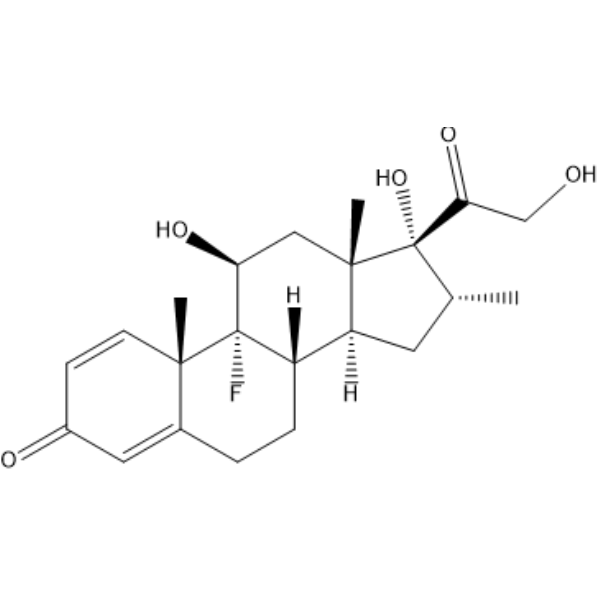
Dexamethasone (Standard) is the analytical standard of Dexamethasone. This product is intended for research and analytical applications. Dexamethasone (Hexadecadrol) is a glucocorticoid receptor agonist. Dexamethasone also significantly decreases CD11b, CD18, and CD62L expression on neutrophils, and CD11b and CD18 expression on monocytes. Dexamethasone is highly effective in the control of COVID-19 infection. Dexamethasone inhibits production of exosomes containing inflammatory microRNA-155 in lipopolysaccharide-induced macrophage inflammatory responses.
68
68 Cited Publications
Cat. No.: HY-16560
CAS No.: 7689-03-4
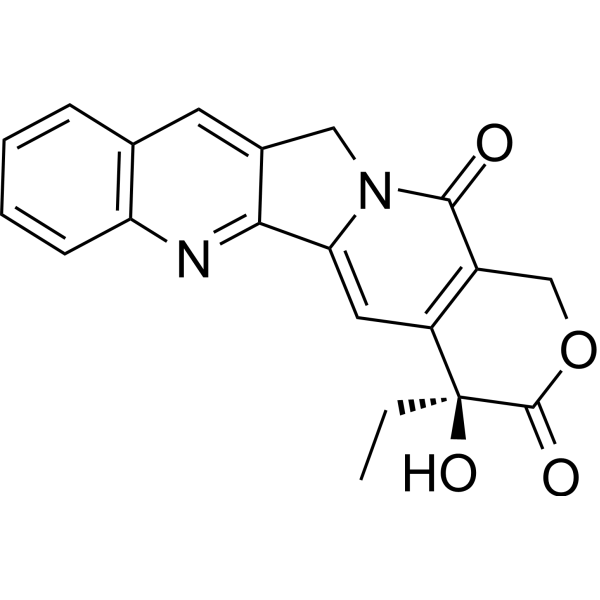
Synonyms: Campathecin; (S)-(+)-Camptothecin; CPT
Camptothecin (CPT), a kind of alkaloid, is a DNA topoisomerase I (Topo I) inhibitor with an IC50 of 679 nM . Camptothecin (CPT) exhibits powerful antineoplastic activity against colorectal, breast, lung and ovarian cancers, modulates hypoxia-inducible factor-1α (HIF-1α) activity by changing microRNAs (miRNA) expression patterns in human cancer cells .
22
22 Cited Publications
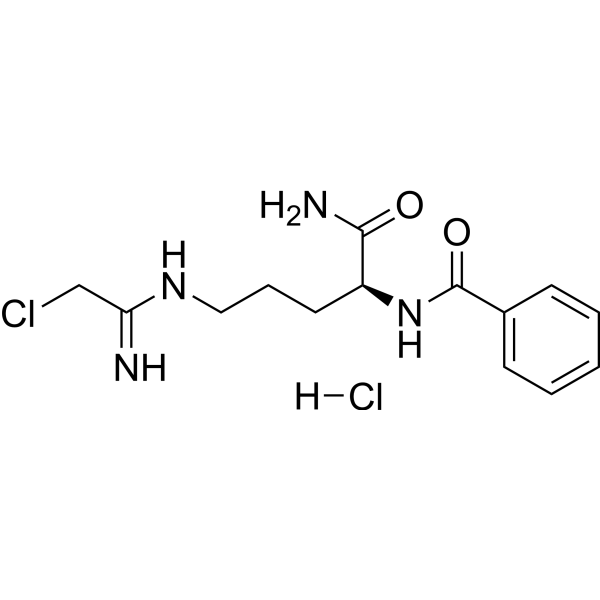
Cat. No.: HY-100574A
CAS No.: 1373232-26-8
Purity:  99.82%
Cl-amidine hydrochloride is an orally active peptidylarginine deminase (PAD) inhibitor, with IC50 values of 0.8 μM, 6.2 μM and 5.9 μM for PAD1, PAD3, and PAD4, respectively. Cl-amidine hydrochloride induces apoptosis in cancer cells. Cl-amidine hydrochloride induces microRNA (miR)-16 (miRNA-16, microRNA-16) expression and causes cell cycle arrest. Cl-Amidine hydrochloride prevents histone 3 citrullination and neutrophil extracellular trap formation, and improves survival in a murine sepsis model .
22
22 Cited Publications
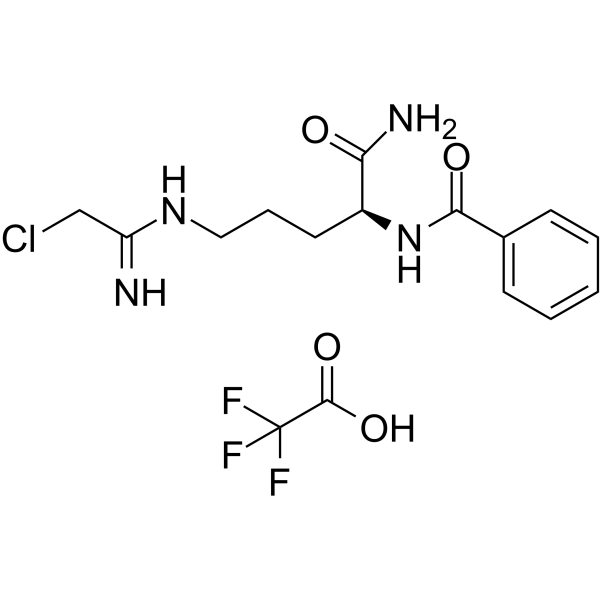
Cat. No.: HY-100574B
CAS No.: 1043444-18-3
Cl-amidine TFA is an orally active peptidylarginine deminase (PAD) inhibitor, with IC50 values of 0.8 μM, 6.2 μM and 5.9 μM for PAD1, PAD3, and PAD4, respectively. Cl-amidine TFA induces apoptosis in cancer cells. Cl-amidine TFA induces microRNA (miR)-16 (miRNA-16, microRNA-16) expression and causes cell cycle arrest. Cl-Amidine TFA prevents histone 3 citrullination and neutrophil extracellular trap formation, and improves survival in a murine sepsis model .
16
16 Cited Publications
Cat. No.: HY-R04602
Target:  

MicroRNA

Research Areas:  

Cancer

MicroRNA Mimic Negative Control is a miRNA mimic of 21-nucleotides, and can be used as a negative control. The sequence of MicroRNA Mimic Negative Control is derived from cel-mir-239b. It has minimal sequence identity with miRNAs in human, mouse, and rat.
11
11 Cited Publications
Cat. No.: HY-RI04602
Target:  

MicroRNA

Research Areas:  

Others

MicroRNA Inhibitor Negative Control is a full-length nucleotide 2'-methoxy modified oligonucleotide, and can be used as a negative control. The sequence of MicroRNA Inhibitor Negative Control is derived from cel-mir-239b. It has minimal sequence identity with miRNAs in human, mouse, and rat.
7
7 Cited Publications
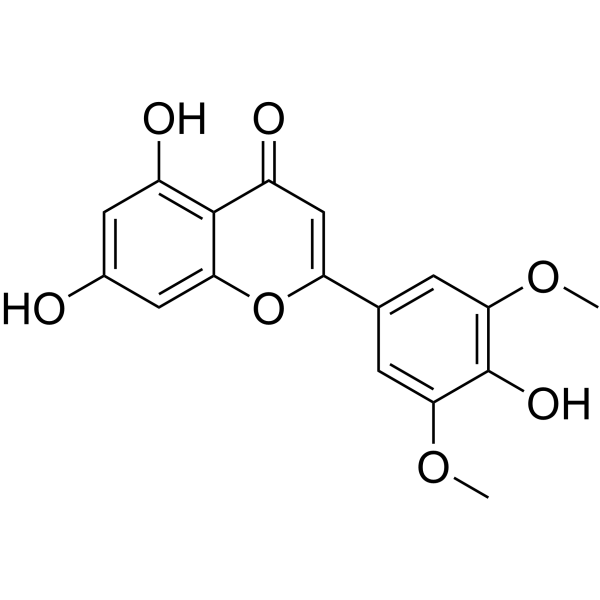
Cat. No.: HY-N1127
CAS No.: 520-32-1
Tricin is a natural flavonoid found in large amounts in wheat. Tricin inhibits HCMV replication by inhibiting CDK9. Tricin inhibits the proliferation and invasion of C6 glioma cells by upregulating the expression of FAK-targeting microRNA-7 .
5
5 Cited Publications
Cat. No.: HY-50751
CAS No.: 796967-16-3
Synonyms: ABT-869; AL-39324
Research Areas:  

Cancer

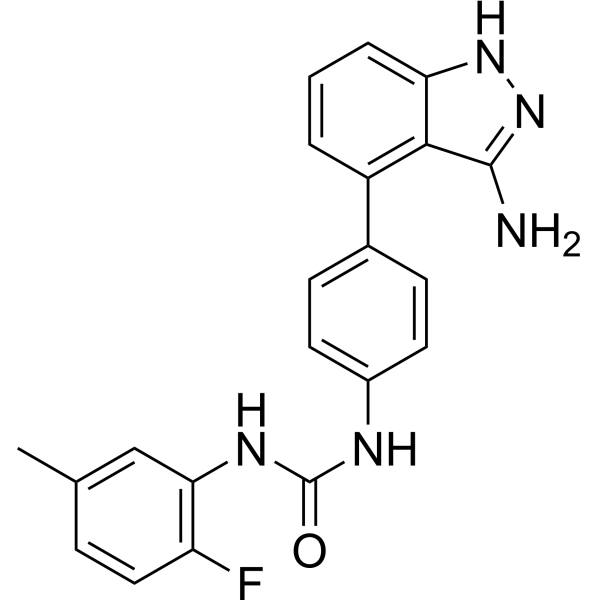
Linifanib (ABT-869) is a potent and orally active multi-target inhibitor of VEGFR and PDGFR family with IC50s of 4, 3, 66, and 4 nM for KDR, FLT1, PDGFRβ, and FLT3, respectively. Linifanib shows prominent antitumor activity. Linifanib has much less activity against unrelated RTKs, soluble tyrosine kinases, or serine/threonine kinases. Linifanib is a specific miR-10b inhibitor that blocks miR-10b biogenesis .
3
3 Cited Publications
Cat. No.: HY-RI04602A
Target:  

MicroRNA

Research Areas:  

Others

MicroRNA Antagomir Negative Control is a chemically-modified oligonucleotide (2 phosphorothioates at the 5' end, 4 phosphorothioates at the 3' end, 1 cholesterol group at the 3' end, and full-length nucleotide 2'-methoxy modification), and can be used as a negative control. The sequence of MicroRNA Antagomir Negative Control is derived from cel-mir-239b. It has minimal sequence identity with miRNAs in human, mouse, and rat.
2
2 Cited Publications
Cat. No.: HY-139290
CAS No.: 2229964-07-0
Purity:  99.06%
Synonyms: RG4326
Target:  

MicroRNA

Research Areas:  

Metabolic Disease Cancer

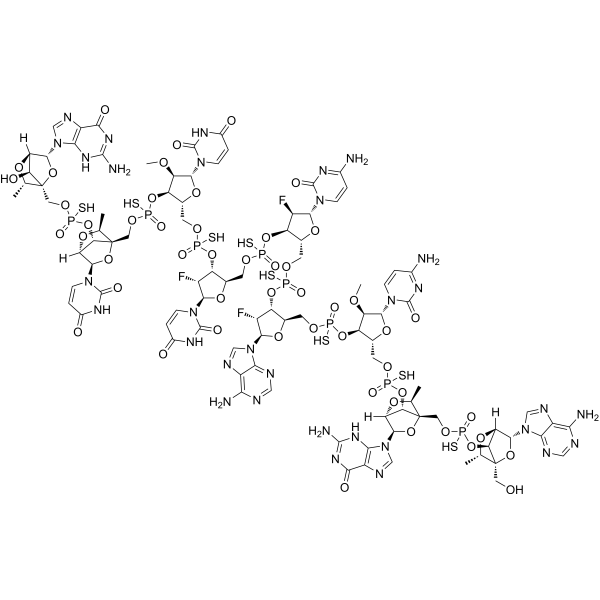
RGLS4326 (RG4326) is a first-in-class, short oligonucleotide inhibitor of microRNA-17 (miR-17). RGLS4326 can be used for the research of autosomal dominant polycystic kidney disease (ADPKD). RGLS4326 inhibits miR-17 function in HeLa cells with an EC50 value of 28.3 nM .
2
2 Cited Publications
Cat. No.: HY-131445
CAS No.: 1276664-20-0
Purity:  99.93%
Target:  

MicroRNA

Research Areas:  

Endocrinology Cancer

RJW100 is a potent liver receptor homolog 1 (LRH-1, NR5A2) and steroidogenic factor-1 (SF-1, NR5A1) agonist with pEC50s of 6.6 and 7.5, respectively . RJW100 also causes strong activation of the miR-200c (miRNA-200c, microRNA-200c) promoter .
2
2 Cited Publications
Cat. No.: HY-B0268
CAS No.: 74011-58-8
Synonyms: AT 2266; CI 919
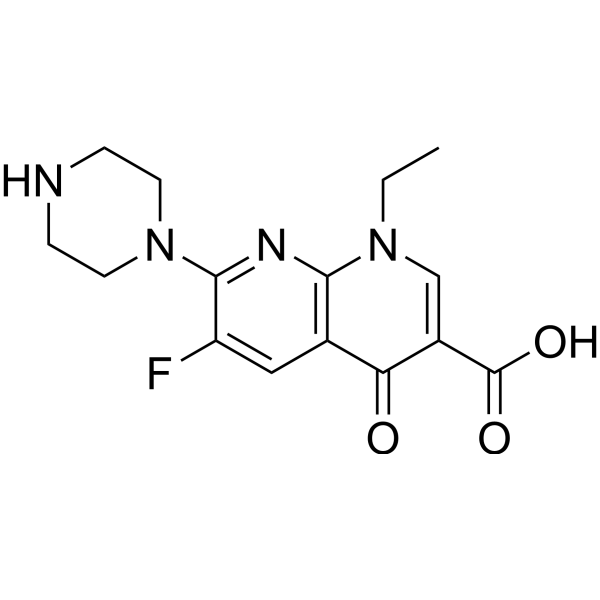
Enoxacin (AT 2266), a fluoroquinolone, interferes with DNA replication and inhibits bacterial DNA gyrase (IC50=126 µg/ml) and topoisomerase IV (IC50=26.5 µg/ml). Enoxacin is a miRNA processing activator and enhances siRNA-mediated mRNA degradation and promotes the biogenesis of endogenous miRNAs. Enoxacin has potent activities against gram-positive and -negative bacteria. Enoxacin is a cancer-specific growth inhibitor that acts by enhancing TAR RNA-binding protein 2 (TRBP)-mediated microRNA processing .
2
2 Cited Publications
Cat. No.: HY-B0268A
CAS No.: 84294-96-2
Synonyms: Enoxacin sesquihydrate; AT-2266 hydrate; CI-919 hydrate
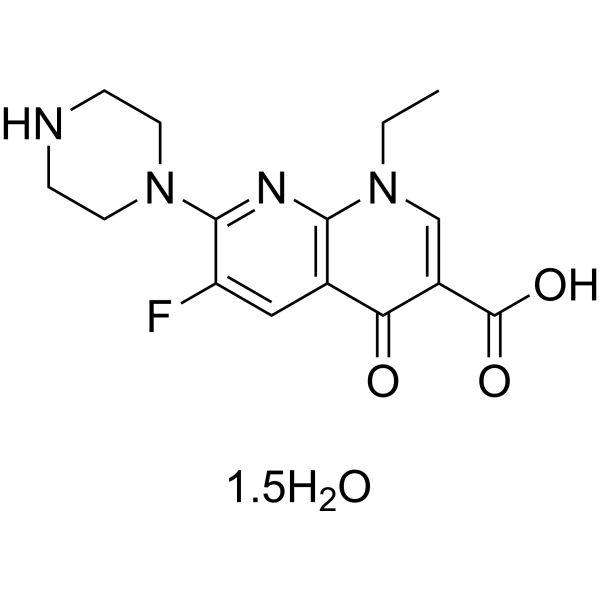
Enoxacin hydrate (Enoxacin sesquihydrate), a fluoroquinolone, interferes with DNA replication and inhibits bacterial DNA gyrase (IC50=126 µg/ml) and topoisomerase IV (IC50=26.5 µg/ml). Enoxacin hydrate is a miRNA processing activator and enhances siRNA-mediated mRNA degradation and promotes the biogenesis of endogenous miRNAs. Enoxacin hydrate has potent activities against gram-positive and -negative bacteria. Enoxacin hydrate is a cancer-specific growth inhibitor that acts by enhancing TAR RNA-binding protein 2 (TRBP)-mediated microRNA processing .
2
2 Cited Publications
Cat. No.: HY-139290A
Purity:  99.06%
Synonyms: RG4326 sodium
Target:  

MicroRNA

Research Areas:  

Cancer

RGLS4326 sodium is a first-in-class, short oligonucleotide inhibitor of microRNA-17 (miR-17). RGLS4326 sodium can be used for the research of autosomal dominant polycystic kidney disease (ADPKD). RGLS4326 sodium inhibits miR-17 function in HeLa cells with an EC50 value of 28.3 nM .
2
2 Cited Publications
Cat. No.: HY-K0512

MCE microRNA RT Master Mix for qPCR Ⅲ (poly A) uses poly(A)-tailing method to perform reverse transcription from miRNA first-strand to cDNA.

1
1 Cited Publications
Cat. No.: HY-139200
CAS No.: 104872-42-6
Purity:  ≥98.0%
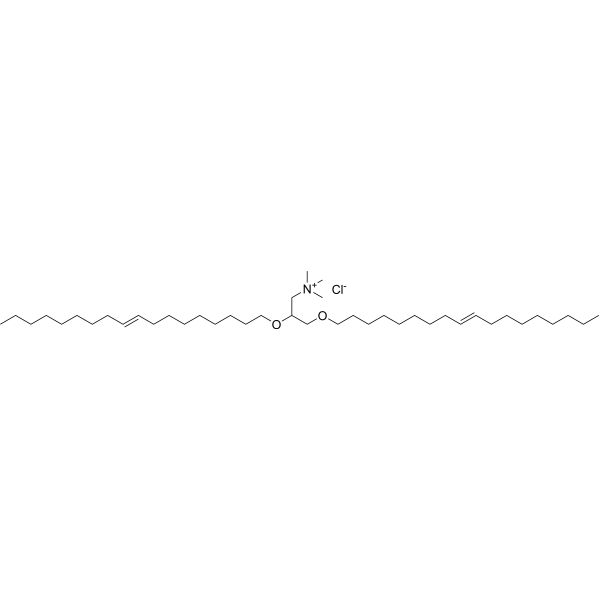
DOTMA is a cationic lipid that has been used as a non-viral vector for gene therapy. DOTMA is used as a component of liposomes to encapsulate siRNA, microRNA, and oligonucleotides and for in vitro gene transfection. DOTMA promotes effective interaction between liposomes and cell membranes by inducing positive charge on the liposomes. DOTMA showed good gene transfection effect both in vitro and in vivo .
1
1 Cited Publications
Cat. No.: HY-151516
CAS No.: 303018-40-8
Purity:  ≥98.0%
Target:  

MicroRNA

Research Areas:  

Cancer

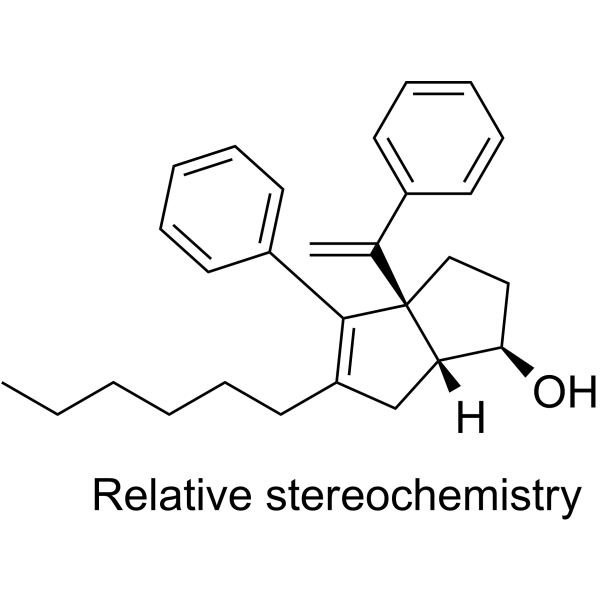
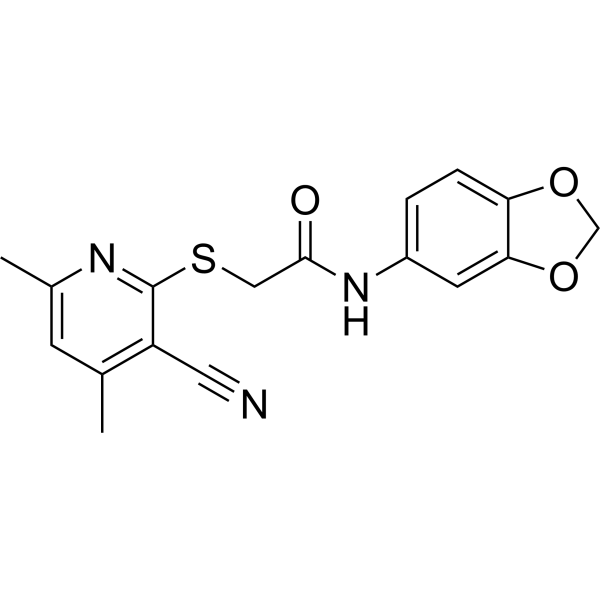
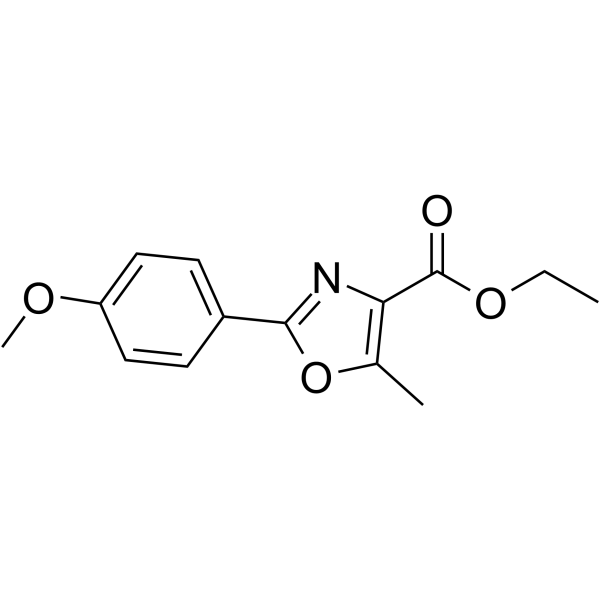
microRNA-21-IN-2 is a potential miR-21 inhibitor with an AC50 value of 3.29 μM. microRNA-21-IN-2 can be used for the research of cancer .
1
1 Cited Publications
Cat. No.: HY-N0686
CAS No.: 102115-79-7
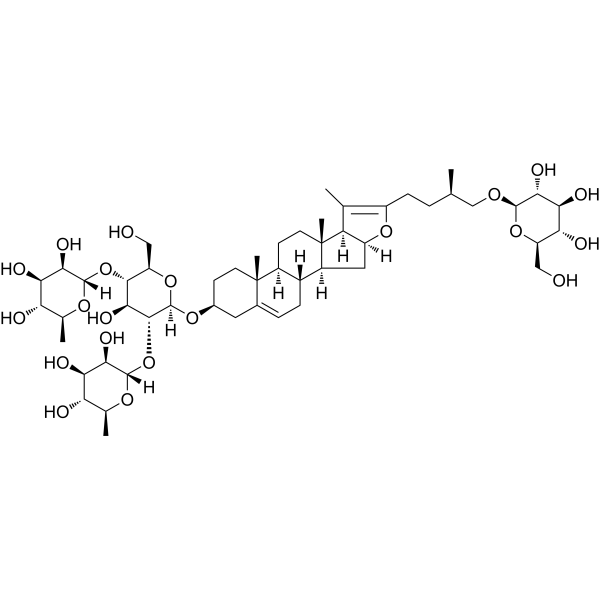
Pseudoprotodioscin, a furostanoside, inhibits SREBP1/2 and microRNA 33a/b levels and reduces the gene expression regarding the synthesis of cholesterol and triglycerides .
1
1 Cited Publications
Cat. No.: HY-R04602A
Target:  

MicroRNA

Research Areas:  

Others

MicroRNA Agomir Negative Control is a chemically-modified double-strand miRNA mimic, and can be used as a negative control. The sequence of MicroRNA Agomir Negative Control is derived from cel-mir-239b. It has minimal sequence identity with miRNAs in human, mouse, and rat.
1
1 Cited Publications
Cat. No.: HY-147918
CAS No.: 124811-87-6
Purity:  99.92%
Target:  

DNA/RNA Synthesis

Research Areas:  

Cancer

Anticancer agent 73 (compound CIB-3b) is a anticancer agent, potently targeting TAR RNA-binding protein 2 (TRBP) and disrupts its interaction with Dicer. Anticancer agent 73 can rebalance the expression profile of oncogenic or tumor-suppressive miRNAs. Anticancer agent 73 suppresses the proliferation and metastasis of HCC in vitro and in vivo .

