1. Search Result
Search Result
Results for "

NMDA receptor antagonist

" in MedChemExpress (MCE) Product Catalog:

226

Inhibitors & Agonists

1

Bibliotecas de Screening

4

Peptides

28

Natural
Products

18

Isotope-Labeled Compounds

Cat. No. Nombre del producto Target Áreas de investigación Chemical Structure
  • HY-100714A
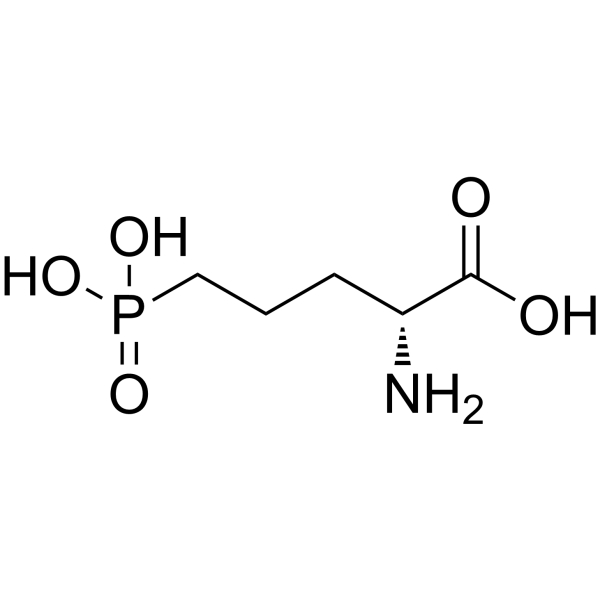
    D-AP5
    25+ Cited Publications

    D-APV; D-2-Amino-5-phosphonovaleric acid

    iGluR Neurological Disease
    D-AP5 (D-APV) is a selective and competitive NMDA receptor antagonist with a Kd of 1.4 μM. D-AP5 (D-APV) inhibits the glutamate binding site of NMDA receptors .
    D-AP5
  • HY-15084
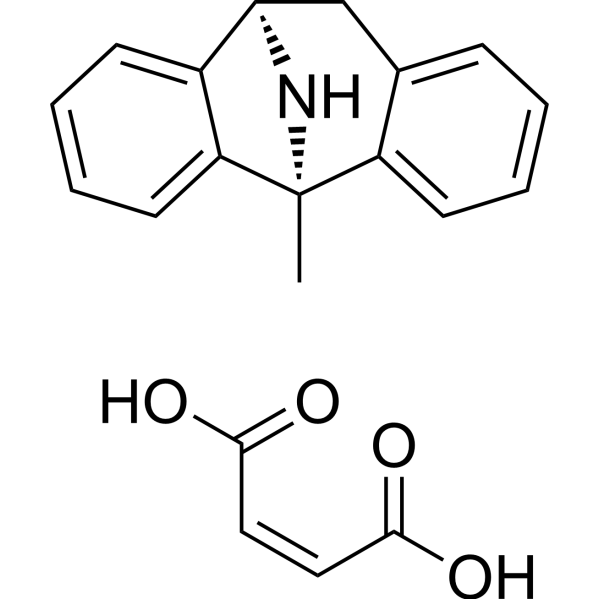
    Dizocilpine maleate
    Maximum Cited Publications
    44 Publications Verification

    (+)-MK 801 Maleate

    iGluR Neurological Disease
    Dizocilpine maleate (MK-801 maleate) is a potent, selective and non-competitive NMDA receptor antagonist with Kd of 37.2 nM in rat brain membranes.
    Dizocilpine maleate
  • HY-15084B
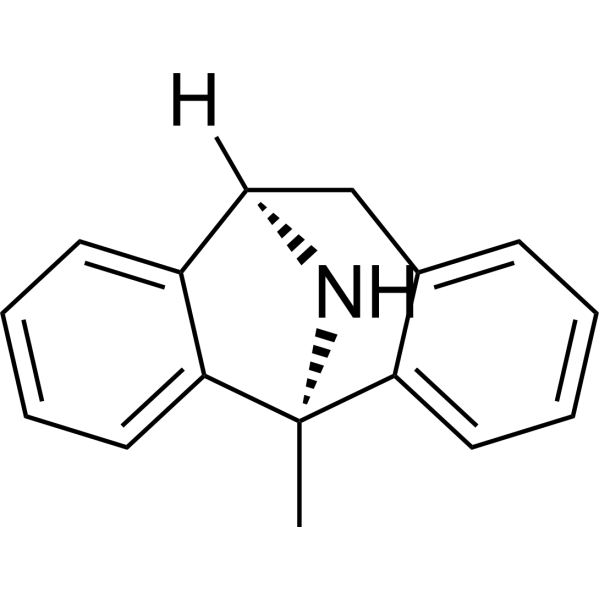
    Dizocilpine
    Maximum Cited Publications
    44 Publications Verification

    MK-801

    iGluR Neurological Disease
    Dizocilpine (MK-801), a potent anticonvulsant, is a selective and non-competitive NMDA receptor antagonist, with a Kd of 37.2 nM in rat brain membranes. Dizocilpine acts by binding to a site located within the NMDA associated ion channel and thus prevents Ca 2+ flux .
    Dizocilpine
  • HY-15066
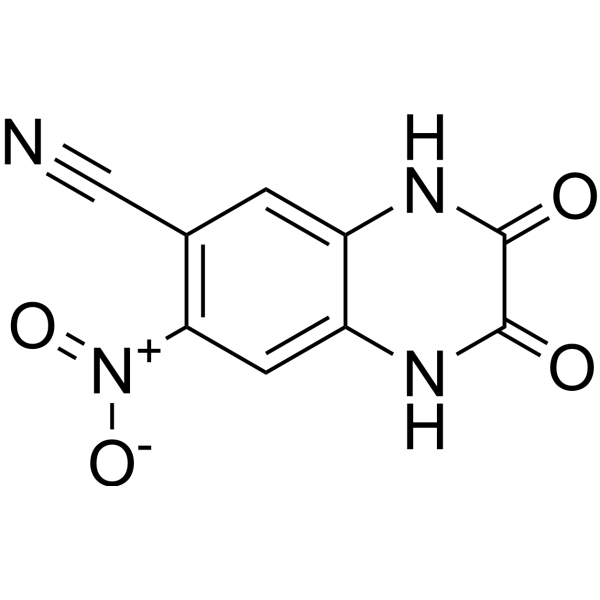
    CNQX
    15+ Cited Publications

    FG9065

    iGluR Neurological Disease
    CNQX (FG9065) is a potent and competitive AMPA/kainate receptor antagonist with IC50s of 0.3 μM and 1.5 μM, respectively. CNQX is a competitive non-NMDA receptor antagonist . CNQX blocks the expression of fear-potentiated startle in rats .
    CNQX
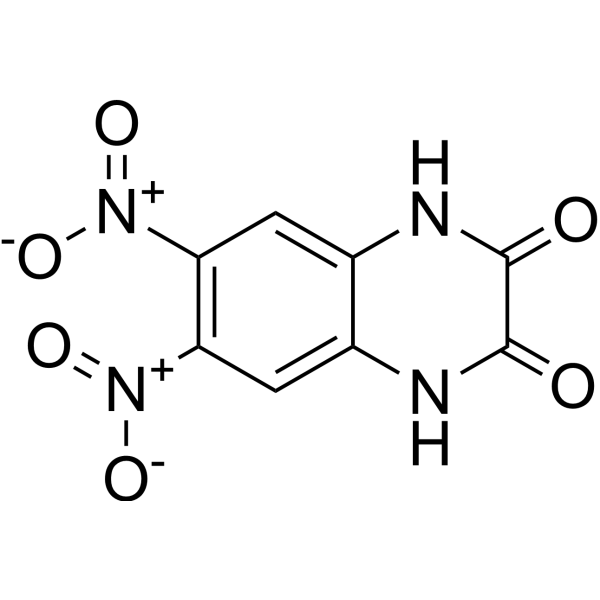
  • HY-15067
    DNQX
    10+ Cited Publications

    FG 9041

    iGluR Cancer
    DNQX (FG 9041), a quinoxaline derivative, is a selective, potent competitive non-NMDA glutamate receptor antagonist (IC50s = 0.5, 2 and 40 μM for AMPA, kainate and NMDA receptors, respectively) .
    DNQX
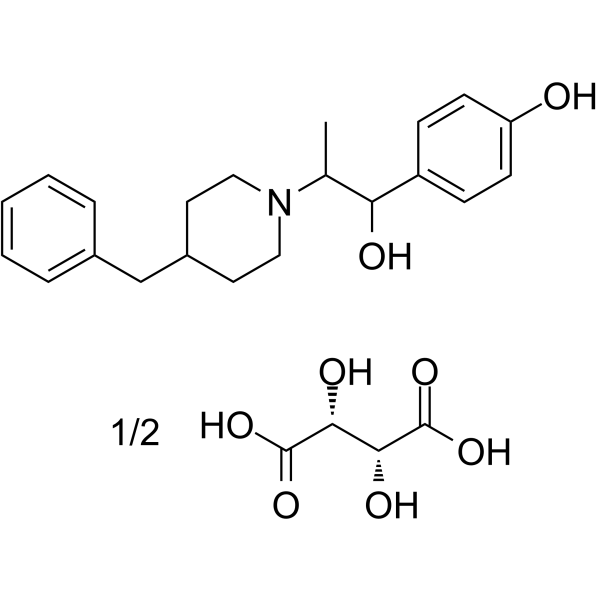
  • HY-12882A
    Ifenprodil tartrate
    Maximum Cited Publications
    10 Publications Verification

    NP-120 tartrate; RC-61-91 tartrate

    iGluR Adrenergic Receptor Potassium Channel Calcium Channel Influenza Virus Infection Neurological Disease
    Ifenprodil (NP-120) tartrate, a cerebral vasodilator, is a noncompetitive NMDA receptor antagonist. Ifenprodil tartrate exerts high affinity at NR1A/NR2B receptors (IC50=0.34 μM) over 400-fold than at NR1A/NR2A receptors (IC50=146 μM) . Ifenprodil tartrate is an α1 adrenergic receptor antagonist. Ifenprodil tartrate inhibits GIRK (Kir3), reduces inward currents through the basal GIRK activity. Ifenprodil tartrate has reliable inhibitory effects against A/H1N1 strains (EC50 of 6.6 µM). Ifenprodil tartrate has neuroprotective, anticonvulsant and antinociceptive effects. Ifenprodil tartrate can be used for the study of cerebrovascular diseases and peripheral arterial obliterative disease .
    Ifenprodil tartrate
  • HY-15066A
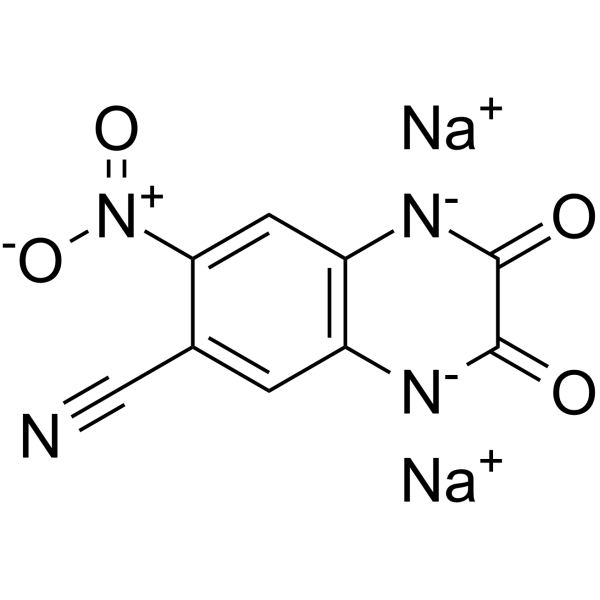
    CNQX disodium
    15+ Cited Publications

    FG9065 disodium

    iGluR Neurological Disease
    CNQX disodium (FG9065 disodium) is a potent and competitive AMPA/kainate receptor antagonist with IC50s of 0.3 μM and 1.5 μM, respectively. CNQX disodium is a competitive non-NMDA receptor antagonist . CNQX disodium blocks the expression of fear-potentiated startle in rats .
    CNQX disodium
  • HY-15085

    iGluR Neurological Disease
    MDL 105519 is a potent and selective antagonist of glycine binding to the NMDA receptor.
    MDL 105519
  • HY-B1270

    Adrenergic Receptor iGluR Neurological Disease Endocrinology
    Isoxsuprine hydrochloride is a beta-adrenergic receptor agonist with Kis of 13.65 μΜ and 3.48 μΜ for myometrial and placcntal beta-adrenergic receptor, respectively. Isoxsuprine hydrochloride is also a NMDA receptor antagonist.
    Isoxsuprine hydrochloride
  • HY-B1487

    Tricyclamol hydrochloride; (±)-Procyclidine hydrochloride

    iGluR mAChR Neurological Disease
    Procyclidine (Tricyclamol, (±)-Procyclidine) hydrochloride , an anticholinergic agent, is a muscarinic receptor antagonist that also has the properties of an N-methyl-D-aspartate (NMDA) antagonist. Procyclidine hydrochloride can be used in studies of Parkinson's disease and related psychiatric disorders such as Soman-induced epilepsy .
    Procyclidine hydrochloride
  • HY-13457
    TCN 201
    1 Publications Verification

    iGluR Neurological Disease
    TCN 201 is a potent, selective and non-competitive antagonist of GluN1/GluN2A NMDA receptor, with a pIC50 of 6.8. TCN 201 is selective for GluN1/GluN2A NMDA receptor over GluN1/GluN2B NMDA receptor (pIC50<4.3) .
    TCN 201
  • HY-18698

    iGluR Neurological Disease
    L-701324 is a potent, orally active NMDA receptor antagonist that antagonizes the activity of the NMDA receptor by blocking its glycine B binding site. L-701324 binds with high affinity to rat brain membranes (IC50=2 nM). L-701324 has antidepressant activity .
    L-701324
  • HY-16312
    MDL-29951
    5 Publications Verification

    iGluR Neurological Disease
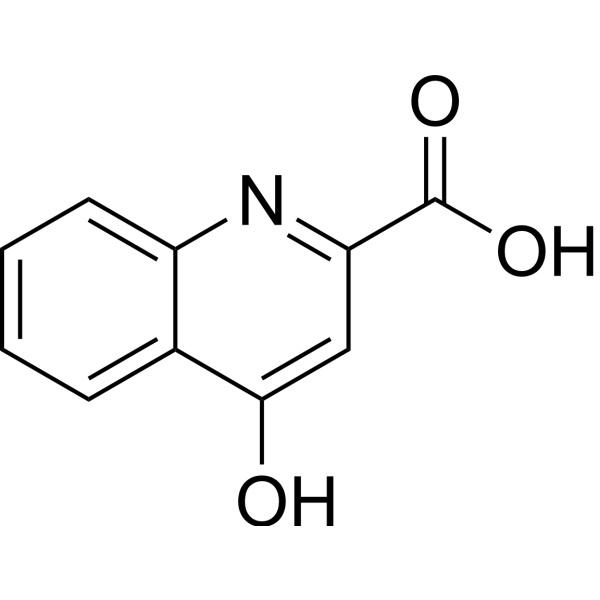
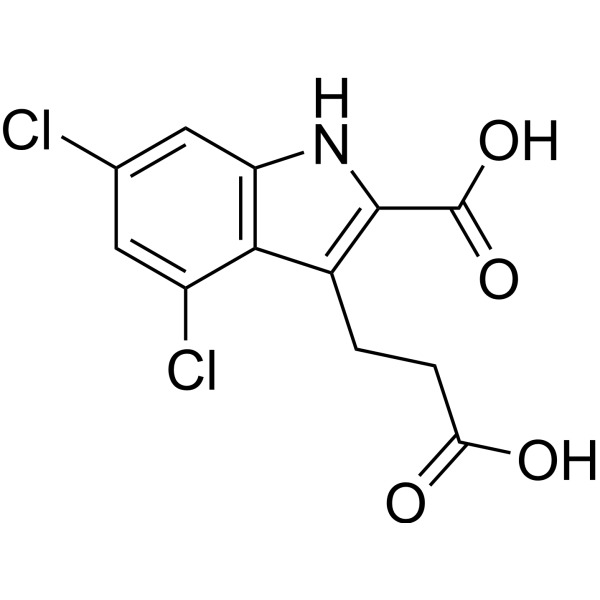
    MDL-29951 is a novel glycine antagonist of NMDA receptor activation, with Ki of 0.14 μM for [ 3H]glycine binding in vitro and in vivo.
    MDL-29951
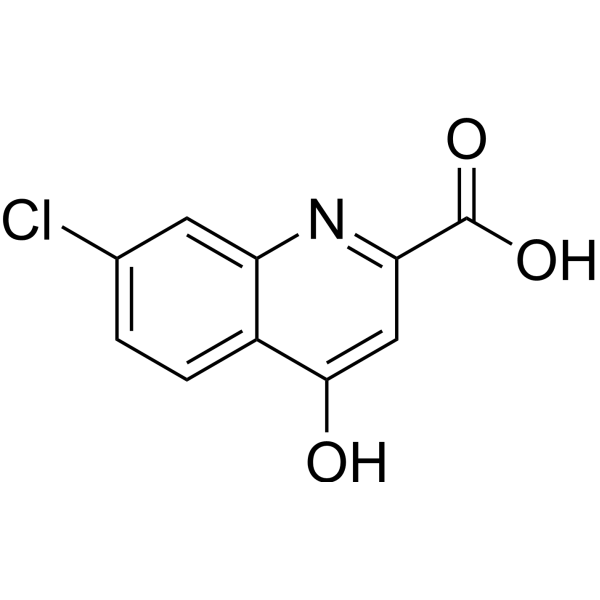
  • HY-I0096

    iGluR HIV HIV Integrase Neurological Disease
    Indole-2-carboxylic acid (I2CA) is a competitive antagonist of the glycine site of the NMDA receptor (Ki=15 μM, 5-fluoro-I2CA) and an inhibitor of HIV-1 integrase. Indole-2-carboxylic acid is selective for the glycine site of the NMDA receptor and blocks the enhancement of NMDA receptor by competitively inhibiting the binding of glycine to the NMDA receptor. Indole-2-carboxylic acid can also inhibit the strand transfer activity of HIV-1 integrase by chelating Mg 2+ at the active site of integrase and interacting with the hydrophobic cavity. Indole-2-carboxylic acid can be used in the study of neurological diseases (such as stroke, epilepsy) and HIV-1 infection .
    Indole-2-carboxylic acid
  • HY-12882
    Ifenprodil
    5+ Cited Publications

    NP-120; RC-61-91

    iGluR Adrenergic Receptor Potassium Channel Calcium Channel Influenza Virus Infection Neurological Disease
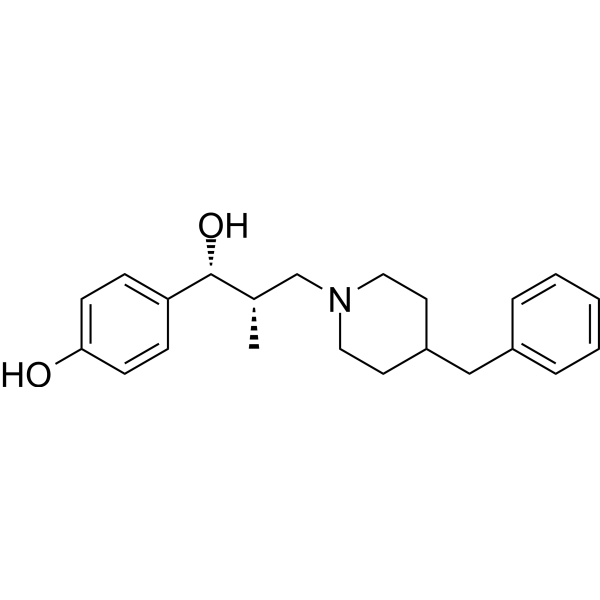
    Ifenprodil (NP-120), a cerebral vasodilator, is a noncompetitive NMDA receptor antagonist. Ifenprodil exerts high affinity at NR1A/NR2B receptors (IC50=0.34 μM) over 400-fold than at NR1A/NR2A receptors (IC50=146 μM) . Ifenprodil is an α1 adrenergic receptor antagonist. Ifenprodil inhibits GIRK (Kir3), reduces inward currents through the basal GIRK activity. Ifenprodil has reliable inhibitory effects against A/H1N1 strains (EC50 of 6.6 µM). Ifenprodil has neuroprotective, anticonvulsant and antinociceptive effects. Ifenprodil can be used for the study of cerebrovascular diseases and peripheral arterial obliterative disease .
    Ifenprodil
  • HY-100814
    (R)-CPP
    1 Publications Verification

    iGluR Neurological Disease
    (R)-CPP is a highly potent NMDA receptor antagonist .
    (R)-CPP
  • HY-101178

    iGluR Neurological Disease
    L-689560 is a potent N-methyl-D-aspartate (NMDA) receptor antagonist at the GluN1 glycine binding site. L-689560 is widely used as a radiolabeled ligand in binding studies and used for study the roles of NMDA receptors in normal neurological processes as well as in diseases .
    L-689560
  • HY-110097

    CNS 1102

    iGluR Neurological Disease
    Aptiganel hydrochloride (Cerestat) is a non-competitive NMDA receptor antagonist with neuroprotective effect.
    Aptiganel hydrochloride
  • HY-153129

    Prostaglandin Receptor Endocrinology
    EP2 receptor antagonist-2 (CID891729) is an antagonist of EP2 receptor. EP2 receptor antagonist-2 inhibits the EP2 receptor activation induced by PGE2. EP2 receptor antagonist-2 also suppresses lactate dehydrogenase (LDH) release induced by N-methyl-D-aspartate (NMDA) .
    EP2 receptor antagonist-2
  • HY-16502
    Crocetin disodium
    3 Publications Verification

    Transcrocetin disodium; trans-Crocetin disodium

    iGluR Cancer
    Crocetin (Transcrocetin) disodium, extracted from saffron (Crocus sativus L.), acts as an NMDA receptor antagonist with high affinity.
    Crocetin disodium
  • HY-13059

    iGluR Neurological Disease
    SDZ 220-581 is an orally active, potent, competitive NMDA receptor antagonist with pKi value of 7.7 .
    SDZ 220-581
  • HY-124463

    5α,3β-THDOC

    GABA Receptor iGluR Neurological Disease
    Epiallopregnanolone (5α,3β-THDOC), a 3β-hydroxy neurosteroid, an antagonist at GABAA receptors and a NMDA receptor enhancer .
    Epiallopregnanolone
  • HY-12881

    SL-820715

    iGluR Neurological Disease
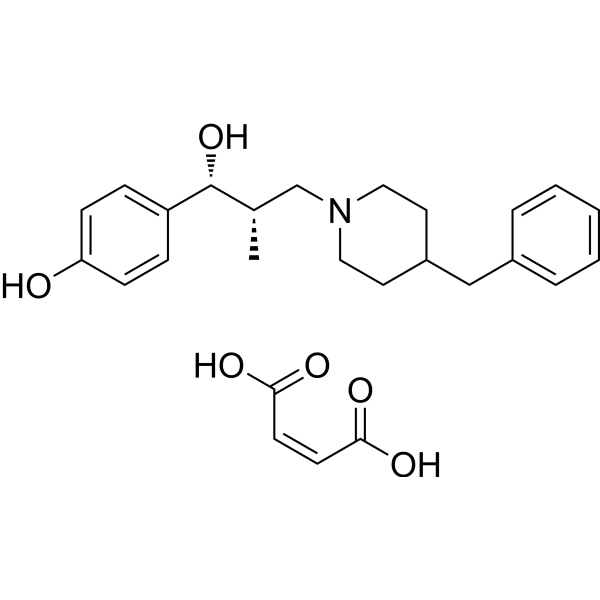
    Eliprodil(SL-820715) is a non-competitive NR2B-NMDA receptor antagonist(IC50=1 uM), less potent for NR2A- and NR2C-containing receptors(IC50> 100 uM).
    Eliprodil
  • HY-W008038

    iGluR Others
    NMDAR antagonist 3 (Compound 2) is an antagonist of the NMDA receptor. NMDAR antagonist 3 has a certain but weak inhibitory activity against the NR1A/2B subtype of the NMDA receptor .
    NMDAR antagonist 3
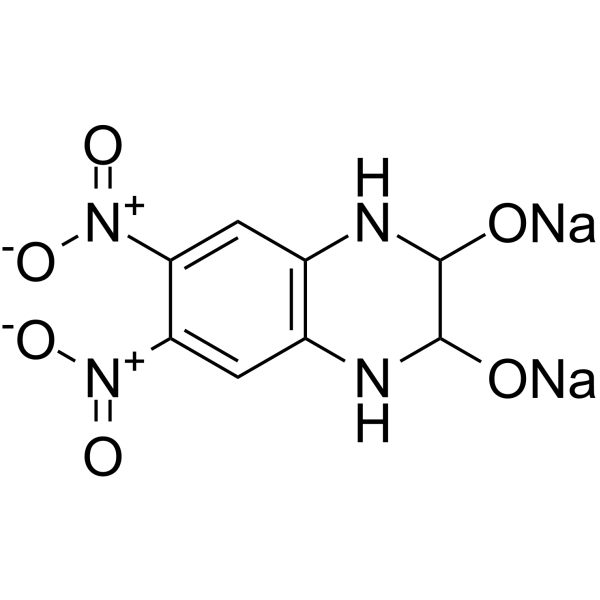
  • HY-103233
    DNQX disodium salt
    10+ Cited Publications

    FG 9041 disodium salt

    iGluR Cancer
    DNQX (FG 9041) disodium salt, a quinoxaline derivative, is a selective, potent competitive non-NMDA glutamate receptor antagonist (IC50s = 0.5, 2 and 40 μM for AMPA, kainate and NMDA receptors, respectively) .
    DNQX disodium salt
  • HY-107700

    GV 150526A

    iGluR Cardiovascular Disease
    Gavestinel (GV 150526A) is a potent, selective, orally active and non-competitive antagonist of NMDA receptor. Gavestinel binds to the glycine site of the NMDA receptor, with a pKi of 8.5. Gavestinel can be used for the research of acute ischemic stroke .
    Gavestinel sodium salt
  • HY-101620
    MRZ 2-514
    1 Publications Verification

    iGluR Neurological Disease
    MRZ 2-514 is an antagonist of the strychnine-insensitive modulatory site of the NMDA receptor (glycineB), with Ki of 33 μM.
    MRZ 2-514
  • HY-107706

    PD 174494 hydrochloride

    iGluR Neurological Disease
    Co 101244 (PD 174494) hydrochloride is a NR2B-containing NMDA receptor antagonist .
    Co 101244 hydrochloride
  • HY-150138

    GV 150526

    iGluR Neurological Disease
    Gavestinel (GV 150526) is a selective and potent the glycine site of the NMDA receptor antagonist. Gavestinel has neuroprotectant effects .
    Gavestinel
  • HY-121964

    iGluR Neurological Disease
    Cis-piperidine-2,3-dicarboxylic acid is a non-specific antagonist of NMDA, AMPA and kainate ionotropic receptors and a partial agonist for NMDA receptors. Cis-piperidine-2,3-dicarboxylic acid can be used in blocking general excitatory synaptic transmissions .
    cis-Piperidine-2,3-dicarboxylic acid
  • HY-15086

    CGS 19755

    iGluR Neurological Disease
    Selfotel (CGS 19755) is a selective and competitive antagonist at N-methyl-D-aspartate (NMDA)-preferring receptor. CGS 19755 inhibits the binding of [3H]-3-(2-carboxypiperazin-4-yl)propyl-1-phosphonic acid to NMDA-type receptors with an IC50 of 50 nM .
    Selfotel
  • HY-42937
    Crocetin meglumine
    3 Publications Verification

    Transcrocetin meglumine; trans-Crocetin meglumine

    iGluR Cancer
    Crocetin (Transcrocetin) meglumine, extracted from saffron (Crocus sativus L.), acts as an NMDA receptor antagonist with high affinity.
    Crocetin meglumine
  • HY-107713

    iGluR Neurological Disease
    PPDA is a subtype-selective NMDA receptor antagonist that preferentially binds to NR2C/NR2D containing receptors .
    PPDA
  • HY-101809A

    iGluR Cardiovascular Disease
    CNS-5161 is a novel NMDA ion-channel antagonist that interacts with the NMDA receptor/ion channel site to produce a noncompetitive blockade of the actions of glutamate.
    CNS 5161
  • HY-N12180A

    Opioid Receptor Bacterial Fungal Infection Neurological Disease
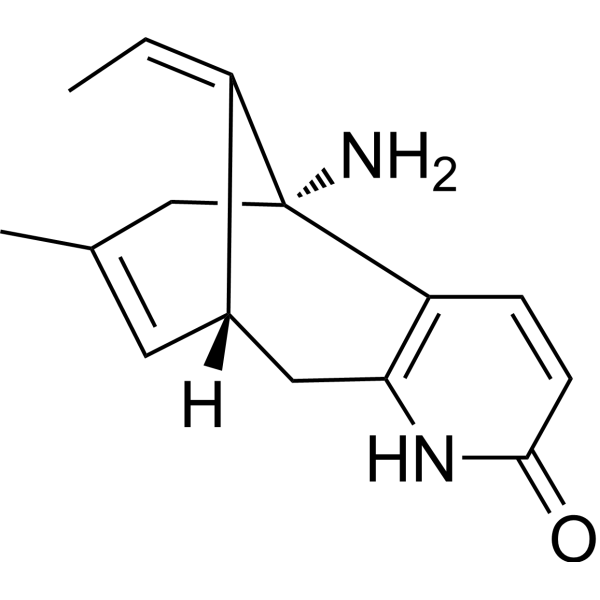
    Hodgkinsine is an opioid receptor agonist and NMDA receptor antagonist, which has analgesic and anti-injurial effects. In addition, Hodgkinsine has antiviral, antibacterial and antifungal activities .
    Hodgkinsine
  • HY-15436

    iGluR Neurological Disease
    L-687414 is an orally active glycine-site NMDA receptor antagonist or low-potency partial agonist. L-687414 has anticonvulsant activity .
    L-687414
  • HY-106969A

    Glycine Receptor (GlyR) iGluR Cardiovascular Disease Neurological Disease
    ZD 9379 sodium is a competitive glycine/NMDA receptor antagonist, with an IC50 value of 75 nM (glutamate site). ZD 9379 sodium selectively antagonizes the glycine binding site (GlyB site) on the NMDA receptor, inhibiting the binding of glycine to the NMDA receptor and alleviating excitotoxicity. ZD 9379 sodium reduces the frequency of cortical spreading depression (SDs), alleviates energy depletion in the ischemic penumbra, and delays the expansion of infarction. ZD 9379 sodium reduces the infarct volume and improves neurological function in mouse models. ZD 9379 sodium can be used in studies of acute ischemic stroke, etc .
    ZD 9379 sodium
  • HY-146101

    iGluR Neurological Disease
    NMDA receptor antagonist 5 (Compound 10e) is a potent, brain permeable and non-toxic NMDA receptor antagonist. NMDA receptor antagonist 5 can be used for neurological disorder research .
    NMDA receptor antagonist 5
  • HY-155049

    iGluR Neurological Disease
    NMDA receptor antagonist 6 (compound 13b) is an antagonist of NMDA receptor, targeting to the glycine binding site. NMDA receptor antagonist 6 shows cytoneuroprotective potency, and protects PC12 cells against NMDA-induced injury and cell apoptosis .
    NMDA receptor antagonist 6
  • HY-155185A

    iGluR Neurological Disease
    NMDA receptor antagonist 8 (Compound (R)-10a) is GluN2B subunit-selective NMDA Receptor antagonist, with an Ki of 265 nM and an IC50 of 62 nM. NMDA receptor antagonist 8 can be used for research of neurodegenerative diseases .
    NMDA receptor antagonist 8
  • HY-155185

    iGluR Neurological Disease
    NMDA receptor antagonist 7 (Compound (S)-10a) is GluN2B subunit-selective NMDA Receptor antagonist, with an Ki of 93 nM and an IC50 of 72 nM. NMDA receptor antagonist 7 can be used for research of neurodegenerative diseases .
    NMDA receptor antagonist 7
  • HY-136459

    iGluR Neurological Disease
    NMDA receptor antagonist 2 is a potent and orally active NR2B subtype-selective NMDA antagonist with an IC50 and a Ki of 1.0 nM and 0.88 nM, respectively. NMDA receptor antagonist 2 is used for the study of neuropathic pain and Parkinson’s disease .
    NMDA receptor antagonist 2
  • HY-139708

    iGluR Neurological Disease
    NMDA receptor antagonist-3, a NMDA receptor antagonist, stands out with a remarkable percentage of recovery (40.0%, at 100 μM) and safe toxicological profile in SH-SY5Y and human adipose mesenchymal stem cells.
    NMDA receptor antagonist-3
  • HY-146588

    iGluR Neurological Disease
    NMDA receptor antagonist 4 (IIc) is a uncompetitive, voltage-dependent, orally active NMDAR blocker, with an IC50 of 1.93 μM. NMDA receptor antagonist 4 shows a positive predicted blood-brain-barrier (BBB) permeability, and can be studied in Alzheimer's disease .
    NMDA receptor antagonist 4
  • HY-100920

    iGluR Neurological Disease
    Arcaine (sulfate) is a glutamate NMDA receptor inhibitor .
    Arcaine sulfate
  • HY-126123

    iGluR Potassium Channel Neurological Disease
    NR2B-selective NMDA receptor antagonist 1 (compound 29) is a potent antagonist of NR1/NR2B receptors, with IC50s of 0.05 μM, 0.73 μM, 2.4 μM to NR1/NR2B NMDA receptor, hERG, α1-AdR, respectivity. NR2B-selective NMDA receptor antagonist 1 exhibites efficient permeability across the blood–brain barrier .
    NR2B-selective NMDA receptor antagonist 1
  • HY-120386

    iGluR Neurological Disease
    LY382884 is a selective antagonist for GluR5 kainate receptor. LY382884 prevents the induction of NMDA receptor independent long-term potentiation (LTP) .
    LY382884
  • HY-107695

    FPL 12924AA

    iGluR Sodium Channel Neurological Disease
    Remacemide hydrochloride (FPL 12924AA), a moderate inhibitor of the Na + channel, is a weak uncompetitive NMDA receptor antagonist with IC50s of 68 μM and 76 μM for MK-801 binding and NMDA currents, respectively . Remacemide hydrochloride is an anticonvulsant agent .
    Remacemide hydrochloride
  • HY-W045132

    Desbutylbupivacaine

    Drug Metabolite Neurological Disease
    N-Desbutyl Bupivacaine (compound 100) is a metabolite of Bupivacaine (HY-B0405), an NMDA receptor inhibitor and SCN5A antagonist .
    N-Desbutyl Bupivacaine
  • HY-138940

    3-MEO PCE hydrochloride

    iGluR Neurological Disease
    3-Methoxy PCE (3-MEO PCE) hydrochloride is structurally classified as an arylcyclohexylamine and is an /b>NMDA receptor antagonist with a pKi value of 7.22 .
    3-Methoxy PCE hydrochloride

Consulta en línea

Your information is safe with us. * Required Fields.

Saludo


Country or Region *

Nombre del solicitante *


Nombre de la Organizaciòn *

Department *


Direcciòn del E-mail *


Nombre del producto *

Cat. No.


Requested quantity *

Número de teléfono *


Observaciones

Consulta en línea

Inquiry Information

Nombre del producto:
Cat. No.:
Cantidad:
MCE Japan Authorized Agent:

