1. Search Result
Search Result
Results for "

NPFF

" in MedChemExpress (MCE) Product Catalog:

25

Inhibitors & Agonists

15

Peptides

3

Oligonucleotides

Cat. No. Product Name Target Research Areas Chemical Structure
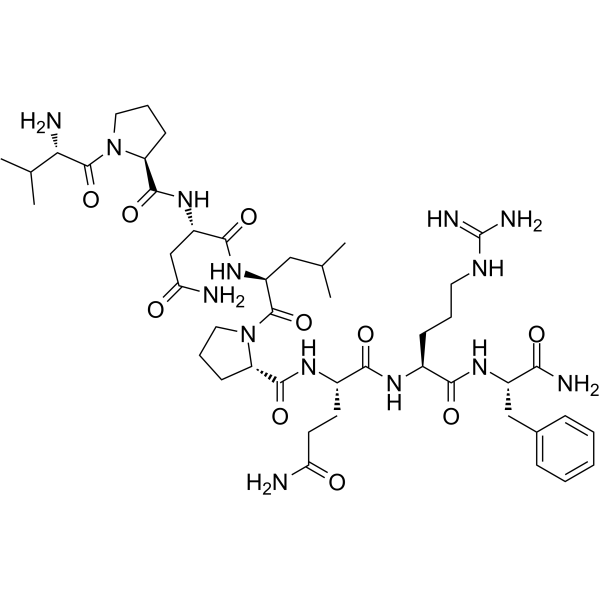
  • HY-P1248

    NPFF

    Neuropeptide FF Receptor Cardiovascular Disease Neurological Disease
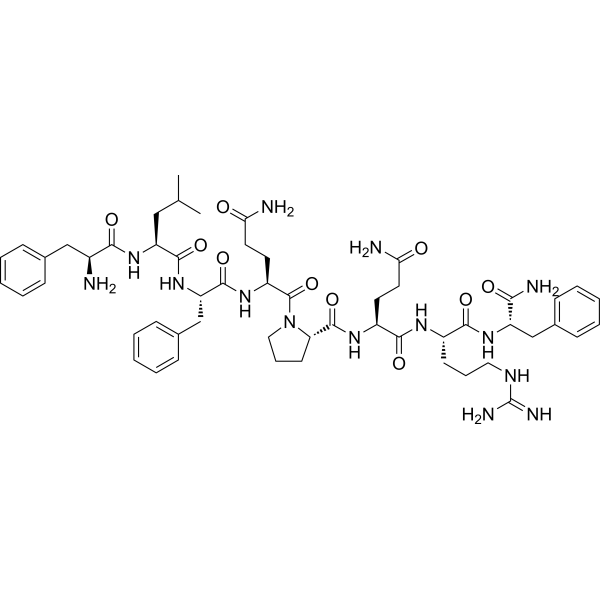
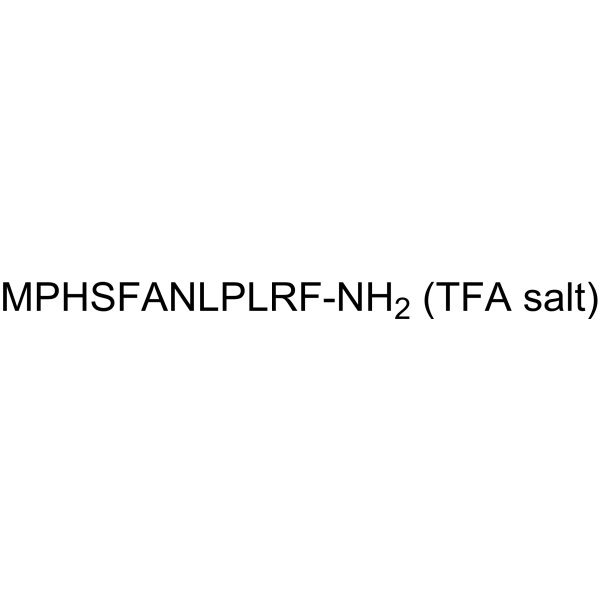
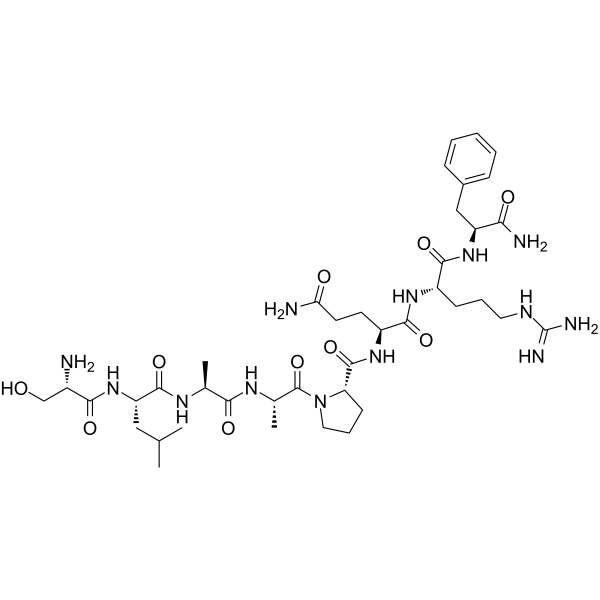
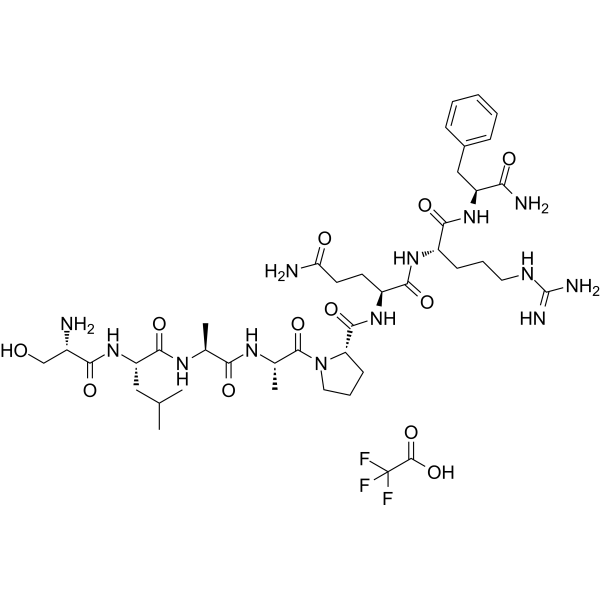
    Neuropeptide FF (NPFF), an octapeptide belonging to the RF-amide family of peptides, is a NPFF1 and NPFF2 receptors agonist with Ki values of 2.82 nM and 0.21 nM, respectively. Neuropeptide FF induces abstinence syndrome, exerts antiopioid and analgesic effects, releases via calcium-dependent mechanisms from rat spinal cord, regulates memory, autonomic function, and neuroendocrine function, modulates pain and opioid antinociception, reduces food intake, stimulates water intake, alters cardiovascular parameters, and shows differential activity in hypothalamic paraventricular nucleus neurons. Neuropeptide FF is present in mammalian central nervous system and periphery, with NPFF-immunoreactivity increases in rat cerebrospinal fluid during opiate tolerance, and its NPFF gene and NPFF-R2 gene are up-regulated in rat spinal cord and dorsal root ganglia during peripheral inflammation. Neuropeptide FF can be used for the research of opioid tolerance, morphine-induced analgesia, abstinence syndrome, pain, hypertension, nociception, inflammatory pain, and neuropathic pain .
    Neuropeptide FF
  • HY-107726
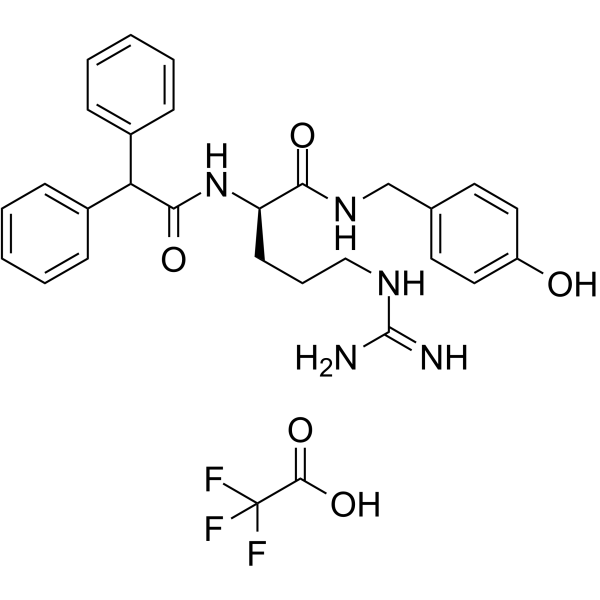
    BIBP3226 TFA
    1 Publications Verification

    Neuropeptide Y Receptor Neurological Disease
    BIBP3226 TFA is a potent and selective neuropeptide Y Y1 (NPY Y1) and neuropeptide FF (NPFF) receptor antagonist, with Kis of 1.1, 79, and 108 nM for rNPY Y1, hNPFF2, and rNPFF, respectively. BIBP3226 TFA displays anxiogenic-like effect .
    BIBP3226 TFA
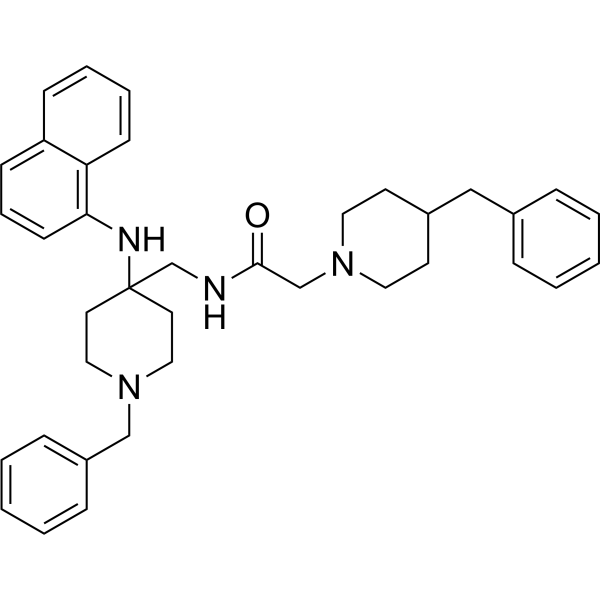
  • HY-161405

    Neuropeptide FF Receptor Opioid Receptor Neurological Disease
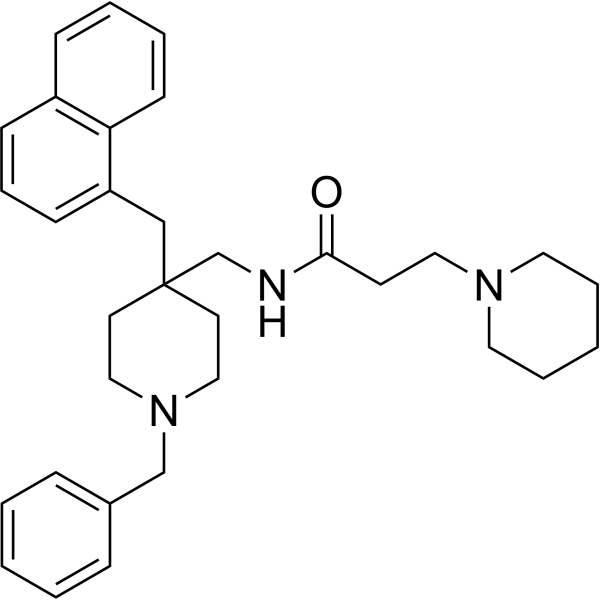
    NPFF1-R antagonist 1 (compound 8b), a piperidine analogue, is a potent neuropeptide FF (NPFF) receptor antagonist. NPFF1-R antagonist 1 is 15-fold selective for the NPFF1-R subtype, with Ki values of 211 nM and 3270 nM for NPFF1-R and NPFF2-R, respectively .
    NPFF1-R antagonist 1
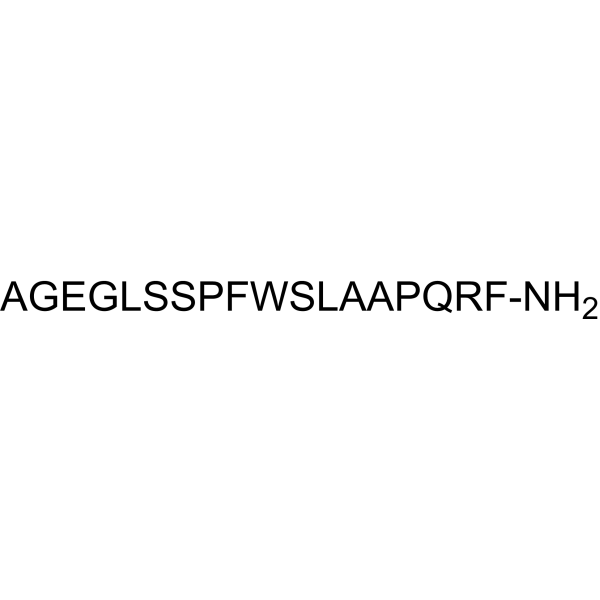
  • HY-P10377

    Neuropeptide FF Receptor Metabolic Disease
    GUB03385 is a long-acting PrRP31 analogue. GUB03385 is a potent dual agonist for GPR10 (full agonist, EC50: 0.4 nM) and NPFF2R (partial agonist, EC50: 20 nM). GUB03385 has anti-obesity effect .
    GUB03385
  • HY-P1428
    RFRP-1(human)
    1 Publications Verification

    Neuropeptide Y Receptor Endocrinology
    RFRP-1(human) is a gonadotropin-inhibitory hormone (GnIH) homolog. RFRP-1(human) targets human gonadotropin-releasing hormone (GnRH) neurons and gonadotropes and potently inhibits gonadotropin. RFRP-1(human) is a potent Neuropeptide FF (NPFF) receptor agonist with EC50s of 0.0011 nM and 29 nM for NPFF2 and NPFF1, respectively .
    RFRP-1(human)
  • HY-P1250

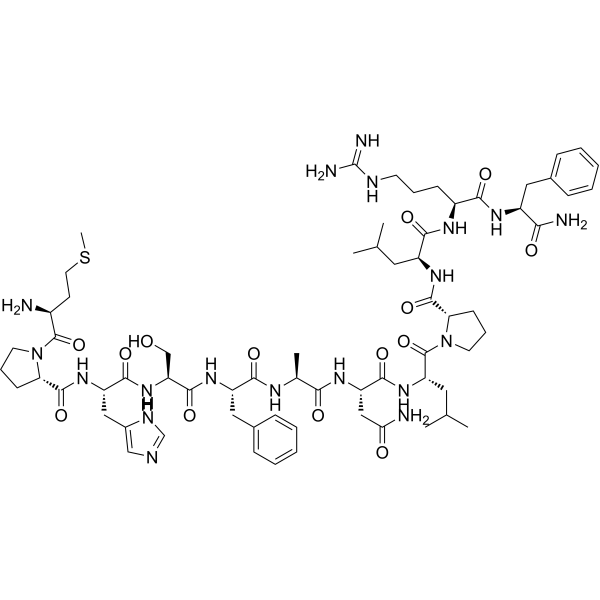
    Neuropeptide VF(124-131)(human); Neuropeptide NPVF (human)

    Neuropeptide Y Receptor Neurological Disease
    RFRP-3 (Neuropeptide VF(124-131))(human), a human GnIH peptide homolog, is a potent inhibitor of gonadotropin secretion by inhibiting Ca 2+ mobilization. RFRP-3(human) is a NPFF1 receptor agonist, it inhibits forskolin-induced production of cAMP with an IC50 of 0.7 nM .
    RFRP-3(human)
  • HY-P1245

    Neuropeptide NPFF (human)

    CRFR Others
    Neuropeptide SF human augments paraventricular corticotrophin-releasing hormone (CRH) release and increases adrenocorticotropic hormone (ACTH) and corticosterone levels in the plasma. Neuropeptide SF human play a physiologic role in the regulation of such circadian functions as the activity of motor centers and the HPA axis, through the release of CRH .
    Neuropeptide SF (human)
  • HY-P10380

    Neuropeptide FF Receptor Neurological Disease Metabolic Disease
    palm11-PrRP31 is a lipidized endogenous appetite inhibitory neuropeptide (PrRP) analogue. palm11-PrRP31 is GPR10 (EC50=39 pM) and NPFF-R2 effective dual agonists. palm11-PrRP31 is able to mimic the natural function of PrRP by binding to these receptors to reduce food intake. palm11-PrRP31 can be used as a potential anti-obesity agent and for the study of neuropeptide-receptor interaction .
    palm11-PrRP31
  • HY-107726A

    Neuropeptide Y Receptor Neurological Disease
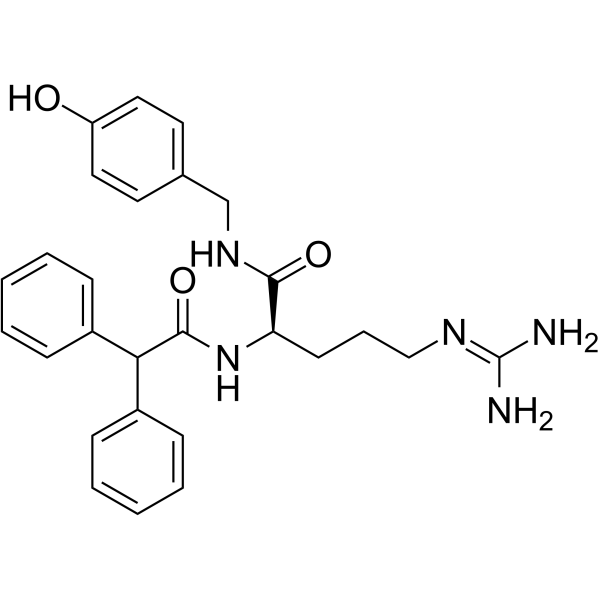
    BIBP3226 is a potent and selective neuropeptide Y Y1 (NPY Y1) and neuropeptide FF (NPFF) receptor antagonist, with Kis of 1.1, 79, and 108 nM for rNPY Y1, hNPFF2, and rNPFF, respectively. BIBP3226 displays anxiogenic-like effect .
    BIBP3226
  • HY-P3843

    Mas-related G-protein-coupled Receptor (MRGPR) Neuropeptide Y Receptor Neurological Disease
    Neuropeptide AF (cattle), an amidated octadecapeptide, is RFamide neuropeptide. Neuropeptide AF (cattle) acts as a ligand of Mas-related gene receptor A4 (MrgprA4) (Mas-related G-protein-coupled Receptor (MRGPR)) (EC50 of ~60 nM) and MrgprC11 (EC50 of ~300 nM). Neuropeptide AF (cattle) also activate to the G protein-coupled receptors NPFF1 (Neuropeptide Y Receptor) (EC50 of ~25-325 nM) and NPFF2 (EC50 of ~1-5 nM). Neuropeptide AF (cattle) shows anti-opiate and related pain modulation effects .
    Neuropeptide AF (cattle)
  • HY-154829A

    Neuropeptide FF Receptor Inflammation/Immunology
    AC-099 hydrochloride (compound 3) is a selective NPFF2R full agonist (EC50=1189 nM) and NPFF1R partial agonist (EC50=2370 nM). AC-099 hydrochloride attenuates spinal nerve ligation-induced hypersensitivity in rats .
    AC-099 hydrochloride
  • HY-161382

    Neuropeptide FF Receptor Neurological Disease
    NPFF2-R ligand 1 (Compound 16a) is a NPFF2-R ligand, with Kis of 228 and 27 nM for NPFF1-R and NPFF2-R respectively. NPFF2-R ligand 1 can be used for research related with central nervous system .
    NPFF2-R ligand 1
  • HY-P10380A

    Neuropeptide FF Receptor Neurological Disease Metabolic Disease
    palm11-PrRP31 TFA is a lipidized endogenous appetite inhibitory neuropeptide (PrRP) analogue. palm11-PrRP31 TFA is GPR10 (EC50=39 pM) and NPFF-R2 effective dual agonists. palm11-PrRP31 TFA is able to mimic the natural function of PrRP by binding to these receptors to reduce food intake. palm11-PrRP31 TFA can be used as a potential anti-obesity agent and for the study of neuropeptide-receptor interaction .
    palm11-PrRP31 TFA
  • HY-RS16912

    Small Interfering RNA (siRNA) Others

    Npff Mouse Pre-designed siRNA Set A contains three designed siRNAs for Npff gene (Mouse), as well as a negative control, a positive control, and a FAM-labeled negative control.

    Npff Mouse Pre-designed siRNA Set A
    Npff Mouse Pre-designed siRNA Set A
  • HY-RS09480

    Small Interfering RNA (siRNA) Others

    NPFF Human Pre-designed siRNA Set A contains three designed siRNAs for NPFF gene (Human), as well as a negative control, a positive control, and a FAM-labeled negative control.

    NPFF Human Pre-designed siRNA Set A
    NPFF Human Pre-designed siRNA Set A
  • HY-154829

    Neuropeptide FF Receptor Inflammation/Immunology
    AC-099 (compound 3) is a selective NPFF2R full agonist (EC50=1189 nM) and NPFF1R partial agonist (EC50=2370 nM). AC-099 attenuates spinal nerve ligation-induced hypersensitivity in rats .
    AC-099
  • HY-P1428A

    Neuropeptide Y Receptor Cardiovascular Disease
    RFRP-1(human) TFA is a potent endogenous NPFF receptor agonist (EC50 values are 0.0011 and 29 nM for NPFF2 and NPFF1, respectively). Attenuates contractile function of isolated rat and rabbit cardiac myocytes. Reduces heart rate, stroke volume, ejection fraction and cardiac output, and increases plasma prolactin levels in rats.
    RFRP-1(human) TFA
  • HY-P1249

    Neuropeptide Y Receptor Neurological Disease
    Neuropeptide SF (mouse,rat) is a potent neuropeptide FF receptor agonist with Ki values are 48.4 nM and 12.1 nM for NPFF1 and NPFF2, respectively. Neuropeptide SF increases the amplitude of the sustained current of heterologously expressed acid sensing ion channel 3 (ASIC3) .
    Neuropeptide SF(mouse,rat)
  • HY-P1249A

    Neuropeptide Y Receptor Neurological Disease
    Neuropeptide SF (mouse,rat) TFA is a potent neuropeptide FF receptor agonist with Ki values are 48.4 nM and 12.1 nM for NPFF1 and NPFF2, respectively. Neuropeptide SF TFA increases the amplitude of the sustained current of heterologously expressed acid sensing ion channel 3 (ASIC3) .
    Neuropeptide SF(mouse,rat) TFA
  • HY-P1245A

    Neuropeptide NPFF (human) acetate

    CRFR Others
    Neuropeptide SF (human) acetate augments paraventricular corticotrophin-releasing hormone (CRH) release and increases adrenocorticotropic hormone (ACTH) and corticosterone levels in the plasma. Neuropeptide SF (human) acetate play a physiologic role in the regulation of such circadian functions as the activity of motor centers and the HPA axis, through the release of CRH .
    Neuropeptide SF (human) acetate
  • HY-P10379

    Neuropeptide FF Receptor Others Neurological Disease
    palm-PrRP31 is a potent dual receptor agonist for both GPR10 (EC50=72 pM) and NPFF-R2. palm-PrRP31 activates downstream signaling pathways through binding to its receptors, GPR10 and NPFF-R2, which results in reduced appetite and increased energy expenditure. Utilizing palm-PrRP31 facilitates the study of the mechanism of action in the nervous system, thereby elucidating the complex biological processes that regulate appetite and energy expenditure .
    palm-PrRP31
  • HY-P1250A

    Neuropeptide VF(124-131)(human) TFA; Neuropeptide NPVF (human) TFA

    Neuropeptide Y Receptor Neurological Disease
    RFRP-3 (Neuropeptide VF(124-131))(human) TFA, a human GnIH peptide homolog, is a potent inhibitor of gonadotropin secretion by inhibiting Ca 2+ mobilization. RFRP-3(human) is a NPFF1 receptor agonist, it inhibits forskolin-induced production of cAMP with an IC50 of 0.7 nM .
    RFRP-3(human) TFA
  • HY-RS23354

    Small Interfering RNA (siRNA) Others

    Npff Rat Pre-designed siRNA Set A contains three designed siRNAs for Npff gene (Rat), as well as a negative control, a positive control, and a FAM-labeled negative control.

    Npff Rat Pre-designed siRNA Set A
    Npff Rat Pre-designed siRNA Set A
  • HY-107726R

    Reference Standards Neuropeptide Y Receptor Neurological Disease
    BIBP3226 TFA (Standard) is the analytical standard of BIBP3226 (TFA) (HY-107726). This product is intended for research and analytical applications. BIBP3226 TFA is a potent and selective neuropeptide Y Y1 (NPY Y1) and neuropeptide FF (NPFF) receptor antagonist, with Kis of 1.1, 79, and 108 nM for rNPY Y1, hNPFF2, and rNPFF, respectively. BIBP3226 TFA displays anxiogenic-like effect .
    BIBP3226 TFA (Standard)
  • HY-P11810

    GnRH Receptor Neuropeptide FF Receptor Metabolic Disease
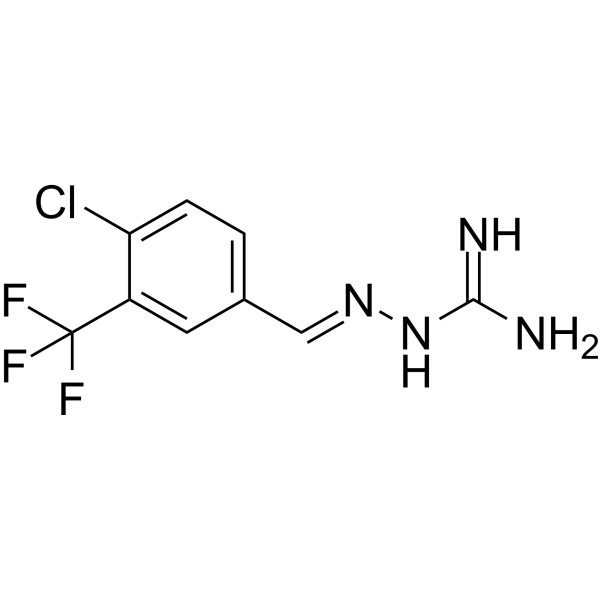
    GUB08248 is a full GPR10 agonist and a partial NPFF2R agonist, with EC50 values of 0.5 nM and 2.5 nM, respectively. GUB08248 inhibits food intake and induces sustained weight loss. GUB08248 can be used in obesity-related research .
    GUB08248

Inquiry Online

Your information is safe with us. * Required Fields.

Salutation


Country or Region *

Applicant Name *


Organization Name *

Department *


Email Address *


Product Name *

Cat. No.


Requested quantity *

Phone Number *


Remarks

Inquiry Online

Inquiry Information

Product Name:
Cat. No.:
Quantity:
MCE Japan Authorized Agent:

