
1. Search Result
Search Result
Pathways Recommended: Membrane Transporter/Ion Channel
Results for "

PEPT1/2 transporters

" in MedChemExpress (MCE) Product Catalog:

873

Inhibitors & Agonists

8

Screening Libraries

16

Fluorescent Dyes

22

Biochemical Assay Reagents

15

Peptides

3

Inhibitory Antibodies

112

Natural
Products

1

Recombinant Proteins

78

Isotope-Labeled Compounds

2

Antibodies

1

Click Chemistry

6

Oligonucleotides

3

GMP Molecules

Cat. No. Product Name Target Research Areas Chemical Structure
  • HY-N0455
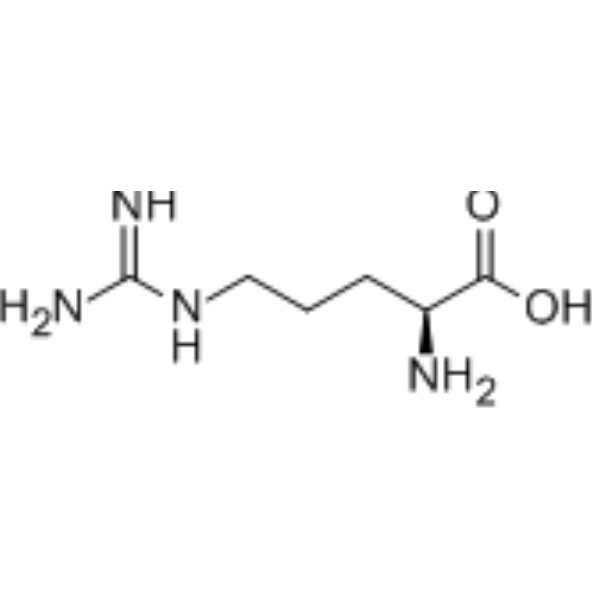
    L-Arginine
    20+ Cited Publications

    Environmental Pollutants Endogenous Metabolite NO Synthase Cardiovascular Disease Inflammation/Immunology
    L-Arginine ((S)-(+)-Arginine) is the substrate for the endothelial nitric oxide synthase (eNOS) to generate NO. L-Arginine is transported into vascular smooth muscle cells by the cationic amino acid transporter family of proteins where it is metabolized to nitric oxide (NO), polyamines, or L-proline. L-Arginine is a potent vasodilator, and can be used to induce experimental acute pancreatitis [1] .
    L-Arginine
  • HY-N0455A
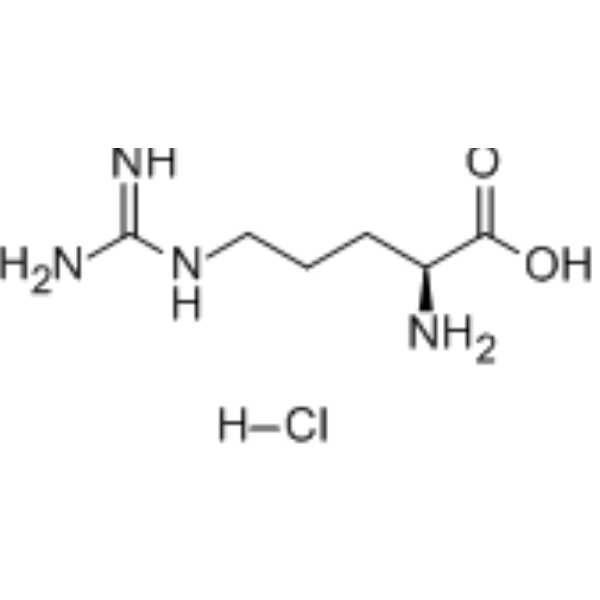
    L-Arginine hydrochloride
    20+ Cited Publications

    (S)-(+)-Arginine hydrochloride

    NO Synthase Endogenous Metabolite Cardiovascular Disease Inflammation/Immunology
    L-Arginine ((S)-(+)-Arginine) is the substrate for the endothelial nitric oxide synthase (eNOS) to generate NO. L-Arginine is transported into vascular smooth muscle cells by the cationic amino acid transporter family of proteins where it is metabolized to nitric oxide (NO), polyamines, or L-proline. L-Arginine is a potent vasodilator, and can be used to induce experimental acute pancreatitis [1] .
    L-Arginine hydrochloride
  • HY-B1190
    Cefadroxil
    5 Publications Verification

    BL-S 578

    Bacterial Antibiotic EAAT Infection Neurological Disease
    Cefadroxil is an orally active broad-spectrum cephalosporin antibiotic. Cefadroxil inhibits bacterial cell wall synthesis and enhances the expression of glutamate transporter-1. Cefadroxil is dependent on the intestinal peptide transporter PepT1 for small intestinal absorption. Cefadroxil has inhibitory and bactericidal activity against a variety of Gram-positive and Gram-negative bacteria and has analgesic effects on neuropathic pain [1] .
    Cefadroxil
  • HY-W010936
    Nitrobenzylthioinosine
    3 Publications Verification

    NBMPR

    Adenosine Receptor Neurological Disease
    Nitrobenzylthioinosine is an ENT1 transporter inhibitor that binds to ENT1 transporter with high affinity. Nitrobenzylthioinosine is a photoaffinity probe for adenosine uptake sites in brain. Nitrobenzylthioinosine can cross the blood-brain barrier [1] .
    Nitrobenzylthioinosine
  • HY-16771
    Valbenazine
    4 Publications Verification

    NBI-98854

    Monoamine Transporter Neurological Disease
    Valbenazine (NBI-98854) is a vesicular monoamine transporter 2 (VMAT2) inhibitor with the Ki of 110-190 nM [1].
    Valbenazine
  • HY-W011391
    GPNA hydrochloride
    5+ Cited Publications

    Apoptosis ASCT Cancer
    GPNA hydrochloride is a well known substrate of the enzyme γ-glutamyltransferase (GGT). GPNA hydrochloride is a specific glutamine (Gln) transporter ASCT2 inhibitor. GPNA hydrochloride also inhibit Na +-dependent carriers, such as SNAT family (SNAT1/2/4/5), and the Na +-independent leucine transporters LAT1/2. GPNA reversibly induces apoptosis in A549 cells [1].
    GPNA hydrochloride
  • HY-W010162

    L-Alanyl-L-alanine; Ala-Ala

    Amino Acid Derivatives Others
    H-Ala-Ala-OH is a substrate of human intestinal oligopeptide transporter (PEPT1/SLC15A1), with an IC50 of 0.25 mM and an EC50 of 0.08 mM against human PEPT1. When used as a dipeptide linker in antibody-drug conjugates (ADCs) loaded with glucocorticoid receptor regulator payloads, H-Ala-Ala-OH enables efficient intracellular payload release [1] .
    H-Ala-Ala-OH
  • HY-B1258
    4-(Aminomethyl)benzoic acid
    1 Publications Verification

    Aminomethylbenzoic acid; α-Amino-p-toluic acid

    Amino Acid Derivatives Cancer
    4-(Aminomethyl)benzoic acid is a competitive inhibitor of PepT1 and has antifibrinolytic activity [1].
    4-(Aminomethyl)benzoic acid
  • HY-Y1080

    N-Acetyl-D-leucine

    Amino Acid Derivatives Monocarboxylate Transporter Endocrinology
    N-Acetyl-R-leucine is an amino-protecting group N-substituted chiral amino acid. N-Acetyl-R-leucine is a PepT1 and MCT1 inhibitor with IC50 of 0.74 and 11 mM, respectively. N-Acetyl-R-leucine can be used for LysoTracker signaling studies [1] .
    N-Acetyl-R-leucine
  • HY-W016445

    1-Amino-1-deoxy-D-glucitol, 98%

    Biochemical Assay Reagents Others
    D-Glucamine, 98% (1-Amino-1-deoxy-D-glucitol, 98%) is an amino sugar derivative that serves as an excipient in pharmaceutical formulations. D-Glucamine, 98% also acts as a substrate for studies investigating sugar transporter pathways [1]
    D-Glucamine, 98%
  • HY-B1190A
    Cefadroxil hydrate
    5 Publications Verification

    BL-S 578 hydrate

    Bacterial Antibiotic EAAT Infection Neurological Disease
    Cefadroxil hydrate is an orally active broad-spectrum cephalosporin antibiotic. Cefadroxil hydrate inhibits bacterial cell wall synthesis and enhances the expression of glutamate transporter-1. Cefadroxil hydrate is dependent on the intestinal peptide transporter PepT1 for small intestinal absorption. Cefadroxil hydrate has inhibitory and bactericidal activity against a variety of Gram-positive and Gram-negative bacteria and has analgesic effects on neuropathic pain [1] .
    Cefadroxil hydrate
  • HY-107521
    TFB-TBOA
    3 Publications Verification

    CF3-Bza-TBOA

    EAAT Neurological Disease
    TFB-TBOA (CF3-Bza-TBOA) is a potent glutamate transporter blocker that potently suppresses the activity of glial transporters. TFB-TBOA shows IC50 values of 22, 17, and 300 nM for glutamate transporters EAAT1, EAAT2, and EAAT3 respectively in an uptake assay using cells transiently expressing EAATs [1].
    TFB-TBOA
  • HY-111956B
    D-Ala-Lys-AMCA hydrochloride
    1 Publications Verification

    Fluorescent Dye Cancer
    D-Ala-Lys-AMCA hydrochloride is a known proton-coupled oligopeptide transporter 1 (PEPT1) substrate that emits blue fluorescence. D-Ala-Lys-AMCA hydrochloride may be transported into liver cancer cells and Caco-2 cells based on fluorescence analysis. D-Ala-Lys-AMCA hydrochloride can be used for characterizing PEPT1-specific substrates or inhibitors (Ex/Em = 390/480 nm) [1] .
    D-Ala-Lys-AMCA hydrochloride
  • HY-B1274
    Cinromide
    2 Publications Verification

    trans-3-Bromo-N-ethylcinnamamide

    Amino acid Transporter Neurological Disease Metabolic Disease
    Cinromide is an anticonvulsant agent. Cinromide inhibits epithelial neutral amino acid transporter B 0AT1 (SLC6A19) with an IC50 of 0.5 μM [1] .
    Cinromide
  • HY-101190

    SHP626; LUM002

    Apical Sodium-Dependent Bile Acid Transporter Metabolic Disease
    Volixibat (SHP626) is a highly selective, minimally absorbed, and competitive apical sodium-dependent bile acid transporter (ASBT) inhibitor. Volixibat has potential for treatment for non-alcoholic steatohepatitis (NASH) [1] .
    Volixibat
  • HY-B1704
    Nisoxetine
    1 Publications Verification

    Monoamine Transporter Sodium Channel Neurological Disease
    Nisoxetine is a potent and selective inhibitor of noradrenaline transporter (NET), with a Kd of 0.76 nM. Nisoxetine is an antidepressant and local anesthetic, it can block voltage-gated sodium channels [1] .
    Nisoxetine
  • HY-149170

    5-HT Receptor Monoamine Transporter Neurological Disease
    FFN246 is a fluorescent, dual substrate of serotonin transporter (SERT) probe and vesicular monoamine transporter 2 (VMAT2) with excitation and emission spectra 392/427 nm. FFN246 can be used for labeling serotonergic neurons in mouse brain tissue through SERT-dependent accumulation [1].
    FFN246
  • HY-138068

    Endogenous Metabolite Metabolic Disease
    L-Tryptophanylglycine is a dipeptide. L-Tryptophanylglycine exerts its function through competitive substrate interaction with intestinal dipeptide transporters [1].
    L-Tryptophanylglycine
  • HY-126302
    DMT1 blocker 2
    3 Publications Verification

    Ferroportin Metabolic Disease
    DMT1 blocker 2 is a direct inhibitor of divalent metal transporter 1 (DMT1), with an IC50 of 0.83 μM. DMT1 blocker 2 can block iron uptake by enterocytes in vivo [1].
    DMT1 blocker 2
  • HY-B1704A
    Nisoxetine hydrochloride
    1 Publications Verification

    Monoamine Transporter Sodium Channel Neurological Disease
    Nisoxetine hydrochloride is a potent and selective inhibitor of noradrenaline transporter (NET), with a Kd of 0.76 nM. Nisoxetine hydrochloride is an antidepressant and local anesthetic, it can block voltage-gated sodium channels [1] .
    Nisoxetine hydrochloride
  • HY-W327145

    Endogenous Metabolite Infection
    Lysylglutamic acid is a dipeptide formed by combining two amino acids, Lysine (Lys) and Glutamic acid (Glu). The Ki value of the membrane transporter PEPT1 was 1.3 mM [1].
    Lysylglutamic acid
  • HY-139692

    EAAT Neurological Disease
    EAAT2 activator 1 is the potent activator of excitatory amino acid transporter 2 (EAAT2). EAAT2 is the major glutamate transporter and functions to remove glutamate from synapses. EAAT2 activator 1 increases EAAT2 protein levels dose-dependently [1].
    EAAT2 activator 1
  • HY-111956

    Fluorescent Dye Cancer
    D-Ala-Lys-AMCA is a known proton-coupled oligopeptide transporter 1 (PEPT1) substrate that emits blue fluorescence. D-Ala-Lys-AMCA may be transported into liver cancer cells and Caco-2 cells based on fluorescence analysis. D-Ala-Lys-AMCA can be used for characterizing PEPT1-specific substrates or inhibitors (Ex/Em = 390/480 nm) [1] .
    D-Ala-Lys-AMCA
  • HY-101315
    AHN 1-055 hydrochloride
    3 Publications Verification

    3α-Bis-(4-fluorophenyl) Methoxytropane hydrochloride

    Dopamine Transporter Neurological Disease
    AHN 1-055 hydrochloride is a dopamine uptake inhibitor that can cross the blood-brain barrier, with an IC50 of 71 nM. AHN 1-055 hydrochloride binds with high affinity to the dopamine transporter (DAT) [1].
    AHN 1-055 hydrochloride
  • HY-101998

    Mitochondrial Metabolism Metabolic Disease
    CTP inhibitor (Compound 792949) is a potent and selective CTP inhibitor. CTP inhibitor inhibits the plasma membrane citrate transporter (PMCT) [1].
    CTP inhibitor
  • HY-124789

    Bacterial Antibiotic Infection
    TBT1 is a first-generation inhibitor of the MsbA transporter. TBT1 is an LPS transport inhibitor and MsbA ATPase stimulator in strains from the Acinetobacter genus. TBT1 stimulated ATPase activity with an EC50 of 13 µM [1].
    TBT1
  • HY-120170
    BMS-466442
    1 Publications Verification

    ASCT Adrenergic Receptor Dopamine Transporter Neurological Disease
    BMS-466442 is a potent and selective inhibitor of asc-1 (alanine serine cysteine transporter-1), with an IC50 of 11 nM. BMS-466442 inhibits [ 3H] D-serine uptake into rat brain synaptosomes, with an IC50 of 400 nM. BMS-466442 can be used for schizophrenia research [1] .
    BMS-466442
  • HY-126584

    Val-Val

    Drug Intermediate Oligopeptide Cotransporter Others
    H-Val-Val-OH (Val-Val) is a stereochemistry-dependent substrate and inhibitor of apical oligopeptide transporters. H-Val-Val-OH undergoes apical intracellular accumulation in human intestinal cells via carrier-mediated transport, and inhibits the uptake of Cephalexin (HY-B0200) through interaction with transporters. Substitution of L-valine with D-valine in H-Val-Val-OH abolishes its binding ability to apical oligopeptide transporters [1].
    H-Val-Val-OH
  • HY-133825

    IKF-916

    Environmental Pollutants OAT Oct3/4 Infection
    Cyazofamid exerts its bactericidal effect by impairing ATP production. Cyazofamid inhibits organic cation transporter 3 (OCT3) and OAT1, with IC50 values ​​of 1.54 and 17.3 μM, respectively [1] .
    Cyazofamid
  • HY-N7506

    Delta3,2-Hydroxylbakuchiol

    Monoamine Transporter Dopamine Transporter Neurological Disease
    13-Hydroxyisobakuchiol (Delta3,2-Hydroxylbakuchiol), an analog of Bakuchiol (HY-N0235) that can be isolated from Psoralea corylifolia (L.), is a potent selective monoamine transporter inhibitor. 13-Hydroxyisobakuchiol is more selective for the dopamine transporter (DAT) (IC50 = 0.58 μM) and norepinephrine transporter (NET) (IC50 = 0.69 μM) than for the serotonin transporter (SERT) (IC50 = 312.02 μM). 13-Hydroxyisobakuchiol increases the activity of intact mice and improves the decreased activity of reserpinized mice in vivo. 13-Hydroxyisobakuchiol can be used for the research of disorders such as Parkinson's disease and depression [1].
    13-Hydroxyisobakuchiol
  • HY-B1190R

    BL-S 578 (Standard)

    Reference Standards Bacterial Antibiotic EAAT Infection Neurological Disease
    Cefadroxil (Standard) is the analytical standard of Cefadroxil (HY-B1190). This product is intended for research and analytical applications. Cefadroxil is an orally active broad-spectrum cephalosporin antibiotic. Cefadroxil inhibits bacterial cell wall synthesis and enhances the expression of glutamate transporter-1. Cefadroxil is dependent on the intestinal peptide transporter PepT1 for small intestinal absorption. Cefadroxil has inhibitory and bactericidal activity against a variety of Gram-positive and Gram-negative bacteria and has analgesic effects on neuropathic pain [1] .
    Cefadroxil (Standard)
  • HY-16771A
    Valbenazine tosylate
    4 Publications Verification

    NBI-98854 tosylate

    Monoamine Transporter Neurological Disease
    Valbenazine tosylate (NBI-98854 tosylate) is a vesicular monoamine transporter 2 (VMAT2) inhibitor with the Ki of 110-190 nM [1].
    Valbenazine tosylate
  • HY-121162

    (+)-Mesembrine

    5-HT Receptor Phosphodiesterase (PDE) Neurological Disease
    Mesembrine ((+)-Mesembrine) a main alkaloid that features an aryloctahydroindole skeleton. Mesembrine is a 5-HT transporter inhibitor with a Ki of 1.4 nM. Mesembrine also inhibits phosphodiesterase 4B (PDE4B) with an IC50 of 7.8 μM [1] .
    Mesembrine
  • HY-14794

    (1R,2S)-Milnacipran; F2696

    Serotonin Transporter Adrenergic Receptor Neurological Disease Metabolic Disease
    Dextromilnacipran ((1R,2S)-Milnacipran; F2696) is an orally active Serotonin (HY-B1473A)/Noradrenaline (HY-13715) transporter inhibitor. Dextromilnacipran inhibits Serotonin and Noradrenaline reuptake. Dextromilnacipran can be used for the research of depression, fibromyalgia [1].
    Dextromilnacipran
  • HY-108510

    BW 234U dihydrochloride

    Sigma Receptor Dopamine Receptor Neurological Disease Cancer
    Rimcazole (BW 234U) dihydrochloride is a carbazole derivative that acts in part as a sigma (σ) receptor antagonist. Rimcazole dihydrochloride also binds with moderate affinity to the dopamine transporter and inhibit dopamine uptake. Rimcazole dihydrochloride can reduce locomotor activity and sensitization. Rimcazole dihydrochloride also can be used for the research of cancer [1] .
    Rimcazole dihydrochloride
  • HY-160519

    Bacterial Antibiotic Infection
    Targocil-II (Compound 2) is an ABC transporter inhibitor with a IC50 value of 137 nM. Targocil-II prevents ATP hydrolysis by binding to allosteric sites of the TM domain. Targocil-II has (antibacterial) activity [1].
    Targocil-II
  • HY-148574

    Monocarboxylate Transporter P-glycoprotein Cancer
    MCT1-IN-3 is a monocarboxylate transporter 1 (MCT1) inhibitor with an IC50 value of 81.0 nM. MCT1-IN-3 has also significant inhibitivity against the multidrug transporter ABCB1. MCT1-IN-3 can be used for the research of cancer [1].
    MCT1-IN-3
  • HY-133177

    EAAT Neurological Disease
    MS-153 is a glutamate transporter activator that can be used as a neuroprotective agent [1] .
    MS-153
  • HY-118796

    4-HO-MET; 4-Hydroxy-N-methyl-N-ethyltryptamine

    5-HT Receptor Serotonin Transporter Neurological Disease
    4-Hydroxy MET (4-HO-MET; 4-Hydroxy-N-methyl-N-ethyltryptamine) is a synthetic tryptamine psychoactive substance. 4-Hydroxy MET is a partial 5-HT2A receptor agonist, a serotonin transporter inhibitor and weak norepinephrine transporter inhibitor. 4-Hydroxy MET affects emotional, motoric, and cognitive functions via serotonergic hallucinogenic activity [1].
    4-Hydroxy MET
  • HY-119996A
    AR-C141990 hydrochloride
    1 Publications Verification

    Monocarboxylate Transporter Inflammation/Immunology
    AR-C141990 hydrochloride is a potent lactate transporters (monocarboxylate transporters; MCTs) inhibitor with pKi values of 7.6, 6.6 for MCT-1 and MCT-2, respectively [1]. AR-C141990 hydrochloride has immunosuppressive properties and inhibits graft versus host response .
    AR-C141990 hydrochloride
  • HY-161246

    5-HT Receptor Neurological Disease
    uPSEM792 is a pharmacologically selective effector molecules (PSEM) agonist for PSAM 4-GlyR, with an affinity of Ki of 0.7 nM. uPSEM792 is a substrate for efflux transporters in brains of wild type and dual P-gp and BCRP knockout mice. uPSEM7952 is a possible lead for developing the PET radioligand for PSAM 4-GlyR [1].
    uPSEM792
  • HY-111419

    Serotonin Transporter 5-HT Receptor Neurological Disease
    DSP-1053, a benzylpiperidine derivative, is a potent Serotonin Transporter (SERT) inhibitor with a Ki of 1.02 nM. DSP-1053 shows partial 5-HT1A receptor agonistic activity with a Ki of 5.05 nM. DSP-1053 has antidepressant activity [1].
    DSP-1053
  • HY-B1190S

    BL-S 578-d4 hydrate

    Isotope-Labeled Compounds Bacterial Antibiotic EAAT Infection Neurological Disease
    Cefadroxil-d4 (hydrate) is the deuterium labeled Cefadroxil hydrate (HY-B1190A). Cefadroxil hydrate is an orally active broad-spectrum cephalosporin antibiotic. Cefadroxil hydrate inhibits bacterial cell wall synthesis and enhances the expression of glutamate transporter-1. Cefadroxil hydrate is dependent on the intestinal peptide transporter PepT1 for small intestinal absorption. Cefadroxil hydrate has inhibitory and bactericidal activity against a variety of Gram-positive and Gram-negative bacteria and has analgesic effects on neuropathic pain [1] .
    Cefadroxil-d4 hydrate
  • HY-111956A

    Fluorescent Dye Cancer
    D-Ala-Lys-AMCA TFA is a known proton-coupled oligopeptide transporter 1 (PEPT1) substrate that emits blue fluorescence. D-Ala-Lys-AMCA TFA may be transported into liver cancer cells and Caco-2 cells based on fluorescence analysis. D-Ala-Lys-AMCA TFA can be used for characterizing PEPT1-specific substrates or inhibitors (Ex/Em = 390/480 nm) [1] .
    D-Ala-Lys-AMCA TFA
  • HY-158555

    Monoamine Transporter Neurological Disease
    4-Ethyl-N,N-Dmc hydrochloride is an analog of Methedrone. Methedrone acts as a non-selective substrate for monoamine transporters, facilitating a neurotransmitter release [1].
    4-Ethyl-N,N-Dmc hydrochloride
  • HY-P1699

    Bacterial Antibiotic Infection Inflammation/Immunology
    Aurantimycin A (Adipogen), a depsipeptide antibiotic, displays strong activity against Gram-positive bacteria. Aurantimycin A is a substrate of the LieAB transporter [1] .
    Aurantimycin A
  • HY-B0590D

    (-)-TBZ; (3S,11bS)-TBZ; (3S,11bS)-Tetrabenazine

    Monoamine Transporter Neurological Disease
    (-)-Tetrabenazine ((-)-TBZ; compound 13) is an enantiomer of Tetrabenazine (HY-B0590). (+)-Tetrabenazine proves 3-fold more active than (-)-Tetrabenazine in inhibiting vesicular monoamine transporter 2 (VMAT2) [1].
    (-)-Tetrabenazine
  • HY-110289

    Serotonin Transporter 5-HT Receptor Neurological Disease
    (R)-Citalopram oxalate, a R-(-) enantiomers of Citalopram (HY-121203), is a serotonin reuptake inhibitor. (R)-Citalopram oxalate is at least 20-fold weaker than S-citalopram (HY-14258) as inhibitor of the 5-HT transporter (SERT). (R)-Citalopram oxalate can be used for research of depression [1] .
    (R)-Citalopram oxalate
  • HY-117110

    H-Arg-Pro-OH

    Proton Pump Metabolic Disease
    Arginylproline (H-Arg-Pro-OH) is a dipeptide consisted of arginine and proline. Arginylproline reduces intracellular triglyceride (TG) levels stimulated by Oleic acid (HY-N1446), through the peptide transporter 1 (PepT1) pathway [1].
    Arginylproline
  • HY-B2072AR

    Reference Standards Antibiotic Bacterial Infection
    Cefadroxil (hydrate) (Standard) is the analytical standard of Cefadroxil (hydrate). This product is intended for research and analytical applications. Cefadroxil hydrate (BL-S 578 hydrate) is an orally active and first-generation cephalosporin with a broad spectrum antibacterial activity. Cefadroxil hydrate (BL-S 578 hydrate) also acts as a substrate of the peptide transporter PEPT1 and PEPT2 [1] .
    Cephaloridine hydrate (Standard)

Inquiry Online

Your information is safe with us. * Required Fields.

Salutation


Country or Region *

Applicant Name *


Organization Name *

Department *


Email Address *


Product Name *

Cat. No.


Requested quantity *

Phone Number *


Remarks

Inquiry Online

Inquiry Information

Product Name:
Cat. No.:
Quantity:
MCE Japan Authorized Agent:

