
1. Search Result
Search Result
Results for "

Rhesus

" in MedChemExpress (MCE) Product Catalog:

76

Inhibitors & Agonists

1

Biochemical Assay Reagents

4

Peptides

15

Inhibitory Antibodies

3

Natural
Products

301

Recombinant Proteins

4

Isotope-Labeled Compounds

1

Oligonucleotides

Cat. No. Product Name Target Research Areas Chemical Structure
  • HY-12366

    MK-1602

    CGRP Receptor Cardiovascular Disease Neurological Disease
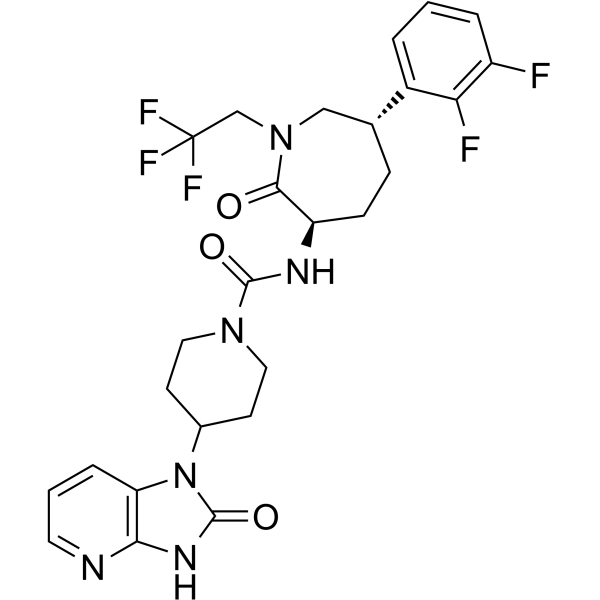
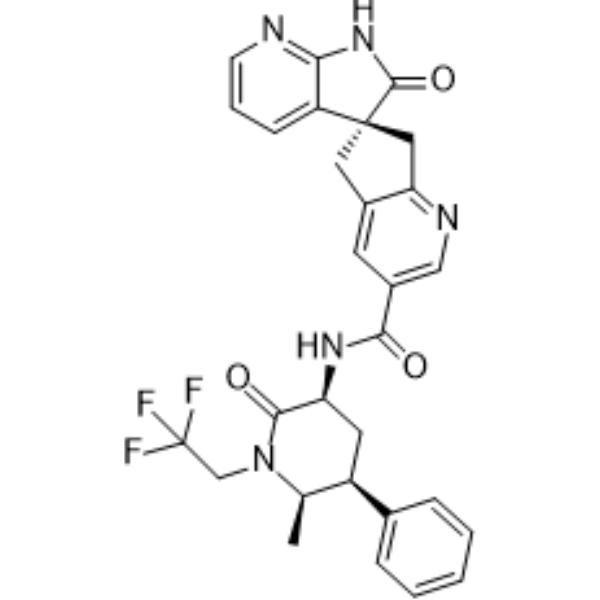
    Ubrogepant (MK-1602) is an orally active and selective antagonist of calcitonin gene-related peptide receptor (CGRP). Ubrogepant has high affinity for CGRP receptors in human and rhesus monkeys, and can effectively block the cAMP response stimulated by α-CGRP. Ubrogepant can be used in the study of acute migraine .
    Ubrogepant
  • HY-153810

    JNJ-1802

    Virus Protease Flavivirus Dengue Virus Infection
    Mosnodenvir (JNJ-1802) is an orally active pan serotype dengue virus (DENV) inhibitor, with EC50 values ranging from 0.057 to 11 nM for four dengue virus (DENV) serotypes. Mosnodenvir blocks viral replication by inhibiting the formation of complexes between two viral proteins, nonstructural protein 3 (NS3) and NS4B, thereby preventing the formation of new viral RNA. Mosnodenvir exhibits picomolar to nanomolar antiviral activity in vitro and has antiviral efficacy in mice and non-human primates .
    Mosnodenvir
  • HY-32709
    Telcagepant
    2 Publications Verification

    MK-0974

    CGRP Receptor Neurological Disease
    Telcagepant (MK-0974) is an orally active calcitonin gene-related peptide (CGRP) receptor antagonist with Kis of 0.77 nM and 1.2 nM for human and rhesus CGRP receptors, respectively.
    Telcagepant
  • HY-P991049

    ATM-001

    TNF Receptor Metabolic Disease Inflammation/Immunology
    Atrosimab is an Fv-Fc1K fusion protein with an EC50 value of 0.37 nM against humans. Atrosimab inhibits TNF-induced TNFR1 activation, release of IL-6 and IL-8, and cell death, and alleviates neuroinflammation. Atrosimab is applicable to research related to inflammatory diseases, neurodegenerative diseases, acute and chronic inflammation, experimental arthritis, non-alcoholic steatohepatitis, and experimental autoimmune encephalomyelitis .
    Atrosimab
  • HY-P990545
    Tanruprubart
    5 Publications Verification

    ANX005

    Complement System Neurological Disease
    Tanruprubart (ANX005) is a C1q inhibitor and C1q depleter. Tanruprubart is a human antibody expressed in CHO cells, with huIgG1 heavy chains and huκ light chains, and its predicted molecular weight (MW) is 145 kDa. For the isotype control of Tanruprubart, refer to Human IgG1 kappa, Isotype Control (HY-P99001). The IC50 of Tanruprubart is 346 ng/mL for humans and 259 ng/mL for rats; its EC50 is 3.8 ng/mL for humans, 5.2 ng/mL for rats, and 9.9 ng/mL for mice. Tanruprubart is applicable to the research of Guillain-Barré syndrome and Alzheimer's disease .
    Tanruprubart
  • HY-P99670

    CFZ-533; OM11-62MF

    TNF Receptor Metabolic Disease Inflammation/Immunology
    Iscalimab (CFZ-533) is a non-depleting IGg1 monoclonal antibody targeting CD40 (KD: 0.3 nM). Iscalimab can be used for research of Graves' hyperthyroidism and autoimmune diseases .
    Iscalimab
  • HY-176533

    LPL Receptor Neurological Disease
    S1PR5-IN-1 (Compound 7a) is a highly selective S1PR5 antagonist and orally bioavailable inhibitor with a human S1PR5 IC50 of 85.4 nM and human S1PR5 Ka of 2.173 nM.S1PR5-IN-1 binds to S1PR5 and inhibits natural killer cell migration toward sphingosine-1-phosphate.S1PR5-IN-1 can be used for the research of multiple sclerosis .
    S1PR5-IN-1
  • HY-10995
    Tozadenant
    4 Publications Verification

    SYN115

    Adenosine Receptor Neurological Disease
    Tozadenant is an adenosine A2A receptor antagonist, with Ki of 11.5 nM on human A2A and 6 nM on rhesus A2A.
    Tozadenant
  • HY-B0742
    Hydroxyprogesterone caproate
    5+ Cited Publications

    17α-Hydroxyprogesterone hexanoate; 17α-Hydroxyprogesterone caproate

    Progesterone Receptor Endocrinology
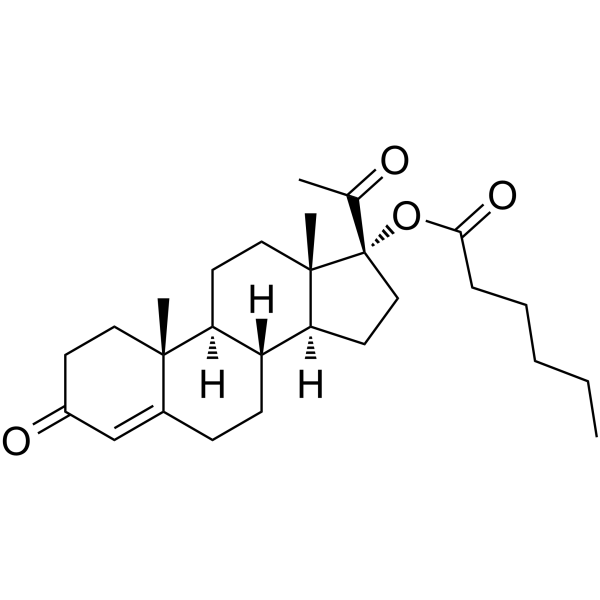
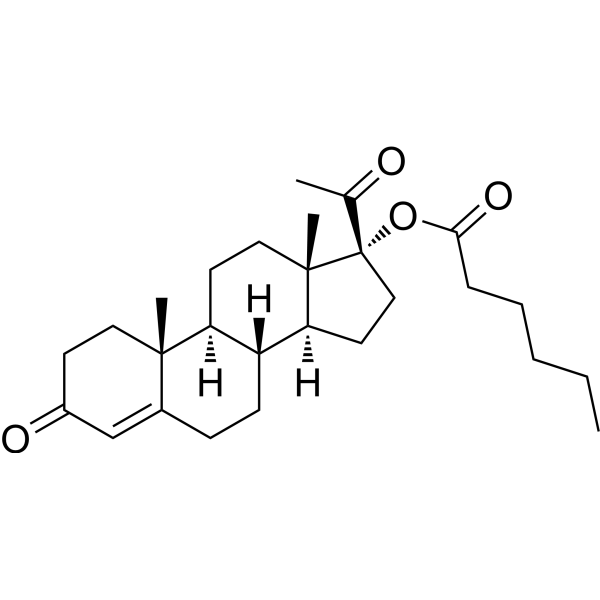
    Hydroxyprogesterone caproate (17α-Hydroxyprogesterone hexanoate; 17α-Hydroxyprogesterone caproate) is a progesterone receptor (progesterone receptor) ligand and steroid hormone transcription inhibitor. Hydroxyprogesterone caproate downregulates estrogen receptors in target tissues and activates their metabolic pathways, and exhibits equivalent affinity for progesterone receptor A and progesterone receptor B. Hydroxyprogesterone caproate shows no consistent teratogenicity or developmental toxicity in rat, mouse and monkey models, but induces resorption or abortion in rhesus monkeys at human-equivalent doses. Hydroxyprogesterone caproate promotes the production of TNF-α in lipopolysaccharide-stimulated whole blood from non-pregnant women. Hydroxyprogesterone caproate can be used in scientific research related to preterm birth .
    Hydroxyprogesterone caproate
  • HY-B1752
    Quinpirole
    4 Publications Verification

    LY 171555; (-)-LY 141865

    Dopamine Receptor Calcium Channel Bcl-2 Family iGluR Apoptosis Neurological Disease
    Quinpirole (LY 171555; (-)-LY 141865) is a D2/D3 dopamine receptor agonist and a CaV1.3 calcium channel modulator. Quinpirole normalizes dendritic spine density in dopamine-depleted striatum, upregulates the protein expression of BCL2 and GluR2, downregulates the protein expression of BAX, and delays the onset of seizures. Quinpirole enhances learning and memory, inhibits neuronal apoptosis (apoptosis), and induces anxiety-like, stereotyped, and compulsive behaviors. Quinpirole disrupts prepulse inhibition in rhesus monkeys, enhances the activity of paraventricular thalamic neurons to promote recovery from Isoflurane anesthesia, and alters the composition of the gut microbiota in rats. Quinpirole can be used in research related to dyskinesia, pain, epilepsy, and neurological disorders including anxiety disorder, obsessive-compulsive disorder, and schizophrenia .
    Quinpirole
  • HY-P99302

    BMS-931699 Antibody

    CD28 Inflammation/Immunology
    Lulizumab (Humanized Anti-CD28 Recombinant Antibody) is an anti-CD28 domain antibody antagonist. Lulizumab inhibits T-cell activation by selectively targeting the CD28 signal. In a sensitized non-human primate kidney transplantation model, when combined with Carfilzomib (HY-10455), Lulizumab can regulate immune cells and prolong the survival time of the graft .
    Lulizumab
  • HY-15618

    M1 receptor modulator

    mAChR Calcium Channel Neurological Disease
    MK-7622 (M1 receptor modulator) is an orally active positive allosteric modulator of muscarinic M1 acetylcholine receptors (mAChRs). MK-7622 enhances ACh-induced calcium flux in CHO cells expressing human M1 receptors (EC50 = 21 nM) and shows robust agonist activity in rat M1-expressing CHO cells, increasing intracellular calcium. MK-7622 reverses Scopolamine (HY-N0296)-induced cognitive deficits in rhesus macaques in an object retrieval detour task. MK-7622 can be used for the study of Alzheimer's disease (AD) .
    MK-7622
  • HY-P99650

    WT1

    Transmembrane Glycoprotein Cancer
    Grisnilimab (WT1) is an IgG2a monoclonal antibody targeting CD7. Grisnilimab only binds to lymphoid tissues and T lymphocytes, with no off-target binding to normal tissues. Grisnilimab can be used to synthesize the immunotoxin WT1-SMPT-dgRTA, which exerts cytotoxic effects on T-lymphoblastic leukemia cells. Grisnilimab is applicable to relevant research on leukemia .
    Grisnilimab
  • HY-19870C
    Setmelanotide monoacetate
    5+ Cited Publications

    RM-493 monoacetate; BIM-22493 monoacetate; IRC-022493 monoacetate

    Melanocortin Receptor Calmodulin AMPK Cardiovascular Disease Metabolic Disease Inflammation/Immunology
    Setmelanotide monoacetate (RM-493 monoacetate) is a blood-brain barrier-permeable, selective MC4R agonist with a Ki value of 2.1 nM for hMC4R. Setmelanotide monoacetate activates the CaMKK2/AMPK signaling pathway. Setmelanotide monoacetate mediates body weight homeostasis, feeding regulation and energy expenditure modulation; it reduces food intake, induces weight loss, decreases obesity severity, increases daytime activity and energy expenditure, lowers levels of leptin, triglycerides, fasting insulin and diastolic blood pressure, improves insulin sensitivity, glucose tolerance and fatty liver condition, and reverses respiratory depression. Setmelanotide monoacetate is applicable to research related to obesity, hyperinsulinemia, fatty liver and respiratory depression .
    Setmelanotide monoacetate
  • HY-B0890

    McN-2783-21-98

    PGE synthase Neurological Disease Inflammation/Immunology
    Zomepirac sodium salt (McN-2783-21-98) is an orally active prostaglandin synthetase inhibitor. Zomepirac sodium salt blocks prostaglandin synthesis and inhibits Collagen (HY-P72147)- or Epinephrine (HY-B0447)-induced platelet aggregation. Zomepirac sodium salt can be used for the research of postoperative pain and osteoarthritis .
    Zomepirac sodium salt
  • HY-P990667

    Integrin TGF-beta/Smad Inflammation/Immunology Cancer
    STX-100 is a humanized monoclonal antibody targeting αVβ6 integrin. STX-100 specifically binds αVβ6 integrin, blocks latent TGF-β activation via latency-associated peptide (LAP) interaction prevention, and reduces profibrotic responses. STX-100 can be used for the research of idiopathic pulmonary fibrosis, and cancer .
    STX-100
  • HY-10242

    BILN 2061; BILN 2061ZW

    HCV HCV Protease DNA/RNA Synthesis Infection
    Ciluprevir (BILN 2061; BILN 2061ZW) is an orally active macrocyclic peptide inhibitor of hepatitis C virus (HCV)NS3 protease, with an IC50 of 3 nM. Ciluprevir has Kᵢ values of 0.66 nM and 0.30 nM against genotypes 1b and 1a, respectively. Ciluprevir inhibits HCV RNA replication with an EC50 of 1.2 nM, and its EC50 values against genotypes 1b and 1a are 3 nM and 4 nM, respectively. Ciluprevir shows no significant inhibition against human leukocyte elastase and hepatic cathepsin B. Ciluprevir can be used for genotype 1 HCV infection .
    Ciluprevir
  • HY-101663

    MK-8408

    HCV Infection
    Ruzasvir (MK-8408) is an orally active inhibitor for genotypic HCV nonstructural protein 5A (NS5A), which inhibits the replication of NS5A mutants GT1a, GT1a L31V, GT1a Y93H, GT2b, GT3a and GT4a with EC90 ranging from 0.003 to 0.067 nM. Ruzasvir exhibits good pharmacokinetic characters in rhesus monkey model .
    Ruzasvir
  • HY-W391596

    Parasite Infection Neurological Disease
    Pamaquine is an 8-aminoquinoline antimalarial agent. Pamaquine has neurotoxicity and can damage specific neuro-anatomical structures, leading to deficits of neurologic function in Rhesus monkeys models .
    Pamaquine
  • HY-107741

    Opioid Receptor Neurological Disease
    SNC162 is a delta-opioid receptor agonist with an IC50 of 0.94 nM. SNC162 has antidepressant-like and antinociceptiv effects .
    SNC162
  • HY-P99701

    BMS-986004

    TNF Receptor Inflammation/Immunology
    Letolizumab (BMS-986004) is a monoclonal antibody targeting CD40L, which is produced to express mutant IgG1 lacking effector function, including Fc binding and complement fixation. Letolizumab reduces rejection, thromboembolism and prolongs the survival time .
    Letolizumab
  • HY-118342
    PQCA
    1 Publications Verification

    mAChR Neurological Disease
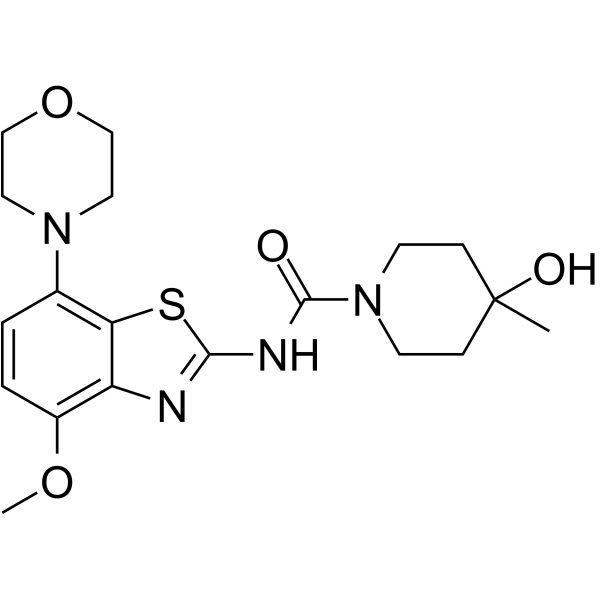
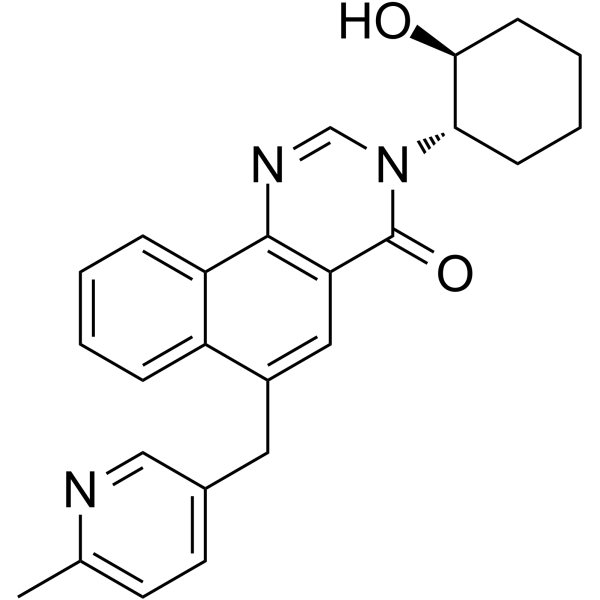
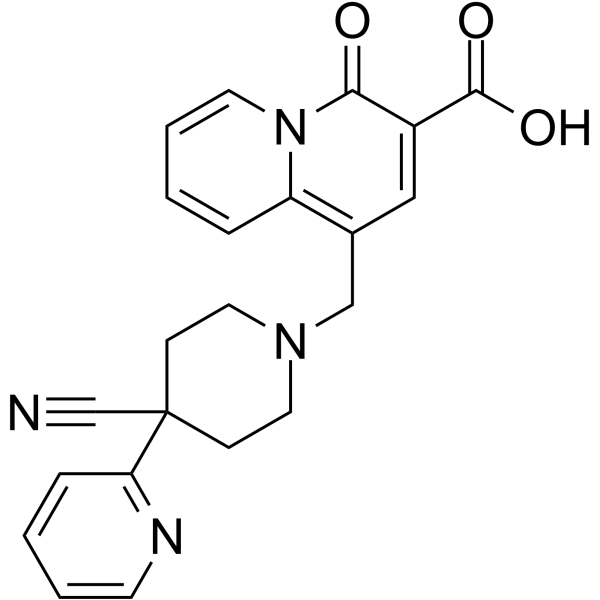
    PQCA is a highly selective and potent muscarinic M1 receptor positive allosteric modulator. PQCA has an EC50 value of 49 nM and 135 nM on rhesus and human M1 receptor, respectively. PQCA is inactive for other muscarinic receptors. PQCA has potential to reduce the cognitive deficits associated with Alzheimer's disease .
    PQCA
  • HY-113266
    Valerylcarnitine
    2 Publications Verification

    Endogenous Metabolite Metabolic Disease
    Valerylcarnitine is an endogenous metabolite, belonging to the short-chain acylcarnitines. Valerylcarnitine acts as a metabolomic biomarker for ionizing radiation exposure in nonhuman primates. Valerylcarnitine can be used for the research of type 1 diabetes .
    Valerylcarnitine
  • HY-149906

    GEM91

    HIV Infection
    Trecovirsen is an antiviral agent targeting HIV gag mRNA, which hybridizes with complementary HIV gag mRNA at the initiation site. Trecovirsen induces a reversible, dose-dependent prolongation of activated partial thromboplastin time via its polyanionic properties. Trecovirsen is applicable to research related to HIV infection .
    Trecovirsen
  • HY-W414588

    HMG-CoA Reductase (HMGCR) CETP Metabolic Disease
    Colestolone is a 15-ketosterol compound and an orally active inhibitor of HMG-CoA reductase. Colestolone can inhibit the activity of cholesteryl ester transfer protein (CETP) in vitro (IC50 = 660 μM). Colestolone is a cholesterol-lowering agent, and can be used in the research of endocrine and metabolic diseases such as hyperlipidemia .
    Colestolone
  • HY-161246

    5-HT Receptor Neurological Disease
    uPSEM792 is a pharmacologically selective effector molecules (PSEM) agonist for PSAM 4-GlyR, with an affinity of Ki of 0.7 nM. uPSEM792 is a substrate for efflux transporters in brains of wild type and dual P-gp and BCRP knockout mice. uPSEM7952 is a possible lead for developing the PET radioligand for PSAM 4-GlyR .
    uPSEM792
  • HY-155088

    mGluR Metabolic Disease
    MK-8768 is a highly potent, orally bioavailable and selective class of mGluR2 negative allosteric modulator (IC50 of 9 .6nM) with excellent brain permeability.
    MK-8768
  • HY-P99545

    r-anti-D

    Biochemical Assay Reagents Others
    Trinbelimab (r-anti-D) is a recombinant anti-D immunoglobulin that targets the RhD antigen. Trinbelimab exerts immunosuppressive effects to block maternal-fetal RhD alloimmunization. Trinbelimab can be used for the study of maternal-fetal immunity associated with RhD incompatibility .
    Trinbelimab
  • HY-B0742R

    17α-Hydroxyprogesterone hexanoate(Standard); 17α-Hydroxyprogesterone caproate (Standard)

    Reference Standards Progesterone Receptor Others
    Hydroxyprogesterone caproate (Standard) is the analytical standard of Hydroxyprogesterone caproate. This product is intended for research and analytical applications. Hydroxyprogesterone caproate (17α-Hydroxyprogesterone hexanoate; 17α-Hydroxyprogesterone caproate) is a progesterone receptor (progesterone receptor) ligand and steroid hormone transcription inhibitor. Hydroxyprogesterone caproate downregulates estrogen receptors in target tissues and activates their metabolic pathways, and exhibits equivalent affinity for progesterone receptor A and progesterone receptor B. Hydroxyprogesterone caproate shows no consistent teratogenicity or developmental toxicity in rat, mouse and monkey models, but induces resorption or abortion in rhesus monkeys at human-equivalent doses. Hydroxyprogesterone caproate promotes the production of TNF-α in lipopolysaccharide-stimulated whole blood from non-pregnant women. Hydroxyprogesterone caproate can be used in scientific research related to preterm birth .
    Hydroxyprogesterone caproate (Standard)
  • HY-178235

    Opioid Receptor Neurological Disease
    MDAN-21 is a bivalent opioid ligand that contains both μ-opioid receptor agonists and δ-opioid receptor antagonists. MDAN-21 has a strong analgesic effect and does not produce tolerance in mouse studies. MDAN-21 can effectively inhibit the withdrawal of morphine dependent monkeys and alleviate abnormal pain in the study of rhesus monkeys. MDAN-21 can be used for the study of allodynia .
    MDAN-21
  • HY-W127357

    Biochemical Assay Reagents Others
    Glyceryl trinonanoate is a triacylglycerol containing nonanoic acid at the sn-1, sn-2 and sn-3 positions. It has been found in Schizochytrium biomass. 1 1,2,3-Trinonanoyl-rac-glycerol increases blood levels of the ketone body D-(-)-3-hydroxybutyrate in neonatal rhesus monkeys. 2|1. Mioso, R., Toledo Marante, FJ, González, JE, et al. Schizochytrium sp. metabolite analysis. Oleaginous microbial sources of biodiesel by GC-MS. braz. J. Microbiology. 45(2), 403-409 (2014).|2. Tetrick, MA, Greer, FR and Benevenga, NJ Blood D- ( )-3-Hydroxybutyric acid concentration. Compare. medicine. 60(6), 486-490 (2010).
    Tripelargonin
  • HY-107176A

    HS-25

    Others Metabolic Disease
    Hyzetimibe is a cholesterol absorption inhibitor. Hyzetimibe blocks the intestinal absorption of cholesterol and phytol. Hyzetimibe is well tolerated in animal models, with an LDmax 2000 mg/kg in rats and an LDmax 500 mg/kg in rhesus monkeys .
    Hyzetimibe
  • HY-12366R

    MK-1602 (Standard)

    CGRP Receptor Reference Standards Cardiovascular Disease Neurological Disease
    Ubrogepant (Standard) is the analytical standard of Ubrogepant. This product is intended for research and analytical applications. Ubrogepant (MK-1602) is an orally active and selective antagonist of calcitonin gene-related peptide receptor (CGRP). Ubrogepant has high affinity for CGRP receptors in human and rhesus monkeys, and can effectively block the cAMP response stimulated by α-CGRP. Ubrogepant can be used in the study of acute migraine .
    Ubrogepant (Standard)
  • HY-P991655

    IFNAR HIV Infection Inflammation/Immunology
    AGS-009 is a humanized monoclonal neutralising antibody targeting IFN-α. AGS-009 significantly reduces activated lymphocytes, such as CD4 + and CD8 + T cells as well as B cells in SIV infection rhesus macaque models. AGS-009 can be used for autoimmune diseases like systemic lupus erythematosus (SLE) and HIV infections research .
    AGS-009
  • HY-14360

    Cathepsin Metabolic Disease
    MK 1256 is a highly selective and orally active inhibitor of tissue protease K (Cat K) with an IC50 of 0.62 nM. MK 1256 shows extremely high selectivity towards other tissue proteases (all > 1100 times), with only a slightly lower selectivity for tissue protease F (Cat F) (110 times). MK 1256 exhibits strong anti-bone resorption activity in the osteoporosis model of rhesus monkeys with ovariectomy. MK 1256 can be used for research on osteoporosis .
    MK 1256
  • HY-144074

    LRRK2 Neurological Disease
    LRRK2-IN-4 is a potent, selective, CNS-penetran and orally active leucine-rich repeat kinase 2 (LRRK2) inhobitor with an IC50 of 2.6 nM. LRRK2-IN-4 has the potential for the research of Parkinson’s disease .
    LRRK2-IN-4
  • HY-14568

    GlyT Neurological Disease
    DCCCyB is an orally bioavailable, potent, and selective inhibitor of GlyT1. DCCCyB demonstrates excellent in vivo occupancy of GlyT1 transporters in rhesus monkey .
    DCCCyB
  • HY-P5625

    Bacterial Infection
    ROAD-1 is an oral mucosal α-defensin of Rhesus Macaque. ROAD-1 is active against S. aureus, E. coli, and C. albicans .
    ROAD-1
  • HY-P11109

    Antibiotic Bacterial Infection
    RL-37 is an alpha-helical antimicrobial peptide. RL-37 can be isolated for rhesus monkey bone marrow. RL-37 rapidly permeabilizes the membranes of Escherichia coli ML-35p and lysed liposomes. RL-37 has effective antibacterial activity against staphylococci, such as wild-type and Methicillin (HY-121544)-resistant S. aureus strains and S. epidermidis ATCC 49741. RL-37 can be used for human skin infections research .
    RL-37
  • HY-122517

    U-24729 A

    Parasite Others
    Mirincamycin (hydrochloride) (U-24729 A), a compound used to inhibit malaria, has a protective effect against the early liver stages of Plasmodium but fails to kill dormant liver stages of Plasmodium in a rhesus monkey model.
    Mirincamycin hydrochloride
  • HY-171457

    RC-12

    Parasite Drug Derivative Infection
    WR-27653 (RC-12) is a derivative of Catechol with good activity against hypnozoites in the gold-standard Plasmodium cynomolgi-rhesus monkey (Macaca mulatta) model. WR-27653 has antimalarial activity .
    WR-27653
  • HY-P991270

    Interleukin Related Inflammation/Immunology
    MT204 is a humanized IgG1 antibody inhibitor targeting IL-2 of human and rhesus monkey origin. MT204 prevents soluble IL-2 from binding to intermediate-affinity IL-2 receptors and blocks CD25-bound IL-2 on high-affinity IL-2 receptors. MT204 has potently anti-proliferative activity with NKL cells and primary NK cells. MT204 has good tolerability and potent immunosuppressive activity in allogeneic skin graft model of rhesus monkey, promising for immunosuppressive and anti-proliferative therapy .
    MT204
  • HY-15042

    Bradykinin Receptor Metabolic Disease
    MK 0686, a potent bradykinin B1 receptor antagonist, demonstrates autoinduction of metabolism in rhesus monkeys after oral administration. It undergoes significant biotransformation primarily via oxidation pathways, leading to the formation of metabolites like M11 and M13 in rhesus liver microsomes. This metabolic induction is mediated by CYP2C75, as evidenced by increased mRNA expression, protein levels, and catalytic activity of this enzyme in hepatocytes and liver microsomes from MK 0686-treated animals. The autoinduction phenomenon suggests that MK 0686 enhances its own metabolism by upregulating CYP2C75, potentially influencing its systemic exposure and pharmacokinetics over time .
    MK 0686
  • HY-12159A

    Integrin Inflammation/Immunology
    MK-0668 mesylate is an amino acid-based, potent antagonist of unactivated VLA-4, with an IC50) of 0.13 nM in human whole blood. And MK-0668 mesylate exhibits IC50s of 0.19 nM in dogs, 0.21 nM in rhesus monkeys, and 0.4 nM in rats .
    MK-0668 mesylate
  • HY-12159

    Integrin Inflammation/Immunology
    MK-0668 is an amino acid-based, potent antagonist of unactivated VLA-4, with an IC50) of 0.13 nM in human whole blood. And MK-0668 exhibits IC50s of 0.19 nM in dogs, 0.21 nM in rhesus monkeys, and 0.4 nM in rats .
    MK-0668
  • HY-123100R

    Reference Standards Others Others
    Isoxepac (Standard) is the analytical standard of Isoxepac. This product is intended for research and analytical applications. Isoxepac (HP 549) is a nonsteroidal anti-inflammatory agent (NSAID) with anti-inflammatory, analgesic and antipyretic activity. Isoxepac has been studied in rat, rabbit, dog, rhesus monkey, etc .
    Ganoderic acid N (Standard)
  • HY-32709S

    MK-0974-d8

    Isotope-Labeled Compounds CGRP Receptor Neurological Disease
    Telcagepant-d8 (MK-0974-d8) is deuterium labeled Telcagepant. Telcagepant (MK-0974) is an orally active calcitonin gene-related peptide (CGRP) receptor antagonist with Kis of 0.77 nM and 1.2 nM for human and rhesus CGRP receptors, respectively.
    Telcagepant-d8
  • HY-120029

    Phosphodiesterase (PDE) Endocrinology
    Org-9935 is a selective inhibitor of PDE3 with an IC50 of 50 nM. Org-9935 inhibits maturation of oocyte in naturally selected dominant follicle in rhesus macaques. Org-9935 can augment glucose-induced insulin release in isolated rat islets with an EC50 of 20 μM .
    Org-9935
  • HY-161965

    FAAH Neurological Disease
    MK-3168 (12C) is a FAAH inhibitor with IC50 values of 1.0, 5.5, 1.7 nM for human, rhesus, rat, respectively. MK-3168 shows good brain uptake and FAAH-specific signal. 11C MK-3168 can be used as FAAH PET tracer .
    MK-3168 (12C)
  • HY-121700

    5 alpha Reductase Others
    L-751788 is a selective inhibitor of type I of 5α-reductase. L-751788 does not have a significant impact on the differentiation of the external genitalia in animals. When administered orally to pregnant rhesus monkeys, L-751788 (2, 10 mg/kg) did not cause abnormalities in fetal external genitalia .
    L-751788

Inquiry Online

Your information is safe with us. * Required Fields.

Salutation


Country or Region *

Applicant Name *


Organization Name *

Department *


Email Address *


Product Name *

Cat. No.


Requested quantity *

Phone Number *


Remarks

Inquiry Online

Inquiry Information

Product Name:
Cat. No.:
Quantity:
MCE Japan Authorized Agent:

