

1. Search Result
Search Result
Results for "

T2

" in MedChemExpress (MCE) Product Catalog:

157

Inhibitors & Agonists

1

Screening Libraries

2

Fluorescent Dye

2

Biochemical Assay Reagents

19

Peptides

2

Inhibitory Antibodies

13

Natural
Products

10

Recombinant Proteins

5

Isotope-Labeled Compounds

16

Antibodies

11

Oligonucleotides

Cat. No. Product Name Target Research Areas Chemical Structure
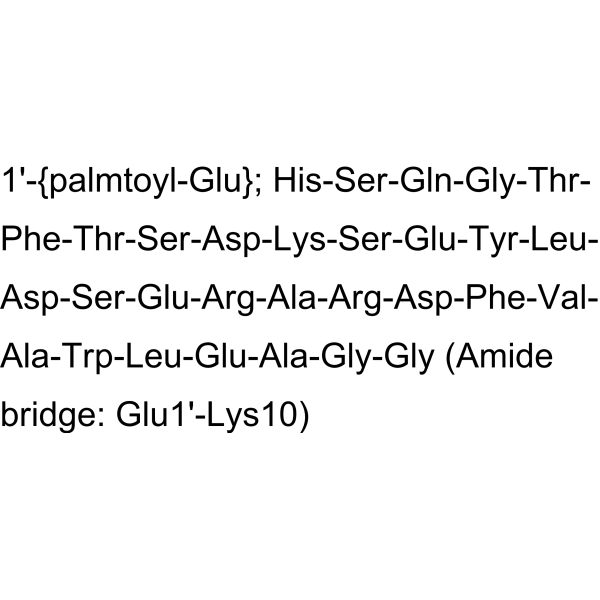
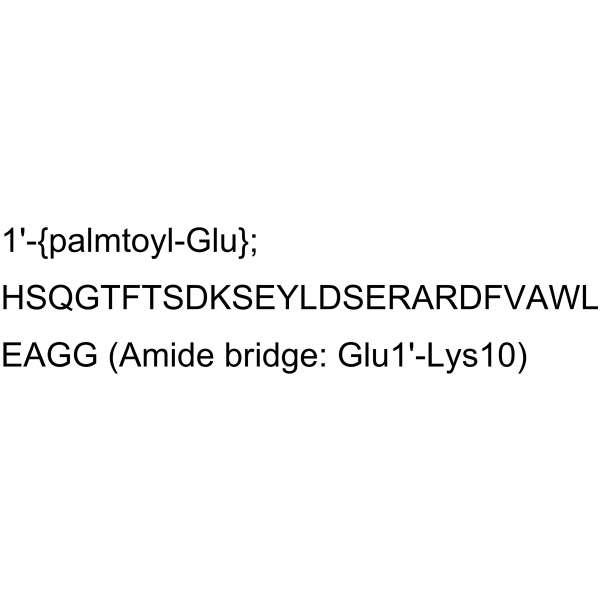
  • HY-P0120
    Dulaglutide
    1 Publications Verification

    LY2189265

    GCGR Metabolic Disease
    Dulaglutide (LY2189265) is a glucagon-like peptide-1 (GLP-1) receptor agonist. Dulaglutide can be uesd for the research of type 2 diabetes (T2D) [2].
    Dulaglutide
  • HY-13757AR
    Tamoxifen (Standard)
    Maximum Cited Publications
    213 Publications Verification

    ICI 47699(Standard); (Z)-Tamoxifen(Standard); trans-Tamoxifen (Standard)

    Reference Standards Estrogen Receptor/ERR HSP Autophagy Apoptosis Endocrinology Cancer
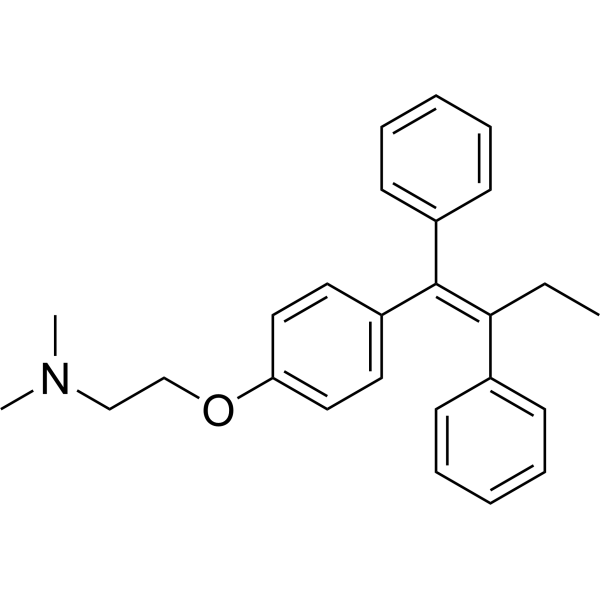
    Tamoxifen (Standard) is the analytical standard of Tamoxifen (HY-13757A). This product is intended for research and analytical applications. Tamoxifen (ICI 47699) is an orally active, selective estrogen receptor modulator (SERM) which blocks estrogen action in breast cells and can activate estrogen activity in other cells, such as bone, liver, and uterine cells [2] . Tamoxifen is a potent Hsp90 activator and enhances the Hsp90 molecular chaperone ATPase activity. Tamoxifen also potent inhibits infectious EBOV Zaire and Marburg (MARV) with IC50 of 0.1 μM and 1.8 μM, respectively . Tamoxifen activates autophagy and induces apoptosis . Tamoxifen also can induce gene knockout of CreER(T2) transgenic mouse .
    Tamoxifen (Standard)
  • HY-P3366

    XW003

    GCGR Metabolic Disease
    Ecnoglutide (XW003) is a long-acting, cAMP-biased glucagon-like peptide 1 (GLP-1) receptor agonist. Ecnoglutide can be used for research of T2DM and obesity [2].
    Ecnoglutide
  • HY-153865

    PF-07081532

    GLP Receptor Metabolic Disease
    Lotiglipron (PF-07081532) is an orally active GLP-1R agonist. Lotiglipron reduces glucose and body weight, and can be used for research of Type 2 diabetes mellitus (T2DM) .
    Lotiglipron
  • HY-110111
    T2AA
    2 Publications Verification

    DNA/RNA Synthesis Cancer
    T2AA is a monoubiquitinated proliferating cell nuclear antigen (PCNA) inhibitor that prevents DNA repair, increases double-strand break (DSB) formation and promotes necroptosis and cell cycle arrest in G1 phase .
    T2AA
  • HY-112233
    O-304
    5 Publications Verification

    AMPK Cardiovascular Disease Metabolic Disease
    O-304 is a first-in-class, orally available pan-AMPK activator, which increases AMPK activity by suppressing the dephosphorylation of pAMPK. O-304 exhibits a great potential as a agent to treat type 2 diabetes (T2D) and associated cardiovascular complications [2].
    O-304
  • HY-112624H

    Dextran 2; Dextran D2; Dextran T2(MW 1600-2400)

    Biochemical Assay Reagents Others
    Dextran T2 (Dextran 2; Dextran T2(MW 1600-2400)) is a natural high molecular weight polysaccharide, the glycosidic bonds in its structure can be recognized by endo-dextranase and exo-dextranase. Dextran T2 (MW 2,000) breaks the glycosidic bonds in the enzymatic hydrolysis mechanism, releasing products such as D-glucose, Isomaltose (IM2), and Isomaltotriose (IM3). Dextran T2 (MW 2,000) can be used as a model substrate to characterize the catalytic properties of dextranase (such as optimal pH, temperature and product specificity), and to study enzymatic mechanism research and polysaccharide degradation pathways in glycobiology. The Dextran series of compounds are also a natural polysaccharide drug carrier, which can be connected to drugs through covalent bonding methods such as ester bonds, amide bonds or click chemistry, or self-assembled to form carriers such as nanoparticles and hydrogels. Dextran is biodegradable and biocompatible, and can achieve targeted delivery and controlled release of drugs. Dextran derivatives can prolong drug half-life, increase local concentration and reduce immune clearance activity [2] .
    Dextran T2 (MW 2,000)
  • HY-129974

    3,3'-T2

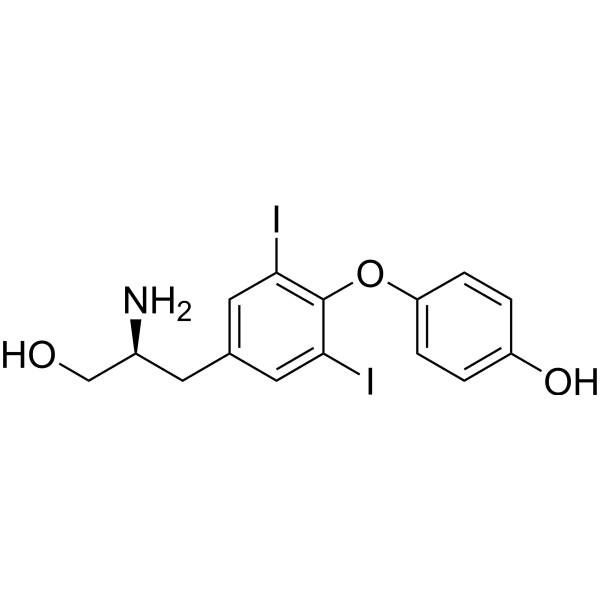
    Endogenous Metabolite COX Metabolic Disease
    3,3'-Diiodo-L-thyronine (3,3'-T2) is an endogenous metabolite of thyroid hormone. 3,3'-Diiodo-L-thyronine significantly enhances COX activity [2].
    3,3'-Diiodo-L-thyronine
  • HY-19947
    PF-06291874
    1 Publications Verification

    Glucagon receptor antagonists-4

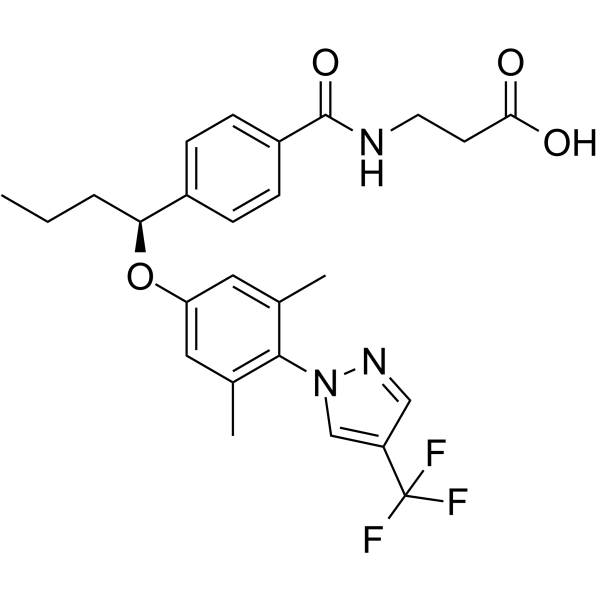
    GCGR Metabolic Disease
    PF-06291874 is a highly potent, non-peptide and orally active glucagon receptor antagonist. PF-06291874 is under the study for type 2 diabetes mellitus (T2DM) [2].
    PF-06291874
  • HY-112668A
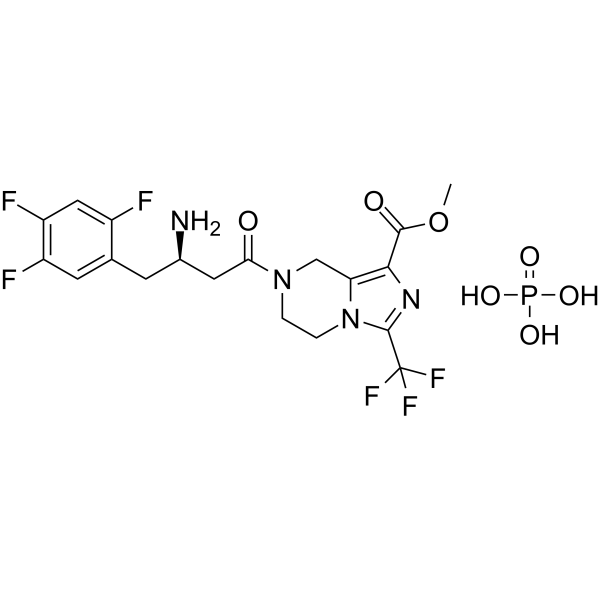
    Retagliptin
    1 Publications Verification

    SP2086

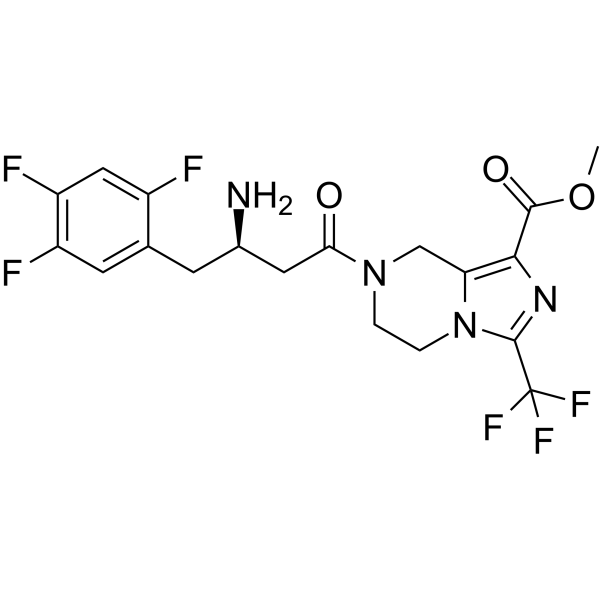
    Dipeptidyl Peptidase Metabolic Disease
    Retagliptin (SP2086) is a selective, competitive and orally active dipeptidyl peptidase-4 (DPP-4) inhibitor. Retagliptin can be used for type 2 diabetes mellitus (T2DM) research .
    Retagliptin
  • HY-15408
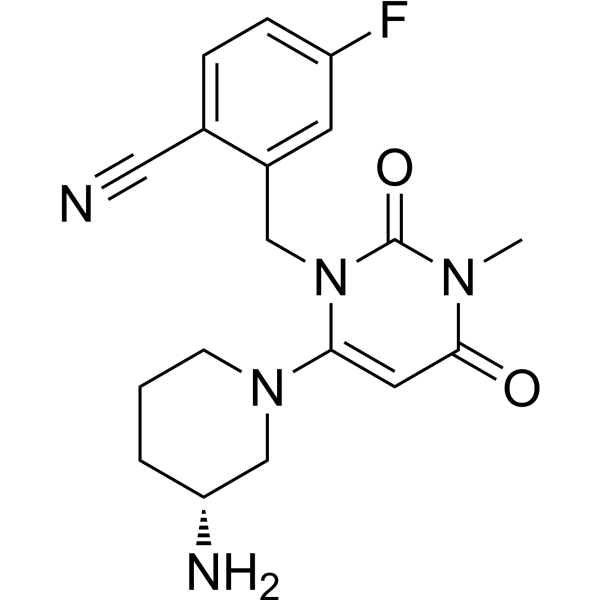
    Trelagliptin
    1 Publications Verification

    SYR-472

    Dipeptidyl Peptidase Metabolic Disease
    Trelagliptin (SYR-472) is a potent, orally active and highly selective DPP-4 inhibitor with an IC50 of 4 nM. Trelagliptin succinate improves glycemic control in vivo and can be used for the study of type 2 diabetes mellitus (T2DM) .
    Trelagliptin
  • HY-12066
    GSK1292263
    5 Publications Verification

    GPR119 Metabolic Disease Inflammation/Immunology
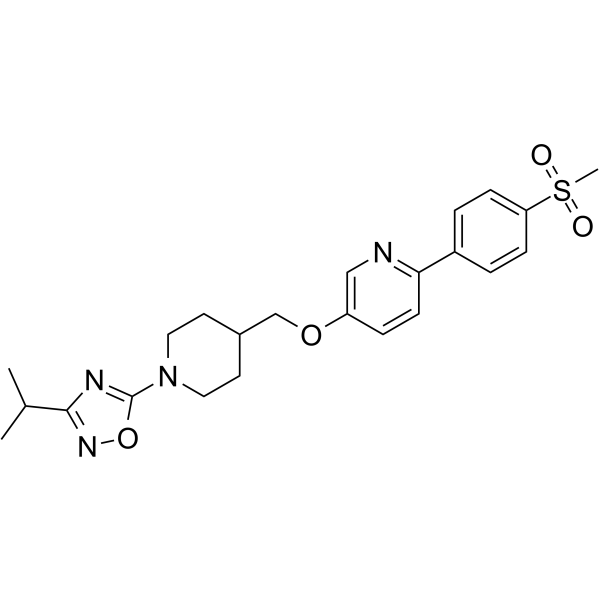
    GSK-1292263 is an orally available GPR119 agonist with pEC50s of 6.9 and 6.7 for human and rat GPR119, respectively. GSK-1292263 can be used for the research of type 2 diabetes mellitus (T2DM) .
    GSK1292263
  • HY-147257

    HSK7653

    Dipeptidyl Peptidase Metabolic Disease
    Cofrogliptin (HSK7653) (compound 2), a tetrahydropyran derivative, is a potent oral dipeptidyl aminopeptidase 4 (DPP-4) inhibitor with Long-acting antidiabetic efficacy. Cofrogliptin (compound 2) has a great potential for type 2 diabetes mellitus (T2DM) .
    Cofrogliptin
  • HY-P99614

    BFKB8488A; RG-7992; RO-7040551

    FGFR Metabolic Disease
    Fazpilodemab (BFKB8488A) is a humanized bispecific IgG1 antibody that selectively targets and activates fibroblast growth factor receptor 1c (FGFR1c) and Klothoβ. Fazpilodemab can be used for the research of type 2 diabetes mellitus (T2DM) or nonalcoholic fatty liver disease (NAFLD) .
    Fazpilodemab
  • HY-P2231A
    Cotadutide acetate
    1 Publications Verification

    MEDI0382 acetate

    GCGR Metabolic Disease
    Cotadutide (MEDI0382) acetate is a potent dual agonist of glucagon-like peptide-1 (GLP-1) and GCGR with EC50 values of 6.9 pM and 10.2 pM, respectively. Cotadutide acetate exhibits ability to facilitate both weight loss and glycaemic control, and alleviate fibrosis. Cotadutide acetate can be used in the research of obesity and type 2 diabetes (T2D) [2] .
    Cotadutide acetate
  • HY-136717

    FBPase Metabolic Disease
    FBPase-1 inhibitor-1 (Compound 1) is an allosteric FBPase-1 inhibitor with an IC50 of 3.3 μM or 3.9 μM. FBPase-1 inhibitor-1 blocks gluconeogenesis by inhibiting FBPase-1. FBPase-1 inhibitor-1 can be used for the research of type 2 diabetes (t2dm) .
    FBPase-1 inhibitor-1
  • HY-112668
    Retagliptin phosphate
    1 Publications Verification

    SP2086 phosphate

    Dipeptidyl Peptidase Metabolic Disease
    Retagliptin phosphate (SP2086 phosphate) is a selective, competitive and orally active dipeptidyl peptidase-4 (DPP-4) inhibitor. Retagliptin phosphate can be used for type 2 diabetes mellitus (T2DM) research .
    Retagliptin phosphate
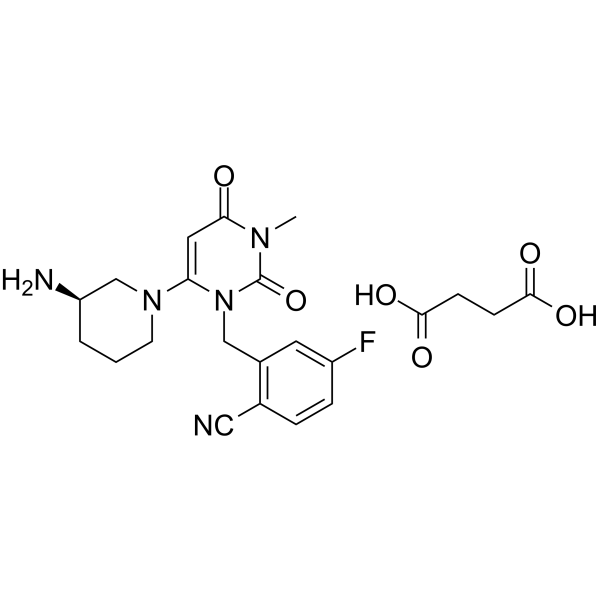
  • HY-15408A
    Trelagliptin succinate
    1 Publications Verification

    SYR-472 succinate

    Dipeptidyl Peptidase Metabolic Disease
    Trelagliptin (SYR-472) succinate is a potent, orally active and highly selective DPP-4 inhibitor with an IC50 of 4 nM. Trelagliptin succinate improves glycemic control in vivo and can be used for the study of type 2 diabetes mellitus (T2DM) .
    Trelagliptin succinate
  • HY-178324

    TREM receptor Syk Neurological Disease Inflammation/Immunology
    T2M-010 is a potent, brain-penetrant TREM2 agonist (Kd = 0.83 μM). T2M-010 activates receptor-proximal signaling, inducing SYK phosphorylation in TREM2-expressing cells, and promotes microglial phagocytosis. T2M-010 can be used for the study of protective microglial responses relevant to Alzheimer’s disease (AD) .
    T2M-010
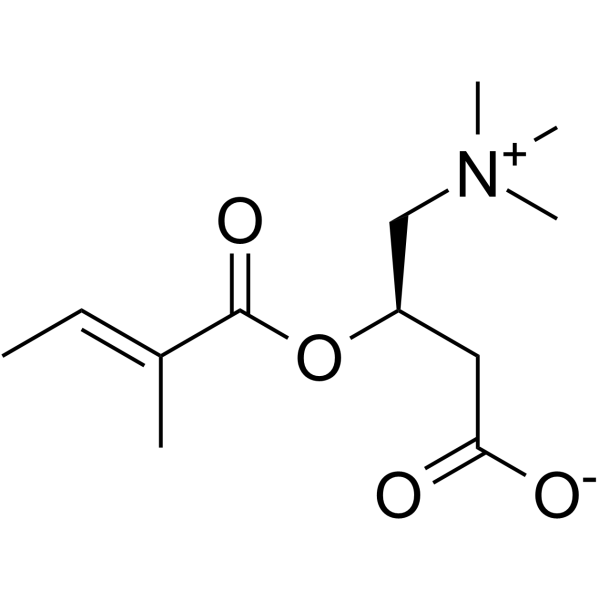
  • HY-113408
    Tiglyl carnitine
    1 Publications Verification

    Endogenous Metabolite Metabolic Disease
    Tiglyl carnitine is found to be associated with celiac disease and mitochondrial acetoacetyl-CoA thiolase (T2) deficiency.
    Tiglyl carnitine
  • HY-119222
    GSK256073
    2 Publications Verification

    GPR109A Metabolic Disease
    GSK256073 is a potent, selective and orally active GPR109A agonist and a long-lasting and non-flushing HCA2 full agonist with a pEC50 of 7.5 (human HCA2). GSK256073 acutely improves glucose homeostasis via inhibition of lipolysis and has the potential for the study of type 2 diabetes mellitus (T2DM)and dyslipidemia [2]. GPR109A: G-protein coupled receptor 109A; HCA2: hydroxy-carboxylic acid receptor 2
    GSK256073
  • HY-160062

    Mucin Cancer
    S2.2 aptamer sodium is a nucleic acid-based MUC1-binding aptamer with high affinity and low toxicity. Upon binding to its target, S2.2 aptamer sodium undergoes a conformational switch and restores fluorescence signal, serving as a targeted imaging agent for MUC1-positive cancer cells. S2.2 aptamer sodium enables targeted delivery to breast cancer cells with overexpressed MUC1. When formulated as the S2.2-PEG-MZF molecular probe, S2.2 aptamer sodium possesses the functions of T2 signal inhibition, magnetic field-induced hyperthermia and targeted magnetic resonance molecular imaging. In the S2.2-PEG-MZF/DOX nanoliposome, S2.2 aptamer sodium supports targeted thermochemotherapy, effectively inhibiting cancer cell proliferation and invasion as well as inducing apoptosis, and is widely used in studies related to breast cancer [2] .
    S2.2 aptamer sodium
  • HY-103465

    Monoamine Transporter Others
    FFN511 is a potent fluorescent false neurotransmitters (FFNs) that targets neuronal vesicular monoamine transporter 2 (VMA T2). FFN511 inhibits serotonin binding to VMA T2-containing membranes with an IC50 of 1 µM. FFN511 directly images the dynamics of release during exocytosis, can be used to label dopamine terminals in live cortical-striatalacute slices [2].
    FFN511
  • HY-B1390A

    Environmental Pollutants Bacterial Infection
    Saccharin sodium is an orally active, non-caloric artificial sweetener (NAS). Saccharin sodium has bacteriostatic and microbiome-modulating properties. Saccharin binds to and signals via specific taste receptors, not only in the oral cavity but also alongside the gastrointestinal tract. Saccharin has been reported to bind the human and rodent heteromeric guanine nucleotide-binding protein (G protein) coupled sweet taste receptors T1R2/T2R3 as well as the human bitter taste receptor T2R43 and T2R44. Saccharin can inhibit bacterial growth in vitro .
    Saccharin sodium
  • HY-114191B

    Somatostatin Receptor Metabolic Disease Endocrinology
    SSTR5 antagonist 2 hydrochloride is a highly potent, oral active and selective somatostatin (receptor) subtype 5 (SSTR5) antagonist and has potential for the research of type 2 diabetes mellitus (T2DM) .
    SSTR5 antagonist 2 hydrochloride
  • HY-129974S

    3,3'-T2-13C6

    COX Endogenous Metabolite Metabolic Disease
    3,3'-Diiodo-L-thyronine- 13C6 is the 13C labeled 3,3'-Diiodo-L-thyronine . 3,3'-Diiodo-L-thyronine (3,3'-T2) is an endogenous metabolite of thyroid hormone. 3,3'-Diiodo-L-thyronine significantly enhances COX activity [2] .
    3,3'-Diiodo-L-thyronine-13C6
  • HY-N6720

    Endogenous Metabolite Metabolic Disease
    T-2 Triol is a trichothecene mycotoxin derived by the metabolism of T-2 toxin. It is less toxic than T-2 toxin . T-2 Triol major metabolites are evaluated in broiler chickens with Half-lives (t1/2λz), Peak plasma concentrations (Cmax) and Tmax values of 9.6 mins, 563 ng/ml , 2.5 mins, respectively [2].
    T-2 Triol
  • HY-113408R

    Reference Standards Endogenous Metabolite Metabolic Disease
    Tiglyl carnitine (Standard) is the analytical standard of Tiglyl carnitine. This product is intended for research and analytical applications. Tiglyl carnitine is found to be associated with celiac disease and mitochondrial acetoacetyl-CoA thiolase (T2) deficiency.
    Tiglyl carnitine (Standard)
  • HY-110251A

    DNA Stain Others
    DFHBI-2T is a membrane-permeable RNA aptamers-activated fluorescence probe (ex/em=500 nm/523 nm). DFHBI-2T is used to image RNA in live cells [2].
    DFHBI-2T
  • HY-W587977

    3-Hydroxyhexadecanoylcarnitine

    Biochemical Assay Reagents Cardiovascular Disease Metabolic Disease
    3-Hydroxypalmitoylcarnitine (3-Hydroxyhexadecanoylcarnitine) is an acylcarnitine. Elevated levels of 3-Hydroxypalmitoylcarnitine are associated with cardiovascular disease (CVD) in type 2 diabetes mellitus (T2DM) .
    3-Hydroxypalmitoylcarnitine
  • HY-P4767

    Amylin Receptor Metabolic Disease
    Amylin (1-13) (human) is a fragment and a residues within amyloid cores of Amylin (human IAPP). Amylin is a glucose-regulating hormone, deposits as amyloid fibrils in condition of type II diabetes (T2D). Amylin (1-13) (human) has no effect on firbl formation, as it cannot form fibrils by itself .
    Amylin (1-13) (human)
  • HY-153798

    GLP Receptor Metabolic Disease
    GLP-1 receptor agonist 10 (compound 42) is an agonist of GLP Receptor. GLP-1 receptor agonist 10 inhibits food intake and reduces glucose excursion in mice. GLP-1 receptor agonist 10 can be used in the study of type 2 diabetes (T2DM) and obesity .
    GLP-1 receptor agonist 10
  • HY-N14437

    Antibiotic Fungal Infection
    Pradimicin T2 is an antibiotic. Pradimicin T2 has activity against filamentous fungi and yeast-like fungi .
    Pradimicin T2
  • HY-RS00136

    Small Interfering RNA (siRNA) Others

    ACAT1 Human Pre-designed siRNA Set A contains three designed siRNAs for ACAT1 gene (Human), as well as a negative control, a positive control, and a FAM-labeled negative control.

    ACAT1 Human Pre-designed siRNA Set A
    ACAT1 Human Pre-designed siRNA Set A
  • HY-138031

    PteGlu6

    Endogenous Metabolite Others
    Pteroylhexaglutamate (PteGlu6) inhibits the T2-phage-induced synthetase by 50% at 0.6 μM in the absence of Mg 2+. Pteroylhexaglutamate is a substrate for pteroylpolyglutamate hydrolase, and can be used to monitor the activity of pteroylpolyglutamate hydrolase [2].
    Pteroylhexaglutamate
  • HY-161242A

    Bcl-2 Family Cancer
    CBI1 formic is a covalent BAX inhibitor. CBI1 formic selectively derivatizes BAX at C126 and inhibits BAX activation by triggering ligands or point mutagenesis. CBI1 formic blocks t-2-hex lipidation and oligomerization of BAX. CBI1 formic inhibits BAX activation induced by BH3 ligands, F116A mutagenesis or t-2-hex .
    CBI1 formic
  • HY-W197205

    Sirtuin Histone Acetyltransferase PEPCK Metabolic Disease
    SL010110 is an anti-hyperglycemic agent. SL010110 potently inhibits gluconeogenesis by inhibiting SIRT2, activating p300, and subsequently promoting PEPCK1 degradation. SL010110 downregulates the protein level of PEPCK1 without affecting the gene expressions of PEPCK, glucose-6-phosphatase, and fructose-1,6-bisphosphatase. SL010110 significantly improves glucose homeostasis in type 2 diabetic (T2D) mice model. SL010110 can be used for T2D research .
    SL010110
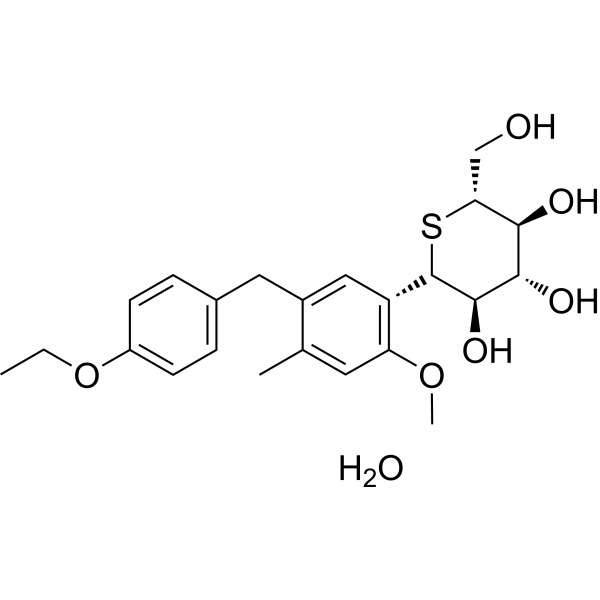
  • HY-10449A

    TS 071 hydrate

    SGLT Metabolic Disease
    Luseogliflozin (TS 071) hydrate is a selective potent and orally active second-generation sodium-glucose co-transporter 2 (SGLT2) inhibitor with an IC50 of 2.26 nM. Luseogliflozin hydrate can be used for the research of type 2 diabetes mellitus (T2DM) [2].
    Luseogliflozin hydrate
  • HY-E70532

    Biochemical Assay Reagents Others
    Ribonuclease T2 (animal free) (EC 4.6.1.19) is a biocatalyst and a key enzyme in new biocatalyst technologies. Enzyme engineering aims to enhance enzyme reaction kinetics, substrate selectivity and activity under adverse conditions (e.g., low or high pH). By introducing stimulus responsiveness to these enzyme modifications, dynamic control of activity is also possible. This product does not contain animal-derived ingredients .
    Ribonuclease T2 (animal free)
  • HY-P11826

    Collagen Metabolic Disease
    T2 peptide-1 is a linear peptide derived from Lumican degradation. T2 peptide-1 exhibits activity against endometrial adhesion progression and ability to inhibit the LumicanCollagen I interaction. T2 peptide-1 can be used for the research of liver fibrosis .
    T2 peptide-1
  • HY-172030

    Drug Derivative Neurological Disease
    2C-T hydrochloride is an analog of Mescaline and 2C-T-2 . Mescaline and 2C-T-2 have psychoactive effects.
    2C-T hydrochloride
  • HY-114566

    Histone Acetyltransferase Metabolic Disease
    SPV106 is histone acetylase (HAT) and GCN5-related N-acetyltransferases (GNAT) activator. SPV106 can be used for the research of type 2 diabetes (T2D) .
    SPV106
  • HY-153113

    DJT1116PG

    SGLT Endocrinology
    Rongliflozin (DJT1116PG) is a selective and orally active inhibitor of sodium-glucose co-transporter-2 (SGLT-2). Rongliflozin can be used for the research of type 2 diabetes mellitus (T2DM) .
    Rongliflozin
  • HY-175807

    Others Neurological Disease Metabolic Disease
    ppGalNAc-T2-IN-1 (Compound 15) is a Polypeptide N-acetyl-galactosaminyltransferase 2 (ppGalNAc-T2) inhibitor with an IC50 of 7.11  μM. ppGalNAc-T2-IN-1 can be used for metabolic and neurodevelopmental disorders research .
    ppGalNAc-T2-IN-1
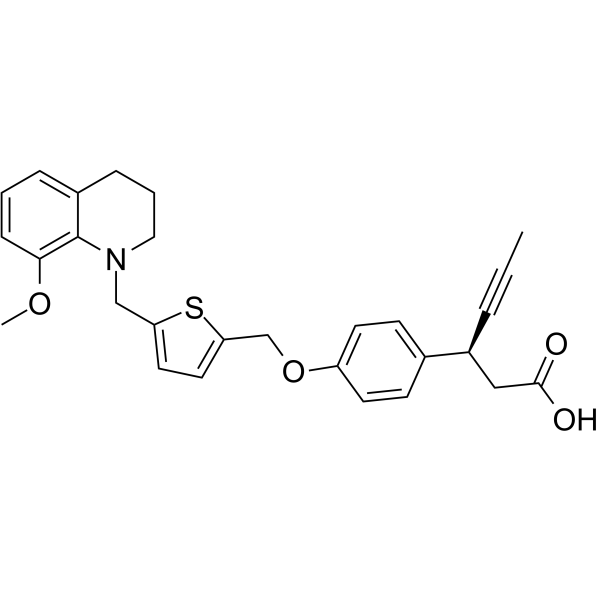
  • HY-128781

    GCGR Metabolic Disease
    Glucagon receptor antagonist-5 (compound 13K) is a potent and orally bioavailable indazole-based glucagon receptor antagonist (Ki=32 nM). Glucagon receptor antagonist-5 has potential for the treatment of type 2 diabetes mellitus (T2DM) .
    Glucagon receptor antagonist-5
  • HY-W653841

    Endogenous Metabolite Parasite Infection Inflammation/Immunology Cancer
    Chondroitin sulfate A disodium is a mucopolysaccharide extracted from animal cartilages such as porcine nasal cartilage, and serves as a major structural component of cartilage. Chondroitin sulfate A disodium is one of the specific receptors for the adhesion of Plasmodium falciparum-infected red blood cells in the microcirculation. Chondroitin sulfate A disodium can be used together with selenium to prepare nanoparticles for protecting cartilage against T‑2 toxin-induced damage. Chondroitin sulfate A disodium is abnormally highly expressed in ameloblastoma, and is particularly enriched in stellate reticulum-like tumor cells. Chondroitin sulfate A disodium can be applied to studies on Plasmodium infection mechanisms, cartilage protection and oral tumors [2] .
    Chondroitin sulfate A disodium
  • HY-106611

    SR 33287

    Phospholipase Cancer
    Brinazarone (SR 33287) is an inhibitor for acid lysosomal sphingomyelinase, and leads to cellular lipidosis. Brinazarone potentiates the cytotoxic effects of anti-Thy 1.2 AT15E RTA-IT on T2 cells and anti-CD5 T101 on CEM cells .
    Brinazarone
  • HY-13757S

    ICI 46474-d3 hydrochloride; (Z)-Tamoxifen-d3 hydrochloride; trans-Tamoxifen-d3 hydrochloride

    Apoptosis Estrogen Receptor/ERR Autophagy HSP Isotope-Labeled Compounds Cancer
    Tamoxifen-d3 hydrochloride is deuterated labeled Tamoxifen (Citrate) (HY-13757). Tamoxifen Citrate (ICI 46474) is an orally active, selective estrogen receptor modulator (SERM) which blocks estrogen action in breast cells and can activate estrogen activity in other cells, such as bone, liver, and uterine cells [2] .Tamoxifen Citrate is a potent Hsp90 activator and enhances the Hsp90 molecular chaperone ATPase activity. Tamoxifen Citrate also potent inhibits infectious EBOV Zaire and Marburg (MARV) with IC50 of 0.1 μM and 1.8 μM, respectively . Tamoxifen Citrate activates autophagy and induces apoptosis .Tamoxifen Citrate also can induce gene knockout of CreER(T2) transgenic mouse .
    Tamoxifen-d3 hydrochloride
  • HY-13757R

    ICI 46474 (Standard); (Z)-Tamoxifen Citrate (Standard); trans-Tamoxifen Citrate (Standard)

    Reference Standards Estrogen Receptor/ERR HSP Autophagy Apoptosis Cancer
    Tamoxifen (Citrate) (Standard) is the analytical standard of Tamoxifen (Citrate). This product is intended for research and analytical applications. Tamoxifen Citrate (ICI 46474) is an orally active, selective estrogen receptor modulator (SERM) which blocks estrogen action in breast cells and can activate estrogen activity in other cells, such as bone, liver, and uterine cells [2] .Tamoxifen Citrate is a potent Hsp90 activator and enhances the Hsp90 molecular chaperone ATPase activity. Tamoxifen Citrate also potent inhibits infectious EBOV Zaire and Marburg (MARV) with IC50 of 0.1 μM and 1.8 μM, respectively . Tamoxifen Citrate activates autophagy and induces apoptosis .Tamoxifen Citrate also can induce gene knockout of CreER(T2) transgenic mouse .
    Tamoxifen Citrate (Standard)
  • HY-E70350

    Endogenous Metabolite Others
    Ribonuclease T2, Aspergillus oryzae is a biocatalyst and a key enzyme in new biocatalyst technology. Enzyme engineering focuses on enhancing enzyme reaction kinetics, substrate selectivity, and activity under harsh conditions such as low or high pH. By introducing stimulus responsiveness to these enzyme modifications, dynamic control of activity is also possible .
    Ribonuclease T2, Aspergillus oryzae

Inquiry Online

Your information is safe with us. * Required Fields.

Salutation


Country or Region *

Applicant Name *


Organization Name *

Department *


Email Address *


Product Name *

Cat. No.


Requested quantity *

Phone Number *


Remarks

Inquiry Online

Inquiry Information

Product Name:
Cat. No.:
Quantity:
MCE Japan Authorized Agent:

