
1. Search Result
Search Result
Pathways Recommended: Stem Cell/Wnt Cell Cycle/DNA Damage
Results for "

U937 leukemia cells

" in MedChemExpress (MCE) Product Catalog:

29

Inhibitors & Agonists

1

Biochemical Assay Reagents

1

Inhibitory Antibodies

7

Natural
Products

2

Isotope-Labeled Compounds

Cat. No. Product Name Target Research Areas Chemical Structure
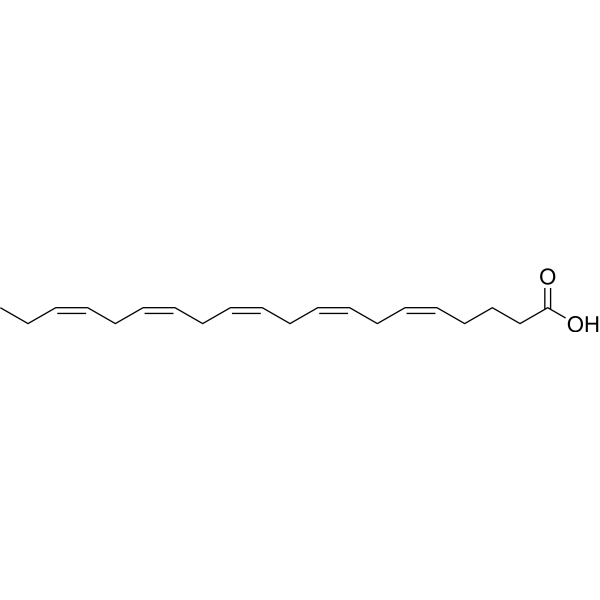
  • HY-B0660
    Eicosapentaenoic Acid
    Maximum Cited Publications
    30 Publications Verification

    EPA; Timnodonic acid

    Endogenous Metabolite Histone Demethylase Neurological Disease Cancer
    Eicosapentaenoic Acid (EPA) is an orally active Omega-3 long-chain polyunsaturated fatty acid (ω-3 LC-PUFA). Eicosapentaenoic Acid exhibits a DNA demethylating action that promotes the re-expression of the tumor suppressor gene CCAAT/enhancer-binding protein δ (C/EBPδ). Eicosapentaenoic Acid activates RAS/ERK/C/EBPβ pathway through H-Ras intron 1 CpG island demethylation in U937 leukemia cells. Eicosapentaenoic Acid can promote relaxation of vascular smooth muscle cells and vasodilation .
    Eicosapentaenoic Acid
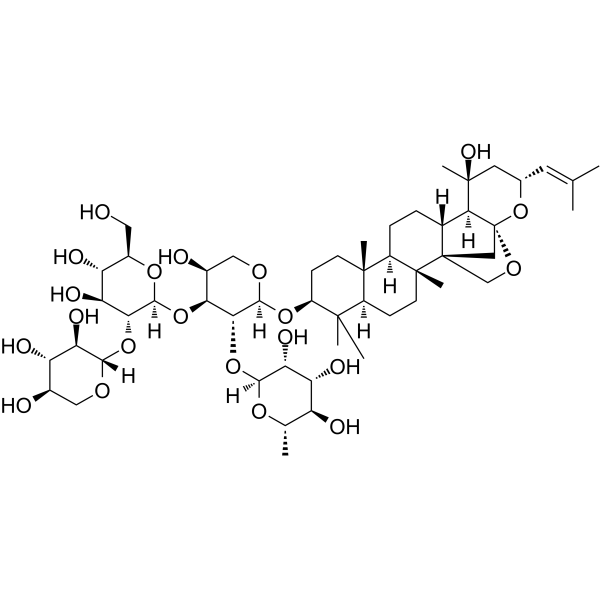
  • HY-N0660

    Apoptosis PARP Caspase AMPK Autophagy VEGFR Keap1-Nrf2 STING 11β-HSD Ferroptosis PI3K Akt p38 MAPK ERK Neurological Disease Metabolic Disease Inflammation/Immunology Cancer
    Jujuboside B is a bioactive saponin component isolated from Ziziphi Spinosae Semen (sour jujube seed), with oral efficacy and blood-brain barrier permeability. Jujuboside B induces acute leukemia cell death and drives necroptosis apoptosis by activating the RIPK1/RIPK3/MLKL pathway. Jujuboside B upregulates the expression of NOXA, PARP and caspase-3, activates AMPK, inhibits the proliferation of breast cancer cells, and induces cell apoptosis and autophagy. Jujuboside B inhibits angiogenesis and tumor growth by blocking the VEGFR-2 signaling pathway. Jujuboside B alleviates liver injury in mice by regulating the Nrf2-STING signaling pathway . Jujuboside B alleviates liver injury by regulating anti-inflammatory responses and downregulating the expression of 11β-HSD2. Jujuboside B induces ferroptosis and overcomes radioresistance in non-small cell lung cancer via the PPARγ-ATF3-Gpx4 signaling pathway. Jujuboside B exerts inhibitory effects on platelet aggregation. Jujuboside B inhibits febrile seizures by suppressing the activity of AMPA receptors. Jujuboside B reverses chronic unpredictable mild stress-promoted tumor progression by blocking the PI3K/Akt and MAPK/ERK pathways and dephosphorylating CREB signaling. Jujuboside B is applicable to related studies on acute leukemia, breast cancer, PM2.5-induced lung injury, hepatotoxicity, liver injury, colorectal cancer, non-small cell lung cancer, thromboembolic diseases, cardiovascular diseases associated with high platelet aggregation, febrile seizures, and depressive-like phenotypes .
    Jujuboside B
  • HY-149470

    Histone Acetyltransferase Cancer
    MOZ-IN-3 (Compound 6j) is a KAT6A (MOZ) acetyltransferase inhibitor (IC50: 30 nM). MOZ-IN-3 has antitumor activity against four different myeloid leukemia cell lines (HL-60, U937, SKNO-1, K562). MOZ-IN-3 has favorable metabolic stability and pharmacokinetics .
    MOZ-IN-3
  • HY-B0660R

    EPA (Standard); Timnodonic acid (Standard)

    Reference Standards Endogenous Metabolite Histone Demethylase Neurological Disease Cancer
    Eicosapentaenoic Acid (Standard) is the analytical standard of Eicosapentaenoic Acid. This product is intended for research and analytical applications. Eicosapentaenoic Acid (EPA) is an orally active Omega-3 long-chain polyunsaturated fatty acid (ω-3 LC-PUFA). Eicosapentaenoic Acid exhibits a DNA demethylating action that promotes the re-expression of the tumor suppressor gene CCAAT/enhancer-binding protein δ (C/EBPδ). Eicosapentaenoic Acid activates RAS/ERK/C/EBPβ pathway through H-Ras intron 1 CpG island demethylation in U937 leukemia cells. Eicosapentaenoic Acid can promote relaxation of vascular smooth muscle cells and vasodilation .
    Eicosapentaenoic Acid (Standard)
  • HY-138617
    AI-10-47
    1 Publications Verification

    RUNX Cancer
    AI-10-47 is a small molecule inhibitor of CBFβ-RUNX binding, with an IC50 of 3.2 μM .
    AI-10-47
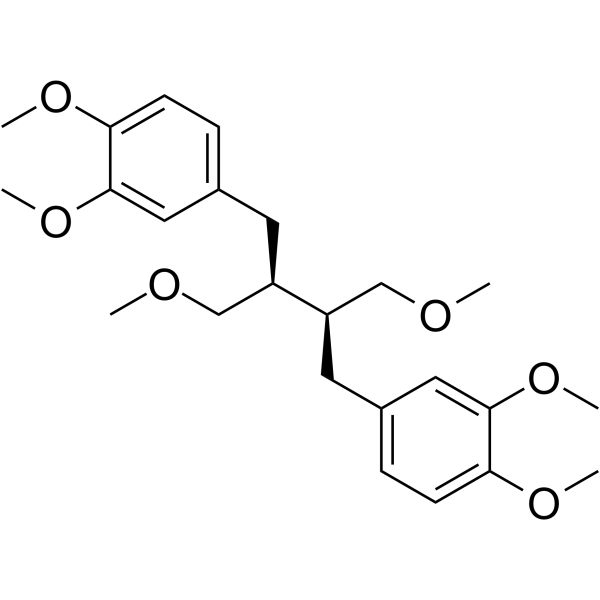
  • HY-N4107
    Phyllanthin
    1 Publications Verification

    TGF-beta/Smad Infection Inflammation/Immunology Cancer
    Phyllanthin is an effective oral anticancer agent. Phyllanthin inhibits MOLT-4 cell viability, increases apoptosis, inhibits cell migration and invasion. Phyllanthin exerts anti-fibrotic effects by down-regulating TGF signaling pathway via ALK5 and Smad2/3. Phyllanthin also has anti-inflammatory and antibacterial properties .
    Phyllanthin
  • HY-156694

    Apoptosis NADPH Oxidase Reactive Oxygen Species (ROS) Inflammation/Immunology Cancer
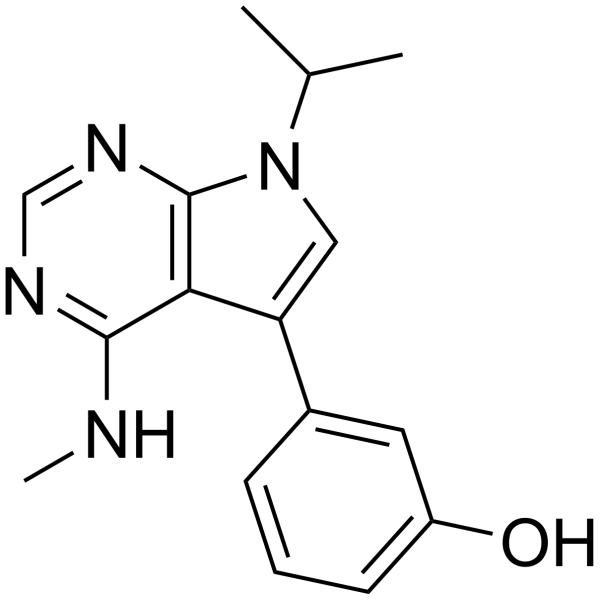
    Hydroxy-PP-Me is a selective CBR1 inhibitor with an IC50 of 759 nM. Hydroxy-PP-Me can inhibit serum starvation-induced apoptosis. Hydroxy-PP-Me can enhance the cytotoxic effects of Daunorubicin (HY-13062A) and As2O3 on tumor cells. Hydroxy-PP-Me can be used in the research of cancer such as leukemia .
    Hydroxy-PP-Me
  • HY-116392D

    Glucosylceramide Synthase (GCS) Apoptosis Cancer
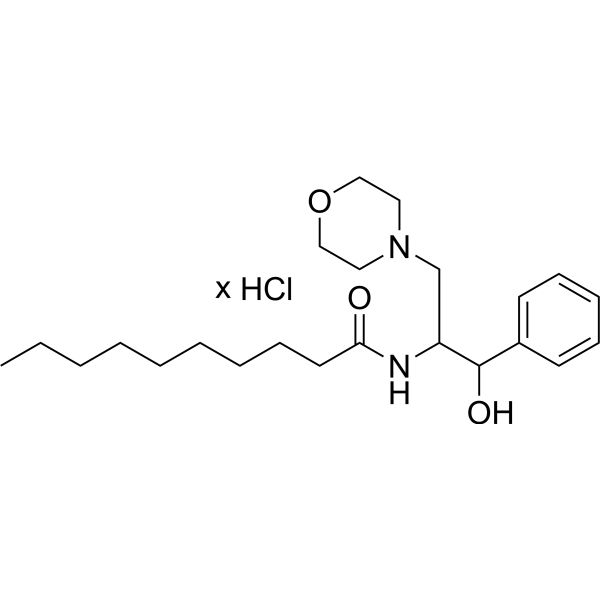
    PDMP hydrochloride is a glucosylceramide synthase (GCS) inhibitor. PDMP hydrochloride induces apoptosis in K562/A02 cells. PDMP hydrochloride can be used in cancer (such as leukemia) research .
    PDMP hydrochloride
  • HY-159059

    c-Myc Bcl-2 Family Eukaryotic Initiation Factor (eIF) Survivin β-catenin MMP Interleukin Related Cardiovascular Disease Neurological Disease Inflammation/Immunology Cancer
    Ganoderma Lucidum/Reishi Extract is a Ganoderma lucidum extract. Ganoderma Lucidum/Reishi Extract reduces the expression of c-Myc, BCL-2, BCL-XL, TERT, PDGFB, eIF4G, Survivin, β-catenin, and eIF4E. Ganoderma Lucidum/Reishi Extract downregulates the gene expression of MMP-9. Ganoderma Lucidum/Reishi Extract upregulates the expression of IL8. Ganoderma Lucidum/Reishi Extract is applicable to the research of inflammatory breast cancer. Ganoderma Lucidum is used in the research of various diseases, such as allergy, arthritis, hypertension, neurasthenia, inflammation, and cancer .
    Ganoderma Lucidum/Reishi Extract
  • HY-173444

    HDAC Transferrin Receptor Apoptosis Ferroptosis Cancer
    HDAC11-IN-3 (Compound A9) is a selective HDAC11 inhibitor (IC50: 4.1 nM). HDAC11-IN-3 has inhibitory effects on U937 and OCI-AML2 acute myeloid leukemia (AML) cell lines (IC50: 10 μM). HDAC11-IN-3 has significant anti-AML activity, inducing apoptosis, cell cycle arrest, and differentiation. HDAC11-IN-3 upregulates the iron transporters transferrin (TF) and transferrin receptor (TFRC), and activates the p62-Keap1-Nrf2-HMOX1 pathway, which together lead to increased intracellular iron levels and induce ferroptosis in AML cells. HDAC11-IN-3 can be used alone or in combination with Cytarabine (HY-13605) for AML research .
    HDAC11-IN-3
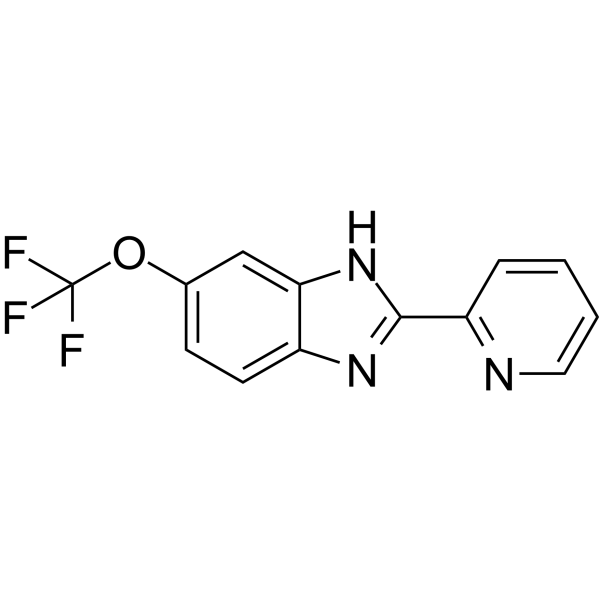
  • HY-155552

    Apoptosis CDK Caspase Cancer
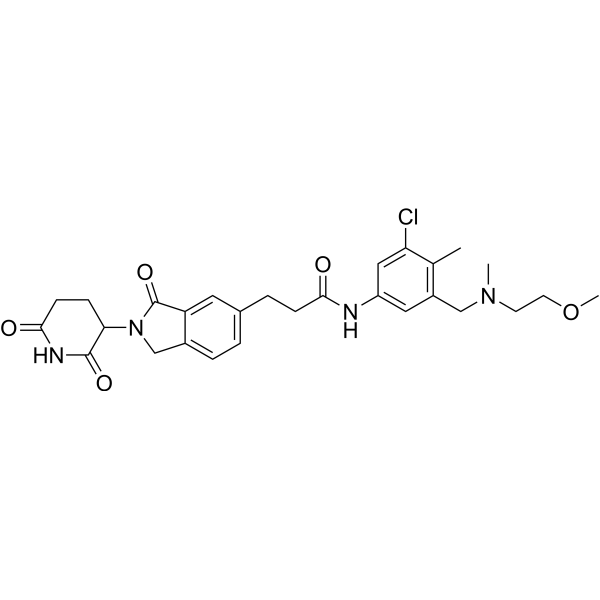
    GSPT1 degrader-1 is a highly selective degrader targeting GSPT1. GSPT1 degrader-1 induces degradation via the ubiquitin-proteasome system. GSPT1 degrader-1 induces G0/G1 phase arrest, apoptosis (apoptosis) and inhibits proliferation in leukemia cells. GSPT1 degrader-1 reduces the levels of CDK6 and Cyclin B1, while increases the levels of activated caspase-3 and caspase-9 in leukemia cells. GSPT1 degrader-1 can be used in leukemia research .
    GSPT1 degrader-1
  • HY-P991517

    Transmembrane Glycoprotein Reactive Oxygen Species (ROS) Cardiovascular Disease Cancer
    BI-836858 is a fully human anti-CD33 monoclonal antibody. BI-836858 reduces CD33+ cells via antibody-dependent cellular cytotoxicity (ADCC), blocks downstream signaling of S100A9/CD33, decreases the secretion of immunosuppressive cytokines and reactive oxygen species-induced genomic instability, and restores bone marrow hematopoietic function. BI-836858 is applicable to the research of myelodysplastic syndrome (MDS) and AML .
    BI-836858
  • HY-W011269
    Eicosapentaenoic Acid sodium
    Maximum Cited Publications
    30 Publications Verification

    EPA sodium; Timnodonic acid sodium

    Endogenous Metabolite Histone Demethylase Cardiovascular Disease Metabolic Disease Cancer
    Eicosapentaenoic Acid (EPA)sodium is an orally active Omega-3 long-chain polyunsaturated fatty acid (ω-3 LC-PUFA). Eicosapentaenoic Acid sodium exhibits a DNA demethylating action that promotes the re-expression of the tumor suppressor gene CCAAT/enhancer-binding protein δ (C/EBPδ). Eicosapentaenoic Acid sodium activates RAS/ERK/C/EBPβ pathway through H-Ras intron 1 CpG island demethylation in U937 leukemia cells. Eicosapentaenoic Acid sodium can promote relaxation of vascular smooth muscle cells and vasodilation .
    Eicosapentaenoic Acid sodium
  • HY-135664

    Dihydroorotate Dehydrogenase DNA/RNA Synthesis Cancer
    DHODH-IN-7 is a human dihydroorotate dehydrogenase (DHODH) inhibitor, with an IC50 of 0.91 μM. DHODH-IN-7 induces differentiation in acute myeloid leukemia .
    hDHODH-IN-5
  • HY-162658

    HDAC Apoptosis Cancer
    Leuxinostat is an inhibitor for HDAC with IC50 of 30 nM for hHDAC6. Leuxinostat inhibits the proliferation of cells THP1, K562, U937 and MEK1, induces apoptosis in leukemia cells NB4 and MOLT-4. Leuxinostat inhibits the expansion of hematopoietic stem cells and exhibits antileukemic activity in zebrafish models .
    Leuxinostat
  • HY-177766

    Molecular Glues Apoptosis Cancer
    GSPT1 degrader-17 (Compound 9q) is a potent and selective cereblon-based molecular glue degrader that targets G1 to S phase transition 1 (GSPT1). GSPT1 degrader-17 degrades GSPT1 in U937 cells with a DC50 of 35 nM and Dmax of 81.65%. GSPT1 degrader-17 has a strong inhibitory effect on U937, MOLT-4 and MV4-11 cells with IC50 values of 0.019, 0.006 and 0.027 μM. GSPT1 degrader-17 can induce cells apoptosis and G0/G1 phase arrest. GSPT1 degrader-17 can be used for the research of cancer, such as acute myeloid leukemia .
    GSPT1 degrader-17
  • HY-B0660S1

    EPA 1,2,3,4,5-13C, FA 20:5-13C5

    Isotope-Labeled Compounds Endogenous Metabolite Histone Demethylase Neurological Disease Cancer
    Eicosapentaenoic acid 1,2,3,4,5- 13C5 (EPA 1,2,3,4,5- 13C, FA 20:5- 13C5) is 13C labeled Eicosapentaenoic Acid. Eicosapentaenoic Acid (EPA) is an orally active Omega-3 long-chain polyunsaturated fatty acid (ω-3 LC-PUFA). Eicosapentaenoic Acid exhibits a DNA demethylating action that promotes the re-expression of the tumor suppressor gene CCAAT/enhancer-binding protein δ (C/EBPδ). Eicosapentaenoic Acid activates RAS/ERK/C/EBPβ pathway through H-Ras intron 1 CpG island demethylation in U937 leukemia cells. Eicosapentaenoic Acid can promote relaxation of vascular smooth muscle cells and vasodilation .
    Eicosapentaenoic acid 1,2,3,4,5-13C5
  • HY-122092

    Telomerase Cancer
    FJ-5002 is a telomerase inhibitor with an IC50 of 2 μM. FJ-5002 can induce telomere shortening, increased chromosomal abnormalities, and senescence/crisis-like features in the human leukemia cell line U937. FJ-5002 exhibits antitumor activity and can be used in the study of cancer .
    FJ-5002
  • HY-155245

    CDK Bcl-2 Family Cancer
    A09-003 is a CDK-9 inhibitor (IC50: 16 nM). A09-003 inhibits leukemia cell proliferation (IC50: 1.90, 0.86, 2.49, 1.84, 0.48 μM for BDCM, Molm-14, THP-1, U937, MV4-11 cells). A09-003 induces apoptosis and decreases Mcl-1 expression through Thr163 dephosphorylation .
    A09-003
  • HY-B0660A

    EPA metformin; Timnodonic acid metformin

    Endogenous Metabolite Histone Demethylase Neurological Disease Cancer
    Eicosapentaenoic Acid (EPA) metformin is an orally active Omega-3 long-chain polyunsaturated fatty acid (ω-3 LC-PUFA). Eicosapentaenoic acid metformin exhibits a DNA demethylating action that promotes the re-expression of the tumor suppressor gene CCAAT/enhancer-binding protein δ (C/EBPδ). EEicosapentaenoic acid metformin activates RAS/ERK/C/EBPβ pathway through H-Ras intron 1 CpG island demethylation in U937 leukemia cells. Eicosapentaenoic acid metformin can promote relaxation of vascular smooth muscle cells and vasodilation .
    Eicosapentaenoic acid metformin
  • HY-B0660S2

    EPA-d10; Timnodonic acid-d10

    Isotope-Labeled Compounds Endogenous Metabolite Histone Demethylase Neurological Disease Cancer
    Eicosapentaenoic acid-d10 (EPA-d10) is the deuterium labeled Eicosapentaenoic acid (HY-B0660). Eicosapentaenoic Acid (EPA) is an orally active Omega-3 long-chain polyunsaturated fatty acid (ω-3 LC-PUFA). Eicosapentaenoic Acid exhibits a DNA demethylating action that promotes the re-expression of the tumor suppressor gene CCAAT/enhancer-binding protein δ (C/EBPδ). Eicosapentaenoic Acid activates RAS/ERK/C/EBPβ pathway through H-Ras intron 1 CpG island demethylation in U937 leukemia cells. Eicosapentaenoic Acid can promote relaxation of vascular smooth muscle cells and vasodilation .
    Eicosapentaenoic acid-d10
  • HY-N4107R

    Reference Standards TGF-beta/Smad Infection Inflammation/Immunology Cancer
    Phyllanthin (Standard) is the analytical standard of Phyllanthin. This product is intended for research and analytical applications. Phyllanthin is an effective oral anticancer agent. Phyllanthin inhibits MOLT-4 cell viability, increases apoptosis, inhibits cell migration and invasion. Phyllanthin exerts anti-fibrotic effects by down-regulating TGF signaling pathway via ALK5 and Smad2/3. Phyllanthin also has anti-inflammatory and antibacterial properties .
    Phyllanthin (Standard)
  • HY-N1328

    Others Cancer
    Safrolglycol is a phenylpropane compound that can be found in the wood of Cinnamomum parthenoxylon. Safrolglycol inhibits the proliferation of human leukemia cells and can be used in leukemia-related research .
    Safrolglycol
  • HY-181949

    PROTACs Epigenetic Reader Domain Cancer
    PROTAC BRD9 Degrader-10 is a PROTAC degrader targeting BRD9, with an IC50 of 2.97 μM against BRD9. PROTAC BRD9 Degrader-10 induces BRD9 degradation via the ubiquitin-proteasome system by recruiting the VHL E3 ubiquitin ligase. PROTAC BRD9 Degrader-10 reduces the viability and inhibits the proliferation of myeloid leukemia cells. PROTAC BRD9 Degrader-10 is applicable for the research of acute myeloid leukemia .
    PROTAC BRD9 Degrader-10
  • HY-182957

    MNK Pim Apoptosis Caspase Eukaryotic Initiation Factor (eIF) PARP c-Myc Cancer
    MNK/PIM-IN-2 is a Mnk/Pim kinase inhibitor with an IC50 of 32 nM for Mnk1, 3 nM for Mnk2, and 37 nM for Pim1. MNK/PIM-IN-2 reduces the levels of p-eIF4E and p-4EBP1. MNK/PIM-IN-2 induces cell cycle arrest, apoptosis (apoptosis) and exerts antiproliferative effects in leukemia cells. MNK/PIM-IN-2 can be used in studies related to leukemia .
    MNK/PIM-IN-2
  • HY-181951

    PROTACs Epigenetic Reader Domain Cancer
    PROTAC BRD9 Degrader-11 is a VHL-based BRD9 PROTAC degraderwith an IC50 of 0.66 μM. PROTAC BRD9 Degrader-11 induces selective, proteasome-dependent degradation of BRD9 via the ubiquitin-proteasome system. PROTAC BRD9 Degrader-11 impairs cell viability, suppresses proliferation, and arrests growth of acute myeloid leukemia cells. PROTAC BRD9 Degrader-11 can be used for the research of acute myeloid leukemia .
    PROTAC BRD9 Degrader-11
  • HY-181078

    c-Myc Apoptosis Bcl-2 Family Cancer
    Cephalotaxine-ester-(R)-1-ethoxy-3-mercaptopropan-2-ol-Ph (3,4OMe) is an anti-leukemic agent with potent ribosome-targeting protein synthesis inhibition. Cephalotaxine-ester-(R)-1-ethoxy-3-mercaptopropan-2-ol-Ph (3,4OMe) downregulates short-lived oncoproteins, including c-Myc and Mcl-1, by inhibiting protein synthesis. Cephalotaxine-ester-(R)-1-ethoxy-3-mercaptopropan-2-ol-Ph (3,4OMe) induces cell cycle arrest at the G0/G1 phase and triggers mitochondrial pathway-mediated apoptosis in acute myeloid leukemia (AML) cells. Cephalotaxine-ester-(R)-1-ethoxy-3-mercaptopropan-2-ol-Ph (3,4OMe) is applicable for research on leukemia .
    Cephalotaxine-ester-(R)-1-ethoxy-3-mercaptopropan-2-ol-Ph(3,4OMe)
  • HY-182644

    Toll-like Receptor (TLR) NF-κB TNF Receptor Interleukin Related Cancer
    SMU-Z1 is a TLR1/2 heterodimer agonist with an EC50 of 4.88 nM. SMU-Z1 activates the NF-κB pathway, triggers pro-inflammatory cytokine production, and induces the generation of TNF-α, IL-1β, IL-6 and NO. SMU-Z1 promotes splenocyte proliferation and upregulates the expression of CD8 +T cells, NK cells and dendritic cells. SMU-Z1 exhibits significant anti-tumor effects in mouse leukemia models. SMU-Z1 can be used for leukemia-related research .
    SMU-Z1
  • HY-180416

    Antibiotic Cancer
    TMC-169 is a potent antibiotic of the Aspochalasin group that can be isolated from Aspergillus flavipes. TMC-169 exhibits anti-tumor activity against multiple cancer cells. TMC-169 can be used for the research of cancer, such as hematologic malignancies, non-small cell lung cancer, breast cancer, and glioma .
    TMC-169

Inquiry Online

Your information is safe with us. * Required Fields.

Salutation


Country or Region *

Applicant Name *


Organization Name *

Department *


Email Address *


Product Name *

Cat. No.


Requested quantity *

Phone Number *


Remarks

Inquiry Online

Inquiry Information

Product Name:
Cat. No.:
Quantity:
MCE Japan Authorized Agent:

