


1. Search Result
Search Result
Results for "

acidic peptide

" in MedChemExpress (MCE) Product Catalog:

291

Inhibitors & Agonists

5

Screening Libraries

11

Fluorescent Dyes

24

Biochemical Assay Reagents

237

Peptides

8

Natural
Products

3

Isotope-Labeled Compounds

4

Click Chemistry

9

Oligonucleotides

Cat. No. Product Name Target Research Areas Chemical Structure
  • HY-Y1703

    Biochemical Assay Reagents Others
    HATU is a third-generation uronium salt peptide coupling reagent. HATU increases the rate of peptide coupling reactions, activates amino acids, promotes peptide bond formation in both solution-phase and solid-phase synthesis, and also facilitates peptide assembly, fragment coupling, and linear peptide cyclization. HATU can promote the N-acylation of chitosan to generate amide-linked cationic derivatives with a controllable degree of substitution. HATU is commonly used in amine acylation reactions .
    HATU
  • HY-P0239
    HA Peptide
    Maximum Cited Publications
    15 Publications Verification

    Influenza Virus Inflammation/Immunology
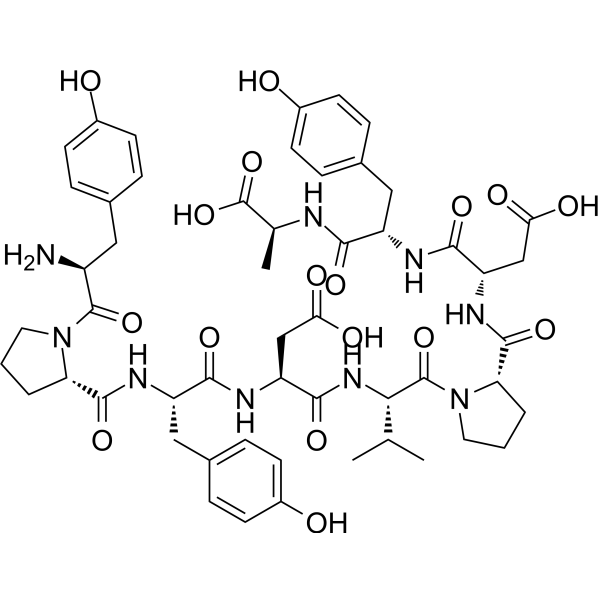
    HA Peptide (HA tag) is a nine amino acids peptide derived from the human influenza hemagglutinin (HA). HA Peptide is extensively used to isolate, purify, detect, and track the protein of interest in cell biology and biochemistry.
    HA Peptide
  • HY-Z0275

    Biochemical Assay Reagents Bacterial Infection
    HOAT is a peptide bond-forming reagent. HOAT is utilized to affect formation of peptide bonds by coupling carboxylic acids with amines. HOAt is not mutagenic in the bacterial reverse mutation test .
    HOAT
  • HY-116010
    Oleandomycin
    1 Publications Verification

    Bacterial Antibiotic Infection
    Oleandomycin is a macrolide antibiotic structurally closely related to Erythromycin. Oleandomycin is similar to Erythromycin with antimicrobial activity. Oleandomycin inhibits protein synthesis by interference with translation of activated amino acids to nascent peptide chains on the ribosomes .
    Oleandomycin
  • HY-E70200

    Ser/Thr Protease Others
    Recombinant Kex2 protease is a membrane-bound, Ca 2+-dependent serine protease. Recombinant Kex2 protease specifically recognize and cleave the carboxyl-terminal peptide bonds of dibasic amino acids .
    Recombinant Kex2 protease
  • HY-P2746

    EC 3.4.2.2

    Endogenous Metabolite Metabolic Disease
    Carboxypeptidase B, Porcine pancreas (EC 3.4.2.2) is a peptide exonuclease that can specifically degrade peptide chains. Carboxypeptidase B is progressively degraded from the C-terminal to release free amino acids. Carboxypeptidase B hydrolyzes only peptide bonds with basic amino acids (such as arginine and lysine) as C-terminal residues .
    Carboxypeptidase B, Porcine pancreas
  • HY-P4244

    H-Ala-Ser-OH

    Amino Acid Derivatives Others
    Ala-Ser (H-Ala-Ser-OH) is a dipeptide composed of two amino acids linked by a peptide bond .
    Ala-Ser
  • HY-P3211B
    Nangibotide scrambled peptide
    2 Publications Verification

    LR12-scr

    TREM receptor Inflammation/Immunology
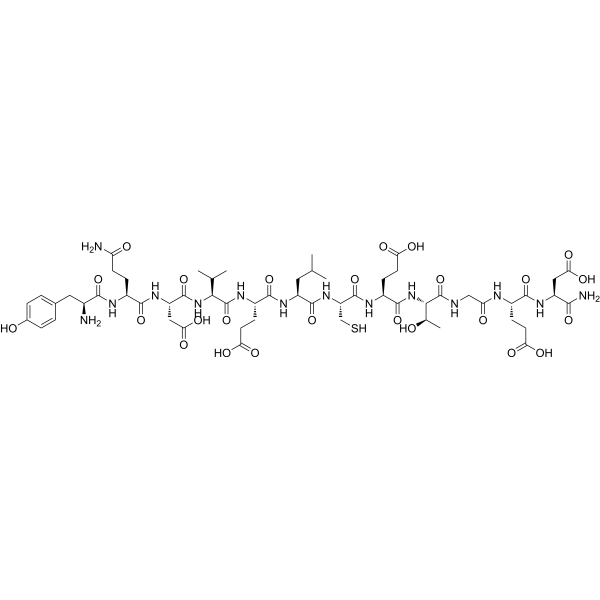
    Nangibotide scrambled peptide (LR12-scr) is a scrambled control peptide composed of the same amino acids from LR12 (Nangibotide; HY-P3211) but in a random sequence (YQDVELCETGED) .
    Nangibotide scrambled peptide
  • HY-W007655

    Biochemical Assay Reagents Amino Acid Derivatives Others
    Fmoc-D-Lys (Boc)-OH is an Fmoc- and Boc-protected D-lysine derivative. Fmoc-D-Lys (Boc)-OH ensures the precise incorporation of D-lysine into peptide chains, maintaining the specific conformation and biological activity of peptides. Fmoc-D-Lys (Boc)-OH can be used in research on the synthesis of peptides containing unnatural amino acids .
    Fmoc-D-Lys(Boc)-OH
  • HY-P11285A

    Long acting GIPRA-1 TFA

    Insulin Receptor Metabolic Disease
    LAGIPRA peptide TFA is a long-acting GIP1R agonist. LAGIPRA peptide TFA enhances insulin sensitivity by augmenting glucose disposal and reduces branched-chain amino acids (BCAAs) and ketoacids. LAGIPRA peptide TFA has the potential for the research of type 2 diabetes .
    LAGIPRA peptide TFA
  • HY-P11146

    Sakacin P inducer peptide

    Bacterial Infection
    SppIP (Sakacin P inducer peptide) is a peptide consisting of 19 amino acids . SppIP is an essential inducer for sakacin P production . SppIP can induce the expression of PRRSV GP5 and SARS-CoV-2 spike protein in recombinant Lactobacillus plantarum. SppIP can activate the transcription of the sakacin P promoter to drive the expression of downstream heterologous capsid proteins, increasing the proportion of PCV2d capsid proteins displayed on the cell surface of Lactobacillus plantarum. SppIP can be used in studies related to sakacin P induction .
    SppIP
  • HY-W615153

    Amino Acid Derivatives Others
    Fmoc-L-Lys[Oct-(OtBu)-Glu-(OtBu)-AEEA-AEEA]-OH is an L-Lys (an amino acid) derivative. Fmoc protects amino acids, ensuring their accurate peptide synthesis .
    Fmoc-L-Lys[Oct-(OtBu)-Glu-(OtBu)-AEEA-AEEA]-OH
  • HY-P4076

    HIV DNA Alkylator/Crosslinker Infection
    MPG peptides, Pβ is an amphipathic cell-penetrating peptide. MPG peptides, Pβ consists of three components: the hydrophobic fusion sequence (GALFLGFLGAAGSTMGA) of HIV glycoprotein 41, a spacer domain (WSQP), and the nuclear localization signal (KKKRKV) of the large T antigen of Simian virus 40. MPG peptides, Pβ can form stable non-covalent complexes with nucleic acids (including DNA) through electrostatic interactions and improve their intracellular delivery. MPG peptides, Pβ can be used in studies of HIV-1-related immune responses .
    MPG peptides, Pβ
  • HY-133803

    Amino Acid Derivatives Others
    Z-Ala-Ala-OH is an N-benzyloxycarbonyl (Z) dipeptide containing small nonpolar amino acids. Z-Ala-Ala-OH is used for enzymatic peptide synthesis .
    Z-Ala-Ala-OH
  • HY-P10242

    TGF-beta/Smad Others
    Myostatin inhibitory peptide 7 is a 23 amino acids peptide, which is derived from amino acids 21 to 43 of the mouse myostatin prodomain. Myostatin inhibitory peptide 7 inhibits myostatin with a Kd of 29.7 nM. Myostatin inhibitory peptide 7 can be used for researches of muscle atrophic disorders .
    Myostatin inhibitory peptide 7
  • HY-E70201

    EC 3.4.2.2 (MS grade)

    Endogenous Metabolite Others
    Carboxypeptidase B (MS grade) is a peptide exonuclease that can specifically degrade peptide chains. Carboxypeptidase B (MS grade) is progressively degraded from the C-terminal to release free amino acids. Carboxypeptidase B (MS grade) hydrolyzes only peptide bonds with basic amino acids (such as arginine and lysine) as C-terminal residues .
    Carboxypeptidase B (MS grade)
  • HY-P0312
    c-Myc Peptide TFA
    1 Publications Verification

    c-Myc Cancer
    c-Myc Peptide (TFA) is a synthetic peptide corresponding to the C-terminal amino acids (410-419) of human c-myc protein, and participates in regulation of growth-related gene transcription.
    c-Myc Peptide TFA
  • HY-P0239A
    HA Peptide TFA
    Maximum Cited Publications
    15 Publications Verification

    Influenza Virus Inflammation/Immunology
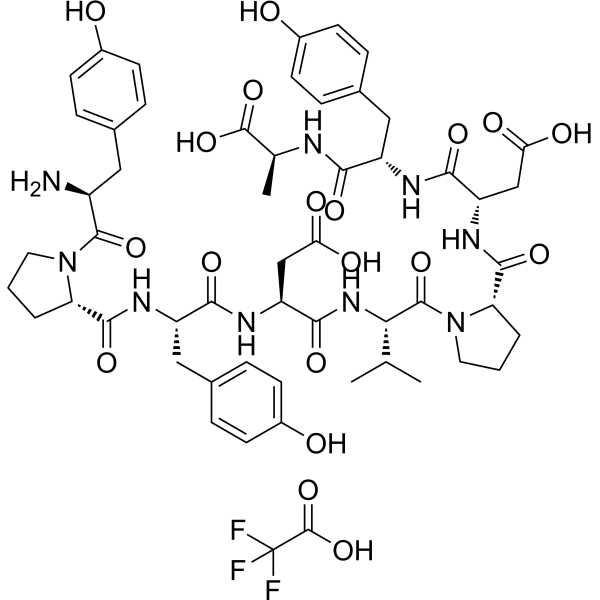
    HA Peptide (TFA) is a nine amino acids peptide derived from the human influenza hemagglutinin (HA). HA Peptide (TFA) is extensively used to isolate, purify, detect, and track the protein of interest in cell biology and biochemistry .
    HA Peptide TFA
  • HY-P2526
    LyP-1
    2 Publications Verification

    Complement System Cancer
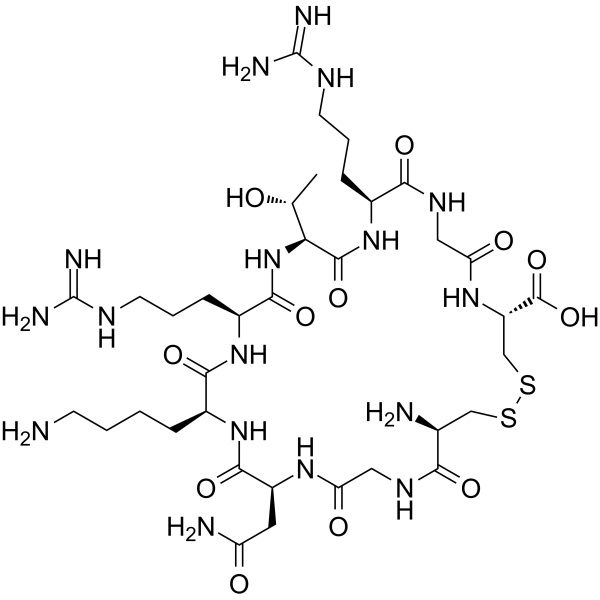
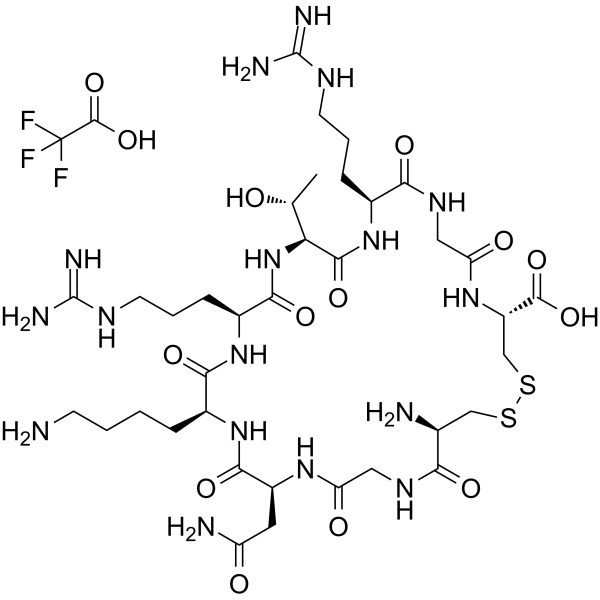
    LyP-1 is a cyclic 9-amino-acids tumor homing peptide and selectively bind to p32 receptors overexpressed in various tumor-associated cells .
    LyP-1
  • HY-P3452

    Tyrosinase Inflammation/Immunology
    Tetrapeptide-30 is a skin-brightening peptide consisting of four amino acids. Tetrapeptide-30 can act as a tyrosinase inhibitor, lightening hyperpigmentation and evening out skin tone by reducing the amount of tyrosinase and inhibiting melanocyte activation .
    Tetrapeptide-30
  • HY-P11285

    Long acting GIPRA-1

    Insulin Receptor Metabolic Disease
    LAGIPRA peptide is a long-acting GIP1R agonist. LAGIPRA peptide enhances insulin sensitivity by augmenting glucose disposal and reduces branched-chain amino acids (BCAAs) and ketoacids. LAGIPRA peptide has the potential for the research of type 2 diabetes .
    LAGIPRA peptide
  • HY-W011412

    Biochemical Assay Reagents Others
    TSTU is used as a coupling reagent in peptide chemistry. TSTU can convert carboxylic acids into the corresponding N-hydroxysuccinimidyl (NHS) esters. TSTU can be applied to the attachment of labels to peptides, proteins, etc .
    TSTU
  • HY-P1826

    CD74 Inflammation/Immunology Cancer
    CLIP (86-100) is amino acids 86 to 100 fragment of class II-associated invariant chain peptide (CLIP). CLIP is a small self-peptide and cleavage product of the invariant chain that resides in the HLA-II antigen binding groove and is believed to play a critical role in the assembly and transport of MHC class II alphabetaIi complexes through its interaction with the class II peptide-binding site .
    CLIP (86-100)
  • HY-W843885

    L-α-Glutamyl-L-threonine; Glu-Thr

    CaSR Others
    H-Glu-Thr-OH (L-α-Glutamyl-L-threonine) is a dipeptide made up of two amino acids—glutamic acid (Glu) and threonine (Thr)—connected by a peptide bond, and it acts as an agonist for the extracellular calcium-sensing receptor (CaSR) .
    H-Glu-Thr-OH
  • HY-P3150

    Ser/Thr Protease Others
    Recombinant Proteinase K is a serine protease that cleaves the carboxy-terminated peptide bonds of aliphatic and aromatic amino acids. Recombinant Proteinase K can be used to digest proteins and remove contamination from nucleic acid preparations .
    Recombinant Proteinase K
  • HY-P1899

    MHC Inflammation/Immunology
    Smcy HY Peptide (738-746) is a H2-D b-restricted peptide corresponding to amino acids 738-746 of Smcy protein .
    Smcy HY Peptide (738-746)
  • HY-P2981

    Carboxypeptidase Y; EC 3.4.16.1

    Carboxypeptidase Others
    Carboxypeptidase C is a carboxypeptidase, is often used in biochemical studies. Carboxypeptidase C removes COOH-terminal lysine, arginine, and proline, as well as all other neutral, aliphatic, aromatic, and the acidic protein amino acids of a peptide chain .
    Carboxypeptidase C
  • HY-P1437

    Neuropeptide Y Receptor Neurological Disease
    Neuropeptide S (mouse) is a bioactive peptide. Neuropeptide S (mouse), as a neurotransmitter/neuromodulator of 20 amino acids, can be used for the research of arousal, anxiety, locomotion, feeding behaviors, memory and agent addiction .
    Neuropeptide S (mouse)
  • HY-P10474

    Drug Isomer Others
    RYTVELA is a deriviative of the peptide antagonist of interleukin-1 receptor 1 (IL-1R1) d-(RYTVELA) (HY-P10353) that contains all L-amino acids .
    RYTVELA
  • HY-P3596A

    Mouse growth hormone-releasing factor TFA

    GHSR Endocrinology
    GHRF, mouse TFA, a mouse growth hormone-releasing factor, is a peptide containing 44 amino acids. GHRF, mouse TFA stimulates the release and synthesis of growth hormone .
    GHRF, mouse TFA
  • HY-P4029

    HCV Infection
    HCV-1 e2 Protein (484-499) is a peptide consisting of 16 amino acids. HCV-1 e2 Protein (484-499) is derived from the envelope 2 protein of hepatitis C virus in the sera from individuals with antibodies to HCV .
    HCV-1 e2 Protein (484-499)
  • HY-P3975

    pGlu-His-Pro-Gly-NH2

    GnRH Receptor Endocrinology
    Glp-His-Pro-Gly-NH2 (pGlu-His-Pro-Gly-NH2) is a peptide containing 4 amino acids. Glp-His-Pro-Gly-NH2 stimulates gonadotrophin, luteinizing hormone (LH) and follicle stimulating hormone (FSH) release .
    Glp-His-Pro-Gly-NH2
  • HY-P3539

    GCGR Neurological Disease Endocrinology
    Exendin-4 (3-39) is a peptide. Exendin-4 (3-39) is a truncated form of Exendin-4 (HY-13443) that lacks the first two amino acids. Exendin-4 is a potent Glucagon-like peptide-1 receptor (GLP-1r) agonist. Exendin-4 (3-39) and Exendin-4 can be used for the research of diabetic and hypothalamic-pituitary-adrenal (HPA) axis .
    Exendin-4 (3-39)
  • HY-148217

    Others Others
    DB02307 is a dipeptide that contains a sequence of two alpha-amino acids joined by a peptide bond .
    DB02307
  • HY-79404A

    Amino Acid Derivatives Others
    Boc-beta-t-butyl-d-alanine is an intermediate, can be used in the synthesis of peptides and other amino acids .
    Boc-beta-t-butyl-d-alanine
  • HY-P5818

    Sodium Channel Neurological Disease
    BDS-II is a peptide toxin, and is composed of 43 amino acids. BDS-II is a selective Kv3.4 channel inhibitor .
    BDS-II
  • HY-P3758

    Natriuretic Peptide Receptor (NPR) Others
    BNP (1-21), Pro (Human) is a peptide containg 21 amino acids. B-Type Natriuretic Peptide (BNP), a cardiac natriuretic hormone. BNP together with the highly homologous atrial natriuretic peptide, it forms a dual natriuretic peptide system of the heart. BNP is responsible for changes in the heart organogenesis and is associated with transition to extrauterine life .
    BNP (1-21), Pro (Human)
  • HY-P1590

    JAK Inflammation/Immunology Cancer
    Tyrosine Protein Kinase JAK 2 (Phospho-Tyr8, 9) is a peptide corresponding to amino acids 475 to 491 of mouse JAK2.
    Tyrosine Protein Kinase JAK 2 (Phospho-Tyr8, 9)
  • HY-P3596

    Mouse growth hormone-releasing factor

    GHSR Endocrinology
    GHRF, mouse, a mouse growth hormone-releasing factor, is a peptide containing 44 amino acids. GHRF, mouse stimulates the release and synthesis of growth hormone .
    GHRF, mouse
  • HY-116010A

    Antibiotic Bacterial Infection
    Oleandomycin phosphate is a macrolide antibiotic structurally closely related to Erythromycin. Oleandomycin is similar to Erythromycin with antimicrobial activity. Oleandomycin inhibits protein synthesis by interference with translation of activated amino acids to nascent peptide chains on the ribosomes .
    Oleandomycin phosphate
  • HY-P11189

    Bacterial Infection
    Astacidin 1 is an antibacterial peptide. Astacidin 1 can be produced by a proteolytic cleavage from hemocyanin under acidic conditions. Astacidin 1 has broad-spectrum antibacterial activity against both Gram-positive and Gram-negative bacteria .
    Astacidin 1
  • HY-P5109

    Cholecystokinin Receptor Others
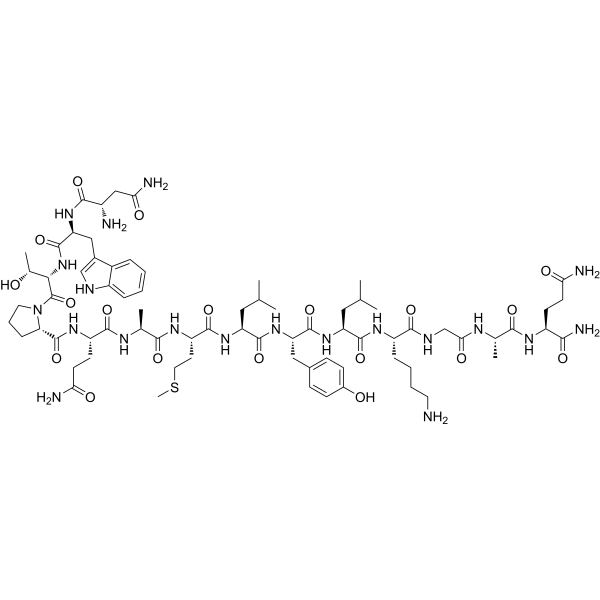
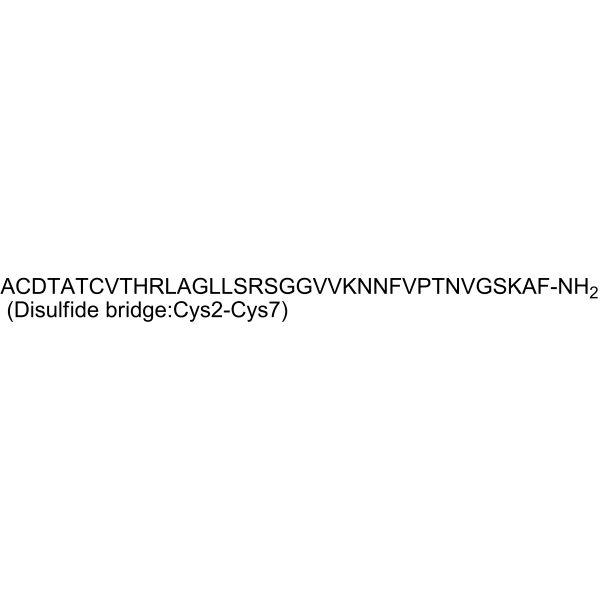
    Minigastrin is an acidic peptide. Minigastrin can be used to study peptidepeptide interaction .
    Minigastrin
  • HY-P2842

    Biochemical Assay Reagents Others Cancer
    Aminopeptidase catalyzes the cleavage of amino acids from the amino terminus of protein or peptide substrates .
    Aminopeptidase
  • HY-P3621

    GCGR Metabolic Disease
    Biotinyl-Glucagon (1-29), human, bovine, porcine is a biotinylated glucagon. Glucagon is a peptide hormone, produced by α-cells of the pancreas, can increase concentration of glucose and fatty acids in the bloodstream .
    Biotinyl-Glucagon (1-29), human, bovine, porcine
  • HY-P10242A

    TGF-beta/Smad Others
    Myostatin inhibitory peptide 7 TFA is a 23 amino acids peptide, which is derived from amino acids 21 to 43 of the mouse myostatin prodomain. Myostatin inhibitory peptide 7 TFA inhibits myostatin with a Kd of 29.7 nM. Myostatin inhibitory peptide 7 TFA can be used for researches of muscle atrophic disorders .
    Myostatin inhibitory peptide 7 TFA
  • HY-P10942

    Small Interfering RNA (siRNA) Neurological Disease
    CGN peptide is a 13 amino acid peptide composed of D-amino acids, referred to as CGN peptide. CGN peptide is the retro-inverso isomer of the l-peptide TGN (TGNYKALHPHNG) and can deliver siRNA to the blood-brain barrier (BBB). CGN peptide can be used in Alzheimer's disease (AD) research .
    CGN peptide
  • HY-P10942A

    Small Interfering RNA (siRNA) Neurological Disease
    CGN peptide TFA is a 13 amino acid peptide composed of D-amino acids, referred to as CGN peptide. CGN peptide TFA is the retro-inverso isomer of the l-peptide TGN (TGNYKALHPHNG) and can deliver siRNA to the blood-brain barrier (BBB). CGN peptide TFA can be used in Alzheimer's disease (AD) research .
    CGN peptide TFA
  • HY-P2360

    Ras 5-17

    Ras Others
    G12 (Ras 5-17) is a wild-type Ras peptide consisted of amino acids 5-17 (KLVVVGAGGVGKS). G12 can be used as a control of mutant Ras peptides studies (such V12) .
    G12
  • HY-P11322

    Amino Acid Derivatives Neurological Disease
    NHIP peptide is a peptide segment containing 20 amino acids located in the nucleus of the cell. NHIP is highly expressed in neuronal derived cells such as LUHMES cells. NHIP peptide can promote the proliferation of 293T cells. NHIP peptide regulates gene networks related to neural development and autism spectrum disorder (ASD) .
    NHIP peptide
  • HY-P5206

    Bacterial Infection
    Garvicin KS, GakB is a peptide at sizes of 34 amino acids to form bacteriocin garvicin KS (GarKS), with other 2 peptides, GakA, and GakC. Garvicin KS, GakB inhibits fibroblast viability and proliferation. Garvicin KS, GakB with GakA, is a potent combination with good peptide stability, antimicrobial efficacy, and fibroblast viability/proliferation effects. Garvicin KS peptides inhibit MSSA with MIC values in the order GakB >GakC >GakA .
    Garvicin KS, GakB

Inquiry Online

Your information is safe with us. * Required Fields.

Salutation


Country or Region *

Applicant Name *


Organization Name *

Department *


Email Address *


Product Name *

Cat. No.


Requested quantity *

Phone Number *


Remarks

Inquiry Online

Inquiry Information

Product Name:
Cat. No.:
Quantity:
MCE Japan Authorized Agent: