32 Results for "

adrenergic function

" in MedChemExpress (MCE) Product Catalog:
Products (32)

32 Results for "adrenergic function" in MCE Product Catalog:

5
5 Cited Publications
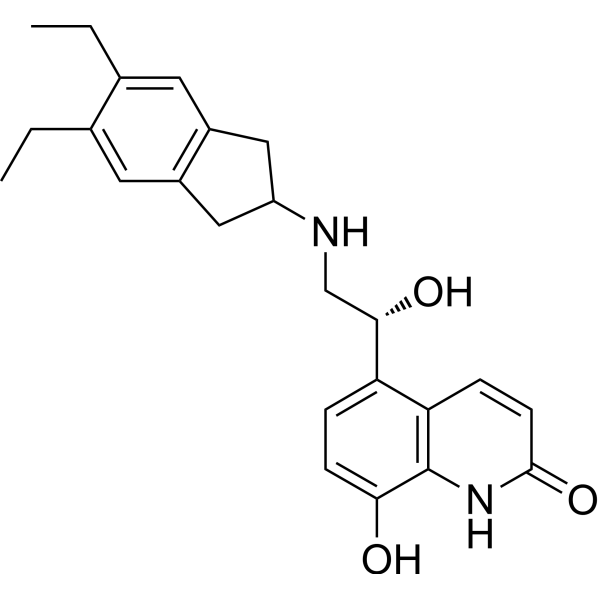
Cat. No.: HY-14299
CAS No.: 312753-06-3
Purity:  99.98%
Indacaterol is an orally active ultra-long-acting β2 adrenergic receptor (ADRB2) agonist. Indacaterol inhibits NF-κB activity in a β-arrestin2-dependent manner, preventing further lung damage and improving lung function in COPD (chronic obstructive pulmonary disorder). Indacaterol can also be used in cardiovascular disease research .
loading...
    loading...
5
5 Cited Publications
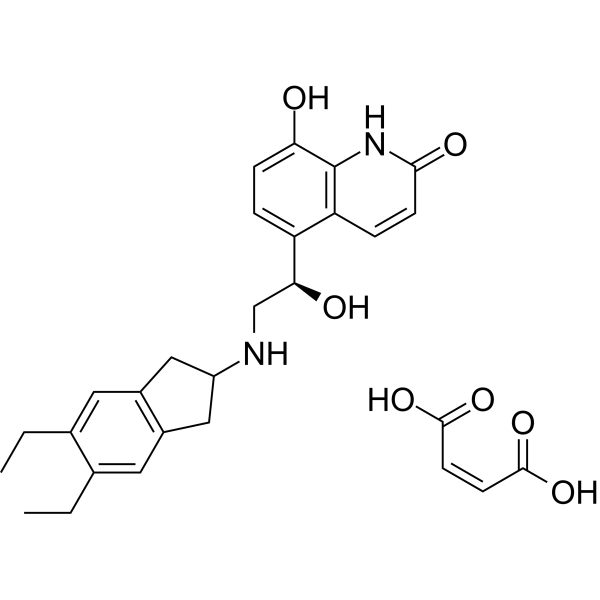
Cat. No.: HY-14299A
CAS No.: 753498-25-8
Purity:  99.82%
Synonyms: QAB149
Indacaterol maleate (QAB149) is an orally active ultra-long-acting β2 adrenergic receptor (ADRB2) agonist. Indacaterol maleate inhibits NF-κB activity in a β-arrestin2-dependent manner, preventing further lung damage and improving lung function in COPD (chronic obstructive pulmonary disorder). Indacaterol maleate can also be used in cardiovascular disease research .
loading...
    loading...
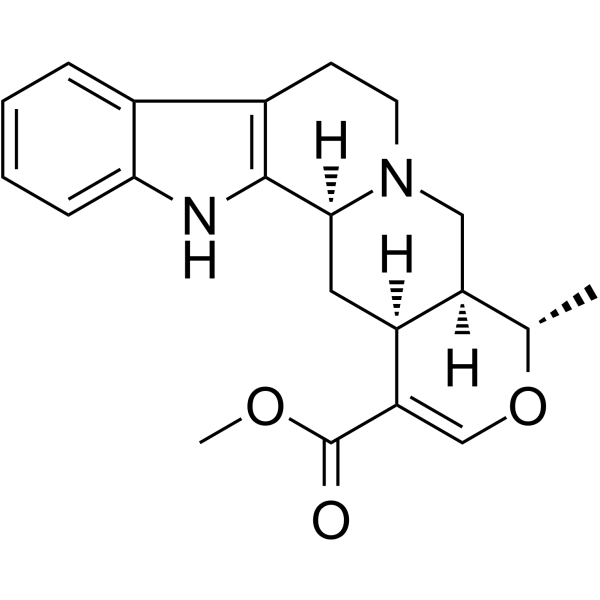
Cat. No.: HY-N1163
CAS No.: 6474-90-4
Synonyms: (-)-Tetrahydroalstonine
Tetrahydroalstonine ((-)-Tetrahydroalstonine) is an indole alkaloid and a selective α₂-adrenergic receptor antagonist. Tetrahydroalstonine exhibits certain neuroprotective effects. Tetrahydroalstonine can regulate autophagy-lysosomal function by activating the Akt/mTOR pathway, significantly reducing OGD/R-induced primary cortical neuronal injury .
loading...
    loading...
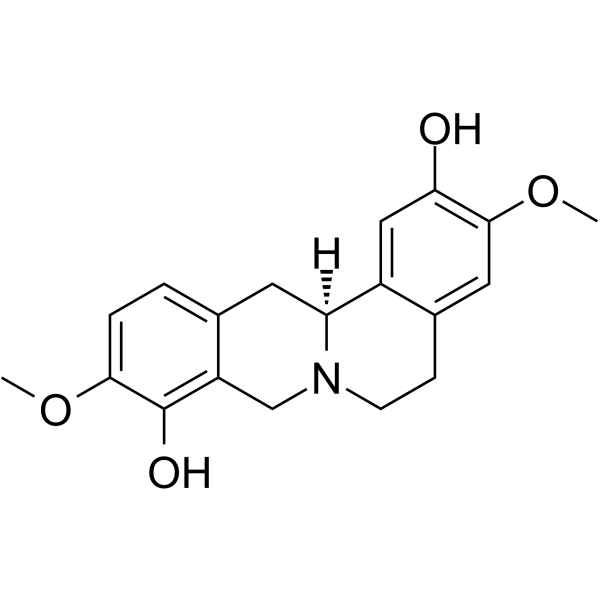
Cat. No.: HY-N1255
CAS No.: 6451-73-6
Synonyms: (-)-Scoulerine; Discretamine
Scoulerine ((-)-Scoulerine; Discretamine) hydrochloride is a multi-target inhibitor with anti-tumor and antioxidant activities. Scoulerine mainly targets the PI3K/Akt/mTOR signaling axis and α1D-adrenergic receptor, disrupts microtubule structure, and induces cell cycle arrest and apoptosis. Scoulerine effectively inhibits mitochondrial dehydrogenase activity, targets GABA receptors and BACE1, and suppresses the proliferation, migration, invasion, epithelial-mesenchymal transition and stem cell properties of cancer cells. Scoulerine also exhibits multiple pharmacological activities including anti-Plasmodium falciparum, antibacterial, antiemetic and antitussive effects, and regulates endoplasmic reticulum stress and mitochondrial function (modulates Bax, Bcl-2 and cytochrome c). Scoulerine is applicable to research related to leukemia, ovarian cancer, and colorectal cancer .
loading...
    loading...
Cat. No.: HY-117071
CAS No.: 219311-44-1
Purity:  98.72%
Synonyms: Ro 115-1240
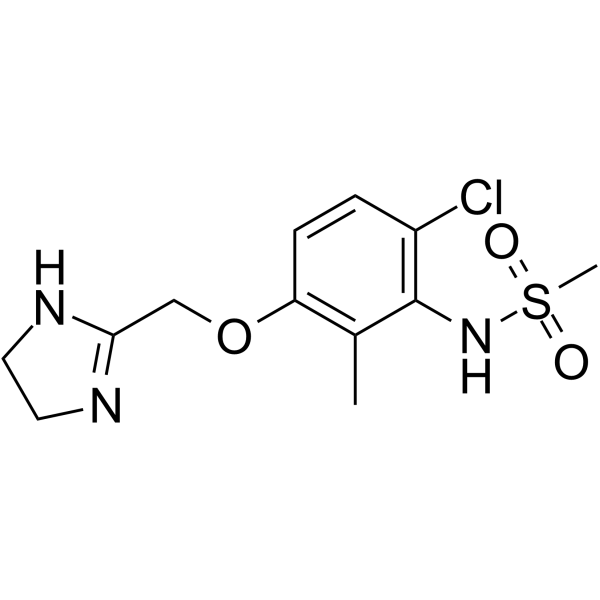
Dabuzalgron (Ro 115-1240) is an orally active and selective α-1A adrenergic receptor agonist for the treatment of urinary incontinence. Dabuzalgron protects against Doxorubicin-induced cardiotoxicity by preserving mitochondrial function .
loading...
    loading...
Cat. No.: HY-B1435
CAS No.: 964-52-3
Synonyms: Thymoxamine hydrochloride
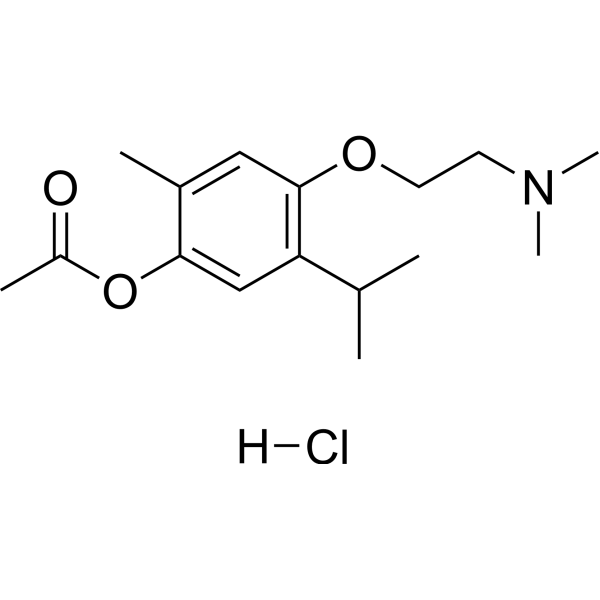
Moxisylyte (Thymoxamine) hydrochloride is a selective α1A-adrenergic receptor antagonist. Moxisylyte hydrochloride competitively antagonizes the activation mediated by norepinephrine. Moxisylyte hydrochloride relaxes penile cavernous smooth muscle and aids erectile function. Moxisylyte hydrochloride is applicable to research related to erectile dysfunction and multiple system atrophy .
loading...
    loading...
Cat. No.: HY-101366
CAS No.: 107756-30-9
Purity:  ≥99.0%
Target:  

Adrenergic Receptor

Research Areas:  

Endocrinology

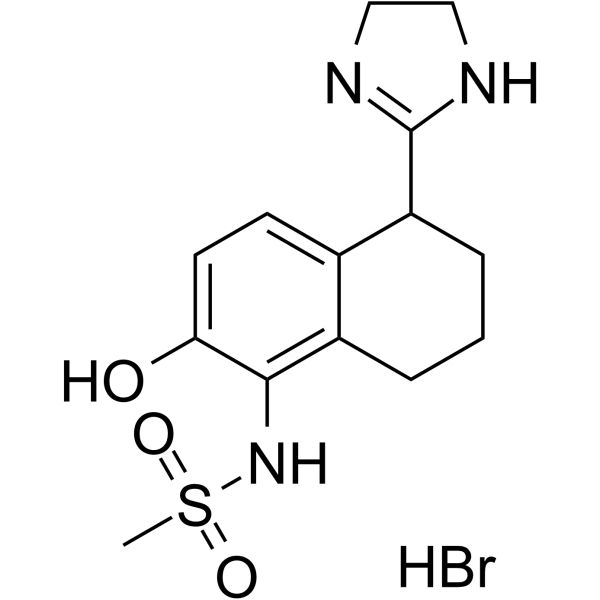
A-61603 is a selective α1A/α1a-adrenergic receptor agonist with Ki of 8.89 nM for rat submaxillary gland α1A, Ki of 30.5 nM for cloned bovine α1a. A-61603 potentiates Ca 2+ transients with EC50 of 6.9 nM. A-61603 stimulates phosphoinositide hydrolysis, induces contractile responses in vas deferens, prostate strips, and spleen strips, and exhibits low activity in aortic rings. A-61603 can be used for research on adrenergic function .
loading...
    loading...
Cat. No.: HY-P10336
CAS No.: 1383743-23-4
Target:  

Serpin

Research Areas:  

Neurological Disease Endocrinology

Serpinin is an agonist of the protease inhibitor Nexin-1 (PN-1). Serpinin upregulates the expression of PN-1 through the cAMP-PKA-Sp1 signaling pathway, promoting granule biogenesis in endocrine cells. Serpinin is used in research related to the regulation of secretory function . Serpinin is a selective agonist for β-adrenergic receptors. Serpinin interacts with β1-adrenergic receptors to activate the AC-cAMP-PKA pathway, which regulates myocardial systolic and diastolic function. pGlu-serpinin upregulates Bcl2 mRNA transcription and exerts neuroprotective effects .
loading...
    loading...
Cat. No.: HY-19686
CAS No.: 95847-70-4
Synonyms: TVX Q 7821 free base
Target:  

5-HT Receptor

Research Areas:  

Neurological Disease

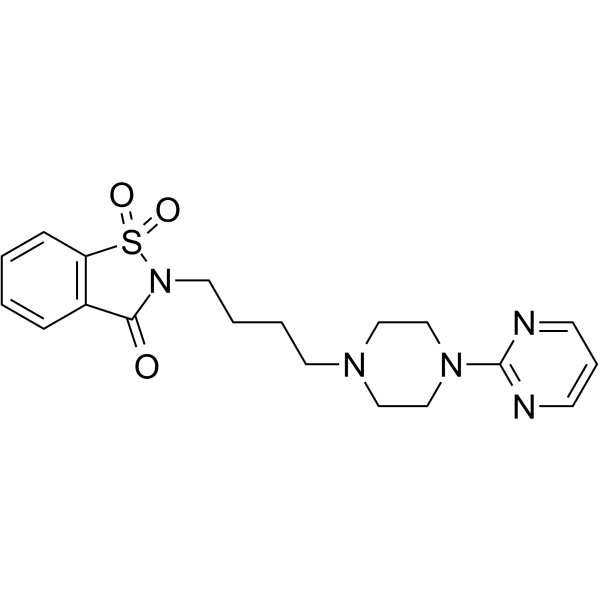
Ipsapirone (TVX Q 7821) is an anxiolytic compound and a 5-HT1A receptor partial agonist. Ipsapirone (TVX Q 7821) also exhibits 5-HT1A receptor antagonistic effect, and only at high doses it can also produce an inhibitory effect on 5-HT2 and the α1-adrenergic function .
loading...
    loading...
Cat. No.: HY-14299AR
CAS No.: 753498-25-8
Synonyms: QAB149 (Standard)
Indacaterol (maleate) (Standard) is the analytical standard of Indacaterol (maleate). This product is intended for research and analytical applications. Indacaterol maleate (QAB149) is an orally active ultra-long-acting β2 adrenergic receptor (ADRB2) agonist. Indacaterol maleate inhibits NF-κB activity in a β-arrestin2-dependent manner, preventing further lung damage and improving lung function in COPD (chronic obstructive pulmonary disorder). Indacaterol maleate can also be used in cardiovascular disease research .
loading...
    loading...
Cat. No.: HY-14299R
CAS No.: 312753-06-3
Indacaterol (Standard) is the analytical standard of Indacaterol. This product is intended for research and analytical applications. Indacaterol is an orally active ultra-long-acting β2 adrenergic receptor (ADRB2) agonist. Indacaterol inhibits NF-κB activity in a β-arrestin2-dependent manner, preventing further lung damage and improving lung function in COPD (chronic obstructive pulmonary disorder). Indacaterol can also be used in cardiovascular disease research .
loading...
    loading...
Cat. No.: HY-U00283
CAS No.: 106401-52-9
Target:  

Adrenergic Receptor

Research Areas:  

Endocrinology

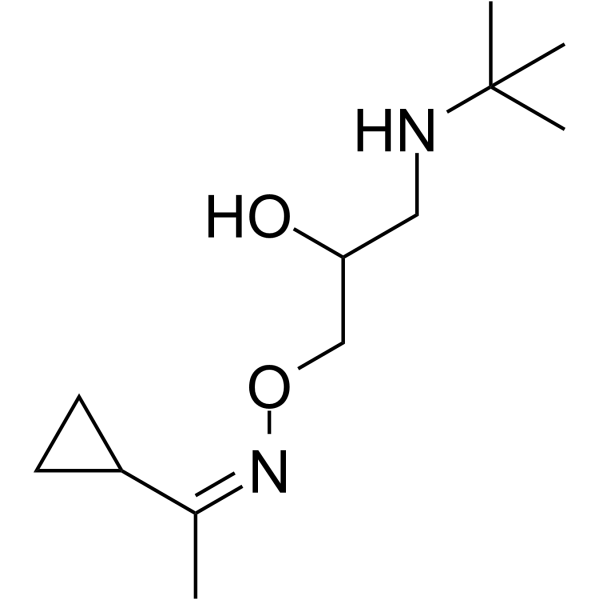
Falintolol, (Z)-, a new β-adrenergic antagonist, is characterized by the presence of an oxime function.
loading...
    loading...
Cat. No.: HY-112072
CAS No.: 75011-65-3
Synonyms: SB 7505 hydrochloride; SKF 100168 hydrochloride
Ibopamine (SB 7505) hydrochloride is an orally active dopamine derivative. Ibopamine hydrochloride exerts agonistic effects on α, β adrenergic receptors and dopaminergic receptors. Ibopamine hydrochloride can be hydrolyzed to produce the active metabolite Epinine. Ibopamine hydrochloride possesses positive inotropic and vasodilatory effects, which can improve hemodynamics and renal function in heart failure models. Ibopamine hydrochloride has good safety profile and can be used in the research of diseases such as congestive heart failure .
loading...
    loading...
Cat. No.: HY-103212B
CAS No.: 36067-73-9
Synonyms: B-HT 933
Target:  

Adrenergic Receptor

Research Areas:  

Neurological Disease

Azepexole (B-HT 933) is a selective α2 adrenergic inducer with over 300-fold selectivity for α2 adrenergic receptors over α1 adrenergic receptors. Azepexole can be used to study the biological functions of α2 adrenergic receptors and inhibition of related diseases. Azepexole may also play a role in regulating mood and improving cognitive function .
loading...
    loading...
Cat. No.: HY-119883
CAS No.: 750531-54-5
Target:  

Adrenergic Receptor

Research Areas:  

Neurological Disease

A-61603 free base is a potent adrenergic receptor agonist. A-61603 free base reduces carotid artery conductance in anesthetized pigs mediated by α1 and α2 adrenergic receptors (pEC50=7.25). A-61603 free base can be used as a probe to study adrenergic function .
loading...
    loading...
Cat. No.: HY-113749
CAS No.: 95656-55-6
Target:  

Adrenergic Receptor

Research Areas:  

Inflammation/Immunology

L-Mabuterol hydrochloride is a selective β2-adrenergic receptor agonist with bronchodilator activity. L-Mabuterol hydrochloride can improve respiratory function and relieve asthma symptoms. L-Mabuterol hydrochloride also shows potential efficacy in the management of chronic obstructive pulmonary disease (COPD) .
loading...
    loading...
Cat. No.: HY-14915A
CAS No.: 194785-31-4
Synonyms: MN-221; KUR-1246
Target:  

Adrenergic Receptor

Research Areas:  

Inflammation/Immunology

Bedoradrine (MN-221) sulfate is a highly selective β2-adrenergic receptor agonist. Bedoradrine sulfate can effectively relieve airway spasm, dilate airway smooth muscle cells, reduce airway inflammation, and thus improve respiratory function. Bedoradrine sulfate can be used in research on asthma .
loading...
    loading...
Cat. No.: HY-14299C
CAS No.: 1000160-97-3
Target:  

Adrenergic Receptor

Research Areas:  

Inflammation/Immunology

Indacaterol xinafoate is an orally active long-acting β2-adrenergic agonist (LABA) with bronchodilatory effect. Indacaterol inhibits NF-κB activity in a β-arrestin2-dependent manner, preventing further lung damage and improving lung function in COPD (chronic obstructive pulmonary disorder). Indacaterol xinafoate can be utilized in asthma research .
loading...
    loading...
Cat. No.: HY-19686A
CAS No.: 92589-98-5
Synonyms: TVX Q 7821
Target:  

5-HT Receptor

Research Areas:  

Neurological Disease

Ipsapirone hydrochloride (TVX Q 7821) is an anxiolytic compound and a 5-HT1A receptor partial agonist. Ipsapirone hydrochloride (TVX Q 7821) also exhibits 5-HT1A receptor antagonistic effect, and only at high doses it can also produce an inhibitory effect on 5-HT2 and the α1-adrenergic function .
loading...
    loading...
Cat. No.: HY-117071A
CAS No.: 219311-43-0
Synonyms: Ro 115-1240 hydrochloride
Dabuzalgron (Ro 115-1240) hydrochloride is an orally active and selective α-1A adrenergic receptor agonist for the treatment of urinary incontinence. Dabuzalgron hydrochloride protects against Doxorubicin-induced cardiotoxicity by preserving mitochondrial function .
loading...
    loading...

