Search Result
Results for "
alpha-amino acid ester
" in MedChemExpress (MCE) Product Catalog:
1
Biochemical Assay Reagents
10
Isotope-Labeled Compounds
| Cat. No. |
Product Name |
Target |
Research Areas |
Chemical Structure |
-
- HY-111365
-
|
|
KMO
|
Metabolic Disease
|
|
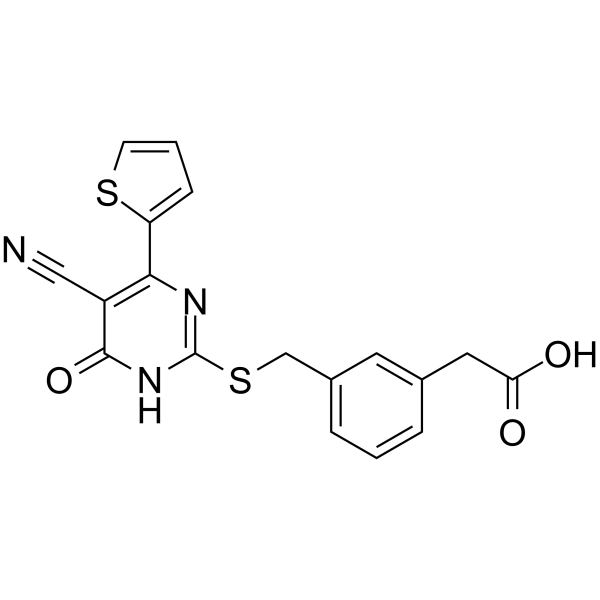
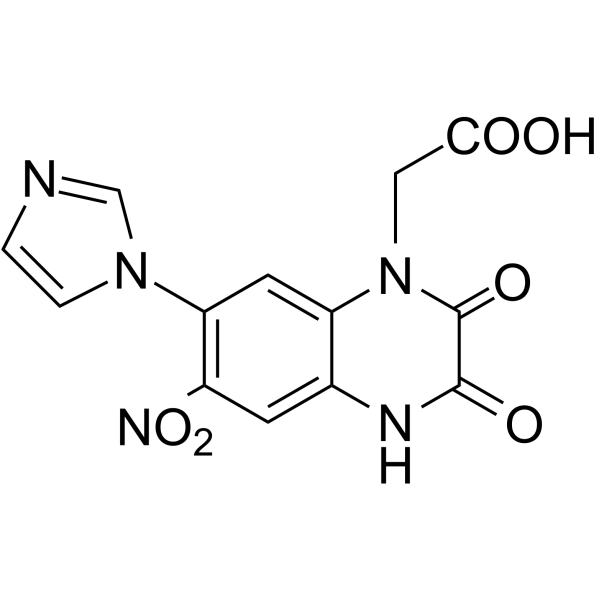
TES-1025 is a potent and selective human α-amino-β-carboxymuconate-ε-semialdehyde decarboxylase (ACMSD) inhibitor with an IC50 of 13 nM .
|
-
-
- HY-W016781
-
|
H-D-Arg-OH
|
Endogenous Metabolite
|
Neurological Disease
Cancer
|
|
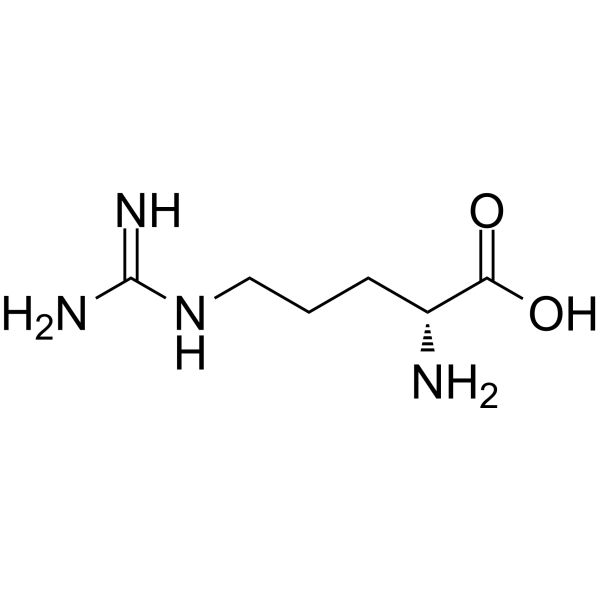
D-arginine (H-D-Arg-OH) is the D-isomer of arginine. Arginine is an α-amino acid that is used in the biosynthesis of proteins. D-Arginine is an inactive form of L-arginine. D-arginine can be used in myeloma and neurological disease research . .
|
-
-
- HY-B2236
-
|
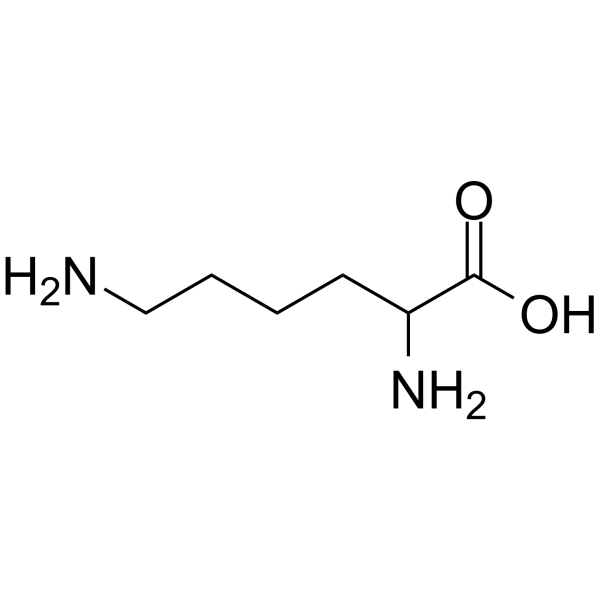
(±)-2,6-Diaminocaproic acid
|
Endogenous Metabolite
|
Metabolic Disease
|
|
DL-Lysine is a racemic mixture of the D-Lysine and L-Lysine. Lysine is an α-amino acid that is used in the biosynthesis of proteins .
|
-
-
- HY-W129394
-
|
|
Biochemical Assay Reagents
|
Others
|
|
6-Amino-6-deoxy-β-cyclodextrin is a cyclodextrin derivative that can be used to prepare other cyclodextrin derivatives. 6-Amino-6-deoxy-β-cyclodextrin can also be used as a chiral selector for chiral separation of α-amino acid derivatives by capillary electrophoresis .
|
-
-
- HY-B1258
-
|
aminomethylbenzoic acid; α-amino-p-toluic acid
|
Amino Acid Derivatives
|
Cancer
|
|
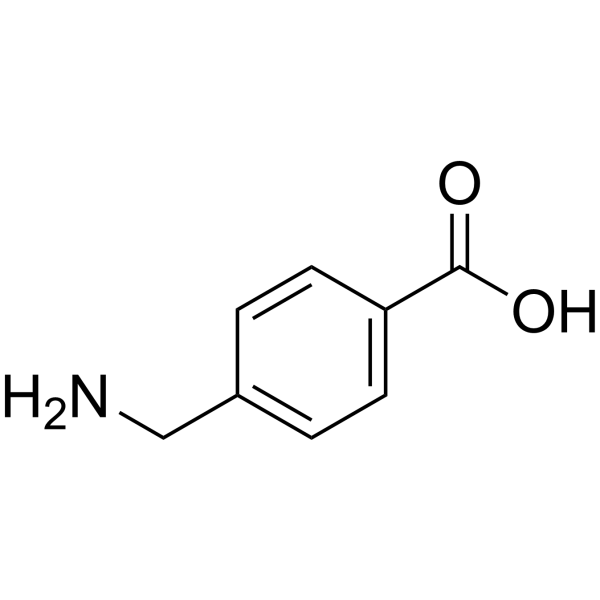
4-(Aminomethyl)benzoic acid is a competitive inhibitor of PepT1 and has antifibrinolytic activity .
|
-
-
- HY-113426
-
-
-
- HY-15079
-
|
GYKI-53773; LY-300164
|
iGluR
Apoptosis
|
Neurological Disease
Cancer
|
|
Talampanel (LY300164) is an orally and selective α-amino-3-hydroxy-5-methyl-4-isoxazolepropionate (AMPA) receptor antagonis with anti-seizure activity . Talampanel (IVAX) has neuroprotective effects in rodent stroke models . Talampanel attenuates caspase-3 dependent apoptosis in mouse brain .
|
-
-
- HY-P10646
-
|
|
Biochemical Assay Reagents
|
Neurological Disease
|
|
Muscle homing peptide M12 can preferentially bind to surface protein of muscle cells. Muscle homing peptide M12 mediates enhanced cellular uptake of nanoparticles (NPs) in myoblasts in vitro. Muscle homing peptide M12 is covalently conjugated to PLGA-PEG NPs via the N-terminal α-amino groups of peptides using the N-hydroxysuccinimide ester reaction .
|
-
-
- HY-112619
-
-
-
- HY-D0885A
-
|
Creatine phosphate disodium tetrahydrate; Creatinephosphoric acid disodium tetrahydrate
|
Endogenous Metabolite
|
Metabolic Disease
|
|
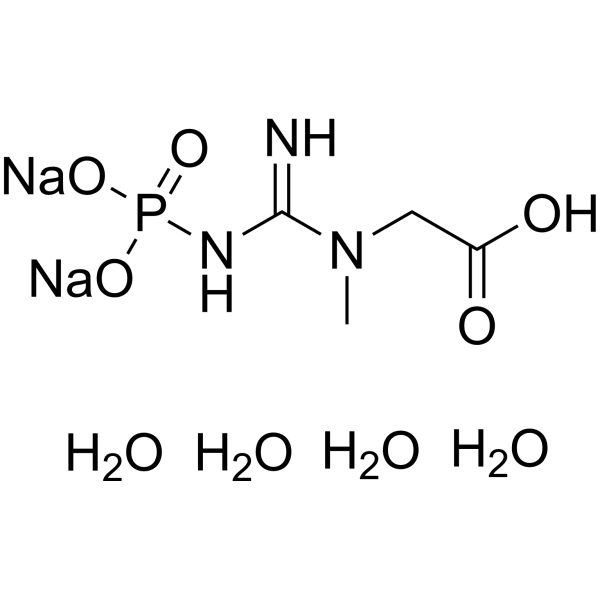
Phosphocreatine disodium tetrahydrate, primarily found in the skeletal muscles of vertebrates and one of organic compounds known as alpha amino acids and derivatives, is a substrate for the determination of creatine kinase and used to regenerate ATP during skeletal muscle contraction .
|
-
-
- HY-113079
-
-
-
- HY-103228
-
|
LY300168 hydrochloride
|
iGluR
|
Neurological Disease
|
|
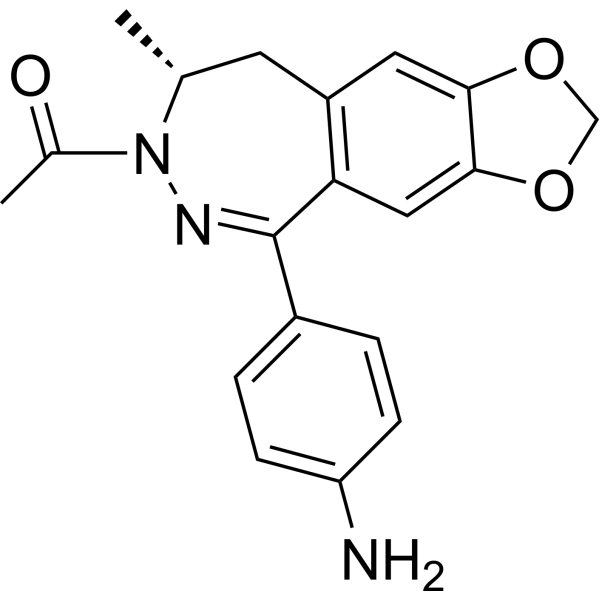
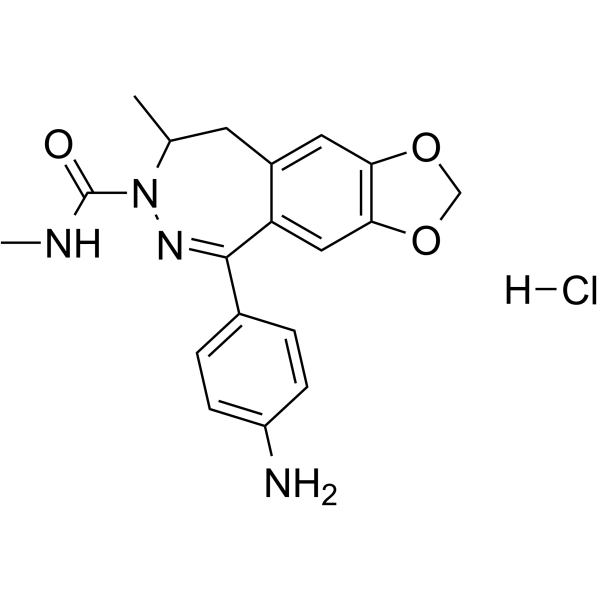
GYKI 53655 (LY300168) hydrochloride is an α-amino-3-hydroxy-5-methylisoxazole-4-propionic acid (AMPA) antagonist.
|
-
-
- HY-20897A
-
-
-
- HY-79106
-
|
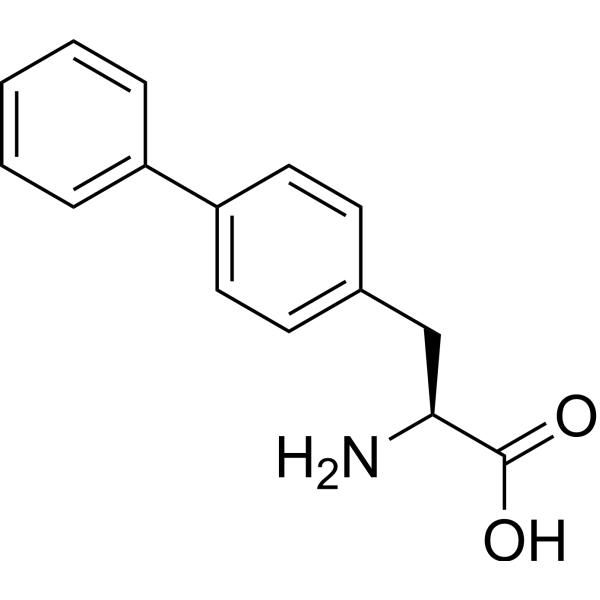
[1,1'-Biphenyl]-4-propanoic acid, α-amino-, (S)-; 4-Biphenylyl-L-alanine; 4-Phenyl-L-phenylalanine; Biphenylalanine
|
Amino Acid Derivatives
|
Others
|
|
L-Biphenylalanine is a phenylalanine derivative .
|
-
-
- HY-15072
-
|
YM 872
|
iGluR
|
Metabolic Disease
|
|
Zonampanel (YM 872) is a selective antagonist of the glutamate receptor subtype, α-amino-3-hydroxy-5-methylisoxazole-4-propionic acid (AMPA) receptor.
|
-
-
- HY-W005308
-
|
|
Amino Acid Derivatives
|
Cancer
|
|
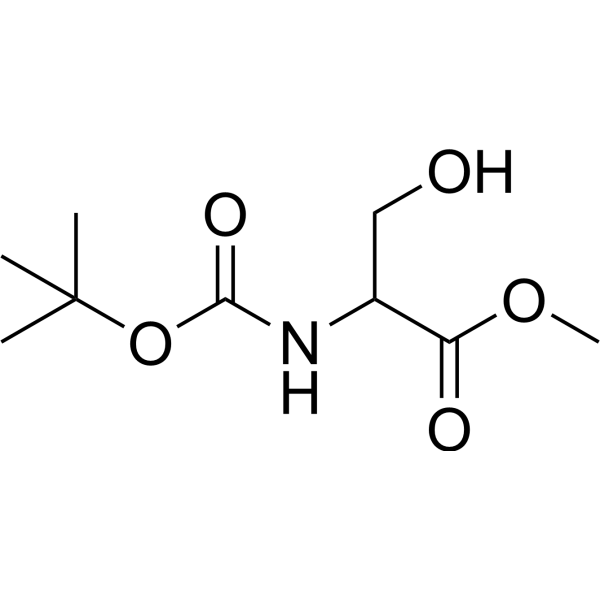
N-BOC-DL-serine methyl ester is a Serine derivative. N-BOC-DL-serine methyl ester is used for the synthesis of α,β-dehydro-α-amino acid. N-BOC-DL-serine methyl ester is also used for the synthesis of anti-cancer agent, such as quinazolinone derivative that inhibits PI3K activity, and tricyclic pyrolopyranopyridines that inhibits protein kinase activity .
|
-
-
- HY-145673
-
|
|
Drug Derivative
|
Others
|
|
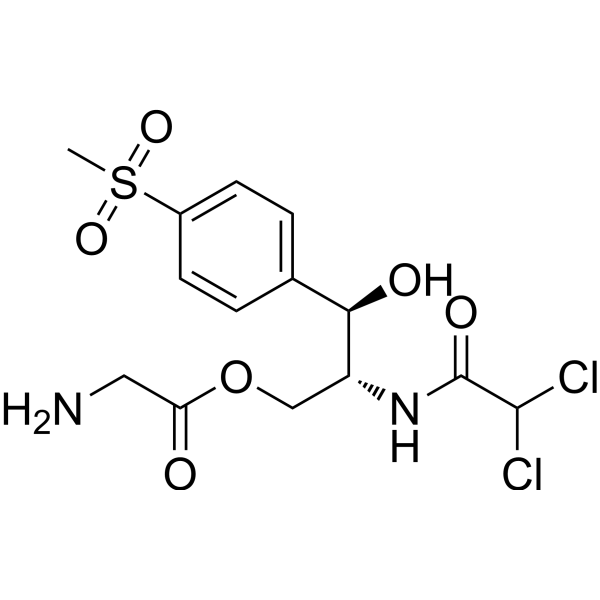
Thiamphenicol glycinate, an alpha-amino acid ester, is a proagent of Thiamphenicol (HY-B0479) .
|
-
-
- HY-W738417
-
|
|
Isotope-Labeled Compounds
Biochemical Assay Reagents
|
Others
|
|
Phthalaldehyde-d6 is the deuterium labeled Phthalaldehyde (HY-W012669). Phthalaldehyde is a biochemical assay reagent, which modifies the amino acid and measure the derivative through HPLC. Phthalaldehyde forms a fluorescent compound with α-amino group .
|
-
-
- HY-P4668
-
|
Val-Leu; H-Val-Leu-OH
|
Bacterial
|
Infection
|
|
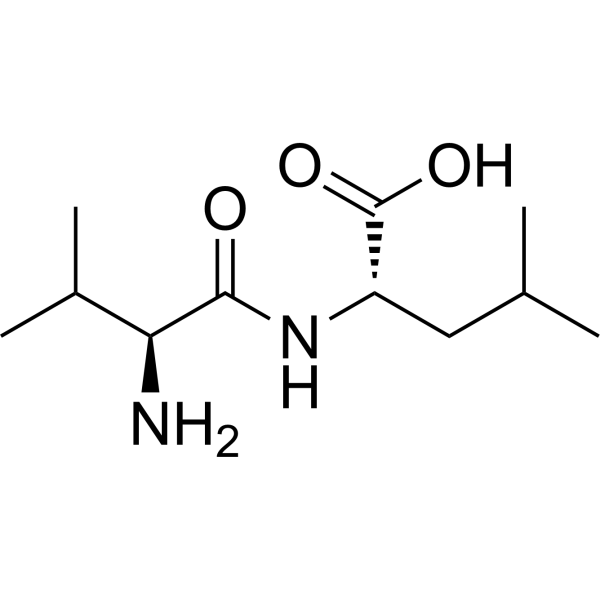
Valylleucine (Val-Leu; H-Val-Leu-OH) is a branched-chain dipeptide that can enter cells independently via bacterial dipeptide transport systems, and is hydrolyzed by dipeptidases to release Val and Leu. Valylleucine, as a model peptide, has its α-amino pK determined to be 7.90 by combining FDNB reaction kinetics with potentiometric titration .
|
-
-
- HY-P4668A
-
|
Val-Leu TFA; H-Val-Leu-OH TFA
|
Bacterial
|
Infection
|
|
Valylleucine (Val-Leu; H-Val-Leu-OH) TFA is a branched-chain dipeptide that can enter cells independently via bacterial dipeptide transport systems, and is hydrolyzed by dipeptidases to release Val and Leu. Valylleucine TFA, as a model peptide, has its α-amino pK determined to be 7.90 by combining FDNB reaction kinetics with potentiometric titration .
|
-
-
- HY-148217
-
|
|
Others
|
Others
|
|
DB02307 is a dipeptide that contains a sequence of two alpha-amino acids joined by a peptide bond .
|
-
-
- HY-W037451
-
|
|
Amino Acid Derivatives
|
Others
|
|
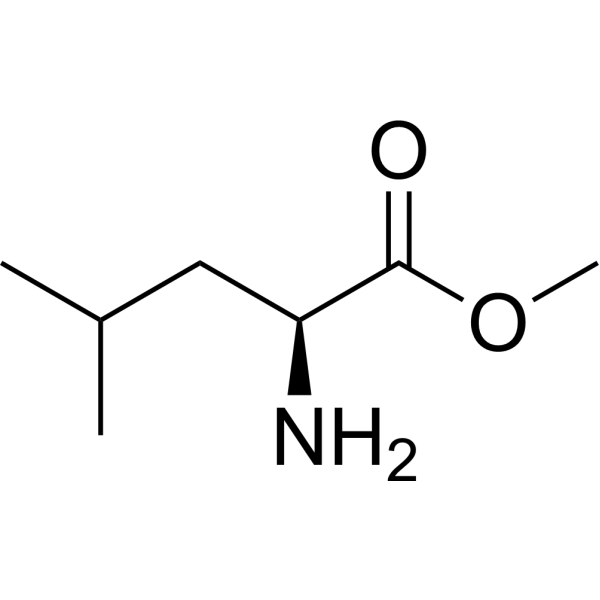
Methyl L-leucinate, methyl ester of L-leucine, is an alpha-amino acid ester. Methyl L-leucinate is a derivative of methyl ester and L-leucine, a class of compounds containing both amino and carboxyl groups in the molecule .
|
-
-
- HY-148218
-
|
N-[(6S)-6-Carboxy-6-(glycylamino)hexanoyl]-D-alanyl-D-alanine
|
Amino Acid Derivatives
|
Metabolic Disease
|
|
Glycyl-L-alpha-amino-epsilon-pimelyl-D-alanyl-D-alanine is a specific peptide substrate of Streptomyces R1 d-alanyl-d-alanine(dd)-peptidases .
|
-
-
- HY-B2236A
-
|
(±)-2,6-Diaminocaproic acid monohydrate
|
Biochemical Assay Reagents
|
Metabolic Disease
|
|
DL-Lysine monohydrate is a racemic mixture of the D-Lysine and L-Lysine. Lysine is an α-amino acid that is used in the biosynthesis of proteins .
|
-
-
- HY-Y1778
-
|
|
Drug Intermediate
|
Others
|
|
N-(Diphenylmethylene)glycine tert-butyl ester is a protected glycine derivative. N-(Diphenylmethylene)glycine tert-butyl ester undergoes enantioselective alkylation to produce α-alkyl-α-amino acid derivatives .
|
-
-
- HY-D0181
-
|
|
Biochemical Assay Reagents
Drug Intermediate
|
Others
|
|
1-Acetylimidazole is an acetylation agent and an important intermediate for the synthesis of various bioactive molecules. 1-Acetylimidazole can be used to close the residual α-amino group remaining after coupling and to synthesize cyclic imidazole derivatives .
|
-
-
- HY-400345
-
|
|
Biochemical Assay Reagents
|
Others
|
|
t-butyl-C18-D-Glu-OtBu is comprised of an octadecanedioic acid with a terminal t-butyl ester and a glutamic acid, which is also protected by a terminal t-butyl ester. The t-butyl groups can be deprotected under acidic conditions. Glutamic acid is an α-amino acid that is used in the biosynthesis of proteins.
|
-
-
- HY-118524
-
-
-
- HY-118524A
-
|
LD-935
|
Adrenergic Receptor
|
Neurological Disease
|
|
Dipiproverine (hydrochloride) is the hydrochloride form of Dipiproverine (HY-118524). Dipiproverine (hydrochloride) is an alpha-amino acid ester, an antispasmodic compound, which is used as an anticholinergic agent .
|
-
-
- HY-W778582
-
|
α-amino acetophenone hydrochloride-d5 hydrochloride
|
Isotope-Labeled Compounds
|
Others
|
|
2-Aminoacetophenone-d5 hydrochloride (α-Amino acetophenone hydrochloride-d5 hydrochloride) is the deuterium labeled 2-Aminoacetophenone hydrochloride (HY-W002084).
|
-
-
- HY-B1258R
-
|
aminomethylbenzoic acid (Standard); α-amino-p-toluic acid (Standard)
|
Amino Acid Derivatives
Reference Standards
|
Others
|
|
4-(Aminomethyl)benzoic acid (Standard) is the analytical standard of 4-(Aminomethyl)benzoic acid. This product is intended for research and analytical applications. 4-(Aminomethyl)benzoic acid is an unnatural amino acid derivative and an antifibrinolytic drug.
|
-
-
- HY-113426S
-
-
-
- HY-W771036
-
-
-
- HY-113426R
-
|
|
Endogenous Metabolite
|
Metabolic Disease
|
|
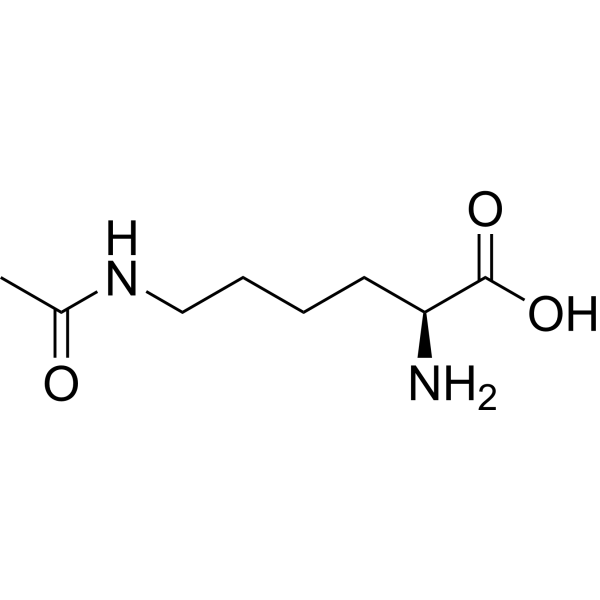
Nepsilon-Acetyl-L-lysine (Standard) is the analytical standard of Nepsilon-Acetyl-L-lysine. This product is intended for research and analytical applications. Nepsilon-Acetyl-L-lysine, an endogenous metabolite, is an R-chain N-acetylated α amino acid .
|
-
-
- HY-W012669R
-
|
Phthaldialdehyde (Standard)
|
Reference Standards
Biochemical Assay Reagents
|
Others
|
|
Phthalaldehyde (Standard) is the analytical standard of Phthalaldehyde. This product is intended for research and analytical applications. Phthalaldehyde is a biochemical assay reagent, which modifies the amino acid and measure the derivative through HPLC. Phthalaldehyde forms a fluorescent compound with α-amino group .
|
-
-
- HY-B2236S3
-
|
(±)-2,6-Diaminocaproic acid-15N2 hydrochloride
|
Isotope-Labeled Compounds
|
Metabolic Disease
|
|
DL-Lysine- 15N2 hydrochloride ((±)-2,6-Diaminocaproic acid- 15N2 hydrochloride) is 15N labeled DL-Lysine (HY-B2236). DL-Lysine is a racemic mixture of the D-Lysine and L-Lysine. Lysine is an α-amino acid that is used in the biosynthesis of proteins.
|
-
-
- HY-B2236S1
-
|
(±)-2,6-Diaminocaproic acid-13C6 hydrochloride
|
Isotope-Labeled Compounds
|
Metabolic Disease
|
|
DL-Lysine- 13C6 hydrochloride ((±)-2,6-Diaminocaproic acid- 13C6 hydrochloride) is 13C-labeled DL-Lysine (HY-B2236). DL-Lysine is a racemic mixture of the D-Lysine and L-Lysine. Lysine is an α-amino acid that is used in the biosynthesis of proteins.
|
-
-
- HY-W016781R
-
|
H-D-Arg-OH (Standard)
|
Reference Standards
Endogenous Metabolite
|
Neurological Disease
Cancer
|
|
D-arginine (H-D-Arg-OH) is the D-isomer of arginine. Arginine is an α-amino acid that is used in the biosynthesis of proteins. D-Arginine is an inactive form of L-arginine. D-arginine can be used in myeloma and neurological disease research . .
|
-
-
- HY-N7538
-
|
|
Bacterial
|
Infection
|
|
Dealanylalahopcin is an antimicrobial agent that can be isolated from the culture filtrate of Streptomyces leucoderma subsp. ochraceus. Dealanylalahopcin can also be synthesized by enzymatic hydrolysis of alahopcin by microbial α-amino acid ester hydrolases. Dealanylalahopcin has weak antimicrobial activity against Gram-positive and Gram-negative bacteria and exhibits moderate inhibition of collagen prolyl hydroxylase .
|
-
-
- HY-117176
-
|
|
iGluR
|
Neurological Disease
|
|
KRP-199 (compound 14h) is an α-amino-3-hydroxy-5-methylisoxazolepropionic acid receptor (AMPA-R) antagonist (Ki=16 nM) with high potency and selectivity for AMPA-R in vitro and good neuroprotective effects in vivo. KRP-199 can be used in the study of neurodegenerative diseases .
|
-
-
- HY-B2236S2
-
|
(±)-2,6-Diaminocaproic acid-13C6,15N2 hydrochloride
|
Isotope-Labeled Compounds
|
Metabolic Disease
|
|
DL-Lysine- 13C6, 15N2 hydrochloride ((±)-2,6-Diaminocaproic acid- 13C6, 15N2 hydrochloride) is 13C and 15N-labeled DL-Lysine (HY-B2236). DL-Lysine is a racemic mixture of the D-Lysine and L-Lysine. Lysine is an α-amino acid that is used in the biosynthesis of proteins.
|
-
-
- HY-20897AR
-
-
-
- HY-E70413
-
|
|
Endogenous Metabolite
|
Cardiovascular Disease
Metabolic Disease
|
|
Amino acid arylamidase, hog kidney is a metalloprotease that can hydrolyze proteins or peptides containing free α-amino or α-imino groups, playing a crucial role in amino acid metabolism and protein digestion. Its hydrolytic activity can be blocked by acetylation of the N-terminus. Amino acid arylamidase, hog kidney can be used in research on hepatic diseases, biliary diseases, and heart failure .
|
-
-
- HY-118814
-
|
|
iGluR
|
Neurological Disease
|
|
YM928 is an orally active and noncompetitive α-Amino-3-hydroxy-5-methyl-4-isoxazolepropionic acid (AMPA) receptor antagonist. YM928 inhibits AMPA receptor-mediated toxicity in primary rat hippocampal cultures with an IC50 value of 2 μM. YM928 blocks AMPA-induced intracellular calcium influx with an IC50 value of 3 μM and antagonizes AMPA-induced inward currents with an IC50 value of 1 μM. YM928 is promising for research of neurological disorders .
|
-
-
- HY-B1258S
-
|
aminomethylbenzoic acid-13C2,15N; α-amino-p-toluic acid-13C2,15N
|
Isotope-Labeled Compounds
Amino Acid Derivatives
|
Cancer
|
|
Intermediate of tranexamic Acid- 13C2, 15N (Aminomethylbenzoic acid- 13C2, 15N) is 13C and 15N labeled 4-(Aminomethyl)benzoic acid. 4-(Aminomethyl)benzoic acid is a competitive inhibitor of PepT1 and has antifibrinolytic activity .
|
-
-
- HY-CE01813
-
|
Glycyl-L-alpha-amino-epsilon-pimelyl-D-alanine-coenzyme A
|
Biochemical Assay Reagents
|
Metabolic Disease
|
|
Glycyl-L-alpha-amino-epsilon-pimelyl-D-alanine-CoA (Glycyl-L-alpha-amino-epsilon-pimelyl-D-alanine-coenzyme A) is a coenzyme A derivative .
|
-
-
- HY-E71217
-
-
-
- HY-CE01814
-
|
Glycyl-L-alpha-amino-epsilon-pimelyl-D-alanyl-D-alanine-coenzyme A
|
Biochemical Assay Reagents
|
Metabolic Disease
|
|
Glycyl-L-alpha-amino-epsilon-pimelyl-D-alanyl-D-alanine-CoA (Glycyl-L-alpha-amino-epsilon-pimelyl-D-alanyl-D-alanine-coenzyme A) is a coenzyme A derivative .
|
-
-
- HY-W704091
-
|
|
Isotope-Labeled Compounds
|
Others
|
|
α-Amino-β-methylaminopropionic acid-d3 hydrochloride is the deuterium labeled α-Amino-β-methylaminopropionic acid. Radioactive isotopes labeled compounds can be used in metabolic analysis, allowing the movement of individual atoms to be precisely tracked and quantified .
|
-
-
- HY-W099812
-
|
H-DL-Nva-OMe (hydrochloride)
|
Biochemical Assay Reagents
|
Others
|
|
Methyl 2-aminopentanoate hydrochloride (H-DL-Nva-OMe hydrochloride) is a chiral α-amino ester hydrochloride precursor used for the synthesis of N-Boc-protected α-amino aldehyde 2b .
|
-
- HY-W990361
-
-
- HY-19410
-
|
|
Drug Derivative
|
Neurological Disease
|
|
ORG-25435 is an alpha amino acid phenolic ester derivative. ORG-25435 has intravenous anesthesia activity. ORG-25435 can be used for anesthesia related research .
|
-
- HY-B2236S
-
|
(±)-2,6-Diaminocaproic acid-d4 dihydrochloride
|
Isotope-Labeled Compounds
|
Metabolic Disease
|
|
DL-Lysine-4,4,5,5-d4 (dihydrochloride) is the deuterium labeled DL-Lysine. DL-Lysine is a racemic mixture of the D-Lysine and L-Lysine. Lysine is an α-amino acid that is used in the biosynthesis of proteins .
|
-
- HY-103228R
-
|
LY300168 hydrochloride (Standard)
|
Reference Standards
iGluR
|
Neurological Disease
|
|
GYKI 53655 hydrochloride (Standard) is the analytical standard of GYKI 53655 hydrochloride (HY-103228). This product is intended for research and analytical applications. GYKI 53655 (LY300168) hydrochloride is an α-amino-3-hydroxy-5-methylisoxazole-4-propionic acid (AMPA) antagonist.
|
-
- HY-W099633
-
|
|
Amino Acid Derivatives
|
Neurological Disease
|
|
2-Aminodecanoic acid is a lipophilic α-amino acid with an aliphatic side chain of 10 carbon atoms. 2-Aminodecanoic acid modifies the N-terminus of endogenous opioid peptide endomorphin-1 to enhance metabolic stability and membrane permeability. 2-Aminodecanoic acid can be used for the research of neuropathic pain .
|
-
- HY-W097355
-
|
D-Phenylalanine amide; H-D-Phe-NH2
|
Amino Acid Derivatives
Drug Intermediate
|
Cancer
|
|
(R)-2-Amino-3-phenylpropanamide (D-Phenylalanine amide) is a non-natural D-α-amino acid derivative and chiral amino acid amide. (R)-2-Amino-3-phenylpropanamide can be converted into D-Phenylalanine (HY-Y0079), which is applicable to the construction of all-D antimicrobial peptides and the synthesis of anti-HIV reagents. (R)-2-Amino-3-phenylpropanamide serves as a reagent for synthesizing benzoxaborole derivative 6, a dual covalent binder of Pseudomonas aeruginosa PBP3. (R)-2-Amino-3-phenylpropanamide is used in colon cancer-related research .
|
-
- HY-183038
-
|
|
Biochemical Assay Reagents
|
Others
|
|
2-Phenyl-1-octen-7-yn-1-one is an alkyne-functionalized enone with site-selective reactivity toward the N-terminal α-amino group of peptides and proteins. 2-Phenyl-1-octen-7-yn-1-one can undergo click chemistry with azides via its alkyne moiety to enable further protein functionalization. 2-Phenyl-1-octen-7-yn-1-one modifies unprotected peptide libraries as well as proteins including insulin, lysozyme, RNaseA and BCArg .
|
-
| Cat. No. |
Product Name |
Type |
-
- HY-Y1778
-
|
|
Fluorescent Dyes
|
|
N-(Diphenylmethylene)glycine tert-butyl ester is a protected glycine derivative. N-(Diphenylmethylene)glycine tert-butyl ester undergoes enantioselective alkylation to produce α-alkyl-α-amino acid derivatives .
|
| Cat. No. |
Product Name |
Type |
-
- HY-W012669R
-
|
Phthaldialdehyde (Standard)
|
Biochemical Assay Reagents
|
|
Phthalaldehyde (Standard) is the analytical standard of Phthalaldehyde. This product is intended for research and analytical applications. Phthalaldehyde is a biochemical assay reagent, which modifies the amino acid and measure the derivative through HPLC. Phthalaldehyde forms a fluorescent compound with α-amino group .
|
| Cat. No. |
Product Name |
Target |
Research Area |
-
- HY-P10646
-
|
|
Biochemical Assay Reagents
|
Neurological Disease
|
|
Muscle homing peptide M12 can preferentially bind to surface protein of muscle cells. Muscle homing peptide M12 mediates enhanced cellular uptake of nanoparticles (NPs) in myoblasts in vitro. Muscle homing peptide M12 is covalently conjugated to PLGA-PEG NPs via the N-terminal α-amino groups of peptides using the N-hydroxysuccinimide ester reaction .
|
-
- HY-20897A
-
-
- HY-79106
-
|
[1,1'-Biphenyl]-4-propanoic acid, α-amino-, (S)-; 4-Biphenylyl-L-alanine; 4-Phenyl-L-phenylalanine; Biphenylalanine
|
Amino Acid Derivatives
|
Others
|
|
L-Biphenylalanine is a phenylalanine derivative .
|
-
- HY-W005308
-
|
|
Amino Acid Derivatives
|
Cancer
|
|
N-BOC-DL-serine methyl ester is a Serine derivative. N-BOC-DL-serine methyl ester is used for the synthesis of α,β-dehydro-α-amino acid. N-BOC-DL-serine methyl ester is also used for the synthesis of anti-cancer agent, such as quinazolinone derivative that inhibits PI3K activity, and tricyclic pyrolopyranopyridines that inhibits protein kinase activity .
|
-
- HY-P4668
-
|
Val-Leu; H-Val-Leu-OH
|
Bacterial
|
Infection
|
|
Valylleucine (Val-Leu; H-Val-Leu-OH) is a branched-chain dipeptide that can enter cells independently via bacterial dipeptide transport systems, and is hydrolyzed by dipeptidases to release Val and Leu. Valylleucine, as a model peptide, has its α-amino pK determined to be 7.90 by combining FDNB reaction kinetics with potentiometric titration .
|
-
- HY-P4668A
-
|
Val-Leu TFA; H-Val-Leu-OH TFA
|
Bacterial
|
Infection
|
|
Valylleucine (Val-Leu; H-Val-Leu-OH) TFA is a branched-chain dipeptide that can enter cells independently via bacterial dipeptide transport systems, and is hydrolyzed by dipeptidases to release Val and Leu. Valylleucine TFA, as a model peptide, has its α-amino pK determined to be 7.90 by combining FDNB reaction kinetics with potentiometric titration .
|
-
- HY-W037451
-
|
|
Amino Acid Derivatives
|
Others
|
|
Methyl L-leucinate, methyl ester of L-leucine, is an alpha-amino acid ester. Methyl L-leucinate is a derivative of methyl ester and L-leucine, a class of compounds containing both amino and carboxyl groups in the molecule .
|
-
- HY-148218
-
|
N-[(6S)-6-Carboxy-6-(glycylamino)hexanoyl]-D-alanyl-D-alanine
|
Amino Acid Derivatives
|
Metabolic Disease
|
|
Glycyl-L-alpha-amino-epsilon-pimelyl-D-alanyl-D-alanine is a specific peptide substrate of Streptomyces R1 d-alanyl-d-alanine(dd)-peptidases .
|
-
- HY-20897AR
-
| Cat. No. |
Product Name |
Category |
Target |
Chemical Structure |
| Cat. No. |
Product Name |
Chemical Structure |
-
- HY-W738417
-
|
|
|
Phthalaldehyde-d6 is the deuterium labeled Phthalaldehyde (HY-W012669). Phthalaldehyde is a biochemical assay reagent, which modifies the amino acid and measure the derivative through HPLC. Phthalaldehyde forms a fluorescent compound with α-amino group .
|
-
-
- HY-W778582
-
|
|
|
2-Aminoacetophenone-d5 hydrochloride (α-Amino acetophenone hydrochloride-d5 hydrochloride) is the deuterium labeled 2-Aminoacetophenone hydrochloride (HY-W002084).
|
-
-
- HY-113426S
-
|
|
|
Nepsilon-acetyl-L-lysine-d8 is the deuterium labeled Nepsilon-Acetyl-L-lysine. Nepsilon-Acetyl-L-lysine, an endogenous metabolite, is an R-chain N-acetylated α amino acid .
|
-
-
- HY-W771036
-
|
|
|
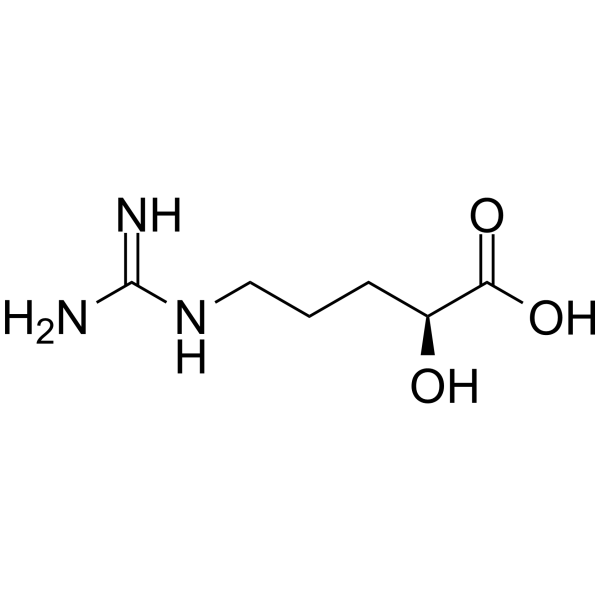
Argininic acid- 13C6 (L-Argininic Acid- 13C6) is the 13C-labeled Argininic acid (HY-113079). Argininic acid is an α-amino acid that is used in the biosynthesis of proteins.
|
-
-
- HY-B2236S3
-
|
|
|
DL-Lysine- 15N2 hydrochloride ((±)-2,6-Diaminocaproic acid- 15N2 hydrochloride) is 15N labeled DL-Lysine (HY-B2236). DL-Lysine is a racemic mixture of the D-Lysine and L-Lysine. Lysine is an α-amino acid that is used in the biosynthesis of proteins.
|
-
-
- HY-B2236S1
-
|
|
|
DL-Lysine- 13C6 hydrochloride ((±)-2,6-Diaminocaproic acid- 13C6 hydrochloride) is 13C-labeled DL-Lysine (HY-B2236). DL-Lysine is a racemic mixture of the D-Lysine and L-Lysine. Lysine is an α-amino acid that is used in the biosynthesis of proteins.
|
-
-
- HY-B2236S2
-
|
|
|
DL-Lysine- 13C6, 15N2 hydrochloride ((±)-2,6-Diaminocaproic acid- 13C6, 15N2 hydrochloride) is 13C and 15N-labeled DL-Lysine (HY-B2236). DL-Lysine is a racemic mixture of the D-Lysine and L-Lysine. Lysine is an α-amino acid that is used in the biosynthesis of proteins.
|
-
-
- HY-B1258S
-
|
|
|
Intermediate of tranexamic Acid- 13C2, 15N (Aminomethylbenzoic acid- 13C2, 15N) is 13C and 15N labeled 4-(Aminomethyl)benzoic acid. 4-(Aminomethyl)benzoic acid is a competitive inhibitor of PepT1 and has antifibrinolytic activity .
|
-
-
- HY-W704091
-
|
|
|
α-Amino-β-methylaminopropionic acid-d3 hydrochloride is the deuterium labeled α-Amino-β-methylaminopropionic acid. Radioactive isotopes labeled compounds can be used in metabolic analysis, allowing the movement of individual atoms to be precisely tracked and quantified .
|
-
-
- HY-B2236S
-
|
|
|
DL-Lysine-4,4,5,5-d4 (dihydrochloride) is the deuterium labeled DL-Lysine. DL-Lysine is a racemic mixture of the D-Lysine and L-Lysine. Lysine is an α-amino acid that is used in the biosynthesis of proteins .
|
-
| Cat. No. |
Product Name |
|
Classification |
-
- HY-183038
-
|
|
|
Alkynes
|
|
2-Phenyl-1-octen-7-yn-1-one is an alkyne-functionalized enone with site-selective reactivity toward the N-terminal α-amino group of peptides and proteins. 2-Phenyl-1-octen-7-yn-1-one can undergo click chemistry with azides via its alkyne moiety to enable further protein functionalization. 2-Phenyl-1-octen-7-yn-1-one modifies unprotected peptide libraries as well as proteins including insulin, lysozyme, RNaseA and BCArg .
|
Your information is safe with us. * Required Fields.
Inquiry Information
- Product Name:
- Cat. No.:
- Quantity:
- MCE Japan Authorized Agent:

