1. Search Result
Search Result
Results for "

callus

" in MedChemExpress (MCE) Product Catalog:

27

Inhibitors & Agonists

2

Biochemical Assay Reagents

2

Peptides

13

Natural
Products

1

Isotope-Labeled Compounds

Cat. No. Product Name Target Research Areas Chemical Structure
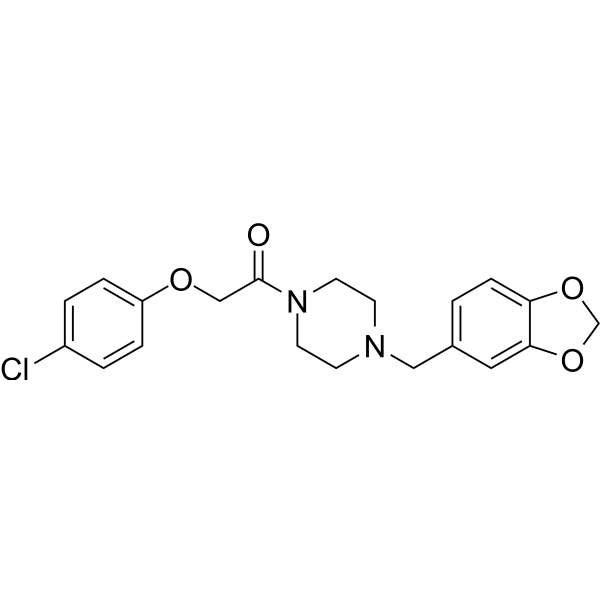
  • HY-B1124
    Fipexide
    1 Publications Verification

    Adenylate Cyclase Dopamine Transporter Neurological Disease
    Fipexide, a parachloro-phenossiacetic acid derivative, is an orally active nootropic agent. Fipexide reduces striatal adenylate cyclase activity. Fipexide has positive effect on cognitive performance by dopaminergic neurotransmission. Fipexide is used for senile dementia research. Fipexide acts as a chemical inducer in callus formation, shoot regeneration and Agrobacterium infection .
    Fipexide
  • HY-P11056

    MDM-2/p53 Others
    REF1 peptide is a PORK1 agonist with an EC50 of 0.028 nM in tomato. REF1 peptide binds to the extracellular domain of PORK1, triggers receptor autophosphorylation, and drives downstream MPK3/MPK6 activation, thereby initiating defense and regeneration signaling cascades. REF1 peptide induces callus formation, inhibits shoot regeneration upon continuous exposure, and enhances the regeneration and transformation efficiency of recalcitrant dicotyledonous and monocotyledonous crops .
    REF1 peptide
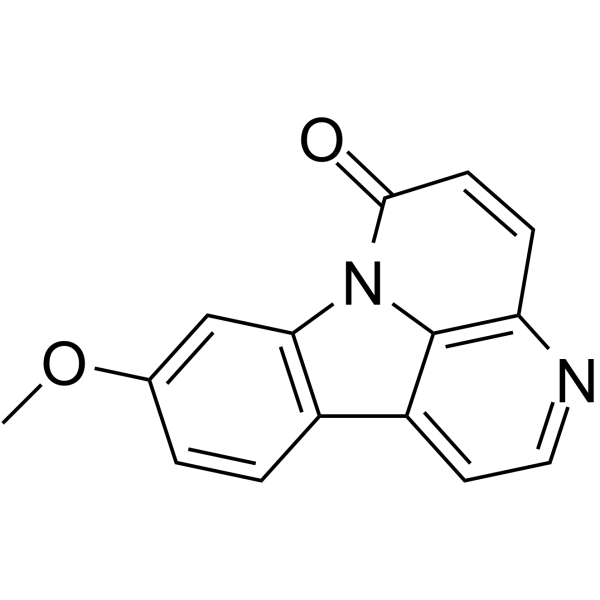
  • HY-112642

    TNF Receptor Cancer
    9-Methoxycanthin-6-one, a canthin-6-one alkaloid, is present in intact plant parts and in callus tissues of different explants. 9-Methoxycanthin-6-one shows anti-tumor activity, inhibits LPS-induced TNF-α and IL-1β .
    9-Methoxycanthin-6-one
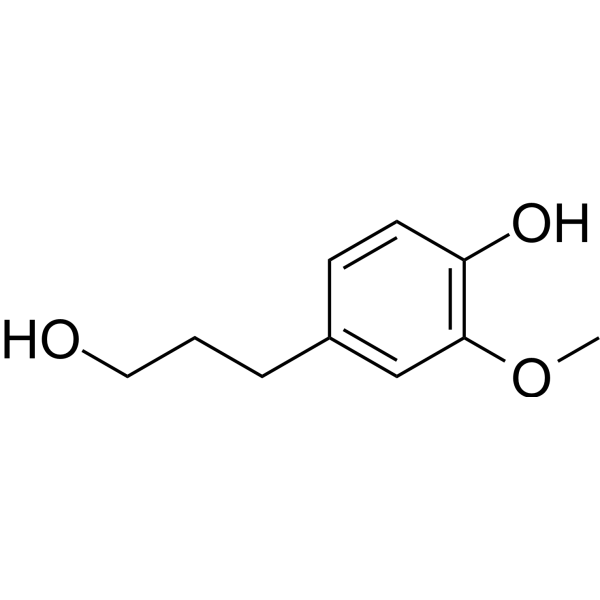
  • HY-W016393

    Endogenous Metabolite Others
    Dihydroconiferyl alcohol is a cell division factor. Dihydroconiferyl alcohol can be isolated from the American sycamore (Acer pseudoplatanus L.). Dihydroconiferyl alcohol inhibits the degradation of Indole-3-acetic acid (HY-18569). Dihydroconiferyl alcohol can stimulate the growth of soybean and tobacco callus tissue and synergistically enhance Indole-3-acetic acid-induced hypocotyl elongation in cucumber. Dihydroconiferyl alcohol can be used in the research of plant growth regulation .
    Dihydroconiferyl alcohol
  • HY-W141858

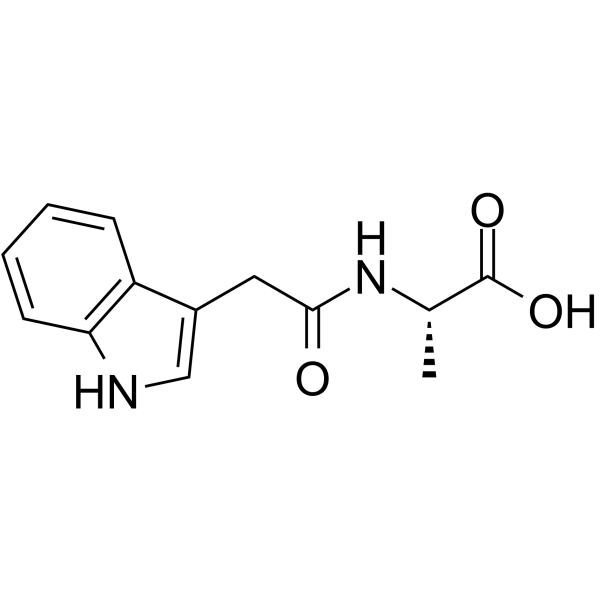
    Indoleacetylalanine; IAA-ala

    Amino Acid Derivatives Others
    N-(3-Indolylacetyl)-L-alanine (Indoleacetylalanine) is an indoleacetylamino acid. N-(3-Indolylacetyl)-L-alanine appears to increase callus growth and reduces the ability of growths to differentiate into shoots of Phalaenopsis orchids .
    N-(3-Indolylacetyl)-L-alanine
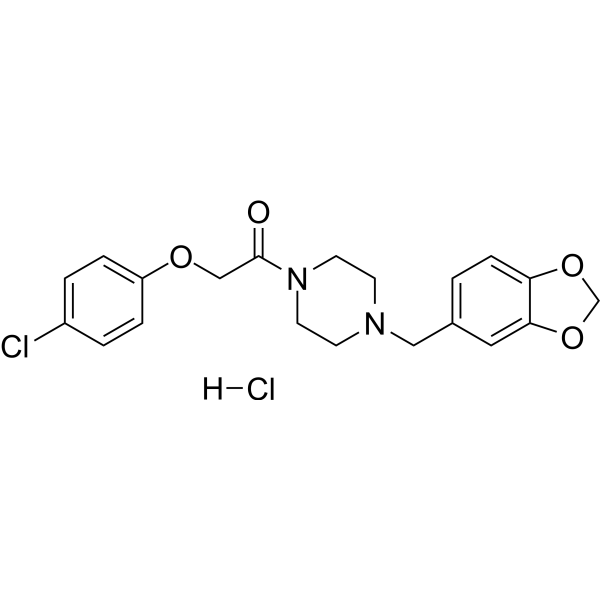
  • HY-B1124A
    Fipexide hydrochloride
    1 Publications Verification

    Adenylate Cyclase Dopamine Transporter Neurological Disease
    Fipexide hydrochloride, a parachloro-phenossiacetic acid derivative, is an orally active nootropic agent. Fipexide hydrochloride reduces striatal adenylate cyclase activity. Fipexide hydrochloride has positive effect on cognitive performance by dopaminergic neurotransmission. Fipexide hydrochloride is used for senile dementia research. Fipexide hydrochloride acts as a chemical inducer in callus formation, shoot regeneration and Agrobacterium infection .
    Fipexide hydrochloride
  • HY-W115789

    Environmental Pollutants Reactive Oxygen Species (ROS) Others
    Sodium silicate is a water-soluble silicate. Sodium silicate is widely used as a binder, particularly in the production of detergents, soaps, and cleaners. Sodium silicate promotes the deposition of suberin polyphenols and lignin at wound sites of potato tubers, accelerates callus structure formation, enhances ROS production, and induces the synthesis of total phenols and flavonoids. Sodium silicate reduces the weight loss rate and disease index of wounded potato tubers during storage .
    Sodium silicate
  • HY-N0902

    13,14-Dihydrosanguinarine

    Fungal Bacterial Interleukin Related Infection Inflammation/Immunology
    Dihydrosanguinarine (13,14-Dihydrosanguinarine) is an alkaloid with antibacterial and anti-inflammatory activities, and also an important precursor of Sanguinarine (HY-N0052). Dihydrosanguinarine targets and regulates the TNF/IL-17/PI3K signaling pathway, downregulates the levels of pro-inflammatory factors such as IL-17A, TNF-α and IL-6, upregulates the expression of TGF-β, inhibits myeloperoxidase activity, and regulates the transcription of multiple inflammation-related genes. Dihydrosanguinarine exhibits antibacterial activity against a variety of oral microorganisms. Dihydrosanguinarine can be used in research related to liver inflammation and oral flora dysbiosis .
    Dihydrosanguinarine
  • HY-N11562

    Others Others
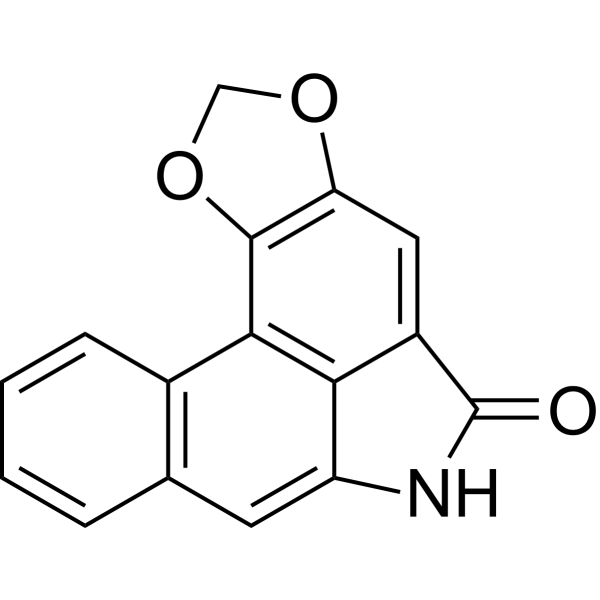
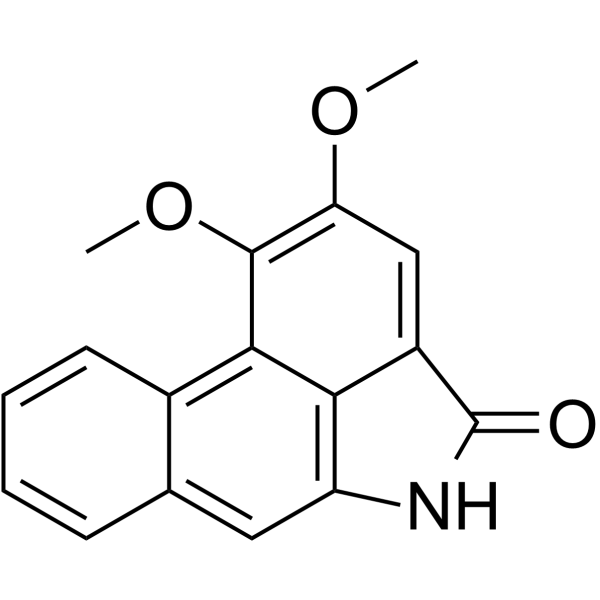
    Aristololactam II is an aristololactam-related blue-fluorescent compound found in the callus tissue of Stephania cepharantha .
    Aristololactam II
  • HY-N16520

    Others Others
    Kaempferol 3-O-β-D-glucopyranoside 6′′-(3-hydroxy-3-methylglutarate) is an acylated flavonol glycoside. Kaempferol 3-O-β-D-glucopyranoside 6′′-(3-hydroxy-3-methylglutarate) can be isolated from 10-year-old callus cultures of Mexican lime .
    Kaempferol 3-O-β-D-glucopyranoside 6′′-(3-hydroxy-3-methylglutarate)
  • HY-N1753

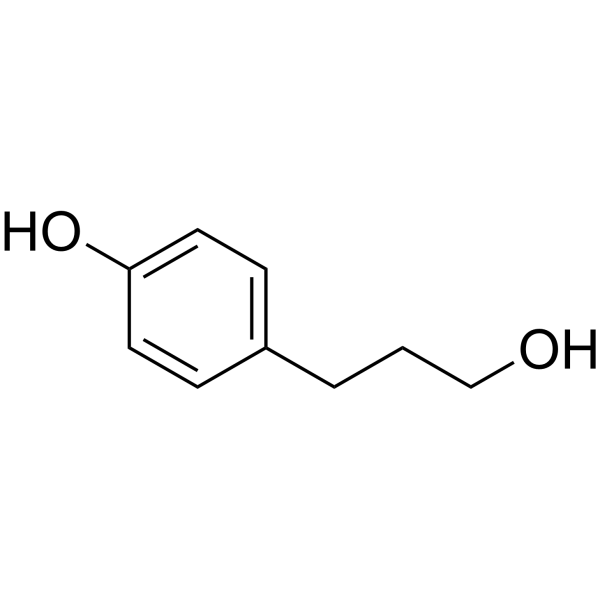
    Dihydro-p-coumaryl alcohol; 3-(p-Hydroxyphenyl)propyl alcohol

    Endogenous Metabolite Others
    3-(4-Hydroxyphenyl)-1-propanol (Dihydro-p-coumaryl alcohol) is a metabolite. 3-(4-Hydroxyphenyl)-1-propanol can be isolated from P. radiate callus cultures. 3-(4-Hydroxyphenyl)-1-propanol is associated with CAD activity .
    3-(4-Hydroxyphenyl)-1-propanol
  • HY-119698

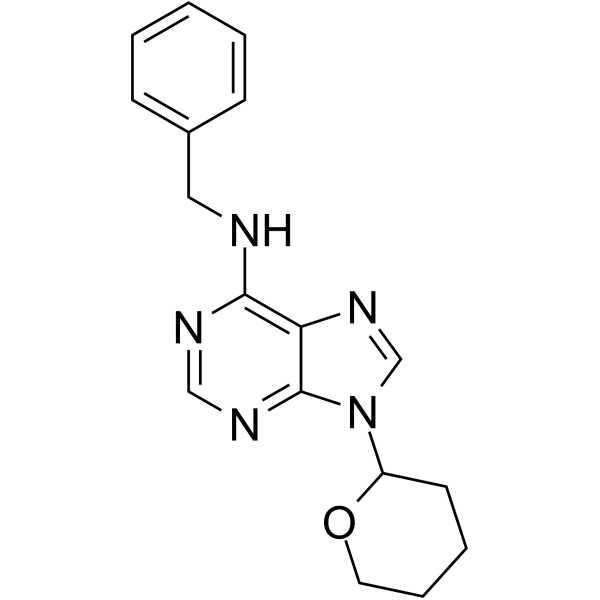
    SD 8339; N-Benzyl-9-(tetrahydro-2h-pyran-2-yl)adenine

    Environmental Pollutants Drug Derivative Others
    BAP9THP is a synthetic cytokinin derivative and a growth regulator. BAP9THP promotes chlorophyll retention (and senescence delay) in plant tissues exceptionally strongly, and growth of tobacco callus almost as strongly as 6-Benzylaminopurine (BAP). BAP9THP induces adventitious shoot formation ignificantly more strongly than N6-isopentenyladenine or Kinetin .
    BAP9THP
  • HY-W016393R

    Reference Standards Endogenous Metabolite Others
    Dihydroconiferyl alcohol (Standard) is an analytical standard of Dihydroconiferyl alcohol (HY-W016393). This product is intended for research and analytical applications. Dihydroconiferyl alcohol is a cell division factor. Dihydroconiferyl alcohol can be isolated from the American sycamore (Acer pseudoplatanus L.). Dihydroconiferyl alcohol inhibits the degradation of Indole-3-acetic acid (HY-18569). Dihydroconiferyl alcohol can stimulate the growth of soybean and tobacco callus tissue and synergistically enhance Indole-3-acetic acid-induced hypocotyl elongation in cucumber. Dihydroconiferyl alcohol can be used in the research of plant growth regulation .
    Dihydroconiferyl alcohol (Standard)
  • HY-N2893

    Aristolactam B II

    Others Others
    Cepharanone B is a fluorescent component isolated from the callus tissue of stephania cephaiuntha .
    Cepharanone B
  • HY-182709

    Biochemical Assay Reagents Others
    Arabidopsis thaliana Callus Induction Medium is a callus induction medium for Arabidopsis thaliana containing sucrose and hormones, but not agar.
    Arabidopsis thaliana Callus Induction Medium
  • HY-B1124AR

    Adenylate Cyclase Dopamine Transporter Reference Standards Neurological Disease
    Fipexide (hydrochloride) (Standard) is the analytical standard of Fipexide (hydrochloride). This product is intended for research and analytical applications. Fipexide hydrochloride, a parachloro-phenossiacetic acid derivative, is an orally active nootropic agent. Fipexide hydrochloride reduces striatal adenylate cyclase activity. Fipexide hydrochloride has positive effect on cognitive performance by dopaminergic neurotransmission. Fipexide hydrochloride is used for senile dementia research. Fipexide hydrochloride acts as a chemical inducer in callus formation, shoot regeneration and Agrobacterium infection .
    Fipexide hydrochloride (Standard)
  • HY-B1124R

    Reference Standards Adenylate Cyclase Dopamine Transporter Neurological Disease
    Fipexide (Standard) is the analytical standard of Fipexide. This product is intended for research and analytical applications. Fipexide, a parachloro-phenossiacetic acid derivative, is an orally active nootropic agent. Fipexide reduces striatal adenylate cyclase activity. Fipexide has positive effect on cognitive performance by dopaminergic neurotransmission. Fipexide is used for senile dementia research. Fipexide acts as a chemical inducer in callus formation, shoot regeneration and Agrobacterium infection .
    Fipexide (Standard)
  • HY-N1753R

    Dihydro-p-coumaryl alcohol (Standard); 3-(p-Hydroxyphenyl)propyl alcohol (Standard)

    Reference Standards Endogenous Metabolite Others
    3-(4-Hydroxyphenyl)-1-propanol (Standard) is an analytical standard of 3-(4-Hydroxyphenyl)-1-propanol (HY-N1753). This product is intended for research and analytical applications. 3-(4-Hydroxyphenyl)-1-propanol (Dihydro-p-coumaryl alcohol) is a metabolite. 3-(4-Hydroxyphenyl)-1-propanol can be isolated from P. radiate callus cultures. 3-(4-Hydroxyphenyl)-1-propanol is associated with CAD activity .
    3-(4-Hydroxyphenyl)-1-propanol (Standard)
  • HY-N9815

    Others Others
    Leontopodic acid B is a phenylpropanoid found in Leontopodium alpinum callus culture extract (LACCE) .
    Leontopodic acid B
  • HY-N17377

    Others Others
    (3β)-3-Hydroxyoleana-11,13(18)-dien-28-oic acid (Compound 4) is a triterpenoid found in the callus tissues of Paeonia japonica and Paeonia suffruticosa .
    (3β)-3-Hydroxyoleana-11,13(18)-dien-28-oic acid
  • HY-W681749

    Morphactin

    Biochemical Assay Reagents Others
    Morphactin Chlorflurenol methyl (Morphactin) is a plant growth regulator. Morphactin Chlorflurenol methyl preserves chlorophyll and suppresses senescence. Morphactin Chlorflurenol methyl regulates chlorophyll metabolic enzymes and alleviates heat-induced leaf senescence by enhancing chlorophyll content and reducing electrolyte leakage. Morphactin Chlorflurenol methyl promotes shoot redifferentiation and tracheary element development in tobacco calluses. Morphactin Chlorflurenol methyl can be applied to the investigation of heat-induced leaf senescence .
    Morphactin Chlorflurenol methyl
  • HY-180756

    Nucleoside Antimetabolite/Analog Others
    p-Coumaroylputrescine is a product found in the callus tissue culture of Nicotiana tabacum .
    p-Coumaroylputrescine
  • HY-N9548

    Trifolirhizin 6''-O-malonate

    Others Others
    6'-Malonyltrifolirhizin (Trifolirhizin 6''-O-malonate) is a malonylated pterocarpan glucoside that can be isolated both from the roots and callus cultures of Sophora flavescens var. angustifolia .
    6'-Malonyltrifolirhizin
  • HY-W141858S

    Indoleacetylalanine-d4; IAA-ala-d4

    Isotope-Labeled Compounds Others
    N-(3-Indolylacetyl)-L-alanine-d4 (Indoleacetylalanine-d4) is the deuterium labeled N-(3-Indolylacetyl)-L-alanine (HY-W141858). N-(3-Indolylacetyl)-L-alanine is an indoleacetylamino acid. N-(3-Indolylacetyl)-L-alanine appears to increase callus growth and reduces the ability of growths to differentiate into shoots of Phalaenopsis orchids .
    N-(3-Indolylacetyl)-L-alanine-d4
  • HY-119698R

    SD 8339 (Standard); N-Benzyl-9-(tetrahydro-2h-pyran-2-yl)adenine (Standard)

    Drug Derivative Reference Standards Others
    BAP9THP (Standard) is the analytical standard of BAP9THP. This product is intended for research and analytical applications. BAP9THP is a synthetic cytokinin derivative and a growth regulator. BAP9THP promotes chlorophyll retention (and senescence delay) in plant tissues exceptionally strongly, and growth of tobacco callus almost as strongly as 6-Benzylaminopurine (BAP). BAP9THP induces adventitious shoot formation ignificantly more strongly than N6-isopentenyladenine or Kinetin .
    BAP9THP (Standard)
  • HY-N17509

    Drug Metabolite Others
    3β-Hydroxy-oleana-11,13 (18)-dien-28-oic acid (compound 3) is a triterpenoid compound present in Paeonia japonica and peony calli. 3β-Hydroxy-oleana-11,13 (18)-dien-28-oic acid is also a biotransformation product of oleanolic acid .
    3β-Hydroxy-oleana-11,13(18)-dien-28-oic acid
  • HY-182089A

    Drug Intermediate Others
    γ-Glutamyl-S-(2-carboxypropyl) cysteine TFA is a chemical intermediate. γ-Glutamyl-S-(2-carboxypropyl) cysteine can be used in the synthesis of Alliin (HY-N0661) and Isoalliin (HY-111825A) .
    γ-Glutamyl-S-(2-carboxypropyl)cysteine TFA

Inquiry Online

Your information is safe with us. * Required Fields.

Salutation


Country or Region *

Applicant Name *


Organization Name *

Department *


Email Address *


Product Name *

Cat. No.


Requested quantity *

Phone Number *


Remarks

Inquiry Online

Inquiry Information

Product Name:
Cat. No.:
Quantity:
MCE Japan Authorized Agent:

