
1. Search Result
Search Result
Results for "

caspase activator

" in MedChemExpress (MCE) Product Catalog:

538

Inhibitors & Agonists

2

Screening Libraries

7

Fluorescent Dyes

12

Biochemical Assay Reagents

36

Peptides

6

Inhibitory Antibodies

152

Natural
Products

23

Isotope-Labeled Compounds

1

Click Chemistry

8

Oligonucleotides

1

GMP Molecules

Targets Recommended:
Cat. No. Product Name Target Research Areas Chemical Structure
  • HY-16591
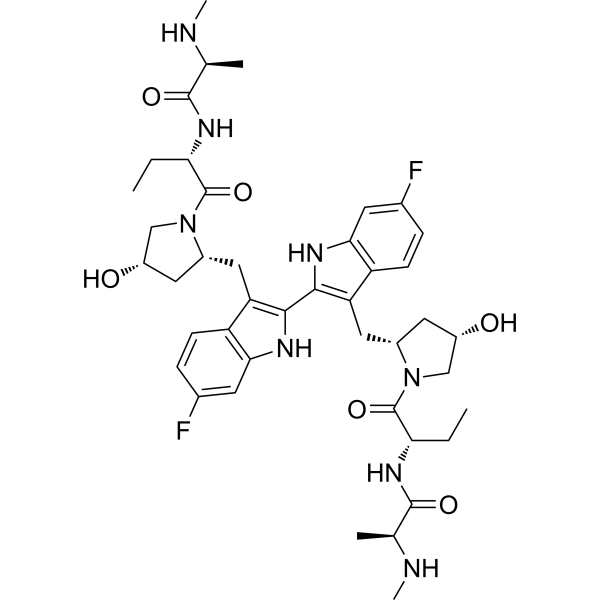
    Birinapant
    40+ Cited Publications

    TL32711

    IAP Apoptosis HIV Cancer
    Birinapant (TL32711), a bivalent Smac mimetic, is a potent antagonist for XIAP and cIAP1 with Kds of 45 nM and less than 1 nM, respectively. Birinapant (TL32711) induces the autoubiquitylation and proteasomal degradation of cIAP1 and cIAP2 in intact cells, which results in formation of a RIPK1: caspase-8 complex, caspase-8 activation, and induction of tumor cell death. Birinapant (TL32711) targets TRAF2-associated cIAPs and abrogates TNF-induced NF-κB activation.
    Birinapant
  • HY-N0605
    Ginsenoside Rh2
    4 Publications Verification

    20(S)-Ginsenoside Rh2; 20(S)-Rh2

    Caspase Apoptosis Endogenous Metabolite Cancer
    Ginsenoside Rh2 (20(S)-Ginsenoside Rh2) induces the activation of caspase-8 and caspase-9. Ginsenoside Rh2 induces cancer cell apoptosis in a multi-path manner.
    Ginsenoside Rh2
  • HY-N0674
    Dehydrocorydaline
    40+ Cited Publications

    13-Methylpalmatine

    Bcl-2 Family Caspase PARP p38 MAPK Parasite Autophagy Infection Cancer
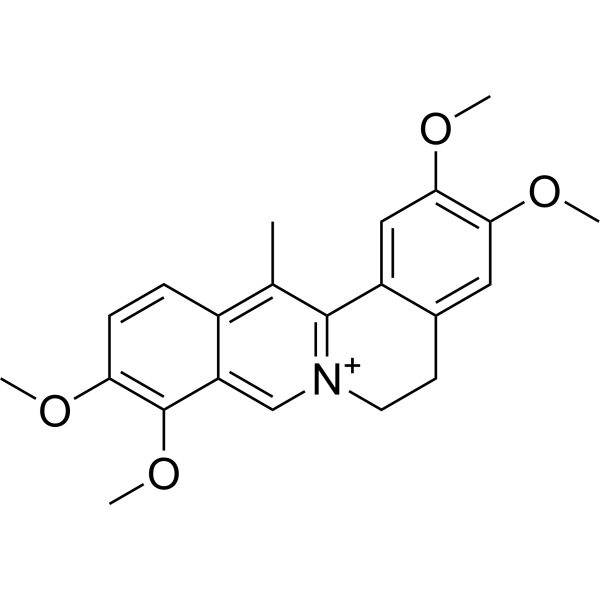
    Dehydrocorydaline (13-Methylpalmatine) is an alkaloid that regulates protein expression of Bax, Bcl-2; activates caspase-7, caspase-8, and inactivates PARP . Dehydrocorydaline elevates p38 MAPK activation. Anti-inflammatory and anti-cancer activities . Dehydrocorydaline shows strong anti-malarial effects (IC50=38 nM), and low cytotoxicity (cell viability > 90%) using P. falciparum 3D7 strain .
    Dehydrocorydaline
  • HY-121320
    Raptinal
    5+ Cited Publications

    Caspase Apoptosis Cancer
    Raptinal, a agent that directly activates caspase-3, initiates intrinsic pathway caspase-dependent apoptosis. Raptinal is able to rapidly induce cancer cell death by directly activating the effector caspase-3, bypassing the activation of initiator caspase-8 and caspase-9 .
    Raptinal
  • HY-108599
    DCP-LA
    5+ Cited Publications

    FR236924

    PKC CaMK Phosphatase Apoptosis Neurological Disease
    DCP-LA (FR236924), a linoleic acid derivative, selectively and directly activates PKCε. DCP-LA activates Ca( 2+)/calmodulin-dependent protein kinase II (CaMKII) and inhibits protein phosphatase-1 (PP-1) to stimulate AMPA receptor exocytosis. DCP-LA inhibits activation of caspase-3/-9 and protects neurons at least in part from oxidative stress-induced apoptosis .
    DCP-LA
  • HY-B0621
    Triclabendazole
    5+ Cited Publications

    CGA89317

    Parasite Caspase Bcl-2 Family PARP Pyroptosis Infection
    Triclabendazole is an orally active parasite inhibitor. Triclabendazole has anti-Leishmania activity and induces gasdermin E (GSDME)-dependent pyroptosis by caspase-3 activation. Triclabendazole can be used for the research of fasciola hepatica .
    Triclabendazole
  • HY-14569
    CDPPB
    1 Publications Verification

    mGluR Akt ERK Caspase Mitochondrial Metabolism Neurological Disease Inflammation/Immunology Cancer
    CDPPB is a selective, orally active and brain-penetrant mGluR5 allosteric modulator. CDPPB increases AKT and ERK1/2 activation and augments the BDNF mRNA. CDPPB inhibits caspase-3 activation and mitochondrial dysfunction. CDPPB improves cognitive impairment, depression, and Huntington's disease .
    CDPPB
  • HY-B1839

    Environmental Pollutants JNK Fungal p38 MAPK Bcl-2 Family Caspase Autophagy Apoptosis Infection
    Fluazinam is an orally active dinitroaniline fungicide. Fluazinam induces phosphorylation of JNK, activates p38 pathway, decreases Bcl-2, activates caspase-3, decreases complex I activity, increases Autophagy and Apoptosis. Fluazinam has strong antifungal activity against F. fujikuroi and B. maydis. Fluazinam has a negative impact on Brachydanio rerio and worker bees .
    Fluazinam
  • HY-N6818
    5,​7,​4'-​Trimethoxyflavone
    2 Publications Verification

    TMF

    Apoptosis Caspase PARP Endogenous Metabolite CFTR Cancer
    5,7,4’-Trimethoxyflavone can be isolated from the medicinal plant Kaempferia parviflora (KP). 5,7,4’-Trimethoxyflavone is a CFTR activator and EC50 is 64 μM. 5,7,4’-Trimethoxyflavone induces apoptosis, increases proteolytic activation of caspase-3, and degradation of ADP-ribose polymerase (PARP) protein. 5,7,4’-Trimethoxyflavone has antitumor activity. 5,7,4’-Trimethoxyflavone can be used to prevent skin aging and oxidative stress .
    5,​7,​4'-​Trimethoxyflavone
  • HY-103667
    2-HBA
    3 Publications Verification

    Quinone Reductase Caspase Cancer
    2-HBA is a potent inducer of NAD(P)H:quinone acceptor oxidoreductase 1 (NQO1) which can also activate caspase-3 and caspase-10.
    2-HBA
  • HY-N3376

    Spermatheridine; VLT045

    Apoptosis Cancer
    Liriodenine (Spermatheridine; VLT045) is an aporphine alkaloid isolated from the plant?Mitrephora sirikitiae?and has anti-cancer activities . Liriodenine induces cell apoptosis, activates the intrinsic pathway by induction of caspase-3 and caspase-9 .
    Liriodenine
  • HY-N0905

    Bcl-2 Family Caspase Apoptosis Autophagy Endogenous Metabolite Cancer
    Ginsenoside Rh4 is a rare saponin obtained from Panax notoginseng. Ginsenoside Rh4 activates Bax, caspase 3, caspase 8, and caspase 9. Ginsenoside Rh4 also induces autophagy.
    Ginsenoside Rh4
  • HY-33350
    Clofilium tosylate
    1 Publications Verification

    Potassium Channel Apoptosis Cardiovascular Disease Cancer
    Clofilium tosylate, a potassium channel blocker, induces apoptosis of human promyelocytic leukemia (HL-60) cells via Bcl-2-insensitive activation of caspase-3. Antiarrhythmic agent .
    Clofilium tosylate
  • HY-Y0152
    Cinchonine
    5 Publications Verification

    (8R,9S)-Cinchonine; LA40221

    Apoptosis Parasite Autophagy Caspase Calcium Channel Others Inflammation/Immunology Cancer
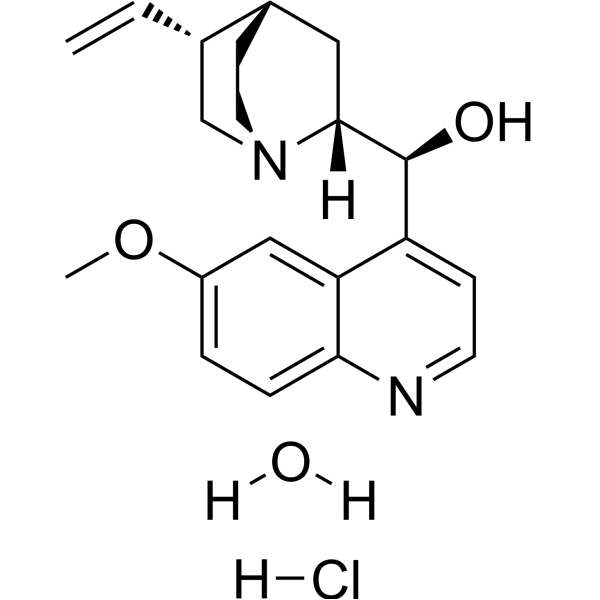
    Cinchonine is a natural compound present in Cinchona bark with antimalarial, antitumor, anti-inflammatory, anti platelet-aggregation and anti-obesity properties. Cinchonine inhibits cells proliferation and autophagy and induces apoptosis through activation of Caspase-3. Cinchonine activates endoplasmic reticulum stress-induced apoptosis in human liver cancer cells .
    Cinchonine
  • HY-N7045
    Isosilybin B
    2 Publications Verification

    Androgen Receptor Apoptosis CDK Caspase PSMA Cancer
    Isosilybin B is a flavonolignan. Isosilybin B can be isolated from Silybum marianum. Isosilybin B can regulate cell cycle-related proteins (e.g., reduce cyclins (D3, D1, A, E), Cdk4, Cdk2, Cdc25A), and activate Caspases (Caspase-9 and Caspase-3). Isosilybin B can promote Apoptosis, reduce androgen receptor (AR) and PSA. Isosilybin B has anticancer activity against prostate cancer .
    Isosilybin B
  • HY-12842

    IAP Survivin Apoptosis Caspase Inflammation/Immunology Cancer
    UC-112 is a XIAP inhibitor with anticancer activity. UC-112 selectively downregulates and degrades survivin via the ubiquitin-mediated proteasomal degradation pathway. UC-112 reduces XIAP levels in in vivo tumor models. UC-112 activates caspase-3/7 and caspase-9, and induces cancer cell apoptosis. UC-112 is applicable to studies on melanoma, prostate cancer and cancer-related research .
    UC-112
  • HY-N2993

    Apoptosis Caspase PARP Akt PTEN MDM-2/p53 JNK Cancer
    Polyporenic acid C is a lanostane-type triterpenoid. Polyporenic acid C can be isolated from Poria cocos. Polyporenic acid C causes the cleavage of caspase-8 and caspase-3, as well as the cleavage of PARP. Polyporenic acid C reduces the phosphorylation level of Akt (Ser473), increases the phosphorylation of PTEN and p53 (Ser15), and activates JNK. Polyporenic acid C induces Apoptosis. Polyporenic acid C shows anticancer activity against non-small cell lung cancer .
    Polyporenic acid C
  • HY-18633

    Apoptosis Cancer
    MDK83190 is a potent apoptosis activator, induces Apaf-1 oligomerization, increases procaspase-9 processing and subsequent caspase-3 activation in a cyto c-dependent Manner .
    MDK83190
  • HY-N0674A
    Dehydrocorydaline chloride
    40+ Cited Publications

    13-Methylpalmatine chloride

    Bcl-2 Family Caspase PARP p38 MAPK Parasite Autophagy Infection Cancer
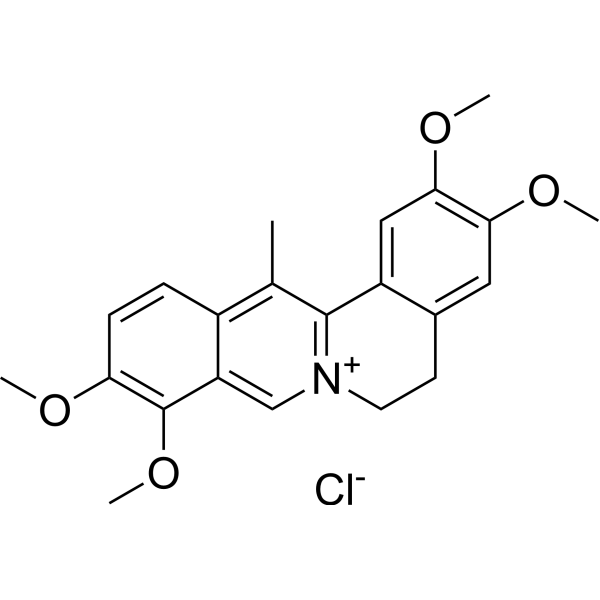
    Dehydrocorydaline chloride (13-Methylpalmatine chloride) is an alkaloid that regulates protein expression of Bax, Bcl-2; activates caspase-7, caspase-8, and inactivates PARP . Dehydrocorydaline chloride elevates p38 MAPK activation. Anti-inflammatory and anti-cancer activities . Dehydrocorydaline chloride shows strong anti-malarial effects (IC50?=38 nM), and low cytotoxicity (cell viability?>?90%) using P. falciparum 3D7 strain .
    Dehydrocorydaline chloride
  • HY-N12503

    Apoptosis Caspase Cancer
    Patuletin is a flavonol, that can be isolated from the flowers of Tagetes patula. Patuletin shows anti-proliferative activity against cancer cells. Patuletin causes significant nuclear fragmentation and has a great capacity to induce caspase-3 activation .
    Patuletin
  • HY-P1380A

    Apoptosis Bcl-2 Family Caspase Cancer
    Difopein TFA is a 14-3-3 protein inhibitor. Difopein TFA acts as an apoptosis inducer, regulates apoptosis-related proteins, downregulates Bcl-2, upregulates Bax, activates caspase-9 and caspase-3, and induces nuclear fragmentation, membrane-enclosed apoptotic bodies and DNA ladder formation. Difopein TFA serves as a tumor growth inhibitor, which inhibits the proliferation of glioma cells and induces their apoptosis in in vivo nude mouse models. Difopein TFA is applicable to glioma-related research .
    Difopein TFA
  • HY-129478
    TC11
    2 Publications Verification

    Caspase Bcl-2 Family CDK Cancer
    TC11 is a MCL1 degrader and Caspase-9 and CDK1 activator. TC11 functions as a phenylacetylamide derivative and is structurally related to immunomodulatory active molecules. TC11 induces degradation of MCL1 leading to apoptotic death during prolonged mitotic arrest.
    TC11
  • HY-103349
    PETCM
    1 Publications Verification

    Caspase Apoptosis Cancer
    PETCM is an activator of caspase-3 and acts as an cytochrome c (cyto c)-dependent manner. PETCM promotes Apaf-1 oligomerization and induces cell apoptosis in HeLa cells .
    PETCM
  • HY-108356

    Apoptosis Cancer
    NS3694, a diarylurea compound, is an apoptosome inhibitor. NS3694 inhibits apoptosome formation and caspase activation .
    NS3694
  • HY-P10939A

    Caspase Pyroptosis Inflammation/Immunology Cancer
    Ac-DMLD-CMK TFA is a caspase 3 inhibitor and a GSDME inhibitor. Ac-DMLD-CMK TFA binds directly to the catalytic domain of caspase-3, blocks caspase-3-mediated cleavage of GSDME, inhibits the activation of caspase 3 and Gsdme in the caspase 3-Gsdme signaling pathway, and reduces the levels of pyroptosis and apoptosis as well as the expression of LDH, IL-6, IL-1β and IL-18. Ac-DMLD-CMK TFA alleviates renal function deterioration, renal tubular epithelial cell injury, inflammatory cytokine secretion, pulmonary structural damage, and chemotherapy-induced nephrotoxicity .
    Ac-DMLD-CMK TFA
  • HY-10531

    Caspase Infection Cancer
    ARRY-380 analog (Compound PCM-0095494) is an ARRY-380 (HY-16069) analog. ARRY-380 analog activates caspases 3 and caspases 8. ARRY-380 analog inhibits Salmonella replication in cells .
    ARRY-380 analog
  • HY-125018

    SVT016426

    Caspase Cancer
    QM31 (SVT016426), a cytoprotective agent, is a selective inhibitor of Apaf-1. QM31 inhibits the formation of the apoptosome (IC50=7.9μM), the caspase activation complex composed by Apaf-1, cytochrome c, dATP and caspase-9. QM31 exerts mitochondrioprotective functions and interferes with the intra-S-phase DNA damage checkpoint .
    QM31
  • HY-N6861

    Apoptosis Cancer
    Lucidenic acid B is a natural compound isolated from Ganoderma lucidum, induces apoptosis of cancer cells, and causes the activation of caspase-9 and caspase-3, and cleavage of PARP. Lucidenic acid B does not affect the cell cycle profile, or the number of necrotic cells .
    Lucidenic acid B
  • HY-N0674B
    Dehydrocorydaline (hydroxyl)
    40+ Cited Publications

    13-Methylpalmatine (hydroxyl)

    Bcl-2 Family Caspase PARP p38 MAPK Parasite Autophagy Infection Inflammation/Immunology Cancer
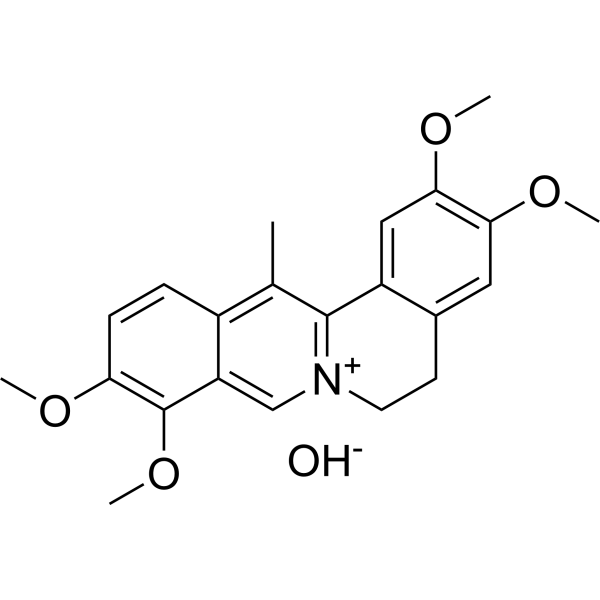
    Dehydrocorydaline (13-Methylpalmatine) hydroxyl is an alkaloid that regulates protein expression of Bax, Bcl-2; activates caspase-7, caspase-8, and inactivates PARP. Dehydrocorydaline hydroxyl elevates p38 MAPK activation. Anti-inflammatory and anti-cancer activities. Dehydrocorydaline hydroxyl shows strong anti-malarial effects (IC50=38 nM), and low cytotoxicity (cell viability > 90%) using P. falciparum 3D7 strain.
    Dehydrocorydaline (hydroxyl)
  • HY-N4238
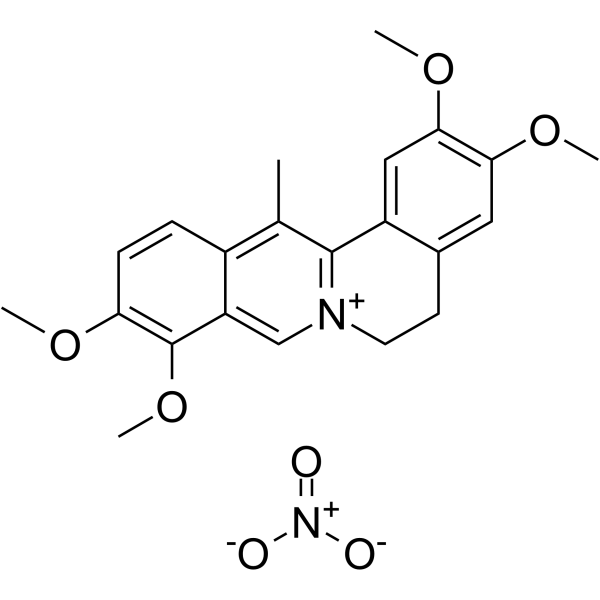
    Dehydrocorydaline nitrate
    40+ Cited Publications

    13-Methylpalmatine nitrate

    Bcl-2 Family Caspase PARP p38 MAPK Parasite Autophagy Infection Cancer
    Dehydrocorydaline nitrate (13-Methylpalmatine nitrate) is an alkaloid. Dehydrocorydaline regulates protein expression of Bax, Bcl-2; activates caspase-7, caspase-8, and inactivates PARP . Dehydrocorydaline nitrate elevates p38 MAPK activation. Anti-inflammatory and anti-cancer activities. . Dehydrocorydaline nitrate shows strong anti-malarial effects (IC50 =38 nM), and low cytotoxicity (cell viability > 90%) using P. falciparum 3D7 strain .
    Dehydrocorydaline nitrate
  • HY-103347

    Apoptosis Inflammation/Immunology
    M50054 is a potent inhibitor of apoptosis. M50054 inhibits Etoposide-induced caspase-3 activation of U937 cells with an IC50 of 79 μg/mL. M50054 does not directly inhibit the enzymatic activity of caspase-3. M50054 can be used for the research anti-Fas-antibody-induced hepatitis and chemotherapy-induced alopecia .
    M50054
  • HY-125305

    Caspase Apoptosis Cancer
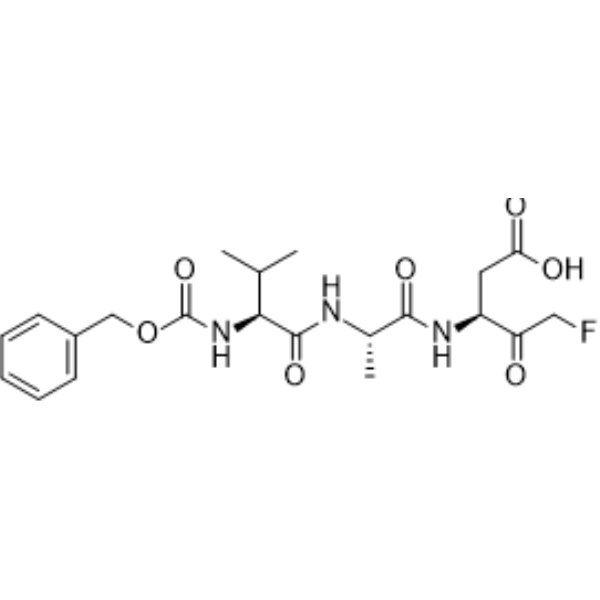
    Z-AEVD-FMK is a caspase-10 inhibitor. Z-AEVD-FMK can inhibit the activation of Bid and the release of apoptosis-inducing factor (AIF) in mitochondria in cells, resulting in a significant decrease in the number of apoptotic cells .
    Z-AEVD-FMK
  • HY-P10939

    Caspase Pyroptosis Inflammation/Immunology Cancer
    Ac-DmLD-CMK is a caspase 3 inhibitor and a GSDME inhibitor. Ac-DmLD-CMK binds directly to the catalytic domain of caspase-3, blocks caspase-3-mediated cleavage of GSDME, inhibits the activation of caspase 3 and Gsdme in the caspase 3-Gsdme signaling pathway, and reduces the levels of pyroptosis and apoptosis as well as the expression of LDH, IL-6, IL-1β and IL-18. Ac-DmLD-CMK alleviates renal function deterioration, renal tubular epithelial cell injury, inflammatory cytokine secretion, pulmonary structural damage, and chemotherapy-induced nephrotoxicity .
    Ac-DMLD-CMK
  • HY-B1559

    Environmental Pollutants Apoptosis Infection Cancer
    Allethrin, a pyrethroid insecticide is a major mosquito repellent agent. Allethrin induces oxidative stress, apoptosis and calcium release in rat testicular carcinoma cells (LC540). Allethrin induces BCL-2, caspase-3 activation and release of intracellular calcium .
    Allethrin
  • HY-NP019

    Sirtuin Caspase Apoptosis Neurological Disease
    Agkistrodon halys batroxobin is a thrombin-like serine protease. Agkistrodon halys batroxobin reduces the expression of Sirt1 and extracellular signal-regulated kinase activation in brain tissue. Agkistrodon halys batroxobin reduces cleaved caspase-3 expression and inhibits neuronal apoptosis in rat .
    Agkistrodon halys batroxobin
  • HY-D1432

    Fluorescent Dye Cancer
    FITC-C6-DEVD-FMK, a fluorescently labeled caspase-3 inhibitor, can be used for detection of active caspase-3 in mammalian cells undergoing apoptosis. FITC-C6-DEVD-FMK provides a convenient means for sensitive detection of activated caspase-3 in living cells. Z-DEVD-FMK is a specific caspase-3 inhibitor .
    FITC-C6-DEVD-FMK
  • HY-114982

    Caspase Apoptosis Cancer
    KEA1-97 is a selective Thioredoxin-caspase 3 interaction disruptor (IC50=10 μM). KEA1-97 disrupts the interaction of thioredoxin with caspase 3, activates caspases, and induces apoptosis without affecting thioredoxin activity .
    KEA1-97
  • HY-130480

    AIM2 Inflammation/Immunology
    Fructose-arginine, an amino-sugar, is an AIM2 inflammasome activation inhibitor. Fructose-arginine attenuates the secretion of IL-1β, IL-18, and caspase-1, and Asc pyroptosome formation and Gsdmd cleavage resulting from AIM2 inflammasome activation .
    Fructose-arginine
  • HY-N16409

    MMP Caspase Inflammation/Immunology Cancer
    Berkeleyamide C is a selective matrix metalloproteinase-3 (MMP-3) and caspase-1 inhibitor. Berkeleyamide C blocks MMP-3-mediated tumor cell invasion and metastasis, as well as the abnormal activation of inflammation and apoptosis related to caspase-1. Berkeleyamide C is promising for research of cancers and inflammation-related diseases .
    Berkeleyamide C
  • HY-130476

    Caspase Apoptosis Cancer
    Satratoxin G is a large cyclic mucor toxin. Satratoxin G induces apoptosis by activation of caspase .
    Satratoxin G
  • HY-120434

    HGS1029

    IAP Cancer
    AEG40826 (HGS1029), a second mitochondria-derived activator of caspases (SMAC) mimetic, is an inhibitor of apoptosis (IAP) inhibitor. AEG40826 degrades cellular IAP1 (cIAP1) and blocks TNF-α pro-survival signaling. AEG40826 can be used for cancer research .
    AEG40826
  • HY-161991

    Caspase Apoptosis Cancer
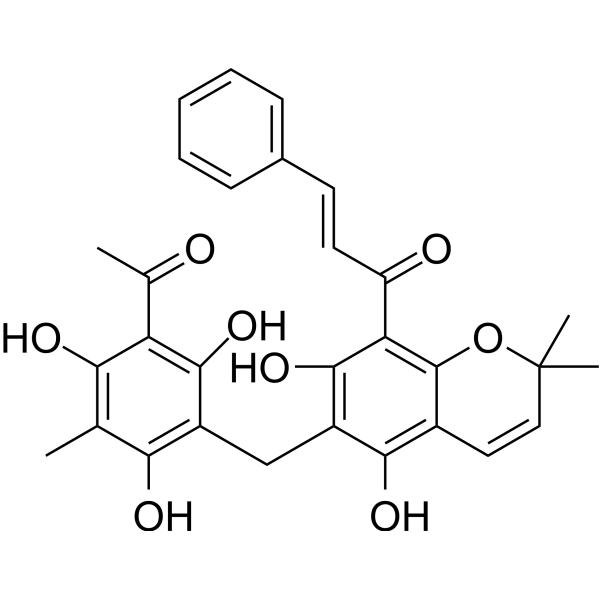
    Caspase-3 activator 4 (compound 4o) is a potent and cross the blood-brain barrier caspase-3 activator. Caspase-3 activator 4 shows antiproliferative activity. Caspase-3 activator 4 induces apoptosis. Caspase-3 activator 4 increases the gene expression of TNF-α. Caspase-3 activator 4 decreases the protein expression of cleaved caspases 3/caspases 3 .
    Caspase-3 activator 4
  • HY-152758

    Apoptosis Caspase Cancer
    Caspase-3/7 activator 3 is an effective activator of Caspase-3/7. Caspase-3/7 activator 3 has tumor selectivity, anti-proliferative activity and high Apoptosis-inducing ability .
    Caspase-3/7 activator 3
  • HY-155390

    Caspase Apoptosis Cancer
    Caspase-3 activator 3 (compound 2h) induces apoptosis in HL-60 and K562 cells via significant caspase 3 activation. Caspase-3 activator 3 shows antileukemic acticity against HL-60 and K562 cells, with IC50 values of 42.89 and 33.61 μM, respectively .
    Caspase-3 activator 3
  • HY-175548

    Keap1-Nrf2 Apoptosis Caspase Neurological Disease
    Nrf2 activator-21 is a Nrf2 activator with dual antioxidant and neuroprotective properties. Nrf2 activator-21 binds to Keap1 Kelch domain and disrupts Keap1-Nrf2 interactions and activate antioxidant defense mechanisms. Nrf2 activator-21 reduces apoptosis and decreases caspase-3 activity in the hippocampal neurons. Nrf2 activator-21 targets cerebral ischemia/reperfusion injury (CIRI) via Nrf2 pathway activation. Nrf2 activator-21 improves neurological function, alleviates anxiety-like behavior, enhances memory in rats with 2-vessel occlusion (2VO)-induced CIRI. Nrf2 activator-21 can be used for the study of cerebral ischemia/reperfusion injury .
    Nrf2 activator-21
  • HY-P2228

    HDAC Apoptosis Cancer
    Chlamydocin (purity≥70%), a fungal metabolite, is a highly potent HDAC inhibitor, with an IC50 of 1.3 nM. Chlamydocin (purity≥70%) exhibits potent antiproliferative and anticancer activities. Chlamydocin (purity≥70%) induces apoptosis by activating caspase-3 .
    Chlamydocin (purity≥70%)
  • HY-150696

    Apoptosis Caspase PARP Cancer
    Antitumor agent-72 (compound 6w) is a potent anticancer agent. Antitumor agent-72 has anticancer activity and induces apoptosis through activation of caspase-3 and cleavage of PARP. Antitumor agent-72 can be used for cancer research .
    Antitumor agent-72
  • HY-113843

    MDM-2/p53 Cancer
    RETRA (hydrobromide) is a mutant p53-dependent activator of p73 that can inhibit cancer cells carrying mutant p53. RETRA (hydrobromide) increases the expression level of p73, induces transcriptional activation of several common to transcriptional targets p53 and p73, which leads to mutant p53- and p73-dependent inhibition of tumor growth, reduction of colony formation and induction of effector caspases .
    RETRA hydrobromide
  • HY-117614

    Caspase Apoptosis Cancer
    WF-210 is a potent procaspase-3 activator with an EC50 value of 0.95 μM. WF-210 induces Apoptosis. WF-210 has anti-tumor activity .
    WF-210
  • HY-N6681

    Caspase Bacterial Apoptosis Antibiotic Infection
    15-acetoxyscirpenol, one of acetoxyscirpenol moiety mycotoxins (ASMs), strongly induces apoptosis and inhibits Jurkat T cell growth in a dose-dependent manner by activating other caspases independent of caspase-3 .
    15-Acetoxyscirpenol

Inquiry Online

Your information is safe with us. * Required Fields.

Salutation


Country or Region *

Applicant Name *


Organization Name *

Department *


Email Address *


Product Name *

Cat. No.


Requested quantity *

Phone Number *


Remarks

Inquiry Online

Inquiry Information

Product Name:
Cat. No.:
Quantity:
MCE Japan Authorized Agent:

