






45 Results for "

cell surface glycoproteins

" in MedChemExpress (MCE) Product Catalog:
Products (45)

45 Results for "cell surface glycoproteins" in MCE Product Catalog:

23
23 Publications Verification
Cat. No.: HY-101916
CAS No.: 9050-30-0
Heparan sulfate, a complex and linear polysaccharide, exists as part of glycoproteins named heparan sulfate proteoglycans, which are expressed abundantly on the cell surface and in the extracellular matrix.
loading...
    loading...
3
3 Cited Publications
Cat. No.: HY-P99006
CAS No.: 931402-35-6
Synonyms: MORab-009

Target:  

Mesothelin

Research Areas:  

Cancer

Amatuximab (MORab-009) is a chimeric, humanized IgG1/k MAb that targets the cell surface mesothelin (MSLN). Mesothelin is a glycosylphosphatidyl inositol (GPI)-anchored membrane glycoprotein, which is present in a restricted set of normal adult tissues such as the mesothelium .
loading...
    loading...
1
1 Cited Publications
Cat. No.: HY-Y1089
CAS No.: 1122-58-3
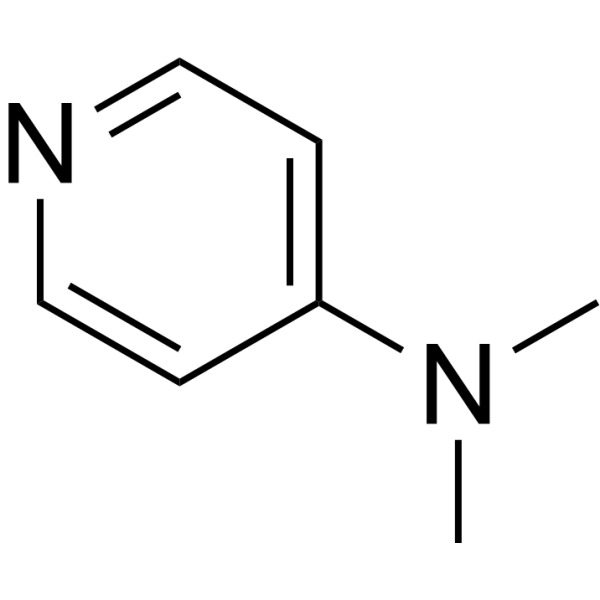
4-Dimethylaminopyridine is an acyl transfer catalyst. 4-Dimethylaminopyridine is used for labeling and analysis of glycoproteins on the surface of living cells. 4-Dimethylaminopyridine reduces dyskinesia attacks .
loading...
    loading...
1
1 Cited Publications
Cat. No.: HY-P99023
CAS No.: 916138-87-9
Synonyms: G250; cG250

Target:  

Carbonic Anhydrase

Research Areas:  

Cancer

Girentuximab (G250) is a chimeric monoclonal antibody that binds carbonic anhydrase IX (CAIX), a cell surface glycoprotein ubiquitously expressed in clear cell renal cell carcinoma (ccRCC) .
loading...
    loading...
Cat. No.: HY-P1698
CAS No.: 1447799-33-8
Synonyms: AB-103
Target:  

Bacterial CD28

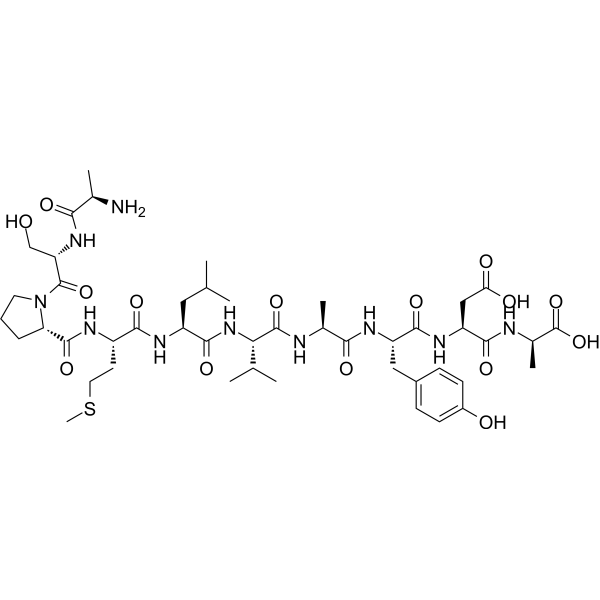
Reltecimod (AB-103) is a T-cell-specific surface glycoprotein CD28 (TP44) antagonist. Reltecimod has beneficial effects against different bacterial infections, their exotoxins and endotoxins, and ionizing radiation. Reltecimod modulates the inflammatory response by targeting and attenuating the critical CD28/B7-2 co-stimulatory pathway, without inhibiting it. Reltecimod can be used to research necrotizing soft-tissue infections (NSTIs) .
loading...
    loading...
Cat. No.: HY-P99231
CAS No.: 156586-89-9
Synonyms: Panorex; CO17-1A

Target:  

Inhibitory Antibodies

Research Areas:  

Cancer

Edrecolomab (Panorex) is a murine monoclonal antibody to the cell-surface glycoprotein 17-1A, expressed on epithelial tissues and on various carcinomas. Edrecolomab shows anti-tumor activity and can be used in colorectal carcinoma research .
loading...
    loading...
Cat. No.: HY-P99157
CAS No.: 1895083-75-6
Synonyms: Mab 8H9
Target:  

CD276/B7-H3

Research Areas:  

Neurological Disease Cancer

Omburtamab (Mab 8H9) is a mouse monoclonal immunoglobulin G1 (IgG1) antibody targeting B7-H3. Omburtamab specifically binds to the glycoprotein antigen B7-H3, which is widely expressed on the surface of tumor cells. As a targeting carrier for recombinant toxins, it delivers PE38 to inhibit cellular protein synthesis and induce cytotoxicity in antigen-expressing cancer cells. Omburtamab can be used in research related to glioma, breast cancer, osteosarcoma and neuroblastoma .
loading...
    loading...
Cat. No.: HY-P990785
CAS No.: 2490552-52-6
Synonyms: ABBV-383; TNB 383B

Target:  

CD3

Etentamig is a BCMA × CD3 bispecific T-cell engager (BiTE) that can inhibit the activity of B-cell maturation antigen (BCMA) and activate the T-cell surface glycoprotein CD3 complex. Etentamig can be used for research in multiple myeloma, immunoglobulin light chain amyloidosis, and cardiovascular diseases .
loading...
    loading...
Cat. No.: HY-147266
Purity:  95.83%
Synonyms: VIR-2218 sodium
Research Areas:  

Infection

Elebsiran (VIR-2218) sodium is a siRNA that targets and degrades hepatitis B virus (HBV) and hepatitis D virus (HDV) RNA transcripts. Elebsiran sodium leads to a significant decrease in HBV surface antigen (HBsAg) and a reduction in viral load. Elebsiran sodium binds to the sialic acid-depleted glycoprotein receptor (ASGPR) on the surface of liver cells through the GalNAc ligand, achieving liver-targeted delivery and demonstrating improved liver safety. Elebsiran sodium can be used for the study of chronic HBV/HDV infections .
loading...
    loading...
Cat. No.: HY-NP163A
Synonyms: WGA-AF488
Wheat germ agglutinin-AF488 (WGA-AF488) is a cell membrane-specific staining agent prepared by conjugating wheat germ agglutinin with the Alexa Fluor 488 (HY-D1304) fluorescent dye, and it binds to cell surface glycoproteins with high affinity. Wheat germ agglutinin-AF488 is applied in fluorescence microscopy and confocal imaging techniques, and it can clearly label the membrane structures of various cells including breast cancer cells, enabling high-resolution visual observation. Wheat germ agglutinin-AF488 is used in studies of breast cancer and triple-negative breast cancer to observe cell morphology and membrane dynamic changes .
loading...
    loading...
Cat. No.: HY-P99454
CAS No.: 1826819-58-2
Synonyms: ABBV-838
Research Areas:  

Cancer

Azintuxizumab vedotin (ABBV-838) is an antibody–drug conjugate (ADC) targeting a unique epitope of CD2 subset 1, a cell-surface glycoprotein expressed on multiple myeloma cells .
loading...
    loading...
Cat. No.: HY-W588717
CAS No.: 3099388-13-0
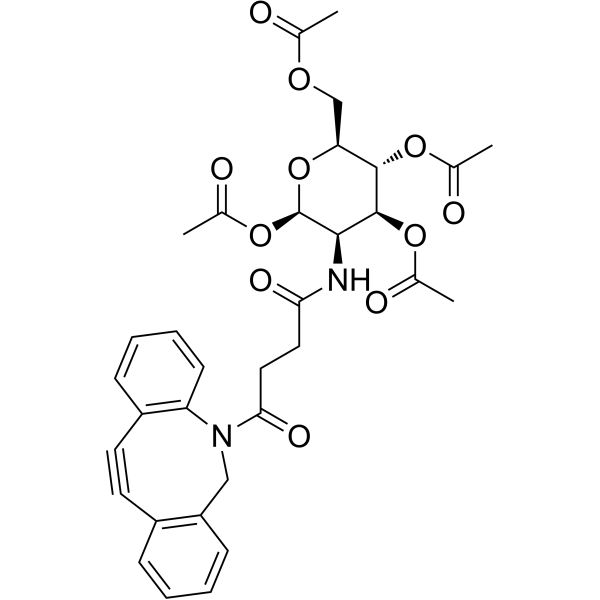
DBCO-Tetraacetyl mannosamine is an organic compound commonly used for chemical alteration and modification in biological research. It can be used to modify glycoproteins, cell surface molecules, and other biomolecules, and is widely used in biomarking and purification techniques. In addition, this compound is used as a carrier for drugs in certain drug controlled release systems. DBCO-Tetraacetyl mannosamine is a click chemistry reagent, it contains a DBCO group that can undergo strain-promoted alkyne-azide cycloaddition (SPAAC) with molecules containing Azide groups.
loading...
    loading...
Cat. No.: HY-145383
CAS No.: 2599839-59-3
Purity:  ≥95.0%
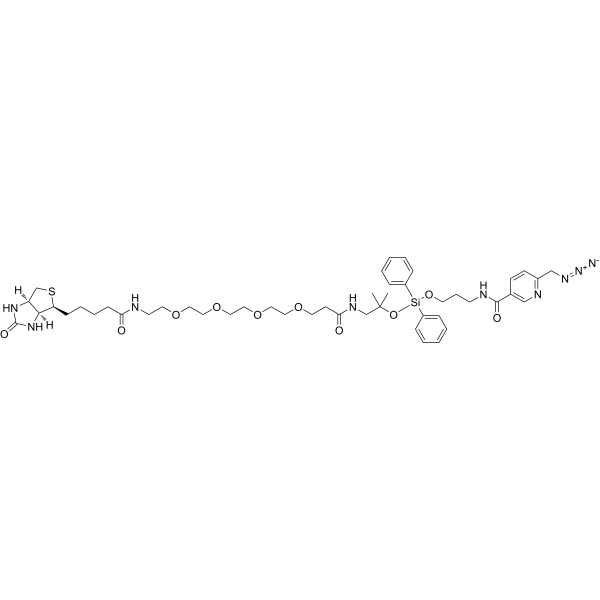
Biotin-PEG4-dialkoxydiphenylsilane-picolyl azide is a clickable, acid-cleavable biotin-picolyl azide. Biotin-PEG4-dialkoxydiphenylsilane-picolyl azide is an enrichment handle of cell surface glycoproteins for protein labeling . It contains an azide group and can undergo copper-catalyzed azide-alkyne cycloaddition (CuAAc) with molecules containing alkyne groups. It can also undergo ring strain-promoted alkyne-azide cycloaddition (SPAAC) with molecules containing DBCO or BCN groups.
loading...
    loading...
Cat. No.: HY-147266A
CAS No.: 2648009-64-5
Synonyms: VIR-2218
Research Areas:  

Infection

Elebsiran (VIR-2218) is a siRNA that targets and degrades hepatitis B virus (HBV) and hepatitis D virus (HDV) RNA transcripts. Elebsiran leads to a significant decrease in HBV surface antigen (HBsAg) and a reduction in viral load. Elebsiran binds to the sialic acid-depleted glycoprotein receptor (ASGPR) on the surface of liver cells through the GalNAc ligand, achieving liver-targeted delivery and demonstrating improved liver safety. Elebsiran can be used for the study of chronic HBV/HDV infections .
loading...
    loading...
Cat. No.: HY-W415798
CAS No.: 1810852-60-8
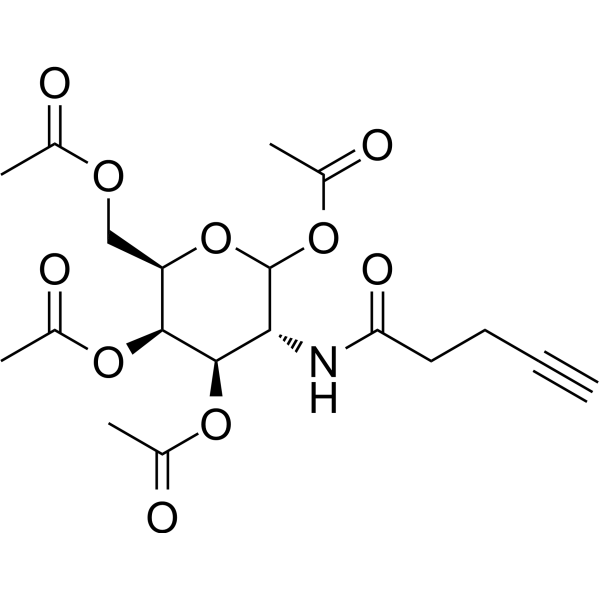
Ac4GalNAlk is a weakly alkyne-labeled reagent for metabolic oligosaccharide engineering (MOE) that can be used to detect protein glycosylation. MOE reagents can be activated by cellular biosynthetic machinery into nucleotide sugars, which can be further traced through the introduction of glycoproteins in bioorthogonal chemistry. Ac4GalNAlk promotes nucleotide-sugar biosynthesis and increases bioorthogonal cell surface markers .
loading...
    loading...
Cat. No.: HY-Y1089R
CAS No.: 1122-58-3
Research Areas:  

Others

4-Dimethylaminopyridine (Standard) is the analytical standard of 4-Dimethylaminopyridine. This product is intended for research and analytical applications. 4-Dimethylaminopyridine is an acyl transfer catalyst. 4-Dimethylaminopyridine is used for labeling and analysis of glycoproteins on the surface of living cells. 4-Dimethylaminopyridine reduces dyskinesia attacks .
loading...
    loading...
Cat. No.: HY-161902
CAS No.: 3033379-90-4
Research Areas:  

Infection

MI-1904 is the inhibitor for matriptase/TMPRSS2, that exhibits antiviral activity against influenza virus H1N1 and H9N2. MI-1904 blocks the cleavage of glycoproteins on the viral surface, prevents the virus from binding to host cell receptors, and thus inhibits the entry and replication of the virus .
loading...
    loading...
Cat. No.: HY-N4299
CAS No.: 1913319-59-1
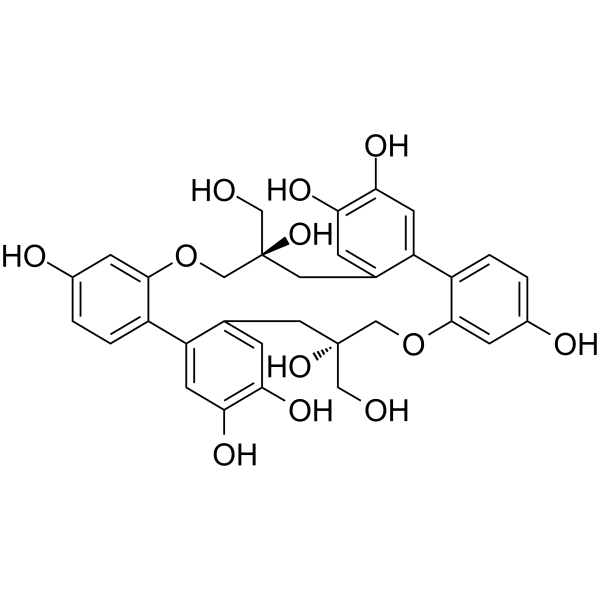
Caesappanin C, a biphenyl dimer from the ethanolic extract of the heartwood of Indonesian Caesalpinia sappan L., shows strong proliferation stimulating activity against the primary osteoblastic cells in vitro. Caesappanin C has the potential to stimulate bone formation and regeneration . Caesappanin C can effectively deactivate HSV particles and bind HSV surface glycoprotein B (gB) to inhibit membrane fusion .
loading...
    loading...
Cat. No.: HY-161160
CAS No.: 1015698-39-1
Target:  

Fluorescent Dye

Research Areas:  

Others

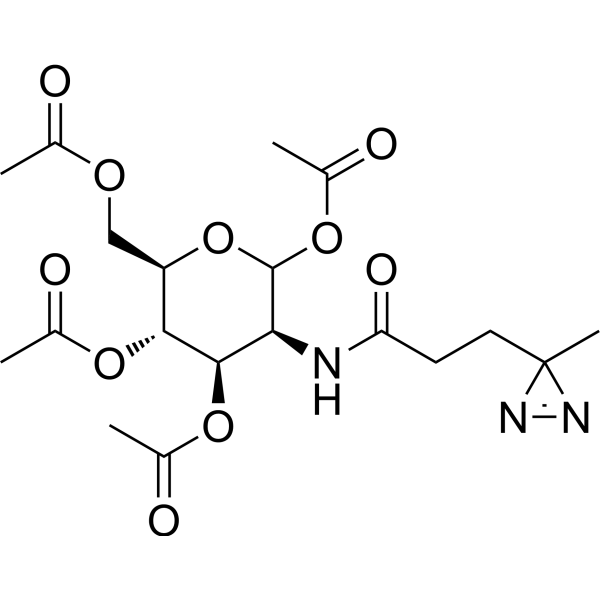
Ac4ManNDAz is a cell-permeable photocross-linking probe. Ac4ManNDAz can effectively compete with endogenous sialic acid for incorporation into cell surface glycoproteins and form cross-links with glycoprotein ligands under UV light irradiation. Ac4ManNDAz can be used to study interactions between glycoproteins .
loading...
    loading...
Cat. No.: HY-115848
CAS No.: 314030-54-1
Target:  

Filovirus

Research Areas:  

Infection

Antiviral agent 12 is a antiviral compound. Antiviral agent 12 inhibits Ebola virus entry into host cells by binding to surface glycoprotein, EC50 is 3.9 μM. Antiviral agent 12 can be used in the study of Ebola virus .
loading...
    loading...

