

168 Results for "

chaperone

" in MedChemExpress (MCE) Product Catalog:
Products (168)

168 Results for "chaperone" in MCE Product Catalog:

259
259 Publications Verification
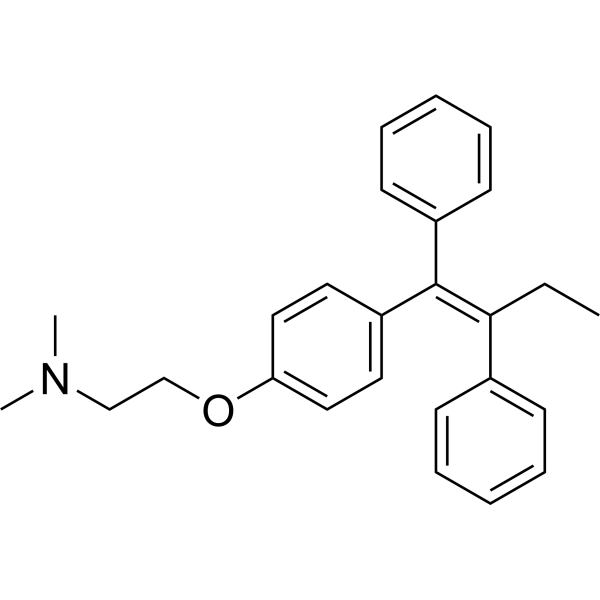
Cat. No.: HY-13757A
CAS No.: 10540-29-1
Purity:  99.78%
Synonyms: ICI 47699; (Z)-Tamoxifen; trans-Tamoxifen
Tamoxifen (ICI 47699) is an orally active, selective estrogen receptor modulator (SERM) which blocks estrogen action in breast cells and can activate estrogen activity in other cells, such as bone, liver, and uterine cells. Tamoxifen is a potent Hsp90 activator and enhances the Hsp90 molecular chaperone ATPase activity. Tamoxifen also potent inhibits infectious EBOV Zaire and Marburg (MARV) with IC50 of 0.1 μM and 1.8 μM, respectively. Tamoxifen activates autophagy and induces apoptosis. Tamoxifen can also be dissolved in corn oil (HY-Y1888) for use in inducing gene knockout in CreER transgenic mice. Tamoxifen has better solubility in corn oil compared to Tamoxifen Citrate (HY-13757) .
loading...
    loading...
259
259 Publications Verification
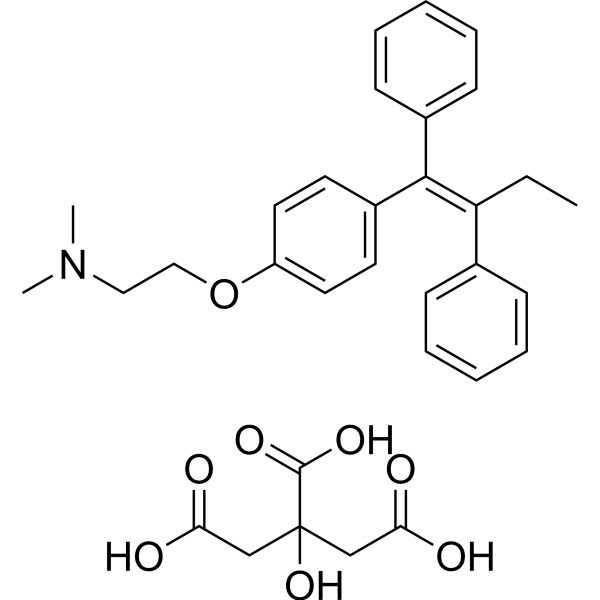
Cat. No.: HY-13757
CAS No.: 54965-24-1
Purity:  99.93%
Synonyms: ICI 46474; (Z)-Tamoxifen Citrate; trans-Tamoxifen Citrate
Tamoxifen Citrate (ICI 46474) is an orally active, selective estrogen receptor modulator (SERM) which blocks estrogen action in breast cells and can activate estrogen activity in other cells, such as bone, liver, and uterine cells.Tamoxifen Citrate is a potent Hsp90 activator and enhances the Hsp90 molecular chaperone ATPase activity. Tamoxifen Citrate also potent inhibits infectious EBOV Zaire and Marburg (MARV) with IC50 of 0.1 μM and 1.8 μM, respectively. Tamoxifen Citrate activates autophagy and induces apoptosis. Tamoxifen Citrate can also be used to induce gene knockout in CreER transgenic mice .
loading...
    loading...
33
33 Cited Publications
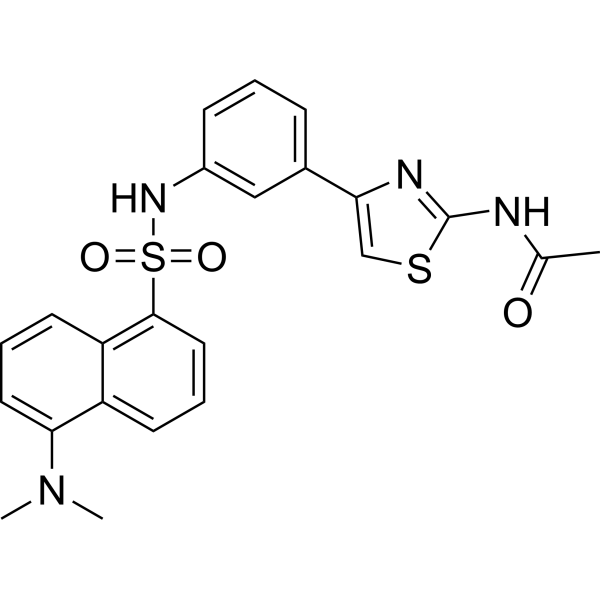
Cat. No.: HY-100437
CAS No.: 1609402-14-3
Purity:  99.98%
Target:  

HSP Autophagy Apoptosis

Research Areas:  

Cancer

HA15 is a potent and specific inhibitor of ER chaperone BiP/GRP78/HSPA5, inhibits the ATPase activity of BiP, with anti-cancerous activity .
loading...
    loading...
24
24 Cited Publications
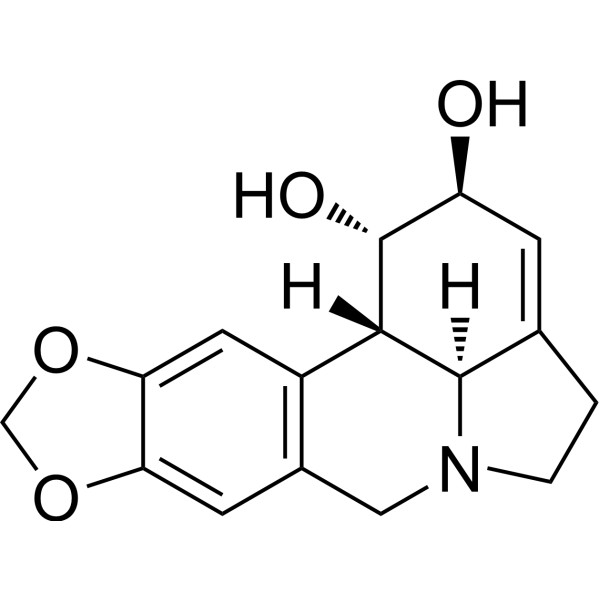
Cat. No.: HY-N0288
CAS No.: 476-28-8
Lycorine is a natural alkaloid extracted from the Amaryllidaceae plant. Lycorine is a potent and orally active SCAP inhibitor with a Kd value 15.24 nM. Lycorine downregulates the SCAP protein level without changing its transcription . Lycorine is also a melanoma vasculogenic inhibitor . Lycorine can be used for the study of prostate cancer and metabolic diseases .
loading...
    loading...
16
16 Cited Publications
Cat. No.: HY-101106
CAS No.: 80306-38-3
Purity:  99.38%
Target:  

RAR/RXR

Research Areas:  

Neurological Disease Cancer

AR7 is an atypical RARA/RARα (retinoic acid receptor, alpha) antagonist. AR7 specifically activates chaperone-mediated-autophagy (CMA) activity without affecting macroautophagy .
loading...
    loading...
13
13 Cited Publications
Cat. No.: HY-18935
CAS No.: 1197996-80-7
Synonyms: Curaxin 137; CBL-C137
Research Areas:  

Cancer

CBL0137, a curaxin compound, is a histone chaperone facilitates chromatin transcription (FACT) inhibitor. CBL0137 downregulates NF-κB and activates p53. CBL0137 restores both histone H3 acetylation and trimethylation. CBL0137 is an anticancer agent. CBL0137 induces cancer cell apoptosis .
loading...
    loading...
13
13 Cited Publications
Cat. No.: HY-18935A
CAS No.: 1197397-89-9
Synonyms: Curaxin-137 hydrochloride; CBL-C137 hydrochloride
Target:  

MDM-2/p53 NF-κB

Research Areas:  

Cancer

CBL0137 hydrochloride is an inhibitor of the histone chaperone, FACT. CBL0137 hydrochloride can also activate p53 and inhibits NF-κB with EC50s of 0.37 and 0.47 μM, respectively.
loading...
    loading...
8
8 Cited Publications
Cat. No.: HY-18669
CAS No.: 100872-83-1
Target:  

HSP

Research Areas:  

Cancer

ML346 is an activator of Hsp70 expression and HSF-1 activity, with an EC50 of 4.6 μM for Hsp70. ML346 restores protein folding in conformational disease models, without significant cytotoxicity or lack of specificity. ML346 induces specific increases in genes and protein effectors of the heat shock response (HSR), including chaperones such as Hsp70, Hsp40, and Hsp27 .
loading...
    loading...
8
8 Cited Publications
Cat. No.: HY-134923
CAS No.: 2412270-22-3
Purity:  99.98%
Target:  

Autophagy

Research Areas:  

Neurological Disease

CA77.1 is a potent, brain-penetrant and orally active chaperone-mediated autophagy (CMA) activator with favorable pharmacokinetics. CA77.1 is a derivative of AR7 (HY-101106) and can increase the expression of the lysosomal receptor LAMP2A in?lysosomes. CA77.1 improves behavior and neuropathology in PS19 mice model and can be used for alzheimer's?disease research .
loading...
    loading...
8
8 Cited Publications
Cat. No.: HY-P1098
CAS No.: 151988-33-9
Target:  

Annexin A NF-κB

Research Areas:  

Inflammation/Immunology

Ac2-26 is the N-terminal peptide of annexin 1, and has anti-inflammatory activity. Ac2-26 induces a decrease in IKKβ protein in lysosomes by chaperone-mediated autophagy (CMA). Ac2-26 ameliorates lung ischemia-reperfusion injury. Ac2-26 also inhibits airway inflammation and hyperresponsiveness in an asthma rat model .
loading...
    loading...
8
8 Cited Publications
Cat. No.: HY-P1098A
Target:  

Annexin A NF-κB

Research Areas:  

Inflammation/Immunology

Ac2-26 TFA is the N-terminal peptide of annexin 1, and has anti-inflammatory activity. Ac2-26 induces a decrease in IKKβ protein in lysosomes by chaperone-mediated autophagy (CMA). Ac2-26 ameliorates lung ischemia-reperfusion injury. Ac2-26 also inhibits airway inflammation and hyperresponsiveness in an asthma rat model .
loading...
    loading...
8
8 Cited Publications
Cat. No.: HY-P1098B
Target:  

IKK

Research Areas:  

Inflammation/Immunology

Ac2-26 ammonium is the N-terminal peptide of annexin 1, and has anti-inflammatory activity. Ac2-26 ammonium induces a decrease in IKKβ protein in lysosomes by chaperone-mediated autophagy (CMA). Ac2-26 ammonium ameliorates lung ischemia-reperfusion injury. Ac2-26 ammonium also inhibits airway inflammation and hyperresponsiveness in an asthma rat model .
loading...
    loading...
7
7 Cited Publications
Cat. No.: HY-18705
CAS No.: 932986-18-0
Azoramide is a potent, orally active small-molecule modulator of the unfolded protein response (UPR). Azoramide improves ER protein folding and elevates ER chaperone capacity, which together protects cells against ER stress. Azoramide alleviates PLA2G6 mutant-induced ER stress through modulating unfolded protein response, and enhances the CERB signaling to rescue mitochondrial function, thereby preventing apoptosis of DA neurons. Azoramide has antidiabetic activity .
loading...
    loading...
7
7 Cited Publications
Cat. No.: HY-112483
CAS No.: 1798331-92-6
Purity:  99.48%
Target:  

Autophagy

Research Areas:  

Cancer

QX77 is a chaperone-mediated autophagy (CMA) activator and upregulates LAMP2A expression in vitro. QX77 induces Rab11 upregulation, rescues Rab11 down-regulation and trafficking deficiency in cystinotic cells . QX77 can impede self-renewal and promote differentiation of ES cells .
loading...
    loading...
6
6 Cited Publications
Cat. No.: HY-107636
CAS No.: 497061-48-0
Purity:  99.97%
Target:  

Apoptosis

Research Areas:  

Cancer

DC_AC50 is a dual inhibitor of Atox1 and CCS (copper chaperones). Inhibiting intracellular copper chaperones as a means of reducing/preventing acquired chemotherapy resistance .
loading...
    loading...
6
6 Cited Publications
Cat. No.: HY-124653
CAS No.: 2133499-85-9
Purity:  99.70%
Synonyms: J2
Target:  

HSP

Research Areas:  

Cancer

HSP27 inhibitor J2 (J2) is a HSP27 inhibitor, which significantly induces abnormal HSP27 dimer formation and inhibits a production of HSP27 giant polymers, thereby having an effect of inhibiting a chaperone function of the HSP27 and reducing a cell protection function thereof. HSP27 inhibitor J2 (J2) remarkably enhances the antiproliferative activity of 17-AAG and sensitizes cisplatin-induced lung cancer cell growth inhibition .
loading...
    loading...
3
3 Cited Publications
Cat. No.: HY-B1039A
CAS No.: 23828-92-4
Synonyms: NA-872 hydrochloride
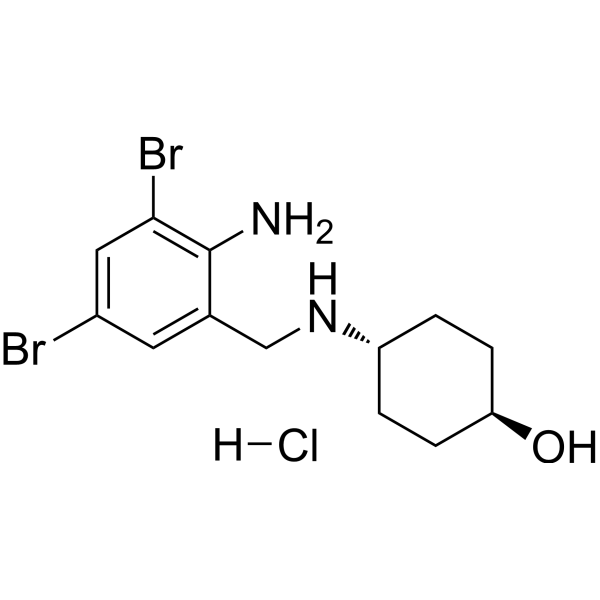
Ambroxol hydrochloride (NA-872 hydrochloride), an active metabolite of the proagent Bromhexine, has potent expectorant effects. Ambroxol hydrochloride is a glucocerebrosidase (GCase) chaperone and increases glucocerebrosidase activity. Ambroxol hydrochloride induces lung autophagy and has the potential for Parkinson disease and neuronopathic Gaucher disease research .
loading...
    loading...
3
3 Cited Publications
Cat. No.: HY-B1039
CAS No.: 18683-91-5
Synonyms: NA-872
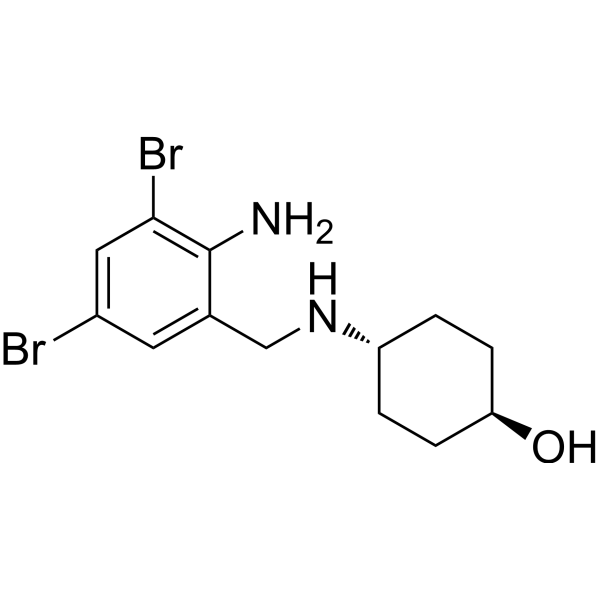
Ambroxol (NA-872), an active metabolite of the proagent Bromhexine, has potent expectorant effects. Ambroxol is a glucocerebrosidase (GCase) chaperone and increases glucocerebrosidase activity. Ambroxol induces lung autophagy and has the potential for Parkinson disease and neuronopathic Gaucher disease research .
loading...
    loading...
3
3 Cited Publications
Cat. No.: HY-135457
CAS No.: 1954650-11-3
Purity:  ≥98.0%
Target:  

Phosphatase STAT Ras

Research Areas:  

Cancer

JMS-053 is an efficient and reversible PTP4A3 inhibitor, with an IC50 value of 18 nM. JMS-053 demonstrates broad PTP4A inhibitory activity with IC50s of 50 nM and 53 nM for PTP4A1 and PTP4A2, respectively. JMS-053 exhibits IC50 values of 92.6 nM and 207.6 nM for CDC25B and DUSP3, respectively. JMS-053 can effectively inhibit the activity of PTP4A3, inhibit tumor cell proliferation and migration through multiple mechanisms such as interfering with RhoA and STAT3/p38 signaling pathway. JMS-053 can be used for the study of cancers such as ovarian cancer, breast cancer and colon cancer .
loading...
    loading...
2
2 Cited Publications
Cat. No.: HY-14929A
CAS No.: 75172-81-5
Purity:  99.70%
Synonyms: GR181413A
Target:  

Glycosidase

Research Areas:  

Others

Migalastat (GR181413A free base) hydrochloride is an orally active α-galactosidase A molecular chaperone, with an IC50 value of 0.04 μM for human α-Gal A. Migalastat binds to the active site of certain unstable mutant forms of α-galactosidase A, facilitating their transport to the lysosome. After dissociation in the acidic environment, Migalastat enables the mutant α-galactosidase A to exhibit biological activity .
loading...
    loading...

