Search Result
Results for "
dihydroorotate dehydrogenase (DHODH)
" in MedChemExpress (MCE) Product Catalog:
1
Biochemical Assay Reagents
5
Isotope-Labeled Compounds
| Cat. No. |
Product Name |
Target |
Research Areas |
Chemical Structure |
-
- HY-B0083
-
-
-
- HY-108325
-
-
-
- HY-N0157
-
|
6-Carboxyuracil; Vitamin B13
|
Nucleoside Antimetabolite/Analog
Endogenous Metabolite
|
Metabolic Disease
|
|
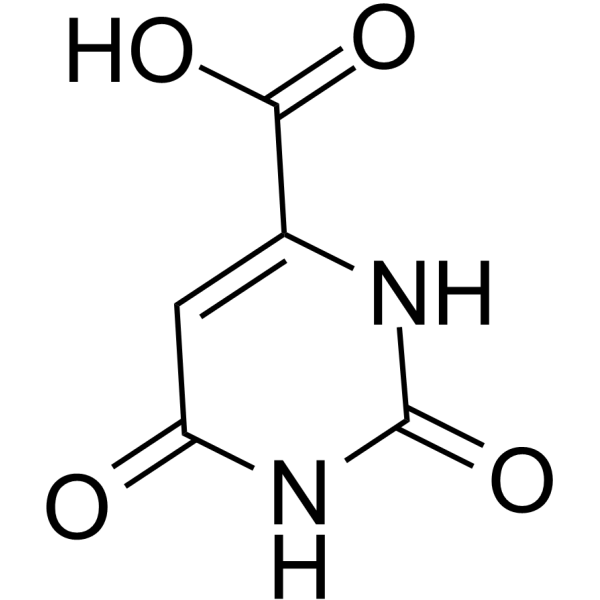
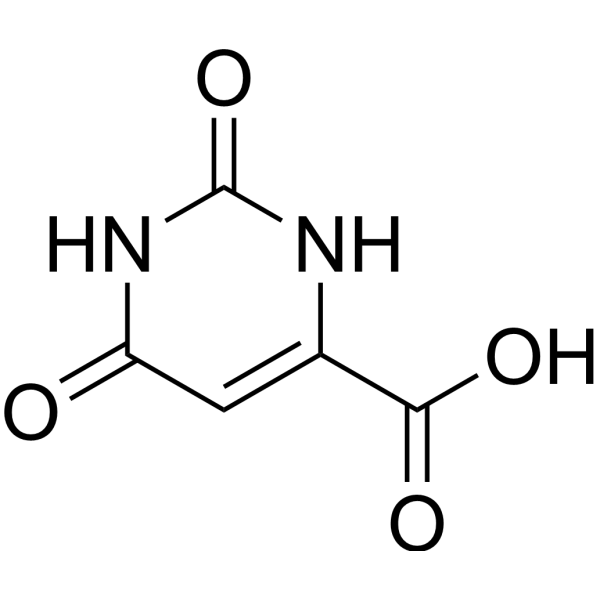
Orotic acid (6-Carboxyuracil), a precursor in biosynthesis of pyrimidine nucleotides and RNA, is released from the mitochondrial dihydroorotate dehydrogenase (DHODH) for conversion to UMP by the cytoplasmic UMP synthase enzyme. Orotic acid is a marker for measurement in routine newborn screening for urea cycle disorders. Orotic acid can induce hepatic steatosis and hepatomegaly in rats .
|
-
-
- HY-112645
-
-
-
- HY-W015495
-
|
|
Endogenous Metabolite
Dihydroorotate Dehydrogenase
|
Others
|
|
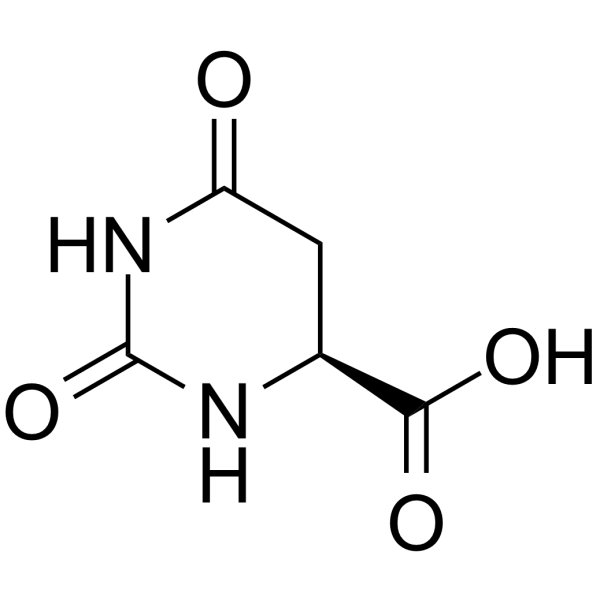
L-Dihydroorotic acid is an important intermediate in the metabolism of orotic acid and a substrate of dihydroorotate dehydrogenase (DHODH). L-Dihydroorotic acid can reversibly hydrolyze to yield the acyclic L-ureidosuccinic acid by dihydrowhey enzyme .
|
-
-
- HY-104029
-
|
F901318
|
Fungal
Dihydroorotate Dehydrogenase
|
Infection
|
|
Olorofim (F901318) selectively inhibits fungal dihydroorotate dehydrogenase (DHODH), a key enzyme in the pyrimidine biosynthesis pathway. Olorofim (F901318). Olorofim exhibits excellent activity against A. fumigatus and other Aspergillus spp. .
|
-
-
- HY-124593
-
PTC299
5 Publications Verification
Emvododstat
|
VEGFR
Dihydroorotate Dehydrogenase
DNA/RNA Synthesis
|
Cancer
|
|
PTC299 is an orally active inhibitor of VEGFA mRNA translation that selectively inhibits VEGF protein synthesis at the post-transcriptional level. PTC299 is also a potent inhibitor of dihydroorotate dehydrogenase (DHODH). PTC299 shows good oral bioavailability and lack of off-target kinase inhibition and myelosuppression. PTC299 can be useful for the research of hematologic malignancies .
|
-
-
- HY-15510
-
|
|
MDM-2/p53
Dihydroorotate Dehydrogenase
Sirtuin
Autophagy
|
Cancer
|
|
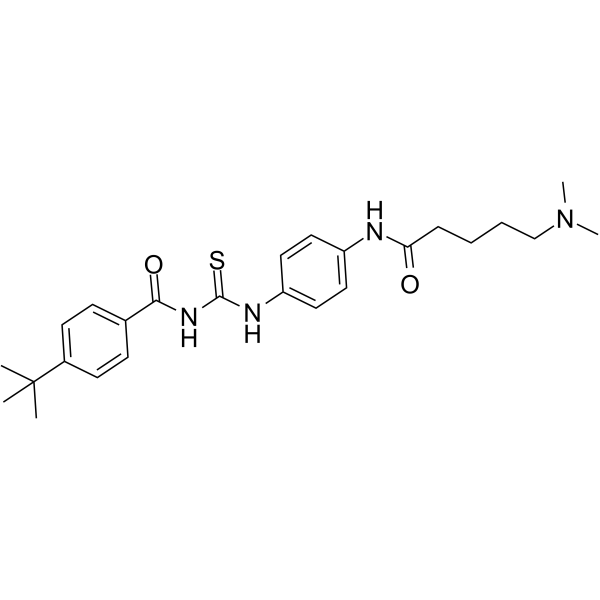
Tenovin-6, an analog of Tenovin-1 (HY-13423), is an activator of p53 transcriptional activity. Tenovin-6 inhibits the protein deacetylase activities of purified human SIRT1, SIRT2, and SIRT3 with IC50s of 21 μM, 10 μM, and 67 μM, respectively. Tenovin-6 also inhibits dihydroorotate dehydrogenase (DHODH) .
|
-
-
- HY-14908
-
|
4sc-101; SC12267
|
Dihydroorotate Dehydrogenase
Interleukin Related
FXR
|
Infection
Inflammation/Immunology
|
|
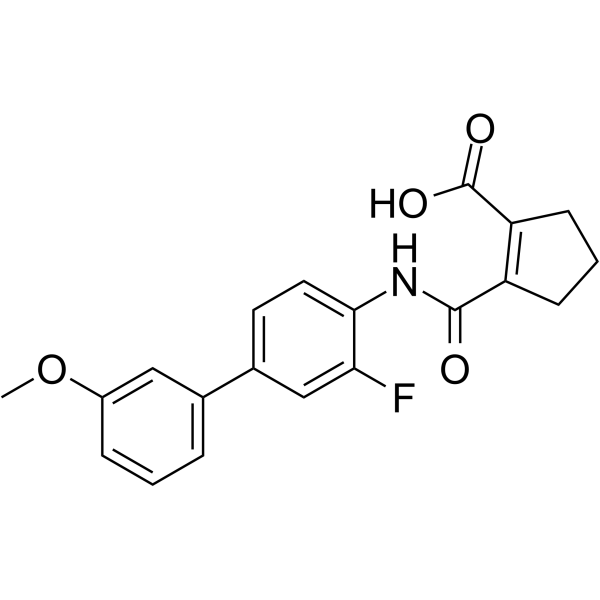
Vidofludimus is an orally active inhibitor for dihydroorotate dehydrogenase (DHODH) and also is a novel modulator for farnesoid X receptor (FXR). Vidofludimus, as an immunomodulatory agent, can be used for the research of autoimmune disorders such as inflammatory bowel disease (IBD). Vidofludimus also can be used for the research of fatty liver by targeting FXR .
|
-
-
- HY-129239
-
|
ASLAN003
|
Dihydroorotate Dehydrogenase
DNA/RNA Synthesis
Apoptosis
|
Cancer
|
|
Farudodstat (ASLAN003) is an orally active and potent Dihydroorotate Dehydrogenase (DHODH) inhibitor with an IC50 of 35 nM for human DHODH enzyme. Farudodstat inhibits protein synthesis via activation of AP-1 transcription factors. Farudodstat induces apoptosis and substantially prolongs survival in acute myeloid leukemia (AML) xenograft mice .
|
-
-
- HY-148396
-
|
|
DNA/RNA Synthesis
|
Infection
Cancer
|
|
UCK2 Inhibitor-3 is a non-competitive inhibitor of uridine-cytidine kinase 2 (UCK2, a pyrimidine salvage enzyme) with an IC50 value of 16.6 μM. UCK2 can replace dihydroorotate dehydrogenase (DHODH), in a certain extent, in infected or rapidly dividing cells to continue efficient uridine salvage. UCK2 Inhibitor-3 also inhibits DNA polymerase eta and kappa with IC50s of 56 μM and 16 μM .
|
-
-
- HY-139189
-
-
-
- HY-100688
-
ML390
1 Publications Verification
|
Dihydroorotate Dehydrogenase
|
Cancer
|
|
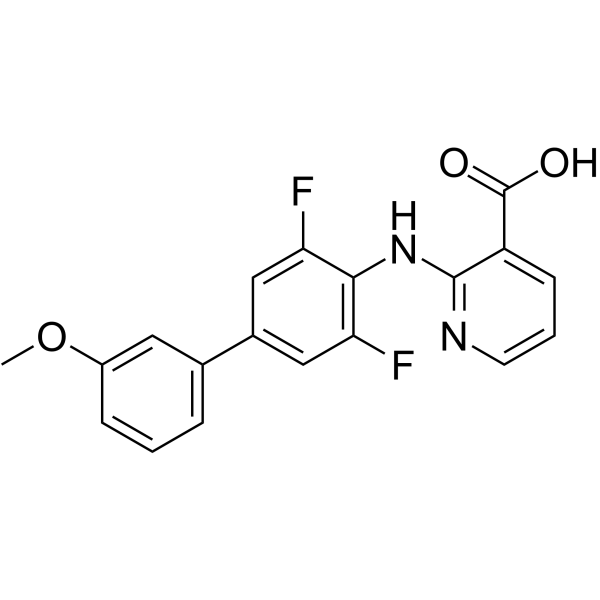
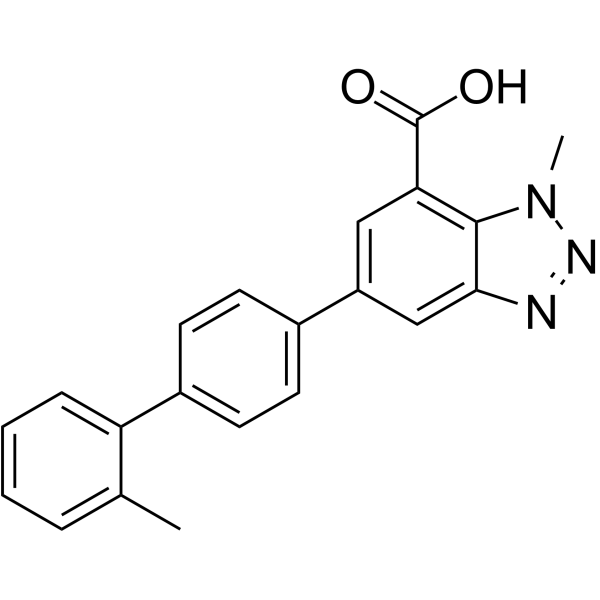
ML390 is a potent dihydroorotate dehydrogenase (DHODH) inhibitor. ML390 is an inducer of myeloid differentiation and causes myeloid differentiation in murine (ER-HoxA9) and human (U937 and THP1) acute myeloid leukemia (AML) models .
|
-
-
- HY-13423
-
|
|
MDM-2/p53
Dihydroorotate Dehydrogenase
Sirtuin
Autophagy
|
Cancer
|
|
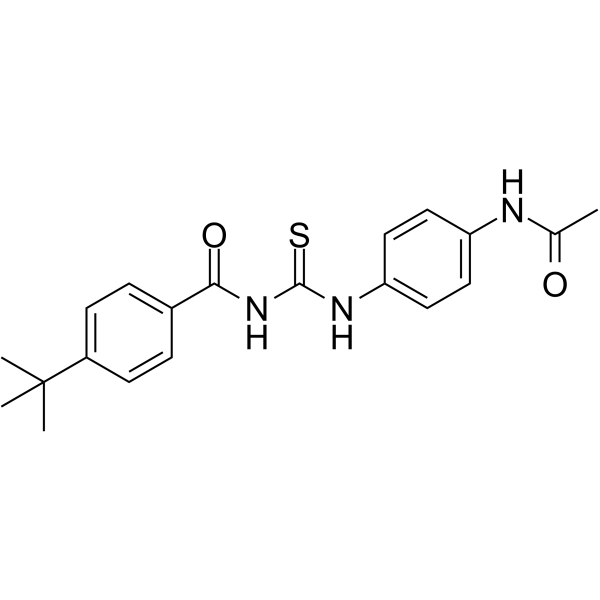
Tenovin-1, a p53 activator, protects p53 from MDM2-mediated degradation. Tenovin-1 acts through inhibition of the protein-deacetylating activities of SirT1 and SirT2. Tenovin-1 is also a dihydroorotate dehydrogenase (DHODH) inhibitor .
|
-
-
- HY-137463
-
-
-
- HY-15510B
-
|
|
MDM-2/p53
Dihydroorotate Dehydrogenase
Sirtuin
Autophagy
|
Cancer
|
|
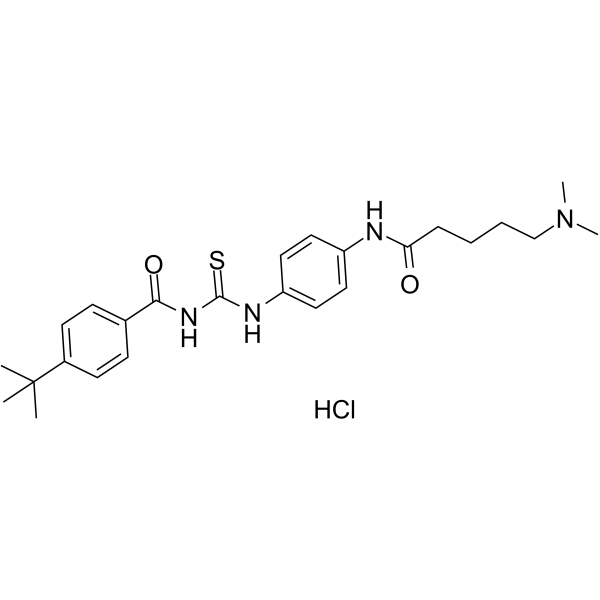
Tenovin-6 Hydrochloride, an analog of Tenovin-1 (HY-13423), is an activator of p53 transcriptional activity. Tenovin-6 Hydrochloride inhibits the protein deacetylase activities of purified human SIRT1, SIRT2, and SIRT3 with IC50s of 21 μM, 10 μM, and 67 μM, respectively. Tenovin-6 Hydrochloride also inhibits dihydroorotate dehydrogenase (DHODH) .
|
-
-
- HY-135282
-
-
-
- HY-101813
-
|
HR325
|
Dihydroorotate Dehydrogenase
DNA/RNA Synthesis
Prostaglandin Receptor
|
Inflammation/Immunology
|
|
Laflunimus (HR325) is an immunosuppressive agent and an analogue of the Leflunomide-active metabolite A77 1726. Laflunimus is an orally active inhibitor of dihydroorotate dehydrogenase (DHODH). Laflunimus suppresses immunoglobulin (Ig) secretion, with IC50 values of 2.5 and 2 µM for IgM and IgG, respectively. Laflunimus also is a prostaglandin endoperoxide H synthase (PGHS) -1 and -2 inhibitor .
|
-
-
- HY-N0157R
-
|
6-Carboxyuracil (Standard); Vitamin B13 (Standard)
|
Reference Standards
Nucleoside Antimetabolite/Analog
Endogenous Metabolite
|
Metabolic Disease
|
|
Orotic acid (Standard) is the analytical standard of Orotic acid. This product is intended for research and analytical applications. Orotic acid (6-Carboxyuracil), a precursor in biosynthesis of pyrimidine nucleotides and RNA, is released from the mitochondrial dihydroorotate dehydrogenase (DHODH) for conversion to UMP by the cytoplasmic UMP synthase enzyme. Orotic acid is a marker for measurement in routine newborn screening for urea cycle disorders. Orotic acid can induce hepatic steatosis and hepatomegaly in rats .
|
-
-
- HY-128787
-
-
-
- HY-N7961
-
-
-
- HY-132174
-
|
|
Flavivirus
Dengue Virus
CHIKV
Dihydroorotate Dehydrogenase
|
Infection
|
|
CHIKV-IN-2 is a potent inhibitor against Chikungunya virus (CHIKV), with excellent cellular antiviral activity (EC90=270 nM) and improved liver microsomal stability. CHIKV-IN-2 shows inhibitory activity against a cellular target Dihydroorotate Dehydrogenase (DHODH), which interacts with various viruses and regulate their replication via depleting intracellular pyrimidine pools .
|
-
-
- HY-135664
-
-
-
- HY-135678
-
-
-
- HY-W015495R
-
|
|
Reference Standards
Endogenous Metabolite
Dihydroorotate Dehydrogenase
|
Others
|
|
L-Dihydroorotic acid (Standard) is an analytical reference standard for L-Dihydroorotic acid. This product is used for research and analytical applications. L-Dihydroorotic acid is an important intermediate in the metabolism of orotic acid and a substrate of dihydroorotate dehydrogenase (DHODH). L-Dihydroorotic acid can reversibly hydrolyze to yield the acyclic L-ureidosuccinic acid by dihydrowhey enzyme .
|
-
-
- HY-N0157A
-
|
6-Carboxyuracil zinc; Vitamin B13 zinc
|
Nucleoside Antimetabolite/Analog
Endogenous Metabolite
|
Metabolic Disease
|
|
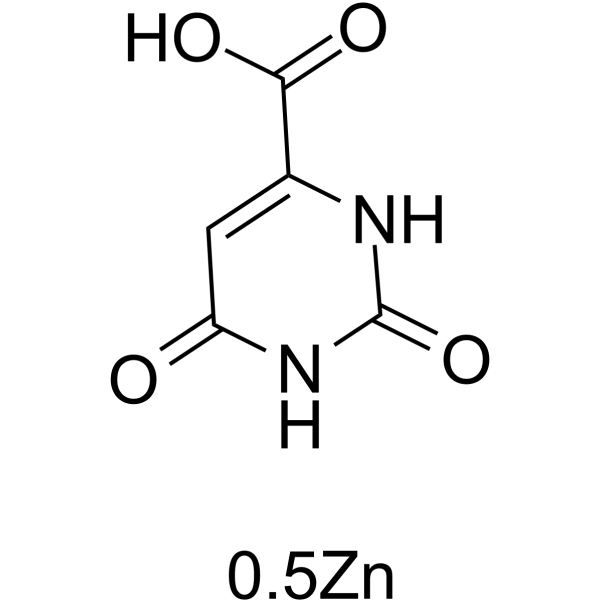
Orotic acid (zinc), a precursor in biosynthesis of pyrimidine nucleotides and RNA, is released from the mitochondrial dihydroorotate dehydrogenase (DHODH) for conversion to UMP by the cytoplasmic UMP synthase enzyme. Orotic acid (zinc) is a marker for measurement in routine newborn screening for urea cycle disorders. Orotic acid (zinc) can induce hepatic steatosis and hepatomegaly in rats .
|
-
-
- HY-132170
-
|
|
Dihydroorotate Dehydrogenase
Parasite
|
Infection
|
|
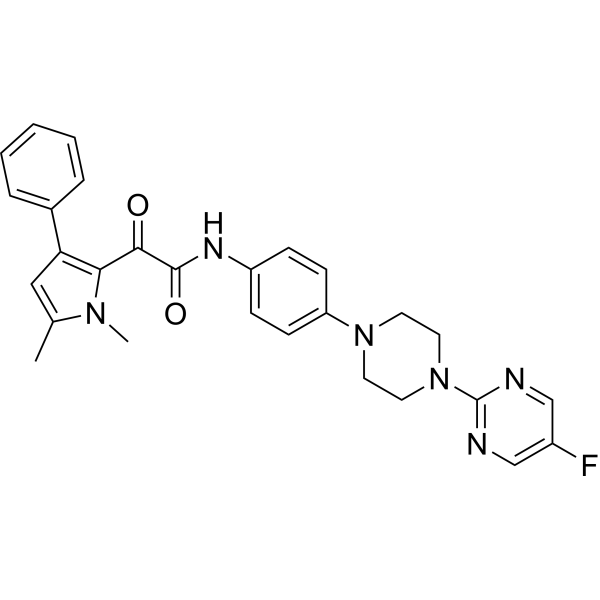
DSM502 is a pyrrole-based Dihydroorotate Dehydrogenase (DHODH) inhibitor. DSM502 exhibits nanomolar potency againsts Plasmodium DHODH and Plasmodium parasites, with no inhibition of mammalian DHODHs .
|
-
-
- HY-135619
-
-
-
- HY-132171A
-
|
|
Dihydroorotate Dehydrogenase
Parasite
|
Infection
|
|
DSM705 hydrochloride, an orally active antimalarial compound, is a pyrrole-based Dihydroorotate Dehydrogenase (DHODH) inhibitor. DSM705 hydrochloride exhibits nanomolar potency against Plasmodium DHODH and Plasmodium parasites (IC50=95, 52 nM for P. falciparum and P. vivax DHODH, respectively), with no inhibition of mammalian DHODHs .
|
-
-
- HY-B0083S
-
|
|
Dihydroorotate Dehydrogenase
|
Cancer
|
|
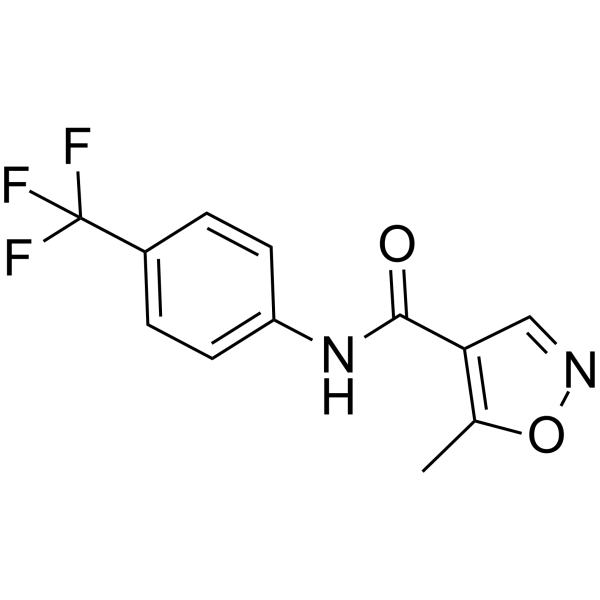
Leflunomide-d4 (HWA486-d4) is the deuterium labeled Leflunomide. Leflunomide is a pyrimidine synthesis inhibitor, inhibiting dihydroorotate dehydrogenase (DHODH), and acts as a disease-modifying antirheumatic agent .
|
-
-
- HY-32757
-
|
5-Bromo-2-fluoro-3-picoline
|
Drug Intermediate
|
Others
|
|
5-Bromo-2-fluoro-3-methylpyridine (5-Bromo-2-fluoro-3-picoline) is a drug synthesis intermediate that can be used to synthesize an inhibitor of dihydroorotate dehydrogenase (DHODH) .
|
-
-
- HY-N0157S1
-
|
6-Carboxyuracil-13C,15N2 monohydrate; Vitamin B13-13C,15N2 monohydrate
|
Nucleoside Antimetabolite/Analog
Endogenous Metabolite
|
Metabolic Disease
|
|
Orotic acid- 13C, 15N2 (monohydrate) is the 13C and 15N labeled Orotic acid . Orotic acid (6-Carboxyuracil), a precursor in biosynthesis of pyrimidine nucleotides and RNA, is released from the mitochondrial dihydroorotate dehydrogenase (DHODH) for conversion to UMP by the cytoplasmic UMP synthase enzyme. Orotic acid is a marker for measurement in routine newborn screening for urea cycle disorders. Orotic acid can induce hepatic steatosis and hepatomegaly in rats .
|
-
-
- HY-14908A
-
|
4sc-101 hemicalcium; SC12267 hemicalcium
|
Dihydroorotate Dehydrogenase
Interleukin Related
FXR
|
Infection
Inflammation/Immunology
|
|
Vidofludimus (4sc-101; SC12267) hemicalcium is an orally active inhibitor for dihydroorotate dehydrogenase (DHODH) and also is a novel modulator for farnesoid X receptor (FXR). Vidofludimus hemicalcium, as an immunomodulatory agent, can be used for the research of autoimmune disorders such as inflammatory bowel disease (IBD). Vidofludimus hemicalcium also can be used for the research of fatty liver by targeting FXR .
|
-
-
- HY-135675
-
-
-
- HY-178156
-
|
|
Dihydroorotate Dehydrogenase
SARS-CoV
|
Infection
|
|
DHODH-IN-31 is a human dihydroorotate dehydrogenase (DHODH) inhibitor with an IC50 of 0.59 μM. DHODH-IN-31 exhibits antiviral activity. DHODH-IN-31 can be used for the research of infection, such as SARS-CoV-2 .
|
-
-
- HY-132171
-
|
|
Dihydroorotate Dehydrogenase
Parasite
|
Infection
|
|
DSM705 is a pyrrole-based Dihydroorotate Dehydrogenase (DHODH) inhibitor. DSM705 exhibits nanomolar potency against Plasmodium DHODH and Plasmodium parasites, with no inhibition of mammalian DHODHs. DSM705 is a potent antimalarial compound .
|
-
-
- HY-135667
-
-
-
- HY-135666
-
-
-
- HY-120924
-
-
-
- HY-108325R
-
-
-
- HY-163158
-
-
-
- HY-135676
-
-
-
- HY-146317
-
-
-
- HY-163328
-
|
|
Dihydroorotate Dehydrogenase
DNA/RNA Synthesis
|
Cancer
|
|
DHODH-IN-25 (Compound 25) is an orally active dihydroorotate dehydrogenase (DHODH) inhibitor with an IC50 value of 5.4 nM for human DHODH. DHODH-IN-25 can be used for the study of acute myeloid leukemia (AML) .
|
-
-
- HY-135677
-
-
-
- HY-135679
-
-
-
- HY-149031
-
|
|
Dihydroorotate Dehydrogenase
|
Cancer
|
|
DHODH-IN-22 is a potent, selective and orally active dihydroorotate dehydrogenase (DHODH) inhibitor with an IC50 value of 0.3 nM. DHODH-IN-22 can be used for researching acute myelogenous leukemia (AML) .
|
-
-
- HY-135618
-
|
|
Dihydroorotate Dehydrogenase
DNA/RNA Synthesis
|
Infection
|
|
DHODH-IN-3 (compound 3) is a potent inhibitor of Human Dihydroorotate Dehydrogenases (HsDHODH) with an IC50 value of 261 nM. DHODH-IN-3 binds to the the ubiquinone binding cavities in DHODH with a Ki app of 32 nM. DHODH-IN-3 has the potential for malaria treatment .
|
-
-
- HY-175423
-
|
|
Dihydroorotate Dehydrogenase
|
Metabolic Disease
|
|
DHODH-IN-30 (compound 4g) is a potent human dihydroorotate dehydrogenase (hDHODH) inhibitor with an IC50 of 32 nM. DHODH-IN-30 exhibits protective effects against oxidative stress .
|
-
-
- HY-149030
-
|
|
Dihydroorotate Dehydrogenase
|
Cancer
|
|
DHODH-IN-21 (compound 19) is an orally active selective dihydroorotate dehydrogenase (DHODH) inhibitor with an IC50 value of 1.1 nM. DHODH-IN-21 has anticancer activity and can be used in studies of acute myeloid leukaemia (AML) .
|
-
- HY-175259
-
|
|
Dihydroorotate Dehydrogenase
Parasite
|
Infection
|
|
DHODH-IN-29 (Compound 2i) is a covalent inhibitor of Leishmania braziliensis Dihydroorotate Dehydrogenase (LbDHODH) with an IC50 value of 0.5 μM. DHODH-IN-29 is promising for research of antileishmaniasis .
|
-
- HY-129253
-
|
|
HPV
|
Infection
|
|
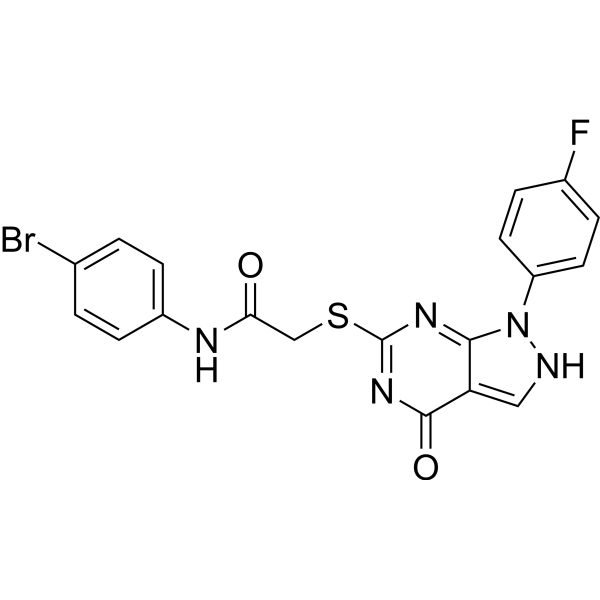
GSK984 is an inactive control probe for GSK983 (HY-119098), a dihydroorotate dehydrogenase (DHODH) inhibitor with antiviral activity .
|
-
- HY-174816
-
|
|
Fluorescent Dye
Dihydroorotate Dehydrogenase
|
Infection
Cancer
|
|
DHODH-IN-28 (Compound 11a) is a potent fluorescent inhibitor targeting human dihydroorotate dehydrogenase (hDHODH) with an IC50 value of 170 nM. DHODH-IN-28 exhibits antileukemic and antiviral activities. DHODH-IN-28 is promising for research of cancers and infectious diseases .
|
-
- HY-B0083R
-
|
HWA486 (Standard); RS-34821 (Standard); SU101 (Standard)
|
Reference Standards
Dihydroorotate Dehydrogenase
Endogenous Metabolite
Bacterial
|
Cancer
|
|
Leflunomide (Standard) is the analytical standard of Leflunomide. This product is intended for research and analytical applications. Leflunomide is a pyrimidine synthesis inhibitor, inhibiting dihydroorotate dehydrogenase (DHODH), and acts as a disease-modifying antirheumatic agent.
|
-
- HY-B0083S1
-
-
- HY-108325S
-
-
- HY-101813R
-
|
HR325 (Standard)
|
Reference Standards
Dihydroorotate Dehydrogenase
DNA/RNA Synthesis
Prostaglandin Receptor
|
Inflammation/Immunology
|
|
Laflunimus (Standard) is the analytical standard of Laflunimus. This product is intended for research and analytical applications. Laflunimus (HR325) is an immunosuppressive agent and an analogue of the Leflunomide-active metabolite A77 1726. Laflunimus is an orally active inhibitor of dihydroorotate dehydrogenase (DHODH). Laflunimus suppresses immunoglobulin (Ig) secretion, with IC50 values of 2.5 and 2 μM for IgM and IgG, respectively. Laflunimus also is a prostaglandin endoperoxide H synthase (PGHS) -1 and -2 inhibitor .
|
-
- HY-120462
-
|
|
Dihydroorotate Dehydrogenase
Parasite
|
Infection
|
|
Genz-669178 is an inhibitor for dihydroorotate dehydrogenase (DHODH) with IC50 of 0.015-0.05 μM in Plasmodium spp.. Genz-669178 inhibits P. berghei, P. falciparum strains 3D7 and Dd2 with IC50 of 0.068, 0.008 and 0.01 μM, respectively. Genz-669178 exhibits anti-malarial efficacy in P. berghei-infected mice with ED50 of 13-21 mg/kg/day. Genz-669178 exhibits good pharmacokinetic characteristics in mice .
|
-
- HY-135662
-
|
|
Dihydroorotate Dehydrogenase
|
Infection
|
|
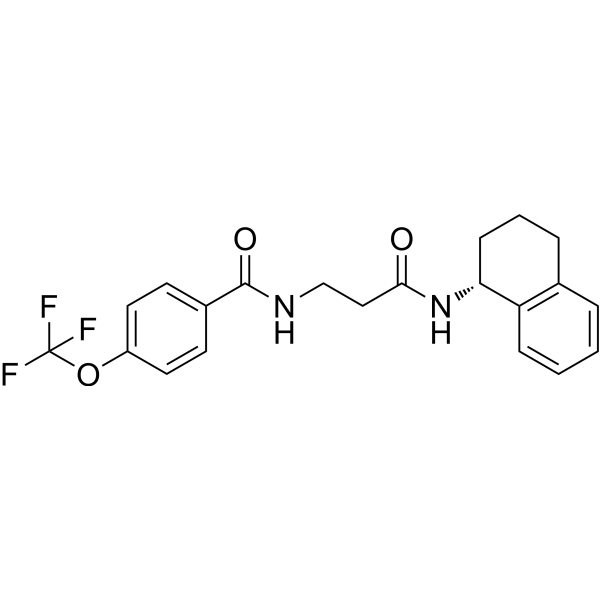
DHODH-IN-34 (Compound 21q) is a potent human dihydroorotate dehydrogenase (DHODH) inhibitor with an IC50 value of 13 nM. DHODH-IN-34 is promising for research of RNA viruses such as measles virus and chikungunya virus .
|
-
- HY-182550
-
|
|
Dihydroorotate Dehydrogenase
|
Cancer
|
|
Indoluidin D is a selective dihydroorotate dehydrogenase (DHODH) inhibitor with a human DHODH IC50 of 210 nM. Indoluidin D selectively inhibits human DHODH activity, with induced effects rescuable by orotic acid. Indoluidin D promotes myeloid differentiation and inhibits cancer cell proliferation. Indoluidin D can be used for the research of acute promyelocytic leukemia .
|
-
- HY-117908
-
|
|
Dihydroorotate Dehydrogenase
Parasite
|
Infection
|
|
DSM267 is a triazolopyrimidine inhibitor of Plasmodium falciparum dihydroorotate dehydrogenase (PfDHODH), with an IC50 of 38 nM, while its IC50 against human DHODH exceeds 100000 nM. DSM267 is used for the in vitro systematic screening and characterization of the resistance evolution pathways of Plasmodium falciparum to DHODH inhibitors .
|
-
- HY-179531
-
|
|
Autophagy
Ferroptosis
ROS Kinase
|
Cancer
|
|
DHODH-IN-33 is a selective dihydroorotate dehydrogenase (DHODH) inhibitor with potent activity against A549 (IC50 = 5.22 μM) and 5637 (IC50 = 3.03 μM). DHODH-IN-33 induces autophagy-dependent ferroptosis (mitochondrial dysfunction, lipid peroxidation, and ROS accumulation) with no notable toxicity in vivo. DHODH-IN-33 exerts anti-cancer effect by promoting the autophagy-dependent degradation of DHODH. DHODH-IN-33 can be used for non-small cell lung cancer and bladder cancer .
|
-
- HY-170780A
-
|
|
Dihydroorotate Dehydrogenase
|
Infection
|
|
(S)-DSM1465 is a Plasmodium dihydroorotate dehydrogenase (DHODH) inhibitor. (S)-DSM1465 exhibits potential inhibitory activity against Plasmodium falciparum and Plasmodium vivax, and can be used in malaria research .
|
-
- HY-165191
-
|
|
Fungal
|
Infection
|
|
LY214352 is an antifungal agent that targets dihydroorotate dehydrogenase (DHO-DH). LY214352 exhibits antifungal activity against Aspergillus nidulans and agriculturally important ascomycete fungi. LY214352 can be used in studies related to grape gray mold, apple scab, and fungal infections caused by ascomycetes .
|
-
- HY-104029R
-
|
F901318 (Standard)
|
Fungal
Reference Standards
Dihydroorotate Dehydrogenase
|
Infection
|
|
Olorofim (Standard) is the analytical standard of Olorofim (HY-104029). This product is intended for research and analytical applications. Olorofim (F901318) selectively inhibits fungal dihydroorotate dehydrogenase (DHODH), a key enzyme in the pyrimidine biosynthesis pathway. Olorofim (F901318). Olorofim exhibits excellent activity against A. fumigatus and other Aspergillus spp. .
|
-
- HY-100688R
-
|
|
Reference Standards
Dihydroorotate Dehydrogenase
|
Cancer
|
|
ML390 (Standard) is the analytical standard of ML390 (HY-100688). This product is intended for research and analytical applications. ML390 is a potent dihydroorotate dehydrogenase (DHODH) inhibitor. ML390 is an inducer of myeloid differentiation and causes myeloid differentiation in murine (ER-HoxA9) and human (U937 and THP1) acute myeloid leukemia (AML) models .
|
-
- HY-N0157AR
-
|
6-Carboxyuracil zinc (Standard); Vitamin B13 zinc (Standard)
|
Nucleoside Antimetabolite/Analog
Endogenous Metabolite
Reference Standards
|
Metabolic Disease
|
|
Orotic acid (zinc) (Standard) is the analytical standard of Orotic acid (zinc). This product is intended for research and analytical applications. Orotic acid (zinc), a precursor in biosynthesis of pyrimidine nucleotides and RNA, is released from the mitochondrial dihydroorotate dehydrogenase (DHODH) for conversion to UMP by the cytoplasmic UMP synthase enzyme. Orotic acid (zinc) is a marker for measurement in routine newborn screening for urea cycle disorders. Orotic acid (zinc) can induce hepatic steatosis and hepatomegaly in rats .
|
-
- HY-15510S
-
|
|
Isotope-Labeled Compounds
|
Others
|
|
Tenovin-6-d6 is the deuterium labeled Tenovin-6 (HY-15510). Tenovin-6, an analog of Tenovin-1 (HY-13423), is an activator of p53 transcriptional activity. Tenovin-6 inhibits the protein deacetylase activities of purified human SIRT1, SIRT2, and SIRT3 with IC50s of 21 μM, 10 μM, and 67 μM, respectively. Tenovin-6 also inhibits dihydroorotate dehydrogenase (DHODH).
|
-
- HY-183925
-
|
|
HIV
Dihydroorotate Dehydrogenase
|
Infection
|
|
Redoxal is a dihydroorotate dehydrogenase (DHODH) inhibitor and anti-HIV-1 agent. Redoxal induces intracellular pyrimidine depletion by inhibiting the de novo pyrimidine biosynthesis pathway, enhances the protein stability of APOBEC3G (A3G), upregulates the abundance of A3G protein in cells and progeny viral particles, thereby strengthening the host endogenous antiviral restriction mediated by A3G . Redoxal selectively targets DHOdehase at the mitochondrial level, with an IC50 of 430 nM for inhibiting DHO oxidation in human mitochondria and an IC50 of 910 nM in rat mitochondria . Redoxal can be used in studies related to HIV-1 infection .
|
-
| Cat. No. |
Product Name |
Type |
-
- HY-32757
-
|
5-Bromo-2-fluoro-3-picoline
|
Biochemical Assay Reagents
|
|
5-Bromo-2-fluoro-3-methylpyridine (5-Bromo-2-fluoro-3-picoline) is a drug synthesis intermediate that can be used to synthesize an inhibitor of dihydroorotate dehydrogenase (DHODH) .
|
| Cat. No. |
Product Name |
Category |
Target |
Chemical Structure |
| Cat. No. |
Product Name |
Chemical Structure |
-
- HY-B0083S
-
|
|
|
Leflunomide-d4 (HWA486-d4) is the deuterium labeled Leflunomide. Leflunomide is a pyrimidine synthesis inhibitor, inhibiting dihydroorotate dehydrogenase (DHODH), and acts as a disease-modifying antirheumatic agent .
|
-
-
- HY-N0157S1
-
|
|
|
Orotic acid- 13C, 15N2 (monohydrate) is the 13C and 15N labeled Orotic acid . Orotic acid (6-Carboxyuracil), a precursor in biosynthesis of pyrimidine nucleotides and RNA, is released from the mitochondrial dihydroorotate dehydrogenase (DHODH) for conversion to UMP by the cytoplasmic UMP synthase enzyme. Orotic acid is a marker for measurement in routine newborn screening for urea cycle disorders. Orotic acid can induce hepatic steatosis and hepatomegaly in rats .
|
-
-
- HY-B0083S1
-
|
|
|
Leflunomide- 13C6 (HWA486- 13C6) is 13C labeled Leflunomide. Leflunomide is a pyrimidine synthesis inhibitor, inhibiting dihydroorotate dehydrogenase (DHODH), and acts as a disease-modifying antirheumatic agent.
|
-
-
- HY-108325S
-
|
|
|
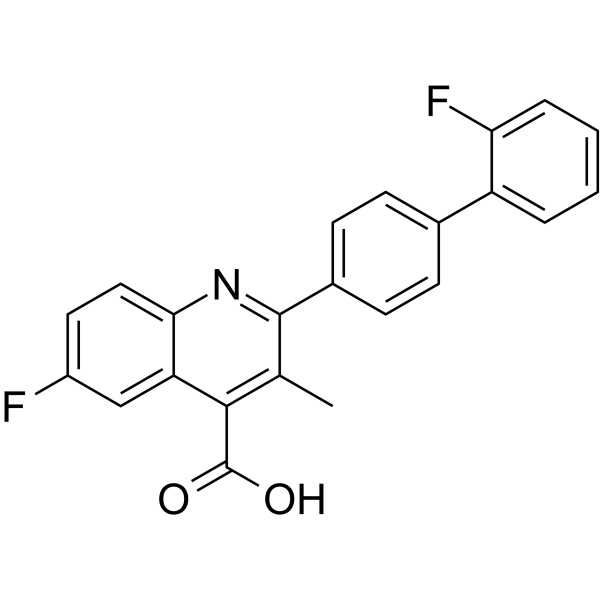
Brequinar-d3 (DUP785-d3) is deuterium labeled Brequinar. Brequinar (DUP785) is a potent inhibitor of dihydroorotate dehydrogenase (DHODH) with an IC50 of 5.2 nM for human DHODH. Brequinar has potent activities against a broad spectrum of viruses. Brequinar also has an anti-SARS2 activity .
|
-
-
- HY-15510S
-
|
|
|
Tenovin-6-d6 is the deuterium labeled Tenovin-6 (HY-15510). Tenovin-6, an analog of Tenovin-1 (HY-13423), is an activator of p53 transcriptional activity. Tenovin-6 inhibits the protein deacetylase activities of purified human SIRT1, SIRT2, and SIRT3 with IC50s of 21 μM, 10 μM, and 67 μM, respectively. Tenovin-6 also inhibits dihydroorotate dehydrogenase (DHODH).
|
-
Your information is safe with us. * Required Fields.
Inquiry Information
- Product Name:
- Cat. No.:
- Quantity:
- MCE Japan Authorized Agent:

