
1998 Results for "

disulfide bond rearrangement

" in MedChemExpress (MCE) Product Catalog:
Products (1998)

1998 Results for "disulfide bond rearrangement" in MCE Product Catalog:

  • Categories Recommended:
    More
162
162 Publications Verification
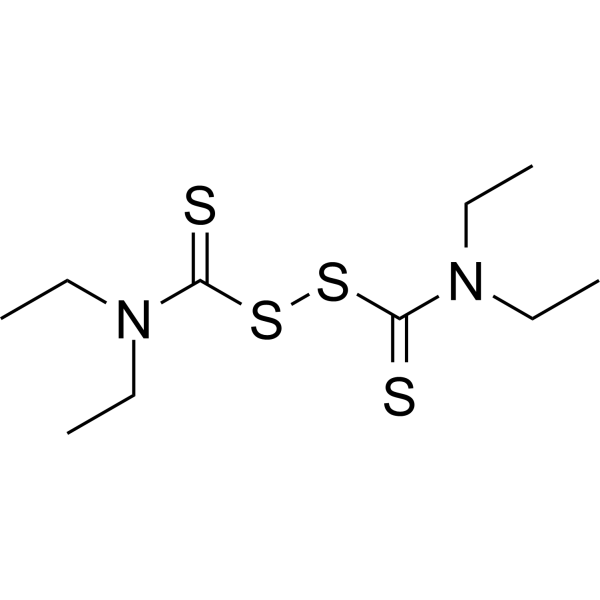
Cat. No.: HY-B0240
CAS No.: 97-77-8
Synonyms: Tetraethylthiuram disulfide; TETD
Disulfiram (Tetraethylthiuram disulfide) is a specific inhibitor of aldehyde-dehydrogenase (ALDH1), used for the treatment of chronic alcoholism by producing an acute sensitivity to alcohol. Disulfiram inhibits gasdermin D (GSDMD) pore formation in liposomes and inflammasome-mediated pyroptosis and IL-1β secretion in human and mouse cells. Disulfiram, a copper ion carrier, with Cu 2+ increases intracellular ROS levels and induces cuproptosis .
loading...
    loading...
136
136 Cited Publications
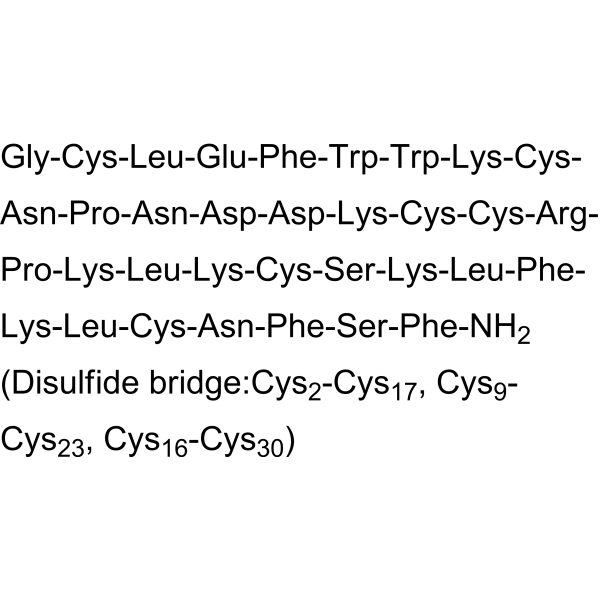
Cat. No.: HY-P1410
CAS No.: 1209500-46-8
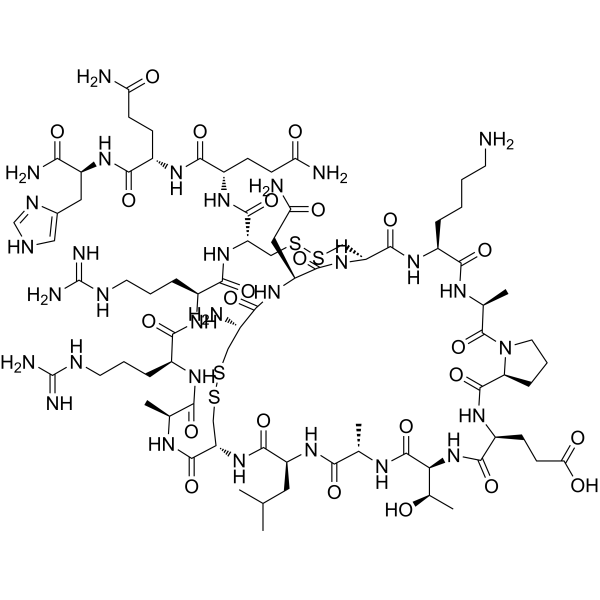
GsMTx4 is a spider venom peptide that selectively inhibits cationic-permeable mechanosensitive channels (MSCs) belonging to the Piezo and TRP channel families. GsMTx4 also blocks cation-selective stretch-activated channels (SACs) , attenuates lysophosphatidylcholine (LPC)-induced astrocyte toxicity and microglial reactivity. GsMTx4 is an important pharmacological tool for identifying the role of these excitatory MSCs in normal physiology and pathology .
loading...
    loading...
136
136 Cited Publications
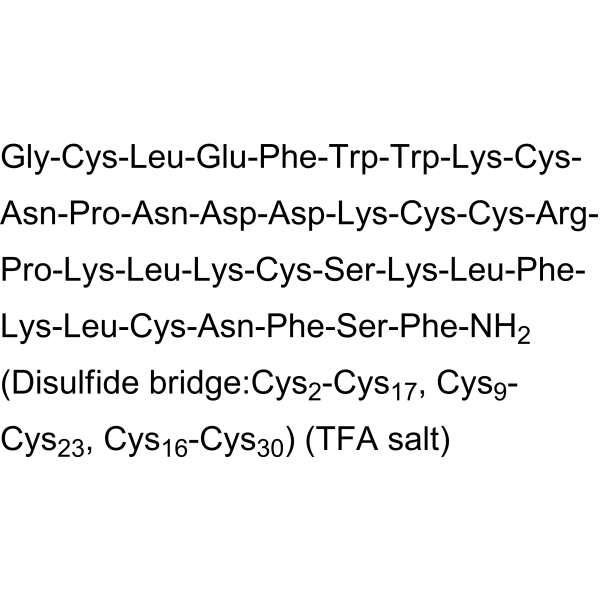
Cat. No.: HY-P1410A
GsMTx4 TFA is a spider venom peptide that selectively inhibits cationic-permeable mechanosensitive channels (MSCs) belonging to the Piezo and TRP channel families. GsMTx4 TFA also blocks cation-selective stretch-activated channels (SACs) , attenuates lysophosphatidylcholine (LPC)-induced astrocyte toxicity and microglial reactivity. GsMTx4 TFA is an important pharmacological tool for identifying the role of these excitatory MSCs in normal physiology and pathology .
loading...
    loading...
60
60 Cited Publications
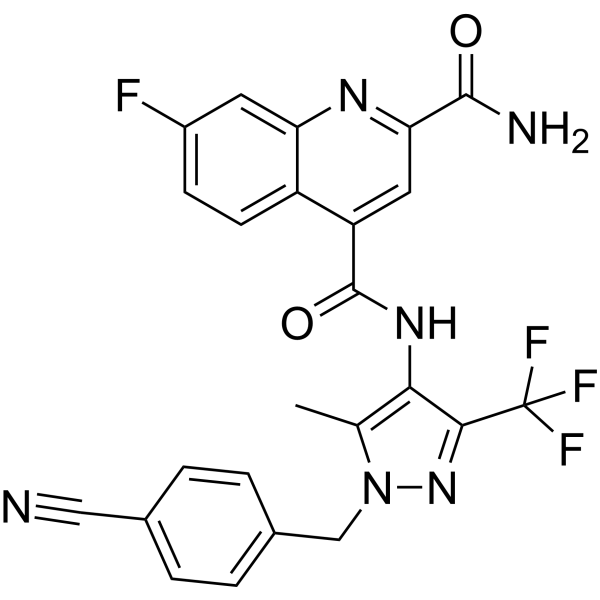
Cat. No.: HY-100017
CAS No.: 1799753-84-6
Purity:  99.67%
Target:  

GLUT Disulfidptosis

Research Areas:  

Cancer

BAY-876, a chemical probe, is an orally active and selective glucose transporter 1 (GLUT1) inhibitor with an IC50 of 2 nM. BAY-876 is >130-fold more selective for GLUT1 than GLUT2, GLUT3, and GLUT4. BAY-876 is also a potent blocker of glycolytic metabolism and ovarian cancer growth. In addition, BAY-876 can induce the formation of disulfide bonds in actin cytoskeletal proteins, leading to the occurrence of cellular disulfidptosis .
loading...
    loading...
49
49 Cited Publications
Cat. No.: HY-15917
CAS No.: 3483-12-3
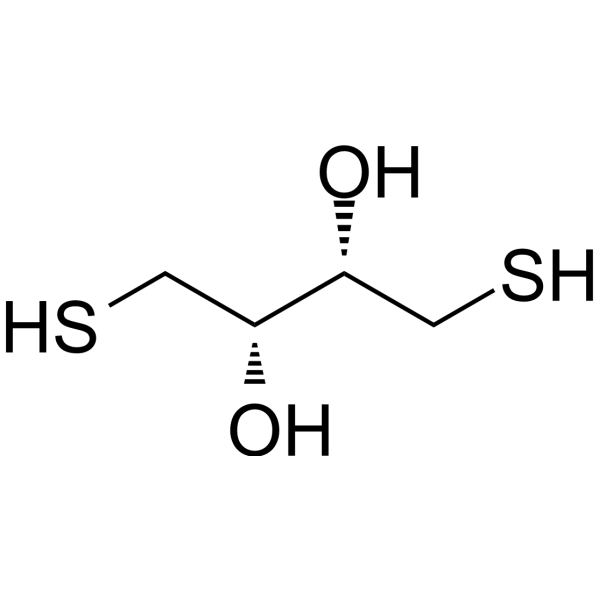
Synonyms: DTT; rel-(2R,3R)-1,4-Dimercapto-2,3-butanediol
DL-Dithiothreitol (DTT) is a strong reductant with anti-disulfidptosis activity. When DL-Dithiothreitol is oxidized, it forms a stable six-membered ring with an internal disulfide bond .
loading...
    loading...
37
37 Cited Publications
Cat. No.: HY-P0017
CAS No.: 9087-70-1
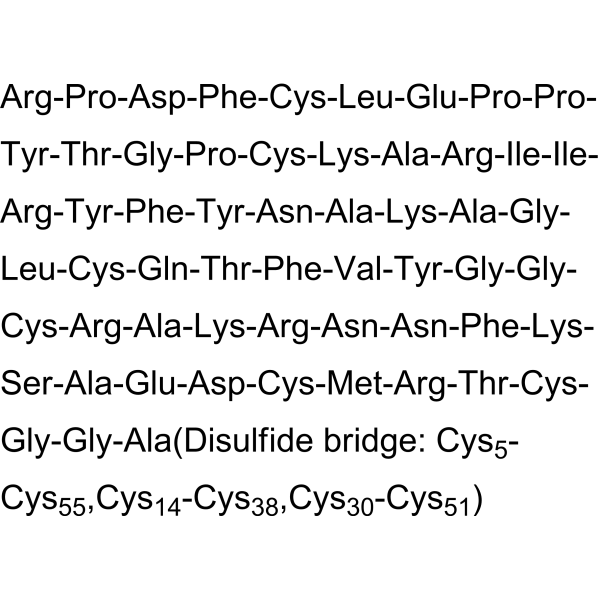
Aprotinin is a bovine pancreatic trypsin inhibitor (BPTI) inhibitor which inhibits trypsin and chymotrypsin with Kis of 0.06 pM and 9 nM, respectively.
loading...
    loading...
30
30 Cited Publications
Cat. No.: HY-17571
CAS No.: 50-56-6
Synonyms: α-Hypophamine; Oxytocic hormone
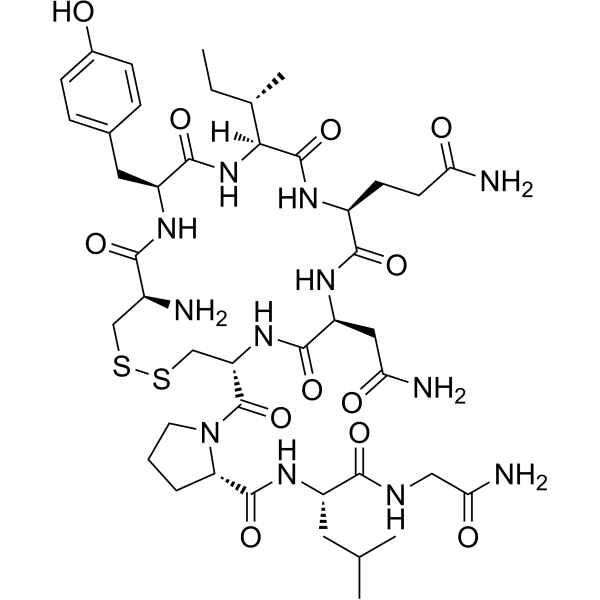
Oxytocin (α-Hypophamine; Oxytocic hormone) is a pleiotropic, hypothalamic peptide known for facilitating parturition, lactation, and prosocial behaviors. Oxytocin can function as a stress-coping molecule with anti-inflammatory, antioxidant, and protective effects especially in the face of adversity or trauma .
loading...
    loading...
30
30 Cited Publications
Cat. No.: HY-17571A
CAS No.: 6233-83-6
Synonyms: α-Hypophamine acetate; Oxytocic hormone acetate
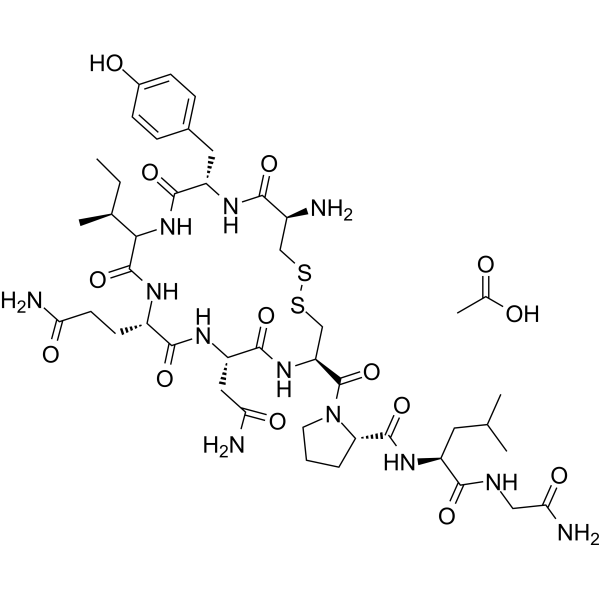
Oxytocin (α-Hypophamine) acetate is a pleiotropic, hypothalamic peptide known for facilitating parturition, lactation, and prosocial behaviors. Oxytocin acetate can function as a stress-coping molecule with anti-inflammatory, antioxidant, and protective effects especially in the face of adversity or trauma .
loading...
    loading...
25
25 Cited Publications
Cat. No.: HY-P0028
CAS No.: 17466-45-4
Target:  

Fluorescent Dye

Research Areas:  

Others

Phalloidin is a mushroom-derived toxin which can be used to label F-actin of the cytoskeleton with fluorochrome .
loading...
    loading...
22
22 Cited Publications
Cat. No.: HY-B1449
CAS No.: 58-96-8
Synonyms: β-Uridine
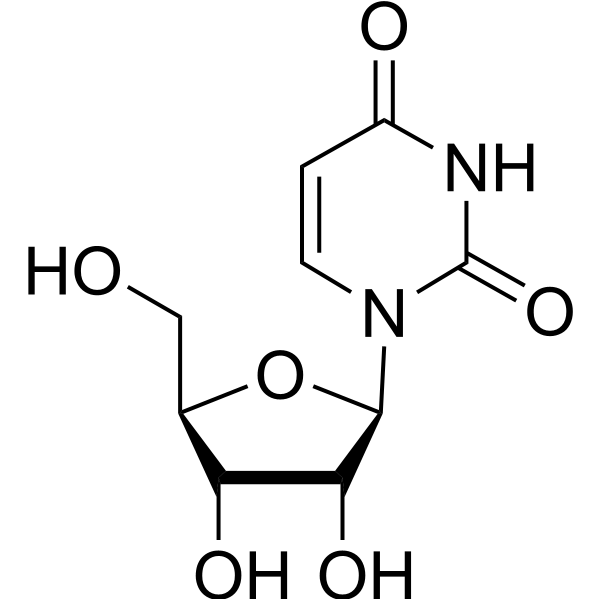
Uridine (β-Uridine) is a nucleoside compound composed of uracil and a ribose ring, which are connected by a β-N1-glycosidic bond .
loading...
    loading...
17
17 Cited Publications
Cat. No.: HY-136175
CAS No.: 2169919-21-3
Purity:  99.76%
Synonyms: SNDX-5613
Research Areas:  

Cancer

Revumenib (SNDX-5613) is a potent and specific Menin-MLL inhibitor with a binding Ki of 0.149 nM and a cell based IC50 of 10-20 nM. Revumenib can be used for the research of MLL-rearranged (MLL-r) acute leukemias, including acute lymphoblastic leukemia (ALL) and acute myeloid leukemia (AML) .
loading...
    loading...
17
17 Cited Publications
Cat. No.: HY-N0315
CAS No.: 539-86-6
Synonyms: Diallyl thiosulfinate
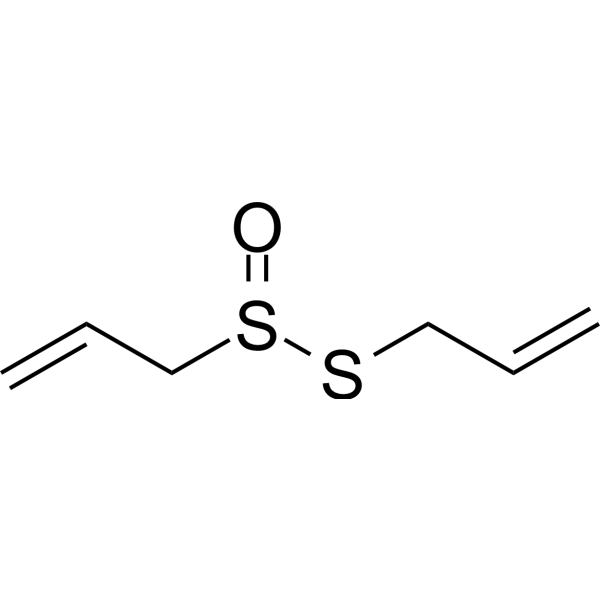
Allicin (diallyl thiosulfinate) is isolated from garlic including Diallyl monosulfide, Diallyl disulfide, Diallyl trisulfide, Diallyl tetrasulfide, and Methyl allyl disulphide etc. They accounts for 98% of the extract. Allicin (diallyl thiosulfinate) has highly potent antimicrobial activity, and inhibits growth of a variety of microorganisms, among them antibiotic-resistant strains .
loading...
    loading...
17
17 Cited Publications
Cat. No.: HY-P0036
CAS No.: 83150-76-9
Synonyms: SMS 201-995
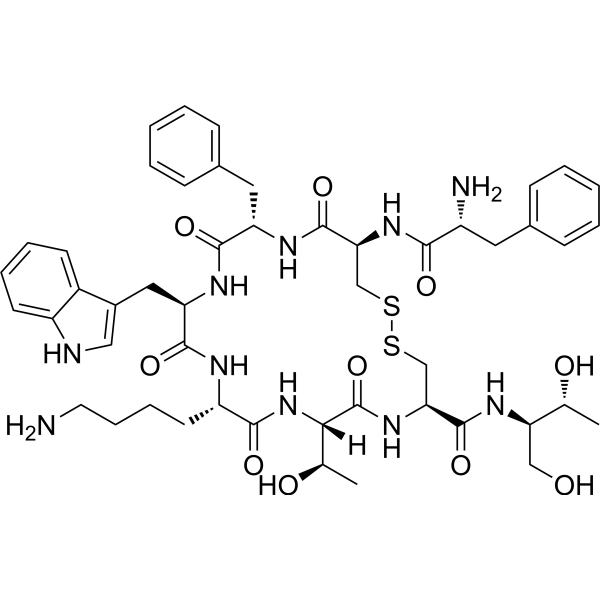
Octreotide (SMS 201-995) is a somatostatin receptor agonist and synthetic octapeptide endogenous somatostatin analogue. Octreotide (SMS 201-995) can bind to the somatostatin receptor and mainly subtypes 2, 3, and 5, increases Gi activity, and reduces intracellular cAMP production. Octreotide (SMS 201-995) has antitumor activity, mediates apoptosis and may also be used in disease studies in acromegaly .
loading...
    loading...
17
17 Cited Publications
Cat. No.: HY-17365
CAS No.: 79517-01-4
Synonyms: SMS 201-995 acetate
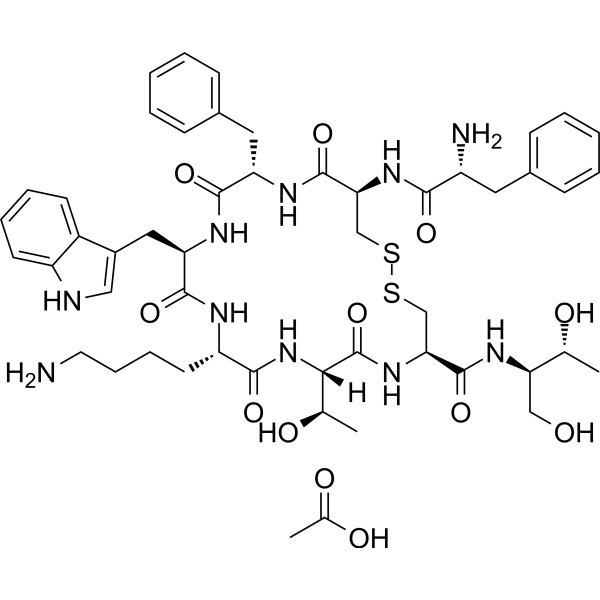
Octreotide acetate, a long-acting synthetic analog of native somatostatin, inhibits growth hormone, glucagon, and insulin more potently.
loading...
    loading...
15
15 Cited Publications
Cat. No.: HY-16993
CAS No.: 1801787-56-3
Target:  

Apoptosis WDR5

Research Areas:  

Cancer

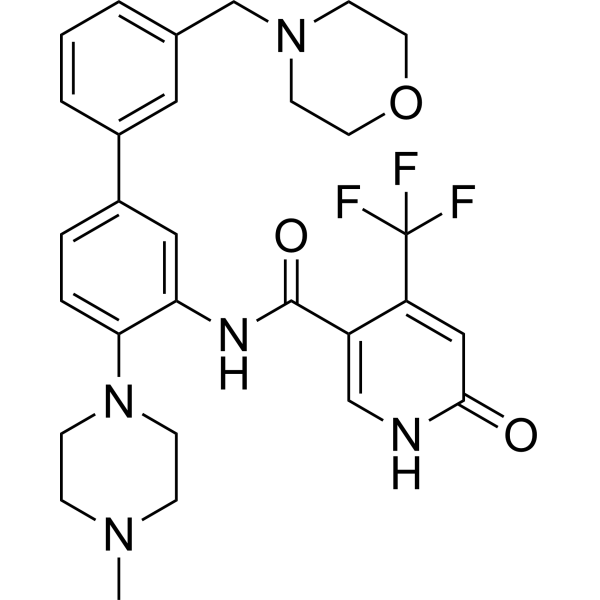
OICR-9429, a chemical probe, is high affinity WD repeat domain 5 (WDR5) inhibitor, competitively blocks WDR5 interaction with MLL protein via binding the central peptide-binding pocket of WDR5. OICR-9429 can suppress histone H3K4 trimethylation and can be used for the research of various cancers including non-MLL-rearranged leukaemia, colon, pancreatic, prostate cancer and bladder cancer (BCa) .
loading...
    loading...
13
13 Cited Publications
Cat. No.: HY-P0256
CAS No.: 24345-16-2
Synonyms: Apamine
Apamin (Apamine) is an 18 amino acid peptide neurotoxin found in apitoxin (bee venom), is known as a specifically selective blocker of Ca 2+-activated K + (SK) channels and exhibits anti-inflammatory and anti-fibrotic activity .
loading...
    loading...
13
13 Cited Publications
Cat. No.: HY-106224
CAS No.: 205640-90-0
Purity:  99.93%
Synonyms: Hypocretin-1 (human, rat, mouse)
Research Areas:  

Neurological Disease

Orexin A (human, rat, mouse) (Hypocretin-1 (human, rat, mouse)), a 33 amino acid excitatory neuropeptide, orchestrates diverse central and peripheral processes. Orexin A (human, rat, mouse) binds and activates two types of G protein-coupled receptors, the orexin-1 receptor (OX1R) and the orexin-2 receptor (OX2R). Orexin A (human, rat, mouse) has a role in the regulation of feeding behavior. Orexin A (human, rat, mouse) is an effective anti-nociceptive and anti-hyperalgesic agent in mice and rats .
loading...
    loading...
13
13 Cited Publications
Cat. No.: HY-106224B
Purity:  99.93%
Synonyms: Hypocretin-1 (human, rat, mouse) acetate
Research Areas:  

Neurological Disease

Orexin A (Hypocretin-1) (human, rat, mouse) acetate is a hypothalamic neuropeptide with analgesic properties (crosses the blood-brain barrier). Orexin A (human, rat, mouse) acetate binds and activates two types of G protein-coupled receptors, the orexin-1 receptor (OX1R) and the orexin-2 receptor (OX2R). Orexin A (human, rat, mouse) acetate can be used in studies of appetite regulation, neurodegenerative diseases and modulation of injurious messaging .
loading...
    loading...
13
13 Cited Publications
Cat. No.: HY-P0256A
Synonyms: Apamine TFA
Apamin TFA (Apamine TFA) is an 18 amino acid peptide neurotoxin found in apitoxin (bee venom), is known as a specifically selective blocker of Ca 2+-activated K + (SK) channels and exhibits anti-inflammatory and anti-fibrotic activity .
loading...
    loading...
13
13 Cited Publications
Cat. No.: HY-106224A
Purity:  97.13%
Synonyms: Hypocretin-1 (human, rat, mouse) TFA
Research Areas:  

Neurological Disease

Orexin A (human, rat, mouse) (Hypocretin-1 (human, rat, mouse)) TFA, a 33 amino acid excitatory neuropeptide, orchestrates diverse central and peripheral processes. Orexin A (human, rat, mouse) TFA binds and activates two types of G protein-coupled receptors, the orexin-1 receptor (OX1R) and the orexin-2 receptor (OX2R). Orexin A (human, rat, mouse) TFA has a role in the regulation of feeding behavior. Orexin A (human, rat, mouse) TFA is an effective anti-nociceptive and anti-hyperalgesic agent in mice and rats .
loading...
    loading...

