


1. Search Result
Search Result
Results for "

filtration

" in MedChemExpress (MCE) Product Catalog:

46

Inhibitors & Agonists

11

Biochemical Assay Reagents

6

Peptides

1

Inhibitory Antibodies

7

Natural
Products

4

Isotope-Labeled Compounds

2

Oligonucleotides

Cat. No. Product Name Target Research Areas Chemical Structure
  • HY-B0594
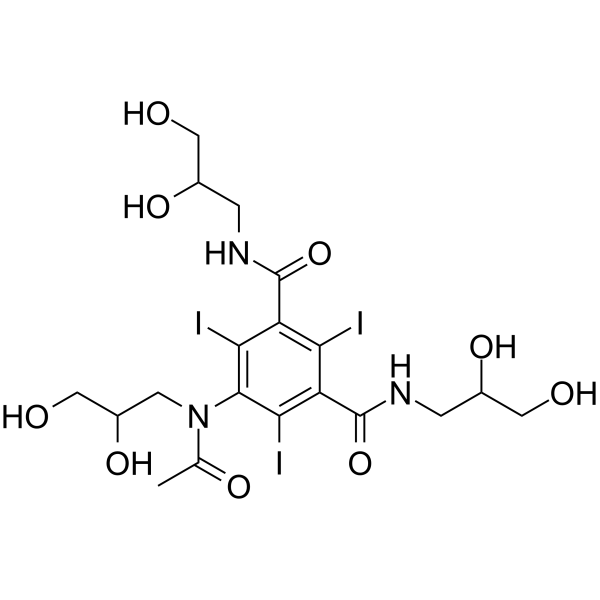
    Iohexol
    5 Publications Verification

    Autophagy Mitophagy Cancer
    Iohexol is a non-ionic, water-soluble contrast agent used as a reference marker for the determination of glomerular filtration rate (GFR) at the level of renal function. Iohexol can be used for contrast in myelography, computerized tomography (cisternography, ventriculography) and MicroCT imaging .
    Iohexol
  • HY-P99901

    VIS649

    SARS-CoV Inflammation/Immunology Cancer
    Sibeprenlimab (VIS649) is a humanized IgG2 monoclonal antibody which inhibits a proliferation-inducing ligand (APRIL). Sibeprenlimab suppresses pathogenic immunoglobulins (IgA and IgM), while preserving antibody responses to mRNA-based vaccines against SARS-COV-2. Sibeprenlimab reduces urinary protein-to-creatinine ratio (UPCR) and glomerular filtration rate (GFR). Sibeprenlimab is promising for the research of IgA nephropathy (IgAN) .
    Sibeprenlimab
  • HY-B0504S
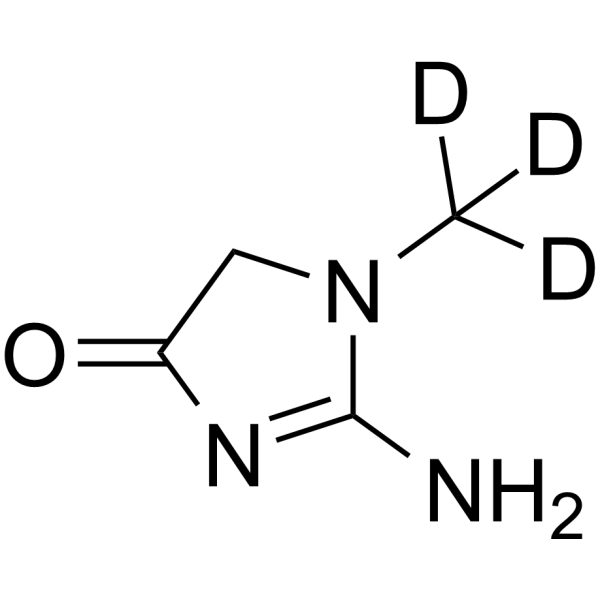
    Creatinine-d3
    5 Publications Verification

    NSC13123-d3

    Isotope-Labeled Compounds Endogenous Metabolite iGluR GABA Receptor Metabolic Disease Cancer
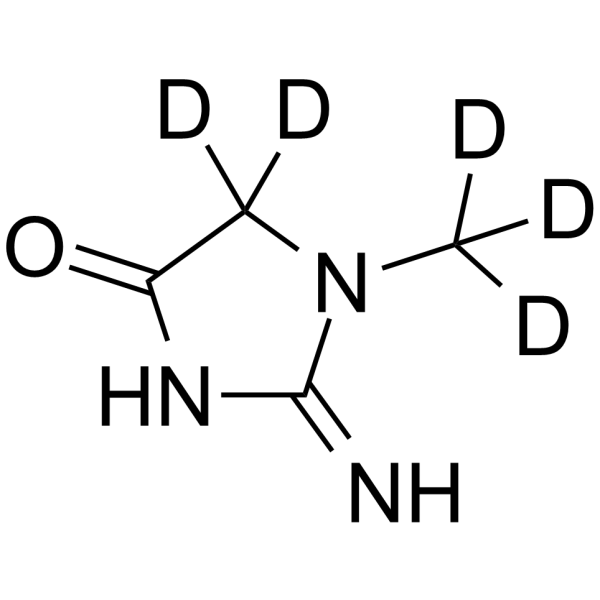
    Creatinine-d3 is a deuterium labeled Creatinine. Creatinine (NSC13123) is an orally active, blood-brain barrier-permeable modulator of GABAA and NMDA receptors, with activities of antioxidation and metabolic regulation. Creatinine is generated via non-enzymatic conversion of creatine and phosphocreatine in muscle. Creatinine serum levels correlate with muscle mass, glomerular filtration rate, and extrarenal clearance, serving as an evaluation biomarker for renal function, muscle mass, and clinical outcomes, and used for perioperative renal risk assessment. In addition, Creatinine can induce specific Cryptococcus species to produce creatinine deiminase and act as their nitrogen source, while it can be secreted via renal tubules. Creatinine is widely used in research related to various diseases such as neurodegenerative diseases, psychiatric disorders, acute kidney injury, chronic kidney disease, and renal failure .
    Creatinine-d3
  • HY-B0504
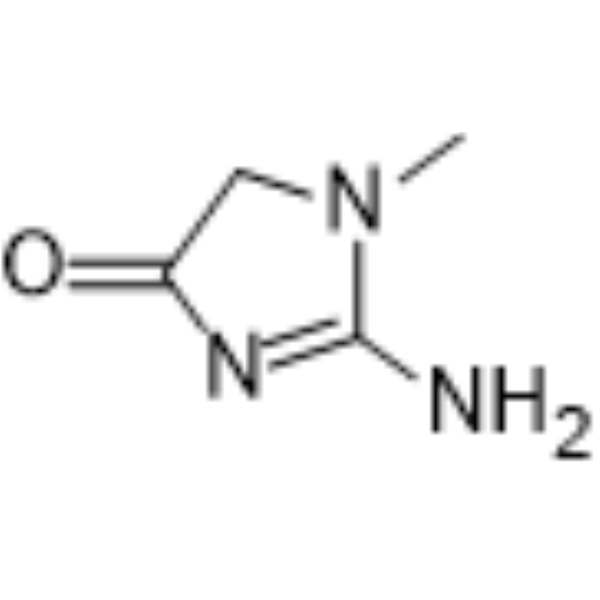
    Creatinine
    5+ Cited Publications

    NSC13123

    Endogenous Metabolite GABA Receptor iGluR Infection Neurological Disease Metabolic Disease Cancer
    Creatinine (NSC13123) is an orally active, blood-brain barrier-permeable modulator of GABAA and NMDA receptors, with activities of antioxidation and metabolic regulation. Creatinine is generated via non-enzymatic conversion of creatine and phosphocreatine in muscle. Creatinine serum levels correlate with muscle mass, glomerular filtration rate, and extrarenal clearance, serving as an evaluation biomarker for renal function, muscle mass, and clinical outcomes, and used for perioperative renal risk assessment. In addition, Creatinine can induce specific Cryptococcus species to produce creatinine deiminase and act as their nitrogen source, while it can be secreted via renal tubules. Creatinine is widely used in research related to various diseases such as neurodegenerative diseases, psychiatric disorders, acute kidney injury, chronic kidney disease, and renal failure .
    Creatinine
  • HY-B0504S2

    NSC13123-d5

    Isotope-Labeled Compounds Endogenous Metabolite iGluR GABA Receptor Metabolic Disease
    Creatinine-d5 is the deuterium labeled Creatinine. Creatinine (NSC13123) is an orally active, blood-brain barrier-permeable modulator of GABAA and NMDA receptors, with activities of antioxidation and metabolic regulation. Creatinine is generated via non-enzymatic conversion of creatine and phosphocreatine in muscle. Creatinine serum levels correlate with muscle mass, glomerular filtration rate, and extrarenal clearance, serving as an evaluation biomarker for renal function, muscle mass, and clinical outcomes, and used for perioperative renal risk assessment. In addition, Creatinine can induce specific Cryptococcus species to produce creatinine deiminase and act as their nitrogen source, while it can be secreted via renal tubules. Creatinine is widely used in research related to various diseases such as neurodegenerative diseases, psychiatric disorders, acute kidney injury, chronic kidney disease, and renal failure .
    Creatinine-d5
  • HY-113205

    15-keto-PGE2

    Endogenous Metabolite Prostaglandin Receptor STAT PPAR Fungal Drug Metabolite Cardiovascular Disease Infection Endocrinology Cancer
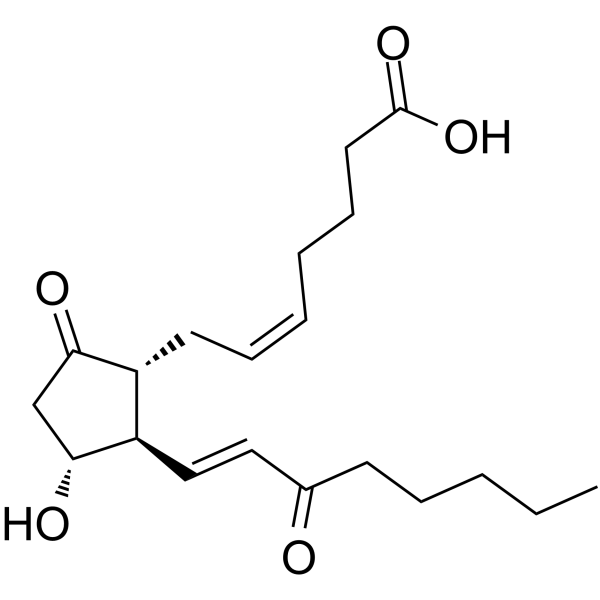
    15-keto-Prostaglandin E2 (15-keto-PGE2) is an endogenous PGE2 metabolite. 15-keto-Prostaglandin E2 inhibits STAT3 activation by binding to the Cys259 residue of STAT3. 15-keto-Prostaglandin E2 binds to and stabilizes EP2 and EP4 receptors. 15-keto-Prostaglandin E2 inhibits the growth and progression of breast cancer cells. 15-keto-Prostaglandin E2 activates PPAR-γ and promotes fungal growth. 15-keto-Prostaglandin E2 disrupts glomerular vascularization during zebrafish development and reduces the surface area of the glomerular filtration barrier .
    15-keto-Prostaglandin E2
  • HY-148139

    Biochemical Assay Reagents Others
    Cross-linked dextran G 75 is a Gel-filtration media. Cross-linked dextran G 75 also is a dextran-based matrix and used for Gel-filtration chromatography (Particle size range: 40-120 μm; Sphere protein separation range: 3K-80K Da; Polysaccharide separation range: 1K-50K Da) .
    Cross-linked dextran G 75
  • HY-P1430
    11R-VIVIT
    5+ Cited Publications

    Cell permeable NFAT inhibitor

    Nuclear Factor of activated T Cells (NFAT) Metabolic Disease
    11R-VIVIT is a cell-permeable nuclear factor of activated T cells (NFAT) inhibitor. 11R-VIVIT can be used for the research of podocyte and diabetic nephropathy .
    11R-VIVIT
  • HY-W042301

    Anion Exchangers Carbonic Anhydrase Endothelin Receptor Cardiovascular Disease
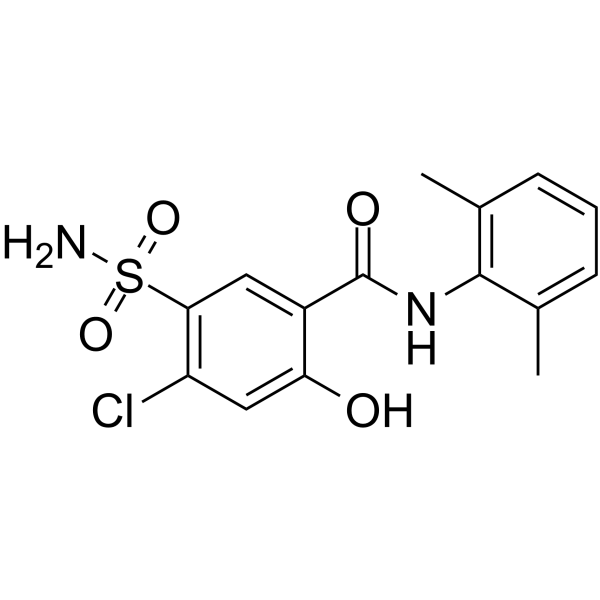
    Xipamide is an orally active carbonic anhydrase (CA) inhibitor and Na +/Cl --potassium transporter inhibitor with diuretic and antihypertensive effects. Xipamide reduces NaCl reabsorption by inhibiting the Cl -/NaCO3 - anion exchanger, and increases calcium reabsorption while promoting potassium and magnesium excretion. Xipamide is mainly cleared via the renal pathway and causes a temporary decrease in glomerular filtration rate under specific conditions. Xipamide does not affect Ca 2+ signaling induced by endothelin-1 and other factors, nor does it inhibit various ion cotransport or pump activities in red blood cells. Xipamide can be used in researches related to cardiovascular diseases, hypertension (especially with left ventricular hypertrophy), advanced renal failure, and liver cirrhosis with ascites .
    Xipamide
  • HY-B0504R

    NSC13123 (Standard)

    Reference Standards Endogenous Metabolite iGluR GABA Receptor Metabolic Disease Cancer
    Creatinine (Standard) is the analytical standard of Creatinine. This product is intended for research and analytical applications. Creatinine (NSC13123) is an orally active, blood-brain barrier-permeable modulator of GABAA and NMDA receptors, with activities of antioxidation and metabolic regulation. Creatinine is generated via non-enzymatic conversion of creatine and phosphocreatine in muscle. Creatinine serum levels correlate with muscle mass, glomerular filtration rate, and extrarenal clearance, serving as an evaluation biomarker for renal function, muscle mass, and clinical outcomes, and used for perioperative renal risk assessment. In addition, Creatinine can induce specific Cryptococcus species to produce creatinine deiminase and act as their nitrogen source, while it can be secreted via renal tubules. Creatinine is widely used in research related to various diseases such as neurodegenerative diseases, psychiatric disorders, acute kidney injury, chronic kidney disease, and renal failure .
    Creatinine (Standard)
  • HY-141522

    Biochemical Assay Reagents Others
    Cross-linked dextran G 100 is a gel filtration medium that can be used for protein purification (Sphere protein separation range: 4K-150K Da; Polysaccharide separation range: 1K-100K Da) .
    Cross-linked dextran G 100
  • HY-138560
    Cross-linked dextran G 50
    2 Publications Verification

    Biochemical Assay Reagents Others
    Cross-linked dextran G 50 is a gel filtration medium. Cross-linked dextran G 50 can be used in gel permeation chromatography for fractionation of the glycopeptide mixture (Sphere protein separation range: 1.5K-30K Da; Polysaccharide separation range: 500-10K Da) .
    Cross-linked dextran G 50
  • HY-113089

    H-Glu(H-Lys-OH)-OH; γ-Glu-ε-Lys

    Endogenous Metabolite Metabolic Disease
    Epsilon-(gamma-glutamyl)-lysine is an N(6)-acyl-L-lysine derivative. The enzyme tissue transglutaminase (tTg) helps the formation of epsilon-(gamma-glutamyl)lysine bonds between ECM components in some disease, such as non-diabetic kidney, glaucoma filtration .
    Epsilon-(gamma-glutamyl)-lysine
  • HY-123572

    AG1717

    Dynamin HIV Integrase Infection Metabolic Disease Inflammation/Immunology
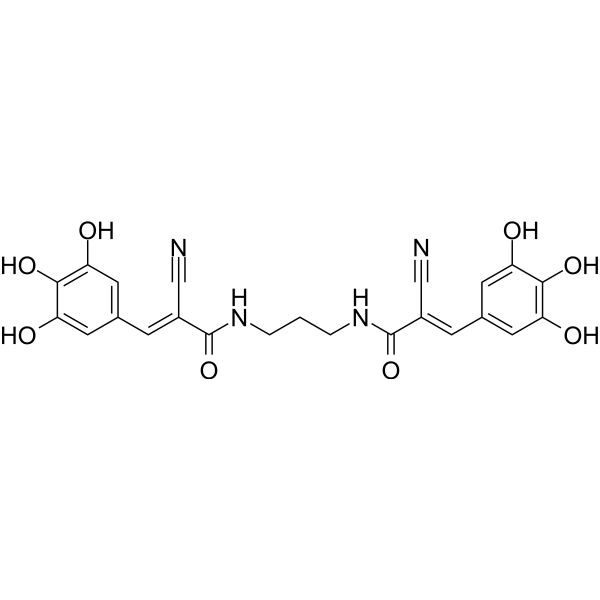
    Bis-T-23 (AG1717), tyrphostin derivative, is an HIV-I integrase inhibitor. Bis-T-23 can promote actin-dependent dynamin oligomerization. Bis-T-23 can be used for the research of HIV and chronic kidney diseases (CKD) .
    Bis-T-23
  • HY-B0504S1

    NSC13123-13C

    Isotope-Labeled Compounds Endogenous Metabolite iGluR GABA Receptor Metabolic Disease
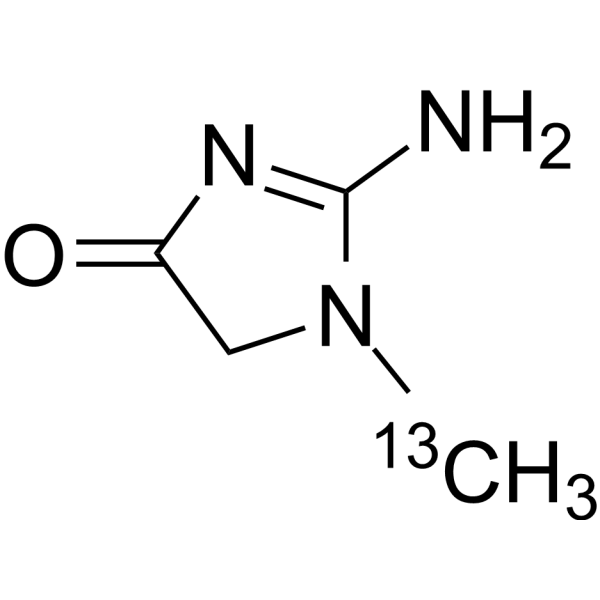
    Creatinine- 13C is the 13C-labeled Creatinine. Creatinine (NSC13123) is an orally active, blood-brain barrier-permeable modulator of GABAA and NMDA receptors, with activities of antioxidation and metabolic regulation. Creatinine is generated via non-enzymatic conversion of creatine and phosphocreatine in muscle. Creatinine serum levels correlate with muscle mass, glomerular filtration rate, and extrarenal clearance, serving as an evaluation biomarker for renal function, muscle mass, and clinical outcomes, and used for perioperative renal risk assessment. In addition, Creatinine can induce specific Cryptococcus species to produce creatinine deiminase and act as their nitrogen source, while it can be secreted via renal tubules. Creatinine is widely used in research related to various diseases such as neurodegenerative diseases, psychiatric disorders, acute kidney injury, chronic kidney disease, and renal failure .
    Creatinine-13C
  • HY-156045C

    Biochemical Assay Reagents Others
    Cross-linked dextran G 200 is a hydrophilic gel based on molecular size exclusion and targeted macromolecular separation. Cross-linked dextran G 200 works through the gel permeation mechanism, and the cross-linked structure forms a three-dimensional network with a specific pore size, achieving separation based on the molecular hydrodynamic volume. Cross-linked dextran G 200 can be used to adjust the osmotic solute distribution coefficient and the ability to maintain osmotic equilibrium, such as in gel filtration chromatography for purification and analysis of biomacromolecules such as proteins and nucleic acids . Cross-linked dextran G 200 can also be used as a gel filtration filler (particle size range: 40-120 μm; globular protein separation range: 5-600 kDa) .
    Cross-linked dextran G 200
  • HY-P1430A
    11R-VIVIT TFA
    5+ Cited Publications

    Cell permeable NFAT inhibitor TFA

    Nuclear Factor of activated T Cells (NFAT) Metabolic Disease
    11R-VIVIT TFA is a cell-permeable nuclear factor of activated T cells (NFAT) inhibitor. 11R-VIVIT TFA can be used for the research of podocyte and diabetic nephropathy .
    11R-VIVIT TFA
  • HY-156045B

    Biochemical Assay Reagents Others
    Cross-linked dextran G 150 is a hydrophilic gel based on molecular size exclusion and targeted for the separation of macromolecules. Cross-linked dextran G 150 functions through the gel permeation mechanism, where the cross-linked structure forms a three-dimensional network with specific pore diameters, achieving separation based on the molecular volumetric flow. Cross-linked dextran G 150 can be used to regulate the distribution coefficient of permeating solutes and maintain the permeation balance, such as in gel filtration chromatography for the purification and analysis of biological macromolecules like proteins and nucleic acids. Cross-linked dextran G 150 can also be used as a gel filtration filler (particle size range: 40-120 μm; spherical protein separation range: 5-300 kDa) .
    Cross-linked dextran G 150
  • HY-113089A

    H-Glu(H-Lys-OH)-OH TFA; γ-Glu-ε-Lys TFA

    Endogenous Metabolite Metabolic Disease
    Epsilon-(gamma-glutamyl)-lysine (H-Glu(H-Lys-OH)-OH) TFA is an N(6)-acyl-L-lysine derivative. The enzyme tissue transglutaminase (tTg) helps the formation of epsilon-(gamma-glutamyl)lysine bonds between ECM components in some disease, such as non-diabetic kidney, glaucoma filtration .
    Epsilon-(gamma-glutamyl)-lysine TFA
  • HY-W250119
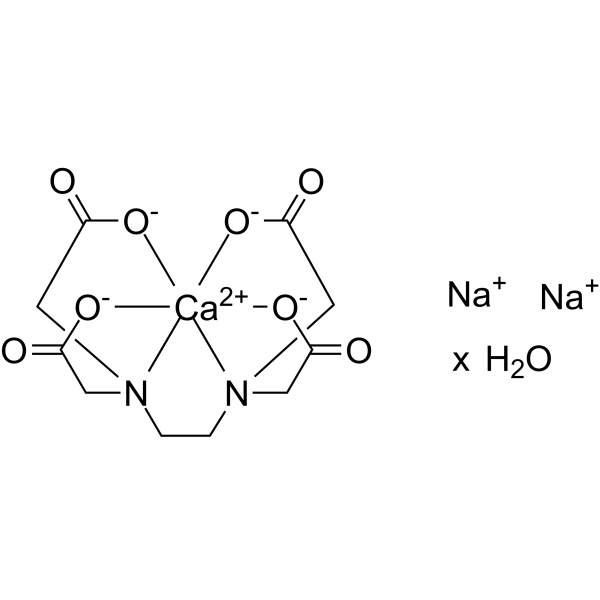
    Calcium disodium edetate hydrate
    20+ Cited Publications

    EDTA disodium calcium salt hydrate; Ethylenediaminetetraacetic acid disodium calcium salt hydrate

    Biochemical Assay Reagents Fungal Mitochondrial Metabolism Infection
    Calcium disodium edetate hydrate (EDTA disodium calcium salt hydrate) is a metal chelator and antifungal agent. Calcium disodium edetate hydrate chelates Mn 2+, damages mitochondria, and interferes with carbohydrate metabolic pathways, particularly the synthesis of pyruvate in glycolysis. Calcium disodium edetate hydrate inhibits Penicillium digitatum and delays conidial germination. Calcium disodium edetate (hydrate) enhances the host defense system of citrus fruits. Calcium disodium edetate hydrate is applicable to research related to citrus green mold .
    Calcium disodium edetate hydrate
  • HY-N11857

    Antibiotic Bacterial Infection
    Gentamicin C2 is an aminoglycoside antibiotic with broad-spectrum bactericidal activity, selectively binding to the bacterial 16S rRNA A-site. Gentamicin C2 interferes with protein synthesis initiation and translation fidelity to exert bactericidal effects. Gentamicin C2 can be used for the research of bacterial infections .
    Gentamicin C2
  • HY-10657

    Urotensin Receptor Cardiovascular Disease Others
    SB-706375 is an antagonist of the Urotensin II (UII) receptor. By blocking the Urotensin II receptor, SB-706375 reduces the kidney's response to UII and Urotensin-related peptide (URP) and significantly increases the Glomerular Filtration Rate (GFR). SB-706375 can be used in research on kidney diseases and hypertension .
    SB-706375
  • HY-B0594R

    Reference Standards Autophagy Mitophagy Cancer
    Iohexol (Standard) is the analytical standard of Iohexol. This product is intended for research and analytical applications. Iohexol is a non-ionic, water-soluble contrast agent used as a reference marker for the determination of glomerular filtration rate (GFR) at the level of renal function. Iohexol can be used for contrast in myelography, computerized tomography (cisternography, ventriculography) and MicroCT imaging .
    Iohexol (Standard)
  • HY-E70005P

    Biochemical Assay Reagents Others
    Collagenase (Type B, animal free) does not contain animal-related components, and is sterilized by filtration using a 0.22 μm filter membrane. Collagenase (Type B, filtered, animal free) has higher collagenase and casein activity.
    Collagenase (Type B, filtered, animal free)
  • HY-B0504S5

    NSC13123-15N

    Isotope-Labeled Compounds Endogenous Metabolite iGluR GABA Receptor Metabolic Disease Cancer
    Creatinine- 15N (NSC13123- 15N) is the 15N-labeled Creatinine (HY-B0504). Creatinine (NSC13123) is an orally active, blood-brain barrier-permeable modulator of GABAA and NMDA receptors, with activities of antioxidation and metabolic regulation. Creatinine is generated via non-enzymatic conversion of creatine and phosphocreatine in muscle. Creatinine serum levels correlate with muscle mass, glomerular filtration rate, and extrarenal clearance, serving as an evaluation biomarker for renal function, muscle mass, and clinical outcomes, and used for perioperative renal risk assessment. In addition, Creatinine can induce specific Cryptococcus species to produce creatinine deiminase and act as their nitrogen source, while it can be secreted via renal tubules. Creatinine is widely used in research related to various diseases such as neurodegenerative diseases, psychiatric disorders, acute kidney injury, chronic kidney disease, and renal failure .
    Creatinine-15N
  • HY-109071

    MB-102

    Fluorescent Dye Others
    Relmapirazin (MB-102) is a fluorescent tracer agent for real-time measurement of glomerular filtration rate .
    Relmapirazin
  • HY-160431

    PPAR NF-κB COX Drug Metabolite Metabolic Disease
    8(9)-EET is one of the main metabolites produced by the metabolism of arachidonic acid (HY-109590) through the cytochrome P450 epoxide pathway. 8(9)-EET is an effective substrate for COX-1 and COX-2. 8(9)-EET activates PPARα in HEK293 cells and inhibits the activity of NF-κB induced by IL-1β in a PPARα-dependent and -independent manner. The (8S,9R)-isomer of 8(9)-EET ([(8S,9R)-EET]) causes vasoconstriction, thereby reducing renal plasma flow and glomerular filtration rate .
    8(9)-EET
  • HY-E70005Q

    Biochemical Assay Reagents Others
    Collagenase (Type C, filtered, animal free) does not contain animal-related components, and is sterilized by filtration using a 0.22 μm filter membrane. Collagenase (Type C, filtered, animal free) has low trypsin activity similar to type 4 collagenase.
    Collagenase (Type C, filtered, animal free)
  • HY-113089AR

    H-Glu(H-Lys-OH)-OH TFA (Standard); γ-Glu-ε-Lys TFA (Standard)

    Endogenous Metabolite Reference Standards Metabolic Disease
    Epsilon-(gamma-glutamyl)-lysine (TFA) (Standard) is the analytical standard of Epsilon-(gamma-glutamyl)-lysine (TFA). This product is intended for research and analytical applications. Epsilon-(gamma-glutamyl)-lysine (H-Glu(H-Lys-OH)-OH) TFA is an N(6)-acyl-L-lysine derivative. The enzyme tissue transglutaminase (tTg) helps the formation of epsilon-(gamma-glutamyl)lysine bonds between ECM components in some disease, such as non-diabetic kidney, glaucoma filtration .
    Epsilon-(gamma-glutamyl)-lysine TFA (Standard)
  • HY-134368

    Calcium Channel Cardiovascular Disease
    Ap3A is a vasoactive molecule that regulates intracellular Ca 2+ levels. Ap3A can promote the growth of vascular smooth muscle cells .
    Ap3A
  • HY-169737

    Glycosidase Amylases Metabolic Disease
    Inulobiose is a difructan disaccharide that can be isolated from Pistacia vera L.. Inulobiose inhibits α-glycosidase and α-amylase activities with IC50s of 1.87 and 40.72 mg/mL, respectively. Inulobiose can be used for the research of diabetes and glomerular filtration rate testing .
    Inulobiose
  • HY-100819

    CCR Metabolic Disease
    RO5234444 is an orally active CCR2 antagonist, with IC50s of 22nM for human CCR2 and 161 nM for mouse CCR2. RO5234444 alleviates glomerulosclerosis, reduces albuminuria, and significantly improves the glomerular filtration rate (GFR) in the uninephrectomized (1K) type 2 diabetic db/db mouse model. RO5234444 can be used for the study of type 2 diabetic nephropathy .
    RO5234444
  • HY-W127408

    Biochemical Assay Reagents Endogenous Metabolite Others
    1,2,3-Tripalmitoleoyl-rac-glycerol is a triacylglycerol containing palmitoleic acid at the sn-1, sn-2 and sn-3 positions. It reduces erythrocyte deformability in a concentration-dependent manner in the Reid filtration assay. Hepatic levels of 1,2,3-tripalmitoleoyl-rac-glycerol are increased in a JAK2L mouse model of hepatic steatosis. 1,2,3-Tripalmitoleoyl-rac-glycerol plasma levels are reduced in patients with predialysis renal disease.
    Tripalmitolein
  • HY-138560A

    Biochemical Assay Reagents Others
    Cross-linked dextran G 50, medium is a gel filtration medium. Cross-linked dextran G 50, medium can be used in gel permeation chromatography for fractionation of the glycopeptide mixture (Sphere protein separation range: 1.5K-30K Da; Polysaccharide separation range: 500-10K Da). Cross-linked dextran G 50, medium are microspheres with an average particle size of D50 = 220-250 μm .
    Cross-linked dextran G 50, medium
  • HY-138560B

    Biochemical Assay Reagents Others
    Cross-linked dextran G 50, fine is a gel filtration medium. Cross-linked dextran G 50, fine can be used in gel permeation chromatography for fractionation of the glycopeptide mixture (Sphere protein separation range: 1.5K-30K Da; Polysaccharide separation range: 500-10K Da). Cross-linked dextran G 50, fineThe average particle size is D50=110-130 μmof microspheres .
    Cross-linked dextran G 50, fine
  • HY-P10279

    Human atrial natriuretic factor (102–126)

    Natriuretic Peptide Receptor (NPR) Cardiovascular Disease Others
    Anaritide is a synthetic form of atrial natriuretic peptide (ANP) composed of 25 amino acids. Anaritide increases glomerular filtration rate by dilating into and contracting out the bulbar arterioles. Anaritide can be used to study the effects on patients with acute tubular necrosis, particularly in improving dialysis free survival .
    Anaritide
  • HY-135599

    Bacterial Infection
    Lysine hydroxamate is an amino acid hydroxamate that inhibits the growth of Escherichia coli K-12. Of the other amino acid hydroxamates tested, only L-lysine hydroxamate reduced the growth rate. The inhibition of growth by L-serine hydroxamate could be rapidly reversed by adding L-serine to the bacterial culture or by removing the analog by filtration. This reversal was specific for L-serine. L-alanine, glycine, or adenine had no effect on the inhibited culture. There was no evidence for active transport of the analog.
    Lysine hydroxamate
  • HY-B2081

    W-2900A

    Others Cardiovascular Disease Metabolic Disease
    Etozolin (W-2900A) is a diuretic agent. Etozolin inhibits fluid and electrolyte reabsorption in the loop of Henle. Etozolin can be used in research of congestive heart failure, hypertension and edema .
    Etozolin
  • HY-14998

    MK 185

    β-catenin PPAR Wnt Endocrinology
    Halofenate, structurally akin to clofibrate, was evaluated in hypertriglyceridemic patients over 6-week periods in a controlled, double-blind crossover trial. It effectively reduced serum triglycerides by 50%, with minimal impact on serum cholesterol levels. Additionally, it lowered serum uric acid by 30% and exhibited uricosuric effects independent of glomerular filtration rate. Halofenate was associated with a significant increase in plasma thyroxine (T4), accompanied by a decrease in protein-bound iodine and T4 by column. In vitro studies confirmed its ability to displace T4 from thyroid-binding proteins, suggesting a thyroxine-displacing effect, which could influence thyroid function in vivo .
    Halofenate
  • HY-185185

    TGF-β Receptor Keap1-Nrf2 Neurological Disease
    S58 aptamer is a ssDNA aptamer targeting transforming growth factor-beta receptor II (TGF-β RII). S58 aptamer inhibits the TGF-β RII interaction with TGF-β. S58 aptamer effectively improves glaucoma filtration surgery (GFS) surgical outcomes by activating the intracellular antioxidant defense PI3K/Akt/Nrf2 signaling pathway .
    S58 aptamer
  • HY-177933

    CCR Neurological Disease Inflammation/Immunology
    mNOX-E36 is a murine-specific analogue of NOX-E36 (HY-148100), an anti-CCL-2 L-RNA aptamer that binds and neutralises the mouse chemokine CCL-2. mNOX-E36 reduces scarring in an experimental murine model of glaucoma filtration surgery (GFS). mNOX-E36 ameliorates lupus nephritis in mice. mNOX-E36 can be used for GFS and lupus nephritis research .
    mNOX-E36
  • HY-10657R

    Reference Standards Urotensin Receptor Cardiovascular Disease Others
    SB-706375 (Standard) is the analytical standard of SB-706375 (HY-10657). This product is intended for research and analytical applications. SB-706375 is an antagonist of the Urotensin II (UII) receptor. By blocking the Urotensin II receptor, SB-706375 reduces the kidney's response to UII and Urotensin-related peptide (URP) and significantly increases the Glomerular Filtration Rate (GFR). SB-706375 can be used in research on kidney diseases and hypertension .
    SB-706375 (Standard)
  • HY-182660

    Biochemical Assay Reagents Others
    Acetosyringone Sterile Solution (100 mM) is formulated with acetosyringone, ethanol, etc., and is sterilized by filtration. It can be used for plant pathogen identification. It effectively induces the virulence genes of Agrobacterium tumefaciens.
    Acetosyringone Sterile Solution (100 mM)
  • HY-B0941B

    Biochemical Assay Reagents Others
    6-BA Sterile Solution (1 mg/mL) is a filtration-sterilized, ready-to-use stock solution of 6-Benzylaminopurine at a concentration of 1 mg/mL. It is one of the most widely used cytokinins in plant tissue culture.
    6-BA Sterile Solution (1 mg/ml)
  • HY-B2081A

    W-2900A hydrochloride

    Endogenous Metabolite Cardiovascular Disease Metabolic Disease
    Etozolin hydrochloride is a diuretic agent. Etozolin hydrochloride inhibits fluid and electrolyte reabsorption in the loop of Henle. Etozolin hydrochloride can be used in research of congestive heart failure, hypertension and edema .
    Etozolin hydrochloride
  • HY-179488

    PPAR NF-κB COX Drug Metabolite Metabolic Disease
    (±)8(9)-EET is one of the main metabolites produced by the metabolism of arachidonic acid (HY-109590) through the cytochrome P450 epoxide pathway. (±)8(9)-EET is an effective substrate for COX-1 and COX-2. (±)8(9)-EET activates PPARα in HEK293 cells and inhibits the activity of NF-κB induced by IL-1β in a PPARα-dependent and -independent manner. The (8S,9R)-isomer of (±)8(9)-EET ([(8S,9R)-EET]) causes vasoconstriction, thereby reducing renal plasma flow and glomerular filtration rate .
    (±)8(9)-EET

Inquiry Online

Your information is safe with us. * Required Fields.

Salutation


Country or Region *

Applicant Name *


Organization Name *

Department *


Email Address *


Product Name *

Cat. No.


Requested quantity *

Phone Number *


Remarks

Inquiry Online

Inquiry Information

Product Name:
Cat. No.:
Quantity:
MCE Japan Authorized Agent:

