
1. Search Result
Search Result
Results for "

fluctuations

" in MedChemExpress (MCE) Product Catalog:

22

Inhibitors & Agonists

4

Fluorescent Dye

1

Biochemical Assay Reagents

2

Peptides

1

Inhibitory Antibodies

1

Natural
Products

Cat. No. Product Name Target Research Areas Chemical Structure
  • HY-14896
    Opicapone
    3 Publications Verification

    BIA 9-1067

    COMT Neurological Disease
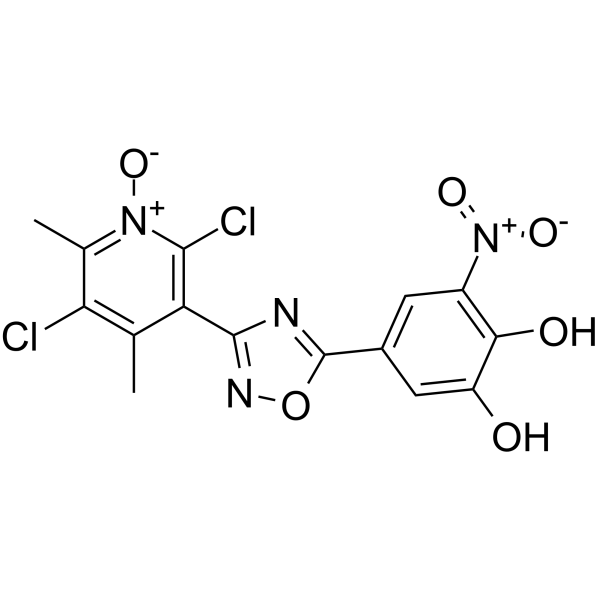
    Opicapone (BIA 9-1067) is a potent third-generation catechol-O-methyltransferase (COMT) inhibitor for the research of Parkinson's disease and motor fluctuations. Opicapone decreases the ATP content of the cells with an IC50 of 98 μM .
    Opicapone
  • HY-B1610N

    Biochemical Assay Reagents Others
    Sodium Citrate Buffer, 0.1M, pH 4.0 is an acidic, aqueous buffer solution. Sodium Citrate Buffer, 0.1M, pH 4.0 resists pH fluctuations, chelates metal ions, and regulates the redox potential of the system. Sodium Citrate Buffer, 0.1M, pH 4.0 is widely used in molecular biology, immunohistochemistry (IHC), and biochemistry .
    Sodium Citrate Buffer, 0.1M, pH 4.0
  • HY-P11274A

    Amycretin sodium; NN 9487 sodium

    Amylin Receptor Insulin Receptor GCGR Metabolic Disease
    Zenagamtide (Amycretin; NN 9487) sodium is an orally active, blood-brain barrier permeable triple agonist that targets GLP-1, amylin (Amylin Receptor) and calcitonin receptor (Calcitonin Receptor). Zenagamtide sodium is a single peptide consisting of 68 amino acids that can target brain regions regulating food intake, significantly suppress appetite and reduce energy intake. Therefore, Zenagamtide sodium improves body weight, waist circumference, glycated hemoglobin and lipid profile, and also alleviates the histological features of metabolic dysfunction-associated steatotic liver disease (MASLD) and enhances insulin sensitivity. Zenagamtide sodium may cause transient increases in heart rate and fluctuations in serum calcium levels, but it is an important compound for the study of overweight, obesity, insulin resistance and related metabolic diseases .
    Zenagamtide sodium
  • HY-34596

    Biochemical Assay Reagents Amyloid-β Neurological Disease Metabolic Disease
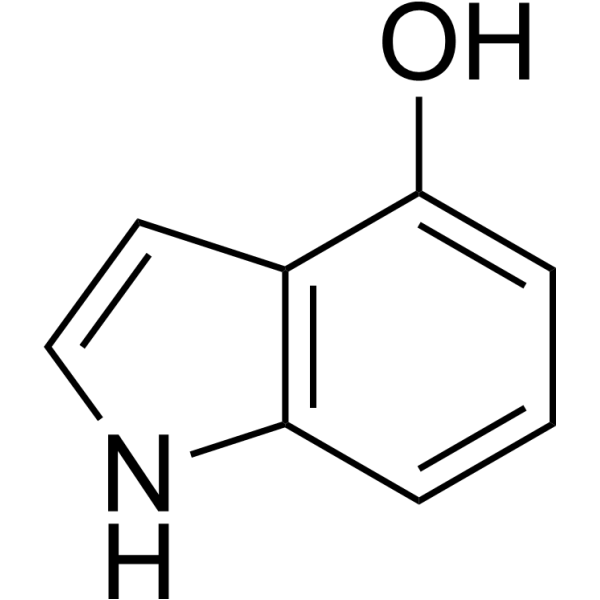
    4-Hydroxyindole is a type of hydroxyindole in which the 1H-indole at position 4 is substituted by a hydroxyl group. 4-Hydroxyindole serves as an important raw material or intermediate in the synthesis of pharmaceutical products and industrial polymers. 4-Hydroxyindole inhibits amyloid fibrillization and induces liver function impairment, thyroid abnormalities, and blood glucose fluctuations in mice. 4-Hydroxyindole holds potential for research in neurodegenerative diseases and metabolic disorders .
    4-Hydroxyindole
  • HY-D2869

    Fluorescent Dye Drug Intermediate Others
    Ac-H-FluNox is an acetylated cell-compatible prodrug of H-FluNox (HY-D2339). Ac-H-FluNox undergoes intracellular hydrolysis of its acetyl group by esterases to generate H-FluNox, which then undergoes a deoxygenation reaction with labile heme to form a fluorescent product. Ac-H-FluNox detects fluctuations of labile heme in living cells, acute labile heme release upon nitric oxide stimulation, and accumulation of labile heme following inhibition of heme export proteins .
    Ac-H-FluNox
  • HY-P11274

    Amycretin; NN 9487

    Amylin Receptor GCGR Insulin Receptor Metabolic Disease
    Zenagamtide (Amycretin; NN 9487) is an orally active, blood-brain barrier permeable triple agonist that targets GLP-1, amylin (Amylin Receptor) and calcitonin receptor (Calcitonin Receptor). Zenagamtide is a single peptide consisting of 68 amino acids that can target brain regions regulating food intake, significantly suppress appetite and reduce energy intake. Therefore, Zenagamtide improves body weight, waist circumference, glycated hemoglobin and lipid profile, and also alleviates the histological features of metabolic dysfunction-associated steatotic liver disease (MASLD) and enhances insulin sensitivity. Zenagamtide may cause transient increases in heart rate and fluctuations in serum calcium levels, but it is an important compound for the study of overweight, obesity, insulin resistance and related metabolic diseases .
    Zenagamtide
  • HY-116016

    L-DOPA ethyl ester; Levodopa ethyl ester

    Dopamine Receptor Drug Metabolite Neurological Disease
    Etilevodopa (L-Dopa ethyl ester), an ethyl-ester proagent of Levodopa, is rapidly hydrolyzed to Levodopa and ethanol by nonspecific esterases in the gastrointestinal tract. Etilevodopa is used for the treatment of Parkinson disease (PD). Levodopa is the direct precursor of dopamine and is a suitable proagent as it facilitates CNS penetration and delivers dopamine .
    Etilevodopa
  • HY-D2312

    Fluorescent Dye Ferroptosis Cancer
    Mito-Rh-S is a ratiometric near-infrared (NIR) fluorescent probe that detects the fluctuation of mitochondrial HClO levels during ferroptosis in hepatocellular carcinoma (HCC) .
    Mito-Rh-S
  • HY-116016A

    L-DOPA ethyl ester hydrochloride; Levodopa ethyl ester hydrochloride

    Dopamine Receptor Drug Metabolite Neurological Disease
    Etilevodopa (L-Dopa ethyl ester) hydrochloride, an ethyl-ester proagent of Levodopa, is rapidly hydrolyzed to Levodopa and ethanol by nonspecific esterases in the gastrointestinal tract. Etilevodopa hydrochloride is used for the treatment of Parkinson disease (PD). Levodopa is the direct precursor of dopamine and is a suitable proagent as it facilitates CNS penetration and delivers dopamine .
    Etilevodopa hydrochloride
  • HY-14896R

    BIA 9-1067 (Standard)

    Reference Standards COMT Neurological Disease
    Opicapone (Standard) is the analytical standard of Opicapone. This product is intended for research and analytical applications. Opicapone (BIA 9-1067) is a potent third-generation catechol-O-methyltransferase (COMT) inhibitor for the research of Parkinson's disease and motor fluctuations. Opicapone decreases the ATP content of the cells with an IC50 of 98 μM .
    Opicapone (Standard)
  • HY-136672

    Fluorescent Dye Others
    (E)-HBT-O is an isomer of HBT-O. HBT-O is a fluorescent probe used to monitor subtle pH fluctuations in living cells .
    (E)-HBT-O
  • HY-147747

    HSP Cancer
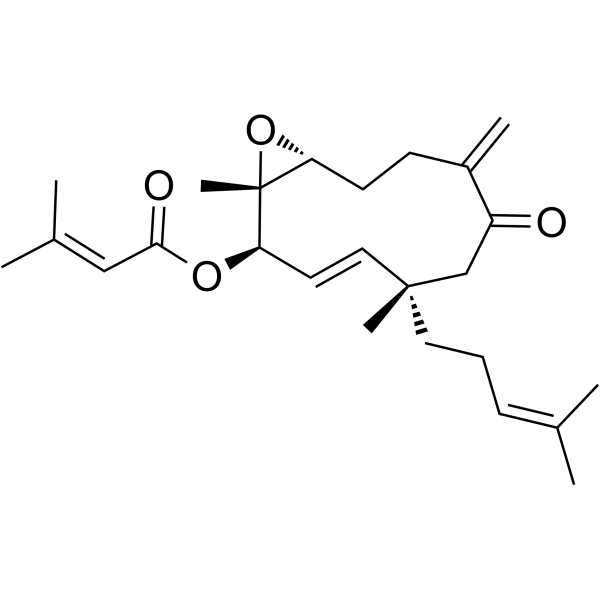
    Among vibsanin a analogues, vibsanin a analog C (VAC) showed anti proliferative effect on various cancer cell lines, and the anti proliferative activity was the strongest among vibsanin a analogues. In addition, VAC fluctuated the amount of hsp90 related proteins in cells and inhibited hsp90 mediated protein refolding of luciferase in vitro.
    HSP90-IN-12
  • HY-150502

    pSAT

    Biochemical Assay Reagents Others
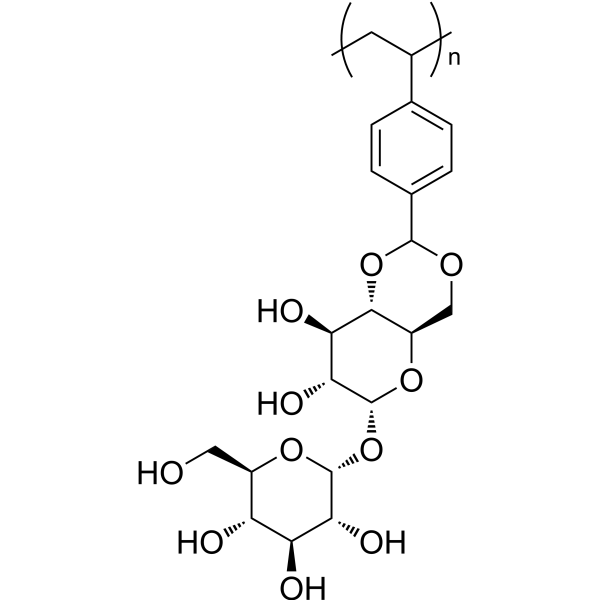
    Poly(styrenyl acetal trehalose) (pSAT) is composed of trehalose side chains linked to a polystyrene backbone via acetals. Poly(styrenyl acetal trehalose) stabilizes a variety of proteins and enzymes against fluctuations in temperature, and does not trigger the innate immune response. Poly(styrenyl acetal trehalose) can be used in synthesis of protein-polymer conjugates for reduced renal clearance of the biomolecule .
    Poly(styrenyl acetal trehalose)
  • HY-116016AR

    L-DOPA ethyl ester hydrochloride (Standard); Levodopa ethyl ester hydrochloride (Standard)

    Reference Standards Dopamine Receptor Drug Metabolite Neurological Disease
    Etilevodopa (hydrochloride) (Standard) is the analytical standard of Etilevodopa (hydrochloride). This product is intended for research and analytical applications. Etilevodopa (L-Dopa ethyl ester) hydrochloride, an ethyl-ester proagent of Levodopa, is rapidly hydrolyzed to Levodopa and ethanol by nonspecific esterases in the gastrointestinal tract. Etilevodopa hydrochloride is used for the treatment of Parkinson disease (PD). Levodopa is the direct precursor of dopamine and is a suitable proagent as it facilitates CNS penetration and delivers dopamine[1][2][3].
    Etilevodopa hydrochloride (Standard)
  • HY-116016R

    L-DOPA ethyl ester (Standard); Levodopa ethyl ester (Standard)

    Reference Standards Dopamine Receptor Drug Metabolite Neurological Disease
    Chlorbenside (Standard) is the analytical standard of Chlorbenside. This product is intended for research and analytical applications. Chlorbenside is an organochlorine pesticide. Chlorbenside targets organism such as mites and ticks and possesses efficient ovicidal and larvicidal activities .
    Etilevodopa (Standard)
  • HY-D1447

    Fluorescent Dye Others
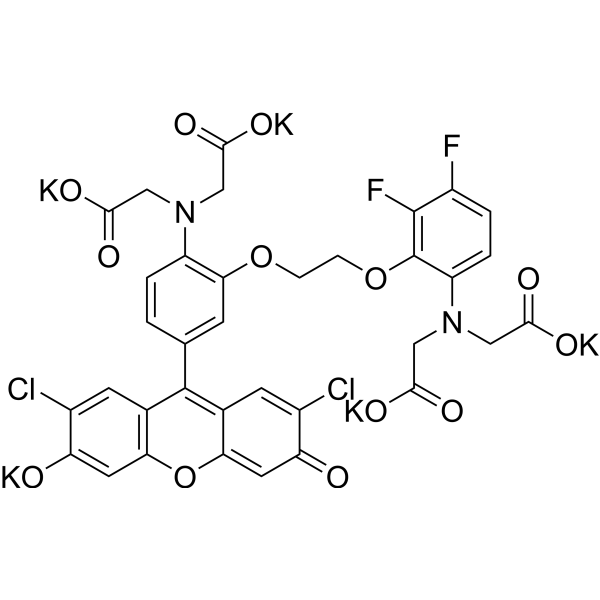
    Fluo-3FF pentapotassium is a cell-impermeant fluorescent calcium indicator. Fluo-3FF is a di-fluorinated analog of Fluo-3 with a 100-fold lower affinity than Fluo-3 for calcium (Kds=42 and 0.4 μM, respectively). For its low affinity, Fluo-3FF is used for studying compartments with high concentrations of calcium, such as endoplasmic reticulum, where high affinity dyes will be insensitive to luminal fluctuations.
    Fluo-3FF pentapotassium
  • HY-D2968

    Fluorescent Dye Neurological Disease
    DCM-ONOO is a near-infrared two-photon fluorescence probe specifically designed for real-time monitoring of the dynamic fluctuations of peroxynitrite (ONOO⁻) in epilepsy models. DCM-ONOO exhibits excellent optical properties, with a single photon excitation (Ex) of 520 nm; a single photon emission (Em) of 685 nm; a two-photon excitation of 820 nm; and a Stokes shift of 165 nm. When DCM-ONOO is combined with ONOO⁻, it shifts from 460 nm to 512 nm, and only generates a significant fluorescence response to ONOO⁻. DCM-ONOO has been successfully applied to rat epilepsy models .
    DCM–ONOO
  • HY-N7697BR

    Reference Standards Others Others
    Gibberellic acid (Standard) is the analytical standard of Gibberellic acid. This product is intended for research and analytical applications. Gibberellic Acid is named after the fungus Gibberella fujikuroi. Gibberellic Acid regulates processes in plant development and growth, including seed development and germination, stem and root growth, cell division, and flowering time. Gibberellic Acid also improves plant response to growth stress caused by various environmental stresses, such as cold stress, drought stress, heavy metal stress, etc. Gibberellic Acid also causes increased lipid peroxidation and fluctuations in the antioxidant defense system in rats .
    Chitobiose dihydrochloride (Standard)
  • HY-18940

    Cilo

    Endogenous Metabolite Cardiovascular Disease
    Cilobradine (Cilo) is a HCN channel blocker with heart rate reducing activity. Cilobradine blocks the slow inward current of human HCN1, HCN2, HCN3, and HCN4 channels. Cilobradine has a slightly higher efficiency in blocking endogenous If in mouse sinoatrial node cells (IC50 value is 0.62μM). Cilobradine can dose-dependently reduce the heart rate from 600 to 200 bpm with an ED50 value of 1.2 mg/kg. Cilobradine induces arrhythmias at doses greater than 5 mg/kg, which are characterized by periodic fluctuations between T waves and P waves .
    Cilobradine
  • HY-185056

    Ferroptosis Fluorescent Dye Cardiovascular Disease Neurological Disease
    Ferfluor-1 is a Ferroptosis inhibitor (EC50 of 57 nM in HT108 cells; EC50 of 75 nM in OS-RC-2 cells; EC50 of 2.3 nM in SH-SY5Y neuroblastoma cells), and ratiometric photoluminescent probe with blood-brain barrier permeability. Ferfluor-1 is a specific indicator for the fluctuation of Ferroptosis. Ferfluor-1 alleviates brain disorder diseases of in vivo stroke and PD models .
    Ferfluor-1
  • HY-182300

    Dipeptidyl Peptidase GLP Receptor Metabolic Disease
    FE 999011 is an orally active dipeptidyl peptidase IV (DPP-IV) inhibitor with IC50 values of 7 nM and 3 nM against human and rat sources, respectively. FE 999011 acts as a glucose tolerance-improving agent and a GLP-1 receptor activator, which reduces blood glucose fluctuation, promotes GLP-1 release and decreases the insulin-glucose ratio. FE 999011 regulates lipid metabolism, delays the onset of diabetes, stabilizes food and water intake, reduces hypertriglyceridemia, prevents the elevation of free fatty acids, and delays the progression of impaired glucose tolerance to disease. FE 999011 can be used in relevant studies of type 2 diabetes .
    FE 999011
  • HY-P992108

    RELAX10

    RXFP Receptor Akt NO Synthase VEGFR Cardiovascular Disease
    Efadirelaxin alfa (RELAX10) is a highly selective agonist of relaxin/insulin-like family peptide receptor RXFP1. After subcutaneous administration in animal experiments, Efadirelaxin alfa exhibits a significantly prolonged terminal half-life (7 days in mice, 3.75 days in rats), and shows no activity against related receptors such as RXFP2 and RXFP3. Efadirelaxin alfa has significant anti-cardiac hypertrophy and anti-fibrotic effects. Efadirelaxin alfa effectively attenuates and reverses cardiac hypertrophy and collagen deposition by regulating the TGF-β1/Smad2 and AKT/eNOS signaling pathways. Efadirelaxin alfa improves cardiac systolic function without causing fluctuations in blood pressure or heart rate, demonstrating favorable safety. Efadirelaxin alfa is currently mainly used in studies related to heart failure .
    Efadirelaxin alfa

Inquiry Online

Your information is safe with us. * Required Fields.

Salutation


Country or Region *

Applicant Name *


Organization Name *

Department *


Email Address *


Product Name *

Cat. No.


Requested quantity *

Phone Number *


Remarks

Inquiry Online

Inquiry Information

Product Name:
Cat. No.:
Quantity:
MCE Japan Authorized Agent:

