


21 Results for "

free cysteine

" in MedChemExpress (MCE) Product Catalog:
Products (21)

21 Results for "free cysteine" in MCE Product Catalog:

47
47 Publications Verification
Cat. No.: HY-D0843
CAS No.: 128-53-0
Synonyms: NEM
N-Ethylmaleimide (NEM) derives from maleic acid, it can alkylates free sulfhydryl. N-Ethylmaleimide is an irreversible cysteine protease inhibitor. N-ethylmaleimide specific inhibits phosphate transport in mitochondria. N-Ethylmaleimide inhibits prolyl endopeptidase with an IC50 value of 6.3 μM. N-Ethylmaleimide can be used to modify cysteine residues in proteins and peptides .
loading...
    loading...
28
28 Cited Publications
Cat. No.: HY-135056
CAS No.: 201860-17-5
Purity:  95.36%
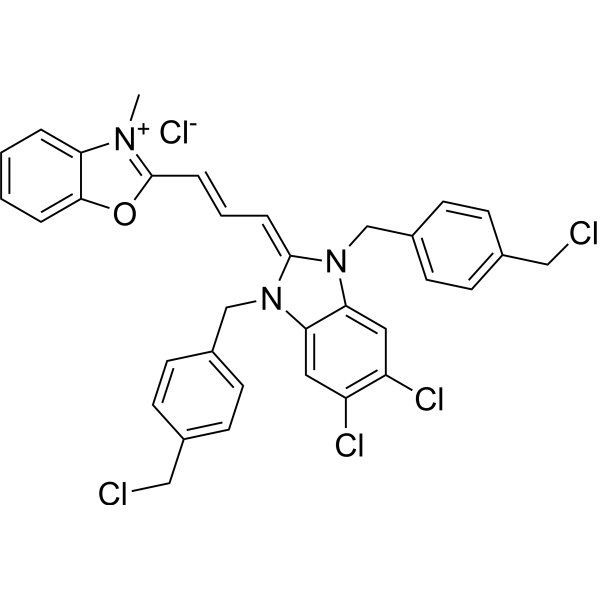
Mito-Tracker Green is a green fluorescent dye that selectively accumulates in the mitochondrial matrix. MitoTracker Green FM covalently binds mitochondrial proteins by reacting with free mercaptan of cysteine residues, allowing staining of mitochondrial membrane potential independent of membrane potential. Excitation/emission wavelength 490/523 nm.
loading...
    loading...
19
19 Cited Publications
Cat. No.: HY-D1783
CAS No.: 873315-86-7
Synonyms: MTDR FM
Target:  

Fluorescent Dye

Research Areas:  

Cancer

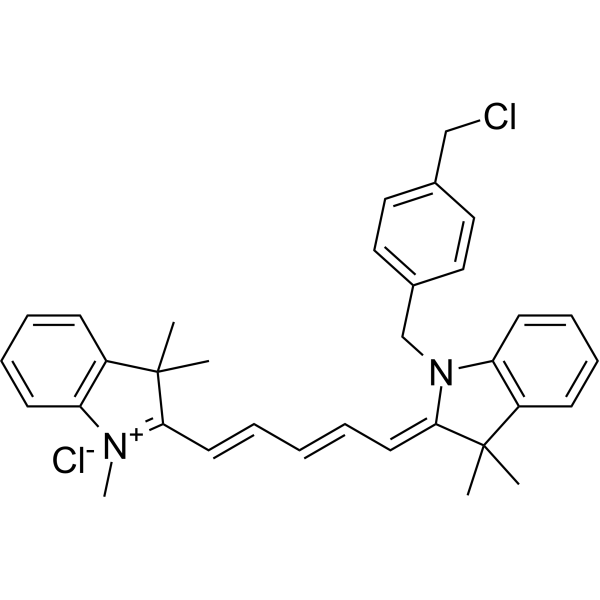
MitoTracker Deep Red (MTDR) FM fluorescent dye that selectively accumulates in the mitochondrial matrix. MitoTracker Deep Red FM covalently binds mitochondrial proteins by reacting with free mercaptan of cysteine residues, allowing staining of mitochondrial membrane potential independent of membrane potential. Excitation/emission wavelength 644/665 nm . MitoTracker Deep Red dyes have an excitation/emission wavelength of 633/650-750 nm .
The Ex/Em of MitoTracker Deep Red (MTDR) FM is 644/665 nm.
loading...
    loading...
2
2 Cited Publications
Cat. No.: HY-159057
CAS No.: 188682-72-6
Purity:  99.92%
Research Areas:  

Others

Biotin-BMCC is a Maliemide (HY-W007324) conjugated biotin molecule that has a high affinity for free thiol groups of cysteines .
loading...
    loading...
1
1 Cited Publications
Cat. No.: HY-D0807
CAS No.: 63368-54-7
Synonyms: 5-Iodoacetamidofluorescein
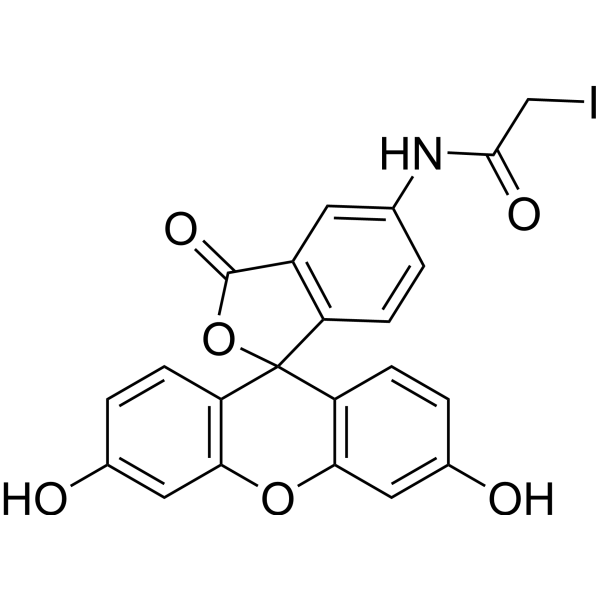
5-IAF (5-Iodoacetamidofluorescein) is an idoacetamide derivate of fluoresceine. 5-IAF can be used as fluorescent probe that labels proteins and other molecules having free thiols (cysteine side chains) .
loading...
    loading...
Cat. No.: HY-W020780
CAS No.: 724722-89-8
Synonyms: mPEG5000-Maleimide
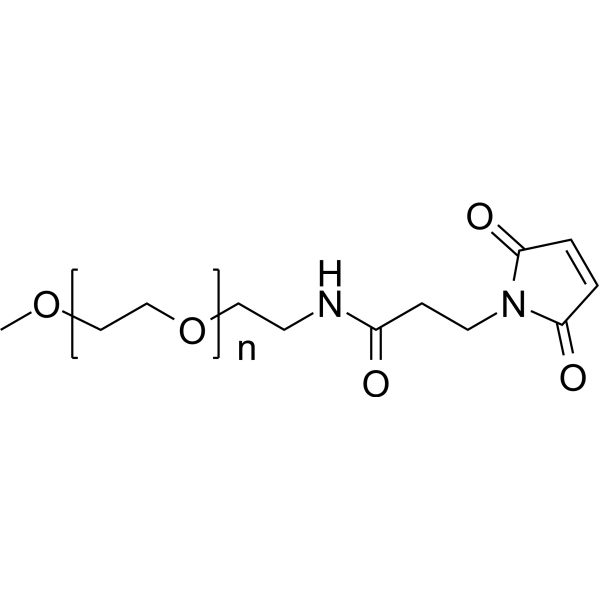
mPEG5000-Mal (mPEG5000-Maleimide) is a PEG-derived selective covalent binding agent for sulfhydryl groups (RSGs), which can form irreversible thioether bonds with sulfhydryl groups under near-neutral conditions via the maleimide group. The mechanism of action of mPEG5000-Mal can be divided into two categories: firstly, as an enzyme modifier, it binds to target proteins through hydrophobic interactions, hydrogen bonds, and van der Waals forces, altering the protein's secondary structure; secondly, as a nanoparticle surface modifier, it covalently binds to sulfhydryl groups on the surface of red blood cells, changing the surface properties and morphology of the red blood cells, leading to their phagocytosis by macrophages of the reticuloendothelial system. mPEG5000-Mal can react with free cysteine in proteins, increasing the apparent molecular weight of the modified protein by 10-15 kDa for detection purposes. mPEG5000-Mal can enhance the thermal stability and catalytic activity of enzymes, and improve the macrophage targeting of nanoparticles, enabling targeted drug delivery. mPEG5000-Mal can be applied in enzyme engineering research in the food industry and in oncology, assisting radiotherapy by inhibiting tumor-associated macrophage infiltration and enhancing anti-tumor immune responses .
loading...
    loading...
Cat. No.: HY-171135
Research Areas:  

Cancer

Cetuximab MMAE is an antibody-drug conjugate (ADC) targeting EGFR, formed by the random conjugation of the Cetuximab (HY-P9905) antibody and VcMMAE (HY-15575) via reduced interchain cysteines. Cetuximab MMAE binds to EGFR, blocks ligand interactions, inhibits downstream signal transduction, mediates receptor internalization, and delivers MMAE to induce G2/M phase cell cycle arrest, inhibit microtubule polymerization, interfere with mitosis, and exert radiosensitizing effects. Cetuximab MMAE limits the toxicity of free MMAE to EGFR-expressing cells and circumvents EGFR resistance mechanisms. Cetuximab MMAE is applicable to research related to EGFR + tumors .
loading...
    loading...
Cat. No.: HY-D0843S
CAS No.: 360768-37-2
Synonyms: NEM-d5
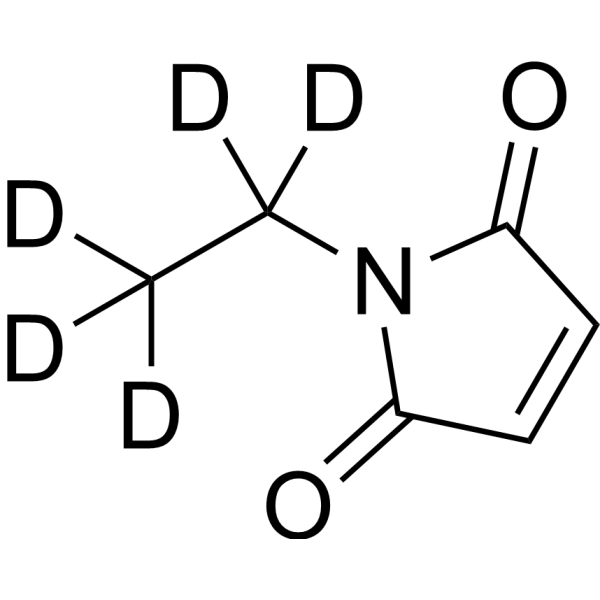
N-Ethylmaleimide-d5 is the deuterium labeled N-Ethylmaleimide. N-Ethylmaleimide (NEM), a reagent that alkylates free sulfhydryl groups, is a cysteine protease inhibitor . N-ethylmaleimide specific inhibits phosphate transport in mitochondria . N-Ethylmaleimide is also a deubiquitinating enzyme inhibitor .
loading...
    loading...
Cat. No.: HY-DY1032
CAS No.: 201860-17-5
Mito-Tracker Green (solution) is a green fluorescent dye that selectively accumulates in the mitochondrial matrix. MitoTracker Green FM covalently binds mitochondrial proteins by reacting with free mercaptan of cysteine residues, allowing staining of mitochondrial membrane potential independent of membrane potential. Excitation/emission wavelength 490/523 nm.
Solvent and concentration: DMSO: 1 mM
loading...
    loading...
Cat. No.: HY-E70364
CAS No.: 1892548-76-3
Research Areas:  

Inflammation/Immunology

IgdE protease is a cysteine protease, which is initially isolated from Streptococcus agalactiae. IgdE protease digests monoclonal antibodies (mAbs) of the IgG1 type specifically at their upper hinge region, produces Fc/2, hinge peptide dimers, and Fab fragment. IgdE protease can be used in disulfide bonds and free thiol analysis, as it requires no reducing agents for cleavage .
loading...
    loading...
Cat. No.: HY-120128
CAS No.: 16599-33-0
Purity:  97.90%
Research Areas:  

Neurological Disease

MTSEA hydrobromide is a sulfhydryl-reactive compound that modifies free cysteine residues to produce a positively charged side chain approximately the size of lysine .
loading...
    loading...
Cat. No.: HY-W738256
CAS No.: 180152-82-3
Synonyms: MDTPA
Research Areas:  

Cancer

Maleimide-DTPA (MDTPA) is a maleimide-functionalized bifunctional chelator that enables site-specific conjugation via a thioether bond to single-domain antibody fragments (sdAb) containing free cysteine, and mediates 111In radiolabeling. DTPA-2Rs15d-HLC, formed by the conjugation of Maleimide-DTPA with anti-HER2 sdAb 2Rs15d-HLC, retains high affinity for HER2 with a Kd of 5.9 nM, and maintains targeting ability to HER2-positive cells and tumors after 111In labeling. Maleimide-DTPA can be used for radiotracer construction, SPECT molecular imaging, and HER2-positive tumor research .
loading...
    loading...
Cat. No.: HY-D2902
CAS No.: 2080332-70-1
SNOTRAP (SNO trapping by triaryl phosphine) is a chemical probe used for detecting S-nitrosylated (SNO) proteins. SNOTRAP selectively converts S-nitrosylated cysteines in proteins into stable disulfide-iminophosphorane intermediates, which are then enriched with streptavidin and detected by nanoLC-MS/MS. SNOTRAP enables global enrichment and label-free quantification of SNO proteins and their modification sites in complex biological samples such as mouse brain tissues. SNOTRAP can be applied to studies related to nitrosative stress-associated diseases, including neurodegenerative diseases, cancer, and multiple sclerosis .
loading...
    loading...
Cat. No.: HY-D0078
CAS No.: 76877-34-4
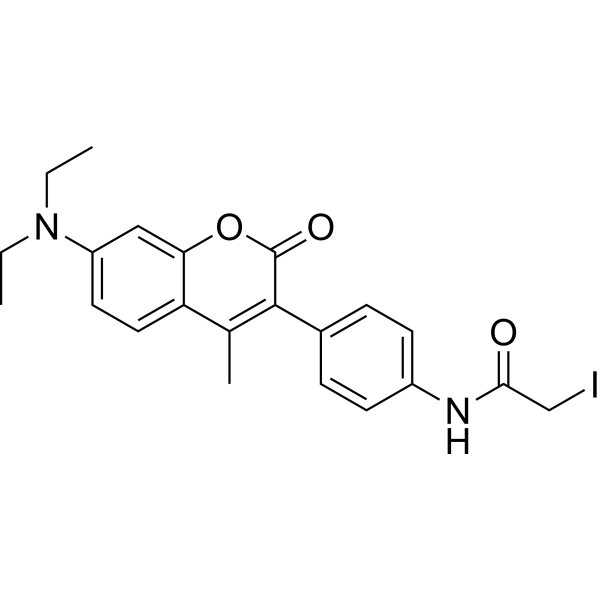
DCIA is a fluorescent dye. DCIA contains a coumarin fluorophore and conjugates specifically with free cysteines in the protein .
loading...
    loading...
Cat. No.: HY-17525
CAS No.: 163269-30-5
Bethoxazin is a yeast DNA topoisomerase II inhibitor with an IC50 of 5.3 μM, and also a broad-spectrum industrial microbicide and covalent adduct-forming agent. Bethoxazin inhibits the catalytic activity of yeast DNA topoisomerase II by reacting with the key free cysteine thiol group on the enzyme. Bethoxazin forms covalent adducts with molecules containing free thiol groups. Bethoxazin inhibits the growth of yeast cells. Bethoxazin can be used in studies related to the growth of fungi, molds and algae .
loading...
    loading...
Cat. No.: HY-152919
CAS No.: 2387738-43-2
Target:  

ADC Linkers

Research Areas:  

Cancer

Mal-amide-PEG8-Val-Cit-PAB-OH is a cleavable ADC linker featuring a maleimide, a hydrophilic PEG spacer, a Val-Cit dipeptide, and a PAB functional group. Maleimide is used to covalently bind free thiols on the cysteine residues of proteins. The Val-Cit dipeptide is cleaved by cellular proteases within the cell to allow for efficient payload delivery with the help of the PAB structure.
loading...
    loading...
Cat. No.: HY-P10540
CAS No.: 2383115-01-1
Target:  

Bacterial

Research Areas:  

Infection

Pantinin-2 is a cysteine-free toxic peptide found in the emperor scorpion (paninus imperator). Pantinin-2 has high activity against Gram-positive bacteria but weak activity against Gram-negative bacteria. Pantinin-2 also exhibits activity against Candida tropicalis and has relatively mild hemolytic activity against human erythrocytes. Pantinin-2 can be used in the development of antimicrobial drugs for drug-resistant pathogens .
loading...
    loading...
Cat. No.: HY-180497
CAS No.: 83016-63-1
Research Areas:  

Others

DBNBS is a radical scavenger. DBNBS undergoes non-radical nucleophilic addition to bind directly to cysteine (e.g., Cys-34 of BSA) to form a hydroxylamine, which is subsequently oxidized to produce an artifact spin adduct signal. DBNBS can be used for detecting biological free radicals .
loading...
    loading...
Cat. No.: HY-DY1105
CAS No.: 873315-86-7
Synonyms: MTDR FM (solution)
Target:  

Fluorescent Dye

Research Areas:  

Others

MitoTracker Deep Red FM (solution) (MTDR FM (solution)) selectively accumulates in the mitochondrial matrix. MitoTracker Deep Red FM covalently binds mitochondrial proteins by reacting with free mercaptan of cysteine residues, allowing staining of mitochondrial membrane potential independent of membrane potential. The Ex/Em of MitoTracker Deep Red (MTDR) FM is 644/665 nm.
Solvent and concentration: DMSO: 1 mM
loading...
    loading...
Cat. No.: HY-D3436
Target:  

Fluorescent Dye

Research Areas:  

Cancer

Pt-Luc is a bioluminescent probe used for real-time, non-invasive monitoring of Pt (IV) prodrug reduction in living cells and animal models. The detection mechanism of Pt-Luc relies on the intracellular reduction mediated by active cysteine residues in proteins. Pt-Luc can penetrate the membrane of living cells; after entering cells, active cysteine thiolates in high-molecular-weight protein components reduce the Pt (IV) complex, thereby cleaving the caged aminoluciferin substrate. The released free aminoluciferin is then oxidized by luciferase in the presence of ATP to generate a bioluminescent signal, whose intensity is directly correlated with the reduction degree of Pt (IV) .
loading...
    loading...

