1. Search Result
Search Result
Results for "

functional selectivity

" in MedChemExpress (MCE) Product Catalog:

137

Inhibitors & Agonists

5

Screening Libraries

2

Fluorescent Dye

5

Biochemical Assay Reagents

3

Peptides

1

Natural
Products

2

Isotope-Labeled Compounds

7

Click Chemistry

Cat. No. Product Name Target Research Areas Chemical Structure
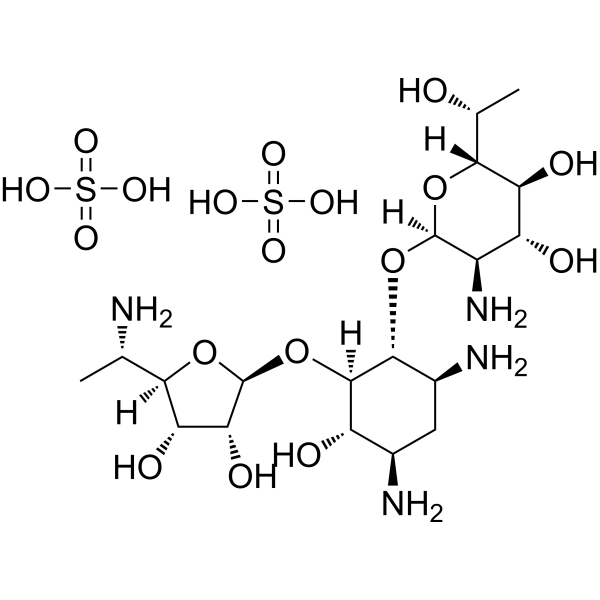
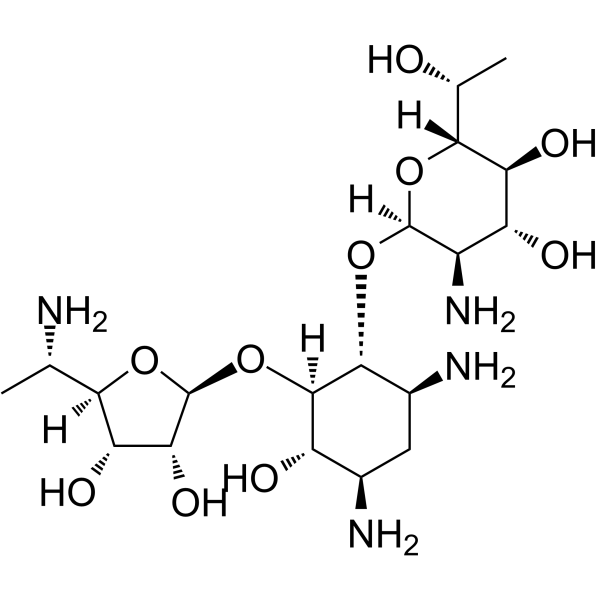
  • HY-114231B
    Exaluren disulfate
    2 Publications Verification

    ELX-02 disulfate; NB-124 disulfate

    DNA/RNA Synthesis Inflammation/Immunology
    Exaluren (ELX-02; NB-124) disulfate is an synthetic eukaryotic ribosome-selective glycoside that induces read-through of nonsense mutations, resulting in normally localized full-length functional proteins. Exaluren disulfate is used for the research of cystic fibrosis caused by nonsense mutations .
    Exaluren disulfate
  • HY-16996A
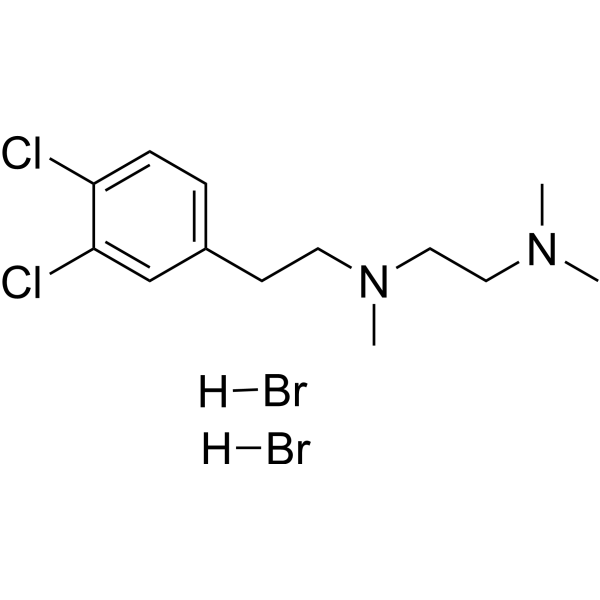
    BD-1047 dihydrobromide
    10+ Cited Publications

    Sigma Receptor Neurological Disease
    BD-1047 dihydrobromide is a selective functional antagonist of sigma receptors. BD-1047 dihydrobromide attenuates Apomorphine (HY-12723)-induced climbing and Phencyclidine-induced head twitches .
    BD-1047 dihydrobromide
  • HY-114996
    ADAMTS-5 Inhibitor
    4 Publications Verification

    ADAMTS Inflammation/Immunology
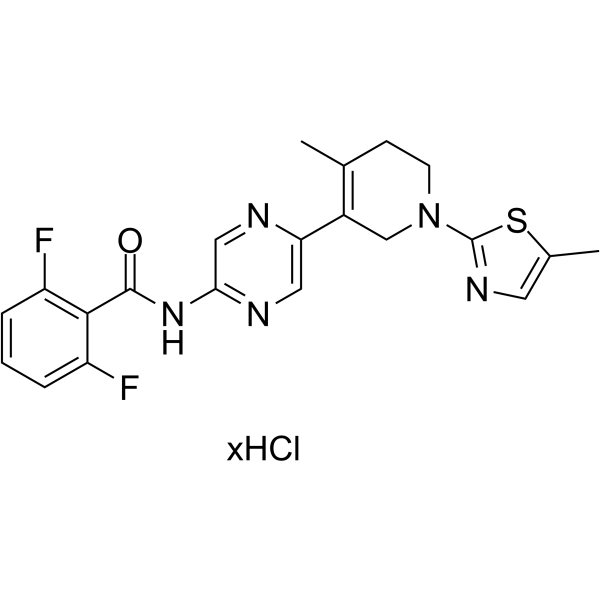
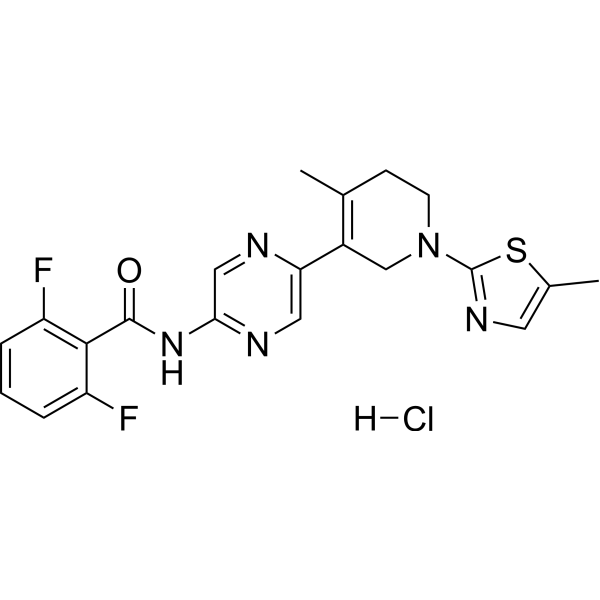
    ADAMTS-5 Inhibitor is a potent ADAMTS-5 (aggrecanase-2) inhibitor, with an IC50 of 1.1 µM. ADAMTS-5 Inhibitor shows >40-fold functional selectivity over ADAMTS-4 (aggrecanase-1) .
    ADAMTS-5 Inhibitor
  • HY-123857
    JNJ-55308942
    2 Publications Verification

    P2X Receptor Neurological Disease Inflammation/Immunology
    JNJ-55308942 is a high-affinity, selective, brain-penetrant P2X7 functional antagonist (hP2X7: IC50=10 nM, Ki=7.1 nM; rP2X7: IC50=15 nM, Ki=2.9 nM). JNJ-55308942 is orally bioavailable, binds to brain P2X7 and blocks IL-1β release from adult rodent brain .
    JNJ-55308942
  • HY-19618
    BRD3308
    1 Publications Verification

    HDAC HIV Apoptosis Infection Metabolic Disease
    BRD3308 is a highly selective HDAC3 inhibitor with an IC50 of 54 nM. BRD3308 is 23-fold selectivity for HDAC3 over HDAC1 (IC50 of 1.26 μM) or HDAC2 (IC50 of 1.34 μM). BRD3308 suppresses pancreatic β-cell apoptosis induced by inflammatory cytokines or glucolipotoxic stress, and increases functional insulin release. BRD3308 activates HIV-1 transcription and disrupts HIV-1 latency .
    BRD3308
  • HY-Y0971

    TBAF

    Biochemical Assay Reagents Others
    Tetrabutylammonium fluoride is an organic compound containing both ammonium and fluorine functional groups. It is commonly used as a reagent in various chemical synthesis applications, especially as a source of fluoride ions for nucleophilic reactions. Tetrabutylammonium fluoride has several properties that make it suitable for these applications, including its high solubility in polar solvents and its ability to selectively activate certain chemical bonds. In addition, it can be used as a catalyst for organic reactions and as an electrolyte for batteries.
    Tetrabutylammonium fluoride (solution),1M in THF
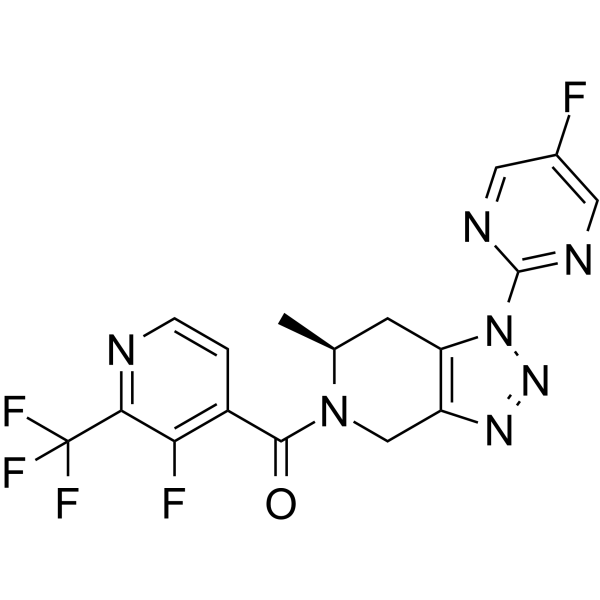
  • HY-148258

    NOD-like Receptor (NLR) Interleukin Related Caspase Neurological Disease Inflammation/Immunology
    GDC-2394 is an orally active and selective NLRP3 inhibitor, and also inhibits IL-1β with IC50s of 0.4 μM (human IL-1β) and 0.1 μM (mouse IL-1β). GDC-2394 inhibits NLRP3-induced caspase-1 activity without inhibiting NLRC4-dependent inflammasome activation. GDC-2394 could be used to study gouty arthritis.
    GDC-2394
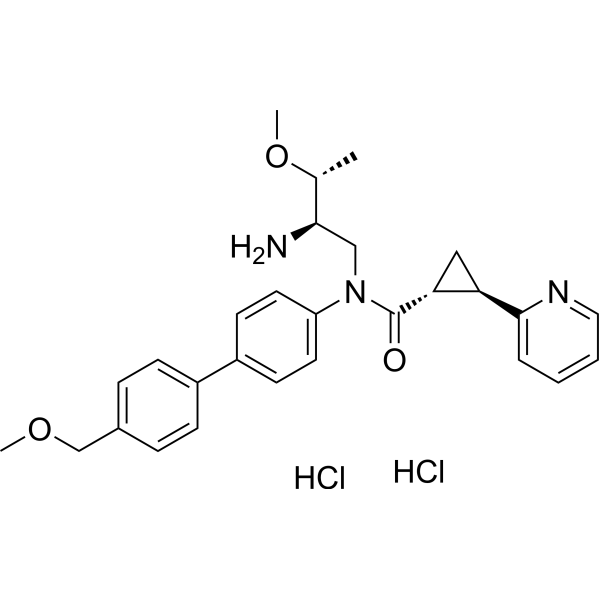
  • HY-112612A
    RTI-13951-33 hydrochloride
    2 Publications Verification

    GPR88 Neurological Disease
    RTI-13951-33 hydrochloride is a potent, selective, and brain-penetrant GPR88 agonist, with an EC50 of 25 nM in GPR88 cAMP functional assay. RTI-13951-33 hydrochloride reduces alcohol reinforcement and intake behaviors in rats .
    RTI-13951-33 hydrochloride
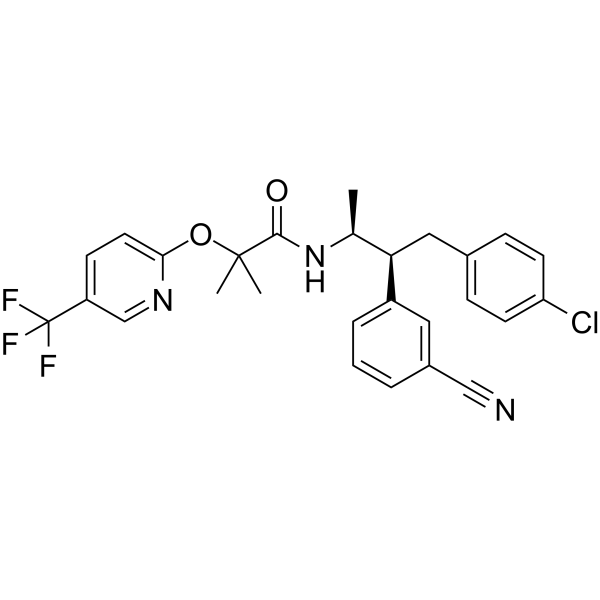
  • HY-10013
    Taranabant
    2 Publications Verification

    MK-0364

    Cannabinoid Receptor Metabolic Disease
    Taranabant is a highly potent and selective cannabinoid 1 (CB1) receptor inverse agonist that inhibits the binding and functional activity of various agonists, with a binding Ki of 0.13 nM for the human CB1R in vitro.
    Taranabant
  • HY-173455

    DNA/RNA Synthesis Inflammation/Immunology Cancer
    NP1867 is a potent, selective, covalent PMS2 inhibitor. NP1867 functionally inhibits DNA mismatch repair. NP1867 enhances immune surveillance. NP1867 can be used in the research of colorectal cancer .
    NP1867
  • HY-114231
    Exaluren
    2 Publications Verification

    ELX-02; NB-124

    Drug Derivative Inflammation/Immunology
    Exaluren (ELX-02; NB-124) is an synthetic eukaryotic ribosome-selective glycoside that induces read-through of nonsense mutations, resulting in normally localized full-length functional proteins. Exaluren is used for the research of cystic fibrosis caused by nonsense mutations .
    Exaluren
  • HY-121467

    Z-338 free base; YM443 free base

    Cholinesterase (ChE) Metabolic Disease Inflammation/Immunology
    Acotiamide is an orally active, selective and reversible acetylcholinesterase (AChE) inhibitor, with an IC50 of 1.79 μM. Acotiamide can enhance gastric contractility and accelerate delayed gastric emptying. Acotiamide has the potential for the research of functional dyspepsia involving gastric motility dysfunction and intestinal inflammatory .
    Acotiamide
  • HY-18664
    PFI-4
    3 Publications Verification

    Epigenetic Reader Domain Cancer
    PFI-4 (compound 11), a chemical probe, is a potent and highly selective BRPF1 Bromodomain (BRPF1B) inhibitor, with an IC50 of 172 nM. PFI-4 can be used to explore the functional mechanisms of the HBO1/BRPF1 complex and to study bone loss and osteolytic malignant bone lesions .
    PFI-4
  • HY-173268

    TAM Receptor Cardiovascular Disease Cancer
    UNC9426 is a potent and selective TYRO3 inhibitor (IC50 = 2.1 nM), demonstrating 276-fold and 90-fold selectivity over MERTK and AXL, respectively. UNC9426 reduces platelet aggregation without increasing bleeding time and blocks TYRO3-dependent functions in tumor cells and macrophages. UNC9426 demonstrates a favorable safety profile with no significant increase in bleeding risk in vivo. UNC9426 can be used for functional studies of TYRO3-dependent phenotypes such as non-small cell lung cancer (NSCLC) .
    UNC9426
  • HY-112626
    CDK12-IN-2
    1 Publications Verification

    CDK Cancer
    CDK12-IN-2 is a potent, selective and nanomolar CDK12 inhibitor (IC50=52 nM) with good physicochemical properties. CDK12-IN-2 is also a strong CDK13 inhibitor due to CDK13 is the closest homologue of CDK12. CDK12-IN-2 shows excellent kinase selectivity for CDK12 over CDK2, 9, 8, and 7. CDK12-IN-2 inhibits the phosphorylation of Ser2 in the C-terminal domain of RNA polymerase II. CDK12-IN-2 can be used an excellent chemical probe for functional studies of CDK12 .
    CDK12-IN-2
  • HY-W017604
    3-Aminophenylboronic acid
    1 Publications Verification

    m-Aminophenylboronic acid

    Biochemical Assay Reagents Others
    3-Aminophenylboronic acid (m-Aminophenylboronic acid) functionalized copper nanoclusters can rapidly, selectively and sensitively detect glycoproteins .
    3-Aminophenylboronic acid
  • HY-147403S

    JNJ-61393215

    Orexin Receptor (OX Receptor) Isotope-Labeled Compounds Neurological Disease
    Tebideutorexant is an OX1R-selective inhibitor with oral bioavailability and blood-brain barrier permeability, with human OX1R pKi 8.17 and rat OX1R pKi 8.13.Tebideutorexant selectively modulates OX1R, with no significant functional effect on OX2R. Tebideutorexant can be used for the research of panic and anxiety disorders .
    Tebideutorexant
  • HY-111385
    UNC9994 hydrochloride
    2 Publications Verification

    Dopamine Receptor 5-HT Receptor Arrestin Neurological Disease
    UNC9994 hydrochloride is a functionally selective, β-arrestin–biased dopamine D2 receptor (D2R) agonist that selectively activates β-arrestin recruitment and signaling. UNC9994 hydrochloride shows a binding affinity with a Ki of 79 nM for D2R. UNC9994 hydrochloride is also an antagonist of Gi-regulated cAMP production and partial agonist for D2R/β-arrestin-2 interactions. UNC9994 hydrochloride shows antipsychotic-like activity .
    UNC9994 hydrochloride
  • HY-115487

    Prostaglandin Receptor Inflammation/Immunology Cancer
    MF-766 is a highly potent, selective and orally active EP4 antagonist with a Ki of 0.23 nM. MF-766 behaves as a full antagonist with an IC50 of 1.4 nM (shifted to 1.8 nM in the presence of 10% HS) in the functional assay. MF-766 can be used for cancer and inflammation diseases research .
    MF-766
  • HY-126220

    Fluorescent Dye Others
    KMG-301AM is the acetoxy methyl esterified form of KMG-301. KMG-301AM successfully accumulates in mitochondria and then it is hydrolyzed to KMG-301. KMG-301 is an Mg 2+-selective fluorescent probe functional in mitochondria in intact cells. Since the mitochondrial membrane is impermeable to KMG-301, it is not released upon depolarization of the mitochondrial membrane potential. KMG-301 can indicate changes in mitochondrial Mg2+ concentration and shows Mg 2+ transport across the mitochondrial membrane in the early phases of a cellular model .
    KMG-301AM
  • HY-101189

    Histamine Receptor Neurological Disease Endocrinology
    JNJ-39758979, a chemical probe, is a selective, orally active, and high-affinity histamine H4 receptor antagonist with Kis of 12.5, 5.3, and 25 nM for human, mouse, and monkey histamine H4 receptor, respectively. JNJ-39758979 functionally antagonizes histamine-induced cAMP inhibition with a pA2 of 7.9 in transfected cells. JNJ-39758979 shows good anti-inflammatory and antipruritic activity .
    JNJ-39758979
  • HY-103475

    GABA Receptor Neurological Disease
    GS39783 is a positive allosteric modulator (PAM) of GABABR. Positive modulation of the GABABR can be used for the research of Nicotine addiction .
    GS39783
  • HY-101336

    RS-17053

    Adrenergic Receptor Metabolic Disease Endocrinology
    RS 17053 hydrochloride is a potent and selective α1A adrenoceptor antagonist, with a pKi value of 9.1 in native cell membrane and a pA2 value of 9.8 in functional assays.
    RS 17053 hydrochloride
  • HY-13499

    CCR2 antagonist 5

    CCR Inflammation/Immunology
    JNJ-41443532 (CCR2 antagonist 5) is a selective, orally active hCCR2 inhibitor with good binding affinity (IC50=37 nM) and potent functional antagonism (chemotaxis IC50=30 nM). JNJ-41443532 displays a Ki of 9.6 µM for mCCR2 binding. JNJ-41443532 can be used in the research of inflammatory disease .
    JNJ-41443532
  • HY-117829
    UNC9994
    2 Publications Verification

    Dopamine Receptor 5-HT Receptor Histamine Receptor Arrestin Neurological Disease
    UNC9994, an analog of Aripiprazole, is a functionally selective β-arrestin-biased dopamine D2 receptor (D2R) agonist with EC50 <10 nM for β-arrestin-2 recruitment to D2 receptors. UNC9994 is simultaneously partial agonists of β-arrestin-2 translocation and antagonists of Gi-regulated cAMP production. Antipsychotic Activity .
    UNC9994
  • HY-126220A

    Fluorescent Dye Others
    KMG-301AM TFA is the acetoxy methyl esterified form of KMG-301. KMG-301AM TFA successfully accumulates in mitochondria and then it is hydrolyzed to KMG-301. KMG-301 is an Mg 2+-selective fluorescent probe functional in mitochondria in intact cells. Since the mitochondrial membrane is impermeable to KMG-301, it is not released upon depolarization of the mitochondrial membrane potential. KMG-301 can indicate changes in mitochondrial Mg2+ concentration and shows Mg 2+ transport across the mitochondrial membrane in the early phases of a cellular model .
    KMG-301AM TFA
  • HY-125475

    GMI-1070

    E-Selectin Cardiovascular Disease
    Rivipansel is a small-molecule glycomimetic pan-selectin antagonist with inhibitory activity against E-selectin and P-selectin. Rivipansel binds tightly to the lectin domain of E-selectin, and selectively blocks the recognition of CD62L by E-selectin without affecting the binding of PSGL-1 to E-selectin. Rivipansel functionally inhibits the adhesion of hematopoietic cells to endothelial cells, and is applicable to research related to sickle cell disease .
    Rivipansel
  • HY-113618B
    RO2959 monohydrochloride
    5 Publications Verification

    CRAC Channel Interleukin Related Cardiovascular Disease
    RO2959 monohydrochloride is a potent and selective CRAC channel inhibitor with an IC50 of 402 nM. RO2959 monohydrochloride is a potent blocker of store operated calcium entry (SOCE) mediated by Orai1/Stim1 channels with an IC50 of 25 nM. RO2959 monohydrochloride is also a potent inhibitor of human IL-2 production, and potently blocks T cell receptor triggered gene expression and T cell functional pathways .
    RO2959 monohydrochloride
  • HY-110132

    CCR Inflammation/Immunology
    JNJ-27141491 is a selective, noncompetitive and orally active functional antagonist of human CCR2 .
    JNJ-27141491
  • HY-103416
    A-77636 hydrochloride
    1 Publications Verification

    Dopamine Receptor Neurological Disease
    A-77636 hydrochloride is a potent, orally active, selective and long acting dopamine D1 receptor agonist (pKi=7.40; Ki=39.8 nM) with antiparkinsonian activity. A-77636 hydrochloride is functionally inactive at dopamine D2 receptor .
    A-77636 hydrochloride
  • HY-B2155

    Cholinesterase (ChE) Metabolic Disease Inflammation/Immunology
    Acotiamide monohydrochloride trihydrate is an orally active, selective and reversible acetylcholinesterase (AChE) inhibitor, with IC50 of 1.79 μM. Acotiamide monohydrochloride trihydrate can enhance gastric contractility and accelerate delayed gastric emptying. Acotiamide monohydrochloride trihydrate has the potential for the research of functional dyspepsia involving gastric motility dysfunction and intestinal inflammatory .
    Acotiamide monohydrochloride trihydrate
  • HY-114411

    Estrogen Receptor/ERR Cancer
    ERRγ inverse agonist 1 (Compound 12) is a selective ERRγ inverse agonist with an IC50 value of 0.040 μM against ERRγ. ERRγ inverse agonist 1 inhibits the activity of ERRγ at the functional level. ERRγ inverse agonist 1 can be used in the research of anaplastic thyroid cancer .
    ERRγ inverse agonist 1
  • HY-14900
    Tedalinab
    1 Publications Verification

    GRC-10693

    Cannabinoid Receptor Inflammation/Immunology
    Tedalinab (GRC-10693) is a potent, orally active, and selective cannabinoid receptor 2 (CB2) agonist. Tedalinab has >4700-fold functional selectivity for CB2 over CB1. Tedalinab has potential for neuropathic pain and osteoarthritis treatment .
    Tedalinab
  • HY-126346

    GPR84 Inflammation/Immunology
    DL-175 (compound 13) is a selective GPR84 agonist with biased agonistic activity. DL-175 can selectively activate functional responses in immune cells and induce enhanced chemotaxis and phagocytosis of human bone marrow cells. DL-175 is a potential chemical probe .
    DL-175
  • HY-18760

    mGluR Neurological Disease
    LY2812223 is a highly potent, functionally selective mGlu2 receptor agonist with mGlu2 binding affinity for mGlu2 and mGlu3 (Ki=144 nM and 156 nM, respectively) .
    LY2812223
  • HY-151682

    Amino Acid Derivatives Others
    H-L-Lys(Norbornene-methoxycarbonyl)-OH is a Norbornene (HY-W013021)-derivatized lysine that can be click-functionalized. H-L-Lys(Norbornene-methoxycarbonyl)-OH can be used for the mild and selective modification of proteins in a copper-free click reaction .
    H-L-Lys(Norbornene-methoxycarbonyl)-OH
  • HY-121467A

    Z-338; YM443

    Cholinesterase (ChE) Others Metabolic Disease Inflammation/Immunology
    Acotiamide hydrochloride is an orally active, selective and reversible acetylcholinesterase (AChE) inhibitor, with an IC50 of 1.79 μM. Acotiamide hydrochloride can enhance gastric contractility and accelerate delayed gastric emptying. Acotiamide hydrochloride has the potential for the research of functional dyspepsia involving gastric motility dysfunction and intestinal inflammatory .
    Acotiamide hydrochloride
  • HY-W009048

    DCH18C6; Perhydrodibenzo-18-crown-6

    Biochemical Assay Reagents Others
    Dicyclohexano-18-crown-6-ether (DCH18C6) is an excellent strontium chelating agent. Dicyclohexano-18-crown-6-ether exhibits favorable extraction capacity and selectivity toward Sr (II). After chemical modification, Dicyclohexano-18-crown-6-ether is covalently bonded to an organosilicon matrix via co-condensation. DCH18C6-functionalized organosilicon materials are expected to be applied to the extraction and separation of strontium from radioactive waste liquid .
    Dicyclohexano-18-crown-6-ether
  • HY-113618A

    CRAC Channel Interleukin Related Cardiovascular Disease
    RO2959 hydrochloride is a potent and selective CRAC channel inhibitor with an IC50 of 402 nM. RO2959 hydrochloride is a potent blocker of store operated calcium entry (SOCE) mediated by Orai1/Stim1 channels with an IC50 of 25 nM. RO2959 hydrochloride is also a potent inhibitor of human IL-2 production, and potently blocks T cell receptor triggered gene expression and T cell functional pathways .
    RO2959 hydrochloride
  • HY-103441

    EGFR Cancer
    JNJ28871063 hydrochloride is an orally active, highly selective and ATP competitive pan-ErbB kinase inhibitor with IC50 values of 22 nM, 38 nM, and 21 nM for ErbB1, ErbB2, and ErbB4, respectively. JNJ28871063 hydrochloride inhibits phosphorylation of functionally important tyrosine residues in both EGFR and ErbB2. JNJ28871063 hydrochloride crosses the blood-brain barrier and has antitumor activity in human tumor xenograft models that overexpress EGFR and ErbB2 .
    JNJ28871063 hydrochloride
  • HY-167862

    Endogenous Metabolite Neurological Disease
    UCM-05194 is a selective LPA1 receptor agonist with activity to improve neuropathic pain. UCM-05194 is a LPA1 agonist that exhibits potent and selective properties in its pharmacologically similar properties. UCM-05194 triggers LPA1-mediated cellular effects and leads to internalization of the receptor, resulting in functional inactivation in primary sensory neurons. UCM-05194 effectively reduces pain perception in in vivo models. UCM-05194 can be used to conduct research on progressive systemic diseases .
    UCM-05194
  • HY-14348

    5-HT Receptor Neurological Disease
    GSK163090 is a potent, selective and orally active 5-HT1A/1B/1D receptor antagonist with pKi values of 9.4, 8.5 and 9.7, respectively. GSK163090 inhibits the functional activity of serotonin reuptake transporter (SerT) with a pKi value of 6.1. GSK163090 has antidepressant and anxiolytic activities .
    GSK163090
  • HY-107678

    WAY-317538

    nAChR Neurological Disease
    SEN 12333 (WAY-317538) is a potent, selective and orally active α7 nAChR agonist. SEN12333 displays high affinity for the rat α7 nAChRs expressed in GH4C1 cells (K>i=260 nM) and acts as full agonist in functional Ca 2+ flux studies (EC50=1.6 μM). SEN 12333 is used for AD and schizophrenia research .
    SEN12333
  • HY-106432

    SB-202026; Memric

    mAChR Neurological Disease
    Sabcomeline (SB-202026) is a potent and functionally selective muscarinic M1 receptor partial agonist that improve cognition. Sabcomeline can be used for Alzheimer's disease research .
    Sabcomeline
  • HY-112612

    GPR88 Neurological Disease
    RTI-13951-33 is a potent, selective, and brain-penetrant GPR88 agonist, with an EC50 of 25 nM in GPR88 cAMP functional assay. RTI-13951-33 reduces alcohol reinforcement and intake behaviors in rats .
    RTI-13951-33
  • HY-11073

    Melanocortin Receptor Metabolic Disease
    MK-0489 is an orally active, highly effective, and selective MC4R agonist. MK-0489 exhibits a strong binding affinity (IC50 = 13 nM) and functional agonist activity (EC50 = 4.6 nM) at human MC4R. MK-0489 shows functional activity of 22 nM (EC50) on mouse MC4R and 1.7 μM (EC50) on mouse MC3R. MK-0489 can be used for the study of obesity .
    MK-0489
  • HY-175599

    Molecular Glues Cardiovascular Disease Neurological Disease
    Z6466608628 is a selective PPIL4 molecular glue degrader with human PPIL4 EC50 values of 0.34 µM. Z6466608628 functionally recruits PPIL4 to CRBN, induces CRL4 CRBN-mediated ubiquitylation and degradation of PPIL4. Z6466608628 can be used for the research of intracranial aneurysms .
    Z6466608628
  • HY-14495

    EX-1314

    GHSR Metabolic Disease
    BMS-604992 (EX-1314) is a selective, orally active small-molecule growth hormone secretagogue receptor (GHSR) agonist. BMS-604992 demonstrates high-affinity binding (Ki=2.3 nM) and potent functional activity (EC50=0.4 nM). BMS-604992 can stimulate food intake in rodents .
    BMS-604992
  • HY-14349

    5-HT Receptor Dopamine Receptor Neurological Disease
    GSK-163090 dihydrochloride is a potent, selective and orally active 5-HT1A/1B/1D receptor antagonist with pKi values of 9.4, 8.5 and 9.7, respectively. GSK-163090 dihydrochloride inhibits the functional activity of serotonin reuptake transporter (SerT) with a pKi value of 6.1. GSK-163090 dihydrochloride has antidepressant and anxiolytic activities .
    GSK-163090 dihydrochloride
  • HY-124947

    5-HT Receptor Neurological Disease
    PF-4522654 is a potent, selective and brain-permeable 5-HT2C receptor agonist with an EC50 of 16 nM and a Ki of 8 nM. PF-4522654 shows no measurable functional agonism at no 5-HT2A and 5-HT2B receptors. PF-4522654 can be used for the study of stress urinary incontinence (SUI) .
    PF-4522654

Inquiry Online

Your information is safe with us. * Required Fields.

Salutation


Country or Region *

Applicant Name *


Organization Name *

Department *


Email Address *


Product Name *

Cat. No.


Requested quantity *

Phone Number *


Remarks

Inquiry Online

Inquiry Information

Product Name:
Cat. No.:
Quantity:
MCE Japan Authorized Agent:

