1. Search Result
Search Result
Results for "

hERG binding

" in MedChemExpress (MCE) Product Catalog:
Cat. No. Product Name Target Research Areas Chemical Structure
  • HY-12533
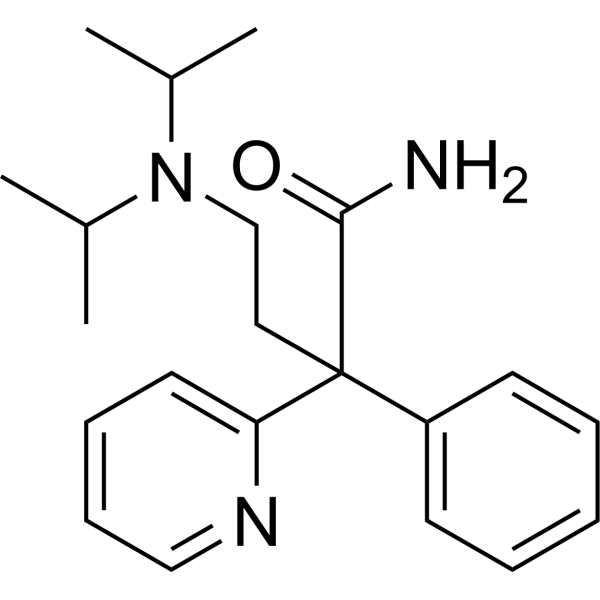
    Disopyramide
    2 Publications Verification

    Dicorantil; SC-7031

    Sodium Channel Potassium Channel Cardiovascular Disease
    Disopyramide (Dicorantil) is a class IA antiarrhythmic agent with efficacy in ventricular and atrial arrhythmias. Disopyramide blocks the fast inward sodium current of cardiac muscle and prolongs the duration of cardiac action potentials. Disopyramide inhibits HERG encoded potassium channels. Disopyramide also exhibits complex protein binding, and has a potent negative inotropic action .
    Disopyramide
  • HY-12533A
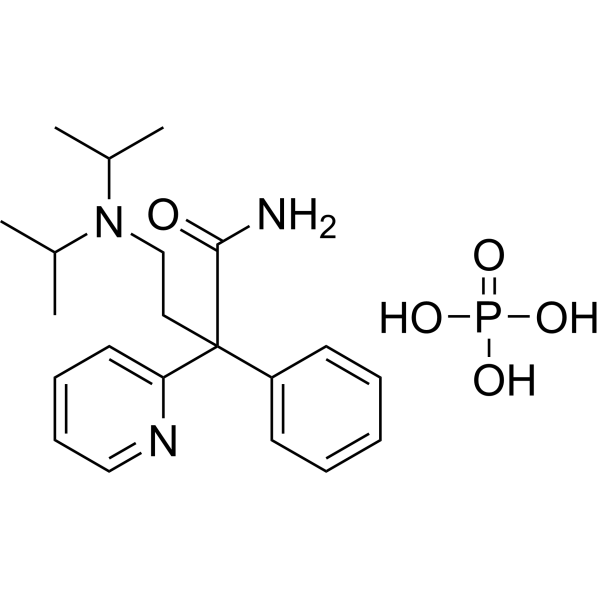
    Disopyramide phosphate
    2 Publications Verification

    Dicorantil phosphate; SC-7031 phosphate

    Potassium Channel Sodium Channel Cardiovascular Disease
    Disopyramide phosphate is a class IA antiarrhythmic agent with efficacy in ventricular and atrial arrhythmias. Disopyramide phosphate blocks the fast inward sodium current of cardiac muscle and prolongs the duration of cardiac action potentials. Disopyramide phosphate inhibits HERG encoded potassium channels. Disopyramide phosphate also exhibits complex protein binding, and has a potent negative inotropic action .
    Disopyramide phosphate
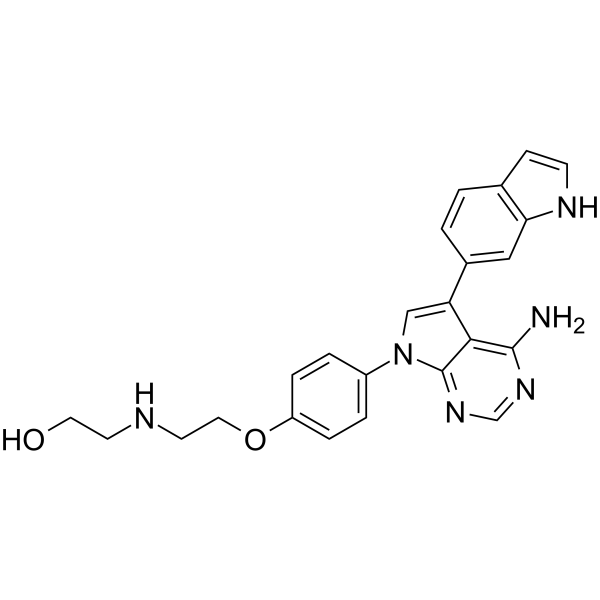
  • HY-111552

    Pim Cancer
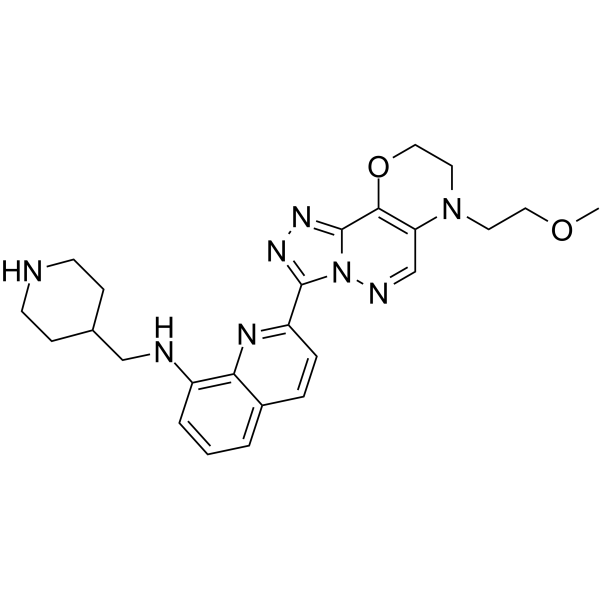
    PIM1-IN-1 is a potent and highly selective PIM1/3 inhibitor, with IC50s of 7, 5530 and 70 nM for PIM1, PIM2, and PIM3, respectively, inhibits the phosphorylation of BAD, a downstream target of PIM, with an EC50 of 262 nM. PIM1-IN-1 shows no obvious effect on FLT3 or hERG binding. Antiproliferative and anti-cancer activity .
    PIM1-IN-1
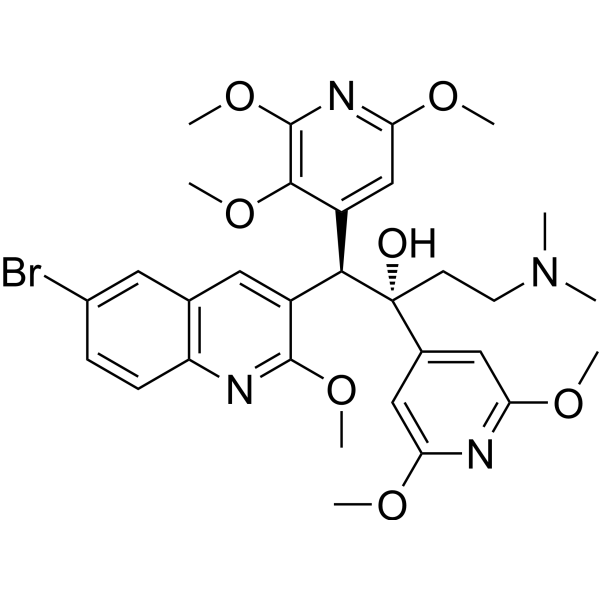
  • HY-128866

    Bacterial Infection
    TBAJ-876 is an orally active diarylquinoline anti-Mycobacterium agent. TBAJ-876 regulates energy metabolism by targeting the c and ε subunits of Mycobacterium tuberculosis F-ATP synthase, exerts bactericidal activity against replicating Mycobacterium tuberculosis, and retains activity against strains carrying the Rv0678 mutation. TBAJ-876 undergoes N-demethylation in vivo to form its major active metabolite TBAJ-876-M3, which has lower lipophilicity and hERG potassium channel binding affinity. TBAJ-876 is well tolerated in BALB/c mice and significantly reduces the colony-forming units of Mycobacterium tuberculosis in the lungs. In addition, TBAJ-876 exhibits inhibitory activity against Mycobacterium abscessus, reduces bacterial loads in the lungs and spleens of infected mice, and shows no antagonistic effect when used in combination with common antibiotics. TBAJ-876 can be used in studies related to tuberculosis and Mycobacterium abscessus pulmonary diseases .
    TBAJ-876
  • HY-124283A

    Cannabinoid Receptor Neurological Disease
    LEI-101 is a potent, selective, and orally bioavailable cannabinoid CB2 receptor agonist, with a pEC50 of 8 for hCB2, and a pKi of less than 4 for hERG. LEI-101 is ~100-fold more potent in binding to CB2 receptors than to CB1 receptors .
    LEI-101
  • HY-119101
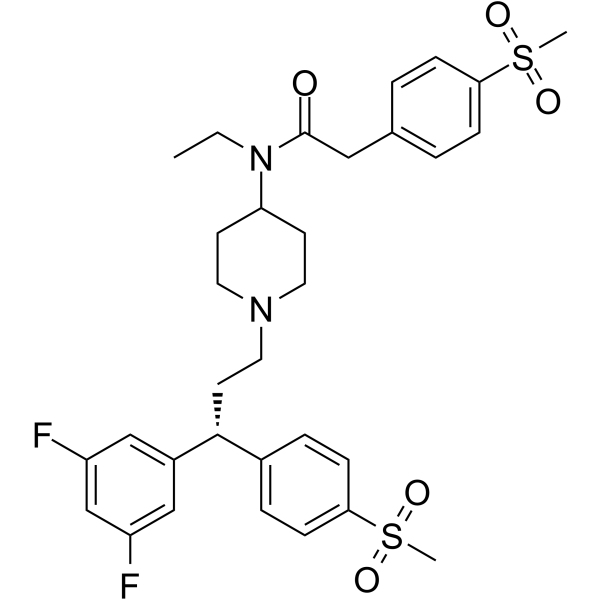
    AZD-5672
    1 Publications Verification

    CCR Potassium Channel P-glycoprotein Inflammation/Immunology
    AZD-5672 is an orally active, potent, and selective CCR5 antagonist (IC50=0.32 nM). AZD-5672 shows moderate activity against the hERG ion channel (binding IC50=7.3 μM). AZD5672 is a substrate of human P-gp, and inhibits P-gp-mediated digoxin transport (IC50=32 μM). AZD-5672 can be used for the research of rheumatoid arthritis .
    AZD-5672
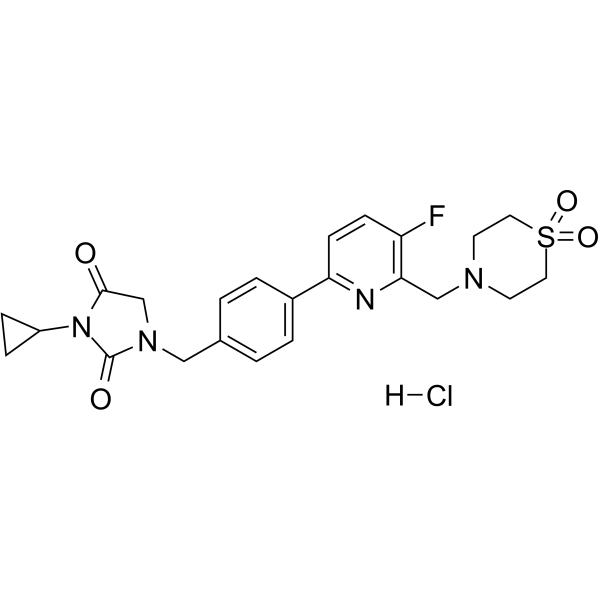
  • HY-12938

    Beta-secretase Neurological Disease
    AMG-8718 is a potent, selective and orally active BACE1 inhibitor with IC50 values of 0.0007, 0.005 µM for BACE1 and BACE2, respectively. AMG-8718 significantly decreases Aβ40 levels in the CSF and brain .
    AMG-8718
  • HY-161873

    Sigma Receptor Neurological Disease
    PW507 is a potent, brain-penetrant and selective sigma 1 receptor (S1R) antagonist with a Ki of 7.5 nM for human S1R. PW507 displays a low binding affinity to S2R and hERG. PW507 can be used for the study of painful diabetic neuropathy (PDN) .
    PW507
  • HY-15736

    Sodium Channel Neurological Disease
    Sodium Channel inhibitor 1 is a state-dependent voltage-gated NaV1.7 inhibitor with an IC50 of 0.087 μM. Sodium Channel inhibitor 1 can be used for research of pain .
    Sodium Channel inhibitor 1
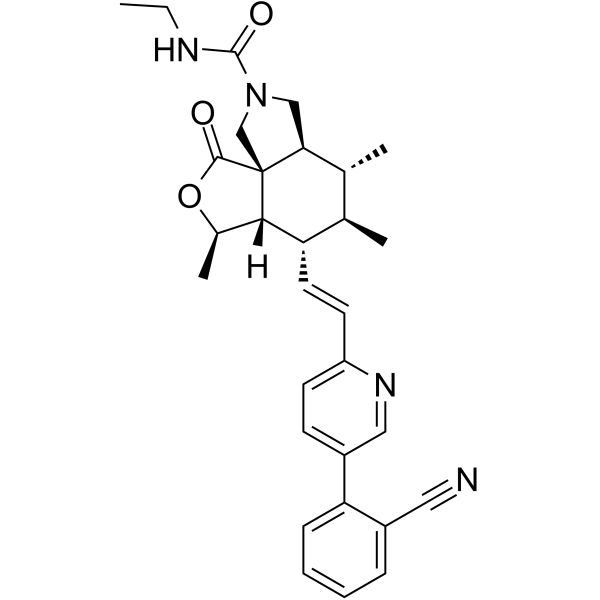
  • HY-143315

    Protease Activated Receptor (PAR) Cardiovascular Disease
    Protease-Activated Receptor-1 antagonist 3 is a potent protease-activated receptor-1 antagonist with an IC50 value of 7 nM. Protease-Activated Receptor-1 antagonist 3 shows binding affinity for hERG K + channel with an IC50 value of 9 µM .
    Protease-Activated Receptor-1 antagonist 3
  • HY-12533B

    Dicorantil hydrochloride; SC-7031 hydrochloride

    Sodium Channel Potassium Channel Cardiovascular Disease
    Disopyramide hydrochloride is a class IA antiarrhythmic agent with efficacy in ventricular and atrial arrhythmias. Disopyramide hydrochloride blocks the fast inward sodium current of cardiac muscle and prolongs the duration of cardiac action potentials. Disopyramide hydrochloride inhibits HERG encoded potassium channels. Disopyramide hydrochloride also exhibits complex protein binding, and has a potent negative inotropic action .
    Disopyramide hydrochloride
  • HY-147691

    Glutathione Peroxidase Potassium Channel Inflammation/Immunology
    MPO-IN-5 (compound 1) is a potent, irreversible MPO (myeloperoxidase) inhibitor. MPO-IN-5 inhibits MPO peroxidation and hERG binding, with IC50 values of 0.22 and 2.8 μM, respectively. MPO-IN-5 shows rapid kinetics of inhibition, with enzyme inactivation rate (kinact/Ki) of 23000 M −1s −1 .
    MPO-IN-5
  • HY-12533R

    Dicorantil (Standard); SC-7031 (Standard)

    Reference Standards Sodium Channel Potassium Channel Cardiovascular Disease
    Disopyramide (Standard) is the analytical standard of Disopyramide. This product is intended for research and analytical applications. Disopyramide (Dicorantil) is a class IA antiarrhythmic agent with efficacy in ventricular and atrial arrhythmias. Disopyramide blocks the fast inward sodium current of cardiac muscle and prolongs the duration of cardiac action potentials. Disopyramide inhibits HERG encoded potassium channels. Disopyramide also exhibits complex protein binding, and has a potent negative inotropic action .
    Disopyramide (Standard)
  • HY-12533AR

    Dicorantil phosphate (Standard); SC-7031 phosphate (Standard)

    Potassium Channel Sodium Channel Reference Standards Cardiovascular Disease
    Disopyramide (phosphate) (Standard) is the analytical standard of Disopyramide (phosphate). This product is intended for research and analytical applications. Disopyramide phosphate is a class IA antiarrhythmic agent with efficacy in ventricular and atrial arrhythmias. Disopyramide phosphate blocks the fast inward sodium current of cardiac muscle and prolongs the duration of cardiac action potentials. Disopyramide phosphate inhibits HERG encoded potassium channels. Disopyramide phosphate also exhibits complex protein binding, and has a potent negative inotropic action .
    Disopyramide phosphate (Standard)
  • HY-119886

    iGluR Neurological Disease
    BMS-986169 is an inhibitor of the glutamate N-methyl-D-aspartate 2B receptor (GluN2B). BMS-986169 has a high binding affinity for the allosteric regulatory site of the GluN2B subunit, with a Ki value of 4.03-6.3 nM. BMS-986169 can inhibit the function of GluN2B receptors in Xenopus oocytes, with an IC50 value of 24.1 nM. BMS-986169 can also inhibit the activity of the hERG channel, with an IC50 value of 28.4 μM. BMS-986169 can be used in research on treatment-resistant depression .
    BMS-986169
  • HY-159958

    Potassium Channel Neurological Disease
    KNa1.1-IN-2 (Compound Z05) is a selective KNa1.1 channel inhibitor with blood-brain barrier penetration, particularly effective against the hERG channel. KNa1.1-IN-2 works by binding to the KNa1.1 channel and blocking the channel activity induced by Gain-of-function (GOF) mutations, effectively intervening in KCNT1-related epilepsy. Additionally, KNa1.1-IN-2 inhibits the GOF mutant Y796H. KNa1.1-IN-2 holds promise for research into KCNT1-related epilepsy disorders .
    KNa1.1-IN-2
  • HY-124283

    Endogenous Metabolite Inflammation/Immunology
    LEI-101 free base is a selective and orally bioavailable CB2 receptor agonist with the potential to inhibit diseases associated with inflammation and/or oxidative stress. LEI-101 free base has a binding potency to CB2 receptors that is approximately 100 times higher than that to CB1 receptors. Its pEC50 value on CB2 receptors is 8, while its pKi value on hERG is less than 4. LEI-101 may have an inhibitory effect on conditions such as kidney disease .
    LEI-101 free base
  • HY-182385

    Lipocalin Family Metabolic Disease
    BPN-14136 is an orally effective retinol-binding protein 4 (RBP4) inhibitor. BPN-14136 inhibits the binding of retinol to RBP4 with an IC50 of 12.8 nM. BPN-14136 inhibits retinol-dependent RBP4-transthyretin interaction (IC50 = 43.6 nM) and reduces circulating plasma RBP4 levels in vivo. BPN-14136 decreases the formation of cytotoxic bisretinoids in retinal pigment epithelial cells. BPN-14136 can be used for the research of atrophic age-related macular degeneration and Stargardt disease .
    BPN-14136

Inquiry Online

Your information is safe with us. * Required Fields.

Salutation


Country or Region *

Applicant Name *


Organization Name *

Department *


Email Address *


Product Name *

Cat. No.


Requested quantity *

Phone Number *


Remarks

Inquiry Online

Inquiry Information

Product Name:
Cat. No.:
Quantity:
MCE Japan Authorized Agent:

