

1. Search Result
Search Result
Results for "

hepatically

" in MedChemExpress (MCE) Product Catalog:

662

Inhibitors & Agonists

2

Screening Libraries

9

Fluorescent Dye

29

Biochemical Assay Reagents

34

Peptides

1

MCE Kits

2

Inhibitory Antibodies

157

Natural
Products

49

Isotope-Labeled Compounds

1

Click Chemistry

40

Oligonucleotides

1

GMP Molecules

Cat. No. Product Name Target Research Areas Chemical Structure
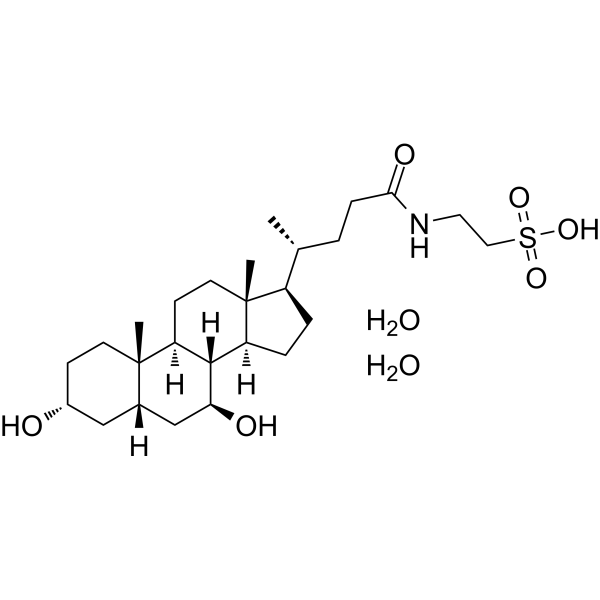
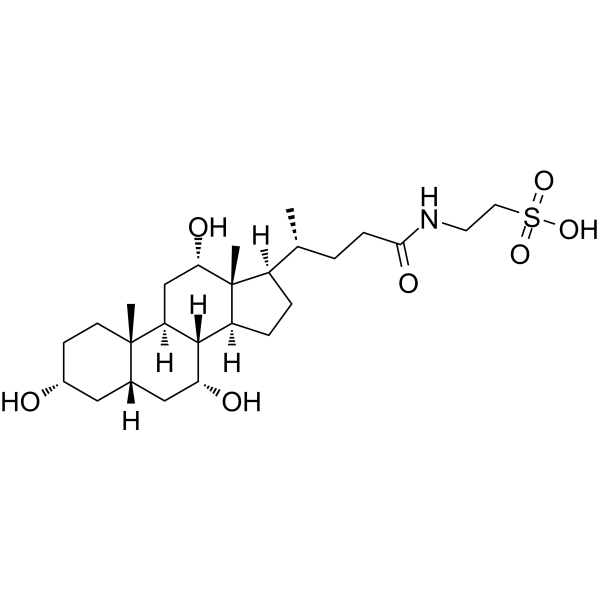
  • HY-B1788
    Taurocholic acid
    30+ Cited Publications

    N-Choloyltaurine

    Endogenous Metabolite Neurological Disease Inflammation/Immunology
    Taurocholic acid (N-Choloyltaurine) has marked bioactive effects such as an inhibitory potential against hepatic artery ligation induced biliary damage by upregulation of VEGF-A expression. Taurocholic acid has immunoregulation effect .
    Taurocholic acid
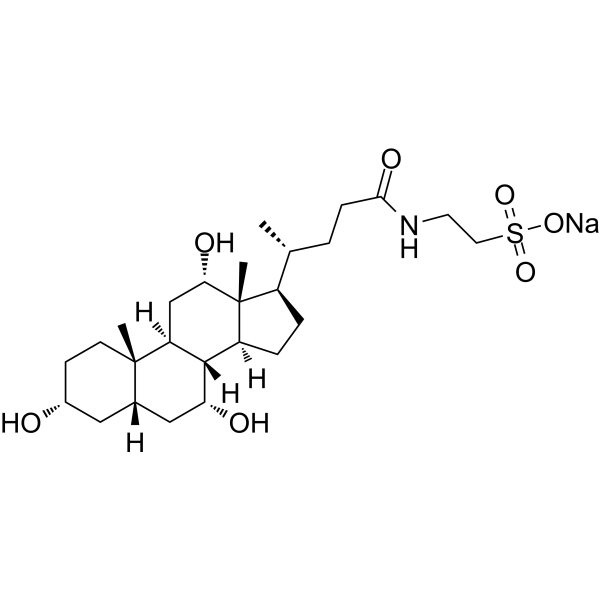
  • HY-N0545
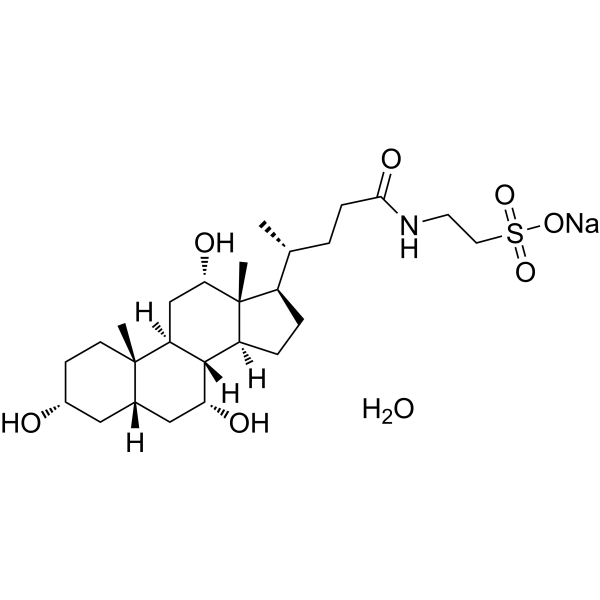
    Taurocholic acid sodium
    30+ Cited Publications

    Sodium taurocholate; N-Choloyltaurine sodium

    VEGFR Endogenous Metabolite Cardiovascular Disease Neurological Disease Inflammation/Immunology Cancer
    Taurocholic acid sodium (Sodium taurocholate) has marked bioactive effects such as an inhibitory potential against hepatic artery ligation induced biliary damage by upregulation of VEGF-A expression. Taurocholic acid sodium has immunoregulation effect .
    Taurocholic acid sodium
  • HY-D1168
    Oil Red O
    10+ Cited Publications

    Environmental Pollutants Fluorescent Dye Metabolic Disease
    Oil Red O is a fat-soluble diazol dye, with a maximum absorption at 518 nm. Oil Red O stains neutral lipids and cholesteryl esters but not biological membranes. Oil Red O can be used for detecting and quantifying hepatic steatosis in mouse liver biopsies. Oil Red O staining efficiently helps to visualize the radical changes that occur in tissues as metabolic disease occurs and progresses .
    Oil Red O
  • HY-N0157
    Orotic acid
    3 Publications Verification

    6-Carboxyuracil; Vitamin B13

    Nucleoside Antimetabolite/Analog Endogenous Metabolite Metabolic Disease
    Orotic acid (6-Carboxyuracil), a precursor in biosynthesis of pyrimidine nucleotides and RNA, is released from the mitochondrial dihydroorotate dehydrogenase (DHODH) for conversion to UMP by the cytoplasmic UMP synthase enzyme. Orotic acid is a marker for measurement in routine newborn screening for urea cycle disorders. Orotic acid can induce hepatic steatosis and hepatomegaly in rats .
    Orotic acid
  • HY-42682
    D(+)-Galactosamine hydrochloride
    3 Publications Verification

    D-Galactosamine HCl

    Drug Derivative Inflammation/Immunology
    D(+)-Galactosamine (D-Galactosamine) hydrochloride, which is an established experimental toxin, primarily causes liver injury by the generation of free radicals and depletion of UTP nucleotides. D(+)-Galactosamine hydrochloride intoxication also induces renal dysfunction thus, renal failure is often associated with the end-stage of the liver damage. Lipopolysaccharide/D(+)-Galactosamine-induced acute liver injury is a known animal model of fulminant hepatic failure .
    D(+)-Galactosamine hydrochloride
  • HY-132609
    Patisiran sodium
    1 Publications Verification

    Small Interfering RNA (siRNA) Transthyretin (TTR) Neurological Disease
    Patisiran sodium is a double-stranded small interfering RNA that targets a sequence within the transthyretin (TTR) messenger RNA. Patisiran sodium specifically inhibits hepatic synthesis of mutant and wild-type TTR. Patisiran sodium can be used for the research of hereditary TTR amyloidosis .
    Patisiran sodium
  • HY-33298
    LM10
    1 Publications Verification

    Indoleamine 2,3-Dioxygenase (IDO) Cancer
    LM10 is a potent inhibitor of tryptophan 2,3-dioxygenase (TDO). Tryptophan 2,3-dioxygenase (TDO) is an unrelated hepatic enzyme that also degrades tryptophan along the kynurenine pathway. LM10 has the potential for the research of cancer diseases .
    LM10
  • HY-12756A
    E6446 dihydrochloride
    5+ Cited Publications

    Toll-like Receptor (TLR) Stearoyl-CoA Desaturase (SCD) Metabolic Disease Inflammation/Immunology
    E6446 dihydrochloride is a potent and orally acitve TLR7 and TLR9 antagonist, used in the research of deleterious inflammatory responses. E6446 dihydrochloride is also a potent SCD1 inhibitor (KD: 4.61 μM), significantly inhibiting adipogenic differentiation and hepatic lipogenesis through SCD1-ATF3 signaling. E6446 dihydrochloride also improves liver pathology in high-fat diet (HFD)-fed mice and may be useful in the study of non-alcoholic fatty liver disease (NAFLD) .
    E6446 dihydrochloride
  • HY-B0247
    Torsemide
    1 Publications Verification

    Torasemide

    NKCC Cardiovascular Disease Metabolic Disease
    Torsemide (Torasemide) is an orally active loop diuretic. Torsemide has anti-aldosterone and vasodilatory effects. Torsemide also can be used for the research of heart failure, renal disease and hepatic cirrhosis .
    Torsemide
  • HY-13771A
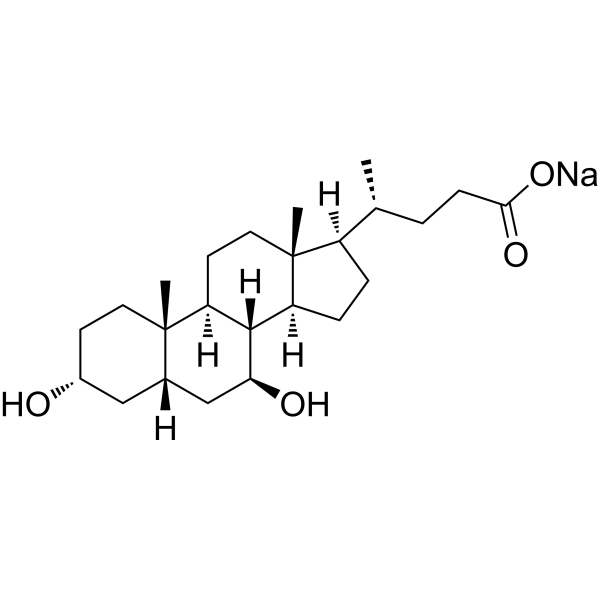
    Ursodeoxycholic acid sodium
    25+ Cited Publications

    Ursodeoxycholate sodium; Ursodiol sodium; UCDA sodium

    G protein-coupled Bile Acid Receptor 1 FXR Endogenous Metabolite Metabolic Disease Inflammation/Immunology Cancer
    Ursodeoxycholic acid (Ursodeoxycholate) sodium is a secondary bile acid issued from the transformation of (cheno)deoxycholic acid by intestinal bacteria, acting as a key regulator of the intestinal barrier integrity and essential for lipid metabolism. Ursodeoxycholic acid sodium acts as signaling molecule, exerting its effects by interacting with bile acid activated receptors, including G-protein coupled bile acid receptor 5 (TGR5, GPCR19) and the farnesoid X receptor (FXR). Ursodeoxycholic acid sodium can be used for the research of a variety of hepatic and gastrointestinal diseases. Orally active .
    Ursodeoxycholic acid sodium
  • HY-112724

    SHR0302

    JAK Apoptosis Inflammation/Immunology Cancer
    Ivarmacitinib (SHR0302) is a potent and orally active all members of the JAK family inhibitor, particularly JAK1. The selectivity of Ivarmacitinib for JAK1 is >10-fold for JAK2, 77-fold for JAK3, 420-fold for Tyk2. Ivarmacitinib inhibits JAK1-STAT3 phosphorylation and induces the apoptosis of hepatic stellate cells. Ivarmacitinib has anti-proliferative and anti-inflammatory effects .
    Ivarmacitinib
  • HY-150223
    GalNAc unconjugated/naked Inclisiran
    1 Publications Verification

    PCSK9 Small Interfering RNA (siRNA) Cardiovascular Disease
    GalNAc unconjugated/naked Inclisiran is a double-stranded small interfering RNA molecule that targets hepatic PCSK9 production to reduce LDL-C levels. GalNAc unconjugated/naked Inclisiran can be used in the research of cardiovascular diseases and hypercholesterolemia .
    GalNAc unconjugated/naked Inclisiran
  • HY-145411
    PEG2000-C-DMG
    3 Publications Verification

    Liposome Endocrinology
    PEG2000-C-DMG, a pegylated lipid, can be used for the preparation of Onpattro. Onpattro, a hepatically directed investigational RNAi therapeutic agent, harnesses this process to reduce the production of mutant and wild-type transthyretin by targeting the 3′ untranslated region of transthyretin mRNA .
    PEG2000-C-DMG
  • HY-B1151

    BAY-e 6975

    Environmental Pollutants Fungal Infection
    Climbazole (BAY-e 6975) is a potent antifungal agent. Climbazole also is a potent inducer of rat hepatic cytochrome P450 .
    Climbazole
  • HY-N2413

    PDGFR UGT Reactive Oxygen Species (ROS) Apoptosis Tyrosinase p38 MAPK Akt ERK COX Interleukin Related Neurological Disease Metabolic Disease Inflammation/Immunology
    Gomisin D is an orally active lignan that binds to PDGFRβ with a Kd of 10 μM. By targeting PDGFRβ to regulate signaling pathways, Gomisin D inhibits the activation and proliferation of hepatic stellate cells and promotes their apoptosis, thereby ameliorating hepatic fibrosis. Gomisin D exhibits multiple activities such as photoprotection, antimelanogenesis, antioxidant effects, and hypoglycemic activity. Gomisin D can be used in studies related to diabetes, Alzheimer's disease, and hepatic fibrosis .
    Gomisin D
  • HY-107830

    Endogenous Metabolite Collagen Infection Metabolic Disease
    Methyl cholate is a bile acid analog and a specific inhibitor of TcdB toxin from Clostridioides difficile. Methyl cholate exerts a stronger selective inhibitory effect on TcdB than on TcdA. Methyl cholate induces conformational stabilization by binding to a unique site of TcdB, thereby blocking the binding of the toxin to host receptors and its self-processing process. Methyl cholate effectively protects human fibroblasts from TcdB-induced cytopathic effects. Methyl cholate exhibits dose-dependent anti-hepatic fibrosis activity in both cellular and zebrafish models, and significantly reduces the expression levels of α-SMA and COL-I. Methyl cholate is suitable for in-depth research in the fields of Clostridioides difficile infection and hepatic fibrosis .
    Methyl cholate
  • HY-N6869
    Dehydroabietic acid
    1 Publications Verification

    Antibiotic PPAR Bacterial Fungal Infection Metabolic Disease Inflammation/Immunology Cancer
    Dehydroabietic acid is a diterpene resin acid that can be isolated from Pinus and Picea. Dehydroabietic acid has anti-bacterial, anti-fungal, anti-inflammatory, and anticancer activities. Dehydroabietic acid is a dual PPAR-α/γ agonist and PPAR-γ partial agonist, which can attenuate insulin resistance (IR) and hepatic steatosis induced by HFD-consumption in mice .
    Dehydroabietic acid
  • HY-12756
    E6446
    5+ Cited Publications

    Toll-like Receptor (TLR) Stearoyl-CoA Desaturase (SCD) Metabolic Disease Inflammation/Immunology
    E6446 is a potent and orally acitve TLR7 and TLR9 antagonist, used in the research of deleterious inflammatory responses. E6446 is also a potent SCD1 inhibitor (KD: 4.61 μM), significantly inhibiting adipogenic differentiation and hepatic lipogenesis through SCD1-ATF3 signaling. E6446 also improves liver pathology in high-fat diet (HFD)-fed mice and may be useful in the study of non-alcoholic fatty liver disease (NAFLD) .
    E6446
  • HY-B1134
    Imazalil
    1 Publications Verification

    Enilconazole

    Environmental Pollutants Fungal Pregnane X Receptor (PXR) Infection
    Imazalil (Enilconazole) is a fungicide. Imazalil has oral activity and strongly activates mPXR but not mCAR in mouse liver. Imazalil is commonly used to protect various agricultural crops against fungal attack. Imazalil induces developmental abnormalities, gut microbiota dysbiosis, and hepatic metabolism disorder .
    Imazalil
  • HY-147425

    SLN360

    Small Interfering RNA (siRNA) Apolipoprotein Cardiovascular Disease
    Zerlasiran (SLN360) is a siRNA targeting apolipoprotein A (ApoA). Zerlasiran targets hepatic ApoA synthesis via RNA interference to degrade encoding mRNA. Zerlasiran can be used for the research of atherosclerotic cardiovascular disease and elevated ApoA levels .
    Zerlasiran
  • HY-N6857

    AP-1 NF-κB p38 MAPK ERK JNK Neurological Disease Metabolic Disease Inflammation/Immunology Cancer
    Armepavine, found in Nelumbo nucifera, is an orally active NF-κB inhibitor. Armepavine attenuates expression of p-p65, α-SMA, p-JNK1/2, p-ERK1/2, p-p38α stimulated by TNF-α and LPS. Armepavine suppresses NF-κB nuclear translocation, IκBα phosphorylation, and collagen deposition. Armepavine can be used for the research of hepatic fibrosis and leukemia .
    Armepavine
  • HY-B1483

    Thenylpyramine hydrochloride

    Environmental Pollutants Histamine Receptor Inflammation/Immunology
    Methapyrilene (Thenylpyramine) hydrochloride is an orally active H1-receptor antihistamine and an anticholinergic agent of the pyridine chemical class. Methapyrilene hydrochloride has hepatotoxicity and can be used as a hepatotoxin that cause periportal hepatic necrosis in vivo
    Methapyrilene hydrochloride
  • HY-15537
    Tilbroquinol
    1 Publications Verification

    Parasite Bacterial Infection
    Tilbroquinol is an orally active halogenated hydroxyquinoline antiprotozoal agent, mainly used for anti-amoebic infections . Tilbroquinol targets intestinal protozoa and Entamoeba histolytica to eliminate parasites in the intestinal lumen. Tilbroquinol can be used in research related to intestinal infections, intestinal amoebiasis and hepatic amoebiasis .
    Tilbroquinol
  • HY-156259

    Acyltransferase Inflammation/Immunology
    PF-07202954 is an orally active, highly selective DGAT2 inhibitor with an IC50 of 10 nM against human DGAT2 and an IC50 of 17 nM against rat DGAT2. PF-07202954 reduces triglyceride synthesis, decreases hepatic triglyceride content and plasma triglyceride levels, inhibits de novo lipogenesis, and suppresses the hepatic SREBP signaling pathway as well as the expression of SREBP target genes. PF-07202954 is applicable to research related to non-alcoholic steatohepatitis .
    PF-07202954
  • HY-113133

    Glycosidase Infection Metabolic Disease Inflammation/Immunology
    Kojibiose, an orally active prebiotic disaccharide, can specifically inhibit the activity of α-glucosidase I. kojibiose is a proliferation factor for Bifidobacterium, lactic acid bacteria, and eubacteria. kojibiose is a low-calorie sweetener capable of increasing the absorption of iron. Kojibiose exhibits antitoxic activity. Kojibiose reduces hepatic expression of inflammatory markers in vivo .
    Kojibiose
  • HY-151481

    FXR Metabolic Disease
    FXR antagonist 1 (compound F6) is an orally active and selective intestinal FXR antagonist (IC50=2.1 μM). FXR antagonist 1 selectively inhibits intestinal FXR signalling through antagonism of intestinal FXR and feedback activation of hepatic FXR to improve hepatic steatosis, inflammation and fibrosis in NASH (nonalcoholic steatohepatitis) models. FXR antagonist 1 can be used in NASH studies .
    FXR antagonist 1
  • HY-N0341

    Sirtuin Metabolic Disease
    Scopolin is a coumarin isolated from Arabidopsis thaliana (Arabidopsis) roots . Scopolin attenuated hepatic steatosis through activation of SIRT1-mediated signaling cascades .
    Scopolin
  • HY-P4060

    Neuropeptide Y Receptor Metabolic Disease Endocrinology
    Pancreatic polypeptide is a peptide secreted by the endocrine PP cells of the pancreas that regulates pancreatic secretory activity and also affects hepatic glycogen stores and gastrointestinal secretion .
    Pancreatic polypeptide
  • HY-W109613

    Bacterial PPAR Fungal Infection Metabolic Disease
    Methyl dehydroabietate is an orally active resin acid. Methyl dehydroabietate disrupts microbial cell walls and exhibits significant antibacterial activity. Methyl dehydroabietate induces the expression of PPARα in the liver and PPARγ in adipose tissue, and promotes adipocyte differentiation. Methyl dehydroabietate improves insulin resistance, reduces TNFα levels, and alleviates adipocyte hypertrophy and hepatic steatosis in obese mice. Methyl dehydroabietate can be used in research related to obesity, insulin resistance and hepatic steatosis .
    Methyl dehydroabietate
  • HY-150151A

    LYTACs Cardiovascular Disease
    GalNac-siRNA negative control (21nt) is the negative control form of GalNac-siRNA. GalNac-siRNA is an Asialoglycoprotein receptor (ASGPR)-targeted inhibitor conjugate. GalNac-siRNA is promising for research of hereditary transthyretin amyloidosis, acute hepatic porphyria, hemophilia and hypercholesterolemia .
    GalNac-siRNA negative control (21nt)
  • HY-N0545R

    Sodium taurocholate (Standard); N-Choloyltaurine sodium (Standard)

    Reference Standards VEGFR Endogenous Metabolite Inflammation/Immunology
    Taurocholic acid (sodium) (Standard) is the analytical standard of Taurocholic acid (sodium). This product is intended for research and analytical applications. Taurocholic acid sodium (Sodium taurocholate) has marked bioactive effects such as an inhibitory potential against hepatic artery ligation induced biliary damage by upregulation of VEGF-A expression. Taurocholic acid sodium has immunoregulation effect .
    Taurocholic acid sodium (Standard)
  • HY-B1684

    SQ 26962

    Biochemical Assay Reagents Others
    Mebrofenin (SQ 26962) is a type of iminodiacetic acid (IDA). Mebrofenin is available as a ready to use the kit for radio-labeling with Tc-99m. Tc-99m Mebrofenin, a diagnostic agent, is used for hepatobiliary imaging. Tc-99m Mebrofenin is the radiopharmaceutical of choice for the evaluation of hepatic function .
    Mebrofenin
  • HY-149406

    AMPK Cancer
    AMPK activator 12 (compound 21) is a potent AMPK activator and GDF15 inducer. AMPK activator 12 increases GDF15 protein levels in human hepatic cells .
    AMPK activator 12
  • HY-121212

    LDLR Metabolic Disease Inflammation/Immunology
    Icosabutate, an orally active ω-3 polyunsaturated fatty acid, is an aeicosapentaenoic acid (EPA) derivative. Icosabutate overcomes the drawbacks of unmodified EPA for liver targeting and improves insulin sensitivity, hepatic inflammation and fibrosis . Icosabutate is well tolerated, and efficacious in lowering non-high-density lipoprotein cholesterol (non-HDL-C) levels in persistent hypertriglyceridemia .
    Icosabutate
  • HY-N0946

    (-)-Pinoresinol 4-O-β-D-glucopyranoside

    Glycosidase Metabolic Disease
    (-)-Pinoresinol 4-O-glucoside ((-)-Pinoresinol 4-O-β-D-glucopyranoside) is a potent and orally active α-glucosidase inhibitor with an IC50 value of 48.13 µM. (-)-Pinoresinol 4-O-glucoside increases cell migration and early differentiation of pre-osteoblasts. (-)-Pinoresinol 4-O-glucoside increases protein level of BMP2, p-Smad1/5/8, RUNX2. (-)-Pinoresinol 4-O-glucoside attenuates oxidative stress, hyperglycemia and hepatic toxicity. (-)-Pinoresinol 4-O-glucoside has the potential for the research of osteoporosis and periodontal disease .
    (-)-Pinoresinol 4-O-glucoside
  • HY-106547

    GABA Receptor Neurological Disease
    Rilmazafone (450191S) is an orally active sleep inducer. Rilmazafone targets cytochrome P-450b and cytochrome P-450e. Rilmazafone induces hepatic drug-metabolizing enzyme activity in rats, mice and dogs. Rilmazafone is applicable for insomnia-related research .
    Rilmazafone
  • HY-113360

    Endogenous Metabolite Inflammation/Immunology
    Chenodeoxycholic acid 3-sulfate is a bile acid. Chenodeoxycholic acid 3-sulfate level corresponds closely with the extent of hepatic dysfunction .
    Chenodeoxycholic acid 3-sulfate
  • HY-151959

    FXR Cardiovascular Disease Metabolic Disease Inflammation/Immunology
    FXR agonist 4 (compound 10a) is an agonist of farnesoid X receptor (FXR) with an EC50 value of 1.05 μM. FXR agonist 4 effectively improves hyperlipidemia, hepatic steatosis, insulin resistance and hepatic inflammation in DIO mice. FXR agonist 4 can be used for the research of non-alcoholic fatty liver disease (NAFLD) .
    FXR agonist 4
  • HY-W766140

    4-Hydroxy duloxetine glucuronide sodium; LY550408 sodium

    Drug Metabolite Metabolic Disease
    4-Hydroxy duloxetine β-D-glucuronide (4-Hydroxy duloxetine glucuronide) sodium is a major metabolite of Duloxetine (HY-B0161). 4-Hydroxy duloxetine β-D-glucuronide sodium is promising for research of hepatic or renal impairment .
    4-Hydroxy duloxetine β-D-glucuronide sodium
  • HY-N0157A
    Orotic acid zinc
    3 Publications Verification

    6-Carboxyuracil zinc; Vitamin B13 zinc

    Nucleoside Antimetabolite/Analog Endogenous Metabolite Metabolic Disease
    Orotic acid (zinc), a precursor in biosynthesis of pyrimidine nucleotides and RNA, is released from the mitochondrial dihydroorotate dehydrogenase (DHODH) for conversion to UMP by the cytoplasmic UMP synthase enzyme. Orotic acid (zinc) is a marker for measurement in routine newborn screening for urea cycle disorders. Orotic acid (zinc) can induce hepatic steatosis and hepatomegaly in rats .
    Orotic acid zinc
  • HY-B1134A
    Imazalil sulfate
    1 Publications Verification

    Enilconazolel sulfate

    Environmental Pollutants Fungal Pregnane X Receptor (PXR) Infection
    Imazalil (Enilconazole) sulfate is a fungicide. Imazalil sulfate has oral activity and strongly activates mPXR but not mCAR in mouse liver. Imazalil sulfate is commonly used to protect various agricultural crops against fungal attack. Imazalil sulfate induces developmental abnormalities, gut microbiota dysbiosis, and hepatic metabolism disorder .
    Imazalil sulfate
  • HY-147278

    Divesiran; SLN124

    Ser/Thr Protease Small Interfering RNA (siRNA) TMPRSS6 Cardiovascular Disease
    Manusiran (Divesiran) is a GalNac-siRNA targeting liver and transmembrane serine protease 6 (Serine protease 6). Manusiran increases hepatic Hepcidin synthesis and plasma levels by silencing TMPRSS6, a negative regulator of hepcidin production, and limits the availability of iron required for erythropoiesis. Combined use of Manusiran with Deferiprone (HY-B0568) reduces ineffective erythropoiesis and hepatic iron overload in a mouse model of β-thalassemia. Manusiran can be used for research on polycythemia vera, type 1 hereditary hemochromatosis, and β-thalassemia .
    Manusiran
  • HY-108263B

    (R)-CGP52421

    FLT3 Drug Metabolite Cancer
    (R)-3-Hydroxy Midostaurin ((R)-CGP52421) is a potent kinases inhibitor. (R)-3-Hydroxy Midostaurin is a major metabolite of midostaurin (PKC412; HY-10230) undergoing by the hepatic CYP3A4 enzyme. (R)-3-Hydroxy Midostaurin has the potential for acute myeloid leukemia (AML) .
    (R)-3-Hydroxy Midostaurin
  • HY-N9434

    Cytochrome P450 Metabolic Disease
    5,7,2',6'-Tetrahydroxyflavone is a natural flavonoid that inhibits hepatic testosterone 6β-hydroxylation (CYP3A4) activity with an IC50 of 7.8 μM .
    5,7,2',6'-Tetrahydroxyflavone
  • HY-133019

    Phosphodiesterase (PDE) Inflammation/Immunology
    ATX inhibitor 5 is a potent and orally active autotaxin (ATX) inhibitor, with an IC50 of 15.3 nM. ATX inhibitor 5 shows anti-hepatofibrosis effects and reduces CCl4-induced hepatic fibrosis level prominently .
    ATX inhibitor 5
  • HY-B1788R

    N-Choloyltaurine (Standard)

    Reference Standards Endogenous Metabolite Inflammation/Immunology
    Taurocholic acid (Standard) is the analytical standard of Taurocholic acid. This product is intended for research and analytical applications. Taurocholic acid (N-Choloyltaurine) has marked bioactive effects such as an inhibitory potential against hepatic artery ligation induced biliary damage by upregulation of VEGF-A expression. Taurocholic acid has immunoregulation effect .
    Taurocholic acid (Standard)
  • HY-42682R

    D-Galactosamine HCl (Standard)

    Reference Standards Inflammation/Immunology
    D(+)-Galactosamine (hydrochloride) (Standard) is the analytical standard of D(+)-Galactosamine (hydrochloride). This product is intended for research and analytical applications. D(+)-Galactosamine (D-Galactosamine) hydrochloride, which is an established experimental toxin, primarily causes liver injury by the generation of free radicals and depletion of UTP nucleotides. D(+)-Galactosamine hydrochloride intoxication also induces renal dysfunction thus, renal failure is often associated with the end-stage of the liver damage. Lipopolysaccharide/D(+)-Galactosamine-induced acute liver injury is a known animal model of fulminant hepatic failure .
    D(+)-Galactosamine hydrochloride (Standard)
  • HY-112724A

    SHR0302 sulfate

    JAK Apoptosis Inflammation/Immunology Cancer
    Ivarmacitinib (SHR0302) sulfate is a potent and orally active all members of the JAK family inhibitor, particularly JAK1. The selectivity of Ivarmacitinib for JAK1 is >10-fold for JAK2, 77-fold for JAK3, 420-fold for Tyk2. Ivarmacitinib inhibits JAK1-STAT3 phosphorylation and induces the apoptosis of hepatic stellate cells. Ivarmacitinib has anti-proliferative and anti-inflammatory effects .
    Ivarmacitinib sulfate
  • HY-135161

    Drug Metabolite Others
    EDDP perchlorate is an N-desmethyl metabolite of Methadone by intestinal, hepatic, and cytochrome P450 (CYP) 3A4 .
    EDDP perchlorate
  • HY-105047

    NRL972

    Biochemical Assay Reagents Metabolic Disease
    Fluorescein lisicol is a fluorescent-labelled bile salt and a marker of hepatic biliary transporter function. Fluorescein lisicol can be used for metabolic research .
    Fluorescein lisicol

Inquiry Online

Your information is safe with us. * Required Fields.

Salutation


Country or Region *

Applicant Name *


Organization Name *

Department *


Email Address *


Product Name *

Cat. No.


Requested quantity *

Phone Number *


Remarks

Inquiry Online

Inquiry Information

Product Name:
Cat. No.:
Quantity:
MCE Japan Authorized Agent:

