
1. Search Result
Search Result
Results for "

isolation

" in MedChemExpress (MCE) Product Catalog:

58

Inhibitors & Agonists

2

Screening Libraries

2

Fluorescent Dye

16

Biochemical Assay Reagents

2

Peptides

17

MCE Kits

1

Inhibitory Antibodies

18

Natural
Products

4

Isotope-Labeled Compounds

1

Click Chemistry

1

Oligonucleotides

Cat. No. Product Name Target Research Areas Chemical Structure
  • HY-Y0873J
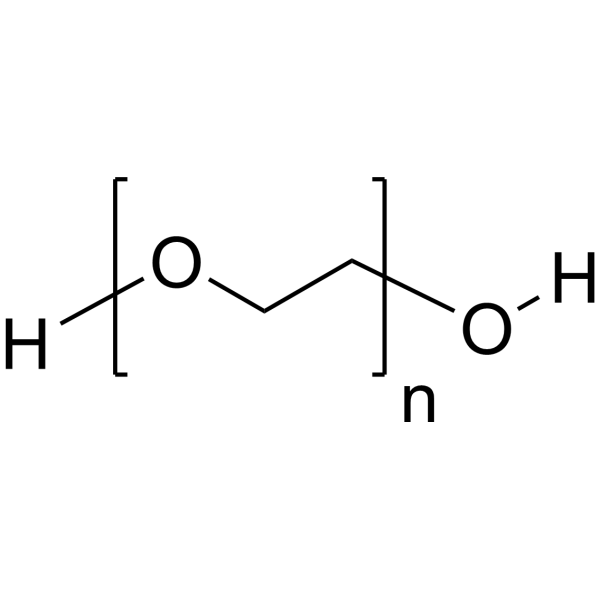
    PEG8000
    2 Publications Verification

    Polyethylene glycol 8000

    Environmental Pollutants Biochemical Assay Reagents Others
    PEG8000 can be used for phage precipitation, isolation of plasmid DNA, and promotion of flat end-junction reactions .
    PEG8000
  • HY-15435
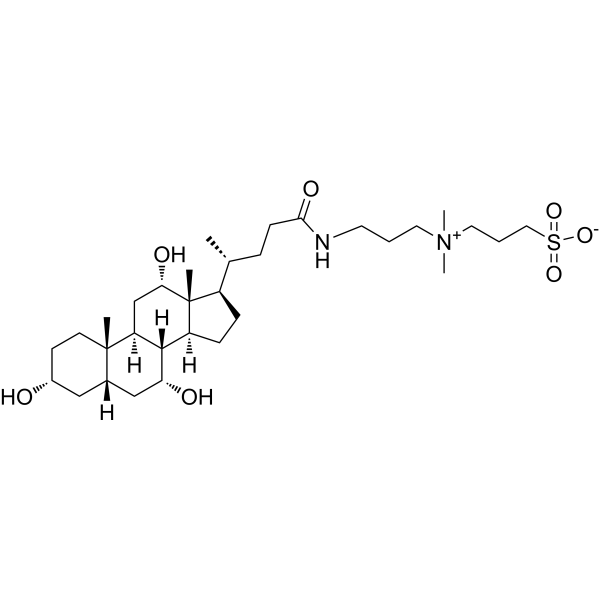
    CHAPS
    4 Publications Verification

    Exosomes Biochemical Assay Reagents Others
    CHAPS is a cholic acid-derived, sulfobetaine-type zwitterionic detergent and micelle-forming agent. CHAPS exhibits properties of weak cationic or nonionic surfactants in different solution systems, undergoes micellization, and forms small, loose hydrophilic aggregates that are temperature-dependent. CHAPS stabilizes mononucleosomes under different ionic strengths, reduces nucleosome sequence specificity, promotes sliding of histone cores along DNA, solubilizes Tamm-Horsfall protein to reduce its interference with urinary exosome isolation, and maintains vesicle structure and the activity of related proteins at the same time. CHAPS is used to recover native folded fusion proteins, enhance the binding capacity of GST fusion proteins, and restore GST enzyme activity. However, CHAPS cannot refold proteins denatured by urea, guanidine hydrochloride or heat, nor can it construct the structure of intrinsically disordered proteins. CHAPS is commonly used in research on the separation and purification of membrane proteins .
    CHAPS
  • HY-128699

    Dethiobiotin

    Endogenous Metabolite Endocrinology
    D-Desthiobiotin is a biotin derivative. D-Desthiobiotin increases testosterone. D-Desthiobiotin is used in affinity chromatography and protein chromatography, also can be used for protein and cell labeling, detection and isolation .
    D-Desthiobiotin
  • HY-128853
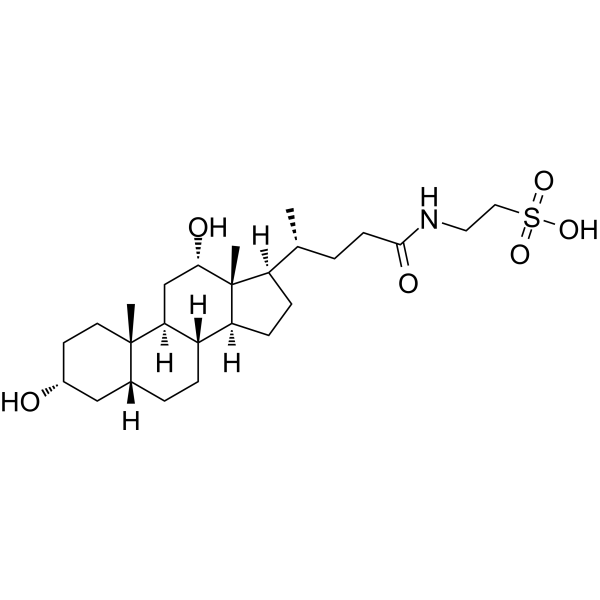
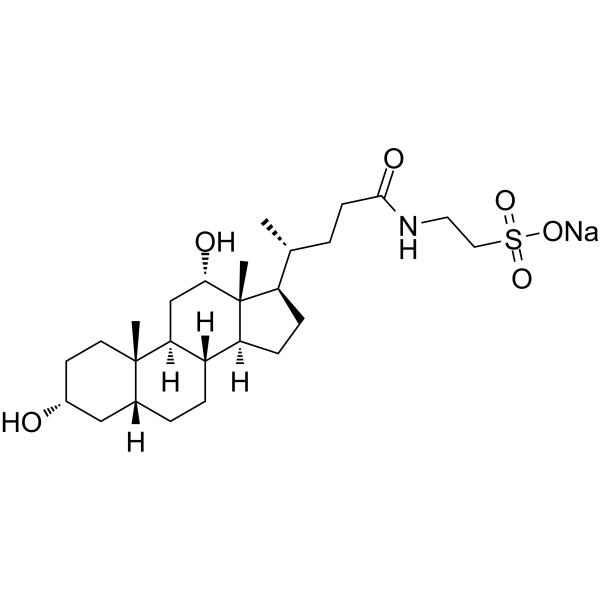
    Taurodeoxycholate sodium
    5+ Cited Publications

    Endogenous Metabolite G protein-coupled Bile Acid Receptor 1 PARP Apoptosis NF-κB PKA Neurological Disease Inflammation/Immunology
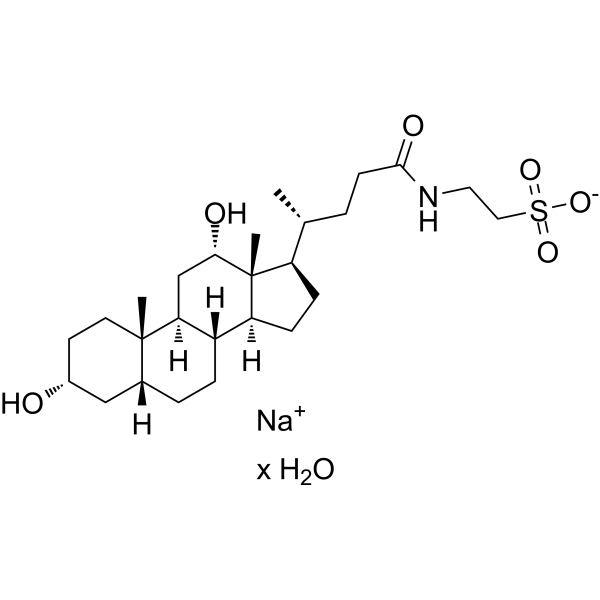
    Taurodeoxycholate sodium salt is a bile salt-related anionic detergent. Taurodeoxycholate sodium salt is formed in the liver by conjugation of deoxycholate with Taurine (HY-B0351). Taurodeoxycholate sodium salt is used for isolation of membrane proteins including inner mitochondrial membrane proteins. Taurodeoxycholate (TDCA) exhibits anti-inflammatory and neuroprotective effects .
    Taurodeoxycholate sodium
  • HY-141140
    5-Ethynyluridine
    2 Publications Verification

    5-EU

    Biochemical Assay Reagents Others
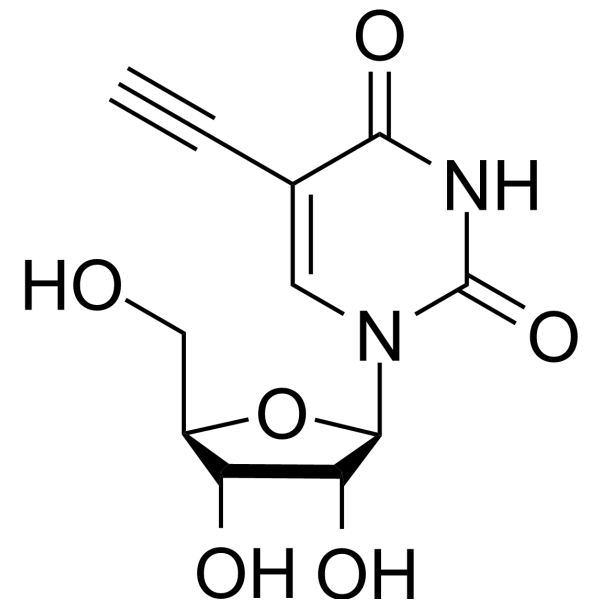
    5-Ethynyluridine (5-EU) is a potent cell-permeable nucleoside can be used to label newly synthesized RNA. 5-Ethynyluridine can be used for isolation and sequencing of nascent RNA from neuronal populations in vivo. 5-Ethynyluridine can be used to identify changes in transcription in vivo in nervous system disease models . 5-Ethynyluridine is a click chemistry reagent, it contains an Alkyne group and can undergo copper-catalyzed azide-alkyne cycloaddition (CuAAc) with molecules containing Azide groups.
    5-Ethynyluridine
  • HY-B1899
    Taurodeoxycholic acid
    Maximum Cited Publications
    7 Publications Verification

    Taurodeoxycholate

    Endogenous Metabolite G protein-coupled Bile Acid Receptor 1 PARP Apoptosis NF-κB PKA Neurological Disease Inflammation/Immunology
    Taurodeoxycholate sodium salt is a bile salt-related anionic detergent. Taurodeoxycholic acid is formed in the liver by conjugation of deoxycholate with Taurine (HY-B0351). Taurodeoxycholic acid is used for isolation of membrane proteins including inner mitochondrial membrane proteins. Taurodeoxycholic acid (TDCA) exhibits anti-inflammatory and neuroprotective effects .
    Taurodeoxycholic acid
  • HY-131960
    Polysucrose 400
    2 Publications Verification

    Biochemical Assay Reagents Others
    Polysucrose 400 is a synthetic polymer of sucrose, can be used for cells and organelles isolation .
    Polysucrose 400
  • HY-Y0261A

    Environmental Pollutants Biochemical Assay Reagents Others
    Ammonium sulphate,≥99.0%,AR is an inorganic sulfate salt used for molecular biology . Ammonium sulphate,≥99.0%,AR can be used to precipitate proteins, separate antibodies, and enhance antigen-antibody reactions. Ammonium sulphate,≥99.0%,AR can serve as a nitrogen source in plant fertilizers and has developmentally toxicity to freshwater snails, but increases the number of Anopheles africanus and Culex mosquito larvae in rice paddies. Ammonium sulphate,≥99.0%,AR also inhibits the conversion of glucose to ascorbic acid in plants .
    Ammonium sulphate,≥99.0%,AR
  • HY-W089835
    Sodium taurodeoxycholate hydrate
    1 Publications Verification

    G protein-coupled Bile Acid Receptor 1 Endogenous Metabolite PARP Apoptosis NF-κB PKA Neurological Disease Inflammation/Immunology
    Sodium taurodeoxycholate hydrate is a bile salt-related anionic detergent. Sodium taurodeoxycholate hydrate is formed in the liver by conjugation of deoxycholate with Taurine (HY-B0351). Sodium taurodeoxycholate hydrate is used for isolation of membrane proteins including inner mitochondrial membrane proteins. Taurodeoxycholate-d6 (TDCA) exhibits anti-inflammatory and neuroprotective effects .
    Sodium taurodeoxycholate hydrate
  • HY-N8332

    Ox bile extract

    Bacterial DNA/RNA Synthesis Infection
    Bile extract (Ox bile extract) is a complex mixture of substances, containing bile acids, cholesterol, and bilirubin. Bile extract has antimicrobial activity and can induce DNA damage and degrade viral and bacterial membranes. Bile extract can be used in bacterial culture media as a selective inhibitor for the isolation and identification of pathogens .
    Bile extract
  • HY-113413
    Imidazoleacetic acid
    2 Publications Verification

    Imidazolyl-4-acetic acid

    Endogenous Metabolite GABA Receptor Cardiovascular Disease Neurological Disease Metabolic Disease
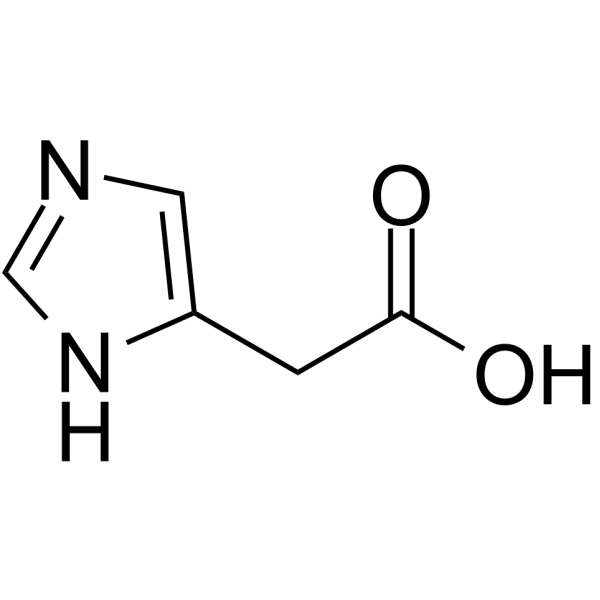
    Imidazoleacetic acid (Imidazolyl-4-acetic acid) is a blood-brain barrier-permeable full agonist of the GABAA receptor. Imidazoleacetic acid forms via histamine oxidation in the mouse brain. Imidazoleacetic acid exerts multiple neurochemical and behavioral effects. Imidazoleacetic acid induces a range of centrally mediated effects, including analgesia, sedation, hypnosis, as well as reductions in blood pressure, body temperature, isolation-induced aggression and motor activity .
    Imidazoleacetic acid
  • HY-E70529

    DNA/RNA Synthesis Bacterial Infection
    Ribonucleoside vanadyl complexes are a class of potent RNase and Taq polymerase inhibitors. Ribonucleoside vanadyl complexes protect RNA during RNA isolation by inhibiting ribonucleases, and also reduce the viability of bacteria and eukaryotic cells by interfering with ribosomal subunit assembly. Ribonucleoside vanadyl complexes block PCR and reverse transcription reactions templated by viral nucleic acids and enhance the effects of antibiotics against Staphylococcus aureus, but do not directly inhibit protein synthesis. Ribonucleoside vanadyl complexes can be effectively removed by phenol-chloroform extraction, thus enabling subsequent PCR analysis. Ribonucleoside vanadyl complexes can be applied in research related to chronic hepatitis C (HCV) and Staphylococcus aureus infection .
    Ribonucleoside vanadyl complexes
  • HY-15435A
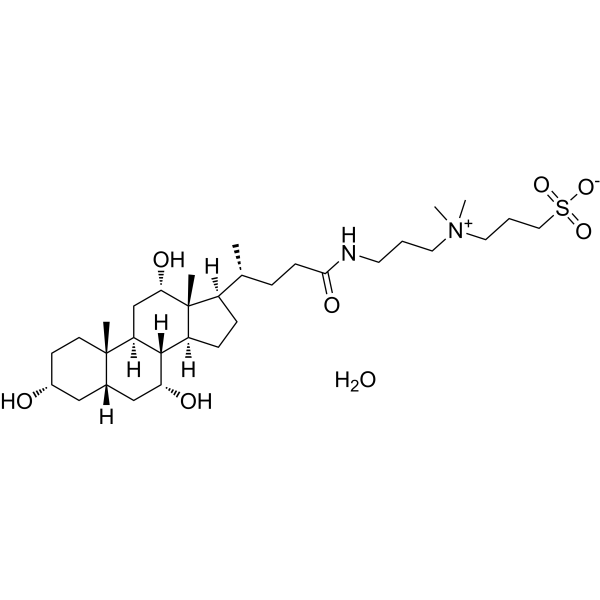
    CHAPS hydrate
    4 Publications Verification

    Biochemical Assay Reagents Exosomes Others
    CHAPS hydrate is a cholic acid-derived, sulfobetaine-type zwitterionic detergent and micelle-forming agent. CHAPS hydrate exhibits properties of weak cationic or nonionic surfactants in different solution systems, undergoes micellization, and forms small, loose hydrophilic aggregates that are temperature-dependent. CHAPS hydrate stabilizes mononucleosomes under different ionic strengths, reduces nucleosome sequence specificity, promotes sliding of histone cores along DNA, solubilizes Tamm‑Horsfall protein to reduce its interference with urinary exosome isolation, and maintains vesicle structure and the activity of related proteins at the same time. CHAPS hydrate is used to recover native folded fusion proteins, enhance the binding capacity of GST fusion proteins, and restore GST enzyme activity. However, CHAPS hydrate cannot refold proteins denatured by urea, guanidine hydrochloride or heat, nor can it construct the structure of intrinsically disordered proteins. CHAPS hydrate is commonly used in research on the separation and purification of membrane proteins .
    CHAPS hydrate
  • HY-B1610L
    Sodium Citrate Buffer, 0.5M, pH 6.0
    1 Publications Verification

    Biochemical Assay Reagents Others
    Sodium citrate buffer, 0.5M, pH 6.0, is a commonly used buffer with main components are citric acid and sodium hydrogen phosphate. Sodium citrate buffer, 0.5M, pH 6.0 is used for RNA isolation and antigens detection in fixed tissue .
    Sodium Citrate Buffer, 0.5M, pH 6.0
  • HY-E70004

    Biochemical Assay Reagents Others
    Microbial neutral proteinase is a neutral proteinase from microorganisms and is useful for cell isolation and tissue dissociation .
    Microbial neutral proteinase
  • HY-N2411
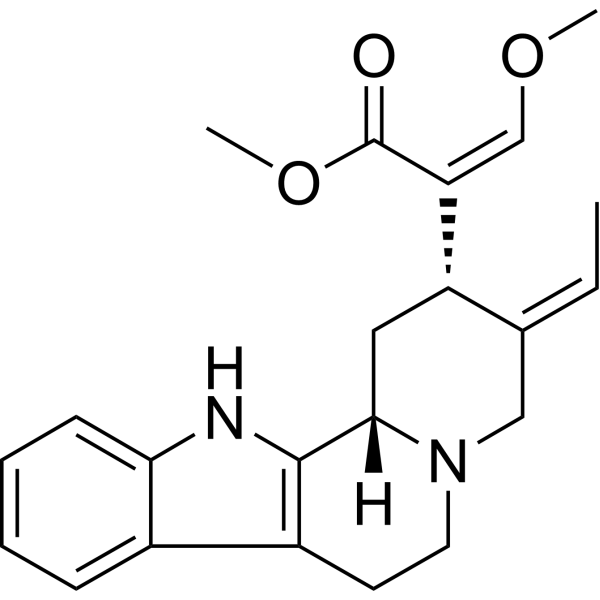
    Geissoschizine methyl ether
    1 Publications Verification

    5-HT Receptor Neurological Disease
    Geissoschizine methyl ether is an orally active, blood-brain barrier permeable alkaloid, and a partial agonist of the 5-HT1A receptor. It can be isolated from Uncaria hook. Geissoschizine methyl ether potently inhibits the binding of [ 3H]8-OH-DPAT to the 5-HT1A receptor in a concentration-dependent manner, with an IC50 of 0.904 μM. It ameliorates isolation-induced increased aggression and reduced sociability in mice. Geissoschizine methyl ether promotes oligodendrocyte differentiation and remyelination in the medial prefrontal cortex of adult mice .
    Geissoschizine methyl ether
  • HY-NP0147
    Wheat Germ Agglutinin (Fluorescein)
    1 Publications Verification

    WGA (Fluorescein)

    Fluorescent Dye Infection Neurological Disease
    Wheat Germ Agglutinin (WGA) Fluorescein is a classic fluorescent label that specifically binds to sugar residues such as N-acetylglucosamine, N-acetylneuraminic acid and sialic acid. Wheat Germ Agglutinin Fluorescein performs regionally differential fluorescent staining of the ocular surface epithelial glycocalyx to assess its integrity, and causes no damage to the eye at safe concentrations. Wheat Germ Agglutinin Fluorescein is also used for staining structures including red blood cells, cultured cells, bacteria and pine wood nematodes, and facilitates the isolation of wheat-associated plant-growth-promoting rhizobacterial strains. Wheat Germ Agglutinin Fluorescein can be applied to the detection of ocular glycocalyx integrity and the research of related diseases such as pine wilt disease .
    Wheat Germ Agglutinin (Fluorescein)
  • HY-138638

    Biochemical Assay Reagents Others
    Cross-linked dextran LH 20 could be used for the isolation and purification of natural compounds and foods, such as red wine, pigments, and flavonoids .
    Cross-linked dextran LH 20
  • HY-W099536

    Tetraoxyethylene glycol monododecyl ether

    Biochemical Assay Reagents Others
    PEG-4 lauryl ether is a non-ionic detergent that can be used as an excipient or for the isolation of functional membrane complexes .
    PEG 4 lauryl ether
  • HY-157363

    Biochemical Assay Reagents Others
    Tryptone Soya Agar is a general-purpose culture medium for the isolation and cultivation of fastidious and non-fastidious microorganisms or the maintenance of stock culture.
    Tryptone Soya Agar
  • HY-W134423B

    Biochemical Assay Reagents Others
    Agar, meets USP testing specifications is a high-quality selective growth support and substrate for non-adherent cells. Agar, meets USP testing specifications effectively supports the growth, colony formation and metachromatic matrix production of chondrocytes, and also facilitates the isolation and differentiation of pure chondrocyte strains by restricting the proliferation of fibroblast-like cells. Chondrocytes grown in Agar, meets USP testing specifications can be successfully transferred to a liquid suspension culture system, where they continue to proliferate while retaining the characteristics exhibited during growth in agar .
    Agar, meets USP testing specifications
  • HY-P991110

    Interleukin Related Inflammation/Immunology
    Anti-Mouse CD25 Antibody (7D4) is a mouse IgG2 monoclonal antibody targeting CD25. Anti-Mouse CD25 Antibody (7D4) enables the isolation of naive CD4 + T cells by depleting CD25-expressing cells .
    Anti-Mouse CD25 Antibody (7D4)
  • HY-B1899R

    Taurodeoxycholate (Standard)

    Reference Standards Endogenous Metabolite G protein-coupled Bile Acid Receptor 1 PARP Apoptosis NF-κB PKA Neurological Disease Inflammation/Immunology
    Taurodeoxycholic acid (Standard) is the analytical standard of Taurodeoxycholic acid. This product is intended for research and analytical applications. Taurodeoxycholate sodium salt is a bile salt-related anionic detergent. Taurodeoxycholic acid is formed in the liver by conjugation of deoxycholate with Taurine (HY-B0351). Taurodeoxycholic acid is used for isolation of membrane proteins including inner mitochondrial membrane proteins. Taurodeoxycholic acid (TDCA) exhibits anti-inflammatory and neuroprotective effects[1][2][3][9][10].
    Taurodeoxycholic acid (Standard)
  • HY-157353

    MAC

    Biochemical Assay Reagents Others Cancer
    MacConkey Agar (MAC) can be used for selective isolation and culture of intestinal pathogens. The composition of 1 liter of MacConkey Agar (MAC) is: 20.0g peptone, 10.0 g lactose, 1.5 g Bile salt number three, 5.0 g sodium chloride, 0.03g Neutral red, 0.001 g Crystal viol and 15.0 g agar .
    MacConkey Agar
  • HY-N4012

    3-Indoleglyoxamide

    Others Others
    Indole-3-glyoxylamide (Compound 4) is a type of indole alkaloid. Indole-3-glyoxylamide shows no significant cytotoxic activity against Hela, Ishikawa, and MGC-803 cells .
    Indole-3-glyoxylamide
  • HY-125662A

    Reactive Oxygen Species (ROS) Apoptosis Metabolic Disease
    BMX-001, a novel redox-active metalloporphyrin, improves islet function and engraftment in a murine transplant model. BMX-001 reduces apoptosis in human and murine islets. BMX-001 significantly improves static-glucose stimulated insulin secretion (sGSIS) responses in murine islets. BMX-001 can significantly restore euglycemia in murine islet studies in the presence of the MnSOD. BMX-001 reduces the generation of ROS in a murine islet isolation and culture model .
    BMX-001
  • HY-W591393

    Biochemical Assay Reagents Cancer
    Biotin Azide Plus is an oxazolidine reagent that integrates azide-biotin click chemistry and a photocleavable linker arm. Biotin Azide Plus not only reacts with biotin thioether to form stable sulfinimide products, but also enables bioconjugation of proteins and DNA through biotin redox-activated chemical labeling technology. Taking advantage of the streptavidin capture and photo-release properties, Biotin Azide Plus effectively facilitates the isolation of lipid-derived electrophile-protein adducts, thus finding wide application in scientific research related to fields such as SKBR3 cancer .
    Biotin Azide Plus
  • HY-128699R

    Dethiobiotin (Standard)

    Endogenous Metabolite Reference Standards Endocrinology
    D-Desthiobiotin (Standard) is the analytical standard of D-Desthiobiotin. This product is intended for research and analytical applications. D-Desthiobiotin is a biotin derivative. D-Desthiobiotin increases testosterone. D-Desthiobiotin is used in affinity chromatography and protein chromatography, also can be used for protein and cell labeling, detection and isolation .
    D-Desthiobiotin (Standard)
  • HY-157368

    Biochemical Assay Reagents Infection
    Bismuth Sulfite Agar is a selective solid medium that can be used for the isolation, determination and culture of Salmonella .
    Bismuth Sulfite Agar
  • HY-156901

    Biochemical Assay Reagents Others
    MNG-14a is an amphiphilic compound that can be used to aid the isolation of membrane proteins, and functional and structural determination of membrane proteins .
    MNG-14a
  • HY-E70531

    Biochemical Assay Reagents Others
    Collagenase/Neutral protease 2 (animal free) is an animal-free mixture of collagenase and neutral protease that can be used for stem cell and other primary cell isolation and bioprocessing applications without the introduction of potential animal-borne pathogens. It has higher casein activity than Collagenase/Neutral Protease 1 (animal free).
    Collagenase/Neutral protease 2 (animal free)
  • HY-128853S

    Endogenous Metabolite G protein-coupled Bile Acid Receptor 1 PARP Apoptosis NF-κB PKA Neurological Disease Inflammation/Immunology
    Taurodeoxycholate-d6 sodium salt is a bile salt-related anionic detergent. Taurodeoxycholate-d6 sodium salt is formed in the liver by conjugation of deoxycholate with Taurine (HY-B0351). Taurodeoxycholate-d6 sodium salt is used for isolation of membrane proteins including inner mitochondrial membrane proteins. Taurodeoxycholate-d6 (TDCA) exhibits anti-inflammatory and neuroprotective effects .
    Taurodeoxycholate-d6 sodium
  • HY-157380

    SS Agar

    Biochemical Assay Reagents Others
    Salmonella-Shigella Agar (SS Agar) is a solid medium that can be used for the isolation, detection and culture of Salmonella and Shigella.
    Salmonella-Shigella Agar
  • HY-E70368

    Biochemical Assay Reagents Others
    Collagenase G Recombinant is involved in the islet isolation process, and digests specific collagens from the N-terminus, especially Col-V .
    Collagenase G (Recombinant)
  • HY-P5168S

    Isotope-Labeled Compounds SARS-CoV Infection
    GPSVFPLAPSSK- 13C6, 15N2 is the 13C- and 15N-labeled GPSVFPLAPSSK. GPSVFPLAPSSK is an IgG1 signature peptide of anti-SARS-CoV-2 antibodies. GPSVFPLAPSSK can be used for the quantification of the specific isolation of anti-SARS-CoV-2 antibodies .
    GPSVFPLAPSSK-13C6,15N2
  • HY-172184

    Biochemical Assay Reagents Others
    Sabouraud dextrose agar is a standard medium for the primary isolation of fungus .
    Sabouraud dextrose agar
  • HY-157381

    Biochemical Assay Reagents Others
    China Blue Lactose Agar is a weakly selective medium used for the selective isolation of intestinal pathogenic bacteria.
    China Blue Lactose Agar
  • HY-N15264

    (-)-Azaspirene

    VEGFR Raf Cancer
    Azaspirene ((-)-Azaspirene) is an angiogenesis and Raf-1 activation inhibitor isolated from the fungus Neosartorya sp. Azaspirene inhibits vascular endothelial growth factor (VEGF)-induced human umbilical vein endothelial cell (HUVEC) migration and Raf-1 activation, but has no effect on the activation of kinase insert domain-containing receptor/fetal liver kinase 1 (VEGF receptor 2) .
    Azaspirene
  • HY-N14663

    Dihydrodeoxygriseolic acid

    Bacterial Infection
    Griseolic acid C (Dihydrodeoxygriseolic acid) is an antibiotic. Griseolic acid C can be found in Streptomyces griseoaurantiacus SANK43894. Griseolic acid C has the activity of inhibiting cyclic adenosine monophosphate (cAMP) phosphodiesterase [EC 3.1.4.17] with an IC50 of 0.12 μM (extracted from rat brain) .
    Griseolic acid C
  • HY-157367

    Biochemical Assay Reagents Others
    Bismuth Sulfite Agar Medium can be used for selective isolation and culture of Salmonella. Bismuth Sulfite Agar Medium ingredients include tryptone, peptone, beef powder, ferrous sulfate, bismuth sulfite, disodium hydrogen phosphate, glucose, brilliant green, agar .
    Bismuth Sulfite Agar Medium
  • HY-N11772R

    Reference Standards Fungal Infection
    Taurodeoxycholate (sodium salt) (Standard) is the analytical standard of Taurodeoxycholate (sodium salt). This product is intended for research and analytical applications. Taurodeoxycholate sodium salt is a bile salt-related anionic detergent used for isolation of membrane proteins including inner mitochondrial membrane proteins. Taurodeoxycholate (TDCA) inhibits various inflammatory responses .
    Mutanocyclin (Standard)
  • HY-121704

    iGluR Neurological Disease
    SR 57227A Free base is a highly selective compound for both peripheral and central 5-HT3 receptors and acts as an inhibitor of NMDA receptor-mediated responses in rat cortical pyramidal cells, demonstrating antidepressant-like effects in rats while reducing isolation-induced aggressive behavior.
    SR 57227A free base
  • HY-P5168AS

    Isotope-Labeled Compounds SARS-CoV Infection
    GPSVFPLAPSSK- 13C6, 15N2 TFA is the 13C- and 15N-labeled GPSVFPLAPSSK. GPSVFPLAPSSK is an IgG1 signature peptide of anti-SARS-CoV-2 antibodies. GPSVFPLAPSSK can be used for the quantification of the specific isolation of anti-SARS-CoV-2 antibodies .
    GPSVFPLAPSSK-13C6,15N2 TFA
  • HY-128853R

    Reference Standards Endogenous Metabolite G protein-coupled Bile Acid Receptor 1 PARP Apoptosis NF-κB PKA Neurological Disease Inflammation/Immunology
    Taurodeoxycholate sodium salt (Standard) is a bile salt (Standard)-related anionic detergent. Taurodeoxycholate sodium salt (Standard) is formed in the liver by conjugation of deoxycholate with Taurine (HY-B0351). Taurodeoxycholate sodium salt (Standard) is used for isolation of membrane proteins including inner mitochondrial membrane proteins. Taurodeoxycholate (TDCA) exhibits anti-inflammatory and neuroprotective effects .
    Taurodeoxycholate sodium salt (Standard)
  • HY-111333

    Dioxapyrrolomycin; LL-F42248α; AL-R2081

    Bacterial Infection
    Pyrroxamycin is a novel antibiotic produced by Streptomyces, whose chemical structure was determined by chemical properties and X-ray crystallography and 13C NMR spectroscopy analysis. It is active against Gram-positive bacteria and dermatophytes. In this paper, the authors discuss the taxonomy, fermentation, isolation, physicochemical properties, chemical structure, and biological activity of the strain producing Pyrroxamycin.
    Pyrroxamycin
  • HY-W250177

    Biochemical Assay Reagents Others
    Tridodexylmethylammonium chloride, also known as TDMAC, is a cationic surfactant commonly used in various industrial and research applications. It belongs to the family of quaternary ammonium compounds and has a positively charged head and a hydrophobic tail, which allows it to be used as a detergent, emulsifier and antimicrobial. Known for its ability to disrupt cell membranes, TDMAC is frequently used in microbiology for the selective isolation and identification of bacteria.
    Tridodecylmethylammonium chloride
  • HY-N12138

    Glycosidase Metabolic Disease
    Flaccidoside III is a triterpenoid isolated from the aerial parts of N. sativa (Ranunculaceae). Flaccidoside III inhibits α-Glucosidase (IC50: 256.7 μM) and has potential antioxidant and antidiabetic activities .
    Flaccidoside III
  • HY-13736

    CV205-502

    Dopamine Receptor Neurological Disease
    Quinagolide (CV205-502) is a non-ergot dopamine D(2) receptor agonist that promotes dopamine activity. Quinagolide has shown effectiveness in modulating endocrine function, particularly in inhibiting disorders associated with dopamine deficiency. Quinagolide is used to suppress hyperprolactinemia and corresponding clinical symptoms, showing good efficacy. Quinagolide's biological activity enables its use as an important research compound in drug isolation and analysis .
    Quinagolide
  • HY-157364

    Levine EMB Agar

    Biochemical Assay Reagents Others
    Levine Eosin-Methylene Blue Agar Medium (Levine EMB Agar) is a weakly selective medium for the isolation of intestinal pathogens, especially E. coli. The composition of 1 liter of Levine Eosin-Methylene Blue Agar Medium: 10.0 g Peptone, 10.0 g lactose, 2.0 g dipotassium hydrogen phosphate, 15.0 g agar, 0.4 g eosin, 0.065 g methylene blue .
    Levine Eosin-Methylene Blue Agar Medium
  • HY-113413R

    Imidazolyl-4-acetic acid (Standard)

    Reference Standards Endogenous Metabolite GABA Receptor Cardiovascular Disease Neurological Disease Metabolic Disease
    Imidazoleacetic acid (Standard) is the analytical standard of Imidazoleacetic acid (HY-113413). This product is intended for research and analytical applications. Imidazoleacetic acid (Imidazolyl-4-acetic acid) is a blood-brain barrier-permeable full agonist of the GABAA receptor. Imidazoleacetic acid forms via histamine oxidation in the mouse brain. Imidazoleacetic acid exerts multiple neurochemical and behavioral effects. Imidazoleacetic acid induces a range of centrally mediated effects, including analgesia, sedation, hypnosis, as well as reductions in blood pressure, body temperature, isolation-induced aggression and motor activity .
    Imidazoleacetic acid (Standard)

Inquiry Online

Your information is safe with us. * Required Fields.

Salutation


Country or Region *

Applicant Name *


Organization Name *

Department *


Email Address *


Product Name *

Cat. No.


Requested quantity *

Phone Number *


Remarks

Inquiry Online

Inquiry Information

Product Name:
Cat. No.:
Quantity:
MCE Japan Authorized Agent:

