

Search Result
Results for "
isomerization
" in MedChemExpress (MCE) Product Catalog:
1
Isotope-Labeled Compounds
| Cat. No. |
Product Name |
Target |
Research Areas |
Chemical Structure |
-
- HY-W004500
-
|
|
Endogenous Metabolite
Apoptosis
|
Metabolic Disease
|
|
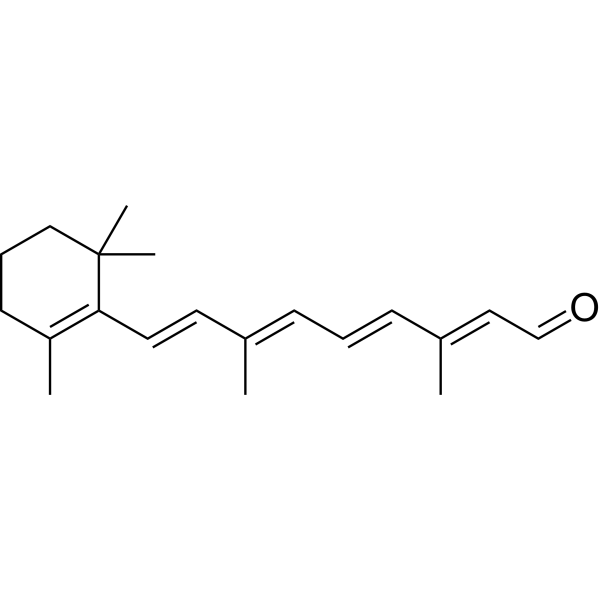
All-trans-retinal is an vitamin A metabolite in the retina, and is produced following photo-isomerization of the visual chromophore 11-cis-Retinal. All-trans-retinal is cleared from photoreceptors by ATP-binding cassette transporter (ABCA4) and all-trans-retinol dehydrogenase (RDH). All-trans-retinal induces Bax activation via DNA damage to mediate retinal cell apoptosis .
|
-
-
- HY-113478
-
|
Isoursodeoxycholic acid
|
Drug Metabolite
|
Metabolic Disease
|
|
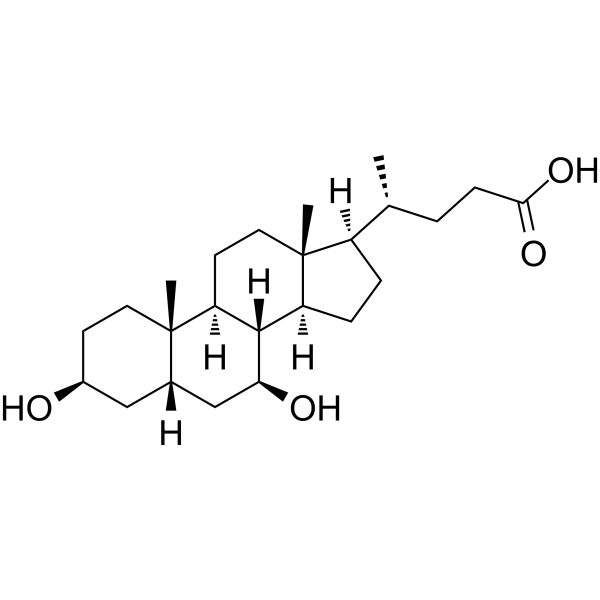
3β-Ursodeoxycholic acid (Isoursodeoxycholic acid) is a bile acid. 3β-Ursodeoxycholic acid shows good tolerance and well intestinal absorption by oral adminstation. 3β-Ursodeoxycholic acid can be isomerized by intestinal and hepatic enzymes to yield UDCA .
|
-
-
- HY-P2848
-
|
ChOx
|
Endogenous Metabolite
|
Others
|
|
Cholesterol oxidase, Microorganism (ChOx) is a bacterial flavin oxidase containing FAD, commonly used in biochemical research. Cholesterol oxidase catalyzes the oxidation of the C(3)-OH group of cholesterol (and other sterols) to cholest-5-en-3-one and isomerizes it to cholest-4-en-3-one .
|
-
-
- HY-145344
-
|
|
Phosphodiesterase (PDE)
|
Cancer
|
|
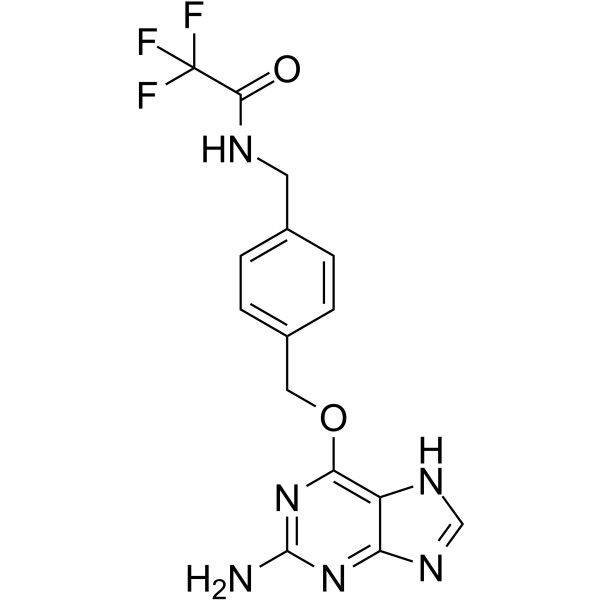
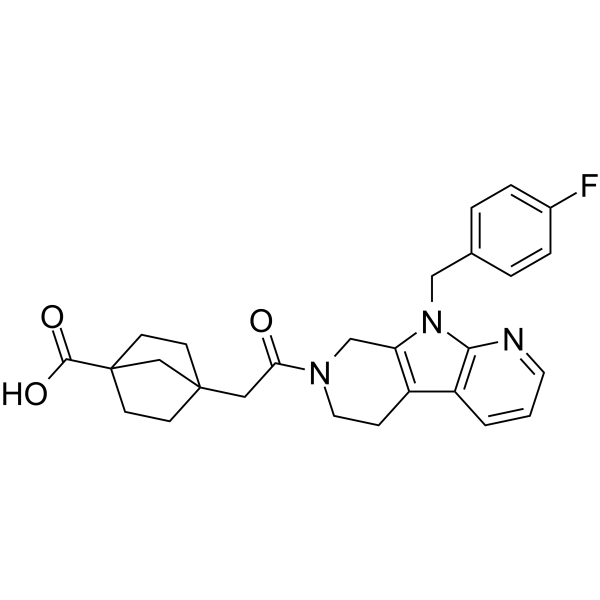
ONO-8430506 is an orally bioavailable and potent autotaxin (ATX)/ENPP2 inhibitor with the IC90 of 100 nM for ATX activity in mouse plasma .
|
-
-
- HY-19720A
-
|
ACU-4429 hydrochloride
|
RPE65
|
Metabolic Disease
|
|
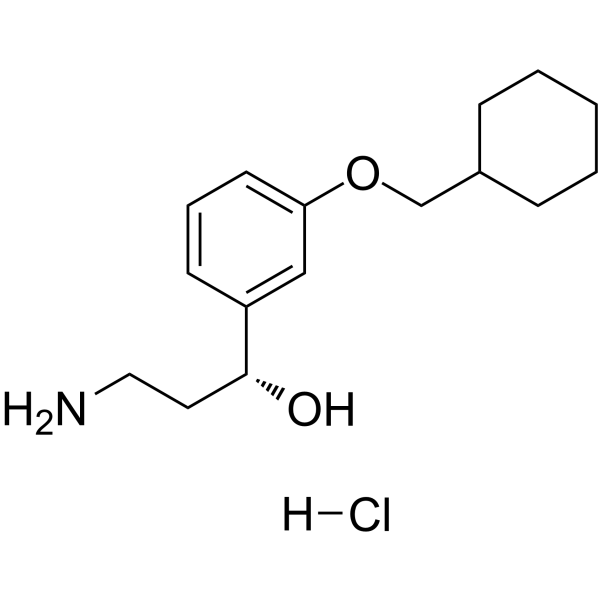
Emixustat (ACU-4429) hydrochloride is an orally active RPE65 inhibitor with an IC50 value of 4.4 nM. Emixustat hydrochloride is also a visual cycle modulator, capable of regulating visual cycle activity by inhibiting retinol isomerization, and holds potential for studying vision disorders such as age-related macular degeneration (AMD) .
|
-
-
- HY-19720
-
|
ACU-4429
|
RPE65
|
Metabolic Disease
|
|
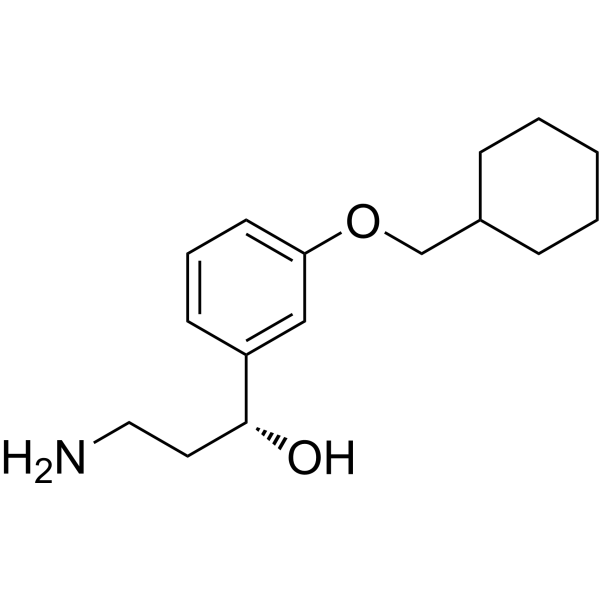
Emixustat is an orally active RPE65 inhibitor with an IC50 value of 4.4 nM. Emixustat is also a visual cycle modulator, capable of regulating visual cycle activity by inhibiting retinol isomerization, and holds potential for studying vision disorders such as age-related macular degeneration (AMD) .
|
-
-
- HY-156004
-
|
|
Bacterial
|
Others
|
|
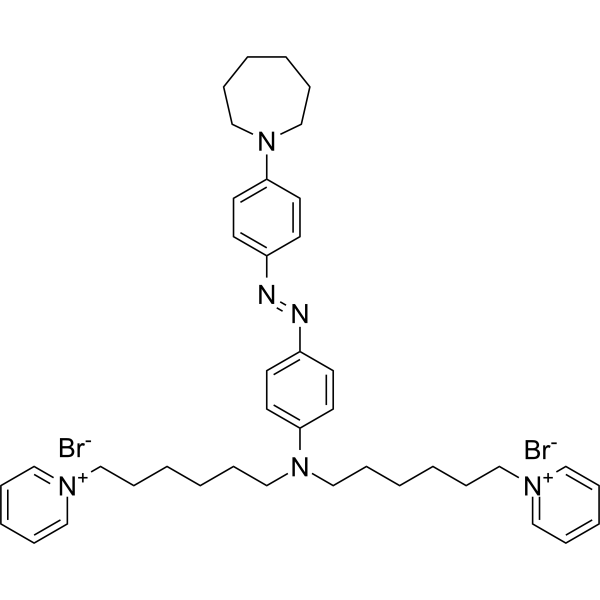
Ziapin 2 is a membrane potential modulator and an intracellular membrane photoactuator. Ziapin 2 binds to the bacterial plasma membrane, and upon embedding into the lipid bilayer, undergoes trans-cis isomerization under 470 nm light irradiation, which triggers membrane potential hyperpolarization and induces the opening of ion channels on bacterial cell membranes. Through interactions with lipids, Ziapin 2 increases the overall flexibility of the lipid bilayer. Ziapin 2 can form photosensitive transmembrane dimers to trigger cellular signal transduction. Ziapin 2 is applicable to the research and regulation of bacterial electrical signal transduction and the regulation of membrane physical properties .
|
-
-
- HY-116716
-
|
|
MicroRNA
|
Cancer
|
|
PIN1 inhibitor API-1 is a specific Pin1 (peptidyl-prolyl cis-trans isomerase NIMA-interacting 1) inhibitor (API-1) with an IC50 of 72.3 nM. PIN1 inhibitor API-1 directly and specifically binds to the Pin1 peptidyl-prolyl isomerase (PPIase) domain and potently inhibits Pin1 cis-trans isomerizing activity. PIN1 inhibitor API-1 retains the active conformation of pXPO5 and restores the ability of pXPO5 to transport pre-miRNAs from nucleus to cytoplasm, thus up-regulating the anticancer miRNA biogenesis to suppress both in vitro and in vivo hepatocellular carcinoma development .
|
-
-
- HY-118828A
-
|
(9S,13R)-12-OPDA
|
Lipoxygenase
|
Others
|
|
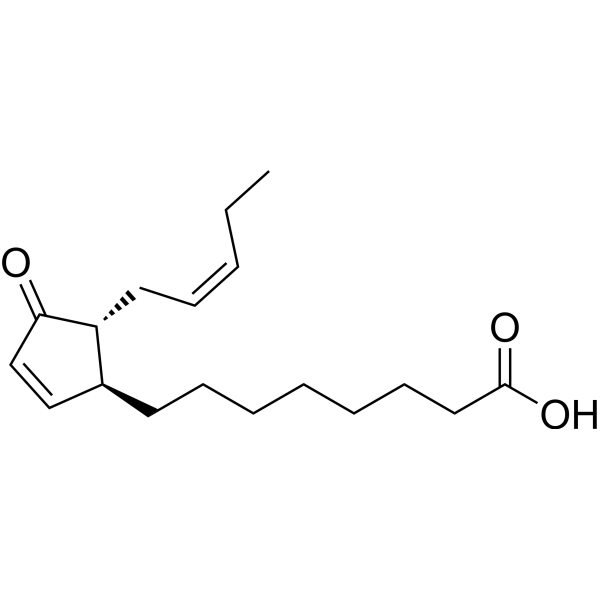
9S,13R)-12-Oxo phytodienoic acid is the isomerization of 12-oxo PDA (HY-118828). (9S,13R)-12-Oxo phytodienoic acid is a lipoxygenase metabolite in the leaves of green plants .
|
-
-
- HY-E70308
-
|
|
Endogenous Metabolite
|
Others
|
|
Glucose isomerase (immobilized) is glucose isomerase, which catalyzes the reversible isomerization of D-glucose and D-xylose into D-fructose and D-xylulose, respectively. Glucose isomerase (immobilized) can be used to produce fructose syrup under high-temperature conditions above 90 ℃. Glucose isomerase (immobilized) is widely distributed in prokaryotes .
|
-
-
- HY-P2918
-
|
GPI; Phosphoglucose Isomerase
|
Endogenous Metabolite
|
Metabolic Disease
Cancer
|
|
Phosphoglucose Isomerase, Rabbit muscle (GPI), i.e., phosphoglucose isomerase/phosphoglucoisomerase (PGI) or phosphohexose isomerase (PHI), is often used in biochemical studies. Glucose 6-phosphate isomeras is a highly conserved glycolytic and dimeric enzyme. Glucose 6-phosphate isomeras catalyzes the reversible isomerization of glucose-6-phosphate to fructose-6-phosphate .
|
-
-
- HY-118828AS
-
|
(9S,13R)-12-OPDA-d5
|
Isotope-Labeled Compounds
|
Others
|
|
(9S,13R)-12-OPDA-d5 ((9S,13R)-12-OPDA-d5) is an isotopic label of (9S,13R)-12-oxyphytodienoic acid. (9S,13R)-12-Oxophytodienoic acid is an isomer of 12-oxoPDA (HY-118828). (9S,13R)-12-Oxo phytodienoic Acid is a lipoxygenase metabolite in green plant leaves .
|
-
-
- HY-CE02017A
-
|
Feruloyl-coenzyme A
|
Drug Intermediate
|
Others
|
|
Feruloyl-CoA (Feruloyl-coenzyme A) is a cinnamoyl-CoA ester substrate involved in the biosynthesis of lignin and coumarin in plants. Feruloyl-CoA acts as a substrate for cinnamoyl-CoA reductase 1-dependent reduction reaction with NADPH to produce cinnamaldehyde. Feruloyl-CoA is a precursor that generates Scopoletin (HY-N0342) via spontaneous trans/cis isomerization and lactonization of its side chain .
|
-
-
- HY-100072
-
|
Methyl (2E,4E,6Z)-decatrienoate
|
Others
|
Infection
|
|
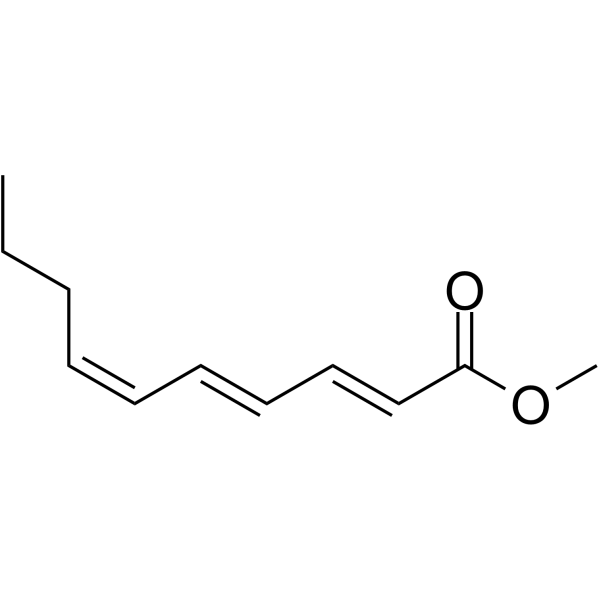
(2E,4E,6Z)-Methyl deca-2,4,6-trienoate (Methyl (2E,4E,6Z)-decatrienoate) is the aggregation pheromone of the brown-winged green bug, Plautia stali. (2E,4E,6Z)-Methyl deca-2,4,6-trienoate exposed to daylight in solutions and/or on dispensers used for field trapping can readily isomerize to form complex mixtures of isomers, thus causing a concern about lure stability and longevity .
|
-
-
- HY-W027631
-
|
|
Fluorescent Dye
|
Infection
|
|
cis-2-Butene-1,4-diol, an industrial product, can be used for the synthesis of antiviral product oxetanocin A. cis-2-Butene-1,4-diol is a probe for studying isomerization versus hydrogenation and hydrogenolysis reactions .
|
-
-
- HY-E70022
-
|
|
Others
|
Others
|
|
D-Mannose isomerase (PsMaSeAF) is a carbohydrate isomerase catalyzing the reversible isomerization of d-mannose to d-fructose. D-Mannose isomerase (PsMaSeAF) belongs to the N-acylglucosamine 2-epimerase (AGE) superfamily along with AGE, cellobiose 2-epimerase (CE), and aldose-ketose isomerase (AKI) .
|
-
-
- HY-P2848A
-
|
|
Toll-like Receptor (TLR)
|
Infection
Metabolic Disease
|
|
Cholesterol oxidase, Rhodococcus sp. is a key enzyme in the cholesterol degradation process. It catalyzes the isomerization and oxidation of cholesterol mediated by the coenzyme FAD. Research indicates that cholesterol oxidase plays a crucial role in the pathogenicity of Mycobacterium tuberculosis by modulating the host macrophage immune response through inhibition of the Toll-like receptor 2 (TLR2) signaling pathway, thereby enhancing the survival of Mycobacterium tuberculosis. Cholesterol oxidase, from Rhodococcus sp., shows potential for research in the field of tuberculosis .
|
-
-
- HY-W012472
-
|
|
Environmental Pollutants
Biochemical Assay Reagents
|
Others
|
|
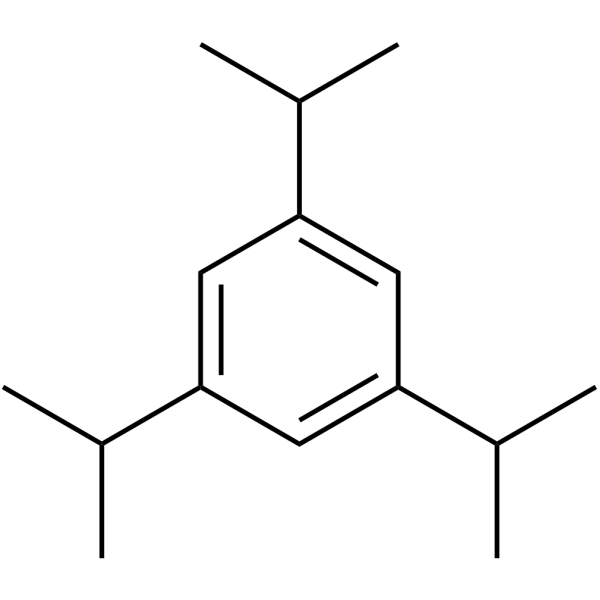
1,3,5-Triisopropylbenzene is a symmetric aromatic hydrocarbon compound. 1,3,5-Triisopropylbenzene serves as a saturated crosslinker to participate in the "inverse vulcanization" reaction of elemental sulfur. 1,3,5-Triisopropylbenzene acts as a probe molecule to evaluate the external surface acidity and accessibility of zeolite materials. 1,3,5-Triisopropylbenzene is also used as fuel and fuel additive, lubricant and lubricant additive, as well as micelle swelling agent .
|
-
-
- HY-P2918B
-
|
|
Endogenous Metabolite
|
Metabolic Disease
|
|
Phosphoglucose isomerase, bacillus stearothermophilus is a highly conserved glycolytic and dimeric enzyme. Phosphoglucose isomerase, bacillus stearothermophilus catalyzes the reversible isomerization of glucose-6-phosphate to fructose-6-phosphate .
|
-
-
- HY-P2918A
-
|
|
Endogenous Metabolite
|
Metabolic Disease
|
|
Phosphoglucose isomerase, bacillus stearothermophilus is a highly conserved glycolytic and dimeric enzyme. Phosphoglucose isomerase, bacillus stearothermophilus catalyzes the reversible isomerization of glucose-6-phosphate to fructose-6-phosphate .
|
-
-
- HY-W583685
-
-
-
- HY-W216621
-
|
|
Fluorescent Dye
|
Others
|
|
Pinacyanol iodide is a fluorescent cyanine dye. Pinacyanol iodide exhibits ultrafast excited state isomerization .
|
-
-
- HY-P2930
-
|
|
Biochemical Assay Reagents
|
Others
|
|
Peptidylprolyl isomerase is an enzyme that catalyzes the cis-trans isomerization of peptidylprolyl amino groups. Peptidylprolyl isomerase may be involved in cellulase modification. Peptidylprolyl isomerase also functions as a chaperone protein .
|
-
-
- HY-E70615
-
|
|
Endogenous Metabolite
|
Cancer
|
|
Protein Disulfide Isomerase, Human, an oxidoreductase, is a mainly endoplasmic reticulum (ER) resident protein. Protein Disulfide Isomerase, Human plays an important role in maintaining cellular homeostasis through thiol oxidation/reduction cycling, chaperone action, and isomerization of client proteins .
|
-
-
- HY-N15785
-
|
|
Biochemical Assay Reagents
|
Metabolic Disease
|
|
18:0-azo PC is an analog of phosphatidylcholine (PC). Under light, 18:0-azo PC can be switched on and off by light, forcing the azobenzene portion of the molecule to undergo cis/trans isomerization, leading to the initiation or termination of cell signaling.
|
-
-
- HY-113465A
-
|
|
Endogenous Metabolite
|
Inflammation/Immunology
|
|
11-trans Leukotriene E4 is an isomer of Leukotriene E4 (LTE4). Slow isomerization of the C-11 double bond of LTE4 leads to the formation of 11-trans LTE4. 11-trans Leukotriene E4 is equipotent to LTE4 in contracting guinea pig ileum .
|
-
-
- HY-117583A
-
|
|
HDAC
Histone Methyltransferase
|
Neurological Disease
|
|
BG47 is a prototypical histone deacetylases HDAC1 and HDAC2 selective, optoepigenetic probe. BG47 can bind to and competitively inhibits the deacetylase activity of HDAC targets upon a light-induced trans-to-cis isomerization, and increases Histone Methyltransferase H3K9 acetylation. BG47 can be used for neurological disease research .
|
-
-
- HY-113478R
-
|
Isoursodeoxycholic acid (Standard)
|
Drug Metabolite
Reference Standards
|
Metabolic Disease
|
|
3β-Ursodeoxycholic acid (Standard) is the analytical standard of 3β-Ursodeoxycholic acid. This product is intended for research and analytical applications. 3β-Ursodeoxycholic acid (Isoursodeoxycholic acid) is a bile acid. 3β-Ursodeoxycholic acid shows good tolerance and well intestinal absorption by oral adminstation. 3β-Ursodeoxycholic acid can be isomerized by intestinal and hepatic enzymes to yield UDCA .
|
-
-
- HY-B1282AR
-
|
|
Reference Standards
Bacterial
Parasite
Antibiotic
|
Infection
|
|
3β-Ursodeoxycholic acid (Standard) is the analytical standard of 3β-Ursodeoxycholic acid. This product is intended for research and analytical applications. 3β-Ursodeoxycholic acid (Isoursodeoxycholic acid) is a bile acid. 3β-Ursodeoxycholic acid shows good tolerance and well intestinal absorption by oral adminstation. 3β-Ursodeoxycholic acid can be isomerized by intestinal and hepatic enzymes to yield UDCA .
|
-
-
- HY-117583
-
|
|
HDAC
Histone Methyltransferase
|
Neurological Disease
|
|
cis-BG47 is an cis-isomer of BG47, BG47 is a prototypical histone deacetylases HDAC1 and HDAC2 selective, optoepigenetic probe. BG47 can bind to and competitively inhibits the deacetylase activity of HDAC targets upon a light-induced trans-to-cis isomerization, and increases Histone Methyltransferase H3K9 acetylation. cis-BG47 can be used for neurological disease research .
|
-
-
- HY-134373A
-
|
|
Adenylate Cyclase
Bacterial
|
Infection
|
|
Bis-Cl-ANT-ATP (tetrasodium) is a fluorescent ATP derivative, which undergo spontaneous isomerization. Bis-Cl-ANT-ATP (tetrasodium) selectively inhibits B. pertussis Adenylyl Cyclase (AC) toxin CyaA over mammalian AC1, AC2, and AC5 (Kis = 16, 1,700, 2,400, and 1,600 nM, respectively). Bis-Br-ANT-ATP (tetrasodium) can be used in the study of whooping cough .
|
-
-
- HY-W747563
-
|
11-trans LTD4
|
Drug Isomer
|
Others
|
|
11-trans Leukotriene D4 (11-trans LTD4) is a C-11 double bond isomer of LTD4. LTD4 undergoes slow temperature-dependent isomerization to 11-trans LTD4 during storage. 11-trans LTD4 retains about 10-25 % of the potency for contraction of guinea pig ileum, trachea and parenchyma compared to LTD4. It exhibits an ED50 ranging between 12-60 nM for contraction of guinea pig trachea.
|
-
-
- HY-118132
-
|
|
Antibiotic
|
Infection
|
|
LL-Z1220 is a novel antibiotic with the structure of 2-(3,8-dioxopentacyclo[5.1.0.0^~^~]oct-5-en-5-yl)-4H-pyran-4-one. This appears to be the first reported natural product containing a benzene dioxide group. This antibiotic readily undergoes valence isomerization to form 1,4-dioxopentacyclo. The chemical and spectroscopic properties of the antibiotic suggest that the benzene dioxide has a cis configuration.
|
-
-
- HY-12031B
-
|
|
MEK
|
Inflammation/Immunology
|
|
(2Z,3Z)-U0126 is a selective inhibitor of MEK1 and MEK2, demonstrating potent antiinflammatory effects by noncompetitively inhibiting AP-1 transcriptional activity with IC50 values of 72 nM for MEK1 and 58 nM for MEK2. (2Z,3Z)-U0126 also inhibits anchorage-independent growth of Ki-ras-transformed rat fibroblasts by blocking both the extracellular signal-regulated kinase and mammalian target of rapamycin pathways. Additionally, (2Z,3Z)-U0126 can undergo isomerization and cyclization, resulting in various products that show reduced affinity for MEK and diminished AP-1 inhibition compared to the parent compound.
|
-
-
- HY-N12748
-
|
|
Others
|
Others
|
|
17βH-Gitoxigenin is a compound that can be isolated from cell suspension cultures of Stropanthus divaricatus .
|
-
-
- HY-N15682
-
|
(7Z)-Provitamin A; (7Z)-beta-Carotene
|
Drug Isomer
|
Inflammation/Immunology
|
|
13-cis-β-Carotene ((7Z)-Provitamin A; (7Z)-beta-Carotene) is a provitamin A carotenoid isomer found in leaves, flowers, stems, and fruit of Momordica charantia. 13-cis-β-Carotene undergoes nonenzymatic isomerization to other β-carotene isomers during aerobic incubation, extraction, and analysis. 13-cis-β-Carotene can be used for the research of chronic diseases .
|
-
-
- HY-180728
-
|
3-Benzylmalate
|
Nucleoside Antimetabolite/Analog
|
Others
|
|
3-Benzylmalic acid (3-Benzylmalate) can be converted from 2-Benzylmalic acid through a HphCD-mediated hydroxyl isomerization reaction .
|
-
-
- HY-E71137
-
|
|
Biochemical Assay Reagents
|
Others
|
|
(S)-β-Macrocarpene synthase (EC 5.5.1.17) participates in cyclization to generate (S)-β-bisabolene, which is then isomerized to generate (S)-β-Macrocarpene.
|
-
-
- HY-W753500
-
|
|
Others
|
Endocrinology
|
|
(E,E)-9,11-Tetradecadienyl acetate is a female sex pheromone isolated from light-induced isomerization products in female coastal noctuid moths .
|
-
-
- HY-129240
-
|
Isoacitretin; Ro 13-7652
|
Drug Derivative
|
Others
|
|
13-cis Acitretin (Isoacitretin; Ro 13-7652) is a retinoid and the major in vivo metabolite of etretinate. 13-cis Acitretin is formed via in vivo isomerization of etretinate. 13-cis Acitretin serves as the primary metabolite in blood .
|
-
-
- HY-Z1074
-
|
|
Endogenous Metabolite
|
Others
|
|
Previtamin D2 is a precursor to Vitamin D2 (ergocalciferol) , formed through the photoisomerization of ergosterol, a compound found in fungi and some plants. Exposure to ultraviolet (UV) light triggers the conversion of ergosterol to previtamin D2, which then rapidly isomerizes to vitamin D2.
|
-
-
- HY-E71348
-
|
|
Biochemical Assay Reagents
|
Others
|
|
ζ-Carotene isomerase (EC 5.2.1.12) catalyses the cis-trans isomerization of the 15-15' carbon-carbon double bond in 9,15,9'-tricis-ζ-Carotene, which is required for biosynthesis of all plant carotenoids. Requires heme b.
|
-
-
- HY-P2848B
-
|
|
Endogenous Metabolite
|
Metabolic Disease
|
|
Cholesterol Oxidase, Streptomyces sp. (EC 1.1.3.6) is a monomeric flavoprotein containing FAD that catalyzes the first step in cholesterol catabolism. This bifunctional enzyme oxidizes cholesterol to cholest-5-en-3-one in an FAD-requiring step, which is then isomerized to cholest-4-en-3-one with the release of H2O2.
|
-
-
- HY-W719703
-
|
A6P sodium; Allu6P sodium; D-Psicose-6-phosphate sodium
|
Bacterial
|
Infection
|
|
D-Allulose-6-phosphate (A6P; Allu6P) sodium is a phosphorylated six-carbon ketose, which serves as the product/substrate of the enzymatic reaction catalyzed by Escherichia coli Type B ribose-5-phosphate isomerase (RpiB). EcRpiB catalyzes the reversible isomerization between All6P and Allu6P (All6P ⇌ Allu6P). D-Allulose-6-phosphate sodium can be used in the research of tuberculosis .
|
-
-
- HY-W392267
-
-
-
- HY-180985
-
|
|
PROTACs
Bcr-Abl
|
Cancer
|
|
Azo-PROTAC-4C-cis is a BCR-ABL PROTAC degrader, and its degradation efficiency of BCR-ABL is much lower than that of its trans isomer Azo-PROTAC-4C-trans (HY-180983). Azo-PROTAC-4C-cis is the product of the conformational transformation of Azo-PROTAC-4C-trans under ultraviolet (UV) light irradiation. Azo-PROTAC-4C-cis can be converted into highly active Azo-PROTAC-4C-trans under visible light, thereby initiating protein degradation. Azo-PROTAC-4C-cis can be used for the study of myeloid leukemia .
|
-
-
- HY-N17719
-
|
|
Others
|
Others
|
|
(2S)-Eriodictyol-5-O-β-D-glucopyranoside (Compound 1b) is a type of flavanone glucoside compound, which can be found in Balanophora involucrate Hook. f .
|
-
-
- HY-133240
-
|
|
DNA Alkylator/Crosslinker
Calcium Channel
Potassium Channel
Sodium Channel
|
Infection
|
|
trans-AzoTAB is a photoresponsive potassium/sodium/calcium channel modulator and DNA-binding agent. trans-AzoTAB undergoes trans-cis isomerization driven by light, with variable polarity and DNA affinity. trans-AzoTAB also enhances voltage-gated potassium currents and inhibits sodium and calcium currents in cardiomyocytes, thereby reducing spontaneous electrical activity and excitation conduction velocity. In addition, trans-AzoTAB induces compaction and frozen conformation of λ-phage DNA, and non-sequence-dependently inhibits transcription and translation processes in the dark; its activity can be reversed and restored by visible light after activation with ultraviolet irradiation. trans-AzoTAB can serve as a probe for two-photon optical regulation of myocardial excitability, and is used to construct photoresponsive interfacial polymer structures .
|
-
-
- HY-N13081
-
|
|
Others
|
Cancer
|
|
3-Oxo-cinobufagin (compound 8) is a potential anticancer compound that can be isolated from the broth of M. spinosus by high-performance liquid chromatography. Compared to other isolated compounds, the hydroxyl group at the C-5 position of 3-Oxo-cinobufagin is further oxidized or isomerized, significantly reducing its cytotoxic activity against most cell lines (except HEL), while increasing its activity against the BEL cell line. The IC50 values of 3-Oxo-cinobufagin's cytotoxicity against cancer cells are: 71.3 μM (HepG2), 90.2 μM (SMMC-7221), 0.11 μM (BEL-7402), 72.5 μM (K562), 5.3 μM (HL-60), and 12 nM (HEL) .
|
-
-
-
HY-L098
-
|
|
415 compounds
|
|
A drug metabolite is a byproduct of the body breaking down, or “metabolizing” a drug into a different substance. Most drugs undergo chemical alteration by various bodily systems as a way to create compounds that are more easily excreted from the body. Drugs can be metabolized by oxidation, reduction, hydrolysis, hydration, conjugation, condensation, or isomerization. Drug metabolism can produce metabolites with physicochemical and pharmacological properties that differ substantially from those of the parent drug, and consequently have important implications for both drug safety and efficacy.
MCE offers a unique collection of 415 drug metabolites which is a useful tool for drug safety and efficacy study and drug repurposing.
|
| Cat. No. |
Product Name |
Type |
-
- HY-W216621
-
|
|
Fluorescent Dye
|
|
Pinacyanol iodide is a fluorescent cyanine dye. Pinacyanol iodide exhibits ultrafast excited state isomerization .
|
| Cat. No. |
Product Name |
Category |
Target |
Chemical Structure |
-
- HY-W004500
-
-
-
- HY-118828A
-
-
-
- HY-N15785
-
|
|
Lipid
|
Biochemical Assay Reagents
|
|
18:0-azo PC is an analog of phosphatidylcholine (PC). Under light, 18:0-azo PC can be switched on and off by light, forcing the azobenzene portion of the molecule to undergo cis/trans isomerization, leading to the initiation or termination of cell signaling.
|
-
-
- HY-113465A
-
-
-
- HY-N12748
-
-
-
- HY-N15682
-
-
-
- HY-180728
-
-
-
- HY-W753500
-
-
-
- HY-129240
-
-
-
- HY-N17719
-
-
-
- HY-N13081
-
|
|
Microorganisms
Steroids
Source Classification
|
Others
|
|
3-Oxo-cinobufagin (compound 8) is a potential anticancer compound that can be isolated from the broth of M. spinosus by high-performance liquid chromatography. Compared to other isolated compounds, the hydroxyl group at the C-5 position of 3-Oxo-cinobufagin is further oxidized or isomerized, significantly reducing its cytotoxic activity against most cell lines (except HEL), while increasing its activity against the BEL cell line. The IC50 values of 3-Oxo-cinobufagin's cytotoxicity against cancer cells are: 71.3 μM (HepG2), 90.2 μM (SMMC-7221), 0.11 μM (BEL-7402), 72.5 μM (K562), 5.3 μM (HL-60), and 12 nM (HEL) .
|
-
| Cat. No. |
Product Name |
Chemical Structure |
-
- HY-118828AS
-
|
|
|
(9S,13R)-12-OPDA-d5 ((9S,13R)-12-OPDA-d5) is an isotopic label of (9S,13R)-12-oxyphytodienoic acid. (9S,13R)-12-Oxophytodienoic acid is an isomer of 12-oxoPDA (HY-118828). (9S,13R)-12-Oxo phytodienoic Acid is a lipoxygenase metabolite in green plant leaves .
|
-
Your information is safe with us. * Required Fields.
Inquiry Information
- Product Name:
- Cat. No.:
- Quantity:
- MCE Japan Authorized Agent:

